WELCOME
FIT INDIA MOVEMENT 2019
This Presentation dedicated to -
Golden Girl
HIMA DAS
PROF DR NILIMA SONAWANE
Institute of Nursing
Education,Sir J J Hospital
campus Mumbai , India
HAPPY NATIONAL SPORT DAY
(Major DHYAN CHAND (29 August 1905 – 3 December 1979)
“On National Sports Day I congratulate all sports
lovers across India and hope sports and
sportsmanshipwillalwaysshineinoursociety”,
What is Health
HOW TO STAY HEALTHY
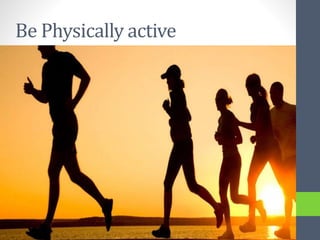
Be Physically active
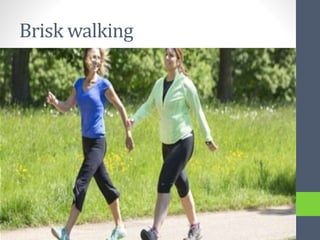
Brisk walking
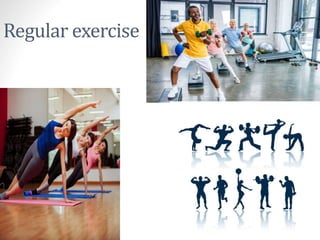
Regular exercise
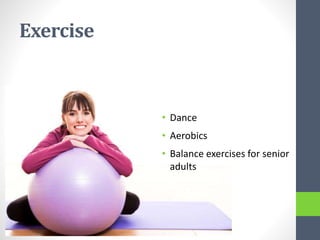
Exercise
• Dance
• Aerobics
• Balance exercises for senior
adults
Yoga
Play outdoor games
Why sports ?
Healthy Weight management
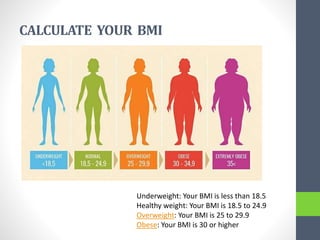
CALCULATE YOUR BMI
Underweight: Your BMI is less than 18.5
Healthy weight: Your BMI is 18.5 to 24.9
Overweight: Your BMI is 25 to 29.9
Obese: Your BMI is 30 or higher
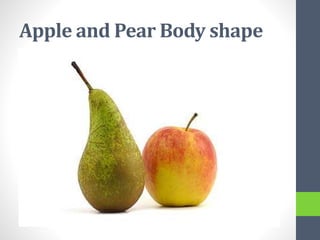
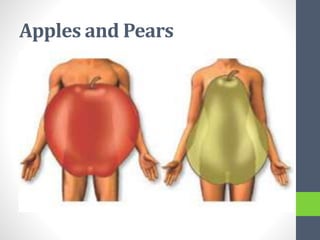
Apple and Pear Body shape
Apples and Pears
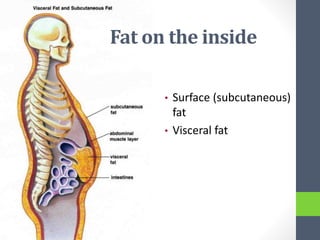
Fat on the inside
• Surface (subcutaneous)
fat
• Visceral fat
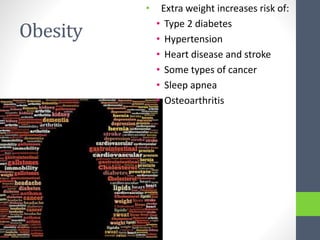
Obesity
• Extra weight increases risk of:
• Type 2 diabetes
• Hypertension
• Heart disease and stroke
• Some types of cancer
• Sleep apnea
• Osteoarthritis
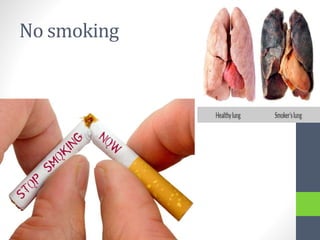
No smoking
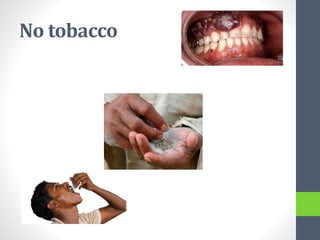
No tobacco
Stop Alcohol
Time management
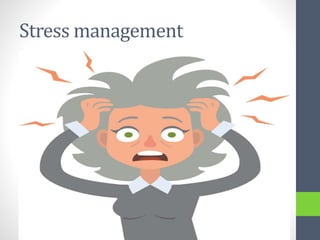
Stress management
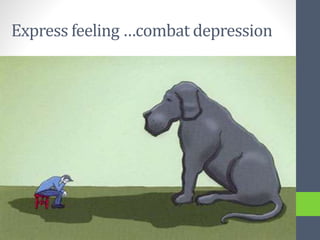
Express feeling …combat depression
Good sleep
Use Cosmetic carefully
No plastic
• BPA, known scientifically as Bisphenol A
• Direct toxicity, as in the cases of lead, cadmium,
and mercury.
• Cancer
• Infertility and Fetal Development
• Brain Function
• Heart Disease and Diabetes
• Weight Problems
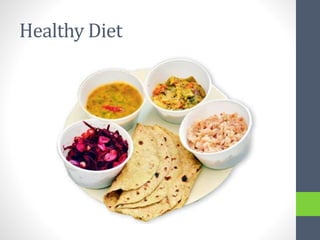
Healthy Diet
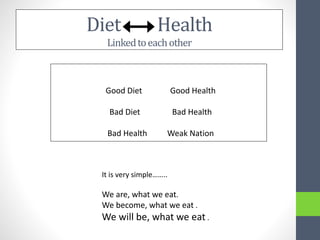
Diet Health
Linkedtoeachother
Good Diet Good Health
Bad Diet Bad Health
Bad Health Weak Nation
It is very simple……..
We are, what we eat.
We become, what we eat .
We will be, what we eat .
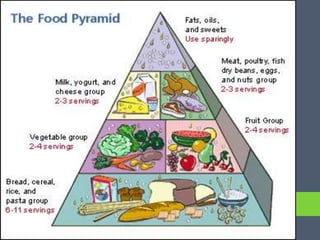
What to eat
Limit Mobile use
Be with friends…
Be happy and laugh for No reason
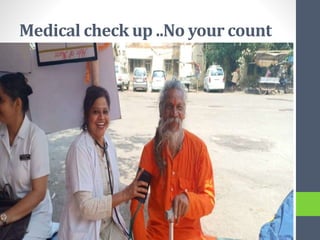
Medical check up ..No your count
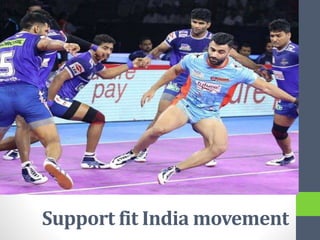
Support fit India movement
THANK YOU
Take Home message

Ppt on fit india movement

Editor's Notes

  • #11 The minimum exercise recommendation for adults is 150 minutes of moderate-intensity aerobic activity each week. If you exercise vigorously, 75 minutes weekly is required. You can break the exercise requirement down into chunks as small as ten minutes. As long as the cumulative amount over the week adds up to 150 minutes, you’re in good shape (no pun intended!). In addition to exercises that increase your heart rate (aerobic), you also should try to strength train at least twice a week, performing strengthening exercises for each major muscle group. These exercises might involve dumbbells, ankle weights, stretch tubes or resistance bands, or even your own body weight. Exercises like squats, lunges, and push-ups are examples of moves using your own body weight for resistance. Strength training is often referred to as resistance training. If you’re an older adult (those age 60 and older are usually said to fall in this category), balance exercises are also important. These exercises will help to prevent falls, and the broken bones and disability that often result from falls. Examples: walking heel-to-toe and standing on one leg.

  • #17 You may have heard people described as having a pear-shaped body, or a body shaped like an apple. When it comes to health, where you wear extra body fat makes a difference. All fat is not created equal.
  • #18 Risk for disease, like heart disease, increases when extra fat is carried around the mid-section (like an apple). In comparison, fat carried in the hips and lower body (like a pear) is associated with lower risk.
  • #19 It’s often said that it’s what’s on the inside that counts. That is absolutely true, even with where you carry extra body fat Some people may be carrying hidden fat. Some fat you can see—this is called subcutaneous fat. But there is another, more dangerous type of fat—visceral fat—which is underneath the muscle, surrounding your organs. Carrying extra fat in the belly puts you at increased risk for diabetes and heart disease. But studies suggest that exercise, even if you don’t lose any weight, can help to reduce this risk by reducing inflammation (obese people have higher levels of circulating inflammatory markers, like CRP—C-reactive protein—which are produced and secreted by fat tissue. The inflammation triggers the diseases associated with metabolic disorder, like diabetes and heart disease). You can literally look slim but be fat on the inside. Stress can be a factor affecting storage of this visceral or internal fat in the body. Visceral fat is harder to lose than subcutaneous fat. Subcutaneous—on the surface; fat you can pinch Visceral—on the inside; “invisible” or “vicious”
  • #22 One of the most important calls a tobacco user can make is to the Arkansas Tobacco Quit line at 1-800-QUIT-NOW (1-800-784-8669). It is confidential, and it is free. When tobacco users call, they will receive: Free, confidential, non-judgmental expert support from a Quit Coach® to help make a plan to quit tobacco. Ongoing Quit Coach® support via phone or online, tailored to the specific needs of all tobacco users, including smokeless tobacco users. Women who are pregnant are eligible for a specialized cessation program with additional benefits. Unlimited access to Web Coach™, an interactive, online community that offers tools to quit, social support and information about quitting. Customized, motivational e-mails sent throughout the quitting process. Help with identifying the best cessation aid, as well as dose and duration. Some aids can be mailed directly to the tobacco user’s home, including free patches and lozenges (while supplies last). Referral to local community resources and/or benefits offered through employers or health plans. Printed Quit Guides – a series of workbooks that offer guidance and support throughout the quitting process. The Arkansas Tobacco Quit line is available seven days a week, 24 hours a day. Services are available in English, Spanish and additional languages as needed, including Marshallese.