Physical Activity And Exercise Keep The
Heart Beating
Presenter : Kaushal Dave, Dr.R.M.L.Hospital, New Delhi
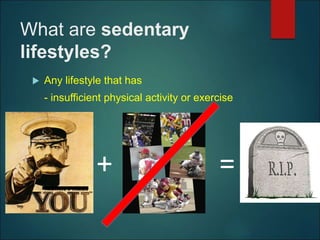
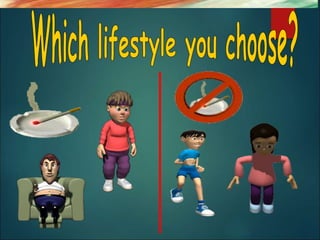
What are sedentary
lifestyles?
 Any lifestyle that has
- insufficient physical activity or exercise
+ =
WHY????????
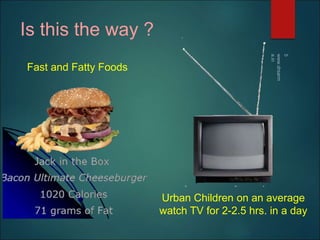
Is this the way ?
Urban Children on an average
watch TV for 2-2.5 hrs. in a day
Fast and Fatty Foods
Paradigm shift in work
culture
 Automation
 Techno savvy
Families…
Farming Desk jobs
Families…
Household chores Home appliances
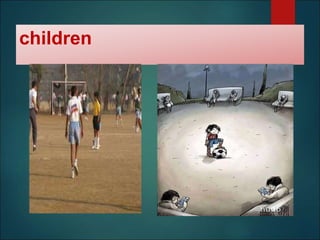
children
EPIDEMIOLOGY: The INDIAN
SCENARIO
It’s Crazyto be Lazy…
“
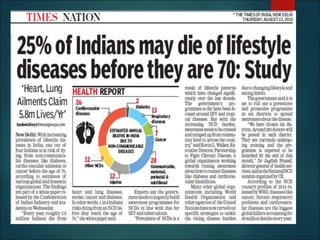
WHO: ~ 2 million deaths per year
can be attributed to sedentary life style
due to increased co-morbidities.
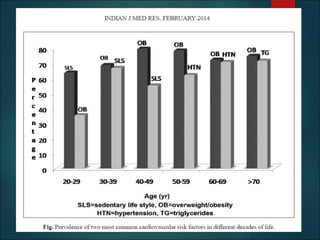
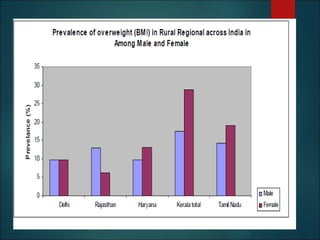
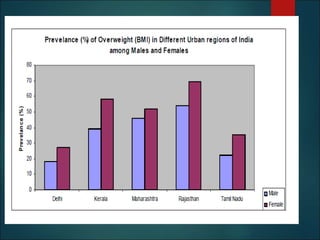
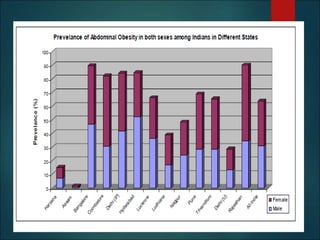
 The prevalence of overweight rose from 2% to
17.1% in rural India due to changing life style.
 The prevalence of overweight in 14 to 17
years old school children has increased
significantly from 10% in 2006-2007 to
12% in 2009, while those underweight
decreased in Delhi.
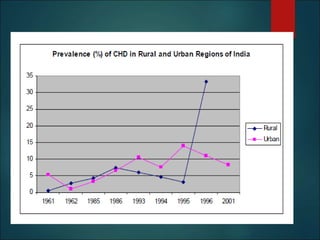
CADI is ‘Malignant’
• CADI strikes early !
• CADI strikes hard !!
• CADI strikes almost any one !!!
• CADI strikes unexpectedly !!!!
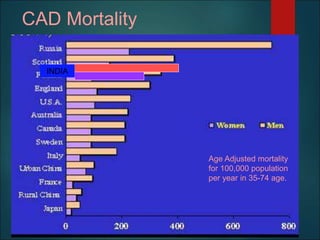
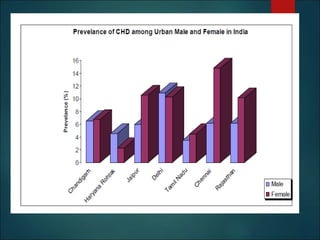
CAD Mortality
Age Adjusted mortality
for 100,000 population
per year in 35-74 age.
INDIA
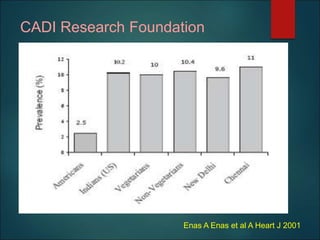
CADI Research Foundation
Enas A Enas et al A Heart J 2001
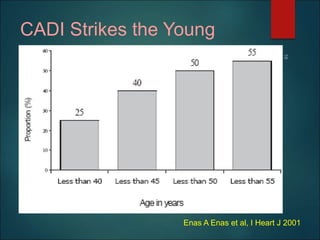
CADI Strikes the Young
Enas A Enas et al, I Heart J 2001
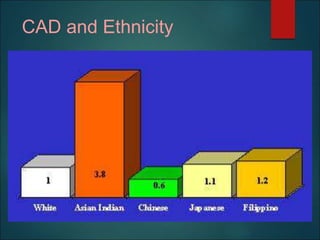
CAD and Ethnicity
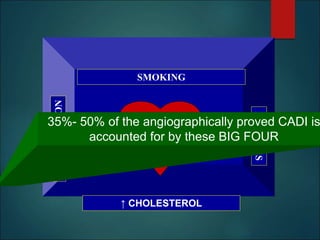
HYPERTENSION
DIABETES
↑ CHOLESTEROL
SMOKING
HEART
ATTACK
35%- 50% of the angiographically proved CADI is
accounted for by these BIG FOUR
And
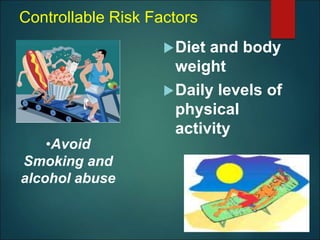
Controllable Risk Factors
Diet and body
weight
Daily levels of
physical
activity
•Avoid
Smoking and
alcohol abuse
PREVENTION
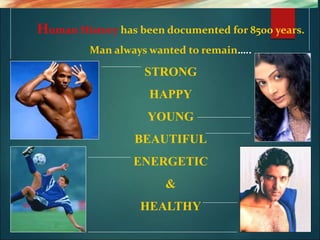
Human History has been documented for 8500 years.
Man always wanted to remain…..
STRONG
HAPPY
YOUNG
BEAUTIFUL
ENERGETIC
&
HEALTHY
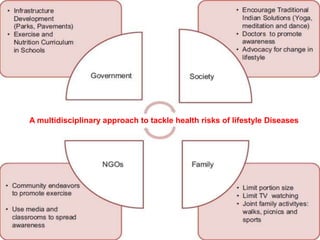
A multidisciplinary approach to tackle health risks of lifestyle Diseases
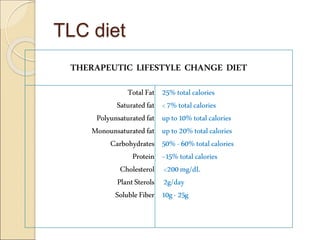
TLC diet
THERAPEUTIC LIFESTYLE CHANGE DIET
TotalFat
Saturatedfat
Polyunsaturatedfat
Monounsaturated fat
Carbohydrates
Protein
Cholesterol
PlantSterols
SolubleFiber
25%total calories
<7%totalcalories
upto10%total calories
upto20%totalcalories
50%-60%total calories
~15%totalcalories
<200mg/dL
2g/day
10g-25g
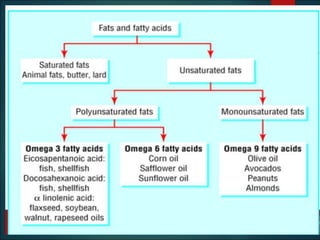
Good foods
 Fish – such as mackerel, sardines, tuna and
salmon which contain omega-3 fatty acids.

 Some vegetables oils – such as corn, soy
and safflower, which contain omega-6 fatty
acids, and those containing omega-3 fatty
acids such as canola and olive oil.
 Fruits and vegetables
 Garlic
Tea –The antioxidants may act as an anti-blood
clotting agent and improve blood vessel dilation to
allow increased blood flow.
Alcohol – it is thought that a moderate intake of alcohol
may have some potential health benefits. For example,
some types of alcohol (such as red wine) may contain
protective factors like antioxidants, although this is still
being researched.
Fiber
Nuts and seeds
Physically active lifestyle
Physical activity simply means
movement of the body that uses
energy.
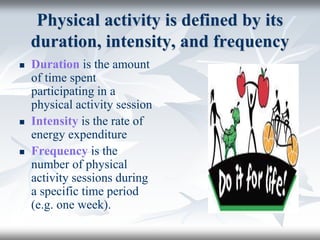
Physical activity is defined by its
duration, intensity, and frequency
 Duration is the amount
of time spent
participating in a
physical activity session
 Intensity is the rate of
energy expenditure
 Frequency is the
number of physical
activity sessions during
a specific time period
(e.g. one week).
Barriers to Getting Physically Active
1. “I’ve got other priorities at the top of my
list.”
2. “My environment keeps me from
exercising.”
3. “None of my friends or family exercise.”
4. “The weather is terrible, I can’t possibly
exercise in this heat/cold.”
5. “I just don’t have the time.”
The Five Stages
of Change
Stage 1. Nope…Not interested in changing
now.
Stage 2. Hmm…I’m giving change serious
consideration.
Stage 3. Yep…I’m getting ready to
change…soon.
Stage 4. Let’s go…I’m taking action.
Stage 5. Old news…I’ve been doing this for a
long time.
5 reasons why
Physical Activity
is important
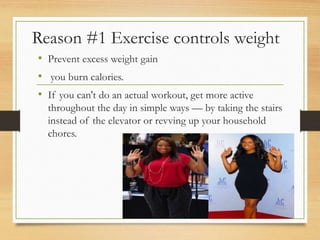
Reason #1 Exercise controls weight
• Prevent excess weight gain
• you burn calories.
• If you can't do an actual workout, get more active
throughout the day in simple ways — by taking the stairs
instead of the elevator or revving up your household
chores.
Reason #2 Exercise combats
health conditions and diseases
• Regular physical activity can help you prevent or manage
a wide range of health problems and concerns, including
stroke, metabolic syndrome, type 2 diabetes, depression,
certain types of cancer, arthritis.
Reason #3 Exercise improves mood
• Need an emotional lift? Or need to blow off some
steam after a stressful day? A workout at the gym or a
brisk 30-minute walk can help.
• Physical activity stimulates various brain chemicals that
may leave you feeling happier and more relaxed.
• You may also feel better about your appearance and
yourself when you exercise regularly, which can boost
your confidence and improve your self-esteem.
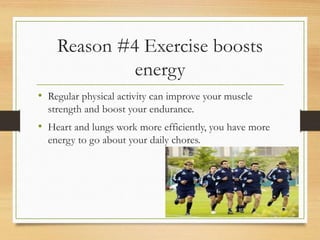
Reason #4 Exercise boosts
energy
• Regular physical activity can improve your muscle
strength and boost your endurance.
• Heart and lungs work more efficiently, you have more
energy to go about your daily chores.
Reason #5 Exercise promotes
better sleep
• Regular physical activity can help you fall asleep faster
and deepen your sleep.
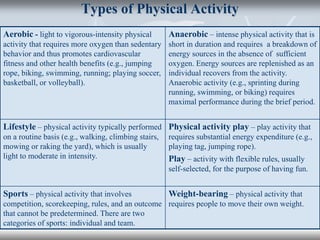
Types of Physical Activity
Aerobic - light to vigorous-intensity physical
activity that requires more oxygen than sedentary
behavior and thus promotes cardiovascular
fitness and other health benefits (e.g., jumping
rope, biking, swimming, running; playing soccer,
basketball, or volleyball).
Anaerobic – intense physical activity that is
short in duration and requires a breakdown of
energy sources in the absence of sufficient
oxygen. Energy sources are replenished as an
individual recovers from the activity.
Anaerobic activity (e.g., sprinting during
running, swimming, or biking) requires
maximal performance during the brief period.
Lifestyle – physical activity typically performed
on a routine basis (e.g., walking, climbing stairs,
mowing or raking the yard), which is usually
light to moderate in intensity.
Physical activity play – play activity that
requires substantial energy expenditure (e.g.,
playing tag, jumping rope).
Play – activity with flexible rules, usually
self-selected, for the purpose of having fun.
Sports – physical activity that involves
competition, scorekeeping, rules, and an outcome
that cannot be predetermined. There are two
categories of sports: individual and team.
Weight-bearing – physical activity that
requires people to move their own weight.
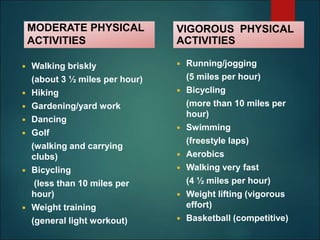
MODERATE PHYSICAL
ACTIVITIES
VIGOROUS PHYSICAL
ACTIVITIES
 Running/jogging
(5 miles per hour)
 Bicycling
(more than 10 miles per
hour)
 Swimming
(freestyle laps)
 Aerobics
 Walking very fast
(4 ½ miles per hour)
 Weight lifting (vigorous
effort)
 Basketball (competitive)
 Walking briskly
(about 3 ½ miles per hour)
 Hiking
 Gardening/yard work
 Dancing
 Golf
(walking and carrying
clubs)
 Bicycling
(less than 10 miles per
hour)
 Weight training
(general light workout)
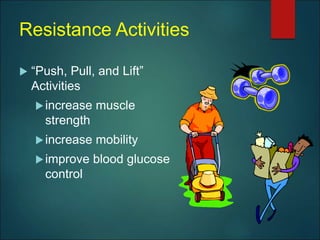
Resistance Activities
 “Push, Pull, and Lift”
Activities
increase muscle
strength
increase mobility
improve blood glucose
control
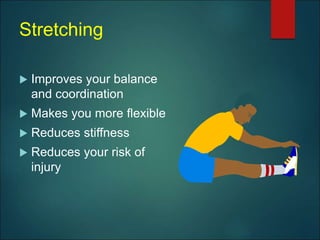
Stretching
 Improves your balance
and coordination
 Makes you more flexible
 Reduces stiffness
 Reduces your risk of
injury
Start Slowly
 Set short-term goal
for one week
 Do less than you
think you can
No Pain
No Gain
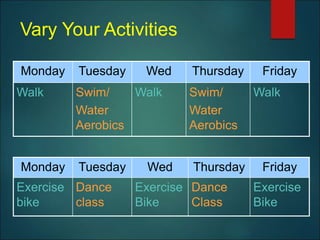
Vary Your Activities
Monday Tuesday Wed Thursday Friday
Walk Swim/
Water
Aerobics
Walk Swim/
Water
Aerobics
Walk
Monday Tuesday Wed Thursday Friday
Exercise
bike
Dance
class
Exercise
Bike
Dance
Class
Exercise
Bike
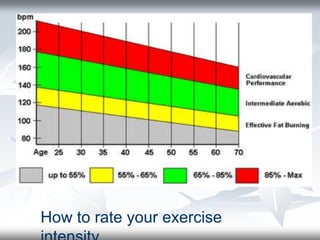
How to rate your exercise
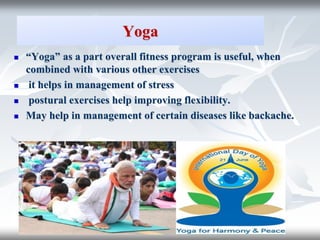
Yoga
 “Yoga” as a part overall fitness program is useful, when
combined with various other exercises
 it helps in management of stress
 postural exercises help improving flexibility.
 May help in management of certain diseases like backache.
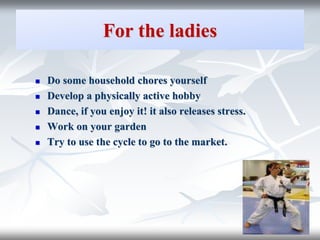
For the ladies
 Do some household chores yourself
 Develop a physically active hobby
 Dance, if you enjoy it! it also releases stress.
 Work on your garden
 Try to use the cycle to go to the market.
Summary
 By maintaining our life style i.e. dietary practices, regular
exercise, smoking cessation and adequate sleep, we can
prevent various life style diseases.
 Practitioners can assist patients with maintaining healthy
behaviors by providing targeted support.
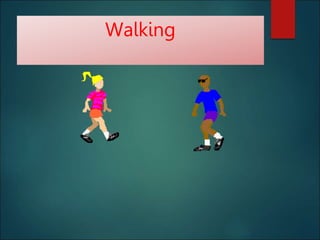
Walking
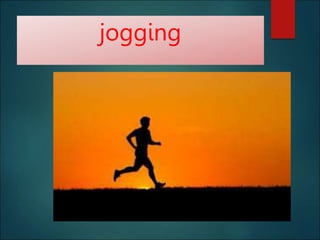
jogging
gardening
Washing clothes
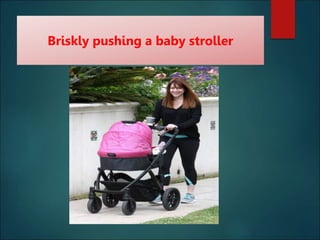
Briskly pushing a baby stroller
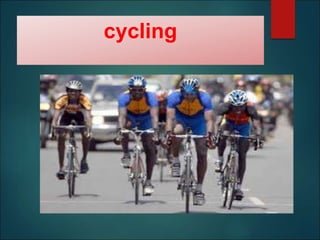
cycling
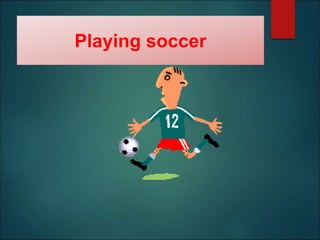
Playing soccer
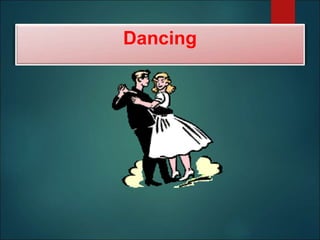
Dancing
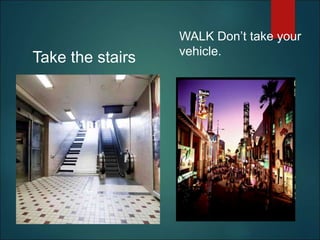
Take the stairs
WALK Don’t take your
vehicle.
Are all good examples
of staying physically
active
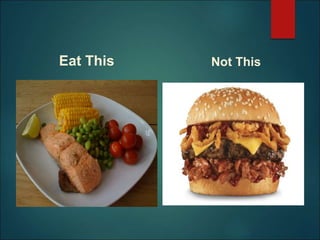
Eat This Not This
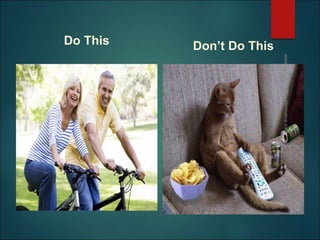
Do This Don’t Do This
www.AgingBeatsTheAlternative.com
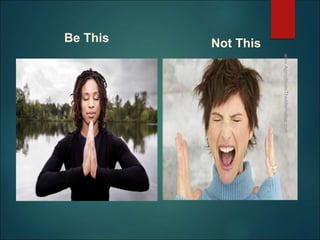
Be This Not This
www.AgingBeatsTheAlternative.com
Physical_Activity_-_KAUSHAL_(2).ppt

Physical_Activity_-_KAUSHAL_(2).ppt

  • 1.
    Physical Activity AndExercise Keep The Heart Beating Presenter : Kaushal Dave, Dr.R.M.L.Hospital, New Delhi
  • 3.
    What are sedentary lifestyles? Any lifestyle that has - insufficient physical activity or exercise + =
  • 4.
  • 5.
    Is this theway ? Urban Children on an average watch TV for 2-2.5 hrs. in a day Fast and Fatty Foods
  • 6.
    Paradigm shift inwork culture  Automation  Techno savvy
  • 7.
  • 8.
  • 9.
  • 11.
    EPIDEMIOLOGY: The INDIAN SCENARIO It’sCrazyto be Lazy… “ WHO: ~ 2 million deaths per year can be attributed to sedentary life style due to increased co-morbidities.
  • 12.
     The prevalenceof overweight rose from 2% to 17.1% in rural India due to changing life style.  The prevalence of overweight in 14 to 17 years old school children has increased significantly from 10% in 2006-2007 to 12% in 2009, while those underweight decreased in Delhi.
  • 13.
    CADI is ‘Malignant’ •CADI strikes early ! • CADI strikes hard !! • CADI strikes almost any one !!! • CADI strikes unexpectedly !!!!
  • 14.
    CAD Mortality Age Adjustedmortality for 100,000 population per year in 35-74 age. INDIA
  • 15.
    CADI Research Foundation EnasA Enas et al A Heart J 2001
  • 16.
    CADI Strikes theYoung Enas A Enas et al, I Heart J 2001
  • 17.
  • 18.
    HYPERTENSION DIABETES ↑ CHOLESTEROL SMOKING HEART ATTACK 35%- 50%of the angiographically proved CADI is accounted for by these BIG FOUR
  • 26.
  • 27.
    Controllable Risk Factors Dietand body weight Daily levels of physical activity •Avoid Smoking and alcohol abuse
  • 28.
  • 29.
    Human History hasbeen documented for 8500 years. Man always wanted to remain….. STRONG HAPPY YOUNG BEAUTIFUL ENERGETIC & HEALTHY
  • 30.
    A multidisciplinary approachto tackle health risks of lifestyle Diseases
  • 34.
    TLC diet THERAPEUTIC LIFESTYLECHANGE DIET TotalFat Saturatedfat Polyunsaturatedfat Monounsaturated fat Carbohydrates Protein Cholesterol PlantSterols SolubleFiber 25%total calories <7%totalcalories upto10%total calories upto20%totalcalories 50%-60%total calories ~15%totalcalories <200mg/dL 2g/day 10g-25g
  • 35.
    Good foods  Fish– such as mackerel, sardines, tuna and salmon which contain omega-3 fatty acids.   Some vegetables oils – such as corn, soy and safflower, which contain omega-6 fatty acids, and those containing omega-3 fatty acids such as canola and olive oil.  Fruits and vegetables  Garlic
  • 36.
    Tea –The antioxidantsmay act as an anti-blood clotting agent and improve blood vessel dilation to allow increased blood flow. Alcohol – it is thought that a moderate intake of alcohol may have some potential health benefits. For example, some types of alcohol (such as red wine) may contain protective factors like antioxidants, although this is still being researched. Fiber Nuts and seeds
  • 37.
    Physically active lifestyle Physicalactivity simply means movement of the body that uses energy.
  • 38.
    Physical activity isdefined by its duration, intensity, and frequency  Duration is the amount of time spent participating in a physical activity session  Intensity is the rate of energy expenditure  Frequency is the number of physical activity sessions during a specific time period (e.g. one week).
  • 39.
    Barriers to GettingPhysically Active 1. “I’ve got other priorities at the top of my list.” 2. “My environment keeps me from exercising.” 3. “None of my friends or family exercise.” 4. “The weather is terrible, I can’t possibly exercise in this heat/cold.” 5. “I just don’t have the time.”
  • 40.
    The Five Stages ofChange Stage 1. Nope…Not interested in changing now. Stage 2. Hmm…I’m giving change serious consideration. Stage 3. Yep…I’m getting ready to change…soon. Stage 4. Let’s go…I’m taking action. Stage 5. Old news…I’ve been doing this for a long time.
  • 41.
    5 reasons why PhysicalActivity is important
  • 42.
    Reason #1 Exercisecontrols weight • Prevent excess weight gain • you burn calories. • If you can't do an actual workout, get more active throughout the day in simple ways — by taking the stairs instead of the elevator or revving up your household chores.
  • 43.
    Reason #2 Exercisecombats health conditions and diseases • Regular physical activity can help you prevent or manage a wide range of health problems and concerns, including stroke, metabolic syndrome, type 2 diabetes, depression, certain types of cancer, arthritis.
  • 44.
    Reason #3 Exerciseimproves mood • Need an emotional lift? Or need to blow off some steam after a stressful day? A workout at the gym or a brisk 30-minute walk can help. • Physical activity stimulates various brain chemicals that may leave you feeling happier and more relaxed. • You may also feel better about your appearance and yourself when you exercise regularly, which can boost your confidence and improve your self-esteem.
  • 45.
    Reason #4 Exerciseboosts energy • Regular physical activity can improve your muscle strength and boost your endurance. • Heart and lungs work more efficiently, you have more energy to go about your daily chores.
  • 46.
    Reason #5 Exercisepromotes better sleep • Regular physical activity can help you fall asleep faster and deepen your sleep.
  • 47.
    Types of PhysicalActivity Aerobic - light to vigorous-intensity physical activity that requires more oxygen than sedentary behavior and thus promotes cardiovascular fitness and other health benefits (e.g., jumping rope, biking, swimming, running; playing soccer, basketball, or volleyball). Anaerobic – intense physical activity that is short in duration and requires a breakdown of energy sources in the absence of sufficient oxygen. Energy sources are replenished as an individual recovers from the activity. Anaerobic activity (e.g., sprinting during running, swimming, or biking) requires maximal performance during the brief period. Lifestyle – physical activity typically performed on a routine basis (e.g., walking, climbing stairs, mowing or raking the yard), which is usually light to moderate in intensity. Physical activity play – play activity that requires substantial energy expenditure (e.g., playing tag, jumping rope). Play – activity with flexible rules, usually self-selected, for the purpose of having fun. Sports – physical activity that involves competition, scorekeeping, rules, and an outcome that cannot be predetermined. There are two categories of sports: individual and team. Weight-bearing – physical activity that requires people to move their own weight.
  • 48.
    MODERATE PHYSICAL ACTIVITIES VIGOROUS PHYSICAL ACTIVITIES Running/jogging (5 miles per hour)  Bicycling (more than 10 miles per hour)  Swimming (freestyle laps)  Aerobics  Walking very fast (4 ½ miles per hour)  Weight lifting (vigorous effort)  Basketball (competitive)  Walking briskly (about 3 ½ miles per hour)  Hiking  Gardening/yard work  Dancing  Golf (walking and carrying clubs)  Bicycling (less than 10 miles per hour)  Weight training (general light workout)
  • 49.
    Resistance Activities  “Push,Pull, and Lift” Activities increase muscle strength increase mobility improve blood glucose control
  • 50.
    Stretching  Improves yourbalance and coordination  Makes you more flexible  Reduces stiffness  Reduces your risk of injury
  • 51.
    Start Slowly  Setshort-term goal for one week  Do less than you think you can No Pain No Gain
  • 52.
    Vary Your Activities MondayTuesday Wed Thursday Friday Walk Swim/ Water Aerobics Walk Swim/ Water Aerobics Walk Monday Tuesday Wed Thursday Friday Exercise bike Dance class Exercise Bike Dance Class Exercise Bike
  • 53.
    How to rateyour exercise
  • 54.
    Yoga  “Yoga” asa part overall fitness program is useful, when combined with various other exercises  it helps in management of stress  postural exercises help improving flexibility.  May help in management of certain diseases like backache.
  • 55.
    For the ladies Do some household chores yourself  Develop a physically active hobby  Dance, if you enjoy it! it also releases stress.  Work on your garden  Try to use the cycle to go to the market.
  • 58.
    Summary  By maintainingour life style i.e. dietary practices, regular exercise, smoking cessation and adequate sleep, we can prevent various life style diseases.  Practitioners can assist patients with maintaining healthy behaviors by providing targeted support.
  • 59.
  • 60.
  • 61.
  • 62.
  • 63.
    Briskly pushing ababy stroller
  • 64.
  • 65.
  • 66.
  • 67.
    Take the stairs WALKDon’t take your vehicle.
  • 68.
    Are all goodexamples of staying physically active
  • 69.
  • 70.
    Do This Don’tDo This www.AgingBeatsTheAlternative.com
  • 71.
    Be This NotThis www.AgingBeatsTheAlternative.com