Lifestyle Disorders
Kaizen hospital
132 feet ring road, near helmet circle,
Memnagar, Ahmedabad - 380052
Gujarat, India
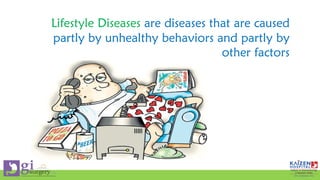
Lifestyle Diseases are diseases that are caused
partly by unhealthy behaviors and partly by
other factors
WHO list of most common Lifestyle Diseases
• CVDs
• Diabetes Mellitus
• COPD
• Cancer
• Asthma
• Disease of Digestive System (Peptic Ulcers, GERD)
• Genitourinary Conditions (Nephritis, CKD)
• Neuro-Psychiatric Disorders (Depression, Anxiety, Stress)
Top 4 Lifestyle Diseases in India
Modifiable Risk Factors
Habits, Behaviors & Practices that we can change
• Diet & Body weight
• Level of physical activity
• Level of sun exposure
• Smoking & Alcohol abuse
• Stress & other Psychological factors
Non-Modifiable Risk Factors
• Age
• Gender
• Ethnicity
• Heredity
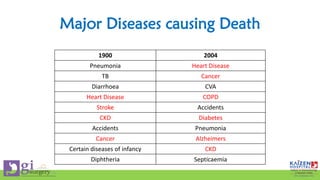
Major Diseases causing Death
1900 2004
Pneumonia Heart Disease
TB Cancer
Diarrhoea CVA
Heart Disease COPD
Stroke Accidents
CKD Diabetes
Accidents Pneumonia
Cancer Alzheimers
Certain diseases of infancy CKD
Diphtheria Septicaemia
Paradigm Shift in House Culture
Household Chores Home Appliances
Field Works Desk Jobs
Paradigm Shift in Work Culture
Outdoor Play Indoor Play
Paradigm Shift in Play Culture
Healthy Foods Junk Foods
Paradigm Shift in Food Culture
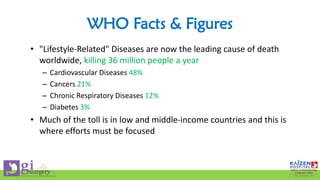
WHO Facts & Figures
• "Lifestyle-Related" Diseases are now the leading cause of death
worldwide, killing 36 million people a year
– Cardiovascular Diseases 48%
– Cancers 21%
– Chronic Respiratory Diseases 12%
– Diabetes 3%
• Much of the toll is in low and middle-income countries and this is
where efforts must be focused
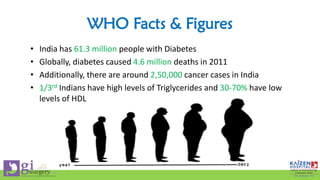
WHO Facts & Figures
• India has 61.3 million people with Diabetes
• Globally, diabetes caused 4.6 million deaths in 2011
• Additionally, there are around 2,50,000 cancer cases in India
• 1/3rd Indians have high levels of Triglycerides and 30-70% have low
levels of HDL
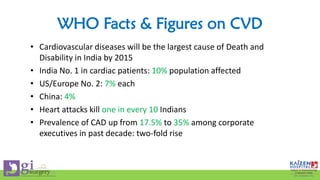
WHO Facts & Figures on CVD
• Cardiovascular diseases will be the largest cause of Death and
Disability in India by 2015
• India No. 1 in cardiac patients: 10% population affected
• US/Europe No. 2: 7% each
• China: 4%
• Heart attacks kill one in every 10 Indians
• Prevalence of CAD up from 17.5% to 35% among corporate
executives in past decade: two-fold rise
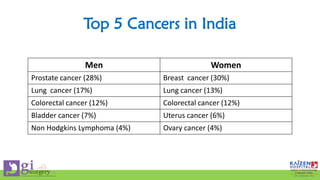
Top 5 Cancers in India
Men Women
Prostate cancer (28%) Breast cancer (30%)
Lung cancer (17%) Lung cancer (13%)
Colorectal cancer (12%) Colorectal cancer (12%)
Bladder cancer (7%) Uterus cancer (6%)
Non Hodgkins Lymphoma (4%) Ovary cancer (4%)
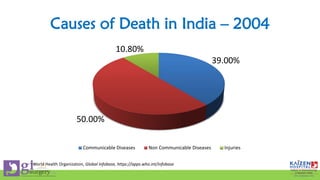
Causes of Death in India – 2004
39.00%
50.00%
10.80%
Communicable Diseases Non Communicable Diseases Injuries
*World Health Organization, Global Infobase, https://apps.who.int/infobase
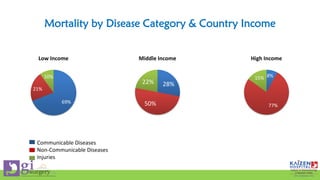
Mortality by Disease Category & Country Income
69%
21%
10%
Low Income
28%
50%
22%
Middle Income
8%
77%
15%
High Income
Communicable Diseases
Non-Communicable Diseases
Injuries
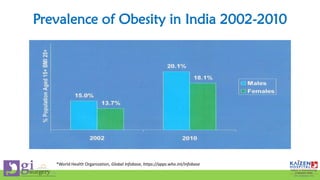
Prevalence of Obesity in India 2002-2010
*World Health Organization, Global Infobase, https://apps.who.int/infobase
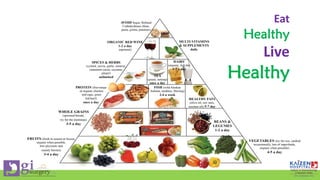
Eat
Healthy
Live
Healthy
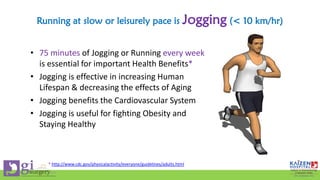
Running at slow or leisurely pace is Jogging (< 10 km/hr)
• 75 minutes of Jogging or Running every week
is essential for important Health Benefits*
• Jogging is effective in increasing Human
Lifespan & decreasing the effects of Aging
• Jogging benefits the Cardiovascular System
• Jogging is useful for fighting Obesity and
Staying Healthy
* http://www.cdc.gov/physicalactivity/everyone/guidelines/adults.html
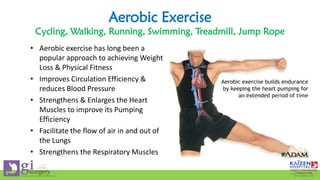
Aerobic Exercise
Cycling, Walking, Running, Swimming, Treadmill, Jump Rope
• Aerobic exercise has long been a
popular approach to achieving Weight
Loss & Physical Fitness
• Improves Circulation Efficiency &
reduces Blood Pressure
• Strengthens & Enlarges the Heart
Muscles to improve its Pumping
Efficiency
• Facilitate the flow of air in and out of
the Lungs
• Strengthens the Respiratory Muscles
• During Anaerobic exercise the body’s
requirement for energy exceeds that provided by
breathing
• To promote Strength, Speed, Power & to build
Muscle Mass
• Leading to greater performance & high intensity
activities in short duration (few seconds to 2
min)
• Power-Lifting, Sprinting
• Use of Oxygen to adequately meet energy
demands during exercise via Aerobic Metabolism
• For Weight Loss, Physical Fitness & Agility
• Leading to light-to-moderate intensity activities
for extended periods of time
• Cycling, Running, Jogging, Treadmill, Swimming
Aerobic Exercise Anaerobic Exercise
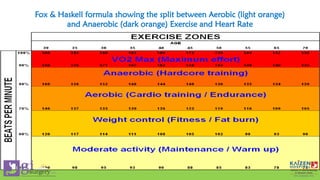
Fox & Haskell formula showing the split between Aerobic (light orange)
and Anaerobic (dark orange) Exercise and Heart Rate
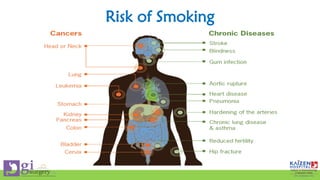
Risk of Smoking
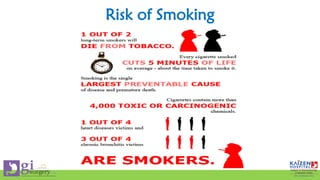
Risk of Smoking
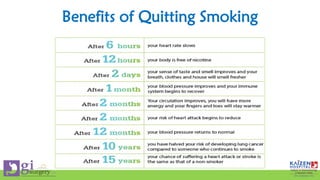
Benefits of Quitting Smoking
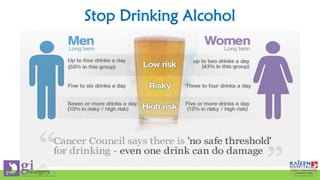
Stop Drinking Alcohol
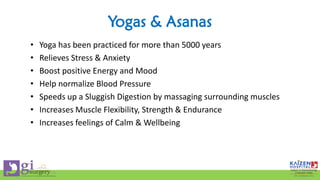
Yogas & Asanas
• Yoga has been practiced for more than 5000 years
• Relieves Stress & Anxiety
• Boost positive Energy and Mood
• Help normalize Blood Pressure
• Speeds up a Sluggish Digestion by massaging surrounding muscles
• Increases Muscle Flexibility, Strength & Endurance
• Increases feelings of Calm & Wellbeing
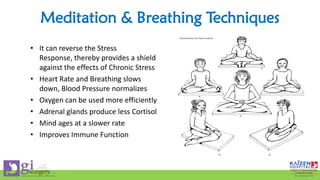
Meditation & Breathing Techniques
• It can reverse the Stress
Response, thereby provides a shield
against the effects of Chronic Stress
• Heart Rate and Breathing slows
down, Blood Pressure normalizes
• Oxygen can be used more efficiently
• Adrenal glands produce less Cortisol
• Mind ages at a slower rate
• Improves Immune Function
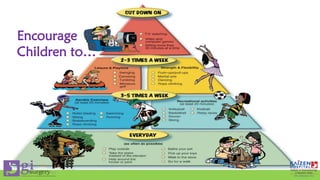
Encourage
Children to…
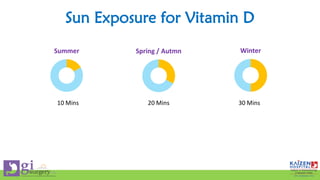
Sun Exposure for Vitamin D
Summer Spring / Autmn Winter
10 Mins 20 Mins 30 Mins
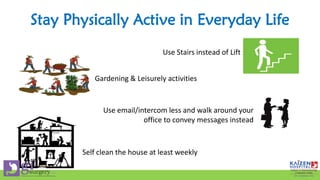
Stay Physically Active in Everyday Life
Use Stairs instead of Lift
Gardening & Leisurely activities
Use email/intercom less and walk around your
office to convey messages instead
Self clean the house at least weekly
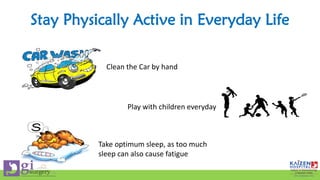
Clean the Car by hand
Stay Physically Active in Everyday Life
Play with children everyday
Take optimum sleep, as too much
sleep can also cause fatigue
Tips to Active Lifestyle
• Incorporate physical activity and exercise into your daily tasks
• Set yourself achievable goals and challenges to stay motivated and rewarded
• Plan and prioritise you activities with rest periods
• Use aids to help you stay physically active and able to do more
• Get a good night’s rest, but avoid sitting or lying still as much as possible during the
day
• Cycling or walking to the local store instead of driving to pick up small items
• Getting off public transport one stop early and walk the extra distance
• Purposefully park your car a little further from the office, mall or store
• Make it fun! Try a new sport like Tennis or Badminton. More you enjoy the
exercise, more likely you are to stick to it
Lifestyle Disorders

Lifestyle Disorders

  • 1.
    Lifestyle Disorders Kaizen hospital 132feet ring road, near helmet circle, Memnagar, Ahmedabad - 380052 Gujarat, India
  • 2.
    Lifestyle Diseases arediseases that are caused partly by unhealthy behaviors and partly by other factors
  • 3.
    WHO list ofmost common Lifestyle Diseases • CVDs • Diabetes Mellitus • COPD • Cancer • Asthma • Disease of Digestive System (Peptic Ulcers, GERD) • Genitourinary Conditions (Nephritis, CKD) • Neuro-Psychiatric Disorders (Depression, Anxiety, Stress) Top 4 Lifestyle Diseases in India
  • 4.
    Modifiable Risk Factors Habits,Behaviors & Practices that we can change • Diet & Body weight • Level of physical activity • Level of sun exposure • Smoking & Alcohol abuse • Stress & other Psychological factors
  • 5.
    Non-Modifiable Risk Factors •Age • Gender • Ethnicity • Heredity
  • 6.
    Major Diseases causingDeath 1900 2004 Pneumonia Heart Disease TB Cancer Diarrhoea CVA Heart Disease COPD Stroke Accidents CKD Diabetes Accidents Pneumonia Cancer Alzheimers Certain diseases of infancy CKD Diphtheria Septicaemia
  • 7.
    Paradigm Shift inHouse Culture Household Chores Home Appliances
  • 8.
    Field Works DeskJobs Paradigm Shift in Work Culture
  • 9.
    Outdoor Play IndoorPlay Paradigm Shift in Play Culture
  • 10.
    Healthy Foods JunkFoods Paradigm Shift in Food Culture
  • 11.
    WHO Facts &Figures • "Lifestyle-Related" Diseases are now the leading cause of death worldwide, killing 36 million people a year – Cardiovascular Diseases 48% – Cancers 21% – Chronic Respiratory Diseases 12% – Diabetes 3% • Much of the toll is in low and middle-income countries and this is where efforts must be focused
  • 12.
    WHO Facts &Figures • India has 61.3 million people with Diabetes • Globally, diabetes caused 4.6 million deaths in 2011 • Additionally, there are around 2,50,000 cancer cases in India • 1/3rd Indians have high levels of Triglycerides and 30-70% have low levels of HDL
  • 13.
    WHO Facts &Figures on CVD • Cardiovascular diseases will be the largest cause of Death and Disability in India by 2015 • India No. 1 in cardiac patients: 10% population affected • US/Europe No. 2: 7% each • China: 4% • Heart attacks kill one in every 10 Indians • Prevalence of CAD up from 17.5% to 35% among corporate executives in past decade: two-fold rise
  • 14.
    Top 5 Cancersin India Men Women Prostate cancer (28%) Breast cancer (30%) Lung cancer (17%) Lung cancer (13%) Colorectal cancer (12%) Colorectal cancer (12%) Bladder cancer (7%) Uterus cancer (6%) Non Hodgkins Lymphoma (4%) Ovary cancer (4%)
  • 15.
    Causes of Deathin India – 2004 39.00% 50.00% 10.80% Communicable Diseases Non Communicable Diseases Injuries *World Health Organization, Global Infobase, https://apps.who.int/infobase
  • 16.
    Mortality by DiseaseCategory & Country Income 69% 21% 10% Low Income 28% 50% 22% Middle Income 8% 77% 15% High Income Communicable Diseases Non-Communicable Diseases Injuries
  • 17.
    Prevalence of Obesityin India 2002-2010 *World Health Organization, Global Infobase, https://apps.who.int/infobase
  • 18.
  • 19.
    Running at slowor leisurely pace is Jogging (< 10 km/hr) • 75 minutes of Jogging or Running every week is essential for important Health Benefits* • Jogging is effective in increasing Human Lifespan & decreasing the effects of Aging • Jogging benefits the Cardiovascular System • Jogging is useful for fighting Obesity and Staying Healthy * http://www.cdc.gov/physicalactivity/everyone/guidelines/adults.html
  • 20.
    Aerobic Exercise Cycling, Walking,Running, Swimming, Treadmill, Jump Rope • Aerobic exercise has long been a popular approach to achieving Weight Loss & Physical Fitness • Improves Circulation Efficiency & reduces Blood Pressure • Strengthens & Enlarges the Heart Muscles to improve its Pumping Efficiency • Facilitate the flow of air in and out of the Lungs • Strengthens the Respiratory Muscles
  • 21.
    • During Anaerobicexercise the body’s requirement for energy exceeds that provided by breathing • To promote Strength, Speed, Power & to build Muscle Mass • Leading to greater performance & high intensity activities in short duration (few seconds to 2 min) • Power-Lifting, Sprinting • Use of Oxygen to adequately meet energy demands during exercise via Aerobic Metabolism • For Weight Loss, Physical Fitness & Agility • Leading to light-to-moderate intensity activities for extended periods of time • Cycling, Running, Jogging, Treadmill, Swimming Aerobic Exercise Anaerobic Exercise
  • 22.
    Fox & Haskellformula showing the split between Aerobic (light orange) and Anaerobic (dark orange) Exercise and Heart Rate
  • 23.
  • 24.
  • 25.
  • 26.
  • 27.
    Yogas & Asanas •Yoga has been practiced for more than 5000 years • Relieves Stress & Anxiety • Boost positive Energy and Mood • Help normalize Blood Pressure • Speeds up a Sluggish Digestion by massaging surrounding muscles • Increases Muscle Flexibility, Strength & Endurance • Increases feelings of Calm & Wellbeing
  • 28.
    Meditation & BreathingTechniques • It can reverse the Stress Response, thereby provides a shield against the effects of Chronic Stress • Heart Rate and Breathing slows down, Blood Pressure normalizes • Oxygen can be used more efficiently • Adrenal glands produce less Cortisol • Mind ages at a slower rate • Improves Immune Function
  • 29.
  • 30.
    Sun Exposure forVitamin D Summer Spring / Autmn Winter 10 Mins 20 Mins 30 Mins
  • 31.
    Stay Physically Activein Everyday Life Use Stairs instead of Lift Gardening & Leisurely activities Use email/intercom less and walk around your office to convey messages instead Self clean the house at least weekly
  • 32.
    Clean the Carby hand Stay Physically Active in Everyday Life Play with children everyday Take optimum sleep, as too much sleep can also cause fatigue
  • 33.
    Tips to ActiveLifestyle • Incorporate physical activity and exercise into your daily tasks • Set yourself achievable goals and challenges to stay motivated and rewarded • Plan and prioritise you activities with rest periods • Use aids to help you stay physically active and able to do more • Get a good night’s rest, but avoid sitting or lying still as much as possible during the day • Cycling or walking to the local store instead of driving to pick up small items • Getting off public transport one stop early and walk the extra distance • Purposefully park your car a little further from the office, mall or store • Make it fun! Try a new sport like Tennis or Badminton. More you enjoy the exercise, more likely you are to stick to it