SUBMITTED TO :DR. SOMESH SHARMA 
Submitted By: Manorma Negi 
Deptt. Of B.tech Foodtechnology 
12ftb(s)034 ,4th semester
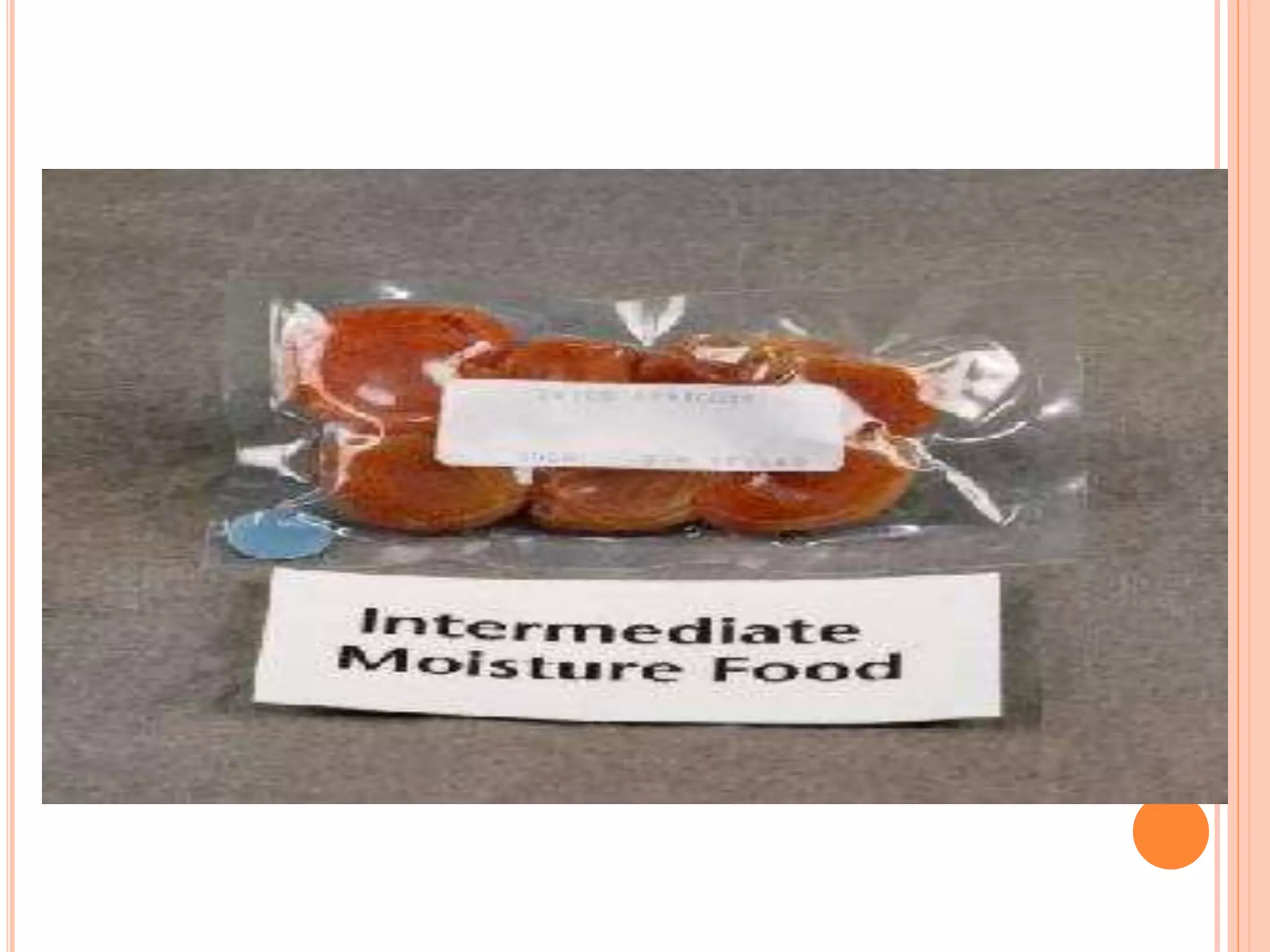
INTERMEDIATE MOISTURE FOODS: 
A food product that has a water 
activity below that which is required 
for the growth of microorganisms; or 
a food containing unavailable 
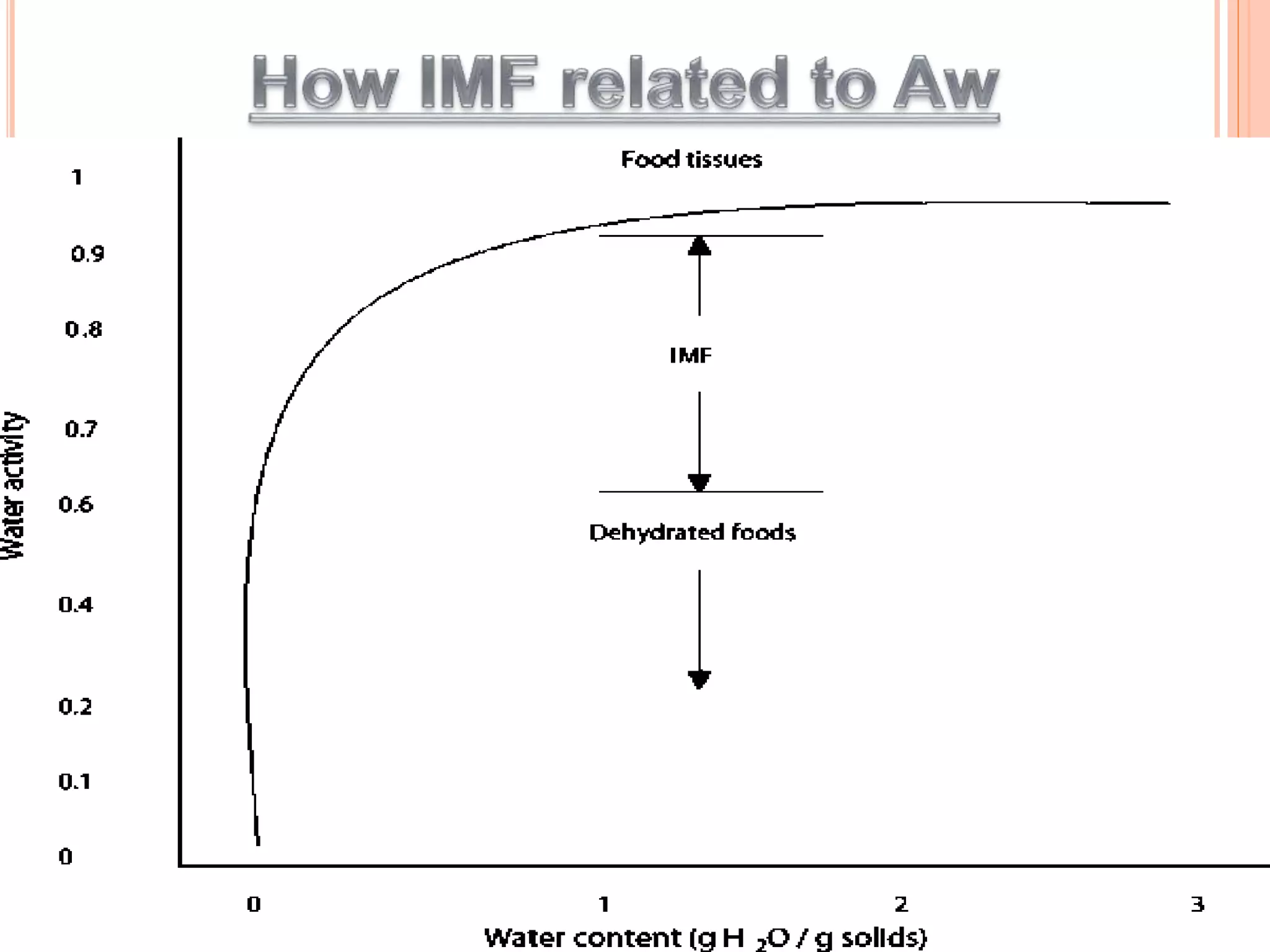
water.IMF foods have water activity 
in B/w 0.6-0.9 or 10 to 50% moisture.
WHAT IS WATER ACTIVITY? 
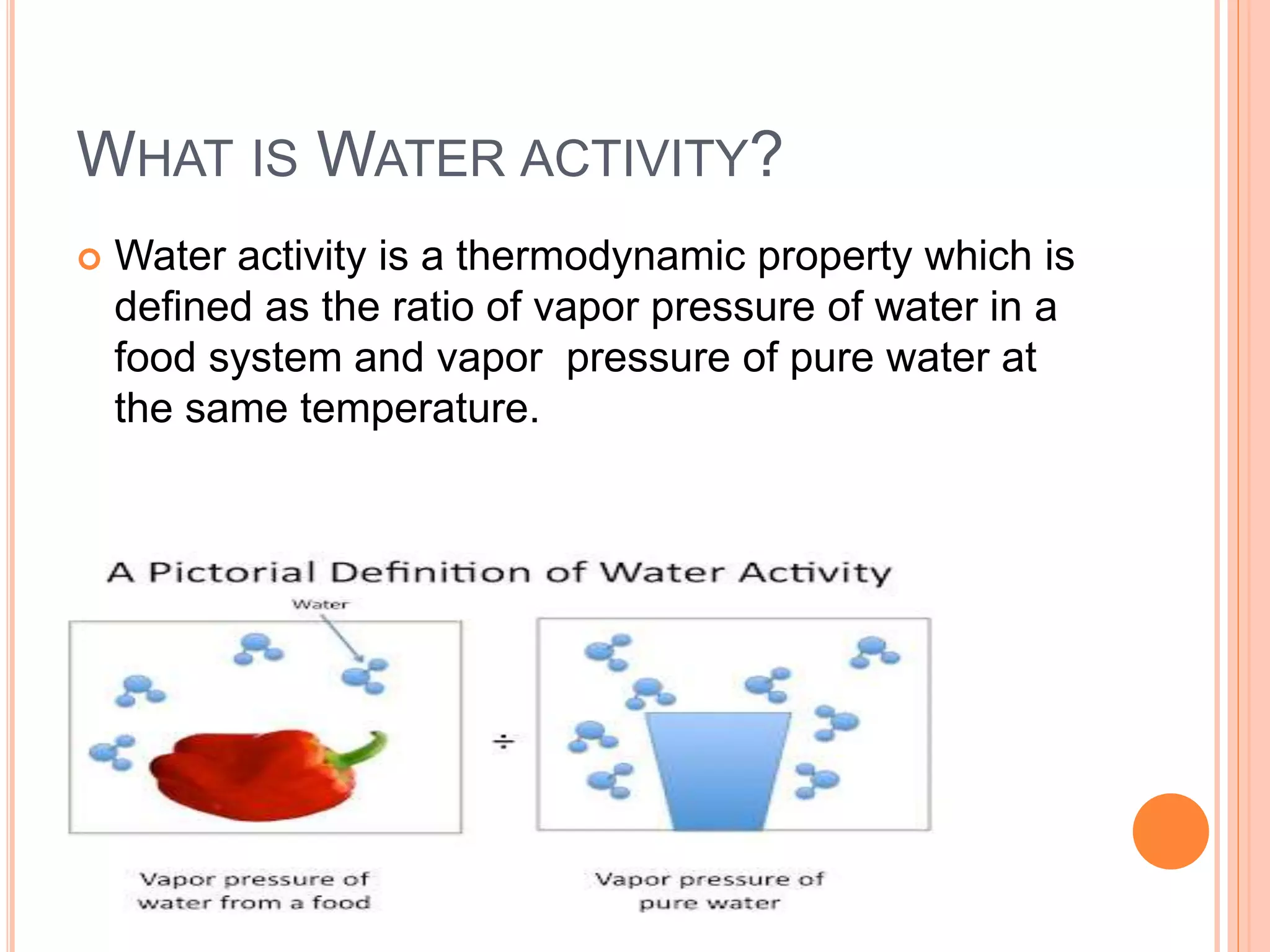
 Water activity is a thermodynamic property which is 
defined as the ratio of vapor pressure of water in a 
food system and vapor pressure of pure water at 
the same temperature.
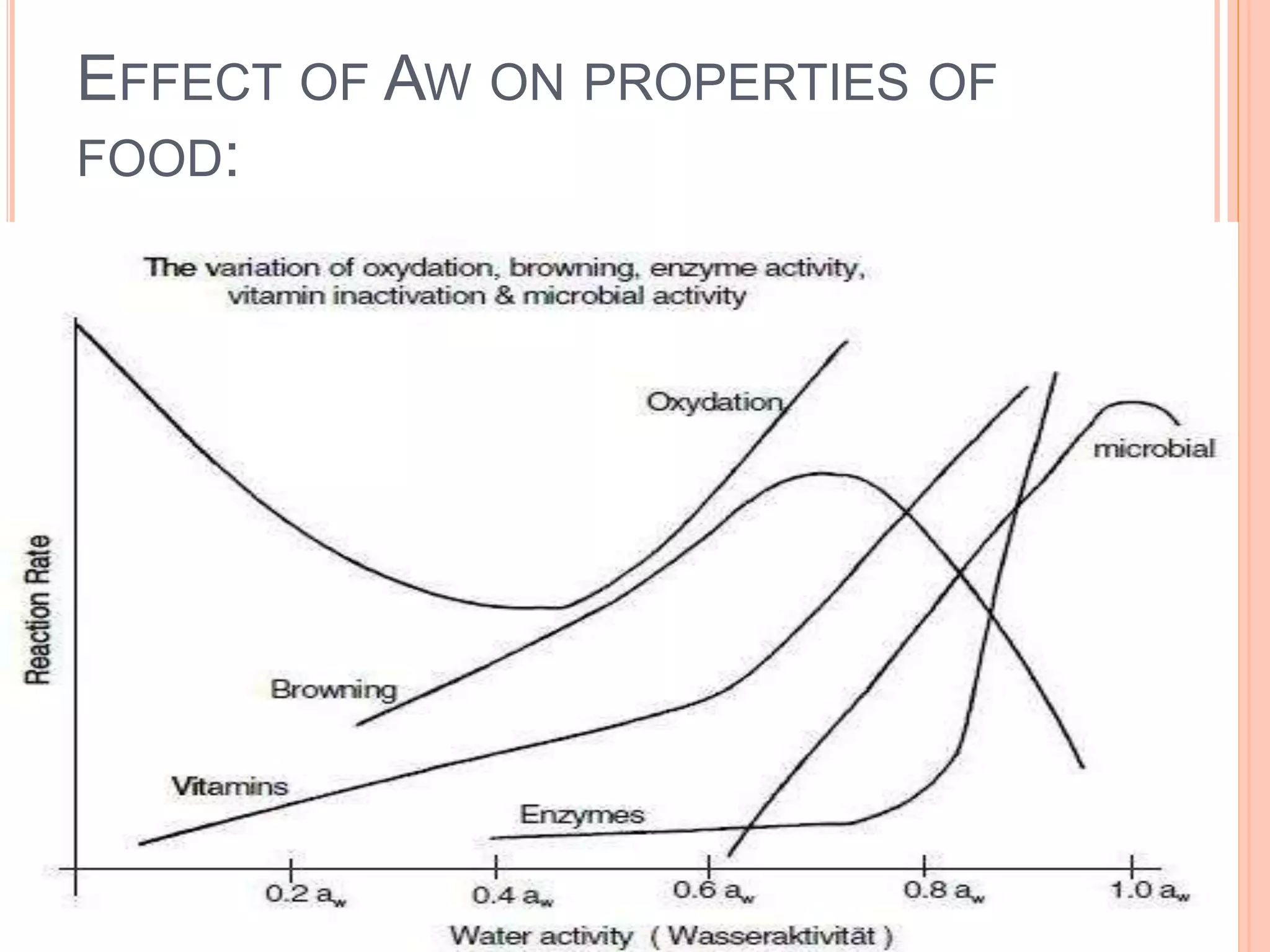
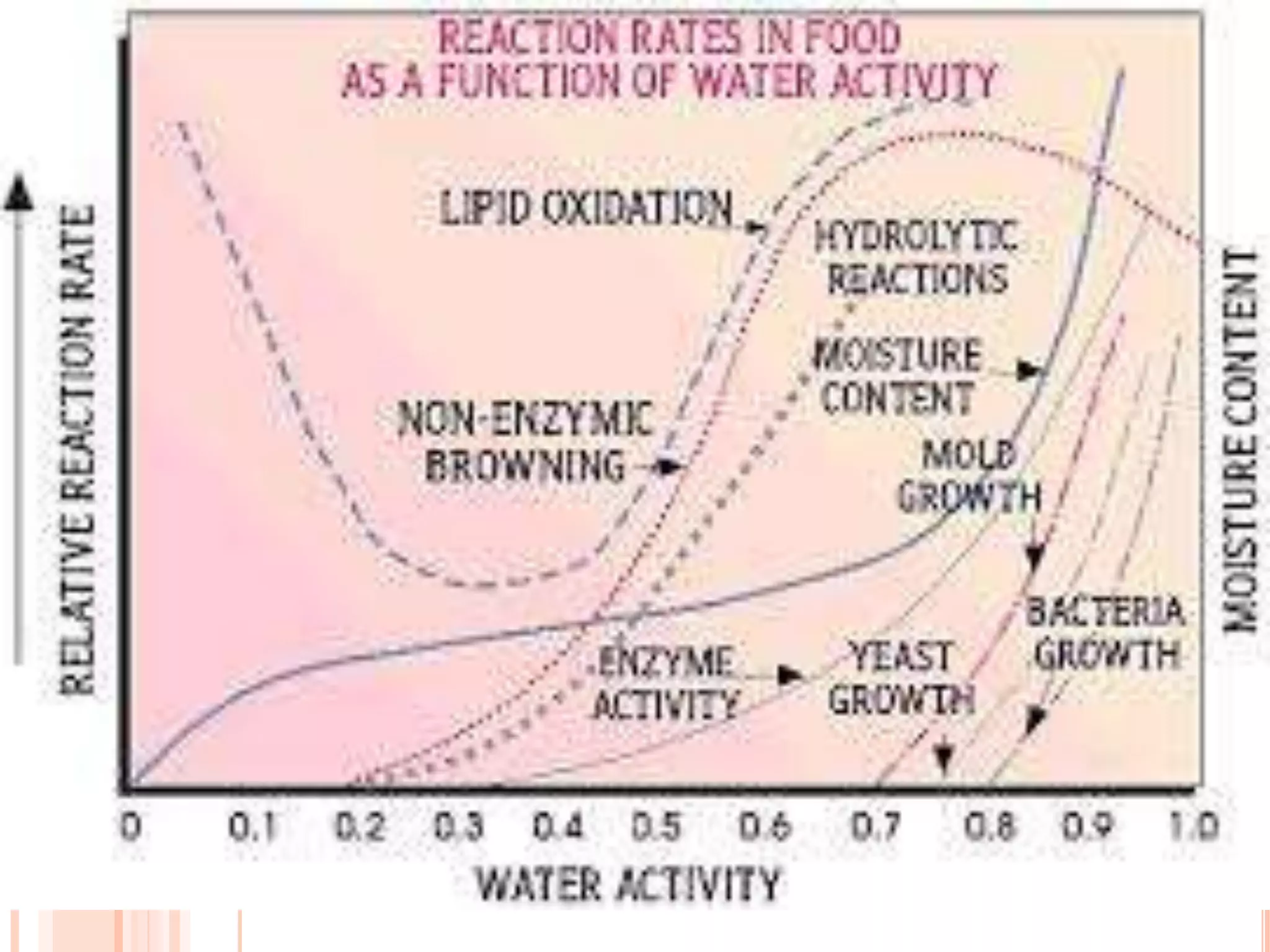
EFFECT OF AW ON PROPERTIES OF 
FOOD:
PURPOSE OF INTERMEDIATE MOISTURE 
FOOD: 
 The purpose is to achieve a desirable water activity by the 
various ingredients so that food product maintain enough 
water for palatability and can be stored safely. 
 Addition of preservatives provides the margin of safety against 
spoilage organisms 
 Staphylococcus aureus is one of the organism of high concern 
which can tolerate aw as low as 0.83-0.86 under aerobic 
conditions.
FRUITS PRESERVED UNDER IMF CONCEPT: 
 The application of IMF technology has been very 
much successful in preserving fruits and vegetables 
without refrigeration. 
 The addition of high amount of suger in fruits during 
processing will create a protective layer against 
microbial contamination after the heat processing. 
 The sugar acts as aw depresser limiting bacterial 
growth. 
 These foods are more stable at room temperature.
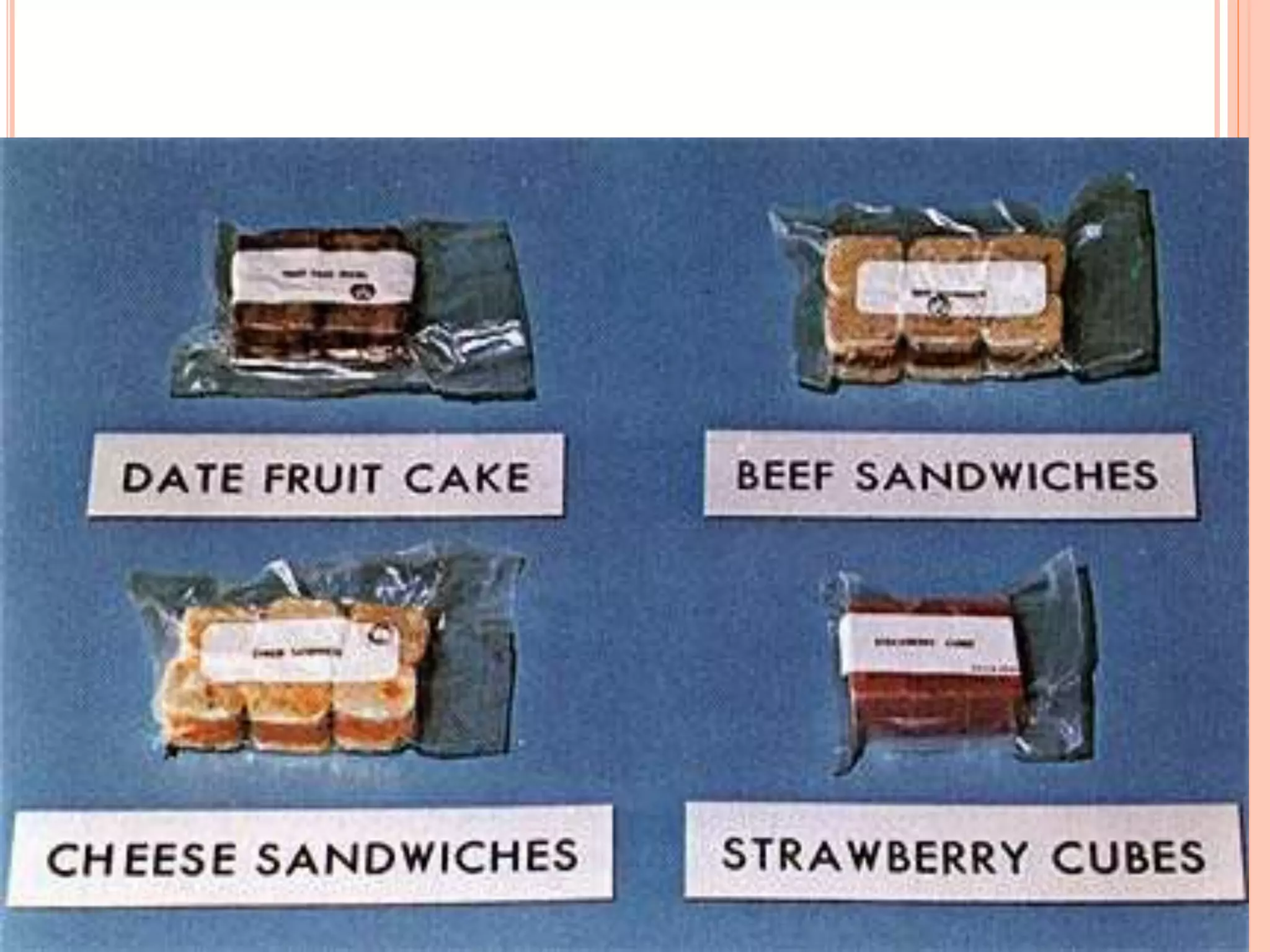
EXAMPLES OF IMF: 
 Jams 
 Jellies 
 Candies 
 Baked foods 
 Honey 
 Dried fruits and vegetables
ADVANTAGES: 
 Low aw thus aw is the primary hurdle to achieve the 
microbial stability and safety. 
 Easy to prepare and store without refrigeration. 
 These are energy efficient and relatively cheap. 
 They don’t get easily spoiled even if the package is 
damaged(bcs of low aw).
DISADVANTAGES: 
 Some IMF foods contain high level of additives that 
may cause health concerns and possible legal 
problems. 
 High sugar content is also a concern becouse of 
high calorific value. 
 Texture and flavour sometimes gets damaged if not 
properlly handled.
Efforts should be made to improve the quality of such 
foods by lowering the sugar and salt addition as well as 
increasing the moisture content and aw but without 
sacrificing the microbial stability and safety of products if 
stored without refrigeration. This may be achieved by an 
intelligent applications of hurdles.
intermediate moisture food

intermediate moisture food

  • 1.
    SUBMITTED TO :DR.SOMESH SHARMA Submitted By: Manorma Negi Deptt. Of B.tech Foodtechnology 12ftb(s)034 ,4th semester
  • 3.
    INTERMEDIATE MOISTURE FOODS: A food product that has a water activity below that which is required for the growth of microorganisms; or a food containing unavailable water.IMF foods have water activity in B/w 0.6-0.9 or 10 to 50% moisture.
  • 4.
    WHAT IS WATERACTIVITY?  Water activity is a thermodynamic property which is defined as the ratio of vapor pressure of water in a food system and vapor pressure of pure water at the same temperature.
  • 6.
    EFFECT OF AWON PROPERTIES OF FOOD:
  • 8.
    PURPOSE OF INTERMEDIATEMOISTURE FOOD:  The purpose is to achieve a desirable water activity by the various ingredients so that food product maintain enough water for palatability and can be stored safely.  Addition of preservatives provides the margin of safety against spoilage organisms  Staphylococcus aureus is one of the organism of high concern which can tolerate aw as low as 0.83-0.86 under aerobic conditions.
  • 9.
    FRUITS PRESERVED UNDERIMF CONCEPT:  The application of IMF technology has been very much successful in preserving fruits and vegetables without refrigeration.  The addition of high amount of suger in fruits during processing will create a protective layer against microbial contamination after the heat processing.  The sugar acts as aw depresser limiting bacterial growth.  These foods are more stable at room temperature.
  • 10.
    EXAMPLES OF IMF:  Jams  Jellies  Candies  Baked foods  Honey  Dried fruits and vegetables
  • 12.
    ADVANTAGES:  Lowaw thus aw is the primary hurdle to achieve the microbial stability and safety.  Easy to prepare and store without refrigeration.  These are energy efficient and relatively cheap.  They don’t get easily spoiled even if the package is damaged(bcs of low aw).
  • 13.
    DISADVANTAGES:  SomeIMF foods contain high level of additives that may cause health concerns and possible legal problems.  High sugar content is also a concern becouse of high calorific value.  Texture and flavour sometimes gets damaged if not properlly handled.
  • 14.
    Efforts should bemade to improve the quality of such foods by lowering the sugar and salt addition as well as increasing the moisture content and aw but without sacrificing the microbial stability and safety of products if stored without refrigeration. This may be achieved by an intelligent applications of hurdles.