FITNESS & TRAINING
        PROGRAMS
    subset of physical         any body movement
    activity: a planned,         carried out by the
    structured, repetitive       skeletal muscles and
    movement of the body         requiring energy
    designed to improve or
    maintain physical
    fitness


EXERCISE                     PHYSICAL ACIVITY
   To   be happy
   To   be healthy
   To   live longer
   To   reduce the chance of disease
   To   develop strong bones and muscles
   To   have good posture
   To   keep our hearts healthy
   To   manage stress
   To   get our brains working
   To   control our weight
   To   give us more energy overall!
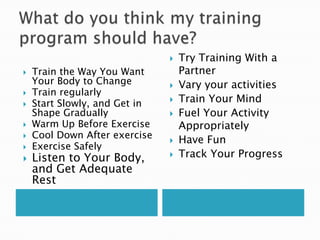
   Try Training With a
   Train the Way You Want         Partner
    Your Body to Change           Vary your activities
   Train regularly
   Start Slowly, and Get in      Train Your Mind
    Shape Gradually               Fuel Your Activity
   Warm Up Before Exercise        Appropriately
   Cool Down After exercise      Have Fun
   Exercise Safely
   Listen to Your Body,          Track Your Progress
    and Get Adequate
    Rest
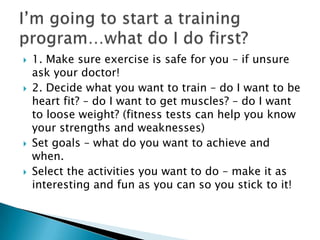
   1. Make sure exercise is safe for you – if unsure
    ask your doctor!
   2. Decide what you want to train – do I want to be
    heart fit? – do I want to get muscles? – do I want
    to loose weight? (fitness tests can help you know
    your strengths and weaknesses)
   Set goals – what do you want to achieve and
    when.
   Select the activities you want to do – make it as
    interesting and fun as you can so you stick to it!
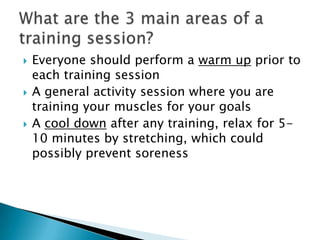
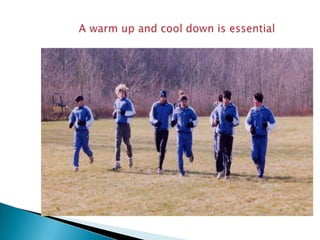
   Everyone should perform a warm up prior to
    each training session
   A general activity session where you are
    training your muscles for your goals
   A cool down after any training, relax for 5-
    10 minutes by stretching, which could
    possibly prevent soreness
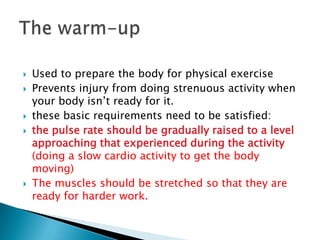
   Used to prepare the body for physical exercise
   Prevents injury from doing strenuous activity when
    your body isn’t ready for it.
   these basic requirements need to be satisfied:
   the pulse rate should be gradually raised to a level
    approaching that experienced during the activity
    (doing a slow cardio activity to get the body
    moving)
   The muscles should be stretched so that they are
    ready for harder work.
   the purpose of the cool down is the opposite of the
    warm up
   when the body has been working hard it must
    allowed to return gradually to its normal resting
    state
   the main two reasons for a cool down (warming
    down) are:
   1 – reduce your heart rate back to a normal resting
    one.
   2 – removing lactic acid from the muscles so that
    we don’t feel too sore the next day.
   In developing a training or exercise programme
    we need to consider a few things…

   SPECIFICITY
   OVERLOAD
   THE F.I.T.T PRINCIPLE
   SPECIFICITY - training must be specific to the
    sport or activity, the type of fitness required and
    the particular muscle groups. For example,
    marathon runners will do mostly endurance
    work (long runs). Whereas, swimmers exercise
    ‘swim specific muscles’

   OVERLOAD - training must be raised to a higher
    level than normal to create the extra demands
    to which the body will adapt. This can be done
    in three ways: - working harder (intensity),
    training more often (frequency), working longer
    (duration)
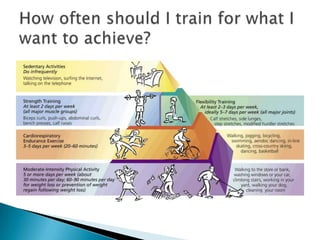
   All training programs should include the following:

   FREQUENCY - how often. Experts suggest that at a
    basic level three sessions per week is the minimum
    frequency that is needed to acquire and maintain a
    healthy fitness level.

   INTENSITY - how hard. For general improvement of
    health it is essential that the heart rate is raised to
    between 60 and 85 % of the maximum heart rate
    (MHR) for a specific age. This is known as the safe
    training zone.
   TIME - for most people 30 minutes exercise will
    raise the heart rate above 60 % of the MHR.

   TYPE - the type of training activity will reflect
    the groups or individuals specific needs – for
    example if I am a weightlifter I don’t want to run
    for 2 hours a day…I want to lift weights and
    build my muscles up.
IMMEDIATE SHORT-TERM
   BREATHING – I am taking more oxygen into my body so my breathing
    becomes faster.

   PULSE RATE – my heart is pumping more blood to my muscles so it is beating
    faster.

   CIRCULATION – blood is moving faster around my body to make my muscles
    move.

   MUSCLES – get more blood flowing into them which makes them more supple
    and less likely to tear or strain

   SWEATING – our body works to cool us and remove bad wastes through our
    pores. We start to clean our body.
LONG TERM EFFECTS OF EXERCISE

   GENERAL WELL BEING - we are able to cope
    with the demands of everyday living (less stress,
    better appetite, sleep better)
   HEART RATE – our resting rate falls making us
    generally fitter.
   BODY COMPOSITION – our body looks better
   MUSCLE SIZE – we get defined muscles
   AN OVERALL HEALTHIER PERSON!!!



Powerpoint fitness and training programs assessment

Powerpoint fitness and training programs assessment

  • 1.
  • 2.
    subset of physical  any body movement activity: a planned, carried out by the structured, repetitive skeletal muscles and movement of the body requiring energy designed to improve or maintain physical fitness EXERCISE PHYSICAL ACIVITY
  • 3.
    To be happy  To be healthy  To live longer  To reduce the chance of disease  To develop strong bones and muscles  To have good posture  To keep our hearts healthy  To manage stress  To get our brains working  To control our weight  To give us more energy overall!
  • 4.
    Try Training With a  Train the Way You Want Partner Your Body to Change  Vary your activities  Train regularly  Start Slowly, and Get in  Train Your Mind Shape Gradually  Fuel Your Activity  Warm Up Before Exercise Appropriately  Cool Down After exercise  Have Fun  Exercise Safely  Listen to Your Body,  Track Your Progress and Get Adequate Rest
  • 5.
    1. Make sure exercise is safe for you – if unsure ask your doctor!  2. Decide what you want to train – do I want to be heart fit? – do I want to get muscles? – do I want to loose weight? (fitness tests can help you know your strengths and weaknesses)  Set goals – what do you want to achieve and when.  Select the activities you want to do – make it as interesting and fun as you can so you stick to it!
  • 6.
    Everyone should perform a warm up prior to each training session  A general activity session where you are training your muscles for your goals  A cool down after any training, relax for 5- 10 minutes by stretching, which could possibly prevent soreness
  • 7.
    Used to prepare the body for physical exercise  Prevents injury from doing strenuous activity when your body isn’t ready for it.  these basic requirements need to be satisfied:  the pulse rate should be gradually raised to a level approaching that experienced during the activity (doing a slow cardio activity to get the body moving)  The muscles should be stretched so that they are ready for harder work.
  • 8.
    the purpose of the cool down is the opposite of the warm up  when the body has been working hard it must allowed to return gradually to its normal resting state  the main two reasons for a cool down (warming down) are:  1 – reduce your heart rate back to a normal resting one.  2 – removing lactic acid from the muscles so that we don’t feel too sore the next day.
  • 10.
    In developing a training or exercise programme we need to consider a few things…  SPECIFICITY  OVERLOAD  THE F.I.T.T PRINCIPLE
  • 11.
    SPECIFICITY - training must be specific to the sport or activity, the type of fitness required and the particular muscle groups. For example, marathon runners will do mostly endurance work (long runs). Whereas, swimmers exercise ‘swim specific muscles’  OVERLOAD - training must be raised to a higher level than normal to create the extra demands to which the body will adapt. This can be done in three ways: - working harder (intensity), training more often (frequency), working longer (duration)
  • 12.
    All training programs should include the following:  FREQUENCY - how often. Experts suggest that at a basic level three sessions per week is the minimum frequency that is needed to acquire and maintain a healthy fitness level.  INTENSITY - how hard. For general improvement of health it is essential that the heart rate is raised to between 60 and 85 % of the maximum heart rate (MHR) for a specific age. This is known as the safe training zone.
  • 13.
    TIME - for most people 30 minutes exercise will raise the heart rate above 60 % of the MHR.  TYPE - the type of training activity will reflect the groups or individuals specific needs – for example if I am a weightlifter I don’t want to run for 2 hours a day…I want to lift weights and build my muscles up.
  • 14.
    IMMEDIATE SHORT-TERM  BREATHING – I am taking more oxygen into my body so my breathing becomes faster.  PULSE RATE – my heart is pumping more blood to my muscles so it is beating faster.  CIRCULATION – blood is moving faster around my body to make my muscles move.  MUSCLES – get more blood flowing into them which makes them more supple and less likely to tear or strain  SWEATING – our body works to cool us and remove bad wastes through our pores. We start to clean our body.
  • 15.
    LONG TERM EFFECTSOF EXERCISE  GENERAL WELL BEING - we are able to cope with the demands of everyday living (less stress, better appetite, sleep better)  HEART RATE – our resting rate falls making us generally fitter.  BODY COMPOSITION – our body looks better  MUSCLE SIZE – we get defined muscles  AN OVERALL HEALTHIER PERSON!!! 