Principles of Fitness
Principles of
FitnessTraining
1. Overload
2.FITT
3.Specificity
4.Rest and
Recovery
5.Use or
Lose
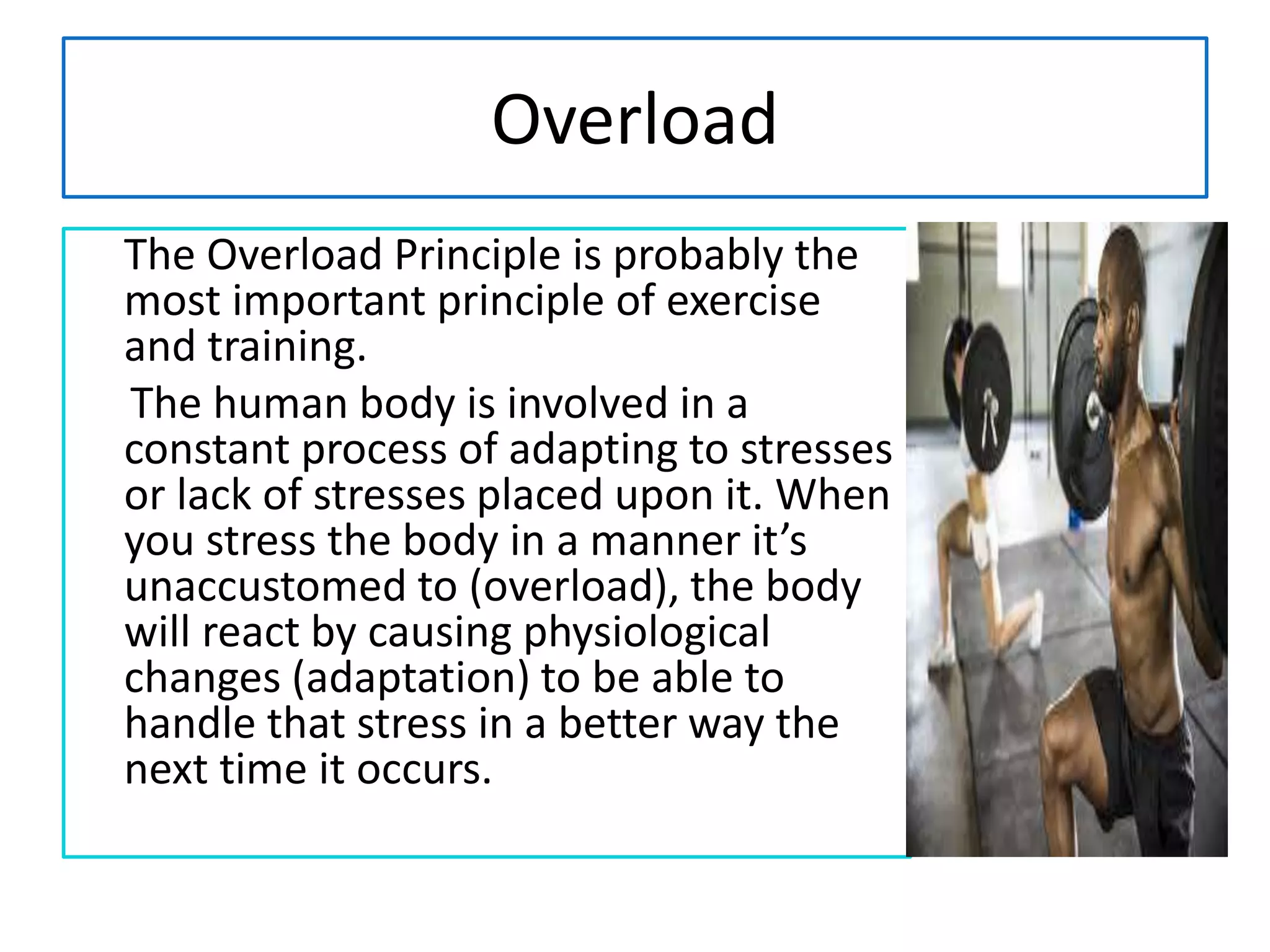
The Overload Principle is probably the
most important principle of exercise
and training.
The human body is involved in a
constant process of adapting to stresses
or lack of stresses placed upon it. When
you stress the body in a manner it’s
unaccustomed to (overload), the body
will react by causing physiological
changes (adaptation) to be able to
handle that stress in a better way the
next time it occurs.
Overload
With your Personal Point of Overload PPO you
know exactly:
• how many sets to perform
• when to increase weights
• when you reached OVERLOAD in the target
system
• all your personal training variables
• what to do to reach OVERLOAD at every workout
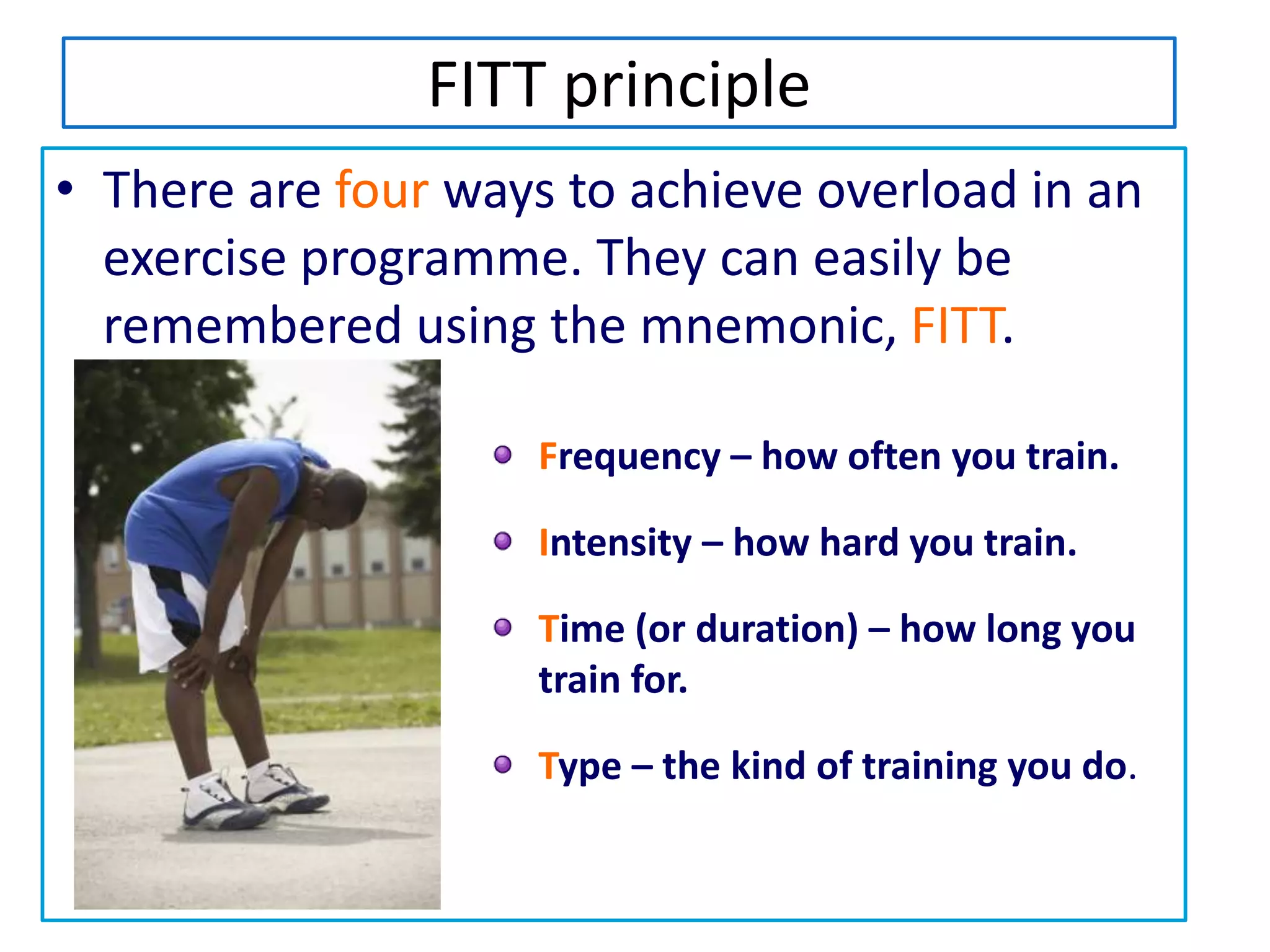
FITT principle
• There are four ways to achieve overload in an
exercise programme. They can easily be
remembered using the mnemonic, FITT.
Frequency – how often you train.
Intensity – how hard you train.
Time (or duration) – how long you
train for.
Type – the kind of training you do.
FITT: frequency
How often you should train depends on what you wish
to achieve.
The National Institute for Health and Clinical Excellence
suggests that to maintain health, you should do 30 minutes of
moderate exercise 5 times a week.
However, if you wish to become an intermediate or elite
competitor in any sport, you will need to train much more
frequently.
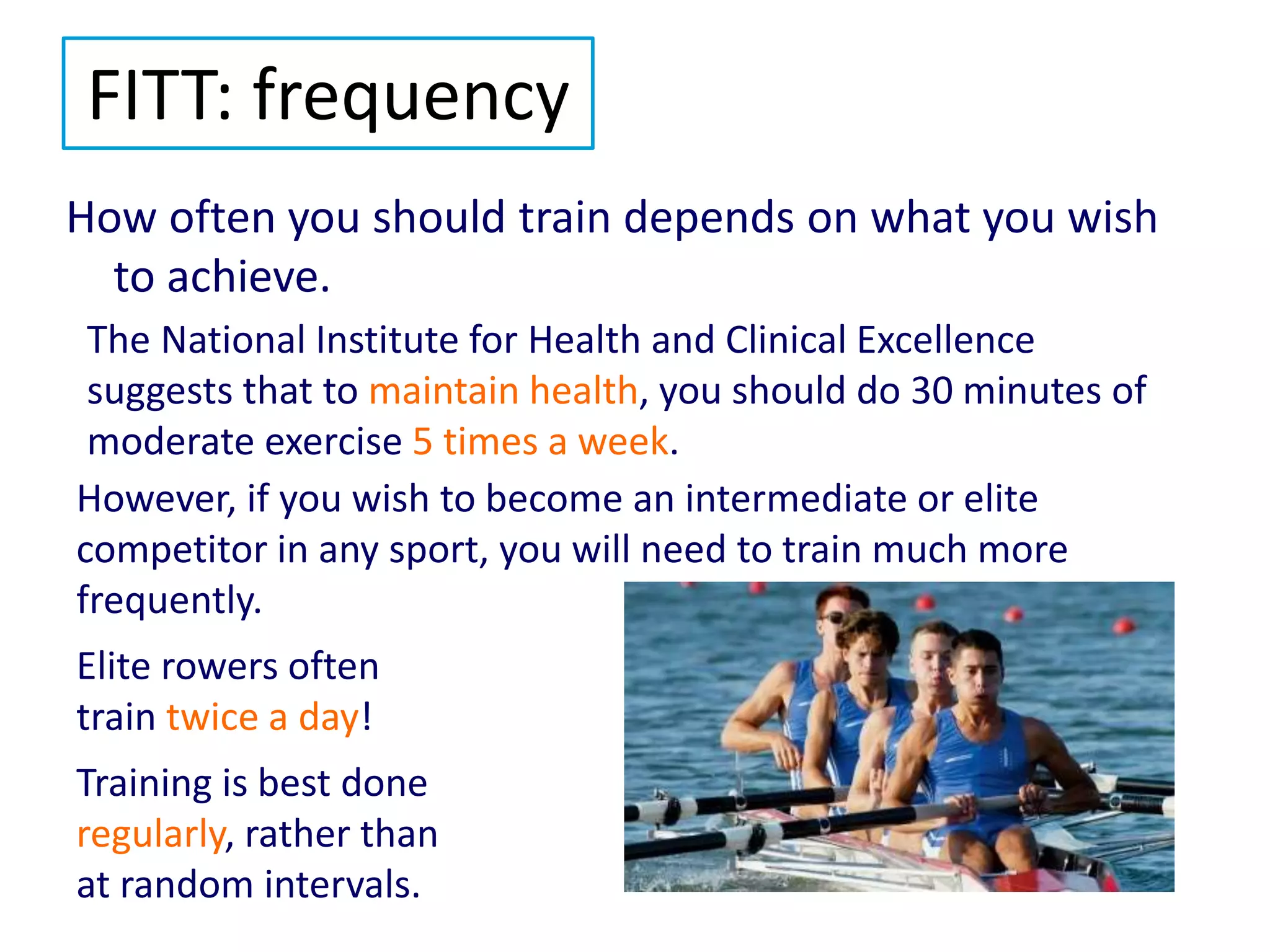
Elite rowers often
train twice a day!
Training is best done
regularly, rather than
at random intervals.
FITT: intensity
• Intensity refers to how hard you work during
your training sessions.
• A good way to measure intensity is to monitor
a performer’s heart rate. The harder you work,
the faster your heart beats.
Heart rate can indicate which energy system is
being used.
FITT: intensity – maximum
heart rate (MHR)
• In order to train the correct energy system, you need to calculate your
maximum heart rate (MHR).
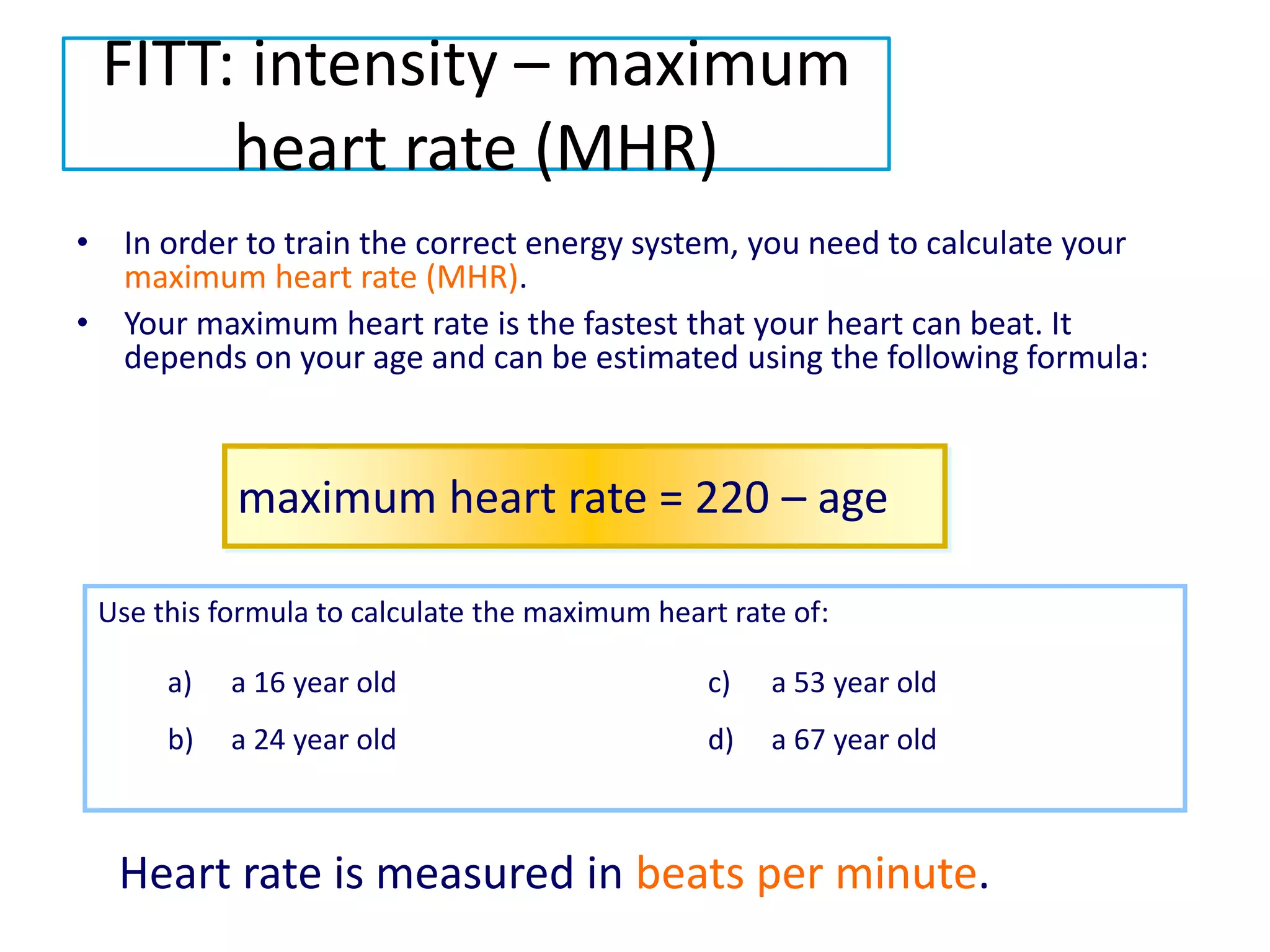
• Your maximum heart rate is the fastest that your heart can beat. It
depends on your age and can be estimated using the following formula:
maximum heart rate = 220 – age
Use this formula to calculate the maximum heart rate of:
a) a 16 year old
b) a 24 year old
c) a 53 year old
d) a 67 year old
Heart rate is measured in beats per minute.
FITT: time
• Intensity will affect the time (or duration) of each training session.
The length of session required to achieve improvements depends
on how hard a performer is training.
• To achieve improvements in aerobic fitness, you should aim
to spend at least 20 minutes per session in the target zone.
• However, time will vary greatly depending on the activity the
performer is training for.
• If they are training for a marathon, they may need to spend several
hours at a time in the aerobic zone.
• A sprinter, on the other hand, will need to spend relatively little
time actually exercising – their sessions are likely to consist of many
short, high intensity bursts with lengthy rests in-between.
FITT: type
• If your aim is simple health related fitness, then the type of
exercise you do does not matter very much – it just needs to
raises your pulse into the aerobic zone for about 20 minutes.
• You could even include activities like gardening, walking or
just dancing round your kitchen!
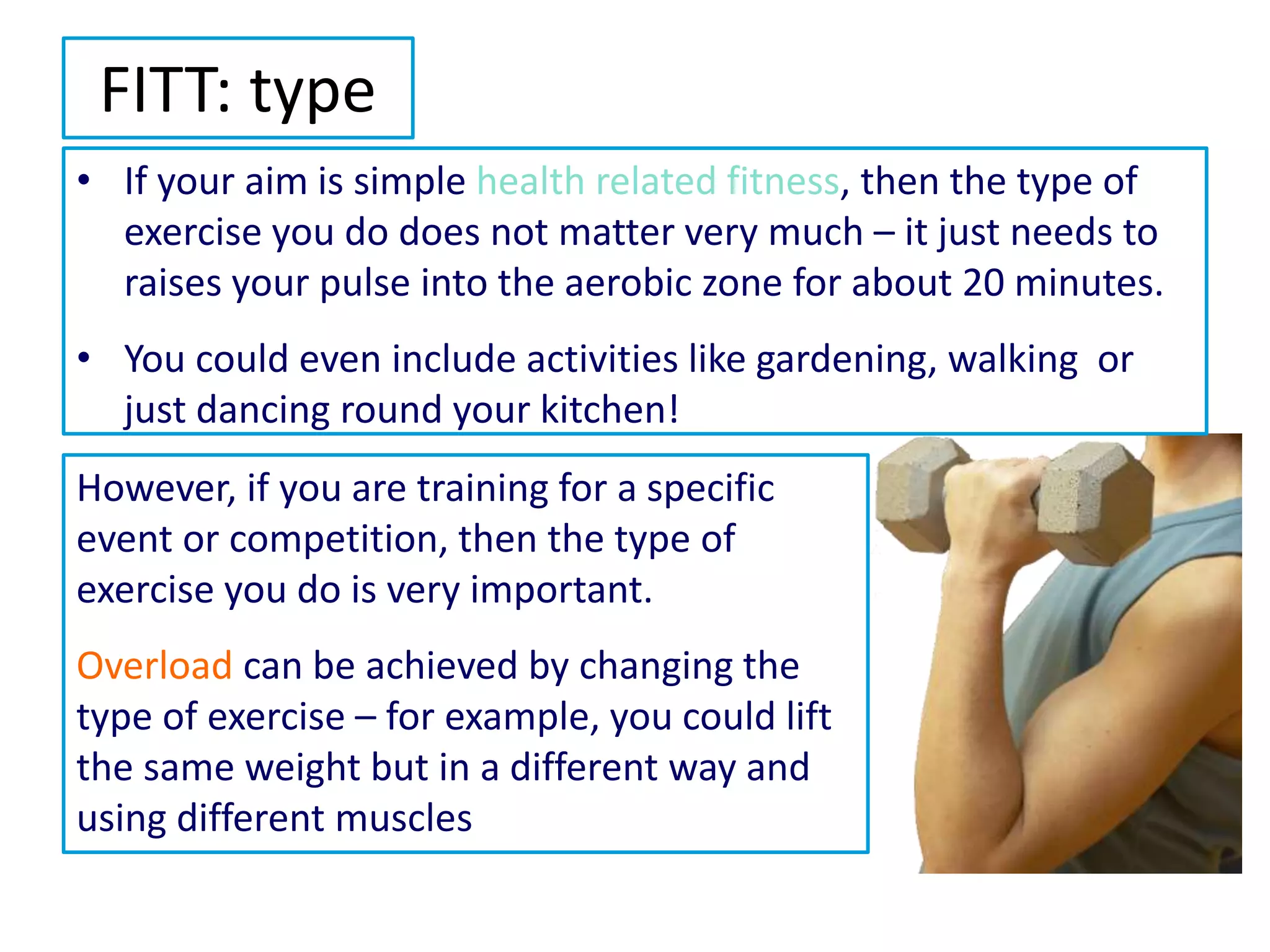
However, if you are training for a specific
event or competition, then the type of
exercise you do is very important.
Overload can be achieved by changing the
type of exercise – for example, you could lift
the same weight but in a different way and
using different muscles
Specificity
• You must do specific types of activity to
improve specific parts of the body in specific
ways.
• Different events can require very different
forms of training
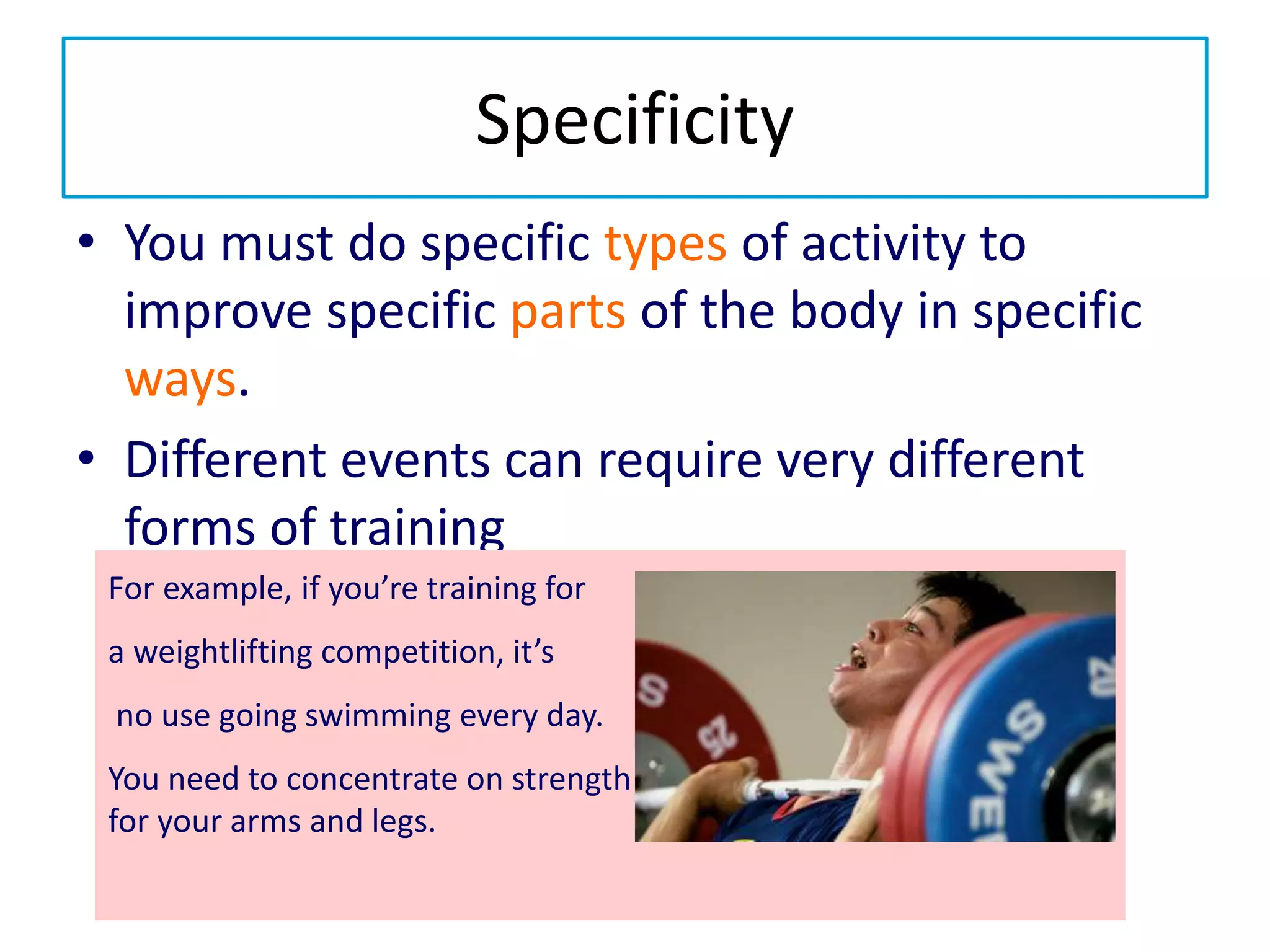
For example, if you’re training for
a weightlifting competition, it’s
no use going swimming every day.
You need to concentrate on strength training
for your arms and legs.
Rest and Recovery
• Rest = The time given to recovery.
• Recovery = The time required to repair
damage to the body caused by training or
competition.
• Hypertrophy-your muscles build strength with
use
• Atrophy-lose strength with lack of use.
Use or Lose Principle
Thank you
END
Reversibility
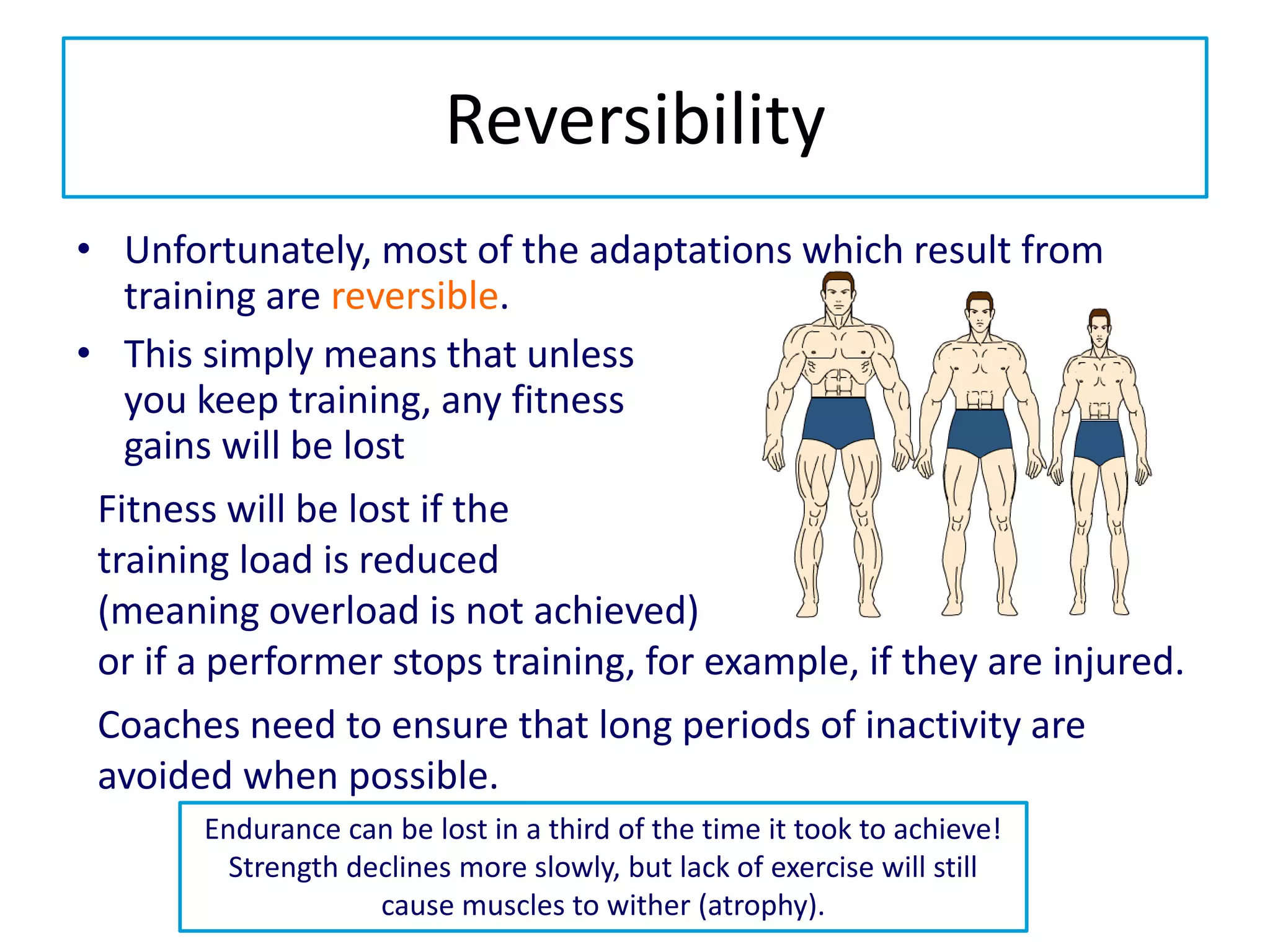
• Unfortunately, most of the adaptations which result from
training are reversible.
• This simply means that unless
you keep training, any fitness
gains will be lost
Fitness will be lost if the
training load is reduced
(meaning overload is not achieved)
or if a performer stops training, for example, if they are injured.
Coaches need to ensure that long periods of inactivity are
avoided when possible.
Endurance can be lost in a third of the time it took to achieve!
Strength declines more slowly, but lack of exercise will still
cause muscles to wither (atrophy).
Tedium
When planning a training
programme, it is important to
vary the training a bit to
prevent performers becoming
bored.
If every training session is the
same, a performer can lose
enthusiasm and motivation for
training.
You should include a variety of
different training methods or
vary the type of activity.
Training for endurance events
can be particularly boring.
Tedium is less of a problem in
team sports.
Why can it sometimes be difficult to avoid
tedium while obeying the first principle –
specificity?
Progression
• Progression means gradually increasing the amount of
exercise you do.
• When a performer first starts exercising, their levels of fitness
may be poor.
If a coach increases the training too quickly, the body will
not have time to adapt and this may result in injury. Slow
and steady progress is the best way forward.
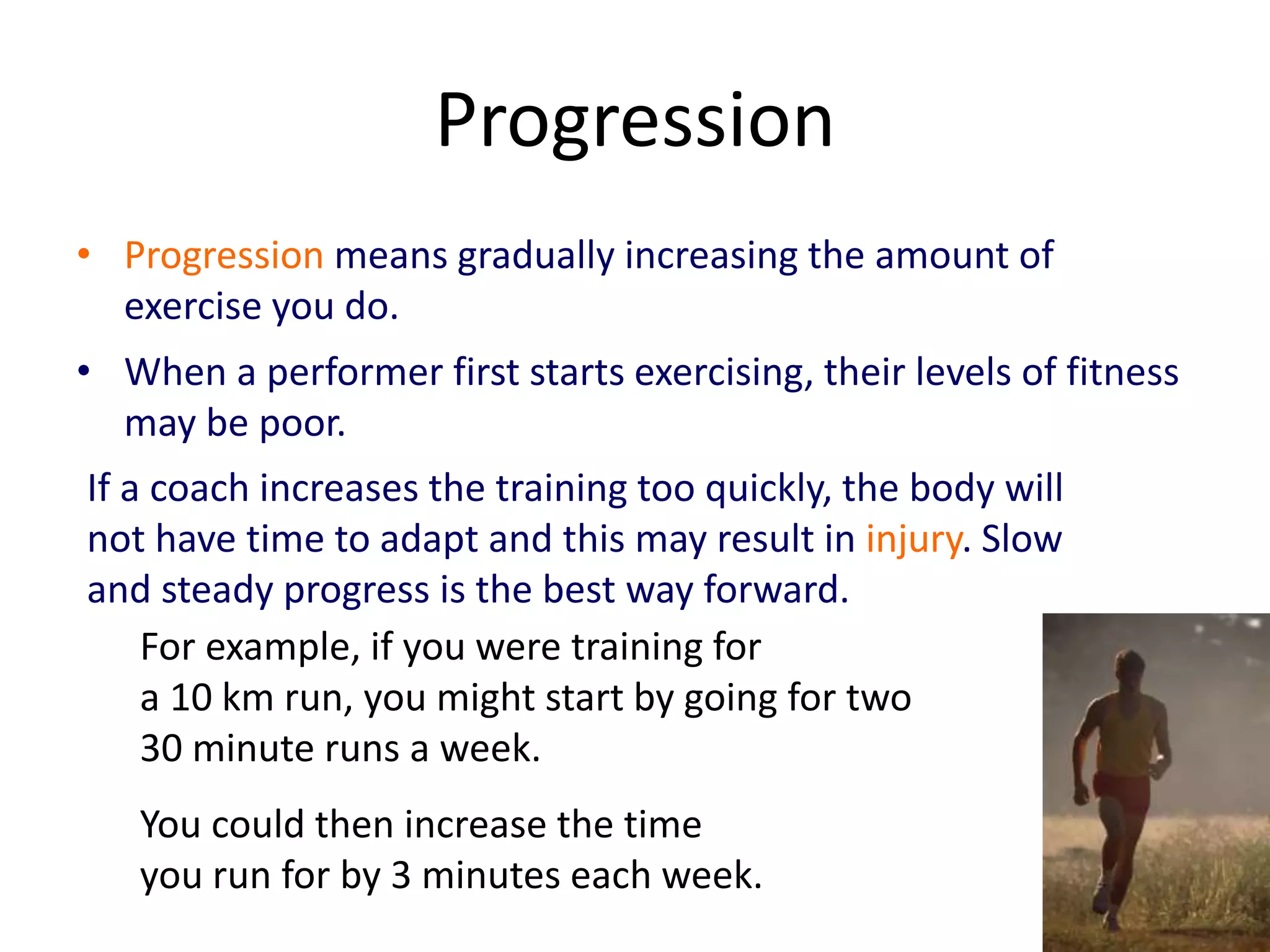
For example, if you were training for
a 10 km run, you might start by going for two
30 minute runs a week.
You could then increase the time
you run for by 3 minutes each week.

Basic Principle of Fitness

  • 1.
  • 2.
  • 3.
    The Overload Principleis probably the most important principle of exercise and training. The human body is involved in a constant process of adapting to stresses or lack of stresses placed upon it. When you stress the body in a manner it’s unaccustomed to (overload), the body will react by causing physiological changes (adaptation) to be able to handle that stress in a better way the next time it occurs. Overload
  • 5.
    With your PersonalPoint of Overload PPO you know exactly: • how many sets to perform • when to increase weights • when you reached OVERLOAD in the target system • all your personal training variables • what to do to reach OVERLOAD at every workout
  • 7.
    FITT principle • Thereare four ways to achieve overload in an exercise programme. They can easily be remembered using the mnemonic, FITT. Frequency – how often you train. Intensity – how hard you train. Time (or duration) – how long you train for. Type – the kind of training you do.
  • 8.
    FITT: frequency How oftenyou should train depends on what you wish to achieve. The National Institute for Health and Clinical Excellence suggests that to maintain health, you should do 30 minutes of moderate exercise 5 times a week. However, if you wish to become an intermediate or elite competitor in any sport, you will need to train much more frequently. Elite rowers often train twice a day! Training is best done regularly, rather than at random intervals.
  • 9.
    FITT: intensity • Intensityrefers to how hard you work during your training sessions. • A good way to measure intensity is to monitor a performer’s heart rate. The harder you work, the faster your heart beats. Heart rate can indicate which energy system is being used.
  • 10.
    FITT: intensity –maximum heart rate (MHR) • In order to train the correct energy system, you need to calculate your maximum heart rate (MHR). • Your maximum heart rate is the fastest that your heart can beat. It depends on your age and can be estimated using the following formula: maximum heart rate = 220 – age Use this formula to calculate the maximum heart rate of: a) a 16 year old b) a 24 year old c) a 53 year old d) a 67 year old Heart rate is measured in beats per minute.
  • 11.
    FITT: time • Intensitywill affect the time (or duration) of each training session. The length of session required to achieve improvements depends on how hard a performer is training. • To achieve improvements in aerobic fitness, you should aim to spend at least 20 minutes per session in the target zone. • However, time will vary greatly depending on the activity the performer is training for. • If they are training for a marathon, they may need to spend several hours at a time in the aerobic zone. • A sprinter, on the other hand, will need to spend relatively little time actually exercising – their sessions are likely to consist of many short, high intensity bursts with lengthy rests in-between.
  • 12.
    FITT: type • Ifyour aim is simple health related fitness, then the type of exercise you do does not matter very much – it just needs to raises your pulse into the aerobic zone for about 20 minutes. • You could even include activities like gardening, walking or just dancing round your kitchen! However, if you are training for a specific event or competition, then the type of exercise you do is very important. Overload can be achieved by changing the type of exercise – for example, you could lift the same weight but in a different way and using different muscles
  • 13.
    Specificity • You mustdo specific types of activity to improve specific parts of the body in specific ways. • Different events can require very different forms of training For example, if you’re training for a weightlifting competition, it’s no use going swimming every day. You need to concentrate on strength training for your arms and legs.
  • 14.
    Rest and Recovery •Rest = The time given to recovery. • Recovery = The time required to repair damage to the body caused by training or competition.
  • 15.
    • Hypertrophy-your musclesbuild strength with use • Atrophy-lose strength with lack of use. Use or Lose Principle
  • 17.
  • 18.
    Reversibility • Unfortunately, mostof the adaptations which result from training are reversible. • This simply means that unless you keep training, any fitness gains will be lost Fitness will be lost if the training load is reduced (meaning overload is not achieved) or if a performer stops training, for example, if they are injured. Coaches need to ensure that long periods of inactivity are avoided when possible. Endurance can be lost in a third of the time it took to achieve! Strength declines more slowly, but lack of exercise will still cause muscles to wither (atrophy).
  • 19.
    Tedium When planning atraining programme, it is important to vary the training a bit to prevent performers becoming bored. If every training session is the same, a performer can lose enthusiasm and motivation for training. You should include a variety of different training methods or vary the type of activity. Training for endurance events can be particularly boring. Tedium is less of a problem in team sports. Why can it sometimes be difficult to avoid tedium while obeying the first principle – specificity?
  • 20.
    Progression • Progression meansgradually increasing the amount of exercise you do. • When a performer first starts exercising, their levels of fitness may be poor. If a coach increases the training too quickly, the body will not have time to adapt and this may result in injury. Slow and steady progress is the best way forward. For example, if you were training for a 10 km run, you might start by going for two 30 minute runs a week. You could then increase the time you run for by 3 minutes each week.