



Suleman Rashid
Iddrissu
 Increase efficiency for athlete to use less energy
 Improve athletes form and body control
 Increase enzyme production. Calories and energy store more in muscles
than fat .
 Used for higher intensity sports, i.e.:Track, soccer, football, field hockey,
etc.
Speed and Agility
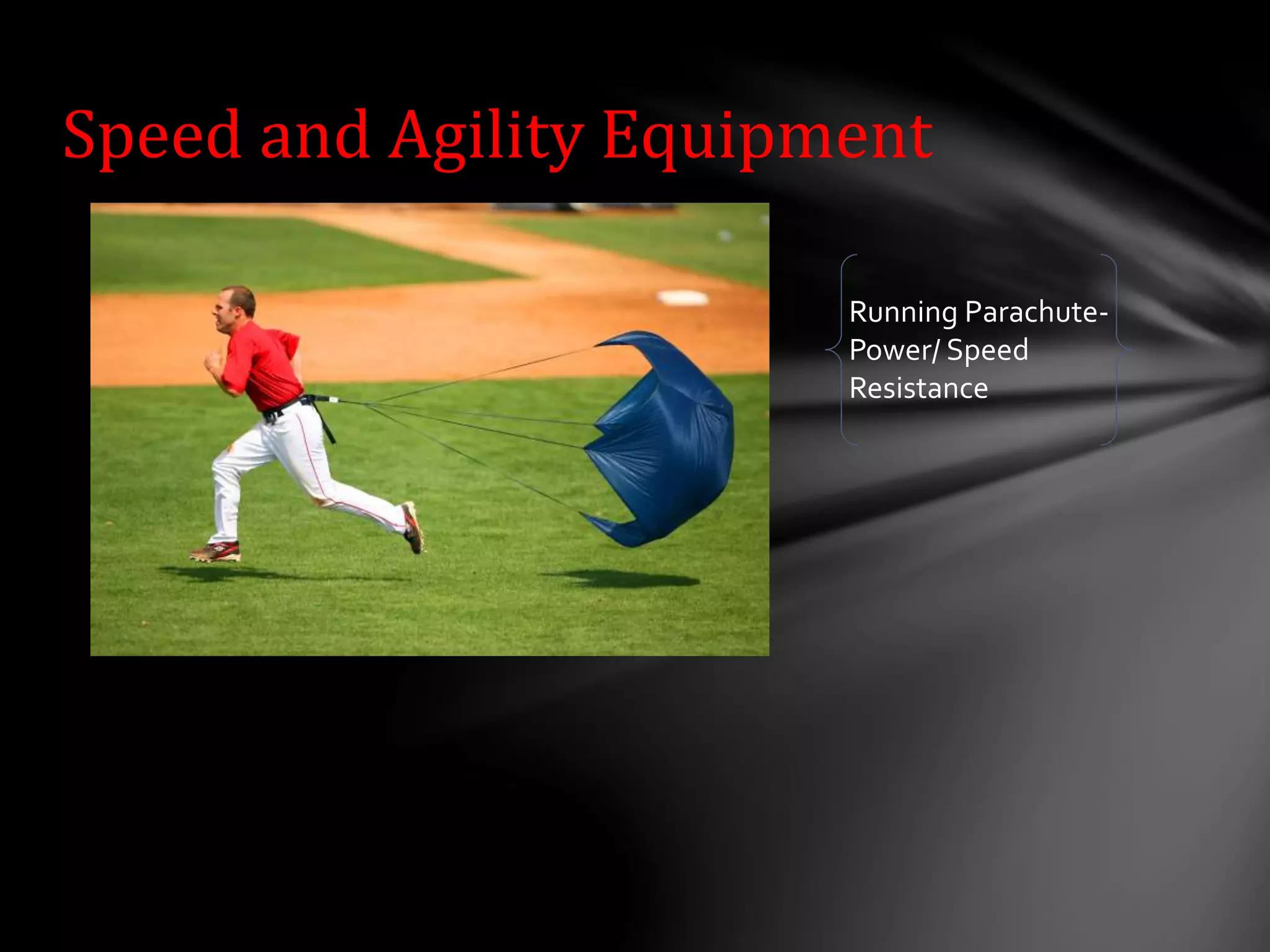
Speed and Agility Equipment
Running Parachute-
Power/ Speed
Resistance
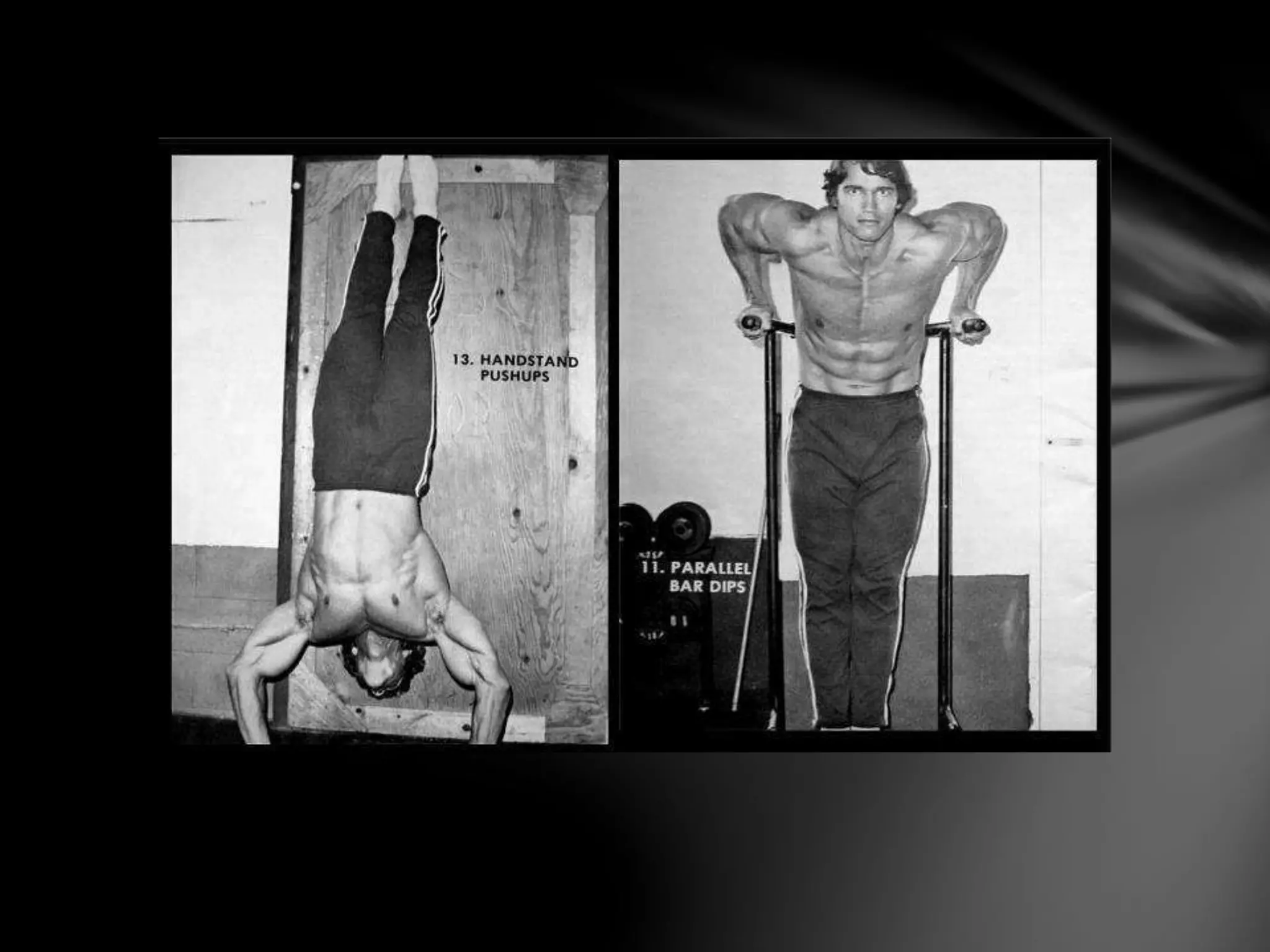
 Exercises using no equipment
 Body weight exercises
 Can improve balance and motor skills
 Strengthen tendons and ligaments around muscle
Calisthenics Exercise
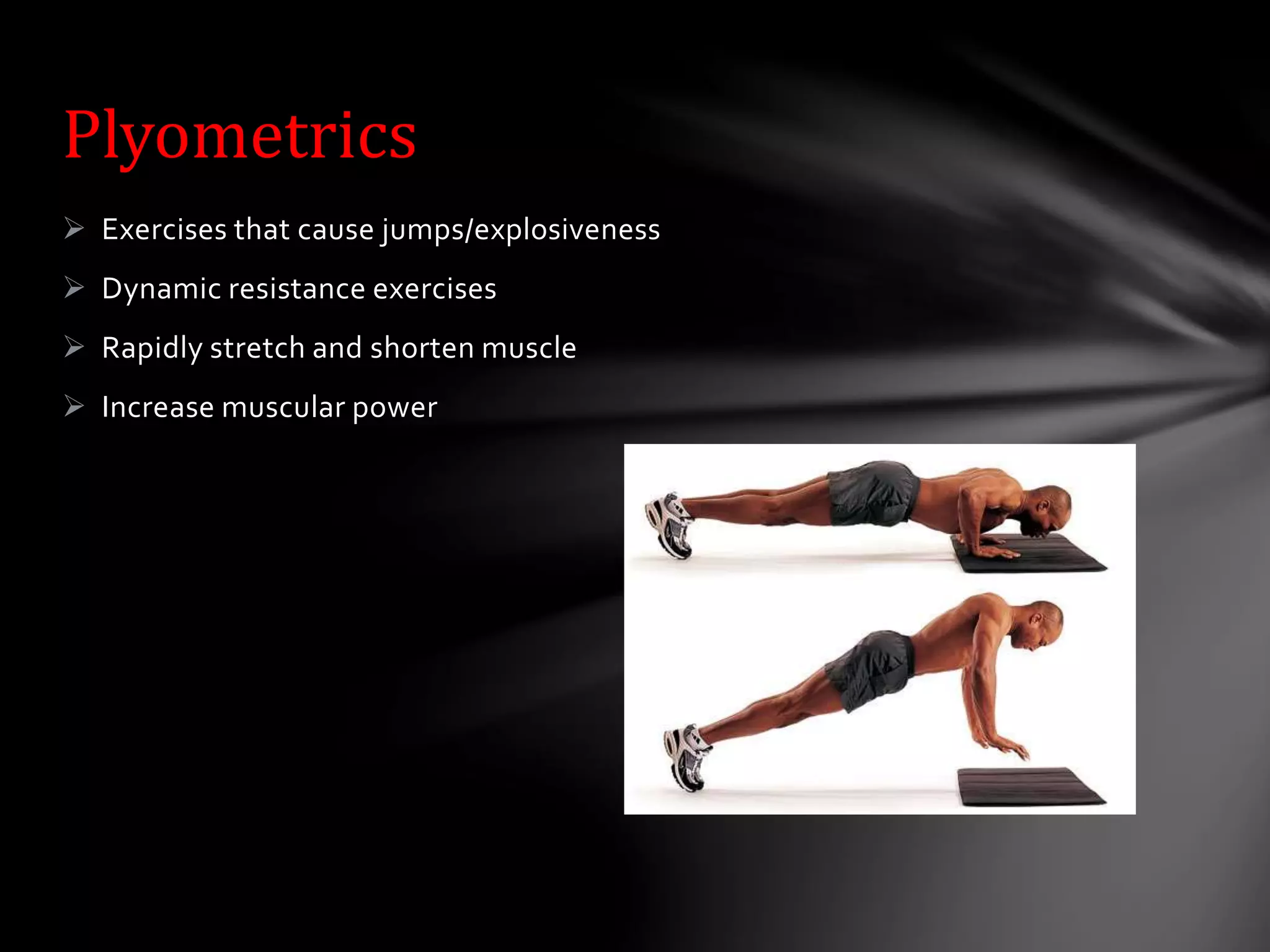
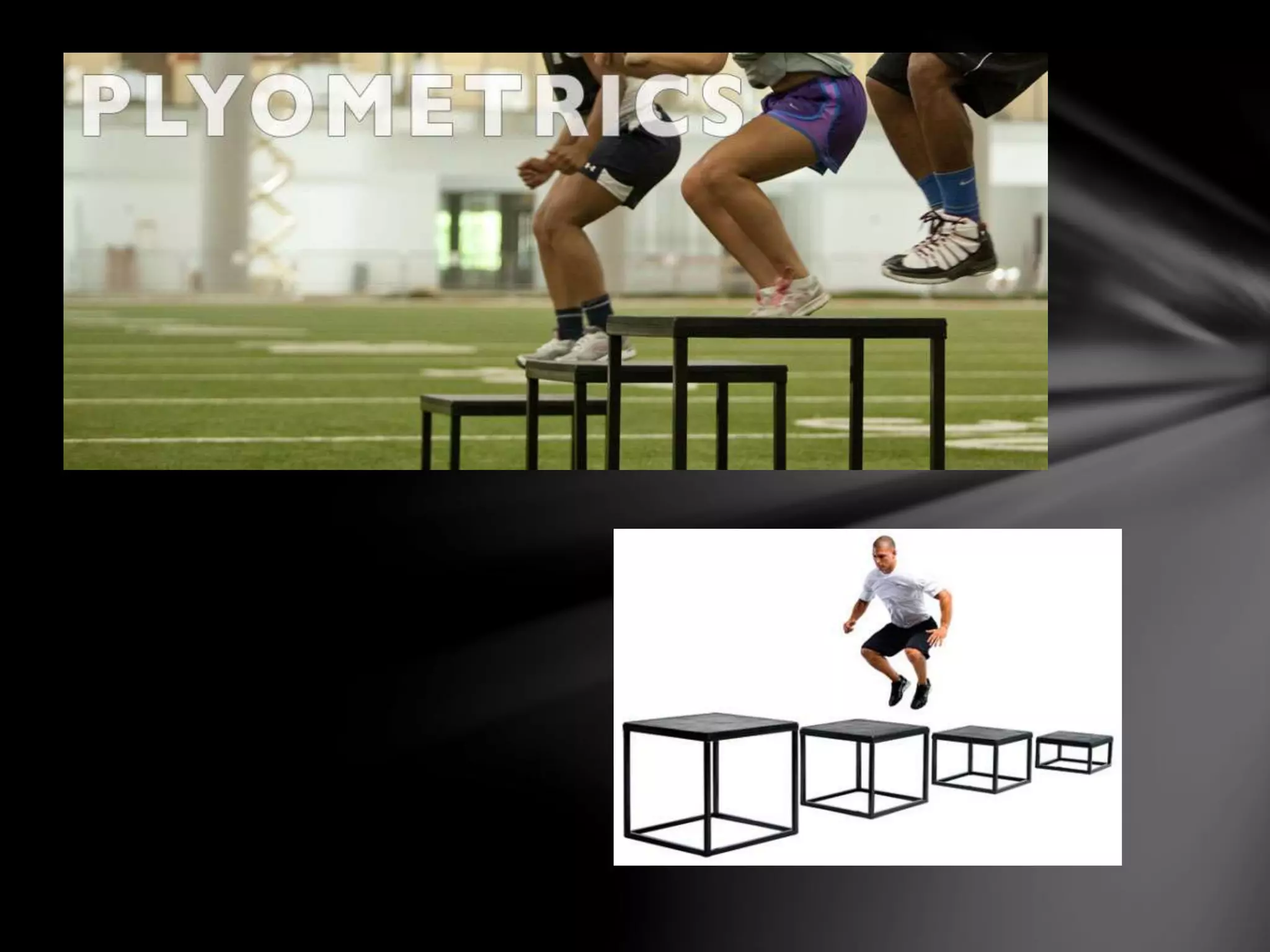
 Exercises that cause jumps/explosiveness
 Dynamic resistance exercises
 Rapidly stretch and shorten muscle
 Increase muscular power
Plyometrics
 Speed and agility exercises more important in off season
 Nervous system needs time to adjust to new motor skills
 Agility speed and form improves over time with high reps
 Takes weeks or months to see difference
Neurological Awareness
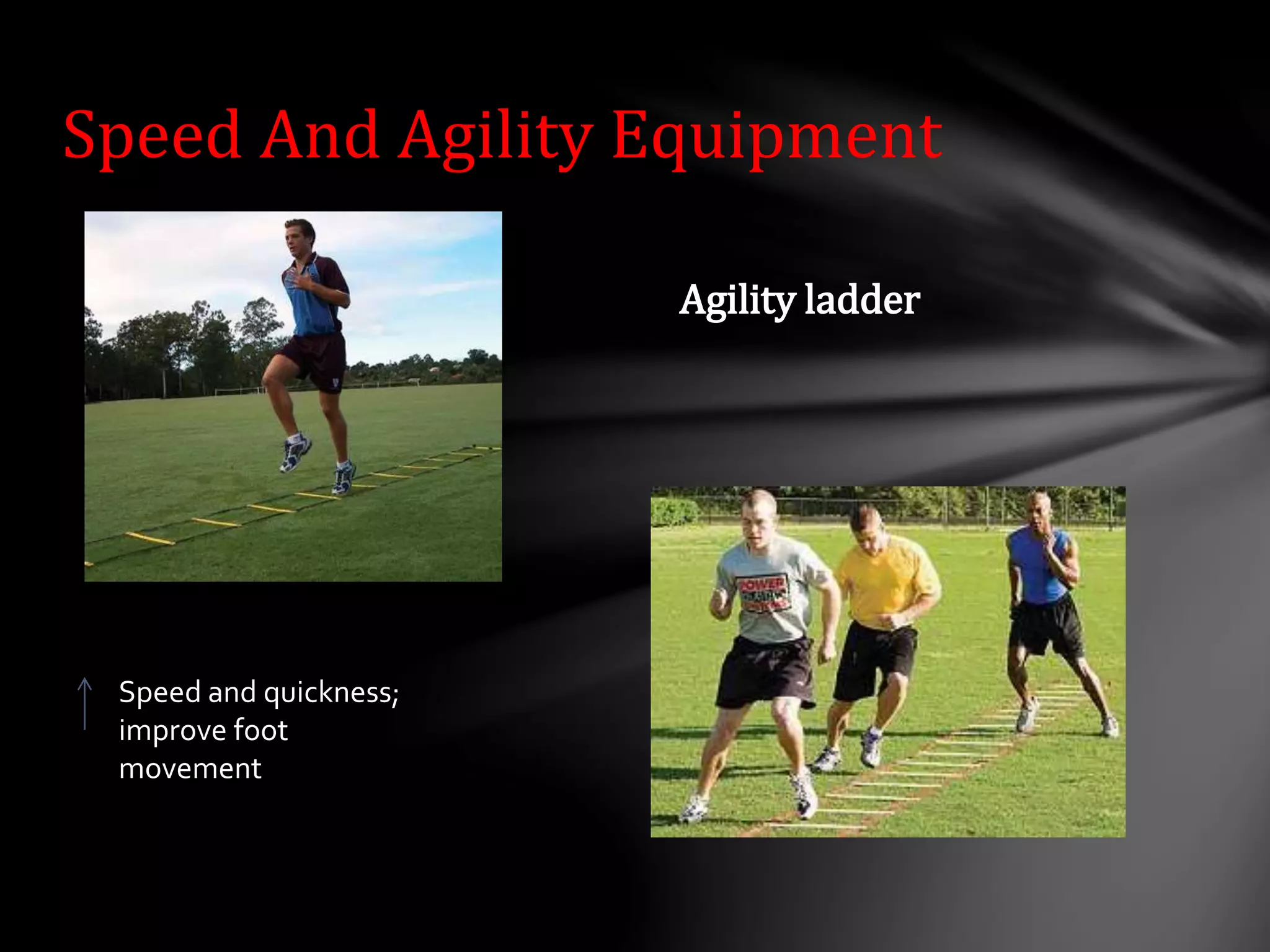
Speed And Agility Equipment
Agility ladder
Speed and quickness;
improve foot
movement
 Neuromuscular Adaptation
 Agility training skills are personally related to your sport
 It directly uses the neuromuscular system because it is at the intensity and speed
of your sport.
 Improved Athleticism
 Increase body control through concentrated muscle strain and movement
 Creating body control helps athletes move fast
 Improves movement in joints, tendons, neck, back, etc.= Improved posture
Benefits of Agility Training
Speed and Agility Equipment
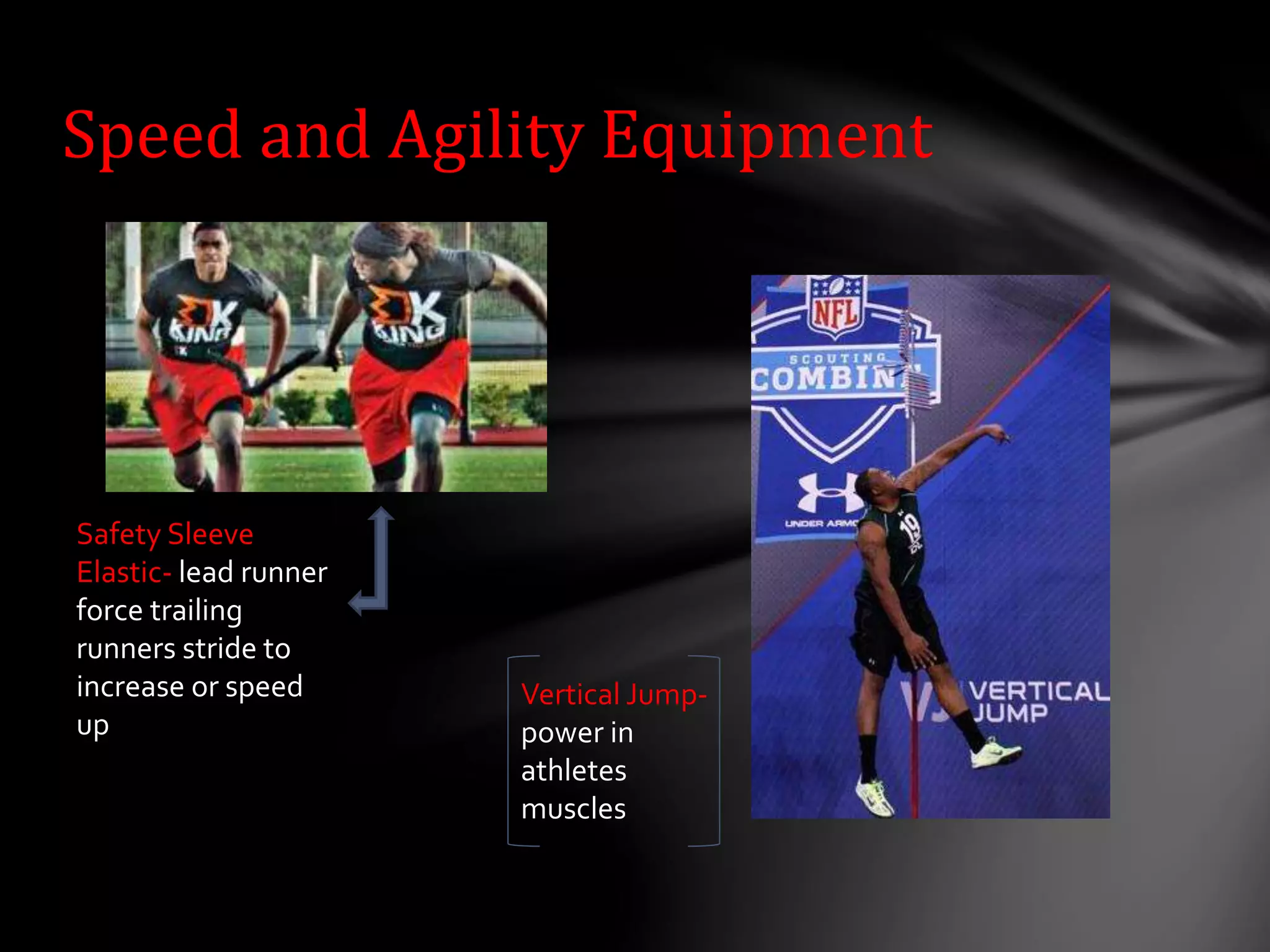
Safety Sleeve
Elastic- lead runner
force trailing
runners stride to
increase or speed
up
Vertical Jump-
power in
athletes
muscles
 Injury Prevention & Decreased RehabilitationTime
 By controlling body movement and improving joint & tendon stability= decrease
in sports injury
 Body is better prepared for awkward movements that can happen during game
time
 Athlete will have more neurological awareness and understand how their body
moves while initiating agility moves during practice
Benefits of Agility Training
Speed and Agility Equipment
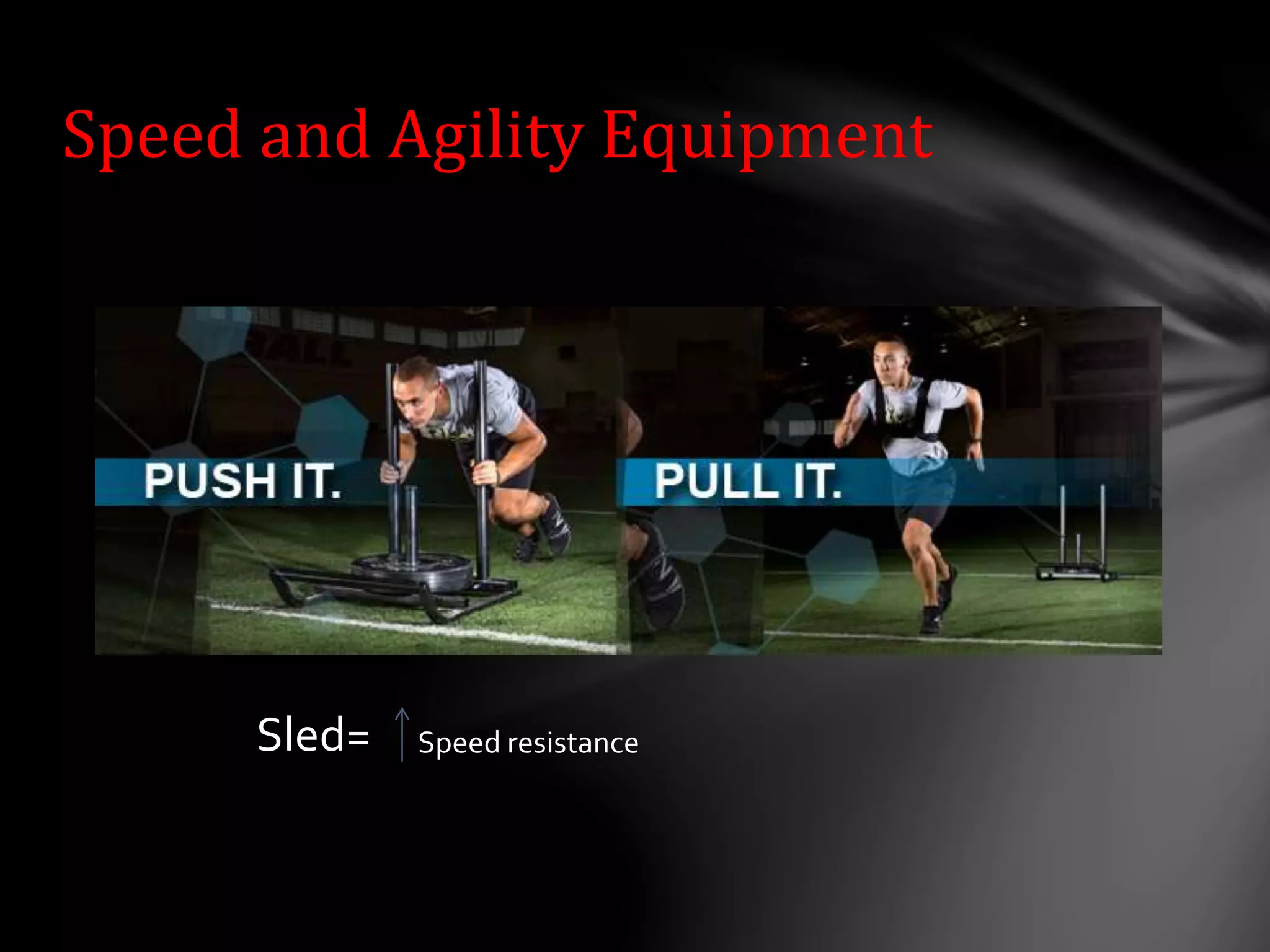
Sled= Speed resistance
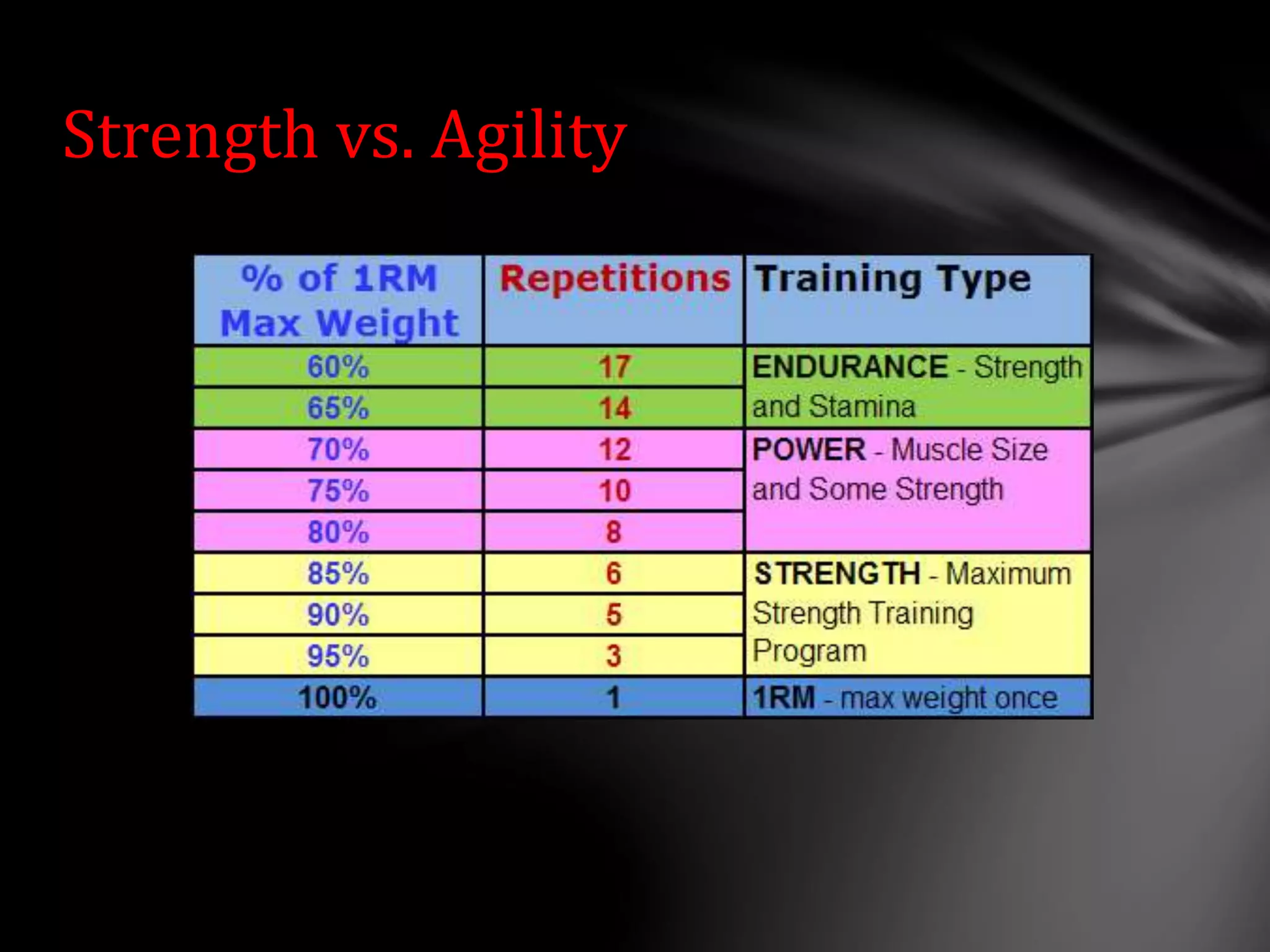
Strength vs. Agility
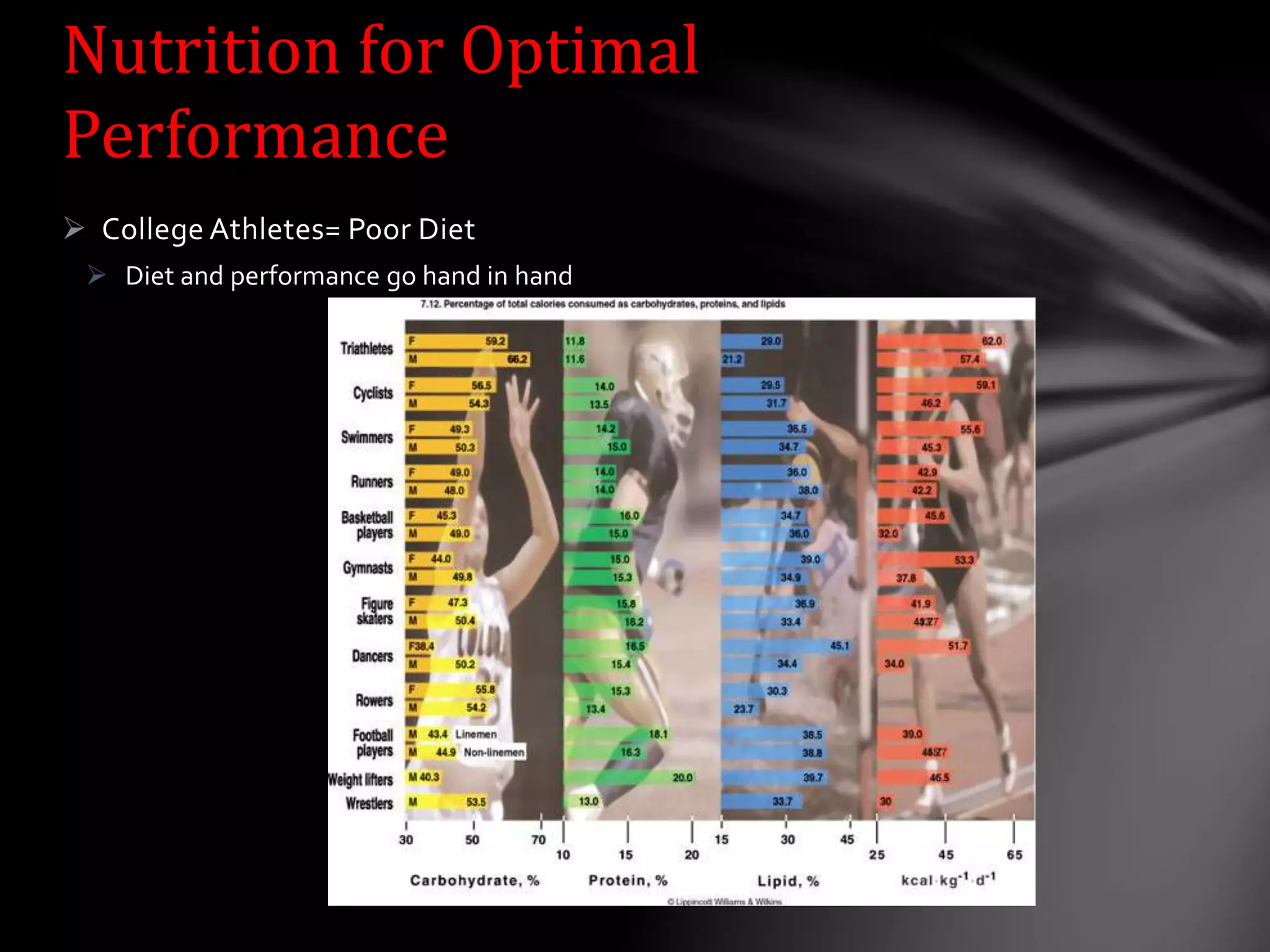
 College Athletes= Poor Diet
 Diet and performance go hand in hand
Nutrition for Optimal
Performance
 Carbs= #1 energy source
 I.e.- Whole grains, brown rice, sweet potatoes, squash, bread
 Increase recovery and replenish glycogen levels
 Gatorade and Water
during and after practice
Energy Sources
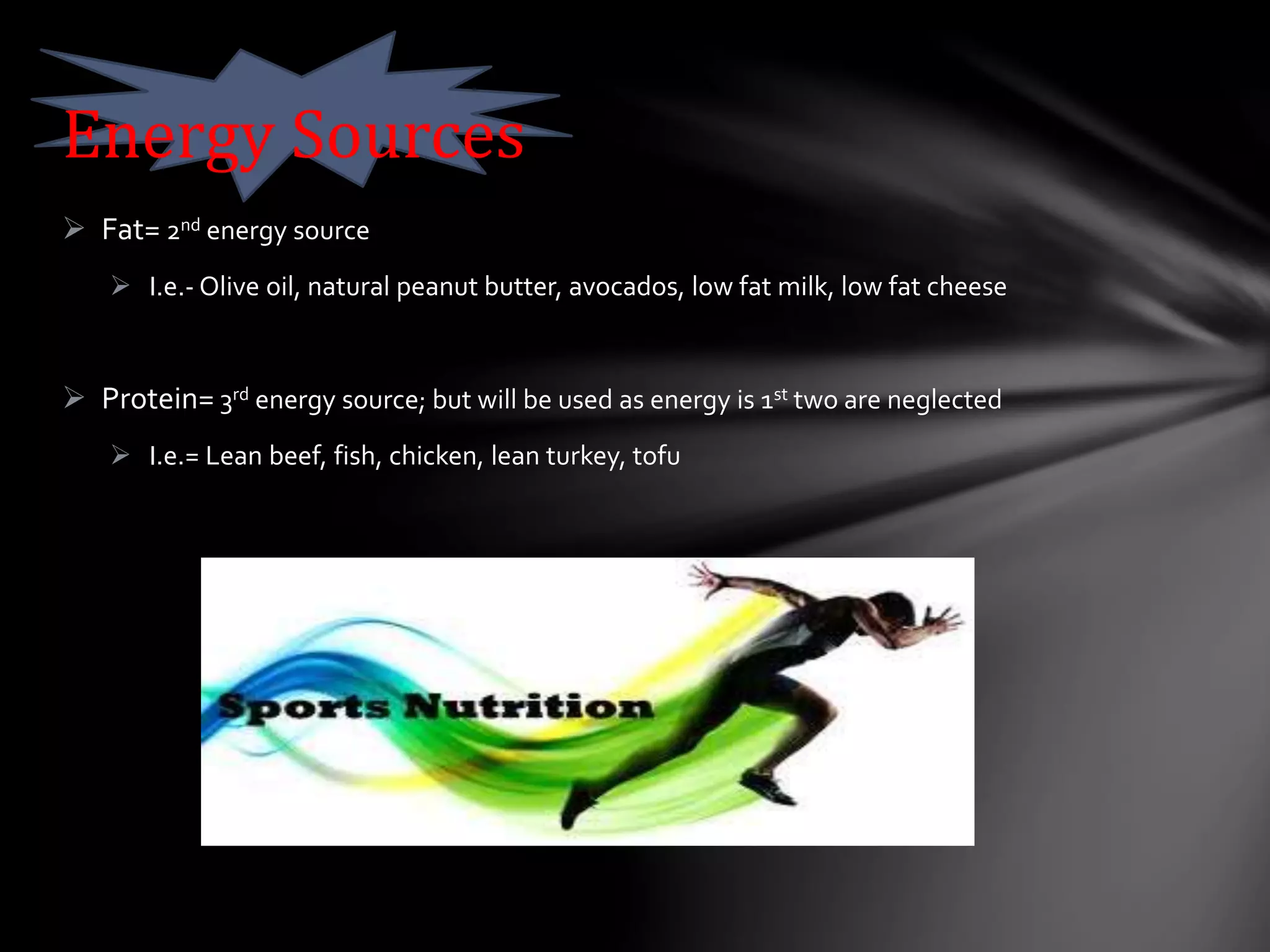
 Fat= 2nd energy source
 I.e.- Olive oil, natural peanut butter, avocados, low fat milk, low fat cheese
 Protein= 3rd energy source; but will be used as energy is 1st two are neglected
 I.e.= Lean beef, fish, chicken, lean turkey, tofu
Energy Sources
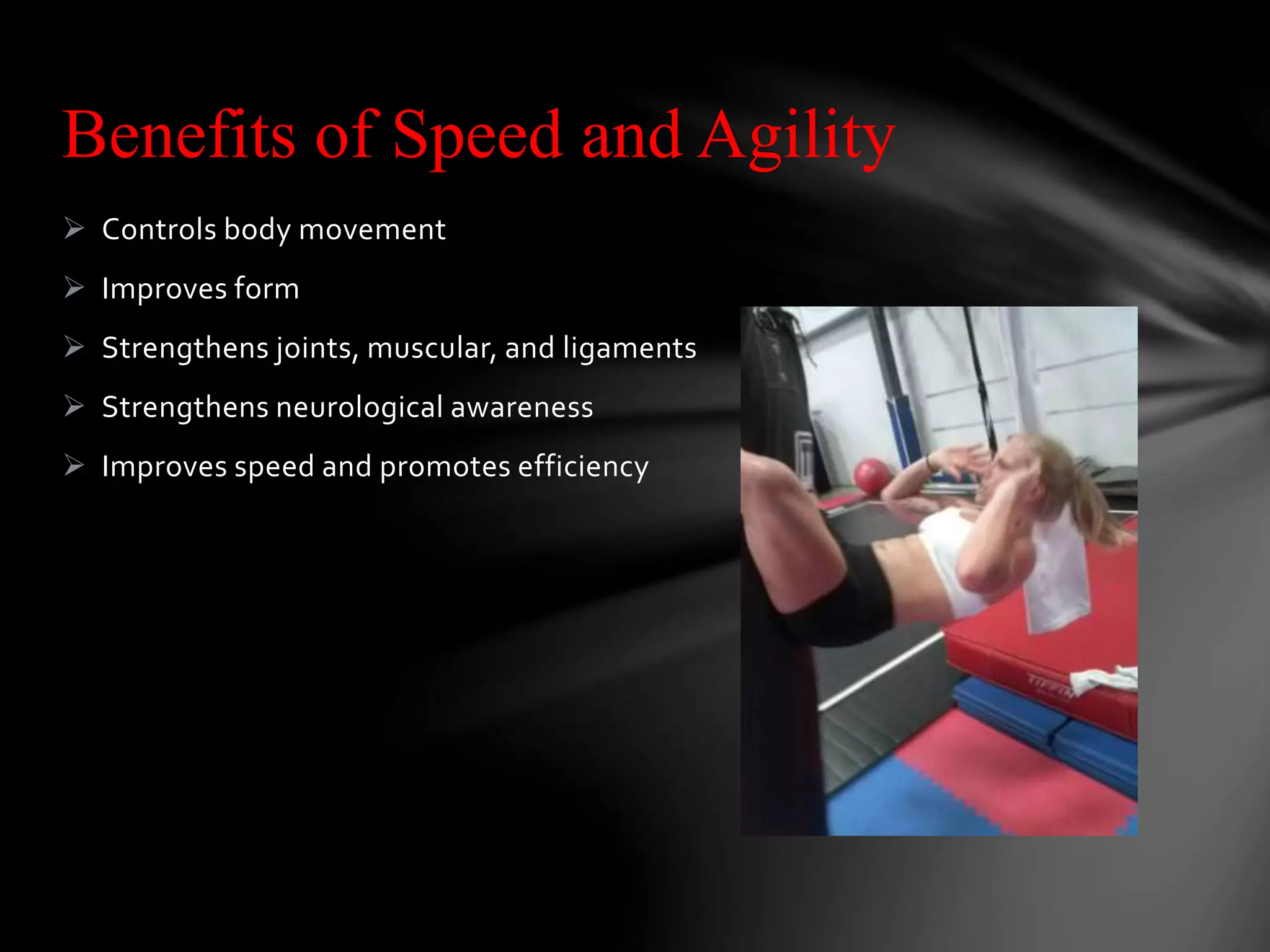
 Controls body movement
 Improves form
 Strengthens joints, muscular, and ligaments
 Strengthens neurological awareness
 Improves speed and promotes efficiency
Benefits of Speed and Agility
Incredible Benefits of Exercise

Incredible Benefits of Exercise

  • 1.
  • 2.
     Increase efficiencyfor athlete to use less energy  Improve athletes form and body control  Increase enzyme production. Calories and energy store more in muscles than fat .  Used for higher intensity sports, i.e.:Track, soccer, football, field hockey, etc. Speed and Agility
  • 3.
    Speed and AgilityEquipment Running Parachute- Power/ Speed Resistance
  • 4.
     Exercises usingno equipment  Body weight exercises  Can improve balance and motor skills  Strengthen tendons and ligaments around muscle Calisthenics Exercise
  • 6.
     Exercises thatcause jumps/explosiveness  Dynamic resistance exercises  Rapidly stretch and shorten muscle  Increase muscular power Plyometrics
  • 8.
     Speed andagility exercises more important in off season  Nervous system needs time to adjust to new motor skills  Agility speed and form improves over time with high reps  Takes weeks or months to see difference Neurological Awareness
  • 9.
    Speed And AgilityEquipment Agility ladder Speed and quickness; improve foot movement
  • 10.
     Neuromuscular Adaptation Agility training skills are personally related to your sport  It directly uses the neuromuscular system because it is at the intensity and speed of your sport.  Improved Athleticism  Increase body control through concentrated muscle strain and movement  Creating body control helps athletes move fast  Improves movement in joints, tendons, neck, back, etc.= Improved posture Benefits of Agility Training
  • 11.
    Speed and AgilityEquipment Safety Sleeve Elastic- lead runner force trailing runners stride to increase or speed up Vertical Jump- power in athletes muscles
  • 12.
     Injury Prevention& Decreased RehabilitationTime  By controlling body movement and improving joint & tendon stability= decrease in sports injury  Body is better prepared for awkward movements that can happen during game time  Athlete will have more neurological awareness and understand how their body moves while initiating agility moves during practice Benefits of Agility Training
  • 13.
    Speed and AgilityEquipment Sled= Speed resistance
  • 14.
  • 15.
     College Athletes=Poor Diet  Diet and performance go hand in hand Nutrition for Optimal Performance
  • 16.
     Carbs= #1energy source  I.e.- Whole grains, brown rice, sweet potatoes, squash, bread  Increase recovery and replenish glycogen levels  Gatorade and Water during and after practice Energy Sources
  • 17.
     Fat= 2ndenergy source  I.e.- Olive oil, natural peanut butter, avocados, low fat milk, low fat cheese  Protein= 3rd energy source; but will be used as energy is 1st two are neglected  I.e.= Lean beef, fish, chicken, lean turkey, tofu Energy Sources
  • 19.
     Controls bodymovement  Improves form  Strengthens joints, muscular, and ligaments  Strengthens neurological awareness  Improves speed and promotes efficiency Benefits of Speed and Agility