MUTHAYAMMAL ENGINEERING COLLEGE,
RASIPURAM 637408
(Autonomous)
DEPARTMENT OF
ELECTRICAL AND ELECTRONICS ENGINEERING
19EEC10 - POWER SYSTEM ANALYSIS
COURSE FACULTY
Dr.N.MOHANANTHINI,
ASP/EEE
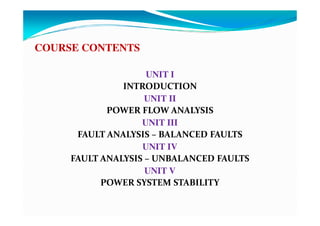
COURSE CONTENTS
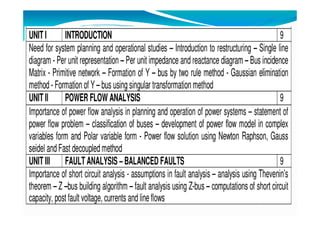
UNIT I
INTRODUCTION
UNIT II
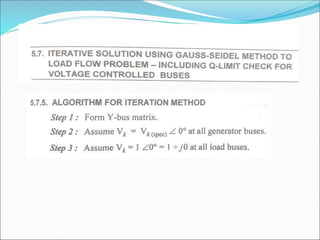
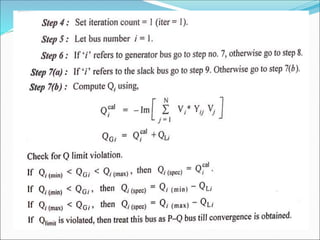
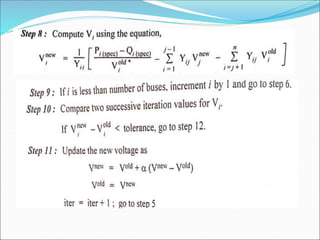
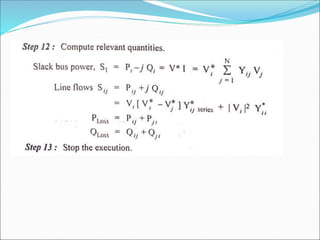
POWER FLOW ANALYSIS
POWER FLOW ANALYSIS
UNIT III
FAULT ANALYSIS – BALANCED FAULTS
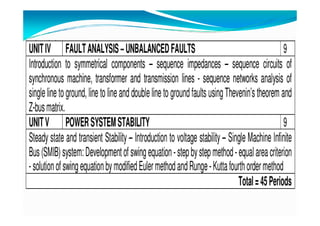
UNIT IV
FAULT ANALYSIS – UNBALANCED FAULTS
UNIT V
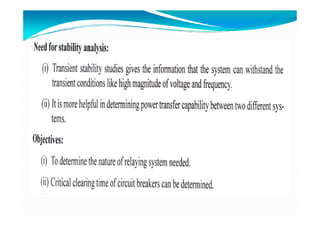
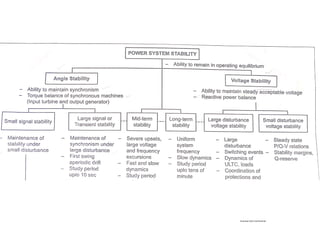
POWER SYSTEM STABILITY
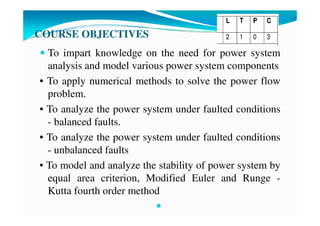
COURSE OBJECTIVES
To impart knowledge on the need for power system
analysis and model various power system components
• To apply numerical methods to solve the power flow
problem.
• To analyze the power system under faulted conditions
- balanced faults.
• To analyze the power system under faulted conditions
- unbalanced faults
• To model and analyze the stability of power system by
equal area criterion, Modified Euler and Runge -
Kutta fourth order method
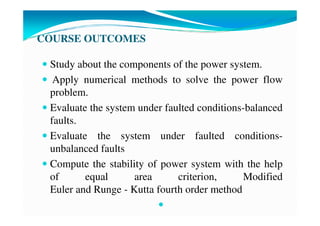
COURSE OUTCOMES
Study about the components of the power system.
Apply numerical methods to solve the power flow
problem.
Evaluate the system under faulted conditions-balanced
faults.
Evaluate the system under faulted conditions-
unbalanced faults
Compute the stability of power system with the help
of equal area criterion, Modified
Euler and Runge - Kutta fourth order method
TEXT BOOKS:
Sl.No Author(s) Title of the Book Publisher Year of Publication
1.
NagrathI.J. and
Kothari D.P
Modern Power System
Analysis
Tata McGraw Hill 2011
2
John J.Grainger
and
W.D.Stevenson
Jr.
Power System Analysis Tata Mc Graw-Hill 2010
REFERENCE BOOKS:
Sl.No Author(s) Title of the Book Publisher Year of Publication
1. Hadi Saadat Power System Analysis Tata McGraw Hill 2010
2.
P.Venkatesh,
B.V.Manikandan,
S.Charles Raja,
A.Srinivasan
Electrical Power
Systems- Analysis,
Security and
Deregulation
PHI Learning Private
Limited
2012
3. Kundur P
Power System Stability
and Control
Tata McGraw Hill 2010
4.
J.DuncanGlover,
Mulukutla
S.Sarma, Thomas
J.Overbye
Power System Analysis
& Design
Cengage Learning, 2012
5. Olle.I .Elgerd
Electric Energy Systems
Theory–An Introduction Tata Mc Graw Hill 2012
UNIT I
INTRODUCTION
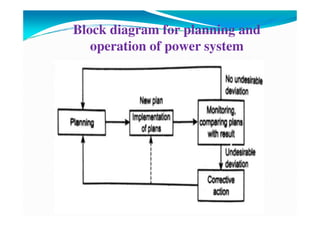
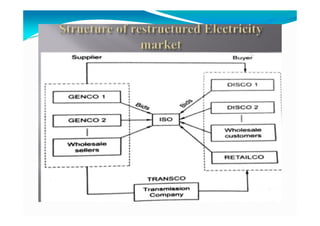
Block diagram for planning and
operation of power system
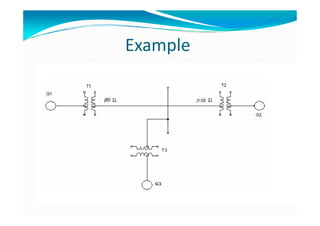
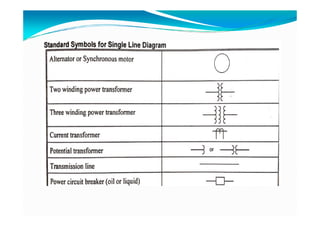
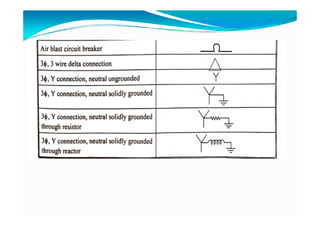
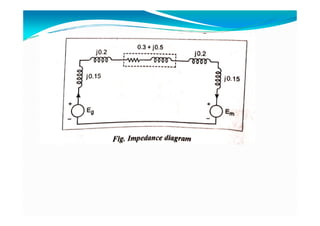
SINGLE LINE DIAGRAM
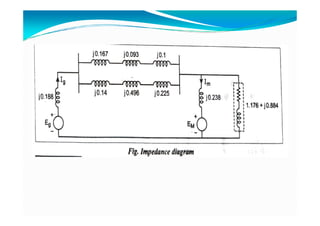
A single line diagram is diagrammatic representation of
power system in which the components are
represented by their symbols and interconnection
between them are shown by a straight
line even though the system is three phase system.
The ratings and the impedances of the
components are also marked on the single line diagram
Example
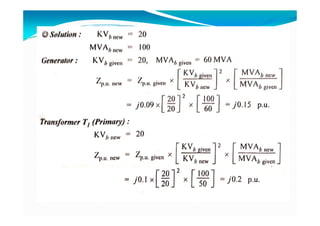
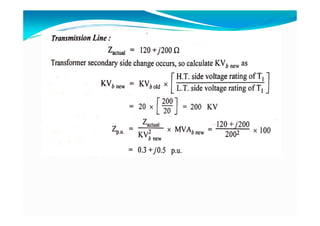
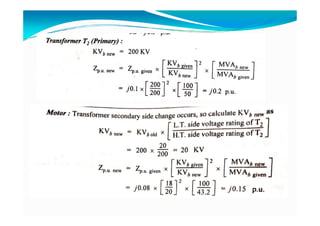
Per unit value
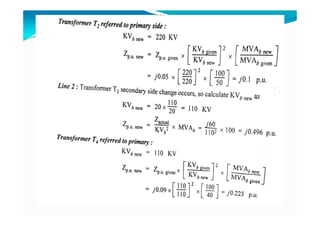
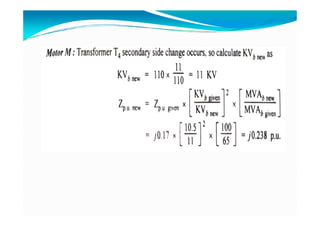
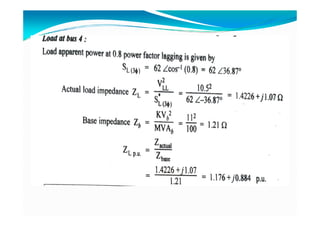
The per unit value of any quantity is defined as the ratio
of the actual value of the any quantity to
the base value of the same quantity as a decimal.
per unit=actual value/base value
Need for base values
The components or various sections of power system
may operate at different voltage and power
levels.
It will be convenient for analysis of power system if the
voltage, power, current and impedance rating of
components of power system are expressed with
reference to a common value called base value
Advantages of per unit system
i. Per unit data representation yields valuable relative magnitude
information.
ii. Circuit analysis of systems containing transformers of various
transformation ratios is greatly simplified.
iii. The p.u systems are ideal for the computerized analysis and simulation
of complex power system problems.
iv. Manufacturers usually specify the impedance values of equivalent in
per unit of the equipments rating.
v. The ohmic values of impedances are refereed to secondary is different
from the value as referee to primary. However, if base values are
selected properly, the p.u impedance is the same on the two sides of
the transformer.
vi. The circuit laws are valid in p.u systems, and the power and voltages
equations are simplified since the factors of √3 and 3 are eliminated
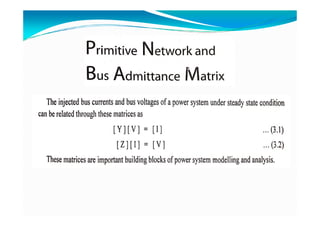
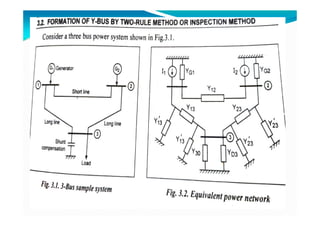
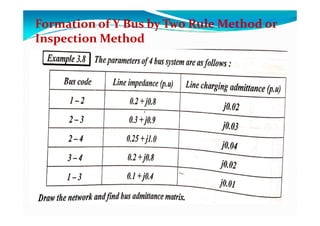
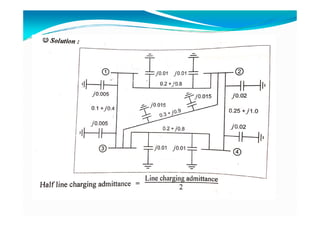
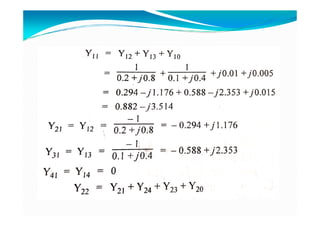
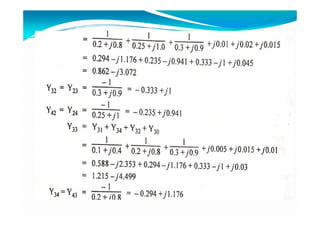
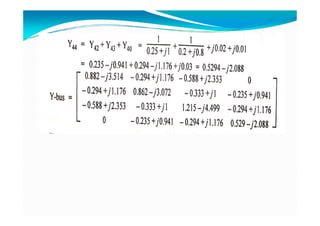
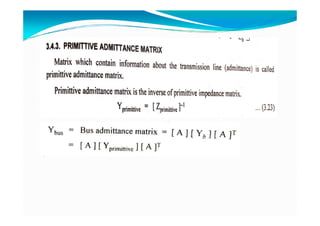
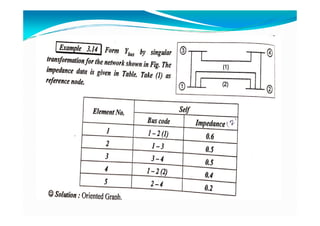
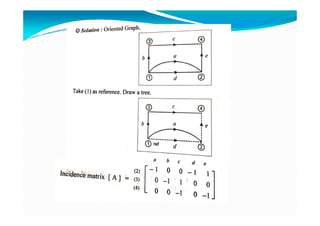
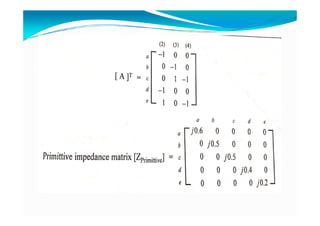
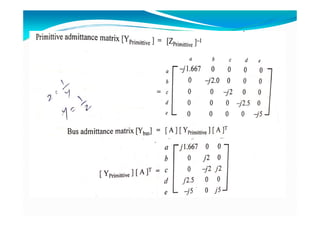
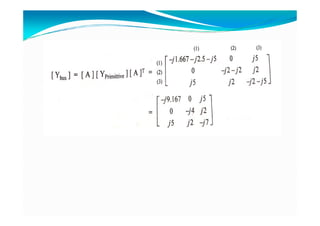
Formation of Y Bus by Two Rule Method or
Inspection Method
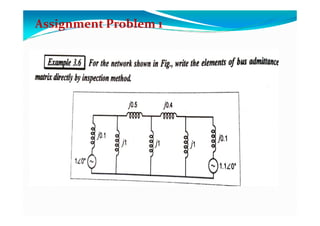
Assignment Problem 1
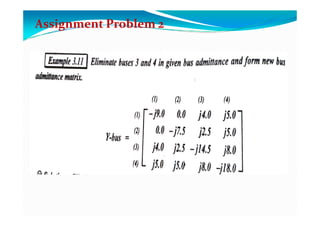
Assignment Problem 2
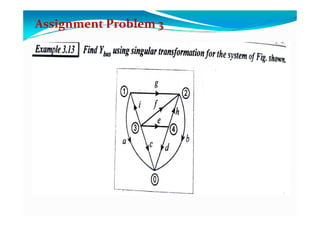
Assignment Problem 3
MUTHAYAMMAL ENGINEERING COLLEGE,
RASIPURAM 637408
(Autonomous)
DEPARTMENT OF
ELECTRICALAND ELECTRONICS ENGINEERING
POWER SYSTEM ANALYSIS
UNIT II
POWER FLOW ANALYSIS
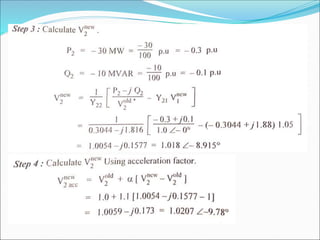
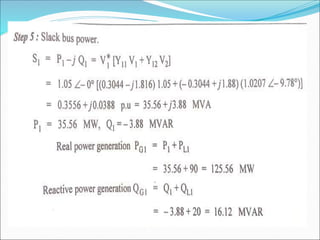
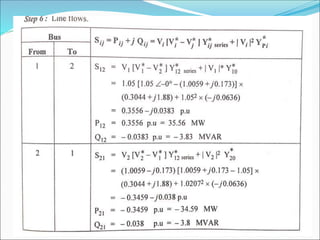
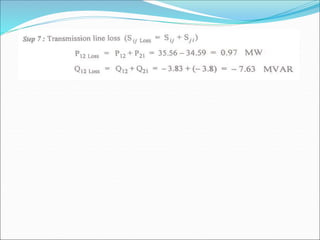
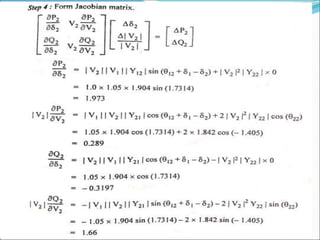
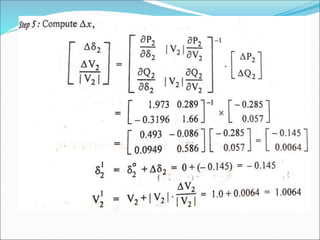
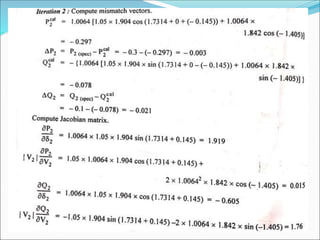
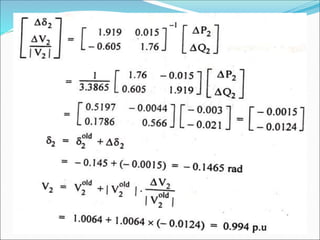
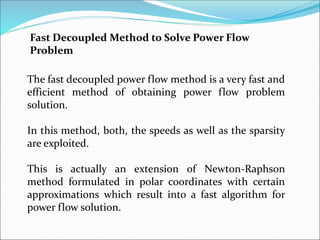
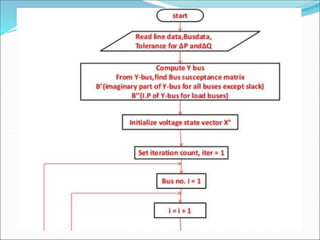
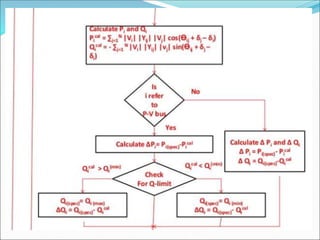
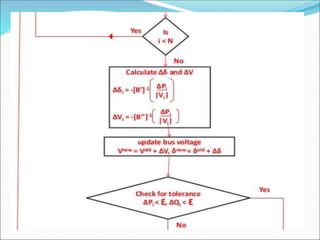
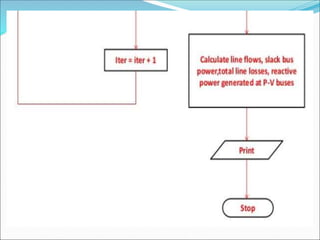
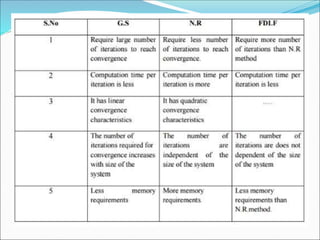
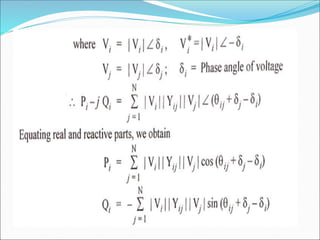
Fast Decoupled Method to Solve Power Flow
Problem
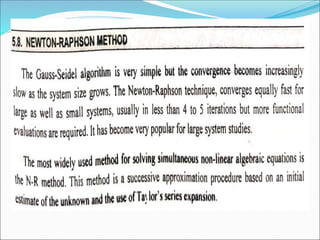
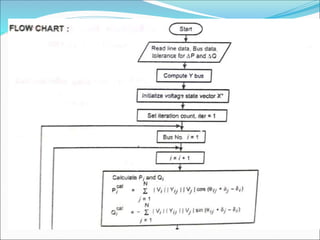
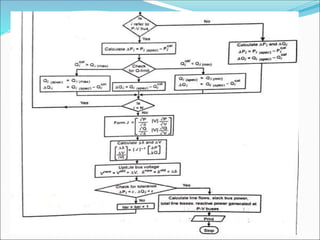
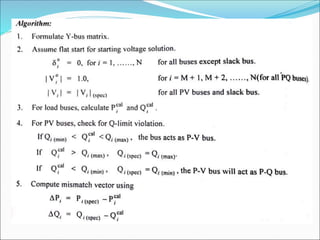
The fast decoupled power flow method is a very fast and
efficient method of obtaining power flow problem
solution.
In this method, both, the speeds as well as the sparsity
are exploited.
This is actually an extension of Newton-Raphson
method formulated in polar coordinates with certain
approximations which result into a fast algorithm for
power flow solution.
49
MUTHAYAMMAL ENGINEERING COLLEGE,
RASIPURAM 637408
(Autonomous)
DEPARTMENT OF
ELECTRICAL AND ELECTRONICS ENGINEERING
POWER SYSTEM ANALYSIS
UNIT III
FAULT ANALYSIS – BALANCED FAULTS
39
UNIT -IV
ELEC3241 1
Outlines
• Fault, classification and symmetrical fault.
• Percentage reactance and Short Circuit Current
• Per-Unit System and Base KVA
• Calculation of Short Circuit KVA
• Control techniques of Short Circuit Currents
• Location of Reactors in Power System
• Steps to symmetrical fault calculation
• Tutorial
ELEC3241 2
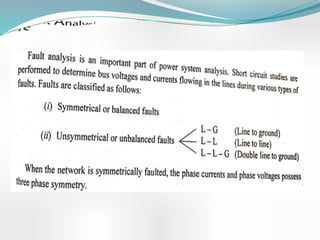
Faults and Classification
• Symmetrical and unsymmetrical faults
• Symmetrical Fault: That fault on power system
which gives rise to symmetrical currents (i.e.
equal fault currents in the lines with 120 degree
displacement) I called a symmetrical fault
• Why symmetrical fault is important??
- Though rarely occurs, but most severe and
IMPOSE MORE HEAVY DUTY ON THE CIRCUIT
BREAKER
• How to limit fault current: By impedance of the
system
ELEC3241 3
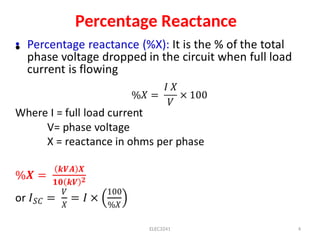
Percentage Reactance
•
ELEC3241 4
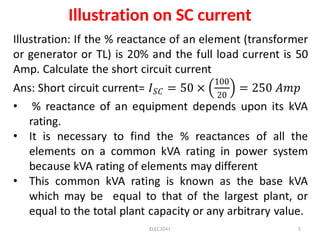
Illustration on SC current
ELEC3241 5
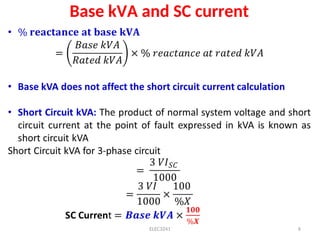
Base kVA and SC current
ELEC3241 6
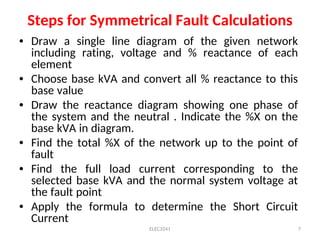
Steps for Symmetrical Fault Calculations
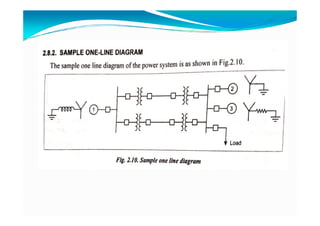
• Draw a single line diagram of the given network
including rating, voltage and % reactance of each
element
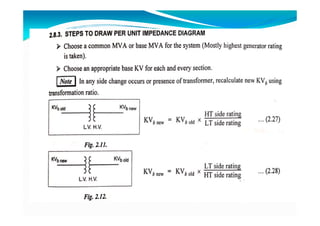
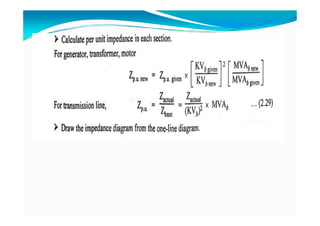
• Choose base kVA and convert all % reactance to this
base value
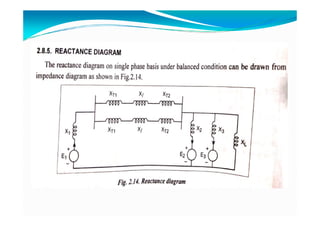
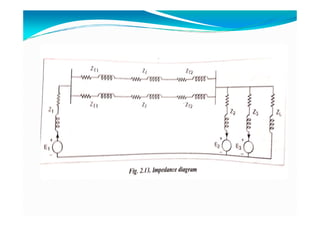
• Draw the reactance diagram showing one phase of
the system and the neutral . Indicate the %X on the
base kVA in diagram.
• Find the total %X of the network up to the point of
fault
• Find the full load current corresponding to the
selected base kVA and the normal system voltage at
the fault point
• Apply the formula to determine the Short Circuit
Current
ELEC3241 7
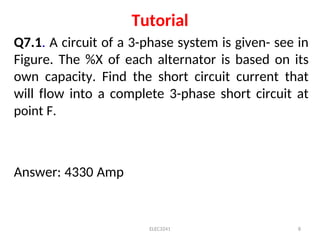
Tutorial
Q7.1. A circuit of a 3-phase system is given- see in
Figure. The %X of each alternator is based on its
own capacity. Find the short circuit current that
will flow into a complete 3-phase short circuit at
point F.
Answer: 4330 Amp
ELEC3241 8
Tutorial
Q7.2. A 3-phase, 20 MVA, 10 kV alternator has
internal reactance of 5% and negligible resistance.
Find the external reactance per phase to be
connected in series with the alternator so that
steady current on short circuit does not exceed 8
times the full load current.
Answer: X = 0.375 Ω
ELEC3241 9
Tutorial
Q7.3. A 3-phase transmission line operating at 10 kV
and having a resistance of 1Ω and reactance of 4Ω is
connected to the generating station bus bar through 5
MVA step-up transformer having a reactance of 5%.
The bus bar supplied by a 10 MVA alternator having
10% reactance. Calculate the short circuit kVA fed to
symmetrical fault between phases if it occurs
(i) At the load end of transmission line
(ii) (ii) at the high voltage terminals of the transformer
Answer: (i) Short circuit kVA = 16,440 kVA
(ii) Short circuit kVA = 50,000 kVA
ELEC3241 10
Tutorial
Q7.4. The plant capacity of a 3-phase generating
station consists of two 10000 kVA generators of
reactance 12% each and one 5000 kVA generator of
reactance 18%. The generators are connected to the
station bus bar from which load is taken through three
5000 kVA step up transformer each having a reactance
of 5%. Determine the maximum fault MVA which the
circuit breakers on (i) low voltage side and (ii) high
voltage side may have to deal with.
Answer: (i) Fault MVA = 194.5
(ii) Fault MVA = 66
ELEC3241 11
POWER SYSTEM ANALYSIS_254ppt.pdf

POWER SYSTEM ANALYSIS_254ppt.pdf

  • 1.
    MUTHAYAMMAL ENGINEERING COLLEGE, RASIPURAM637408 (Autonomous) DEPARTMENT OF ELECTRICAL AND ELECTRONICS ENGINEERING 19EEC10 - POWER SYSTEM ANALYSIS COURSE FACULTY Dr.N.MOHANANTHINI, ASP/EEE
  • 2.
    COURSE CONTENTS UNIT I INTRODUCTION UNITII POWER FLOW ANALYSIS POWER FLOW ANALYSIS UNIT III FAULT ANALYSIS – BALANCED FAULTS UNIT IV FAULT ANALYSIS – UNBALANCED FAULTS UNIT V POWER SYSTEM STABILITY
  • 3.
    COURSE OBJECTIVES To impartknowledge on the need for power system analysis and model various power system components • To apply numerical methods to solve the power flow problem. • To analyze the power system under faulted conditions • To analyze the power system under faulted conditions - balanced faults. • To analyze the power system under faulted conditions - unbalanced faults • To model and analyze the stability of power system by equal area criterion, Modified Euler and Runge - Kutta fourth order method
  • 4.
    COURSE OUTCOMES Study aboutthe components of the power system. Apply numerical methods to solve the power flow problem. Evaluate the system under faulted conditions-balanced Evaluate the system under faulted conditions-balanced faults. Evaluate the system under faulted conditions- unbalanced faults Compute the stability of power system with the help of equal area criterion, Modified Euler and Runge - Kutta fourth order method
  • 7.
    TEXT BOOKS: Sl.No Author(s)Title of the Book Publisher Year of Publication 1. NagrathI.J. and Kothari D.P Modern Power System Analysis Tata McGraw Hill 2011 2 John J.Grainger and W.D.Stevenson Jr. Power System Analysis Tata Mc Graw-Hill 2010 REFERENCE BOOKS: Sl.No Author(s) Title of the Book Publisher Year of Publication 1. Hadi Saadat Power System Analysis Tata McGraw Hill 2010 1. Hadi Saadat Power System Analysis Tata McGraw Hill 2010 2. P.Venkatesh, B.V.Manikandan, S.Charles Raja, A.Srinivasan Electrical Power Systems- Analysis, Security and Deregulation PHI Learning Private Limited 2012 3. Kundur P Power System Stability and Control Tata McGraw Hill 2010 4. J.DuncanGlover, Mulukutla S.Sarma, Thomas J.Overbye Power System Analysis & Design Cengage Learning, 2012 5. Olle.I .Elgerd Electric Energy Systems Theory–An Introduction Tata Mc Graw Hill 2012
  • 8.
  • 13.
    Block diagram forplanning and operation of power system
  • 26.
    SINGLE LINE DIAGRAM Asingle line diagram is diagrammatic representation of power system in which the components are represented by their symbols and interconnection between them are shown by a straight line even though the system is three phase system. line even though the system is three phase system. The ratings and the impedances of the components are also marked on the single line diagram
  • 27.
  • 28.
    Per unit value Theper unit value of any quantity is defined as the ratio of the actual value of the any quantity to the base value of the same quantity as a decimal. per unit=actual value/base value
  • 29.
    Need for basevalues The components or various sections of power system may operate at different voltage and power levels. It will be convenient for analysis of power system if the It will be convenient for analysis of power system if the voltage, power, current and impedance rating of components of power system are expressed with reference to a common value called base value
  • 30.
    Advantages of perunit system i. Per unit data representation yields valuable relative magnitude information. ii. Circuit analysis of systems containing transformers of various transformation ratios is greatly simplified. iii. The p.u systems are ideal for the computerized analysis and simulation of complex power system problems. iv. Manufacturers usually specify the impedance values of equivalent in per unit of the equipments rating. v. The ohmic values of impedances are refereed to secondary is different from the value as referee to primary. However, if base values are selected properly, the p.u impedance is the same on the two sides of the transformer. vi. The circuit laws are valid in p.u systems, and the power and voltages equations are simplified since the factors of √3 and 3 are eliminated
  • 58.
    Formation of YBus by Two Rule Method or Inspection Method
  • 63.
  • 68.
  • 83.
  • 84.
    MUTHAYAMMAL ENGINEERING COLLEGE, RASIPURAM637408 (Autonomous) DEPARTMENT OF ELECTRICALAND ELECTRONICS ENGINEERING POWER SYSTEM ANALYSIS
  • 85.
  • 126.
    Fast Decoupled Methodto Solve Power Flow Problem The fast decoupled power flow method is a very fast and efficient method of obtaining power flow problem solution. In this method, both, the speeds as well as the sparsity are exploited. This is actually an extension of Newton-Raphson method formulated in polar coordinates with certain approximations which result into a fast algorithm for power flow solution.
  • 132.
  • 133.
    MUTHAYAMMAL ENGINEERING COLLEGE, RASIPURAM637408 (Autonomous) DEPARTMENT OF ELECTRICAL AND ELECTRONICS ENGINEERING POWER SYSTEM ANALYSIS
  • 134.
    UNIT III FAULT ANALYSIS– BALANCED FAULTS
  • 171.
  • 172.
  • 173.
    Outlines • Fault, classificationand symmetrical fault. • Percentage reactance and Short Circuit Current • Per-Unit System and Base KVA • Calculation of Short Circuit KVA • Control techniques of Short Circuit Currents • Location of Reactors in Power System • Steps to symmetrical fault calculation • Tutorial ELEC3241 2
  • 174.
    Faults and Classification •Symmetrical and unsymmetrical faults • Symmetrical Fault: That fault on power system which gives rise to symmetrical currents (i.e. equal fault currents in the lines with 120 degree displacement) I called a symmetrical fault • Why symmetrical fault is important?? - Though rarely occurs, but most severe and IMPOSE MORE HEAVY DUTY ON THE CIRCUIT BREAKER • How to limit fault current: By impedance of the system ELEC3241 3
  • 175.
  • 176.
    Illustration on SCcurrent ELEC3241 5
  • 177.
    Base kVA andSC current ELEC3241 6
  • 178.
    Steps for SymmetricalFault Calculations • Draw a single line diagram of the given network including rating, voltage and % reactance of each element • Choose base kVA and convert all % reactance to this base value • Draw the reactance diagram showing one phase of the system and the neutral . Indicate the %X on the base kVA in diagram. • Find the total %X of the network up to the point of fault • Find the full load current corresponding to the selected base kVA and the normal system voltage at the fault point • Apply the formula to determine the Short Circuit Current ELEC3241 7
  • 179.
    Tutorial Q7.1. A circuitof a 3-phase system is given- see in Figure. The %X of each alternator is based on its own capacity. Find the short circuit current that will flow into a complete 3-phase short circuit at point F. Answer: 4330 Amp ELEC3241 8
  • 180.
    Tutorial Q7.2. A 3-phase,20 MVA, 10 kV alternator has internal reactance of 5% and negligible resistance. Find the external reactance per phase to be connected in series with the alternator so that steady current on short circuit does not exceed 8 times the full load current. Answer: X = 0.375 Ω ELEC3241 9
  • 181.
    Tutorial Q7.3. A 3-phasetransmission line operating at 10 kV and having a resistance of 1Ω and reactance of 4Ω is connected to the generating station bus bar through 5 MVA step-up transformer having a reactance of 5%. The bus bar supplied by a 10 MVA alternator having 10% reactance. Calculate the short circuit kVA fed to symmetrical fault between phases if it occurs (i) At the load end of transmission line (ii) (ii) at the high voltage terminals of the transformer Answer: (i) Short circuit kVA = 16,440 kVA (ii) Short circuit kVA = 50,000 kVA ELEC3241 10
  • 182.
    Tutorial Q7.4. The plantcapacity of a 3-phase generating station consists of two 10000 kVA generators of reactance 12% each and one 5000 kVA generator of reactance 18%. The generators are connected to the station bus bar from which load is taken through three 5000 kVA step up transformer each having a reactance of 5%. Determine the maximum fault MVA which the circuit breakers on (i) low voltage side and (ii) high voltage side may have to deal with. Answer: (i) Fault MVA = 194.5 (ii) Fault MVA = 66 ELEC3241 11