Power Steering System
In
Automobiles
Presented by
Deepak Kango
+91-8950783197
Introduction
Steering is the term applied to the collection of
components, linkages, etc. which allow for a car or
other vehicle to follow a course determined by its
driver.
History of Hydro-mechanical Power Steering
(HMPS)
Hydro-mechanical power steering was the
first type to be used on agricultural tractors in
the early 1950’s.
Suitable for small to medium tractors where
power steering can be an option to manual
steering.
Once the size of the tractor becomes too big
for manual steering, hydro-mechanical
steering is usually not cost effective.
General Circuit
Oil Reservoir
Must be large enough to hold more than all of the oil for
the system.
Should be capable of dissipating heat in oil.
Hydraulic Lines
Flexible hoses due to the steering components
movements.
Components in Power Steering
Power Steering Pump
Usually a vane-type pump or similar.
Driven by the engine.
Power Cylinder
Double-acting differential cylinder.
Steering response to left and right turns is slightly
different. Hardly noticeable.
Vane Type of Pump
ROTARY VALVE
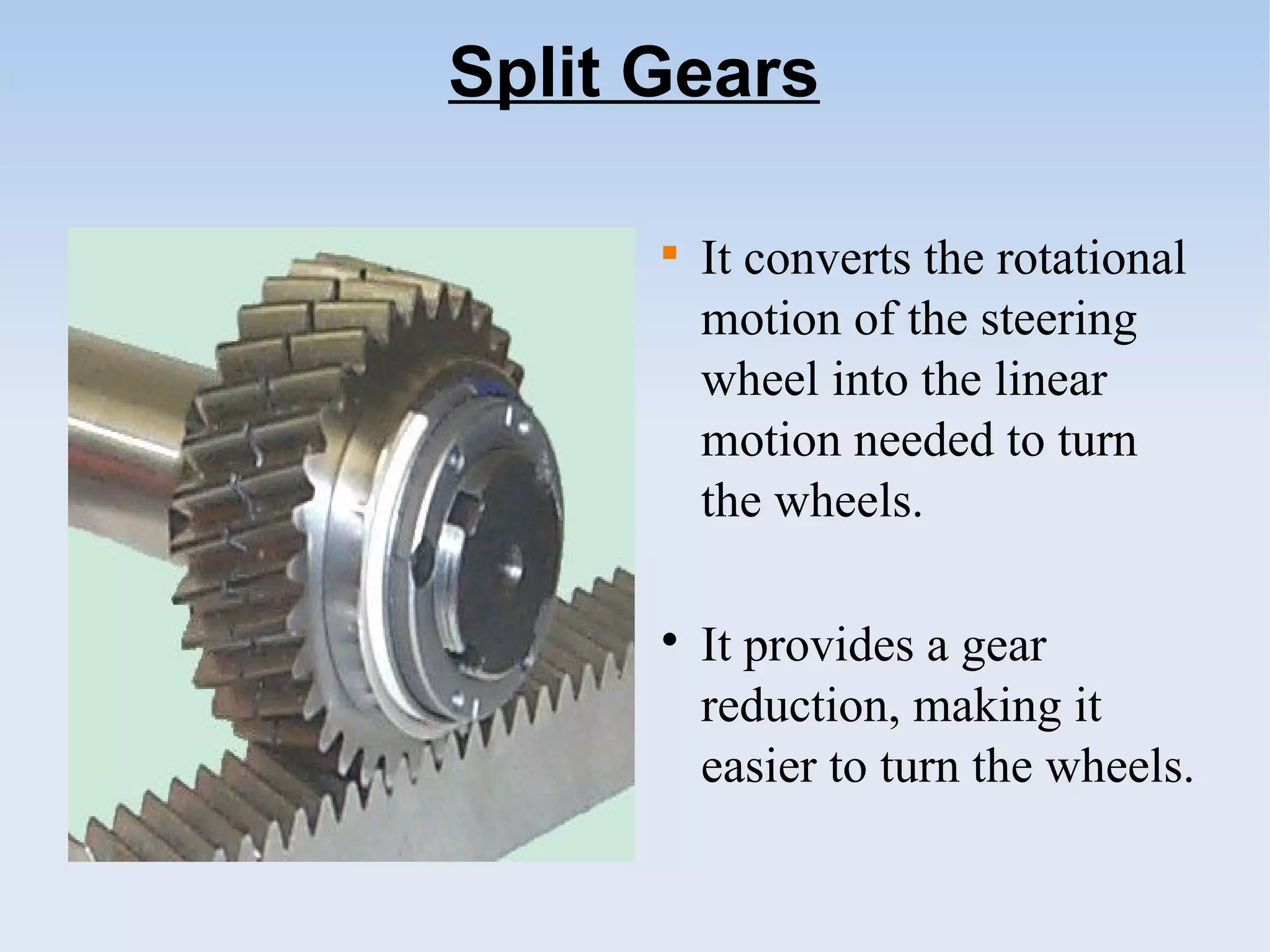
Split Gears

It converts the rotational
motion of the steering
wheel into the linear
motion needed to turn
the wheels.

It provides a gear
reduction, making it
easier to turn the wheels.
Steering Gear Box
Steering gears are
enclosed in a casing
known as steering
gear box ( as shown
in Fig.)
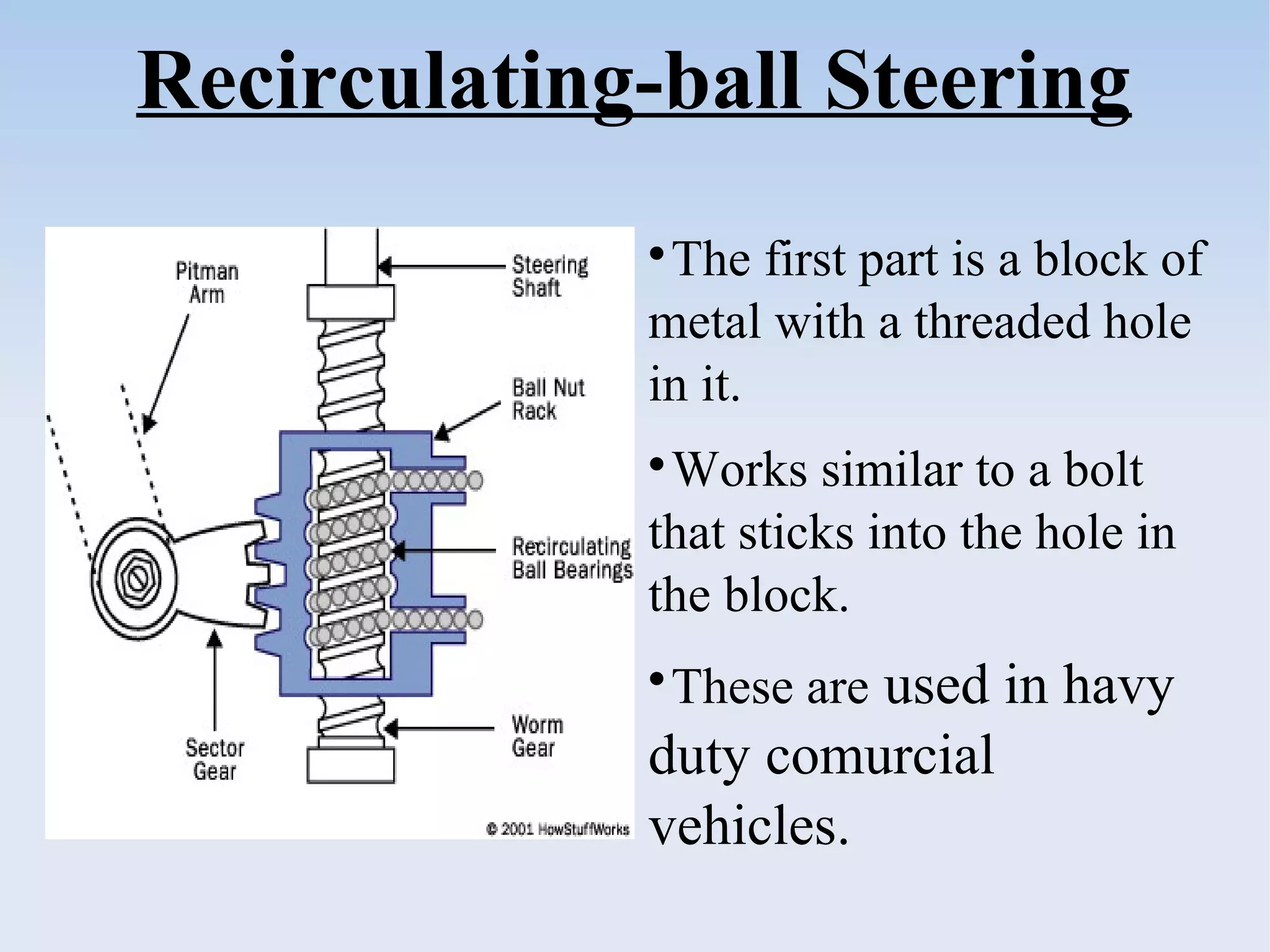
Recirculating-ball Steering

The first part is a block of
metal with a threaded hole
in it.

Works similar to a bolt
that sticks into the hole in
the block.

These are used in havy
duty comurcial
vehicles.
`
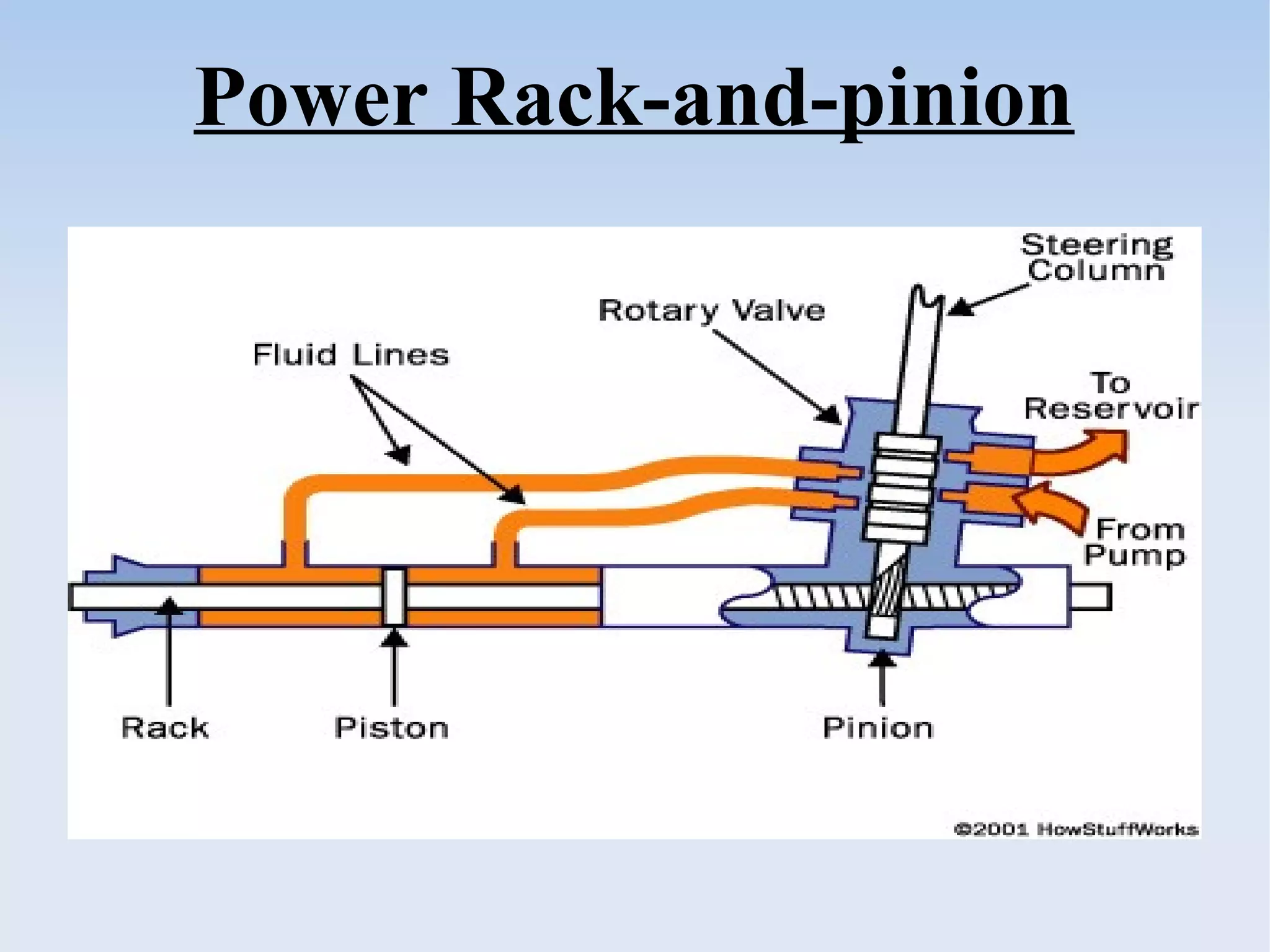
Power Rack-and-pinion
Advantages

Preventing the wheels from transferring the load to
the steering column

Reducing the driver’s fatigue

Low input torque and continuous steering function

Oil output directly proportional to the steering speed
Disadvantages

Design is compications and increased in cost.

Fluid leakage.
Conclusion
By studing all these we can conclude that the
power stering is nesessory for the modern cars.
Now a days we can see almost all cars having
a power steering.
It provides good handling to the driver, gives
better comfert, and make him less fatigue.
Power Steering
Thank you

POWER STEERING SYSTEM

  • 1.
    Power Steering System In Automobiles Presentedby Deepak Kango +91-8950783197
  • 2.
    Introduction Steering is theterm applied to the collection of components, linkages, etc. which allow for a car or other vehicle to follow a course determined by its driver.
  • 3.
    History of Hydro-mechanicalPower Steering (HMPS) Hydro-mechanical power steering was the first type to be used on agricultural tractors in the early 1950’s. Suitable for small to medium tractors where power steering can be an option to manual steering. Once the size of the tractor becomes too big for manual steering, hydro-mechanical steering is usually not cost effective.
  • 4.
    General Circuit Oil Reservoir Mustbe large enough to hold more than all of the oil for the system. Should be capable of dissipating heat in oil. Hydraulic Lines Flexible hoses due to the steering components movements.
  • 5.
    Components in PowerSteering Power Steering Pump Usually a vane-type pump or similar. Driven by the engine. Power Cylinder Double-acting differential cylinder. Steering response to left and right turns is slightly different. Hardly noticeable.
  • 6.
  • 7.
  • 8.
    Split Gears  It convertsthe rotational motion of the steering wheel into the linear motion needed to turn the wheels.  It provides a gear reduction, making it easier to turn the wheels.
  • 9.
    Steering Gear Box Steeringgears are enclosed in a casing known as steering gear box ( as shown in Fig.)
  • 10.
    Recirculating-ball Steering  The firstpart is a block of metal with a threaded hole in it.  Works similar to a bolt that sticks into the hole in the block.  These are used in havy duty comurcial vehicles. `
  • 11.
  • 12.
    Advantages  Preventing the wheelsfrom transferring the load to the steering column  Reducing the driver’s fatigue  Low input torque and continuous steering function  Oil output directly proportional to the steering speed
  • 13.
    Disadvantages  Design is compicationsand increased in cost.  Fluid leakage.
  • 14.
    Conclusion By studing allthese we can conclude that the power stering is nesessory for the modern cars. Now a days we can see almost all cars having a power steering. It provides good handling to the driver, gives better comfert, and make him less fatigue.
  • 15.