POWER QUALITY
IMPROVEMENT
TECHNIQUES:A REVIEW
presented by
Sahid Raja Khan (B.Tech. EE) Hons.
2014-2018
INDEX
 DEFINATION
 DIFFERENT POWER QUALITY PROBLEM
 CONSEQUENCESOF POOR POWER
QUALITY
 SOLUTION OF POWER QUALITY
PROBLEMS
 CONCLUSION
DEFINATION
 Power quality is often defined as the electrical network
grid’s ability to power supply clean and stable power
supply.
 In other words power quality ideally creates a perfect
power supply that is always available has a pure, noise-
free sinusoidal waves shape, and is always within voltage
and frequency tolerances.
DIFFERENT POWER QUALITY PROBLEM
 Due to increasing and varying energy demands from
various industrial processes, many loads regularly impose
disturbances on the grid, making deviation from these
ideal condition are frequent.
 There are main causes of PQ problem given below
1. Harmonic distortion
2. Voltage unbalance
3. Short voltage variation
4. Long voltage variation
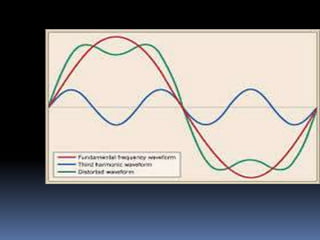
1.Harmonic distortion:
The total harmonic distortion, or THD, of a signal is a
measurement of the harmonic distortion present and is
defined as the ratio of the sum of the powers of all harmonic
components to the power of the fundamental frequency.
Causes:
 Harmonics are caused by non-linear loads that draw a non
sinusoidal current from a sinusoidal voltage source.
 Some examples of harmonic producing loads are electric arc
furnaces, staticVAR compensators, inverters, DC converters,
switch-mode power supplies, and AC or DC motor drives.
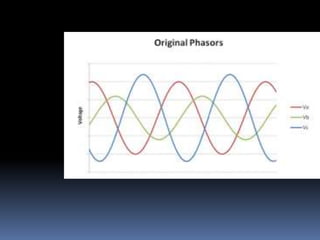
2.Voltage unbalance
 It is defined as the difference between the highest and the
lowest RMS voltage, referred to the average of the three
voltage.
 In other words the maximum deviation from the average
phase voltage, referred to the average of the phase voltage
Causes:
 Any large single phase load, or a number of small loads connected
to only one phase cause more current to flow from that particular
phase causing voltage drop on line.
 Switching of three phase heavy loads results in current and voltage
surges which cause unbalance in the system.
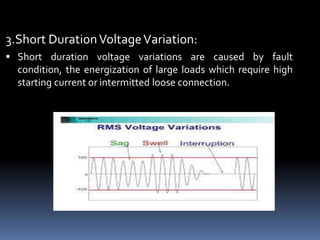
3.Short DurationVoltageVariation:
 Short duration voltage variations are caused by fault
condition, the energization of large loads which require high
starting current or intermitted loose connection.
4.Long DurationVoltageVariation:
 Long duration variation can be either overvoltage or under
voltages. Overvoltage and under voltages generally are not
the result of system fault but are caused by the load variation
on the system and system switching operations.
 There are two types of long duration voltage variation
1. Over voltage
2. Under voltage
Consequense of Poor Power
Quality
 Reduction production speed
 Increased energy consumption
 Charges for reactive power consumption
 Lost production
 Equipment damage
 Data loss
 Decreased equipment lifetime
Solutions of Power Quality
Problems
 Using DVR
 Using UPQC
 Using STATCOM
DVR:
 DynamicVoltage Restorer can provide the
most cost effective solution to mitigate
voltage sags and swells that is required by
customer.
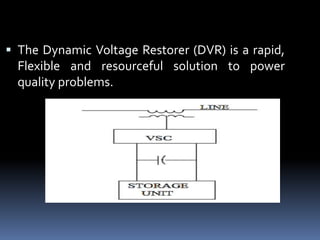
 The Dynamic Voltage Restorer (DVR) is a rapid,
Flexible and resourceful solution to power
quality problems.
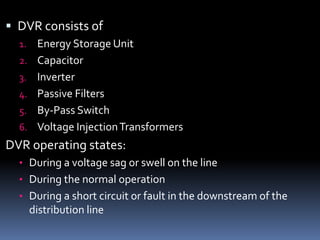
 DVR consists of
1. Energy Storage Unit
2. Capacitor
3. Inverter
4. Passive Filters
5. By-Pass Switch
6. Voltage InjectionTransformers
DVR operating states:
• During a voltage sag or swell on the line
• During the normal operation
• During a short circuit or fault in the downstream of the
distribution line
UPQC:
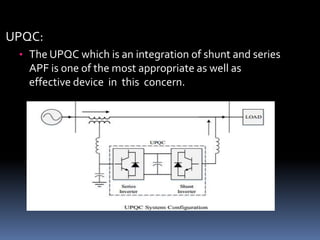
• The UPQC which is an integration of shunt and series
APF is one of the most appropriate as well as
effective device in this concern.
 UPQC consists of
1. Shunt Inverter
2. Series Inverter
3. LC Filter
4. Series InjectionTransformer
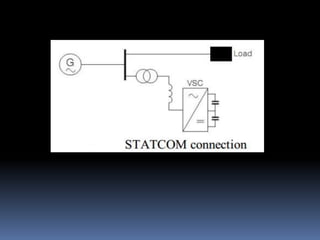
STATCOM:
• STATCOM is a shunt compensator based on usually multi-
level VSC design, utilizing IGBT (Insulated Gate Bipolar
Transistor) as reliable high speed switching elements and
a control concept based on pulse-width modulation.
• STATCOM allows voltage stabilization, improvement of
power factor and dynamic control at the point of
connection to industrial load using reactive power
compensation.
CONCLUSION
 Electrical Power system of India Is not too much efficient
thus many improvements are to made for improve of the
power quality of electrical power.
 Power quality factor is affected by many reason some of
these reasons are harmonics, voltage sag, voltage swell,
voltage interruption, voltage unbalance etc. These factor
can be overcome using UPQC, STATCOM, DVR etc.

Power quality improvement techniques

  • 1.
    POWER QUALITY IMPROVEMENT TECHNIQUES:A REVIEW presentedby Sahid Raja Khan (B.Tech. EE) Hons. 2014-2018
  • 2.
    INDEX  DEFINATION  DIFFERENTPOWER QUALITY PROBLEM  CONSEQUENCESOF POOR POWER QUALITY  SOLUTION OF POWER QUALITY PROBLEMS  CONCLUSION
  • 3.
    DEFINATION  Power qualityis often defined as the electrical network grid’s ability to power supply clean and stable power supply.  In other words power quality ideally creates a perfect power supply that is always available has a pure, noise- free sinusoidal waves shape, and is always within voltage and frequency tolerances.
  • 4.
    DIFFERENT POWER QUALITYPROBLEM  Due to increasing and varying energy demands from various industrial processes, many loads regularly impose disturbances on the grid, making deviation from these ideal condition are frequent.  There are main causes of PQ problem given below 1. Harmonic distortion 2. Voltage unbalance 3. Short voltage variation 4. Long voltage variation
  • 5.
    1.Harmonic distortion: The totalharmonic distortion, or THD, of a signal is a measurement of the harmonic distortion present and is defined as the ratio of the sum of the powers of all harmonic components to the power of the fundamental frequency. Causes:  Harmonics are caused by non-linear loads that draw a non sinusoidal current from a sinusoidal voltage source.  Some examples of harmonic producing loads are electric arc furnaces, staticVAR compensators, inverters, DC converters, switch-mode power supplies, and AC or DC motor drives.
  • 7.
    2.Voltage unbalance  Itis defined as the difference between the highest and the lowest RMS voltage, referred to the average of the three voltage.  In other words the maximum deviation from the average phase voltage, referred to the average of the phase voltage
  • 9.
    Causes:  Any largesingle phase load, or a number of small loads connected to only one phase cause more current to flow from that particular phase causing voltage drop on line.  Switching of three phase heavy loads results in current and voltage surges which cause unbalance in the system.
  • 10.
    3.Short DurationVoltageVariation:  Shortduration voltage variations are caused by fault condition, the energization of large loads which require high starting current or intermitted loose connection.
  • 11.
    4.Long DurationVoltageVariation:  Longduration variation can be either overvoltage or under voltages. Overvoltage and under voltages generally are not the result of system fault but are caused by the load variation on the system and system switching operations.  There are two types of long duration voltage variation 1. Over voltage 2. Under voltage
  • 12.
    Consequense of PoorPower Quality  Reduction production speed  Increased energy consumption  Charges for reactive power consumption  Lost production  Equipment damage  Data loss  Decreased equipment lifetime
  • 13.
    Solutions of PowerQuality Problems  Using DVR  Using UPQC  Using STATCOM DVR:  DynamicVoltage Restorer can provide the most cost effective solution to mitigate voltage sags and swells that is required by customer.
  • 14.
     The DynamicVoltage Restorer (DVR) is a rapid, Flexible and resourceful solution to power quality problems.
  • 15.
     DVR consistsof 1. Energy Storage Unit 2. Capacitor 3. Inverter 4. Passive Filters 5. By-Pass Switch 6. Voltage InjectionTransformers DVR operating states: • During a voltage sag or swell on the line • During the normal operation • During a short circuit or fault in the downstream of the distribution line
  • 16.
    UPQC: • The UPQCwhich is an integration of shunt and series APF is one of the most appropriate as well as effective device in this concern.
  • 17.
     UPQC consistsof 1. Shunt Inverter 2. Series Inverter 3. LC Filter 4. Series InjectionTransformer
  • 18.
    STATCOM: • STATCOM isa shunt compensator based on usually multi- level VSC design, utilizing IGBT (Insulated Gate Bipolar Transistor) as reliable high speed switching elements and a control concept based on pulse-width modulation. • STATCOM allows voltage stabilization, improvement of power factor and dynamic control at the point of connection to industrial load using reactive power compensation.
  • 20.
    CONCLUSION  Electrical Powersystem of India Is not too much efficient thus many improvements are to made for improve of the power quality of electrical power.  Power quality factor is affected by many reason some of these reasons are harmonics, voltage sag, voltage swell, voltage interruption, voltage unbalance etc. These factor can be overcome using UPQC, STATCOM, DVR etc.