By Varun Kakkar
India International School, Sharjah
What are Stem Cells?
O Stem cells are undifferentiated biological cells that can
differentiate into specialized cells and can divide (through
mitosis) to produce more stem cells.
O They are found in multicellular organisms. In mammals,
there are two broad types of stem cells: embryonic stem
cells, which are isolated from the inner cell mass of
blastocysts, and adult stem cells, which are found in
various tissues.
O In adult organisms, stem cells and progenitor cells act as a
repair system for the body, replenishing adult tissues. In a
developing embryo, stem cells can differentiate into all the
specialized cells—ectoderm, endoderm and mesoderm
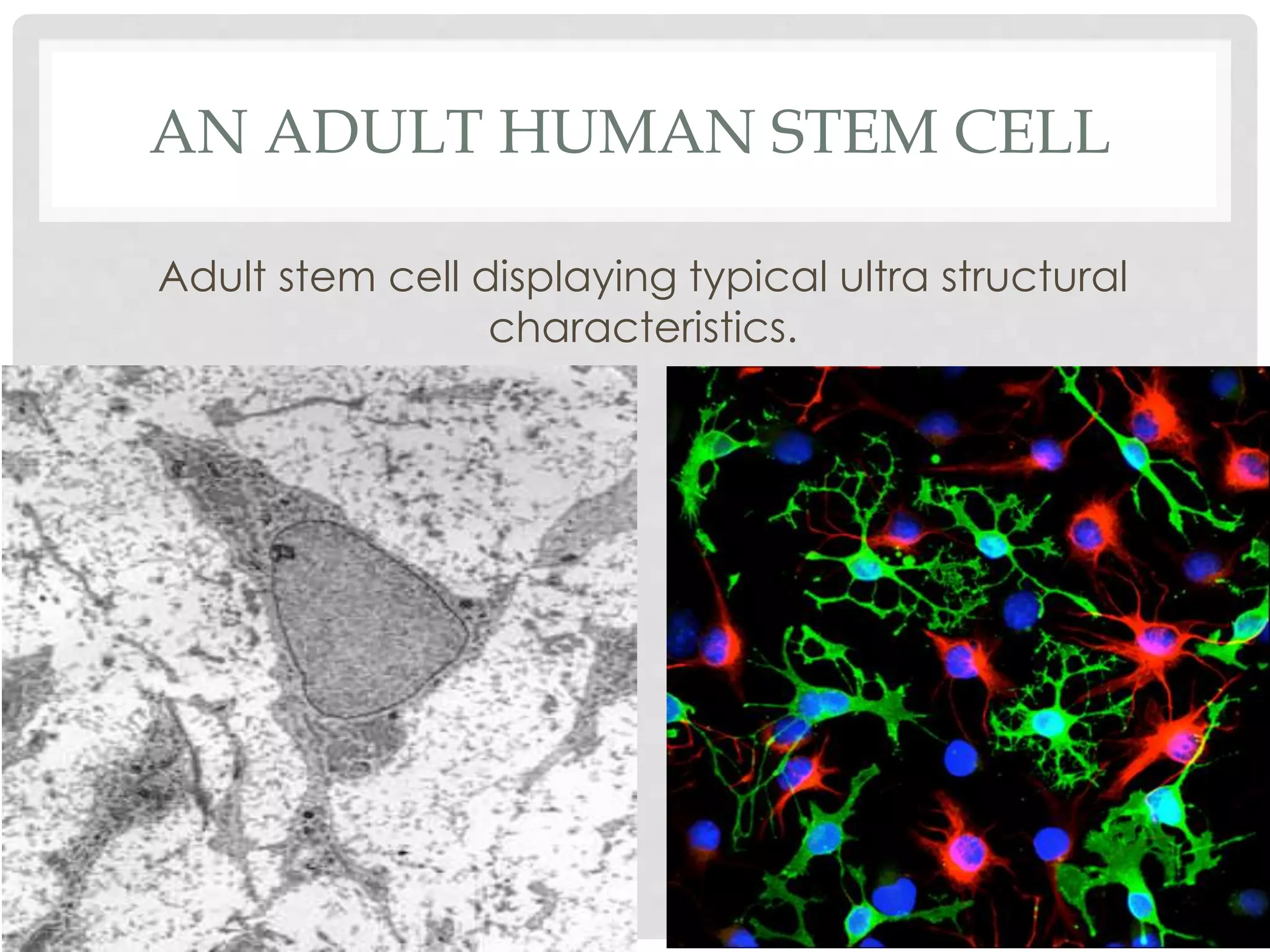
AN ADULT HUMAN STEM CELL
Adult stem cell displaying typical ultra structural
characteristics.
WHAT ARE THE SOURCES OF
STEM CELLS?
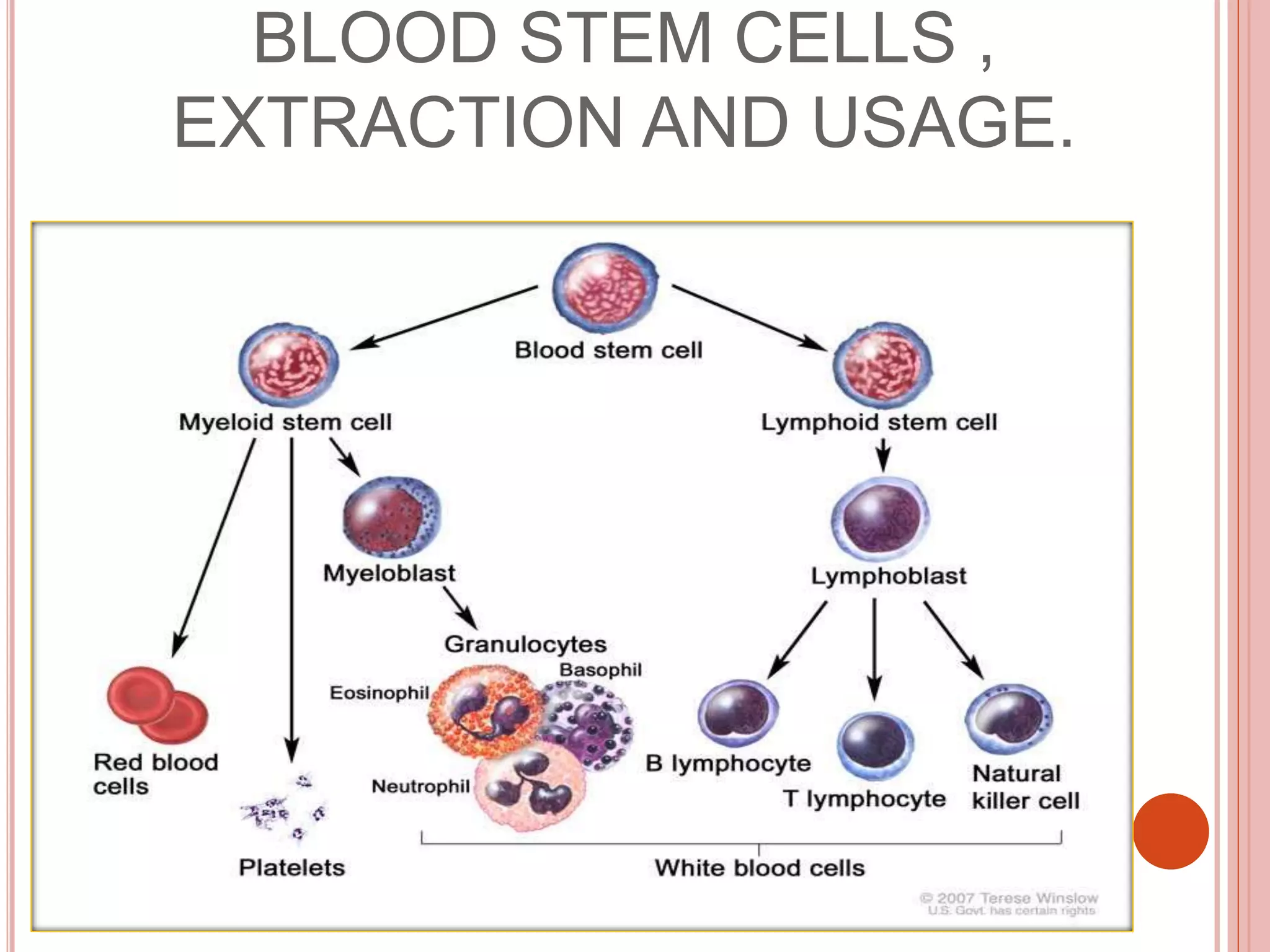
There are three accessible sources of autologous adult
stem cells in humans:
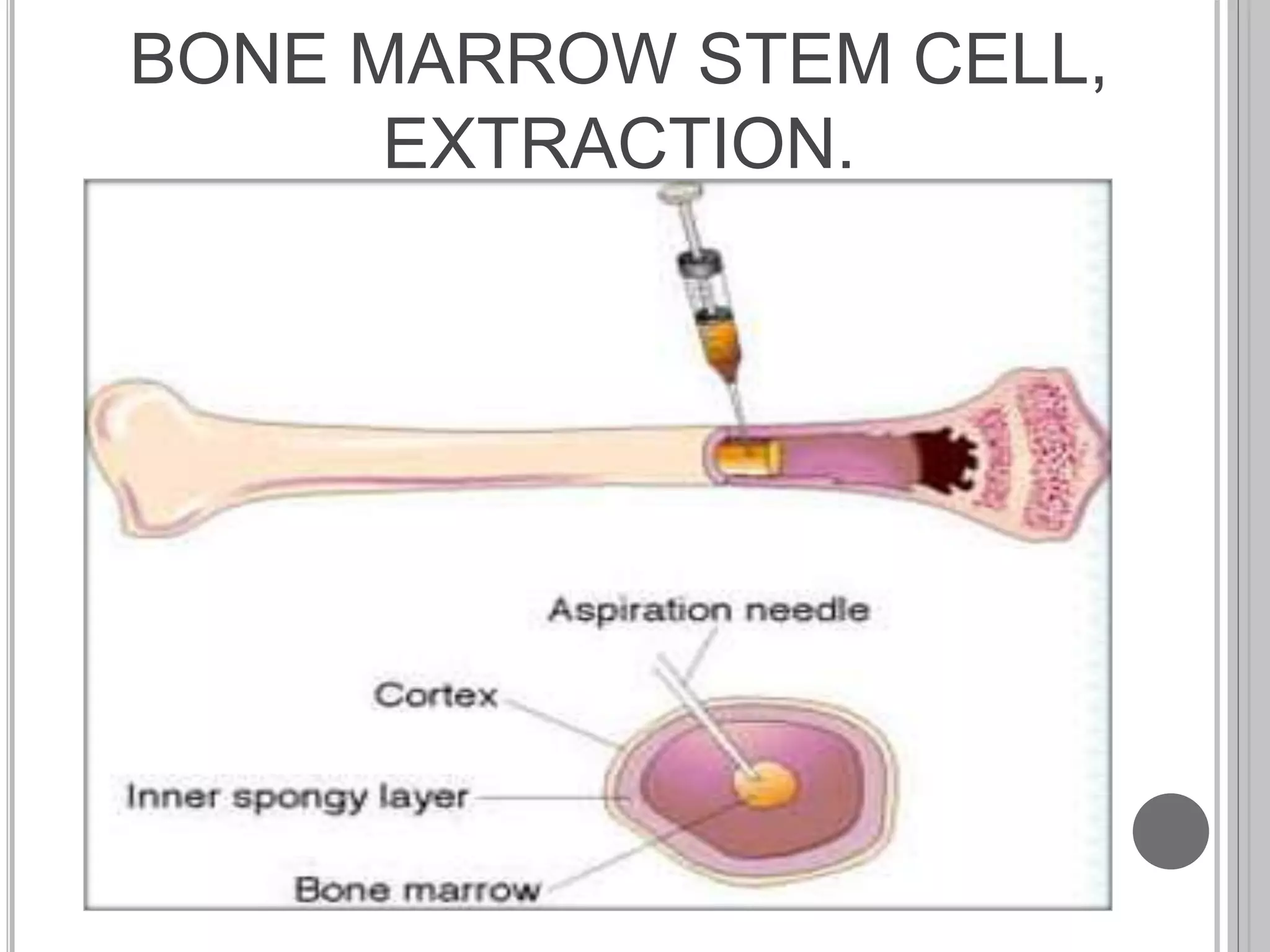
 Bone marrow, which requires extraction by harvesting,
that is, drilling into bone (typically the femur or iliac
crest)
 Adipose tissue (lipid cells), which requires extraction
by liposuction
 Blood, which requires extraction through apheresis,
wherein blood is drawn from the donor (similar to a
blood donation), and passed through a machine that
extracts the stem cells and returns other portions of the
blood to the donor.
BLOOD STEM CELLS ,
EXTRACTION AND USAGE.
BONE MARROW STEM CELL,
EXTRACTION.
THE UNIQUE PROPERTIES OF STEM CELLS
 Stem cells differ from other kinds of cells in the body. All
stem cells—regardless of their source—have three general
properties: they are capable of dividing and renewing
themselves for long periods; they are unspecialized; and
they can give rise to specialized cell types.
 Stem cells are capable of dividing and renewing
themselves for long periods. Unlike muscle cells, blood
cells, or nerve cells—which do not normally replicate
themselves—stem cells may replicate many times, or
proliferate. A starting population of stem cells that
proliferates for many months in the laboratory can yield
millions of cells. If the resulting cells continue to be
unspecialized, like the parent stem cells, the cells are said to
be capable of long-term self-renewal.
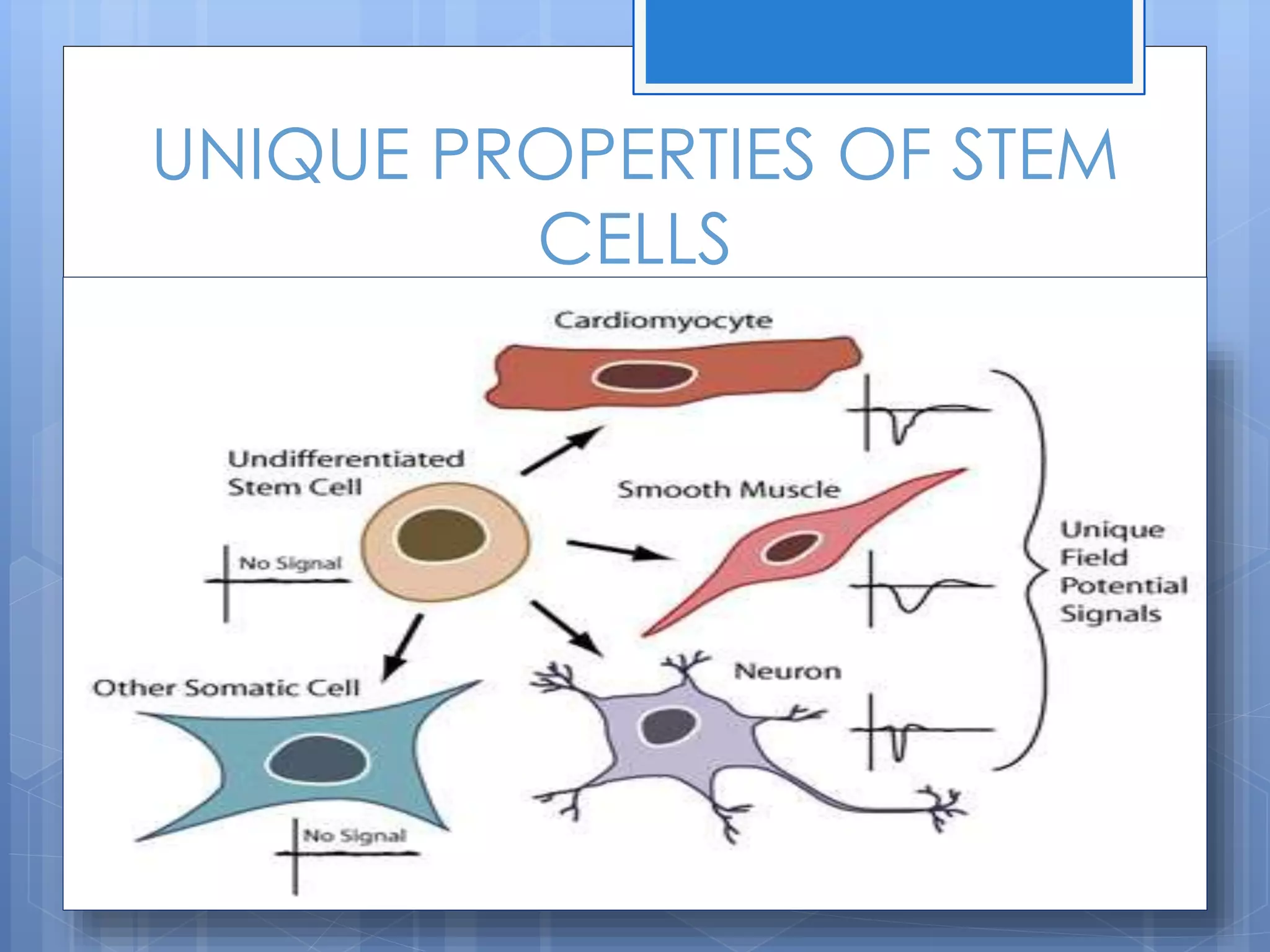
UNIQUE PROPERTIES OF STEM
CELLS
UNIQUE PROPERTIES OF STEM CELLS
 Stem cells are unspecialized. One of the
fundamental properties of a stem cell is that it does
not have any tissue-specific structures that allow it
to perform specialized functions.
 For example, a stem cell cannot work with its
neighbors to pump blood through the body (like a
heart muscle cell), and it cannot carry oxygen
molecules through the bloodstream (like a red
blood cell). However, unspecialized stem cells can
give rise to specialized cells, including heart muscle
cells, blood cells, or nerve cells.
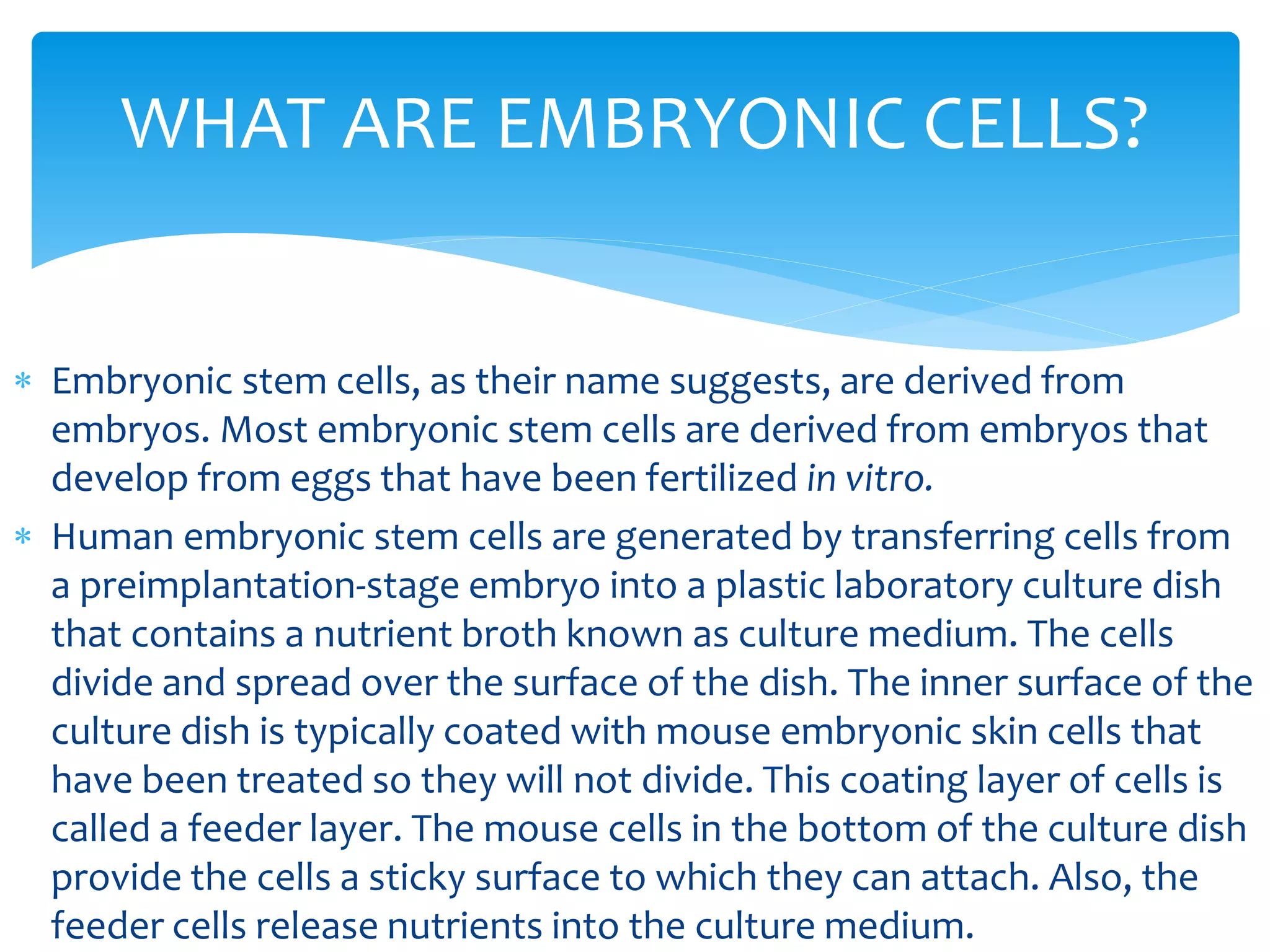
 Embryonic stem cells, as their name suggests, are derived from
embryos. Most embryonic stem cells are derived from embryos that
develop from eggs that have been fertilized in vitro.
 Human embryonic stem cells are generated by transferring cells from
a preimplantation-stage embryo into a plastic laboratory culture dish
that contains a nutrient broth known as culture medium. The cells
divide and spread over the surface of the dish. The inner surface of the
culture dish is typically coated with mouse embryonic skin cells that
have been treated so they will not divide. This coating layer of cells is
called a feeder layer. The mouse cells in the bottom of the culture dish
provide the cells a sticky surface to which they can attach. Also, the
feeder cells release nutrients into the culture medium.
WHAT ARE EMBRYONIC CELLS?
 The process of generating an embryonic stem cell line is somewhat
inefficient, so lines are not produced each time cells from the
preimplantation-stage embryo are placed into a culture dish.
 However, if the plated cells survive, divide and multiply enough to
crowd the dish, they are removed gently and plated into several
fresh culture dishes. The process of re-plating or sub culturing the
cells is repeated many times and for many months. Each cycle of sub
culturing the cells is referred to as a passage. Once the cell line is
established, the original cells yield millions of embryonic stem cells.
Embryonic stem cells that have proliferated in cell culture for a
prolonged period of time without differentiating, are pluripotent,
and have not developed genetic abnormalities are referred to as an
embryonic stem cell line. At any stage in the process, batches of cells
can be frozen and shipped to other laboratories for further culture
and experimentation.
How are Embryonic cells
cultivated?
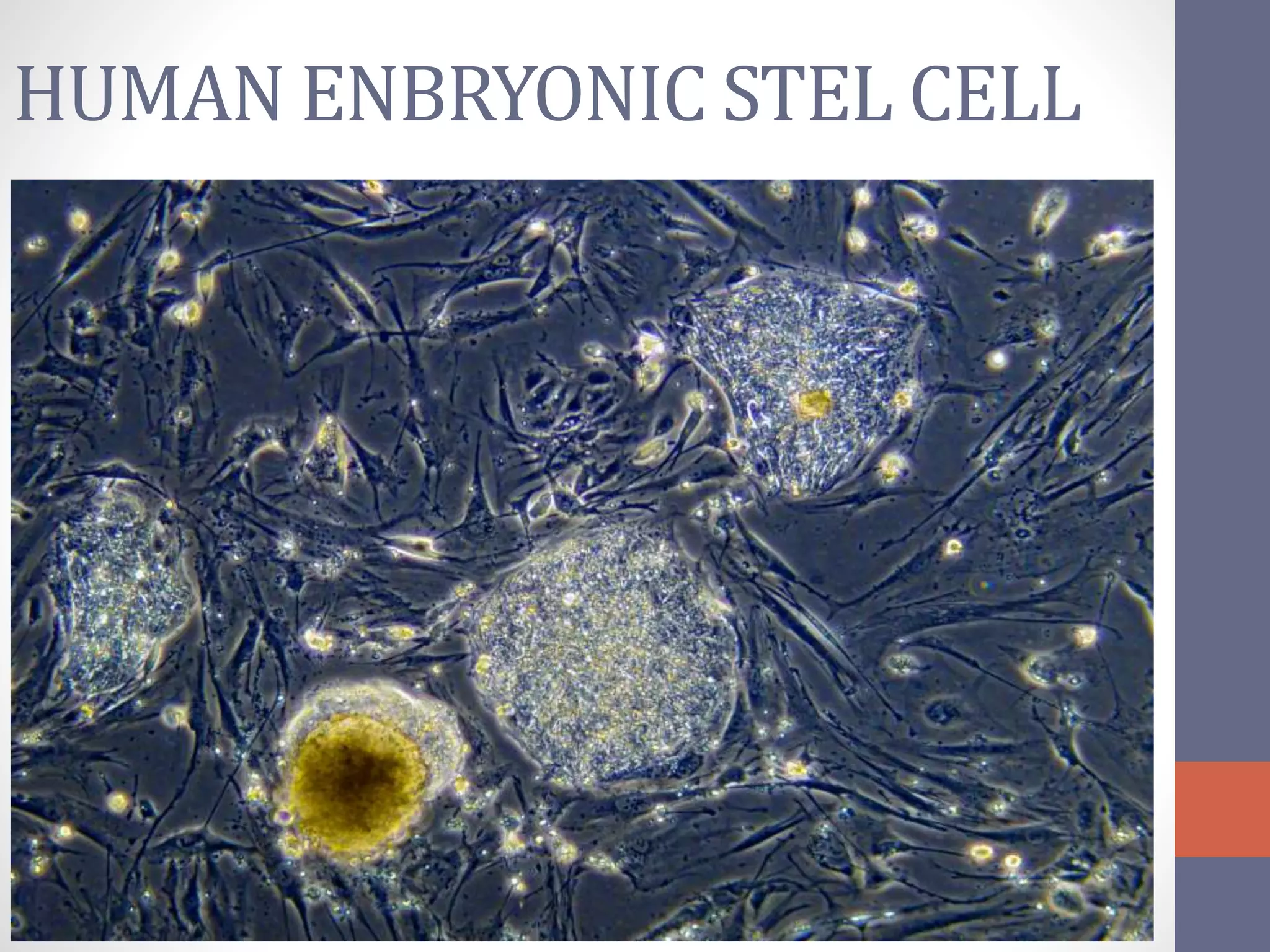
HUMAN ENBRYONIC STEL CELL
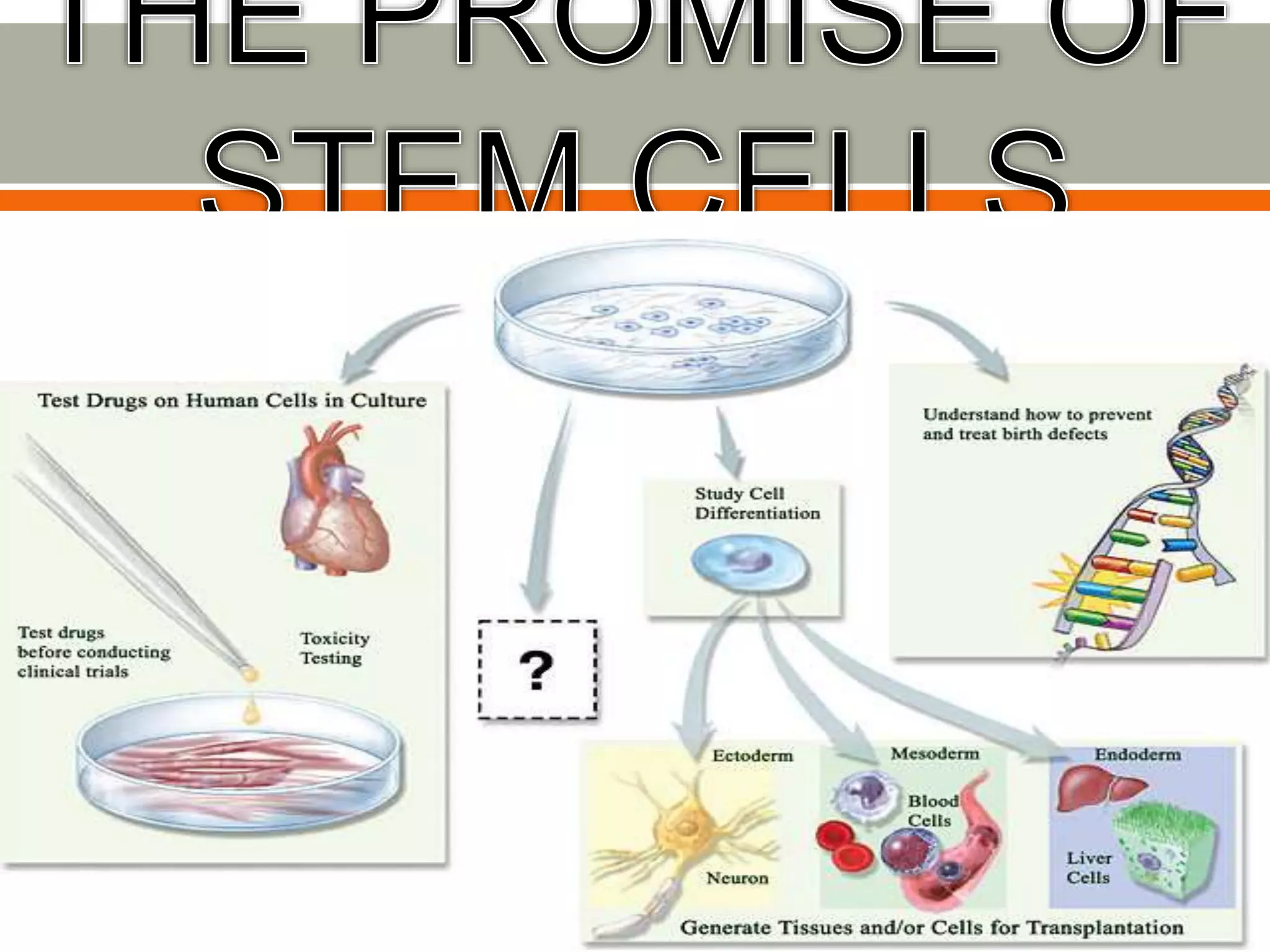
POTENTIAL USES OF STEM CELLS
 The most potent use of stem cells is to identify how
undifferentiated stem cells become the differentiated cells
that form the tissues and organs.
 Turning genes on and off is central to this process.
 Some of the most serious medical conditions are due to
abnormal cell division and differentiation. A more complete
understanding of the genetic and molecular controls of
these processes may yield information about how such
diseases arise and suggest new strategies for therapy.
 Predictably controlling cell proliferation and differentiation
requires additional basic research on the molecular and
genetic signals that regulate cell division and specialization.
POTENTIAL USES OF STEM CELLS
 Human stem cells could also be used to test new drugs. For
example, new medications could be tested for safety on
differentiated cells generated from human pluripotent cell lines.
 The most important potential application of human stem cells is
the generation of cells and tissues that could be used for cell-
based therapies.
 Stem cells, directed to differentiate into specific cell types, offer
the possibility of a renewable source of replacement cells and
tissues to treat diseases including Alzheimer's diseases, spinal
cord injury, stroke, burns, heart disease, diabetes, osteoarthritis,
and rheumatoid arthritis.
 Produce healthy heart cells to treat the patients suffering from
chronic diseases.
 To produce pancreatic cells and tissues and combine with them
to either contribute to the growth factor or differentiate to form
pancreatic cells.

 At the end of this presentation, we now know that what a vast
amount of potential is there in stem cells and what fantabulous
uses they can be put to. Just imagine that there will be nearly
no more need of organ transplantations! Even the people who
are suffering from diabetes because their pancreas has stopped
producing insulin, No problem! Just use human stem cells to
regenerate or to contribute to the growth factor of the
pancreatic cells and then we have healthy pancreas again
producing insulin like ever before. In same way this can be
extended to the treatment of cancer or Alzheimer's disease and
well, numerous other diseases to which until today we had no
or only limited treatment.
CONCLUSION AND
EVALUATION


Potential Uses of Stem Cells

  • 1.
    By Varun Kakkar IndiaInternational School, Sharjah
  • 2.
    What are StemCells? O Stem cells are undifferentiated biological cells that can differentiate into specialized cells and can divide (through mitosis) to produce more stem cells. O They are found in multicellular organisms. In mammals, there are two broad types of stem cells: embryonic stem cells, which are isolated from the inner cell mass of blastocysts, and adult stem cells, which are found in various tissues. O In adult organisms, stem cells and progenitor cells act as a repair system for the body, replenishing adult tissues. In a developing embryo, stem cells can differentiate into all the specialized cells—ectoderm, endoderm and mesoderm
  • 3.
    AN ADULT HUMANSTEM CELL Adult stem cell displaying typical ultra structural characteristics.
  • 4.
    WHAT ARE THESOURCES OF STEM CELLS? There are three accessible sources of autologous adult stem cells in humans:  Bone marrow, which requires extraction by harvesting, that is, drilling into bone (typically the femur or iliac crest)  Adipose tissue (lipid cells), which requires extraction by liposuction  Blood, which requires extraction through apheresis, wherein blood is drawn from the donor (similar to a blood donation), and passed through a machine that extracts the stem cells and returns other portions of the blood to the donor.
  • 5.
    BLOOD STEM CELLS, EXTRACTION AND USAGE.
  • 6.
    BONE MARROW STEMCELL, EXTRACTION.
  • 7.
    THE UNIQUE PROPERTIESOF STEM CELLS  Stem cells differ from other kinds of cells in the body. All stem cells—regardless of their source—have three general properties: they are capable of dividing and renewing themselves for long periods; they are unspecialized; and they can give rise to specialized cell types.  Stem cells are capable of dividing and renewing themselves for long periods. Unlike muscle cells, blood cells, or nerve cells—which do not normally replicate themselves—stem cells may replicate many times, or proliferate. A starting population of stem cells that proliferates for many months in the laboratory can yield millions of cells. If the resulting cells continue to be unspecialized, like the parent stem cells, the cells are said to be capable of long-term self-renewal.
  • 8.
  • 9.
    UNIQUE PROPERTIES OFSTEM CELLS  Stem cells are unspecialized. One of the fundamental properties of a stem cell is that it does not have any tissue-specific structures that allow it to perform specialized functions.  For example, a stem cell cannot work with its neighbors to pump blood through the body (like a heart muscle cell), and it cannot carry oxygen molecules through the bloodstream (like a red blood cell). However, unspecialized stem cells can give rise to specialized cells, including heart muscle cells, blood cells, or nerve cells.
  • 11.
     Embryonic stemcells, as their name suggests, are derived from embryos. Most embryonic stem cells are derived from embryos that develop from eggs that have been fertilized in vitro.  Human embryonic stem cells are generated by transferring cells from a preimplantation-stage embryo into a plastic laboratory culture dish that contains a nutrient broth known as culture medium. The cells divide and spread over the surface of the dish. The inner surface of the culture dish is typically coated with mouse embryonic skin cells that have been treated so they will not divide. This coating layer of cells is called a feeder layer. The mouse cells in the bottom of the culture dish provide the cells a sticky surface to which they can attach. Also, the feeder cells release nutrients into the culture medium. WHAT ARE EMBRYONIC CELLS?
  • 12.
     The processof generating an embryonic stem cell line is somewhat inefficient, so lines are not produced each time cells from the preimplantation-stage embryo are placed into a culture dish.  However, if the plated cells survive, divide and multiply enough to crowd the dish, they are removed gently and plated into several fresh culture dishes. The process of re-plating or sub culturing the cells is repeated many times and for many months. Each cycle of sub culturing the cells is referred to as a passage. Once the cell line is established, the original cells yield millions of embryonic stem cells. Embryonic stem cells that have proliferated in cell culture for a prolonged period of time without differentiating, are pluripotent, and have not developed genetic abnormalities are referred to as an embryonic stem cell line. At any stage in the process, batches of cells can be frozen and shipped to other laboratories for further culture and experimentation. How are Embryonic cells cultivated?
  • 13.
  • 14.
    POTENTIAL USES OFSTEM CELLS  The most potent use of stem cells is to identify how undifferentiated stem cells become the differentiated cells that form the tissues and organs.  Turning genes on and off is central to this process.  Some of the most serious medical conditions are due to abnormal cell division and differentiation. A more complete understanding of the genetic and molecular controls of these processes may yield information about how such diseases arise and suggest new strategies for therapy.  Predictably controlling cell proliferation and differentiation requires additional basic research on the molecular and genetic signals that regulate cell division and specialization.
  • 15.
    POTENTIAL USES OFSTEM CELLS  Human stem cells could also be used to test new drugs. For example, new medications could be tested for safety on differentiated cells generated from human pluripotent cell lines.  The most important potential application of human stem cells is the generation of cells and tissues that could be used for cell- based therapies.  Stem cells, directed to differentiate into specific cell types, offer the possibility of a renewable source of replacement cells and tissues to treat diseases including Alzheimer's diseases, spinal cord injury, stroke, burns, heart disease, diabetes, osteoarthritis, and rheumatoid arthritis.  Produce healthy heart cells to treat the patients suffering from chronic diseases.  To produce pancreatic cells and tissues and combine with them to either contribute to the growth factor or differentiate to form pancreatic cells.
  • 16.
      At theend of this presentation, we now know that what a vast amount of potential is there in stem cells and what fantabulous uses they can be put to. Just imagine that there will be nearly no more need of organ transplantations! Even the people who are suffering from diabetes because their pancreas has stopped producing insulin, No problem! Just use human stem cells to regenerate or to contribute to the growth factor of the pancreatic cells and then we have healthy pancreas again producing insulin like ever before. In same way this can be extended to the treatment of cancer or Alzheimer's disease and well, numerous other diseases to which until today we had no or only limited treatment. CONCLUSION AND EVALUATION
  • 17.