Stem cell
 Submitted to
 Dr. Shruti Mishra
 Assistant Professor
 Submitted by
 Anmol Adhikari
 MSc Biochemistry
 Sem II
 22SBAS2060008
Stem Cell : Introduction
 Stem cells are cells with the potential to develop into many
different types of cells in the body. They serve as a repair
system for the body. This can range from muscle cells to brain
cells.
 Stem cells are the body's raw materials — cells from which all
other cells with specialized functions are generated.
 These cells are the earliest cells of the cell lineage in all tissues
and are found in both embryonic and adult organisms.
 These cells provide a continuous supply of new cells that make
up the tissues and organs of animals and plants.
 Stem cells have been of great interest as a therapeutic method
for various diseases and conditions.
Properties of stem cell ( Identification )
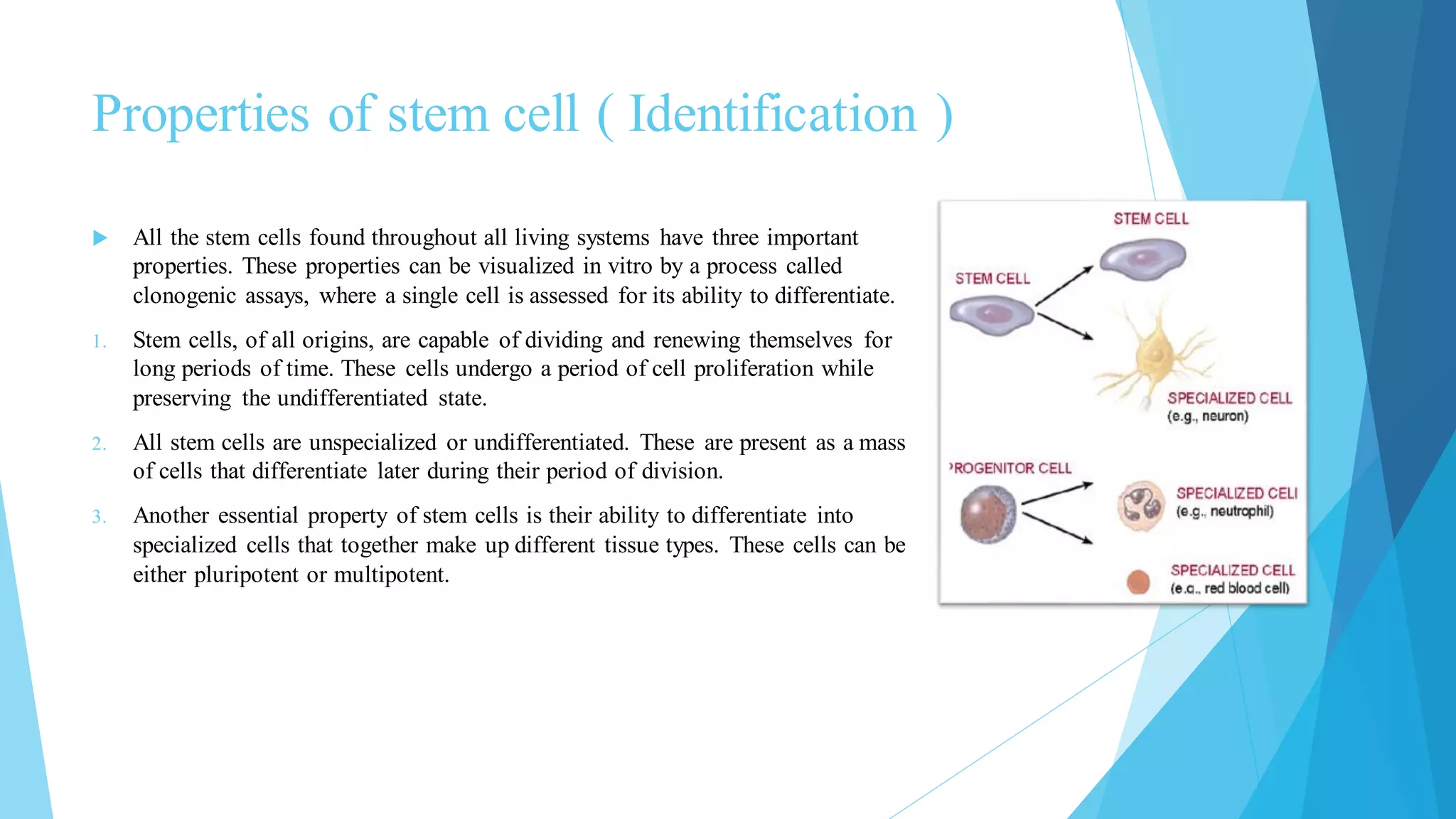
 All the stem cells found throughout all living systems have three important
properties. These properties can be visualized in vitro by a process called
clonogenic assays, where a single cell is assessed for its ability to differentiate.
1. Stem cells, of all origins, are capable of dividing and renewing themselves for
long periods of time. These cells undergo a period of cell proliferation while
preserving the undifferentiated state.
2. All stem cells are unspecialized or undifferentiated. These are present as a mass
of cells that differentiate later during their period of division.
3. Another essential property of stem cells is their ability to differentiate into
specialized cells that together make up different tissue types. These cells can be
either pluripotent or multipotent.
Types of Stem Cell
 Stem cells are classified based on 2 categories:
1. On the basis of source
2. On the basis of differentiation potential
Types on the basis of source of stem cell :
❖ Embryonic stem cell : Embryonic stem cells supply new cells for an embryo as it
grows and develops into a baby.
 These stem cells are said to be pluripotent, which means they can change into any
cell in the body.
 Embryonic stem cells are a group of cells that are present in the inner cell mass of
the embryo at a very early stage of development, called a blastocyst.
 The blastocyst stage in embryonic development is reached within 4-5 days after
fertilization, and the number of cells at that point is about 50-150.
❖ Adult stem cell : Adult stem cells, also called somatic
stem cells, are the cells found in specific tissues that
function to repair and form cells of only the tissues they
are found on.
 These cells are considered less potent than embryonic
stem cells as they cannot differentiate to different cell
types.
 Adult stem cells are said to be multipotent, which means
they can only change into some cells in the body, not any
cell, for example:
Blood (or ‘haematopoietic’) stem cells can only replace the
various types of cells in the blood.
Skin (or ‘epithelial’) stem cells provide the different types of
cells that make up our skin and hair
 Adult stem cells exist in niches or areas created by other
cells which secrete fluids and nutrient for the stem cells to
remain alive on.
❖ Induced pluripotent stem cell : The limitations in adult stem cells led to the creation of novel pluripotent cells
termed induced pluripotent cells from the adult cells by the process of reprogramming the genes.
 Induced pluripotent stem cells are formed when the adult cells are cultured with embryonic stem cells where a
fusion of these two cells forms new cells with stem cell-like properties.
 Pluripotent stem cells are similar to embryonic stem cells in that they can also be stimulated to differentiate
into different cell types however they are different from embryonic stem cells in the level of gene expression
and the condition of the chromatin of the cells.
 It also helps to study new genetic diseases by generating induced pluripotent stem cells from their adult or
somatic cells.
 Induced stem cells of the heart and the eyes can be used in the transplantation of the cells during severe heart
and eye-related diseases.
Types based on the differentiation potential
1. Totipotent: These stem cells can differentiate into all possible cell types.
The first few cells that appear as the zygote starts to divide are totipotent.
2. Pluripotent: These cells can turn into almost any cell. Cells from the
early embryo are pluripotent.
3. Multipotent: These cells can differentiate into a closely related family of
cells. Adult hematopoietic stem cells, for example, can become red and
white blood cells or platelets.
4. Oligopotent: These can differentiate into a few different cell types. Adult
lymphoid or myeloid stem cells can do this.
5. Unipotent: These can only produce cells of one kind, which is their own
type. However, they are still stem cells because they can renew
themselves. Examples include adult muscle stem cells.
Stem Cell Culture
 There is increasing interest in optimizing stem cell culture, not only because cell culture is widely used in basic
researchfor studying stem cell biology, but also owing to the potential therapeutic applications of cultured stem
cells
 Because of their abilityto replace damaged cells, these cells are cultured under artificial conditions to produce
more of these cells.
 Embryonic stem cells are more potent than adult stem cells as they are capable of differentiating into various cell
types.
Stem cell line : A stem cell line is a group of certain stem cells that are cultured in vitro so that they can be
propagated indefinitely for various purposes.
 The source of these cell lines is either humans or animals where these are either embryonic stem cells, adult stem
cells,or induced stem cells.
 Stem cell lines are extensively used for genetic researchand regenerative medicine purposes.
 The stem cell lines retain their original genetic properties even after developing the ability to divide indefinitely.
Types of Stem cell culture :
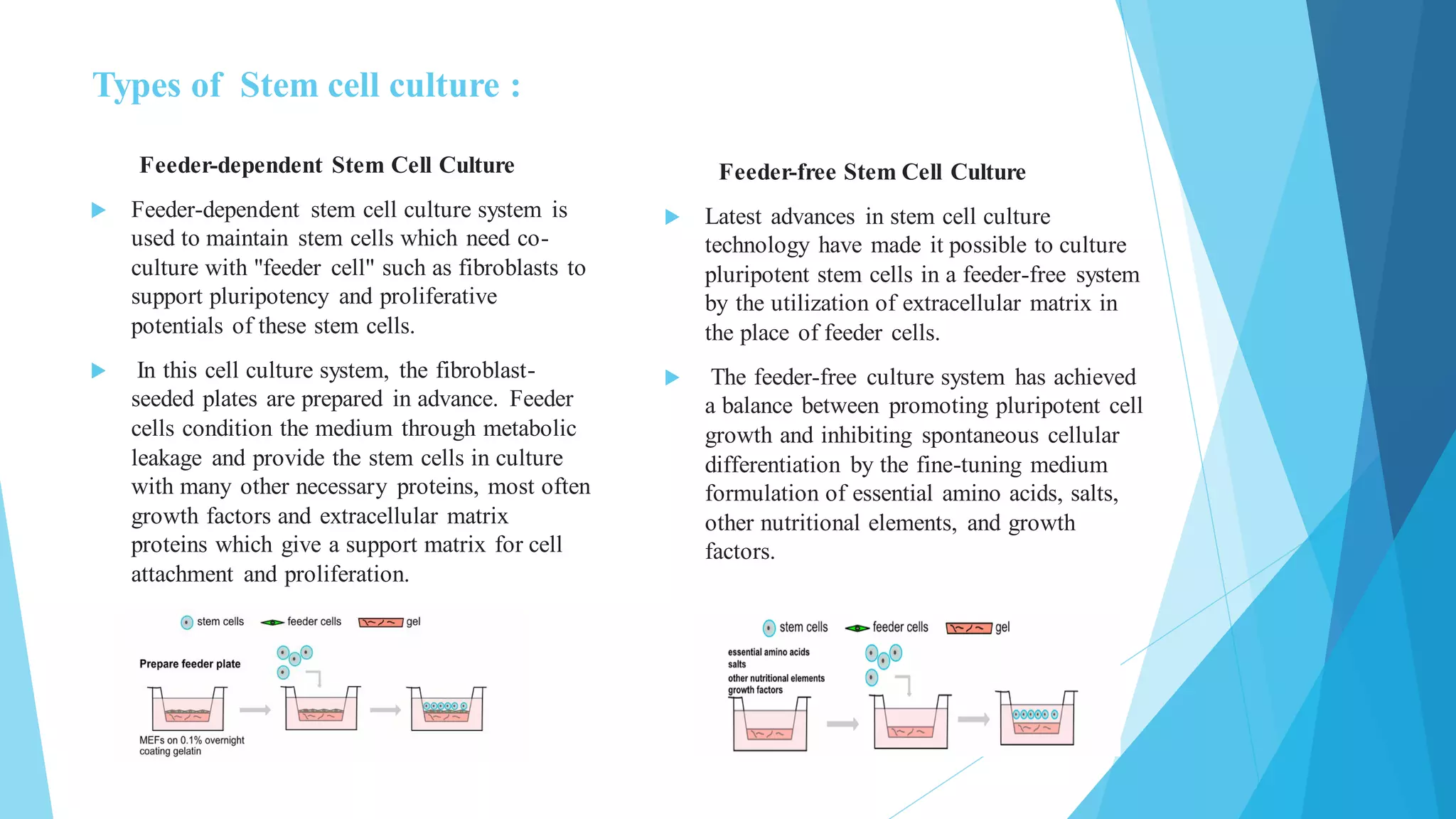
Feeder-dependent Stem Cell Culture
 Feeder-dependent stem cell culture system is
used to maintain stem cells which need co-
culture with "feeder cell" such as fibroblasts to
support pluripotency and proliferative
potentials of these stem cells.
 In this cell culture system, the fibroblast-
seeded plates are prepared in advance. Feeder
cells condition the medium through metabolic
leakage and provide the stem cells in culture
with many other necessary proteins, most often
growth factors and extracellular matrix
proteins which give a support matrix for cell
attachment and proliferation.
Feeder-free Stem Cell Culture
 Latest advances in stem cell culture
technology have made it possible to culture
pluripotent stem cells in a feeder-free system
by the utilization of extracellular matrix in
the place of feeder cells.
 The feeder-free culture system has achieved
a balance between promoting pluripotent cell
growth and inhibiting spontaneous cellular
differentiation by the fine-tuning medium
formulation of essential amino acids, salts,
other nutritional elements, and growth
factors.
Characterization of Stem Cell
 In order to confirm the quality of the stem cells, a package of characterization practices is
necessary which consists of primarily testing functional pluripotency and detecting
abnormalities
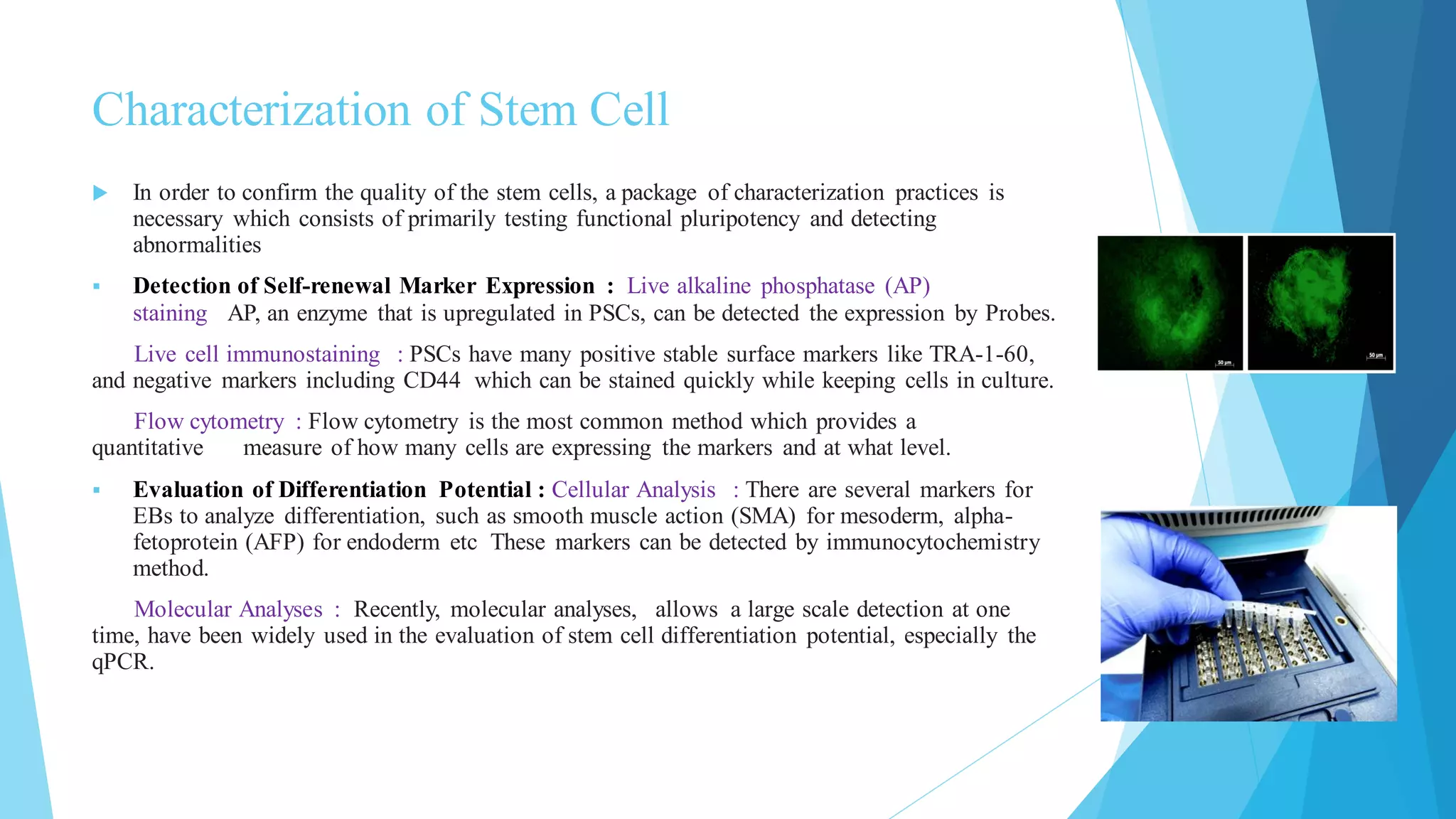
▪ Detection of Self-renewal Marker Expression : Live alkaline phosphatase (AP)
staining AP, an enzyme that is upregulated in PSCs, can be detected the expression by Probes.
Live cell immunostaining : PSCs have many positive stable surface markers like TRA-1-60,
and negative markers including CD44 which can be stained quickly while keeping cells in culture.
Flow cytometry : Flow cytometry is the most common method which provides a
quantitative measure of how many cells are expressing the markers and at what level.
▪ Evaluation of Differentiation Potential : Cellular Analysis : There are several markers for
EBs to analyze differentiation, such as smooth muscle action (SMA) for mesoderm, alpha-
fetoprotein (AFP) for endoderm etc These markers can be detected by immunocytochemistry
method.
Molecular Analyses : Recently, molecular analyses, allows a large scale detection at one
time, have been widely used in the evaluation of stem cell differentiation potential, especially the
qPCR.
Maintenance of Stem Cell
 There are two key elements for the maintenance of stem cells: proliferation and prevention of
differentiation. We propose an ‘Engine-and-Wheel’ model to explain stem cell maintenance in vitro.
 In stem cells, the ‘Engine’ signaling drives the expression of genes important for self-renewal as well as
genes that induce differentiation.
 The ‘Wheel’ signaling works together with the ‘Engine’ signaling to maintain stem cell self-renewal by
suppressing the expression of the differentiation genes.
 Example : including naïve ESCs, NSCs, HSCs, and intestinal stem cells etc
Proliferation heterogeneity of stem cell
 Stem cells divide to form one daughter cell that remains a stem cell and a second that differentiates (e.g., to an
intestinal epithelial cell) is stem cell proliferation A good example of the continual proliferation of stem cells
is provided by blood cell differentiation.
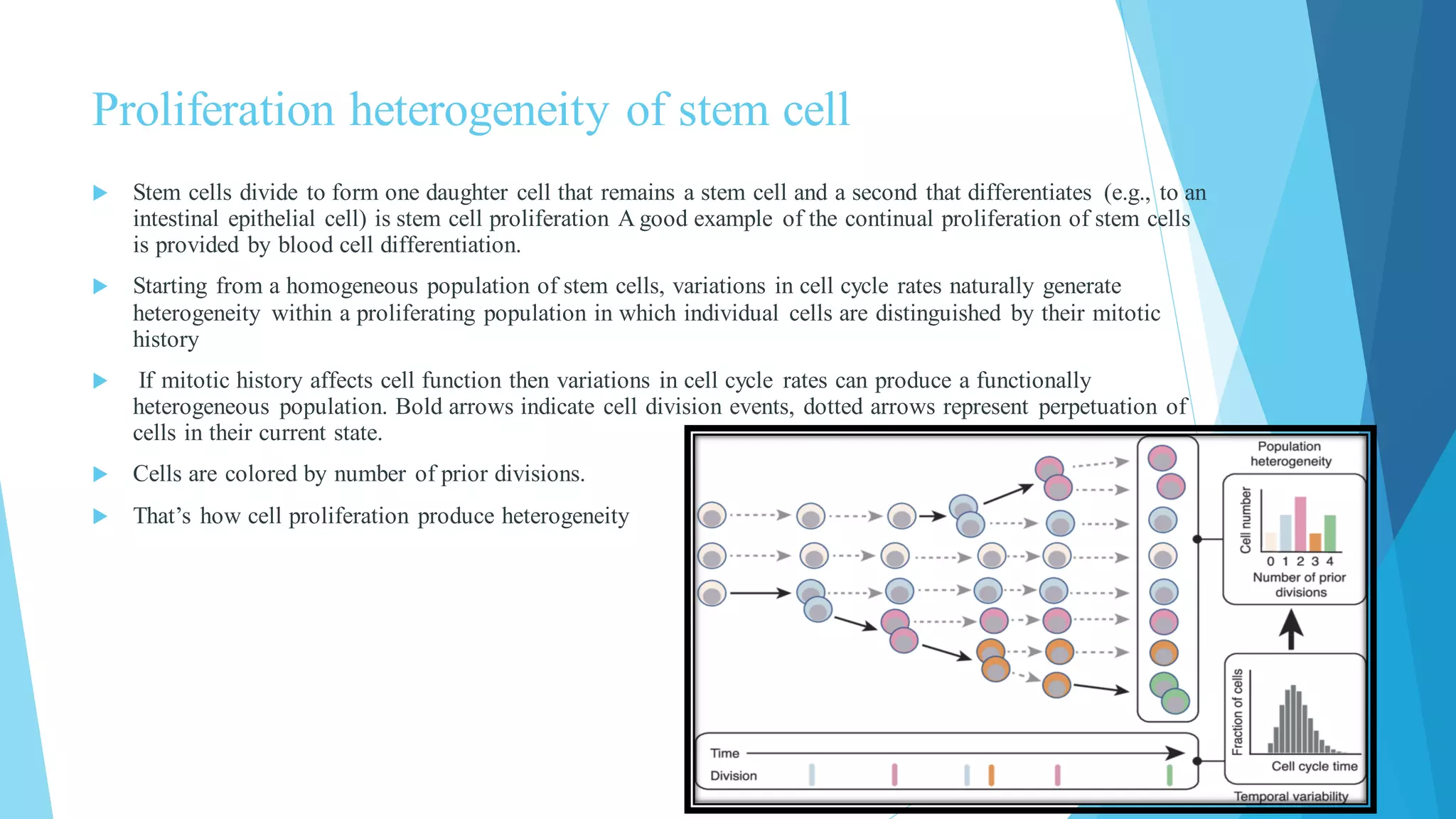
 Starting from a homogeneous population of stem cells, variations in cell cycle rates naturally generate
heterogeneity within a proliferating population in which individual cells are distinguished by their mitotic
history
 If mitotic history affects cell function then variations in cell cycle rates can produce a functionally
heterogeneous population. Bold arrows indicate cell division events, dotted arrows represent perpetuation of
cells in their current state.
 Cells are colored by number of prior divisions.
 That’s how cell proliferation produce heterogeneity
Stem Cell Therapy
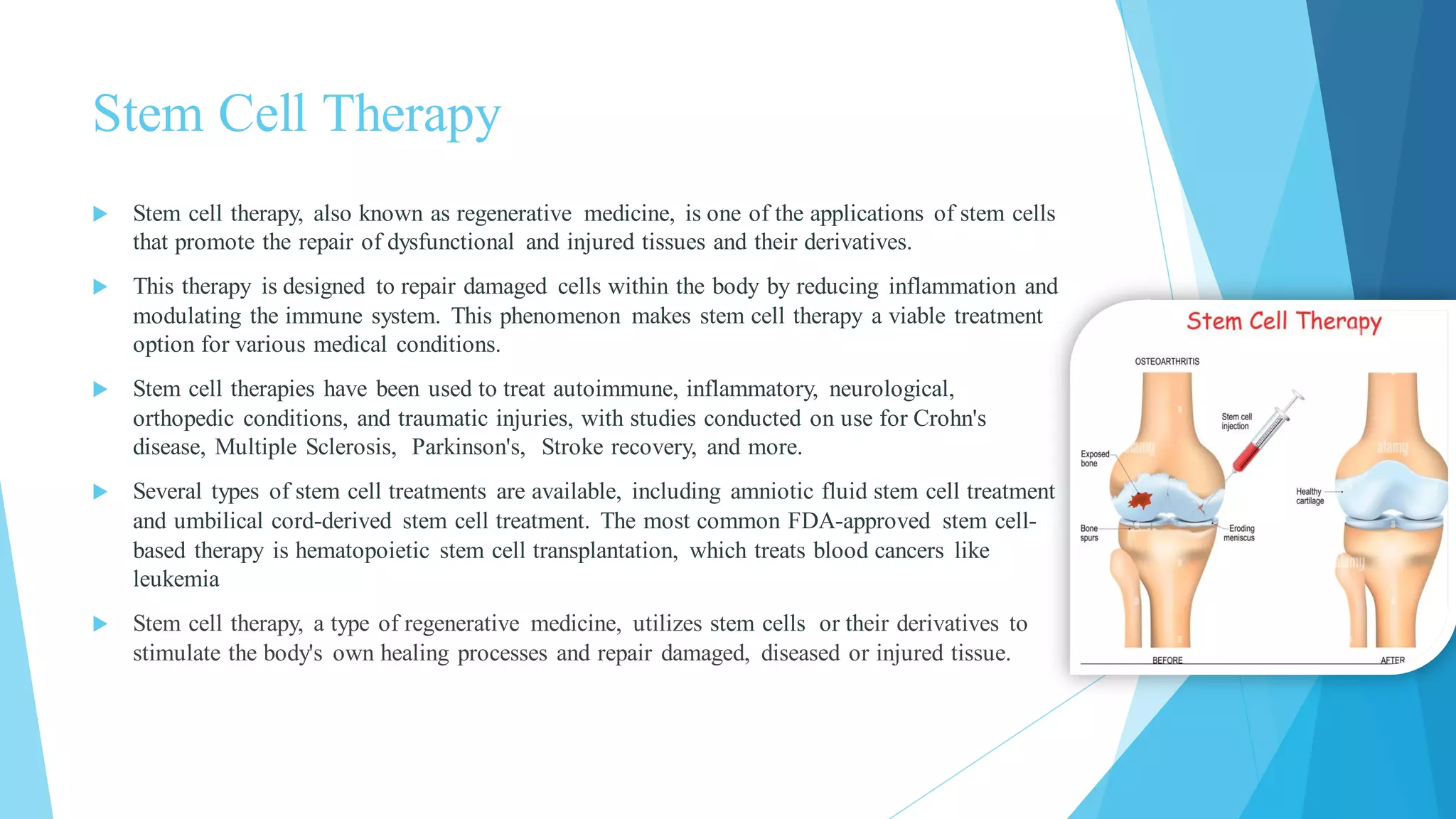
 Stem cell therapy, also known as regenerative medicine, is one of the applications of stem cells
that promote the repair of dysfunctional and injured tissues and their derivatives.
 This therapy is designed to repair damaged cells within the body by reducing inflammation and
modulating the immune system. This phenomenon makes stem cell therapy a viable treatment
option for various medical conditions.
 Stem cell therapies have been used to treat autoimmune, inflammatory, neurological,
orthopedic conditions, and traumatic injuries, with studies conducted on use for Crohn's
disease, Multiple Sclerosis, Parkinson's, Stroke recovery, and more.
 Several types of stem cell treatments are available, including amniotic fluid stem cell treatment
and umbilical cord-derived stem cell treatment. The most common FDA-approved stem cell-
based therapy is hematopoietic stem cell transplantation, which treats blood cancers like
leukemia
 Stem cell therapy, a type of regenerative medicine, utilizes stem cells or their derivatives to
stimulate the body's own healing processes and repair damaged, diseased or injured tissue.
 List of Diseases Treated by Stem Cells shown in diagram :
 Pluripotent stem cells are not often used therapeutically in humans
because some of these cells might result in the undesirable
formation of unusual solid tumors, called teratomas.
 Multipotent stem cells, on the other hand, harvested from bone
marrow have been used since the 1960s to treat leukemia,
myeloma, and lymphoma.
 The use of mesenchymal stem cells in the ability to form whole
joints might be beneficial for other diseases as well.
 Stem cell therapy thus is an excellent avenue for the improvement
in the treatment facilities and methods of various chronic diseases.
Applications of Stem Cell
 Tissue regeneration and repair: Stem cells can be used to replace damaged or lost cells due to
injury, disease, or aging. By differentiating into specialized cells, they facilitate the restoration of
function in affected tissues or organs.
 Drug discovery and testing: Stem cells can be utilized to create in vitro models of human tissues,
enabling researchers to test the safety and efficacy of new drugs and therapies.
 Disease modeling: Stem cells can be used to generate disease-specific cell lines, enabling
researchers to study disease progression and identify potential therapeutic targets.
 Immunotherapy: Stem cells can play a role in modulating the immune system, making them
valuable in treating autoimmune diseases and preventing transplant rejection.
 Gene therapy and genetic editing: Stem cells can be genetically modified to correct mutations
responsible for inherited diseases.
 Personalized medicine: Stem cells can be used to develop patient-specific therapies, tailoring
treatments to an individual's unique genetic makeup and disease progression.
Stem cell.pdf

Stem cell.pdf

  • 1.
    Stem cell  Submittedto  Dr. Shruti Mishra  Assistant Professor  Submitted by  Anmol Adhikari  MSc Biochemistry  Sem II  22SBAS2060008
  • 2.
    Stem Cell :Introduction  Stem cells are cells with the potential to develop into many different types of cells in the body. They serve as a repair system for the body. This can range from muscle cells to brain cells.  Stem cells are the body's raw materials — cells from which all other cells with specialized functions are generated.  These cells are the earliest cells of the cell lineage in all tissues and are found in both embryonic and adult organisms.  These cells provide a continuous supply of new cells that make up the tissues and organs of animals and plants.  Stem cells have been of great interest as a therapeutic method for various diseases and conditions.
  • 3.
    Properties of stemcell ( Identification )  All the stem cells found throughout all living systems have three important properties. These properties can be visualized in vitro by a process called clonogenic assays, where a single cell is assessed for its ability to differentiate. 1. Stem cells, of all origins, are capable of dividing and renewing themselves for long periods of time. These cells undergo a period of cell proliferation while preserving the undifferentiated state. 2. All stem cells are unspecialized or undifferentiated. These are present as a mass of cells that differentiate later during their period of division. 3. Another essential property of stem cells is their ability to differentiate into specialized cells that together make up different tissue types. These cells can be either pluripotent or multipotent.
  • 4.
    Types of StemCell  Stem cells are classified based on 2 categories: 1. On the basis of source 2. On the basis of differentiation potential Types on the basis of source of stem cell : ❖ Embryonic stem cell : Embryonic stem cells supply new cells for an embryo as it grows and develops into a baby.  These stem cells are said to be pluripotent, which means they can change into any cell in the body.  Embryonic stem cells are a group of cells that are present in the inner cell mass of the embryo at a very early stage of development, called a blastocyst.  The blastocyst stage in embryonic development is reached within 4-5 days after fertilization, and the number of cells at that point is about 50-150.
  • 5.
    ❖ Adult stemcell : Adult stem cells, also called somatic stem cells, are the cells found in specific tissues that function to repair and form cells of only the tissues they are found on.  These cells are considered less potent than embryonic stem cells as they cannot differentiate to different cell types.  Adult stem cells are said to be multipotent, which means they can only change into some cells in the body, not any cell, for example: Blood (or ‘haematopoietic’) stem cells can only replace the various types of cells in the blood. Skin (or ‘epithelial’) stem cells provide the different types of cells that make up our skin and hair  Adult stem cells exist in niches or areas created by other cells which secrete fluids and nutrient for the stem cells to remain alive on.
  • 6.
    ❖ Induced pluripotentstem cell : The limitations in adult stem cells led to the creation of novel pluripotent cells termed induced pluripotent cells from the adult cells by the process of reprogramming the genes.  Induced pluripotent stem cells are formed when the adult cells are cultured with embryonic stem cells where a fusion of these two cells forms new cells with stem cell-like properties.  Pluripotent stem cells are similar to embryonic stem cells in that they can also be stimulated to differentiate into different cell types however they are different from embryonic stem cells in the level of gene expression and the condition of the chromatin of the cells.  It also helps to study new genetic diseases by generating induced pluripotent stem cells from their adult or somatic cells.  Induced stem cells of the heart and the eyes can be used in the transplantation of the cells during severe heart and eye-related diseases.
  • 7.
    Types based onthe differentiation potential 1. Totipotent: These stem cells can differentiate into all possible cell types. The first few cells that appear as the zygote starts to divide are totipotent. 2. Pluripotent: These cells can turn into almost any cell. Cells from the early embryo are pluripotent. 3. Multipotent: These cells can differentiate into a closely related family of cells. Adult hematopoietic stem cells, for example, can become red and white blood cells or platelets. 4. Oligopotent: These can differentiate into a few different cell types. Adult lymphoid or myeloid stem cells can do this. 5. Unipotent: These can only produce cells of one kind, which is their own type. However, they are still stem cells because they can renew themselves. Examples include adult muscle stem cells.
  • 8.
    Stem Cell Culture There is increasing interest in optimizing stem cell culture, not only because cell culture is widely used in basic researchfor studying stem cell biology, but also owing to the potential therapeutic applications of cultured stem cells  Because of their abilityto replace damaged cells, these cells are cultured under artificial conditions to produce more of these cells.  Embryonic stem cells are more potent than adult stem cells as they are capable of differentiating into various cell types. Stem cell line : A stem cell line is a group of certain stem cells that are cultured in vitro so that they can be propagated indefinitely for various purposes.  The source of these cell lines is either humans or animals where these are either embryonic stem cells, adult stem cells,or induced stem cells.  Stem cell lines are extensively used for genetic researchand regenerative medicine purposes.  The stem cell lines retain their original genetic properties even after developing the ability to divide indefinitely.
  • 9.
    Types of Stemcell culture : Feeder-dependent Stem Cell Culture  Feeder-dependent stem cell culture system is used to maintain stem cells which need co- culture with "feeder cell" such as fibroblasts to support pluripotency and proliferative potentials of these stem cells.  In this cell culture system, the fibroblast- seeded plates are prepared in advance. Feeder cells condition the medium through metabolic leakage and provide the stem cells in culture with many other necessary proteins, most often growth factors and extracellular matrix proteins which give a support matrix for cell attachment and proliferation. Feeder-free Stem Cell Culture  Latest advances in stem cell culture technology have made it possible to culture pluripotent stem cells in a feeder-free system by the utilization of extracellular matrix in the place of feeder cells.  The feeder-free culture system has achieved a balance between promoting pluripotent cell growth and inhibiting spontaneous cellular differentiation by the fine-tuning medium formulation of essential amino acids, salts, other nutritional elements, and growth factors.
  • 10.
    Characterization of StemCell  In order to confirm the quality of the stem cells, a package of characterization practices is necessary which consists of primarily testing functional pluripotency and detecting abnormalities ▪ Detection of Self-renewal Marker Expression : Live alkaline phosphatase (AP) staining AP, an enzyme that is upregulated in PSCs, can be detected the expression by Probes. Live cell immunostaining : PSCs have many positive stable surface markers like TRA-1-60, and negative markers including CD44 which can be stained quickly while keeping cells in culture. Flow cytometry : Flow cytometry is the most common method which provides a quantitative measure of how many cells are expressing the markers and at what level. ▪ Evaluation of Differentiation Potential : Cellular Analysis : There are several markers for EBs to analyze differentiation, such as smooth muscle action (SMA) for mesoderm, alpha- fetoprotein (AFP) for endoderm etc These markers can be detected by immunocytochemistry method. Molecular Analyses : Recently, molecular analyses, allows a large scale detection at one time, have been widely used in the evaluation of stem cell differentiation potential, especially the qPCR.
  • 11.
    Maintenance of StemCell  There are two key elements for the maintenance of stem cells: proliferation and prevention of differentiation. We propose an ‘Engine-and-Wheel’ model to explain stem cell maintenance in vitro.  In stem cells, the ‘Engine’ signaling drives the expression of genes important for self-renewal as well as genes that induce differentiation.  The ‘Wheel’ signaling works together with the ‘Engine’ signaling to maintain stem cell self-renewal by suppressing the expression of the differentiation genes.  Example : including naïve ESCs, NSCs, HSCs, and intestinal stem cells etc
  • 12.
    Proliferation heterogeneity ofstem cell  Stem cells divide to form one daughter cell that remains a stem cell and a second that differentiates (e.g., to an intestinal epithelial cell) is stem cell proliferation A good example of the continual proliferation of stem cells is provided by blood cell differentiation.  Starting from a homogeneous population of stem cells, variations in cell cycle rates naturally generate heterogeneity within a proliferating population in which individual cells are distinguished by their mitotic history  If mitotic history affects cell function then variations in cell cycle rates can produce a functionally heterogeneous population. Bold arrows indicate cell division events, dotted arrows represent perpetuation of cells in their current state.  Cells are colored by number of prior divisions.  That’s how cell proliferation produce heterogeneity
  • 13.
    Stem Cell Therapy Stem cell therapy, also known as regenerative medicine, is one of the applications of stem cells that promote the repair of dysfunctional and injured tissues and their derivatives.  This therapy is designed to repair damaged cells within the body by reducing inflammation and modulating the immune system. This phenomenon makes stem cell therapy a viable treatment option for various medical conditions.  Stem cell therapies have been used to treat autoimmune, inflammatory, neurological, orthopedic conditions, and traumatic injuries, with studies conducted on use for Crohn's disease, Multiple Sclerosis, Parkinson's, Stroke recovery, and more.  Several types of stem cell treatments are available, including amniotic fluid stem cell treatment and umbilical cord-derived stem cell treatment. The most common FDA-approved stem cell- based therapy is hematopoietic stem cell transplantation, which treats blood cancers like leukemia  Stem cell therapy, a type of regenerative medicine, utilizes stem cells or their derivatives to stimulate the body's own healing processes and repair damaged, diseased or injured tissue.
  • 14.
     List ofDiseases Treated by Stem Cells shown in diagram :  Pluripotent stem cells are not often used therapeutically in humans because some of these cells might result in the undesirable formation of unusual solid tumors, called teratomas.  Multipotent stem cells, on the other hand, harvested from bone marrow have been used since the 1960s to treat leukemia, myeloma, and lymphoma.  The use of mesenchymal stem cells in the ability to form whole joints might be beneficial for other diseases as well.  Stem cell therapy thus is an excellent avenue for the improvement in the treatment facilities and methods of various chronic diseases.
  • 15.
    Applications of StemCell  Tissue regeneration and repair: Stem cells can be used to replace damaged or lost cells due to injury, disease, or aging. By differentiating into specialized cells, they facilitate the restoration of function in affected tissues or organs.  Drug discovery and testing: Stem cells can be utilized to create in vitro models of human tissues, enabling researchers to test the safety and efficacy of new drugs and therapies.  Disease modeling: Stem cells can be used to generate disease-specific cell lines, enabling researchers to study disease progression and identify potential therapeutic targets.  Immunotherapy: Stem cells can play a role in modulating the immune system, making them valuable in treating autoimmune diseases and preventing transplant rejection.  Gene therapy and genetic editing: Stem cells can be genetically modified to correct mutations responsible for inherited diseases.  Personalized medicine: Stem cells can be used to develop patient-specific therapies, tailoring treatments to an individual's unique genetic makeup and disease progression.