Post Modernism 
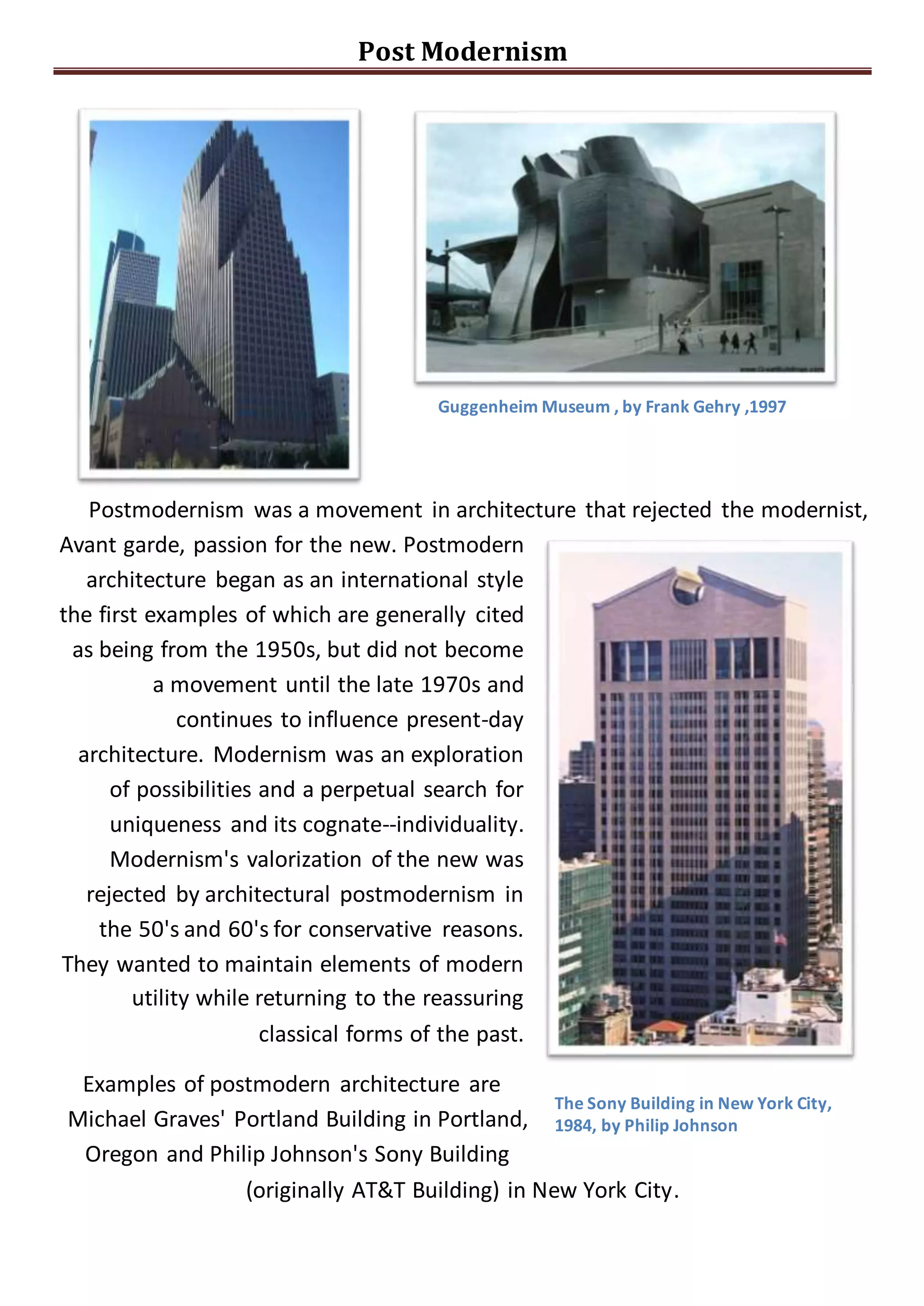
Guggenheim Museum , by Frank Gehry ,1997 
Postmodernism was a movement in architecture that rejected the modernist, 
Avant garde, passion for the new. Postmodern 
architecture began as an international style 
the first examples of which are generally cited 
as being from the 1950s, but did not become 
a movement until the late 1970s and 
continues to influence present-day 
architecture. Modernism was an exploration 
of possibilities and a perpetual search for 
uniqueness and its cognate--individuality. 
Modernism's valorization of the new was 
rejected by architectural postmodernism in 
the 50's and 60's for conservative reasons. 
They wanted to maintain elements of modern 
utility while returning to the reassuring 
classical forms of the past. 
Examples of postmodern architecture are 
Michael Graves' Portland Building in Portland, 
Oregon and Philip Johnson's Sony Building 
The Sony Building in New York City, 
1984, by Philip Johnson 
(originally AT&T Building) in New York City.

Post mordernism

  • 1.
    Post Modernism GuggenheimMuseum , by Frank Gehry ,1997 Postmodernism was a movement in architecture that rejected the modernist, Avant garde, passion for the new. Postmodern architecture began as an international style the first examples of which are generally cited as being from the 1950s, but did not become a movement until the late 1970s and continues to influence present-day architecture. Modernism was an exploration of possibilities and a perpetual search for uniqueness and its cognate--individuality. Modernism's valorization of the new was rejected by architectural postmodernism in the 50's and 60's for conservative reasons. They wanted to maintain elements of modern utility while returning to the reassuring classical forms of the past. Examples of postmodern architecture are Michael Graves' Portland Building in Portland, Oregon and Philip Johnson's Sony Building The Sony Building in New York City, 1984, by Philip Johnson (originally AT&T Building) in New York City.