Downloaded 65 times







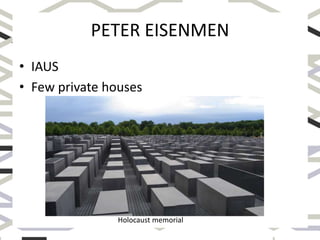


Postmodern architecture emerged in the 1960s as a response to the perceived failures and blandness of modernism. Postmodernism rejected modernism's focus on function over form and the dismissal of ornament. Key figures like Robert Venturi argued for complexity and contradiction in architecture through works like "Complexity and Contradiction in Architecture" which called for "less is a bore." This helped establish postmodernism and groups like the Institute for Architecture and Urban Studies. Major postmodern architects included the "Whites" like Peter Eisenman who kept modernism's light aesthetics and the "Greys" like Venturi and Charles Moore who incorporated more decorative elements. Postmodernism peaked but then declined as it moved to absurdism and


