Positioning the Subject  and the Verb University of the Sacred Heart Department of Humanities Center for Language Development Across the Disciplines LAD
Objectives To describe different types of sentences  To help the student place subjects and verbs in the correct position
The Anatomy of a Sentence A sentence is a group of words containing a subject and a predicate The subject tells  who  or  what  the sentence is about The predicate tells what the subject  is  or  does
Kinds of Sentences Depending on the type of sentence, the subject and the verb are placed in different positions.  Take a look at the examples that follow.
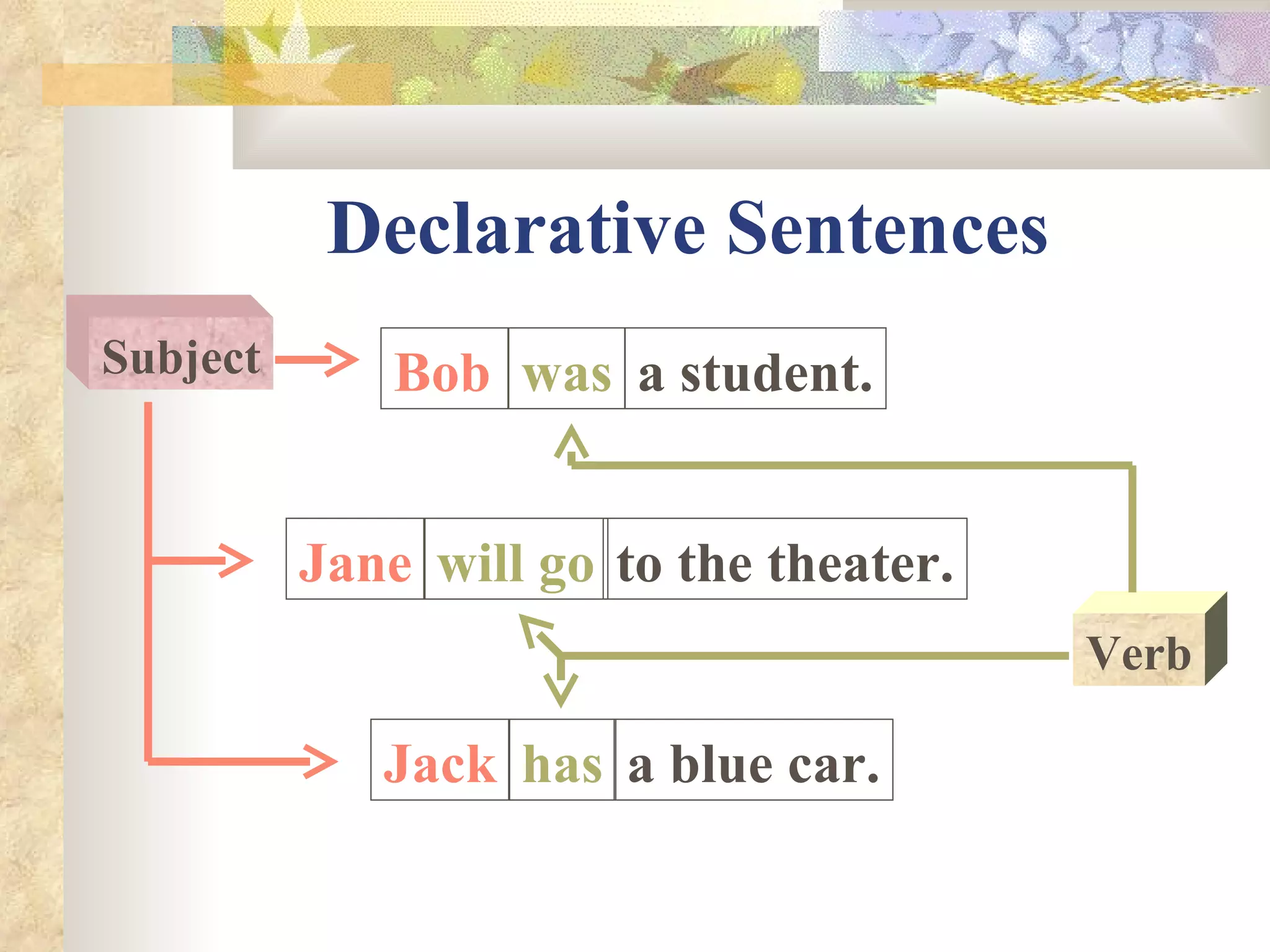
Declarative Sentences A declarative sentence makes a statement.  It tells about something The subject in declarative sentences is placed before the verb
Declarative Sentences Bob Jane Jack Subject Verb was a student. will go to the theater. has a blue car.
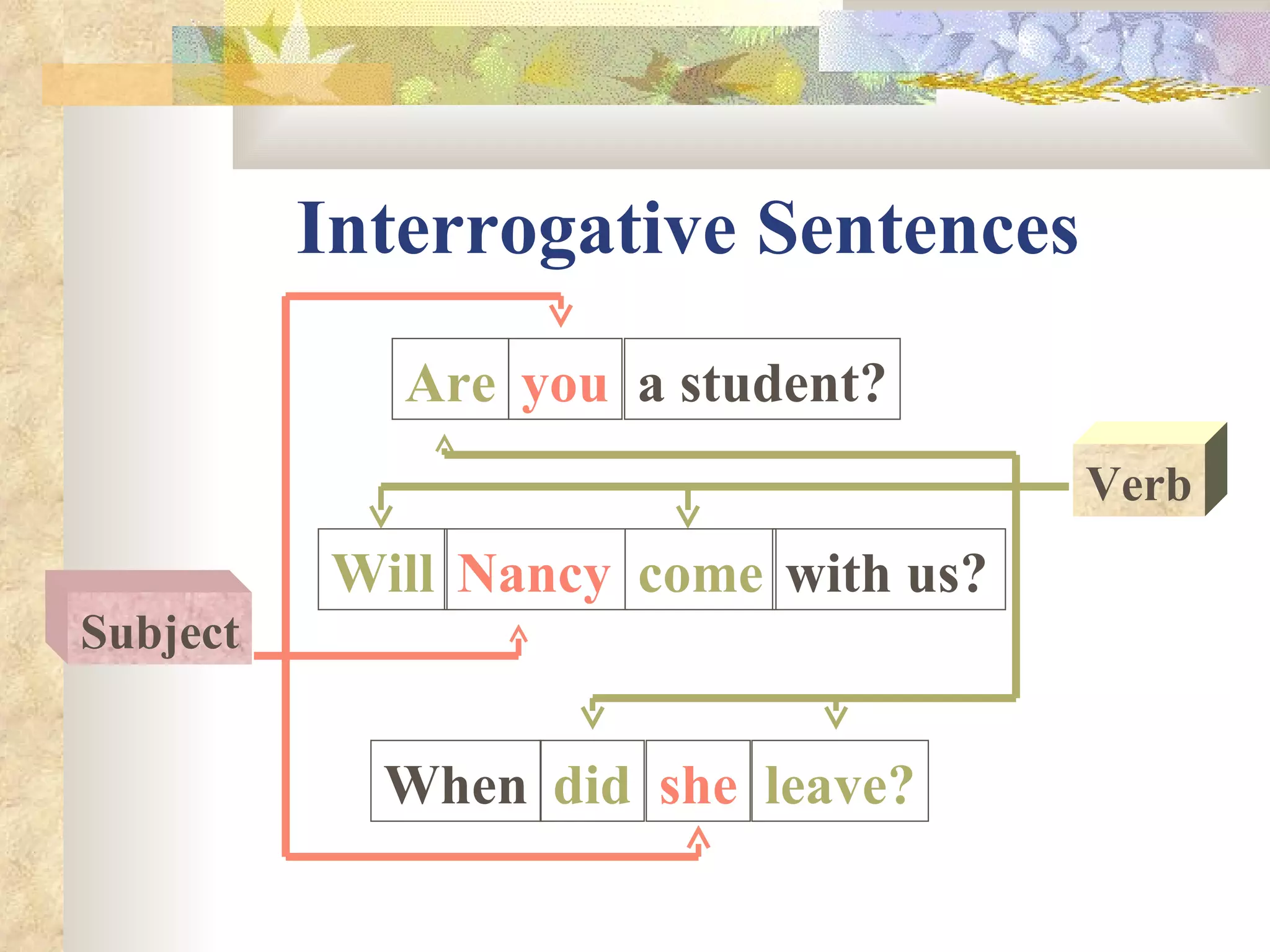
Interrogative Sentences An interrogative sentence asks a question The subject in interrogative sentences is  placed after the verb, or between the  helping verb and the main verb
Interrogative Sentences Are When Will Subject Verb you a student? Nancy come with us? did she leave?
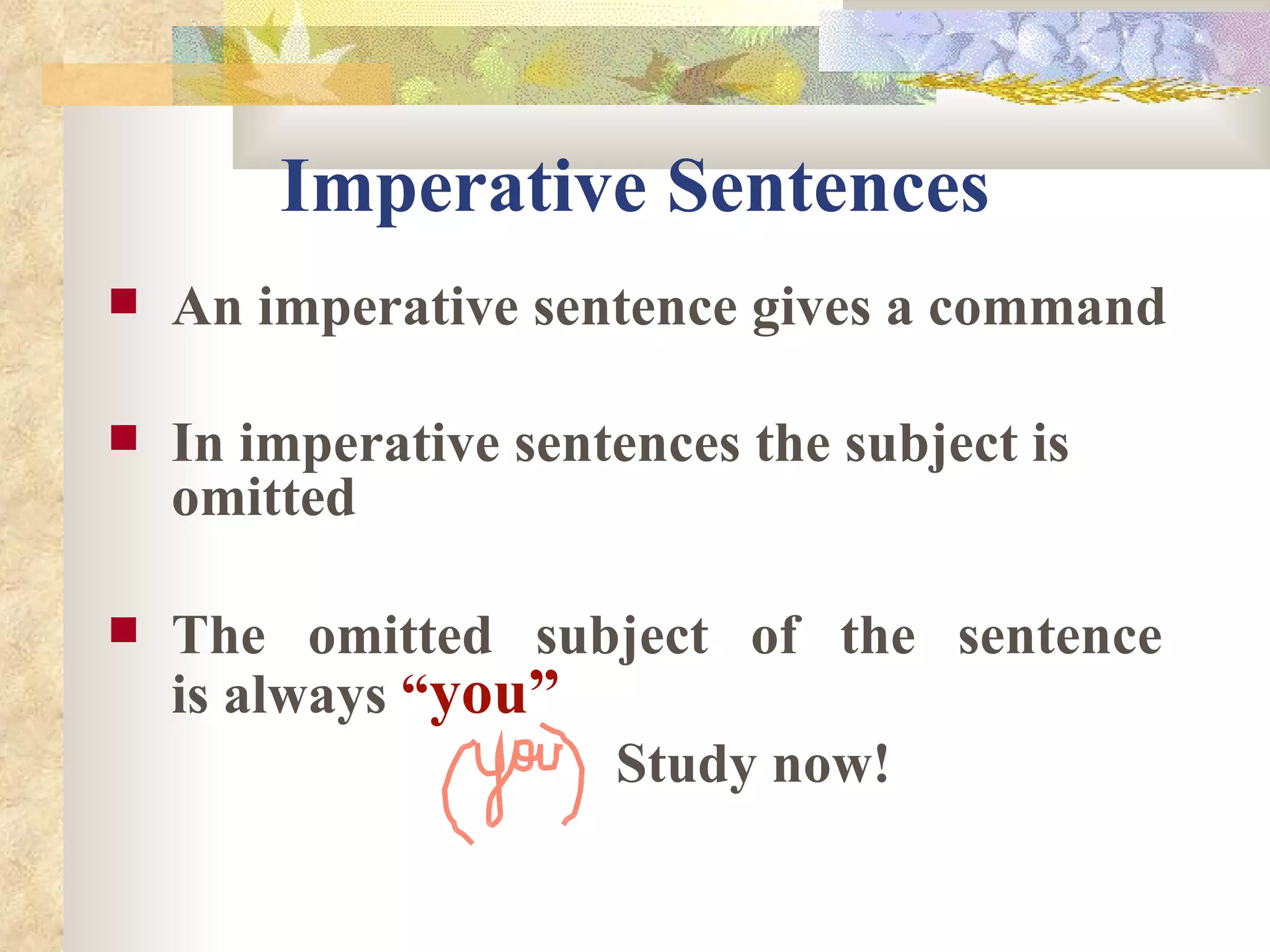
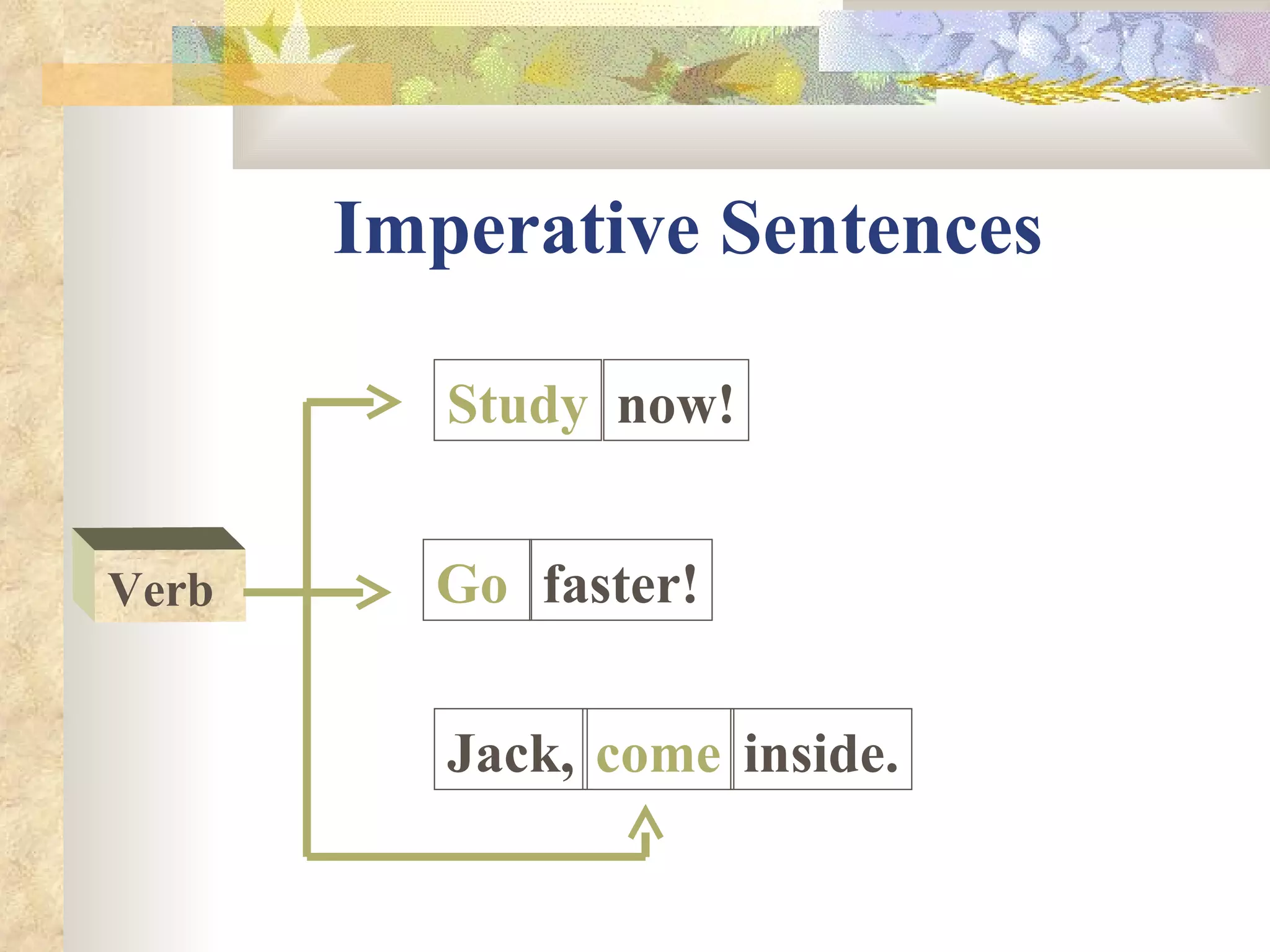
Imperative Sentences An imperative sentence gives a command In imperative sentences the subject is omitted  The omitted subject of the sentence  is always  “ you”   Study now!
Imperative Sentences Study now! Go faster! come inside. Verb Jack,
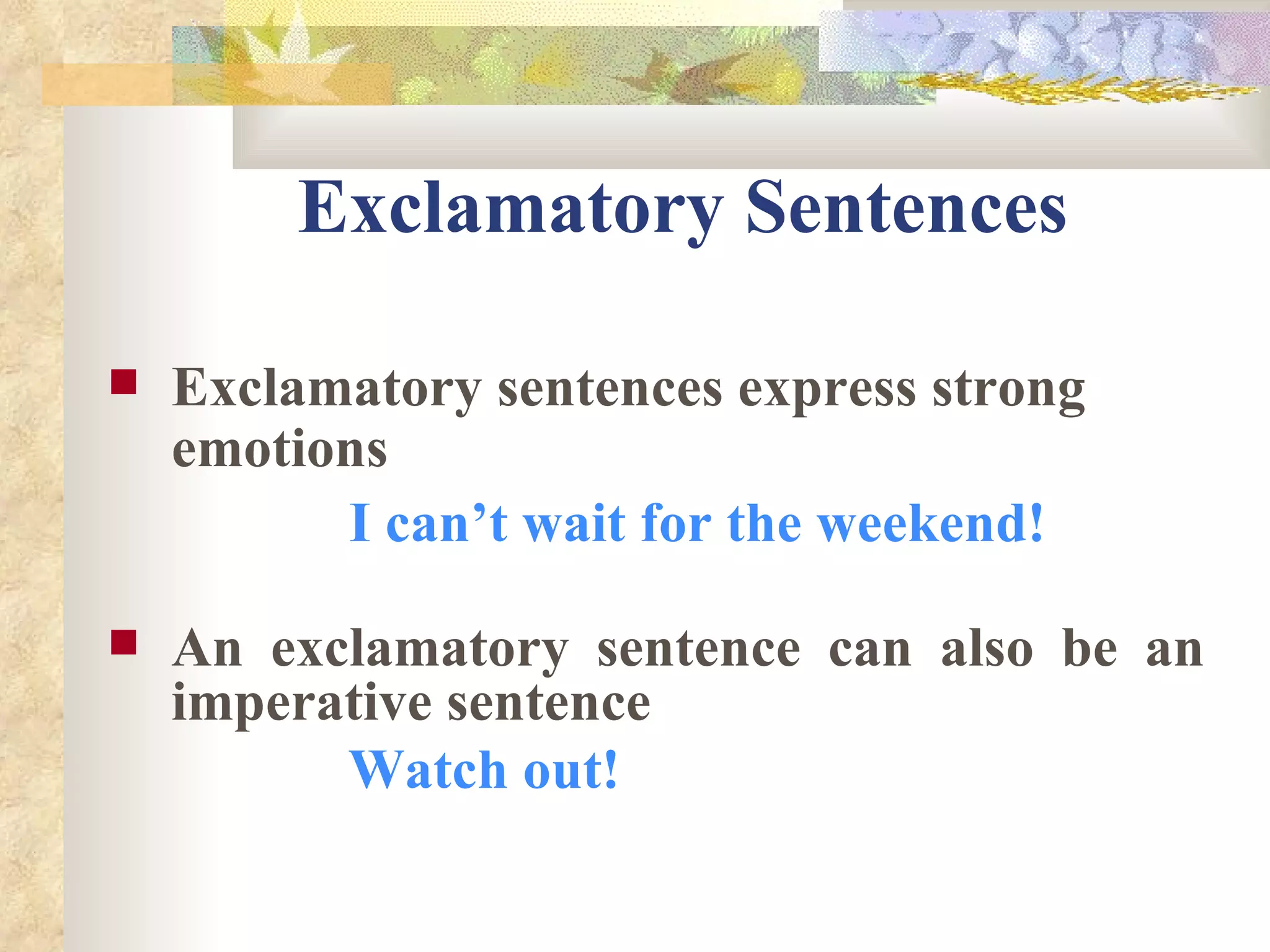
Exclamatory Sentences Exclamatory sentences express strong emotions I can’t wait for the weekend! An exclamatory sentence can also be an imperative sentence   Watch out!
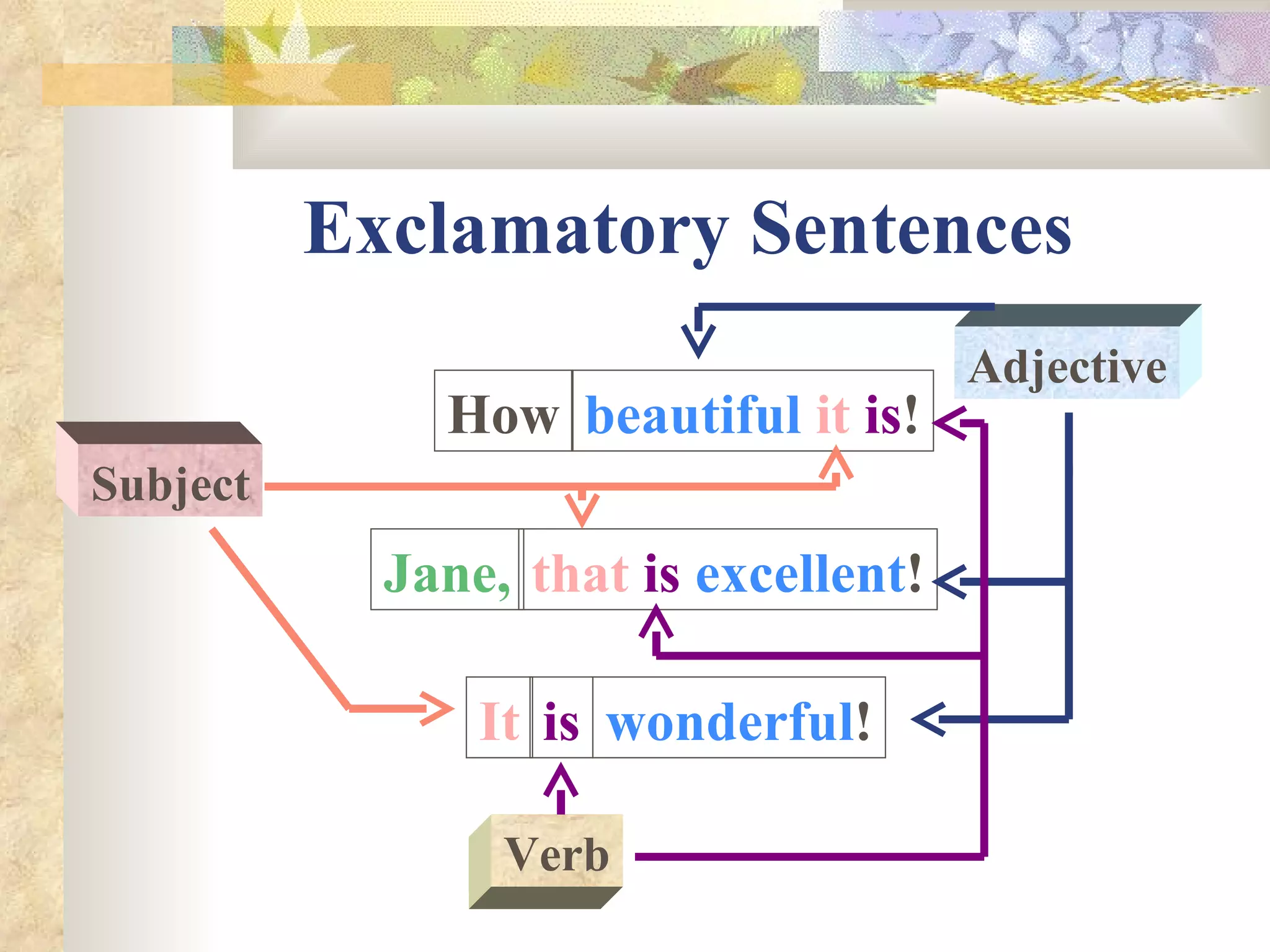
Exclamatory Sentences How beautiful  it   is ! that  is  excellent ! It is wonderful ! Jane, Subject Verb Adjective
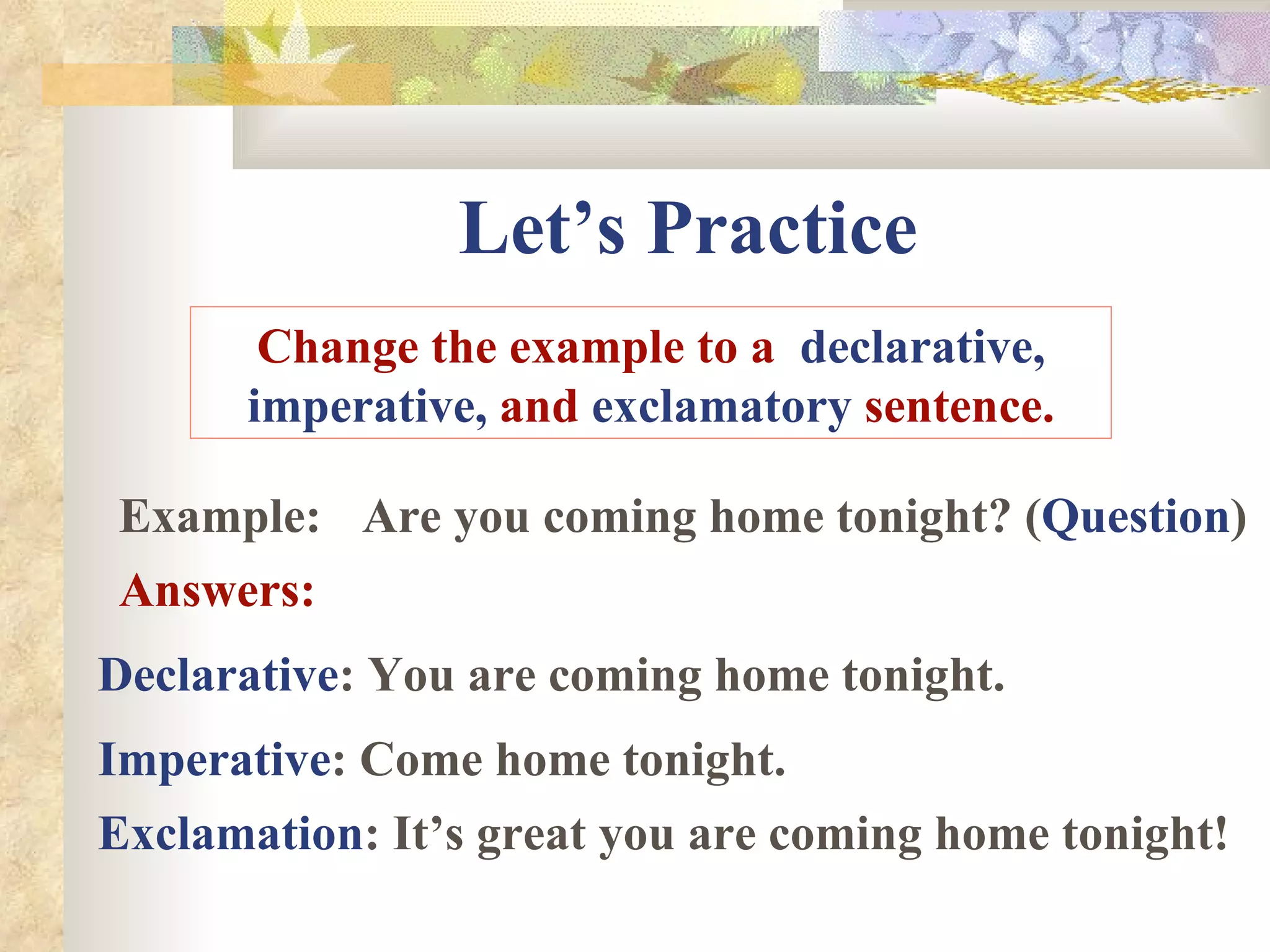
Let’s Practice Change the example to a  declarative, imperative,  and  exclamatory  sentence. Example: Are you coming home tonight? ( Question ) Answers: Declarative : You are coming home tonight. Imperative : Come home tonight. Exclamation : It’s great you are coming home tonight!
For More Information Index English Grammar and Composition http://www.ccc.commnet.edu/grammar/index2.htm   Tons of Fun with Grammar http://www.seasite.niu.edu/flin/103_handouts/       sentences_and_phrases.htm   Grammar Book Table of Contents http:// www.grammarbook.com /exercises/grammar/       cnt_gram.html
Center for Language Development Across the Disciplines Prepared by: Thalia N. Nazario-Santiago   Coordinator for the Center for Languages and Culture   April-June 2003 Revised by: Patricia Kidd Revised by: Prof. Delia Serrano   January 2005

Positioning the Subject and the Verb

  • 1.
    Positioning the Subject and the Verb University of the Sacred Heart Department of Humanities Center for Language Development Across the Disciplines LAD
  • 2.
    Objectives To describedifferent types of sentences To help the student place subjects and verbs in the correct position
  • 3.
    The Anatomy ofa Sentence A sentence is a group of words containing a subject and a predicate The subject tells who or what the sentence is about The predicate tells what the subject is or does
  • 4.
    Kinds of SentencesDepending on the type of sentence, the subject and the verb are placed in different positions. Take a look at the examples that follow.
  • 5.
    Declarative Sentences Adeclarative sentence makes a statement. It tells about something The subject in declarative sentences is placed before the verb
  • 6.
    Declarative Sentences BobJane Jack Subject Verb was a student. will go to the theater. has a blue car.
  • 7.
    Interrogative Sentences Aninterrogative sentence asks a question The subject in interrogative sentences is placed after the verb, or between the helping verb and the main verb
  • 8.
    Interrogative Sentences AreWhen Will Subject Verb you a student? Nancy come with us? did she leave?
  • 9.
    Imperative Sentences Animperative sentence gives a command In imperative sentences the subject is omitted The omitted subject of the sentence is always “ you” Study now!
  • 10.
    Imperative Sentences Studynow! Go faster! come inside. Verb Jack,
  • 11.
    Exclamatory Sentences Exclamatorysentences express strong emotions I can’t wait for the weekend! An exclamatory sentence can also be an imperative sentence Watch out!
  • 12.
    Exclamatory Sentences Howbeautiful it is ! that is excellent ! It is wonderful ! Jane, Subject Verb Adjective
  • 13.
    Let’s Practice Changethe example to a declarative, imperative, and exclamatory sentence. Example: Are you coming home tonight? ( Question ) Answers: Declarative : You are coming home tonight. Imperative : Come home tonight. Exclamation : It’s great you are coming home tonight!
  • 14.
    For More InformationIndex English Grammar and Composition http://www.ccc.commnet.edu/grammar/index2.htm Tons of Fun with Grammar http://www.seasite.niu.edu/flin/103_handouts/ sentences_and_phrases.htm Grammar Book Table of Contents http:// www.grammarbook.com /exercises/grammar/ cnt_gram.html
  • 15.
    Center for LanguageDevelopment Across the Disciplines Prepared by: Thalia N. Nazario-Santiago Coordinator for the Center for Languages and Culture April-June 2003 Revised by: Patricia Kidd Revised by: Prof. Delia Serrano January 2005