University of the Sacred Heart
                        Department of Humanities
       Center for Language Development Across the Disciplines (LAD)

                                    MLA Style

                             Citations and Quotations

•    In MLA style, you should refer to the works you cite or quote in two ways:
    1. Put the author’s name (or title of the work) and the page number in
        parenthesis, right after the cite or quote. This is known as parenthetical
        citation.
    2. At the end of your paper include a list with the complete information on the
        works you cited or quoted. This list is not the reference list.
•   If you add a word (s) or an explanation within a cite or quote, put it in brackets.
    Example:[word(s)].
•   If you omit a word(s) in a cite or quote, put in its place an ellipsis mark within
    brackets […].
•   The author’s name may appear in the text, but the page number should always
    appear in parenthesis after the cite or quote.

Short cites or quotations
• Short cites or quotes of four lines or less should be enclosed in quotation marks
   and incorporated to the text.
• Punctuation marks should appear after the parenthetical citation. Question marks
   and exclamation points should appear within the quotation marks if they are a part
   of the quoted passage, but after the parenthetical citation if they are a part of your
   text.

           “This is a short quotation.” (Author 00).

Long cites or quotations
• Indent long quotations one inch from the margins, and maintain double spacing.
• The parenthetical citation should appear after the closing punctuation mark.

           This is a longer quotation, which you should indent
           one inch from the paragraph’s original indentation.
           Note that all margins should be aligned with the new
           indentation. Also, remember that the cite or quote should
           maintain the double spaced type. (Author 00)
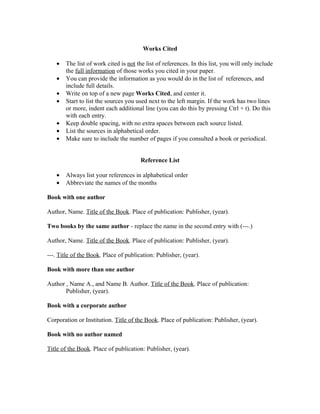
Works Cited

   •   The list of work cited is not the list of references. In this list, you will only include
       the full information of those works you cited in your paper.
   •   You can provide the information as you would do in the list of references, and
       include full details.
   •   Write on top of a new page Works Cited, and center it.
   •   Start to list the sources you used next to the left margin. If the work has two lines
       or more, indent each additional line (you can do this by pressing Ctrl + t). Do this
       with each entry.
   •   Keep double spacing, with no extra spaces between each source listed.
   •   List the sources in alphabetical order.
   •   Make sure to include the number of pages if you consulted a book or periodical.


                                       Reference List

   •   Always list your references in alphabetical order
   •   Abbreviate the names of the months

Book with one author

Author, Name. Title of the Book. Place of publication: Publisher, (year).

Two books by the same author - replace the name in the second entry with (---.)

Author, Name. Title of the Book. Place of publication: Publisher, (year).

---. Title of the Book. Place of publication: Publisher, (year).

Book with more than one author

Author , Name A., and Name B. Author. Title of the Book. Place of publication:
       Publisher, (year).

Book with a corporate author

Corporation or Institution. Title of the Book. Place of publication: Publisher, (year).

Book with no author named

Title of the Book. Place of publication: Publisher, (year).
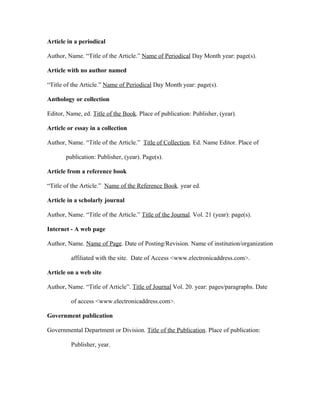
Article in a periodical

Author, Name. “Title of the Article.” Name of Periodical Day Month year: page(s).

Article with no author named

“Title of the Article.” Name of Periodical Day Month year: page(s).

Anthology or collection

Editor, Name, ed. Title of the Book. Place of publication: Publisher, (year).

Article or essay in a collection

Author, Name. “Title of the Article.” Title of Collection. Ed. Name Editor. Place of

       publication: Publisher, (year). Page(s).

Article from a reference book

“Title of the Article.” Name of the Reference Book. year ed.

Article in a scholarly journal

Author, Name. “Title of the Article.” Title of the Journal. Vol. 21 (year): page(s).

Internet - A web page

Author, Name. Name of Page. Date of Posting/Revision. Name of institution/organization

         affiliated with the site. Date of Access <www.electronicaddress.com>.

Article on a web site

Author, Name. “Title of Article”. Title of Journal Vol. 20. year: pages/paragraphs. Date

         of access <www.electronicaddress.com>.

Government publication

Governmental Department or Division. Title of the Publication. Place of publication:

         Publisher, year.
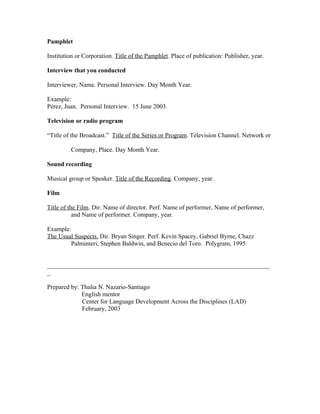
Pamphlet

Institution or Corporation. Title of the Pamphlet. Place of publication: Publisher, year.

Interview that you conducted

Interviewer, Name. Personal Interview. Day Month Year.

Example:
Pérez, Juan. Personal Interview. 15 June 2003.

Television or radio program

“Title of the Broadcast.” Title of the Series or Program. Television Channel. Network or

         Company, Place. Day Month Year.

Sound recording

Musical group or Speaker. Title of the Recording. Company, year.

Film

Title of the Film. Dir. Name of director. Perf. Name of performer, Name of performer,
           and Name of performer. Company, year.

Example:
The Usual Suspects. Dir. Bryan Singer. Perf. Kevin Spacey, Gabriel Byrne, Chazz
        Palminteri, Stephen Baldwin, and Benecio del Toro. Polygram, 1995.


_______________________________________________________________________
_

Prepared by: Thalia N. Nazario-Santiago
             English mentor
             Center for Language Development Across the Disciplines (LAD)
             February, 2003

MLA References

  • 1.
    University of theSacred Heart Department of Humanities Center for Language Development Across the Disciplines (LAD) MLA Style Citations and Quotations • In MLA style, you should refer to the works you cite or quote in two ways: 1. Put the author’s name (or title of the work) and the page number in parenthesis, right after the cite or quote. This is known as parenthetical citation. 2. At the end of your paper include a list with the complete information on the works you cited or quoted. This list is not the reference list. • If you add a word (s) or an explanation within a cite or quote, put it in brackets. Example:[word(s)]. • If you omit a word(s) in a cite or quote, put in its place an ellipsis mark within brackets […]. • The author’s name may appear in the text, but the page number should always appear in parenthesis after the cite or quote. Short cites or quotations • Short cites or quotes of four lines or less should be enclosed in quotation marks and incorporated to the text. • Punctuation marks should appear after the parenthetical citation. Question marks and exclamation points should appear within the quotation marks if they are a part of the quoted passage, but after the parenthetical citation if they are a part of your text. “This is a short quotation.” (Author 00). Long cites or quotations • Indent long quotations one inch from the margins, and maintain double spacing. • The parenthetical citation should appear after the closing punctuation mark. This is a longer quotation, which you should indent one inch from the paragraph’s original indentation. Note that all margins should be aligned with the new indentation. Also, remember that the cite or quote should maintain the double spaced type. (Author 00)
  • 2.
    Works Cited • The list of work cited is not the list of references. In this list, you will only include the full information of those works you cited in your paper. • You can provide the information as you would do in the list of references, and include full details. • Write on top of a new page Works Cited, and center it. • Start to list the sources you used next to the left margin. If the work has two lines or more, indent each additional line (you can do this by pressing Ctrl + t). Do this with each entry. • Keep double spacing, with no extra spaces between each source listed. • List the sources in alphabetical order. • Make sure to include the number of pages if you consulted a book or periodical. Reference List • Always list your references in alphabetical order • Abbreviate the names of the months Book with one author Author, Name. Title of the Book. Place of publication: Publisher, (year). Two books by the same author - replace the name in the second entry with (---.) Author, Name. Title of the Book. Place of publication: Publisher, (year). ---. Title of the Book. Place of publication: Publisher, (year). Book with more than one author Author , Name A., and Name B. Author. Title of the Book. Place of publication: Publisher, (year). Book with a corporate author Corporation or Institution. Title of the Book. Place of publication: Publisher, (year). Book with no author named Title of the Book. Place of publication: Publisher, (year).
  • 3.
    Article in aperiodical Author, Name. “Title of the Article.” Name of Periodical Day Month year: page(s). Article with no author named “Title of the Article.” Name of Periodical Day Month year: page(s). Anthology or collection Editor, Name, ed. Title of the Book. Place of publication: Publisher, (year). Article or essay in a collection Author, Name. “Title of the Article.” Title of Collection. Ed. Name Editor. Place of publication: Publisher, (year). Page(s). Article from a reference book “Title of the Article.” Name of the Reference Book. year ed. Article in a scholarly journal Author, Name. “Title of the Article.” Title of the Journal. Vol. 21 (year): page(s). Internet - A web page Author, Name. Name of Page. Date of Posting/Revision. Name of institution/organization affiliated with the site. Date of Access <www.electronicaddress.com>. Article on a web site Author, Name. “Title of Article”. Title of Journal Vol. 20. year: pages/paragraphs. Date of access <www.electronicaddress.com>. Government publication Governmental Department or Division. Title of the Publication. Place of publication: Publisher, year.
  • 4.
    Pamphlet Institution or Corporation.Title of the Pamphlet. Place of publication: Publisher, year. Interview that you conducted Interviewer, Name. Personal Interview. Day Month Year. Example: Pérez, Juan. Personal Interview. 15 June 2003. Television or radio program “Title of the Broadcast.” Title of the Series or Program. Television Channel. Network or Company, Place. Day Month Year. Sound recording Musical group or Speaker. Title of the Recording. Company, year. Film Title of the Film. Dir. Name of director. Perf. Name of performer, Name of performer, and Name of performer. Company, year. Example: The Usual Suspects. Dir. Bryan Singer. Perf. Kevin Spacey, Gabriel Byrne, Chazz Palminteri, Stephen Baldwin, and Benecio del Toro. Polygram, 1995. _______________________________________________________________________ _ Prepared by: Thalia N. Nazario-Santiago English mentor Center for Language Development Across the Disciplines (LAD) February, 2003