3 POINT LIGHTING
Photographic Imaging 1
Interview Lighting
●   The concepts covered here will reappear in many other lighting setups.
●   They will also help you to create your own distinctive lighting style.
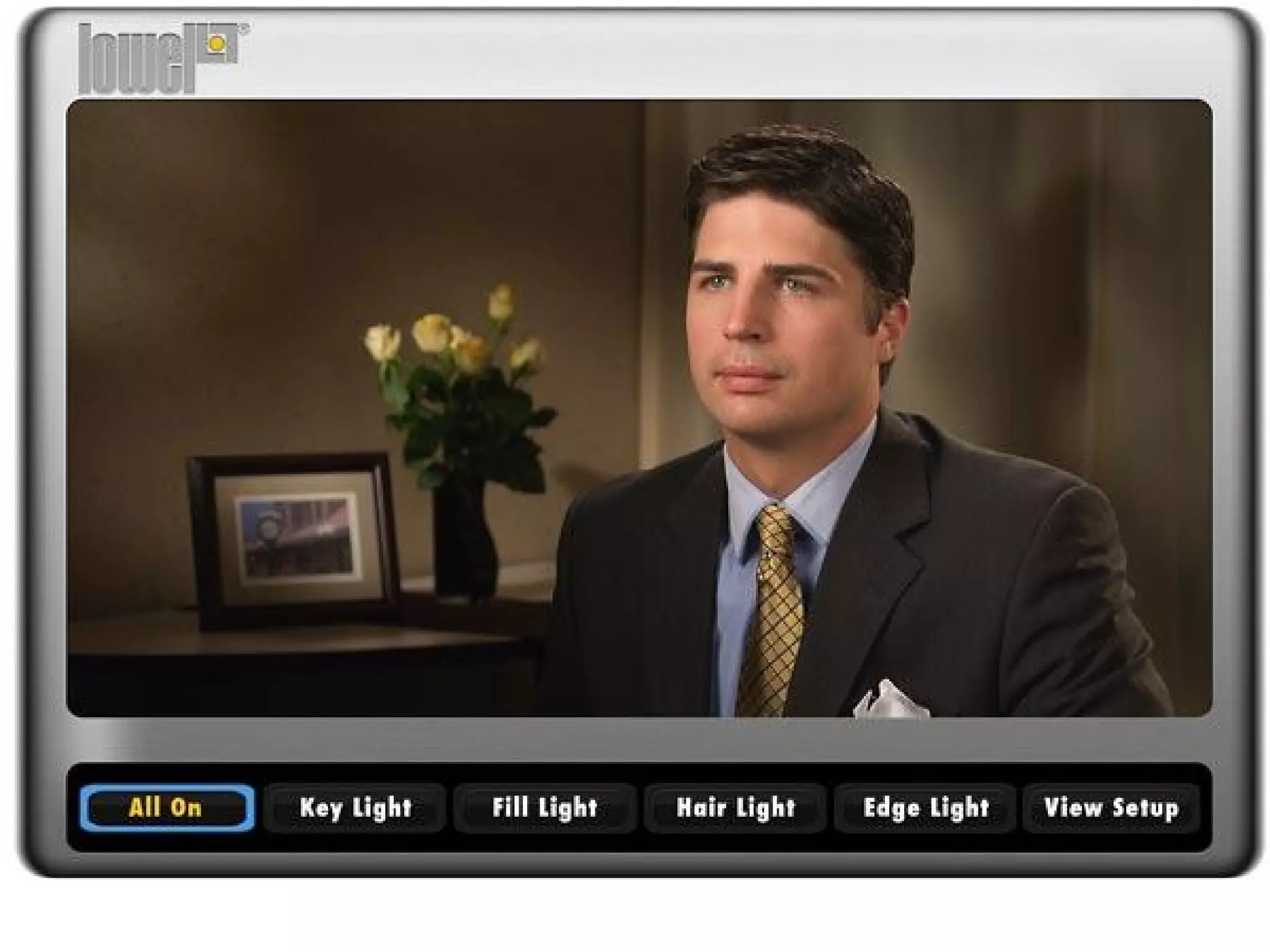
●These 4 lights: Key, Fill, Hair, & Edge, form the basics of a well lit
portrait.
Window lighting
● concepts of contrast and
light angles were often
influenced by indirect light
coming in a window.
●The north-light window/soft
lights- attempt to emulate
this classic look.
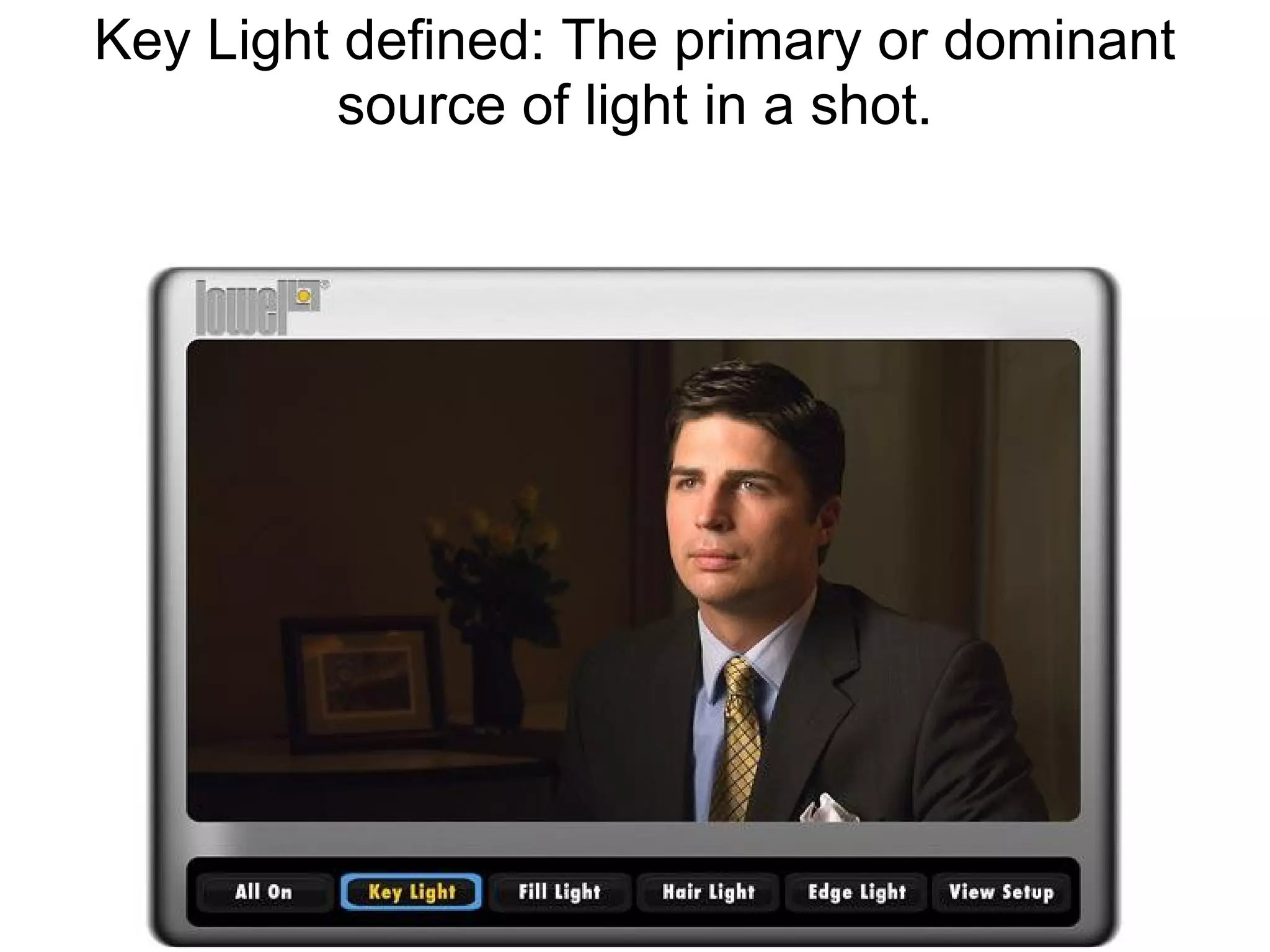
Key Light defined: The primary or dominant
          source of light in a shot.
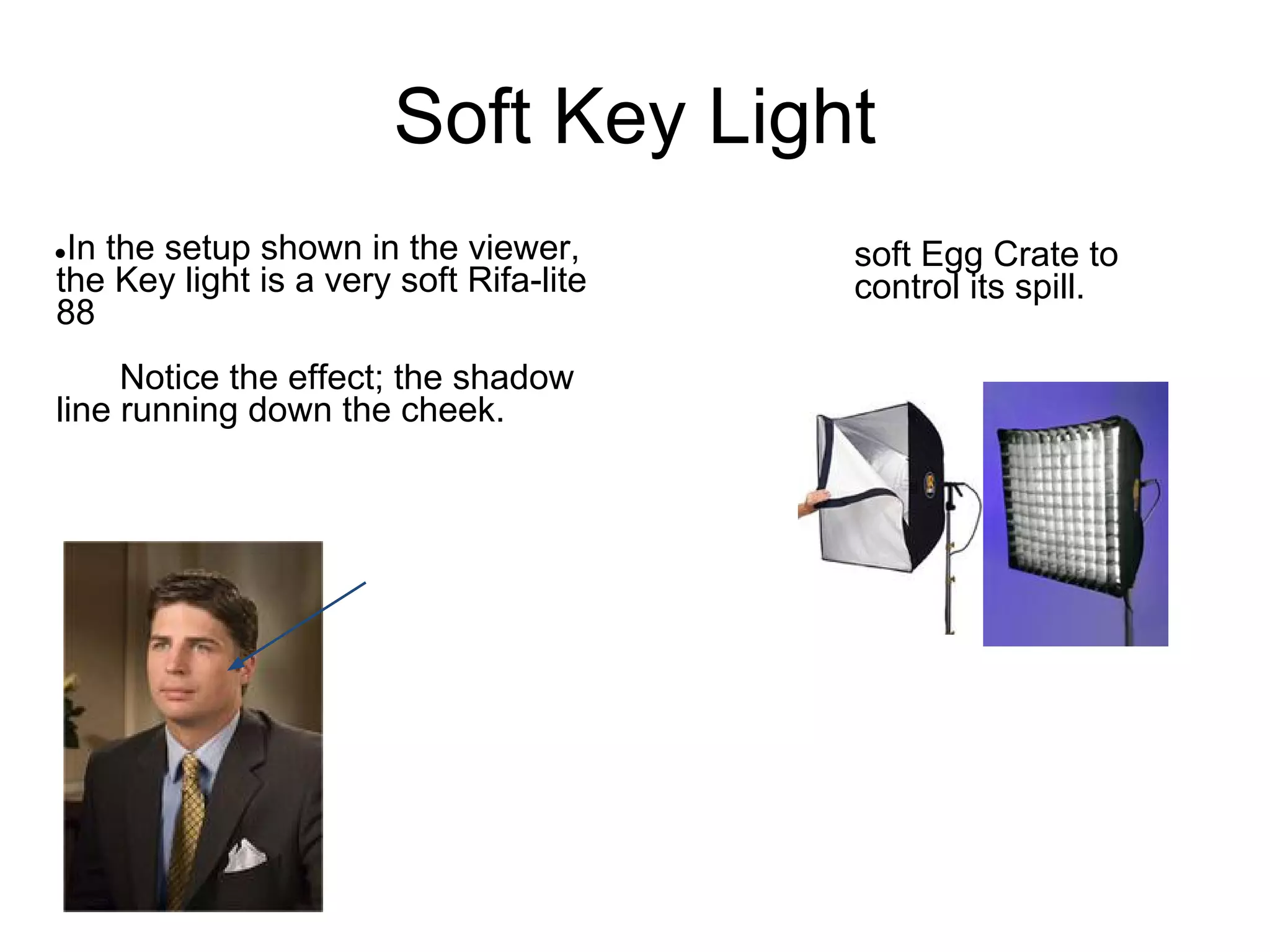
Soft Key Light
●In the setup shown in the viewer,       soft Egg Crate to
the Key light is a very soft Rifa-lite   control its spill.
88
     Notice the effect; the shadow
line running down the cheek.
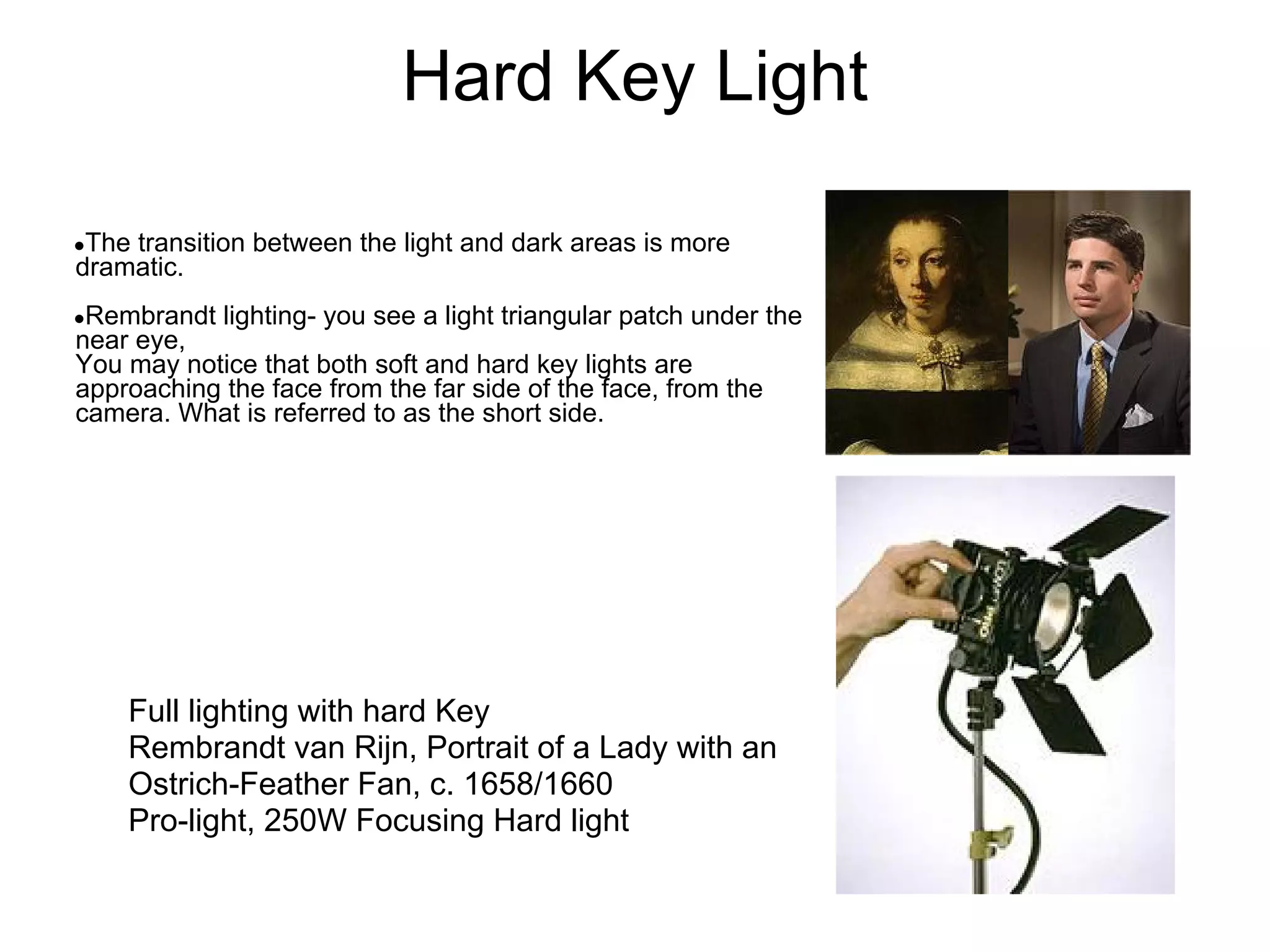
Hard Key Light

●Thetransition between the light and dark areas is more
dramatic.
●Rembrandt   lighting- you see a light triangular patch under the
near eye,
You may notice that both soft and hard key lights are
approaching the face from the far side of the face, from the
camera. What is referred to as the short side.


    Full lighting with hard Key
    Rembrandt van Rijn, Portrait of a Lady with an
    Ostrich-Feather Fan, c. 1658/1660
    Pro-light, 250W Focusing Hard light
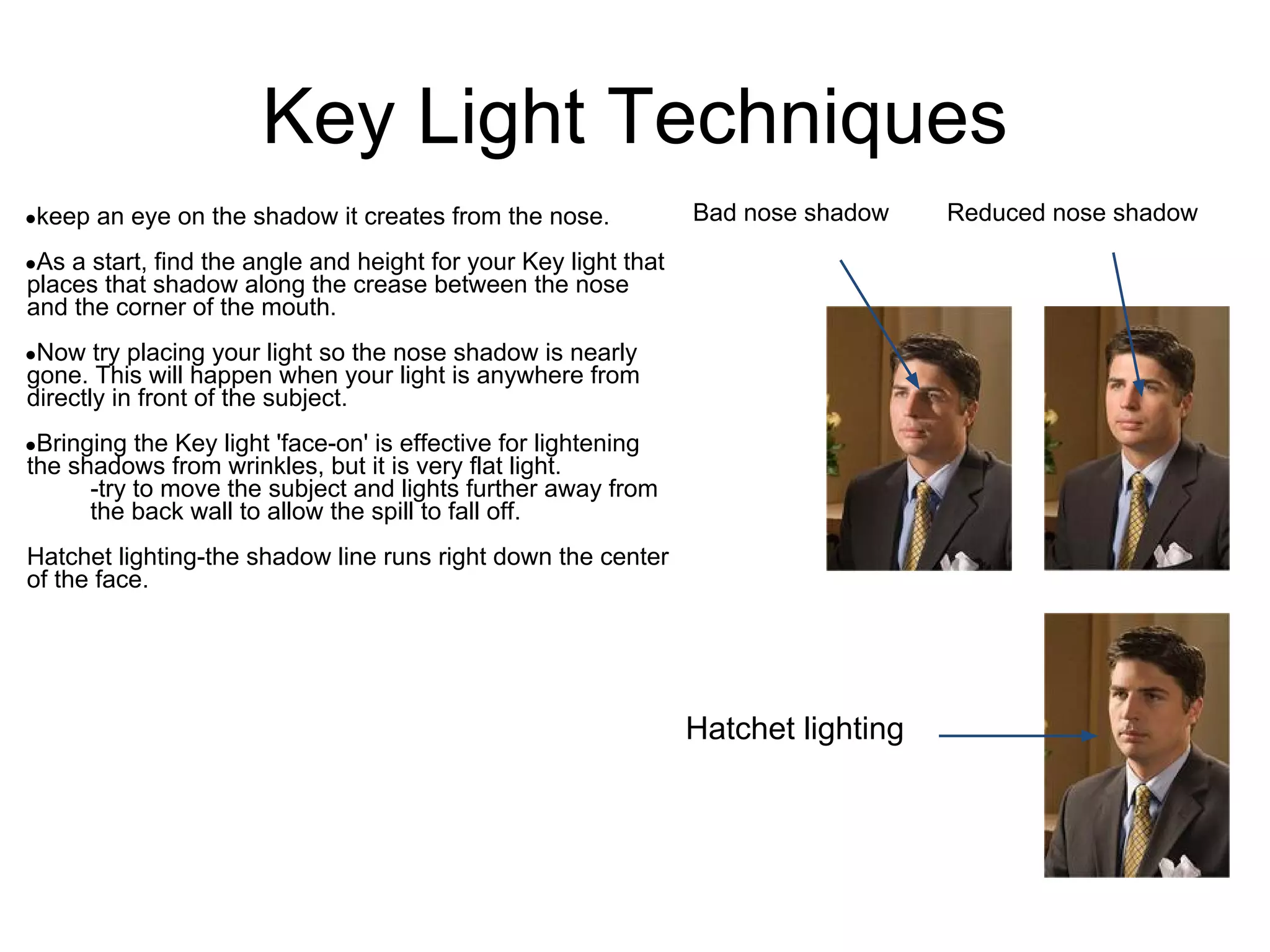
Key Light Techniques
●keep   an eye on the shadow it creates from the nose.           Bad nose shadow    Reduced nose shadow
●As a start, find the angle and height for your Key light that
places that shadow along the crease between the nose
and the corner of the mouth.
●Now   try placing your light so the nose shadow is nearly
gone. This will happen when your light is anywhere from
directly in front of the subject.
●Bringing  the Key light 'face-on' is effective for lightening
the shadows from wrinkles, but it is very flat light.
      -try to move the subject and lights further away from
      the back wall to allow the spill to fall off.
Hatchet lighting-the shadow line runs right down the center
of the face.


                                                                 Hatchet lighting
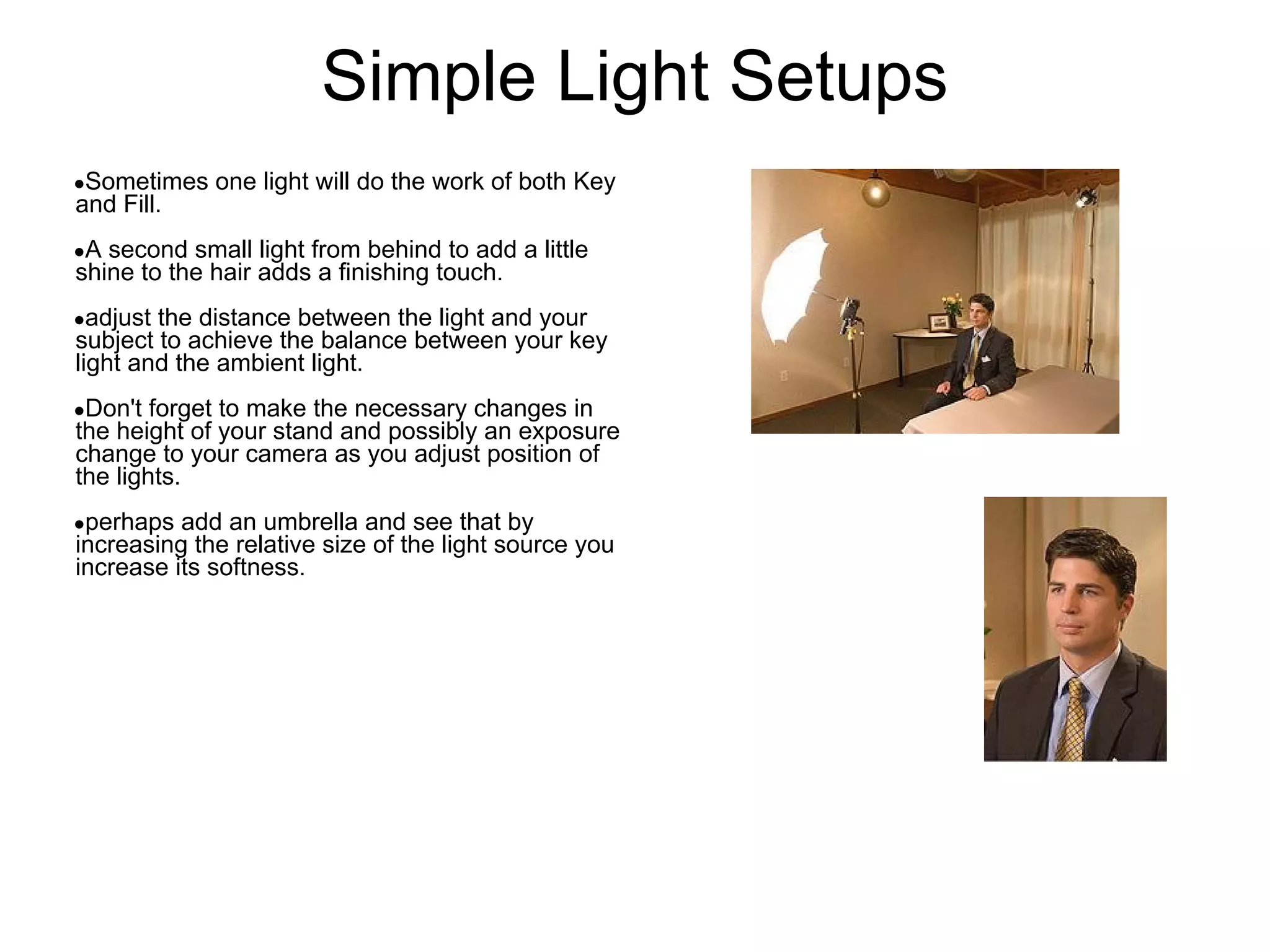
Simple Light Setups
●Sometimes   one light will do the work of both Key
and Fill.
●A second small light from behind to add a little
shine to the hair adds a finishing touch.
●adjust the distance between the light and your
subject to achieve the balance between your key
light and the ambient light.
●Don't  forget to make the necessary changes in
the height of your stand and possibly an exposure
change to your camera as you adjust position of
the lights.
●perhaps  add an umbrella and see that by
increasing the relative size of the light source you
increase its softness.
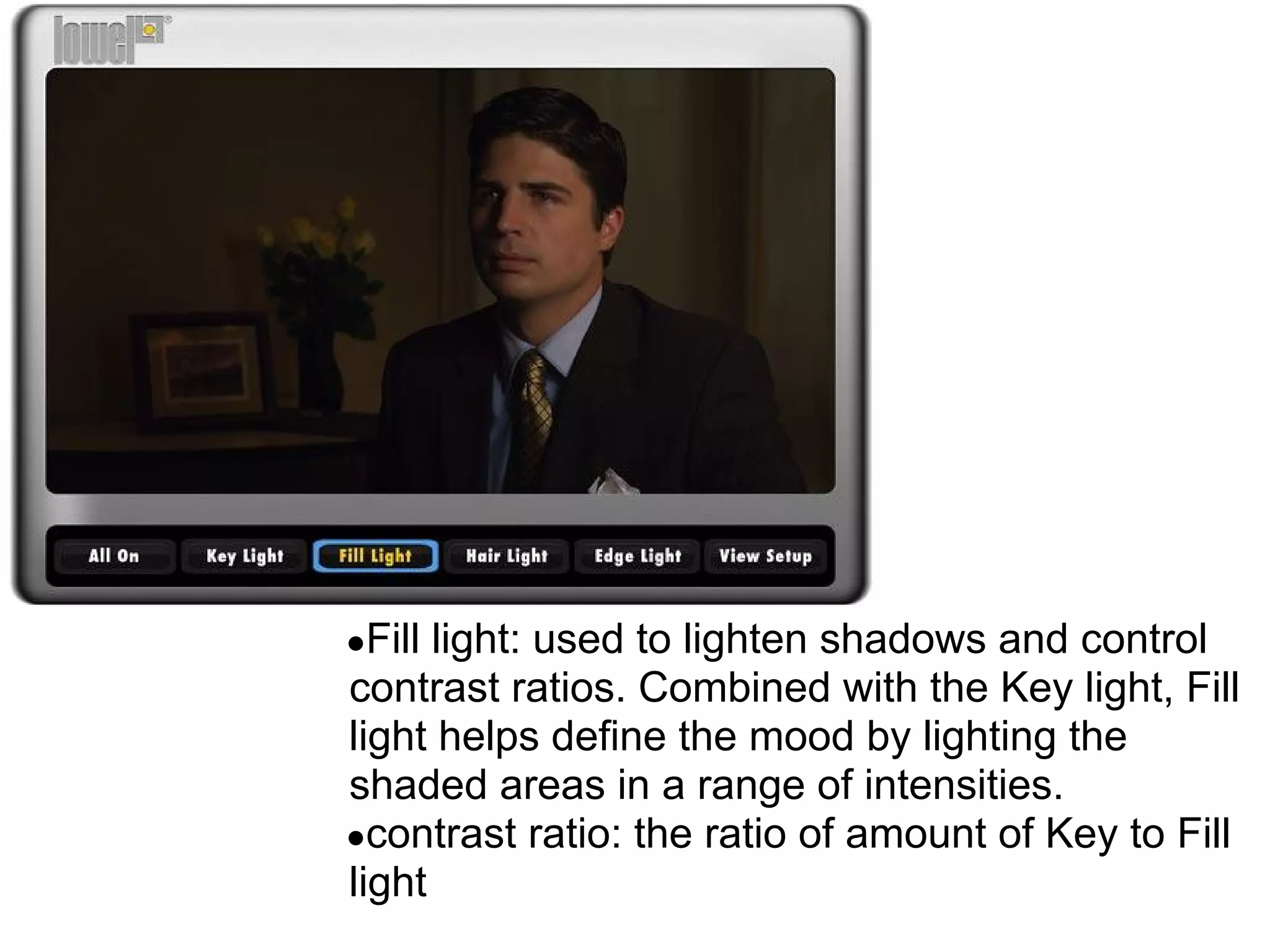
●Fill light: used to lighten shadows and control
contrast ratios. Combined with the Key light, Fill
light helps define the mood by lighting the
shaded areas in a range of intensities.
●contrast ratio: the ratio of amount of Key to Fill
light
Fill Light
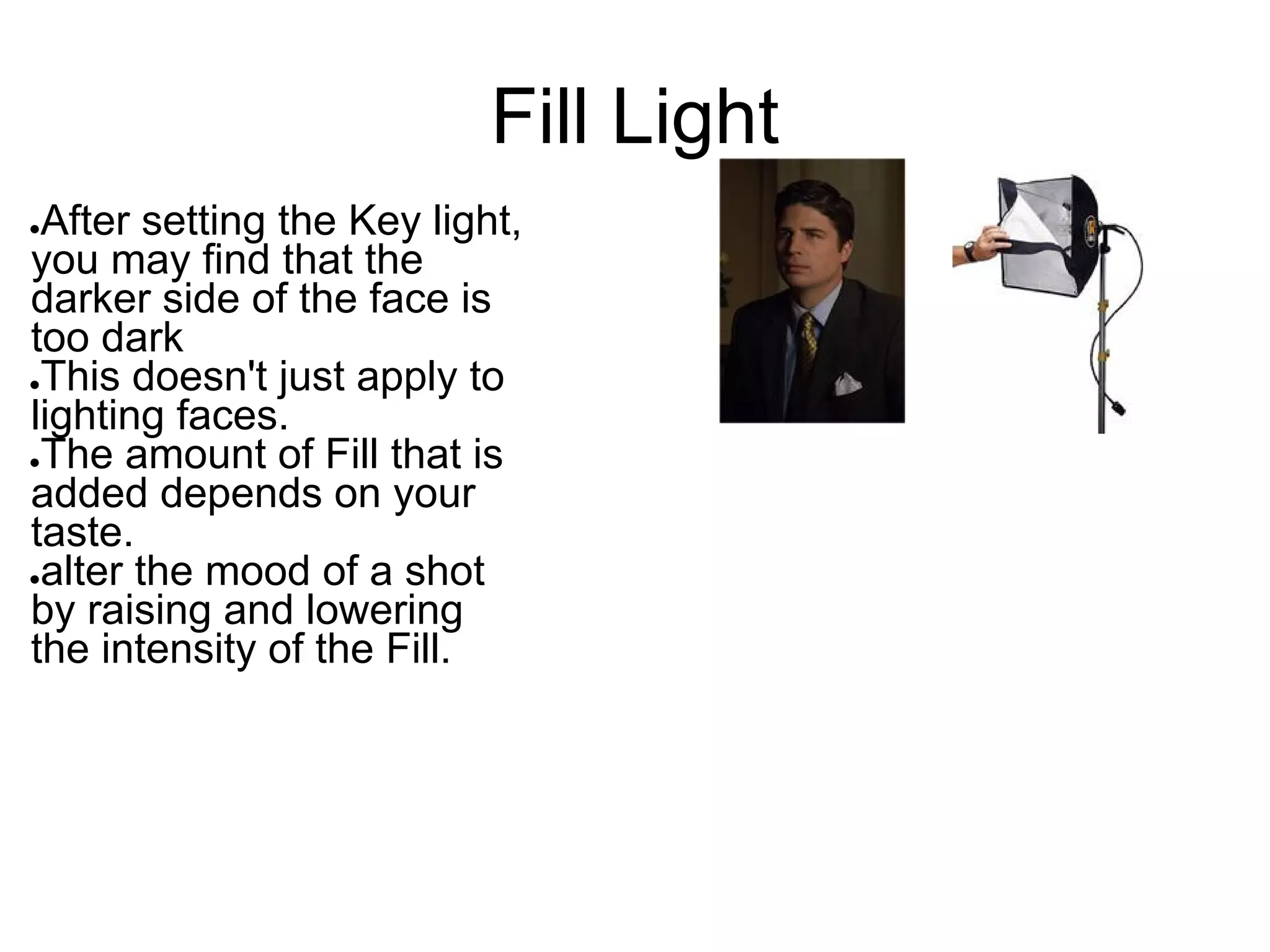
●After setting the Key light,
you may find that the
darker side of the face is
too dark
●This doesn't just apply to

lighting faces.
●The amount of Fill that is

added depends on your
taste.
●alter the mood of a shot

by raising and lowering
the intensity of the Fill.
Fill Light Techniques
●light placement positions near the camera-
hide the shadows behind the subject or more
off to the opposite side from the Key light.
●When   the Fill is directly over the camera it
adds to the Key light's exposure so consider
adjusting for it.
●withthe Key light/ adding scrims or neutral
density gels to the light- lessen the intensity
●. While it could be most any kind of light, a
Fill light is usually a soft source so using an
umbrella or a softbox is common.
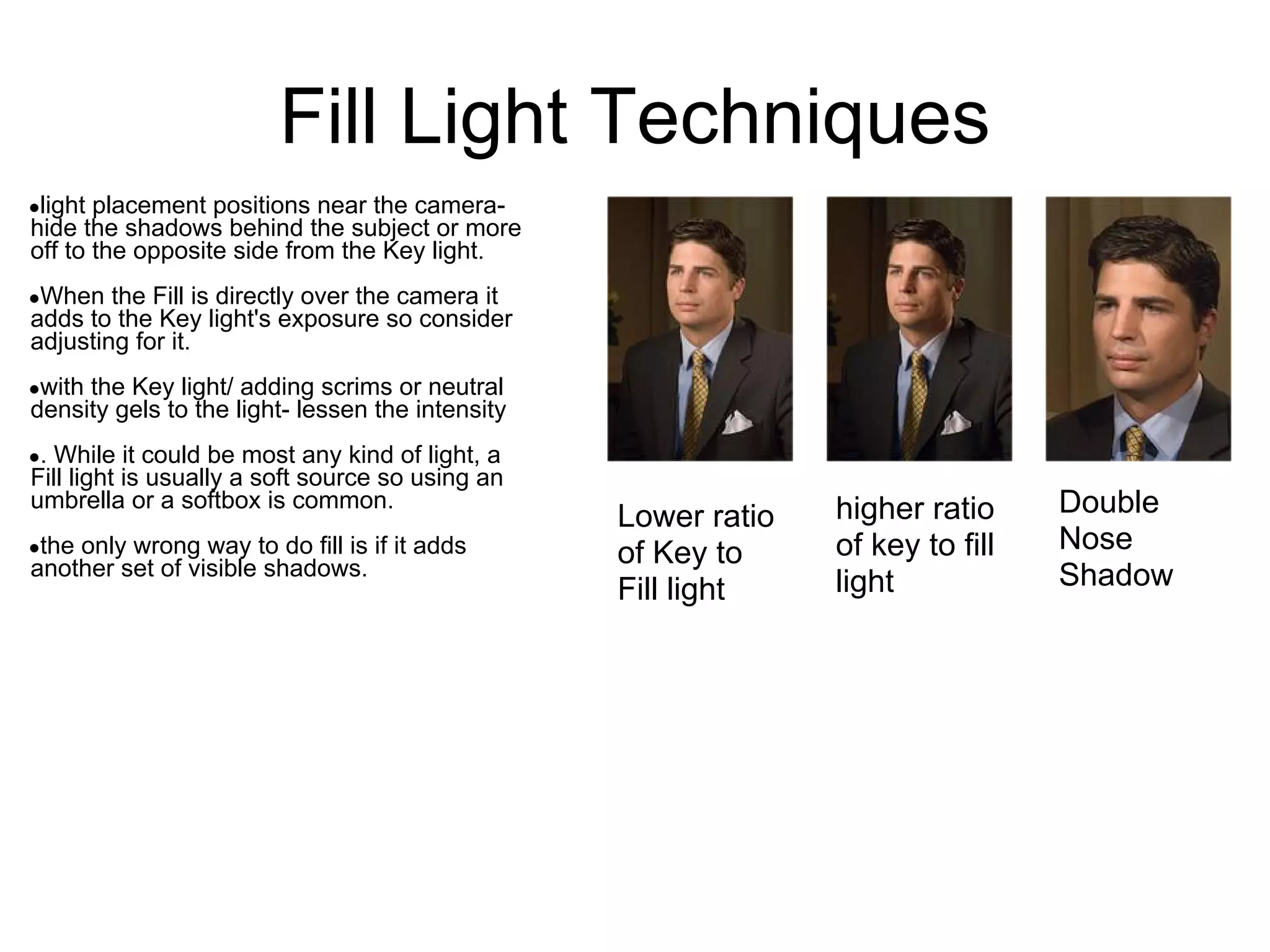
                                                  Lower ratio   higher ratio     Double
●theonly wrong way to do fill is if it adds       of Key to     of key to fill   Nose
another set of visible shadows.                                                  Shadow
                                                  Fill light    light
Reflected Fill Light
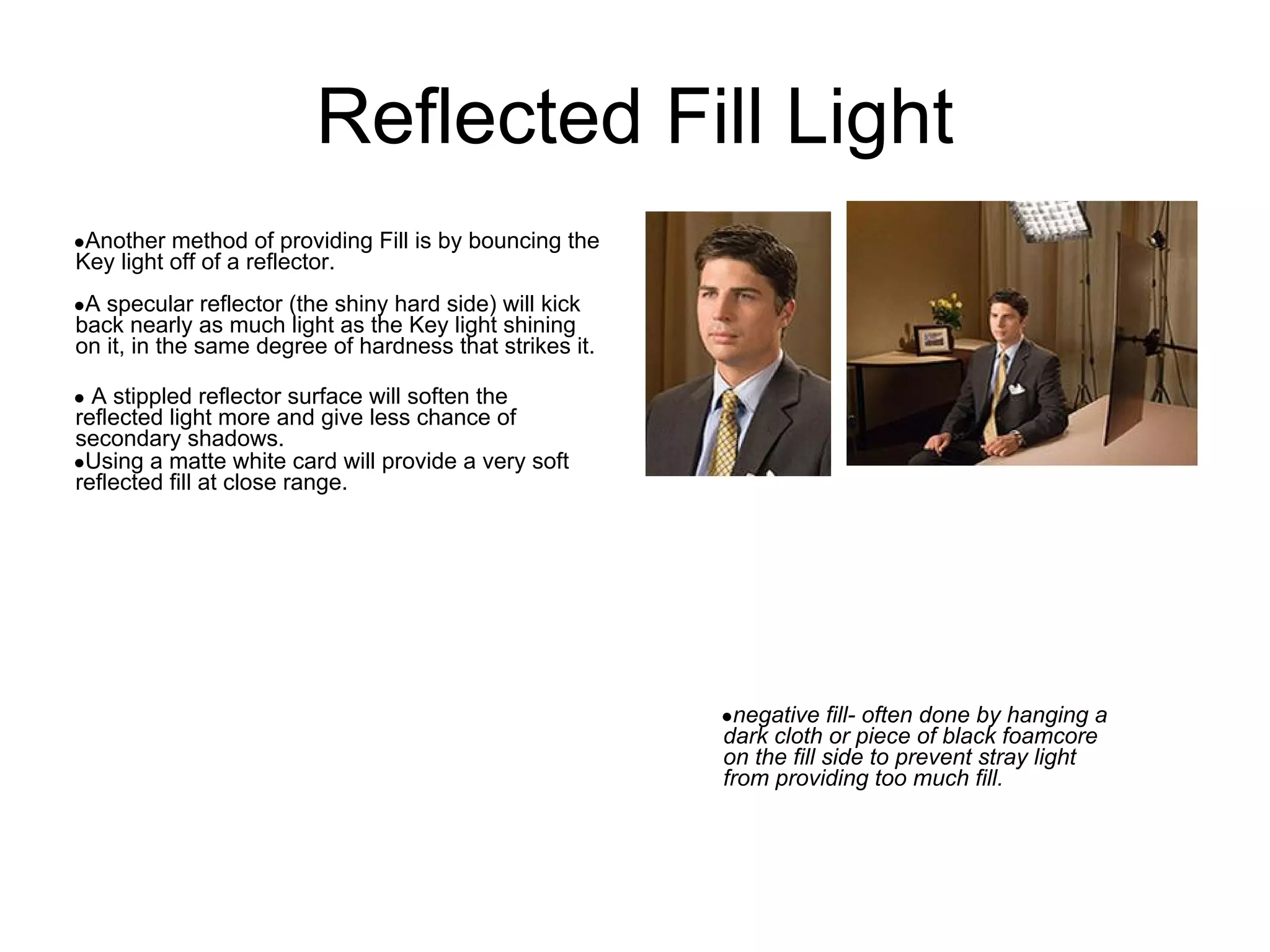
●Another method of providing Fill is by bouncing the
Key light off of a reflector.
●A specular reflector (the shiny hard side) will kick
back nearly as much light as the Key light shining
on it, in the same degree of hardness that strikes it.

● A stippled reflector surface will soften the
reflected light more and give less chance of
secondary shadows.
●Using a matte white card will provide a very soft
reflected fill at close range.


                                                         ●negative fill- often done by hanging a
                                                         dark cloth or piece of black foamcore
                                                         on the fill side to prevent stray light
                                                         from providing too much fill.
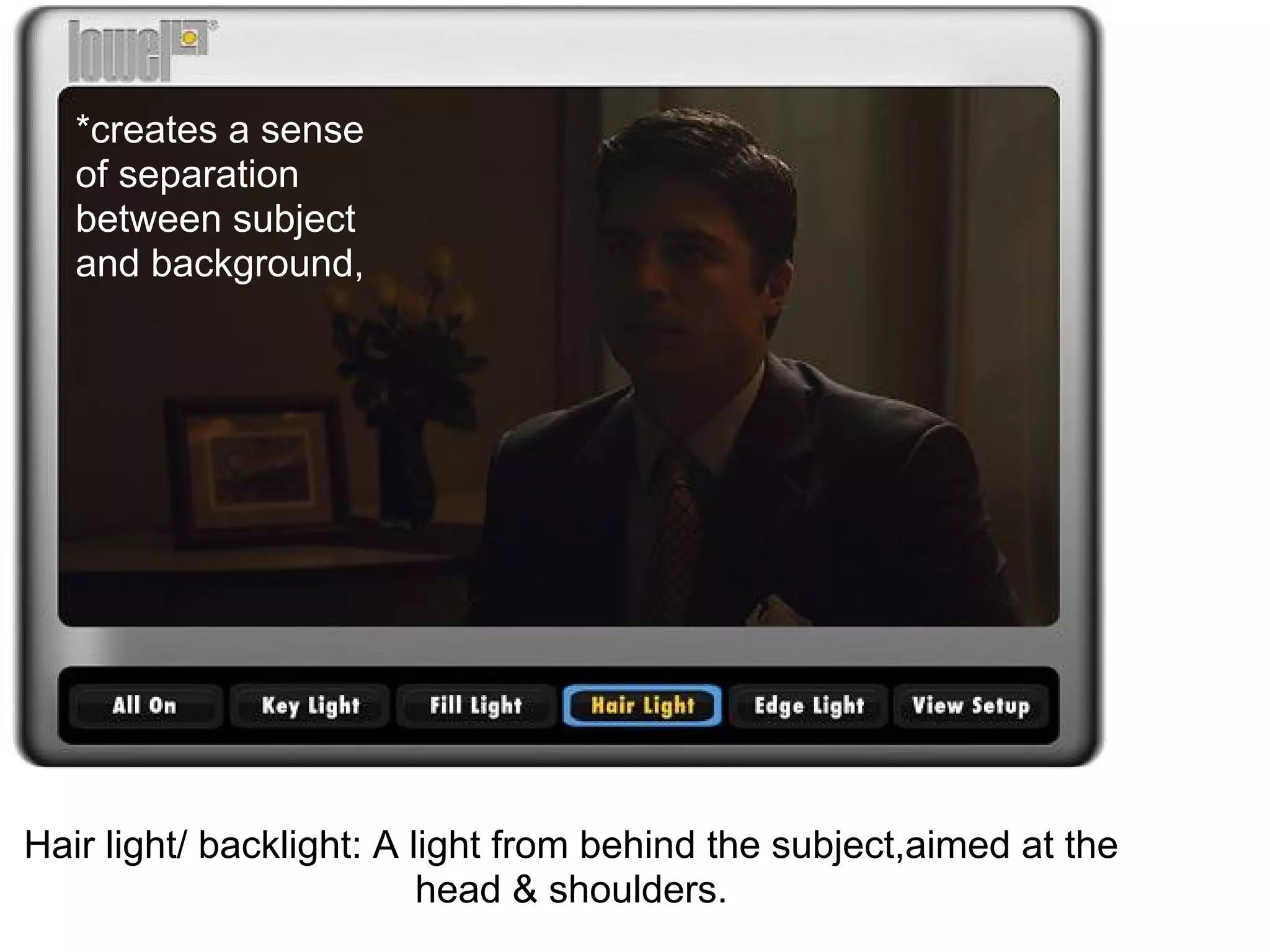
*creates a sense
   of separation
   between subject
   and background,


Hair light/ backlight: A light from behind the subject,aimed at the
                          head & shoulders.
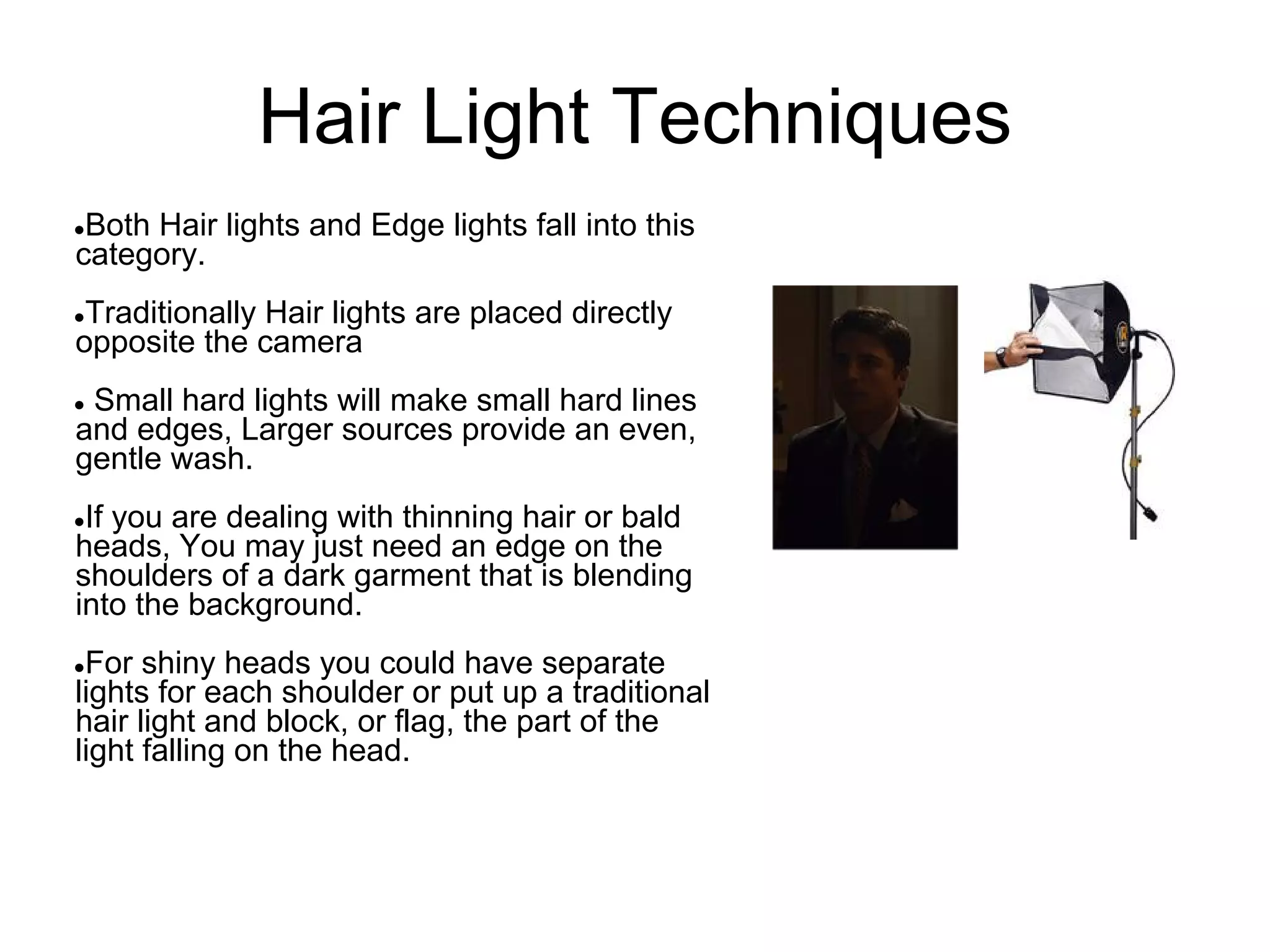
Hair Light Techniques
●Both Hair lights and Edge lights fall into this
category.
●Traditionally Hair lights are placed directly
opposite the camera
●Small hard lights will make small hard lines
and edges, Larger sources provide an even,
gentle wash.
●If you are dealing with thinning hair or bald
heads, You may just need an edge on the
shoulders of a dark garment that is blending
into the background.
●For shiny heads you could have separate
lights for each shoulder or put up a traditional
hair light and block, or flag, the part of the
light falling on the head.
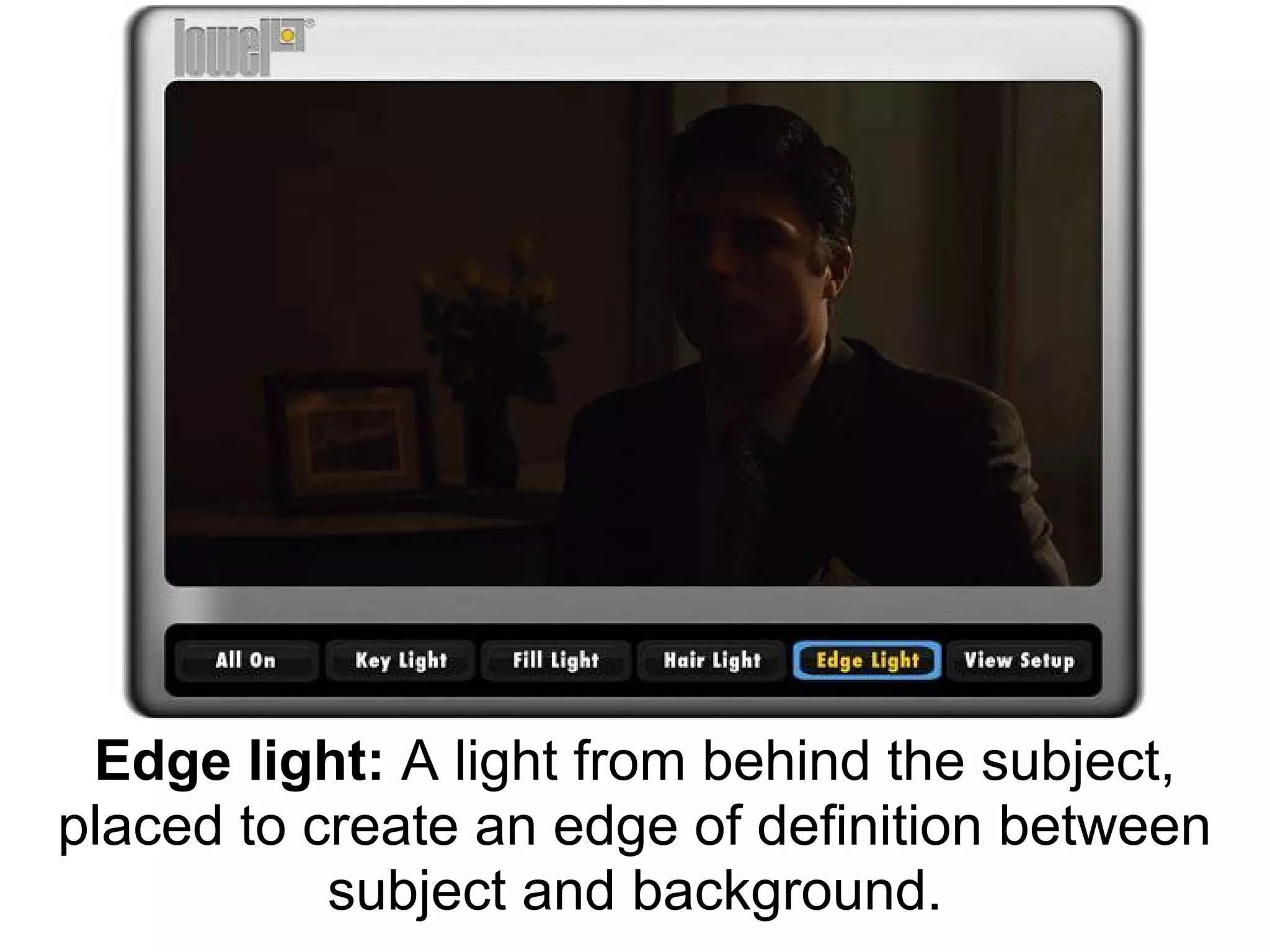
Edge light: A light from behind the subject,
placed to create an edge of definition between
           subject and background.
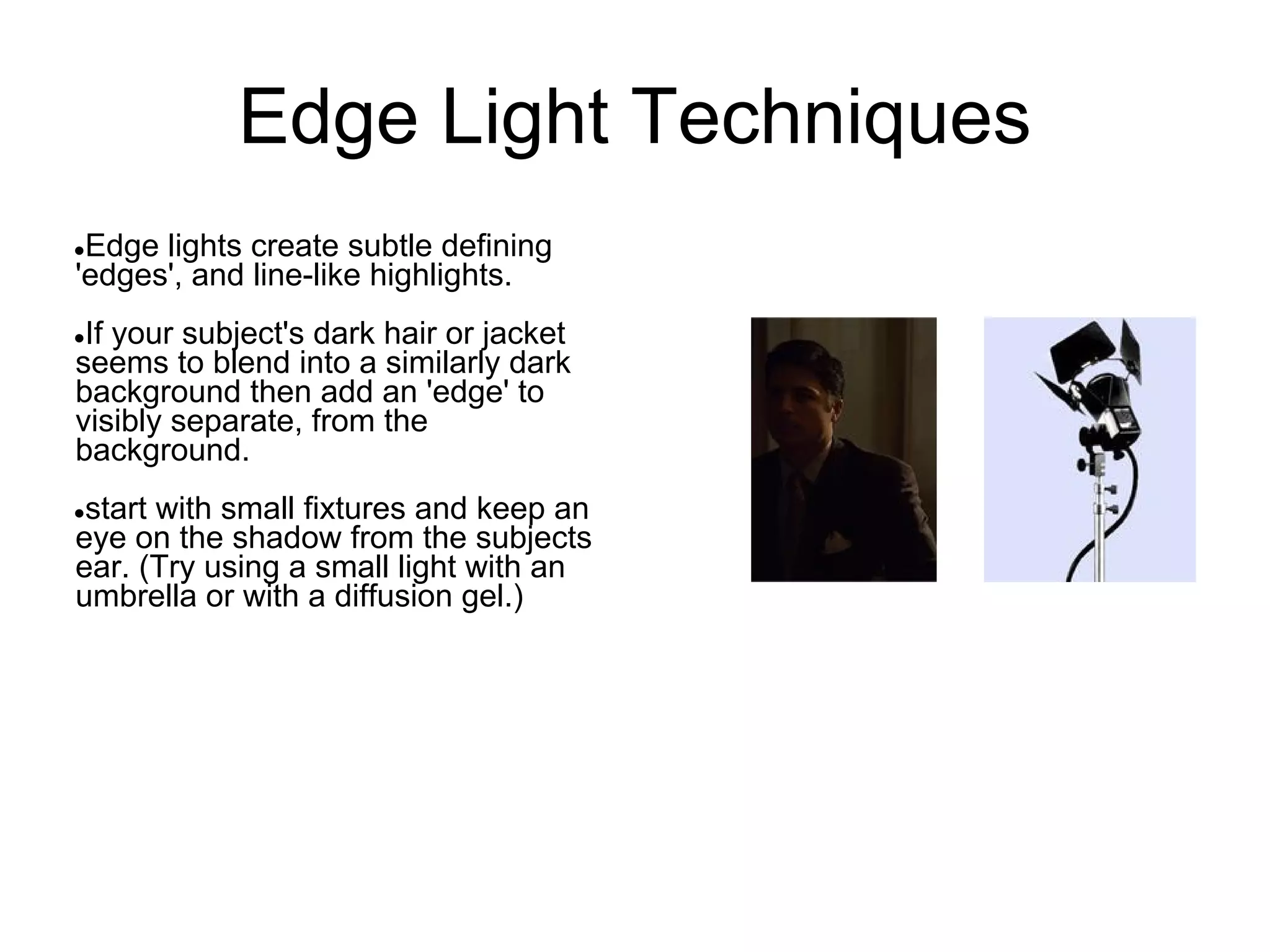
Edge Light Techniques
●Edge lights create subtle defining
'edges', and line-like highlights.
●If your subject's dark hair or jacket
seems to blend into a similarly dark
background then add an 'edge' to
visibly separate, from the
background.
●start with small fixtures and keep an
eye on the shadow from the subjects
ear. (Try using a small light with an
umbrella or with a diffusion gel.)
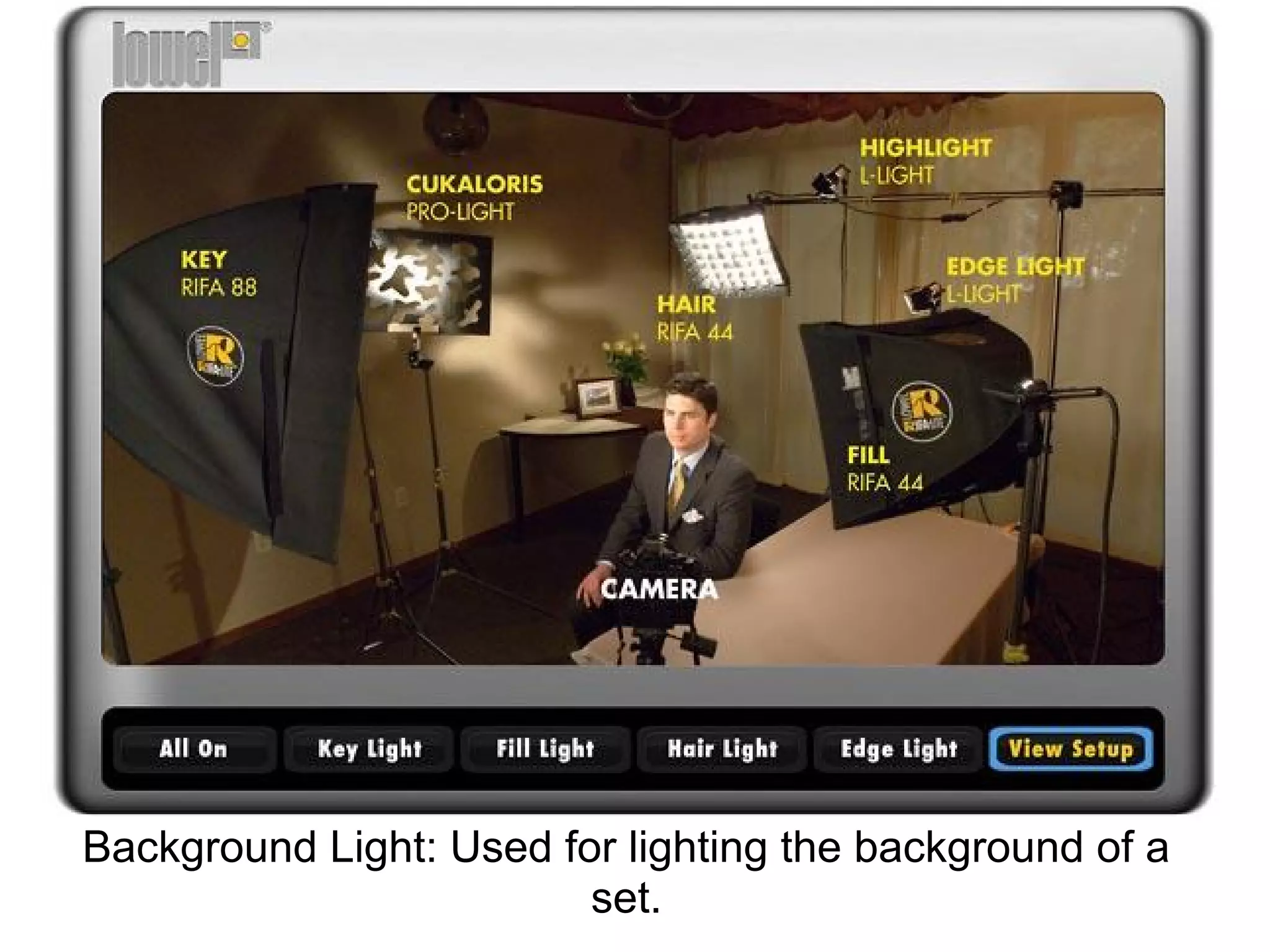
Background Light: Used for lighting the background of a
                         set.
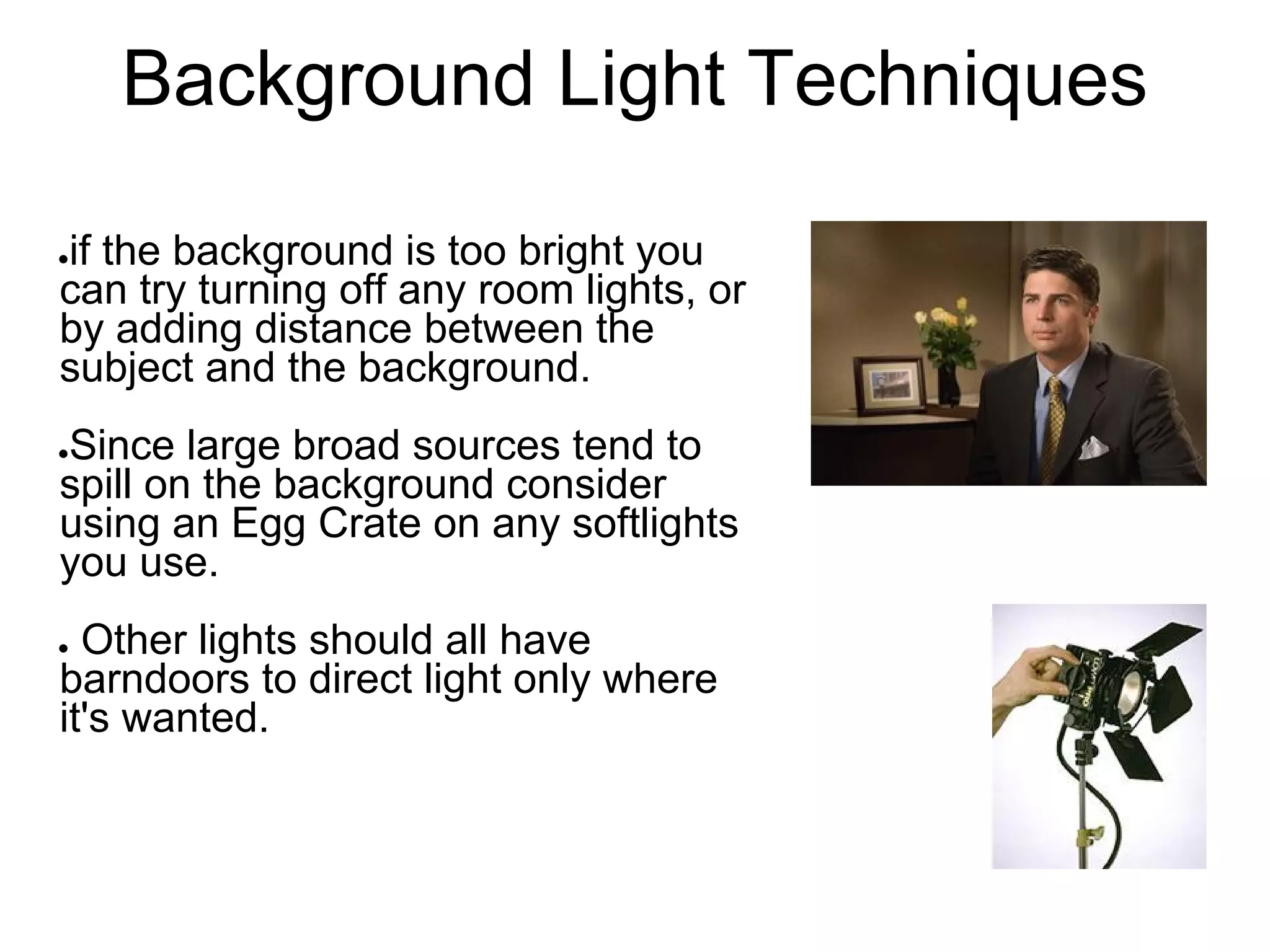
Background Light Techniques

if the background is too bright you
●

can try turning off any room lights, or
by adding distance between the
subject and the background.
Since large broad sources tend to
●

spill on the background consider
using an Egg Crate on any softlights
you use.
● Other lights should all have
barndoors to direct light only where
it's wanted.
Background Light Options
                  (slash accent)
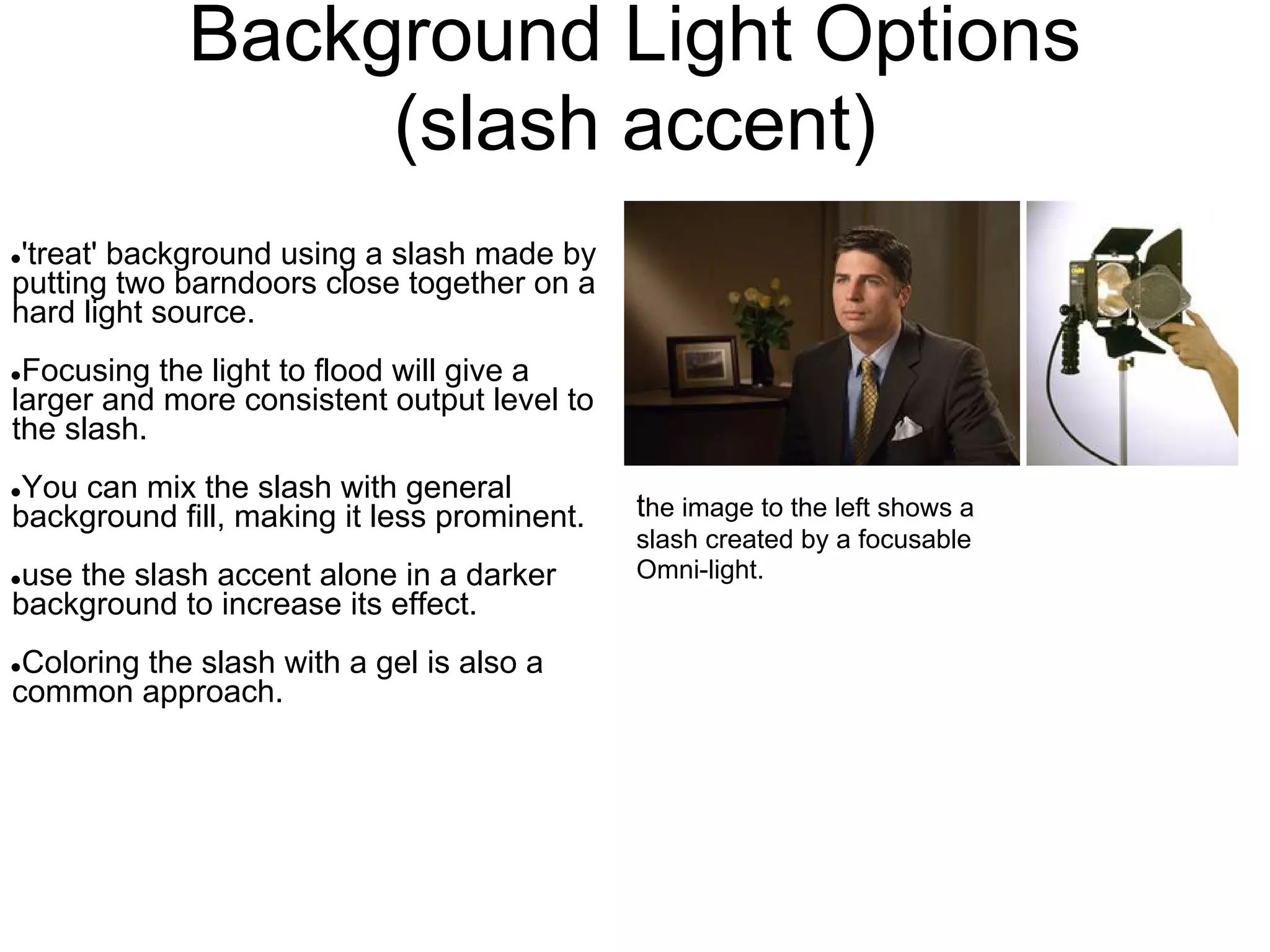
●'treat' background using a slash made by
putting two barndoors close together on a
hard light source.
●Focusing the light to flood will give a
larger and more consistent output level to
the slash.
●You can mix the slash with general
background fill, making it less prominent.   the image to the left shows a
                                             slash created by a focusable
●use the slash accent alone in a darker      Omni-light.
background to increase its effect.
●Coloring the slash with a gel is also a
common approach.
Background Light Options
             (highlight accent)
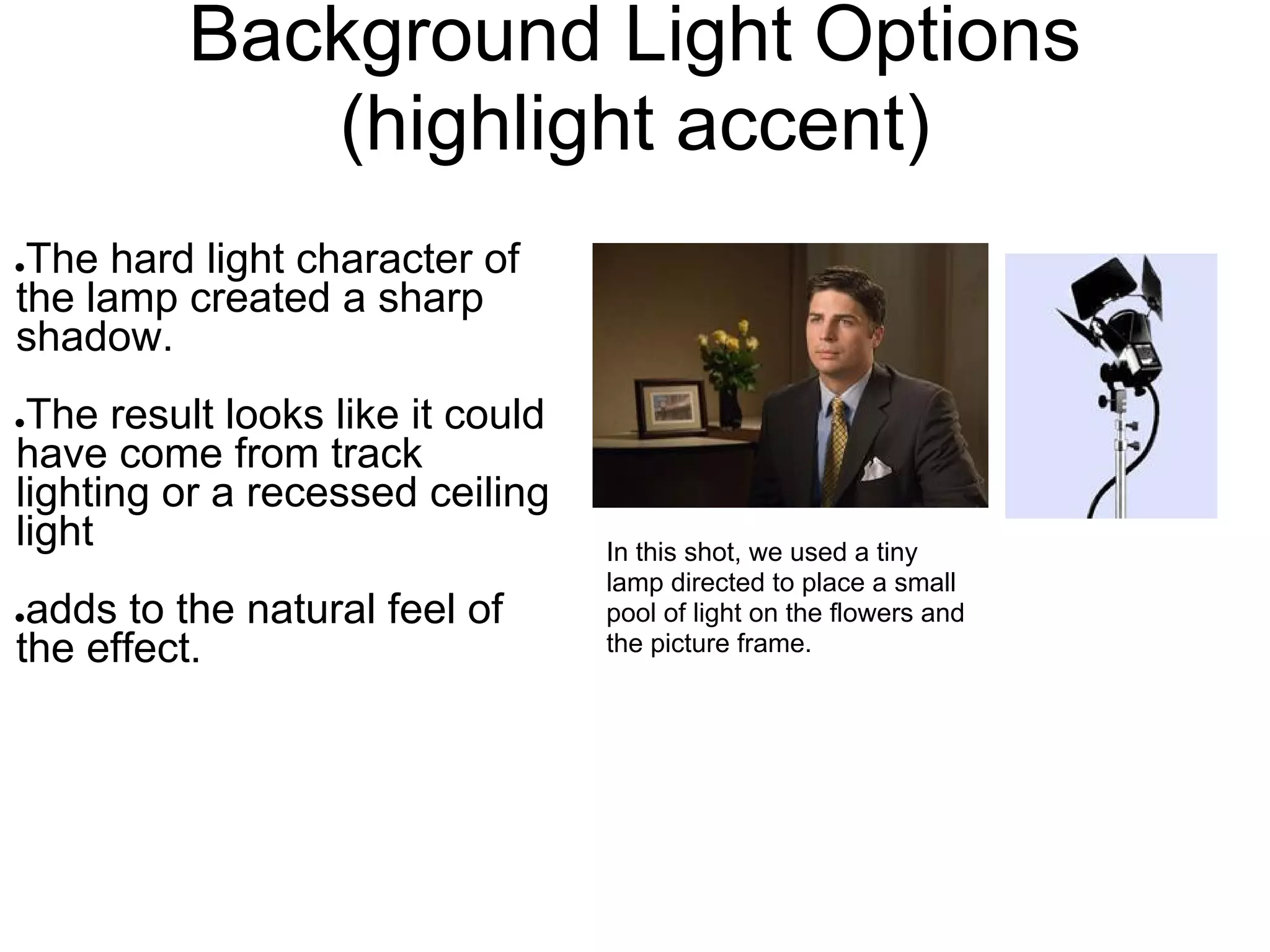
●The hard light character of
the lamp created a sharp
shadow.
●The result looks like it could
have come from track
lighting or a recessed ceiling
light                             In this shot, we used a tiny
                                  lamp directed to place a small
●adds to the natural feel of      pool of light on the flowers and
the effect.                       the picture frame.
Background Light Options
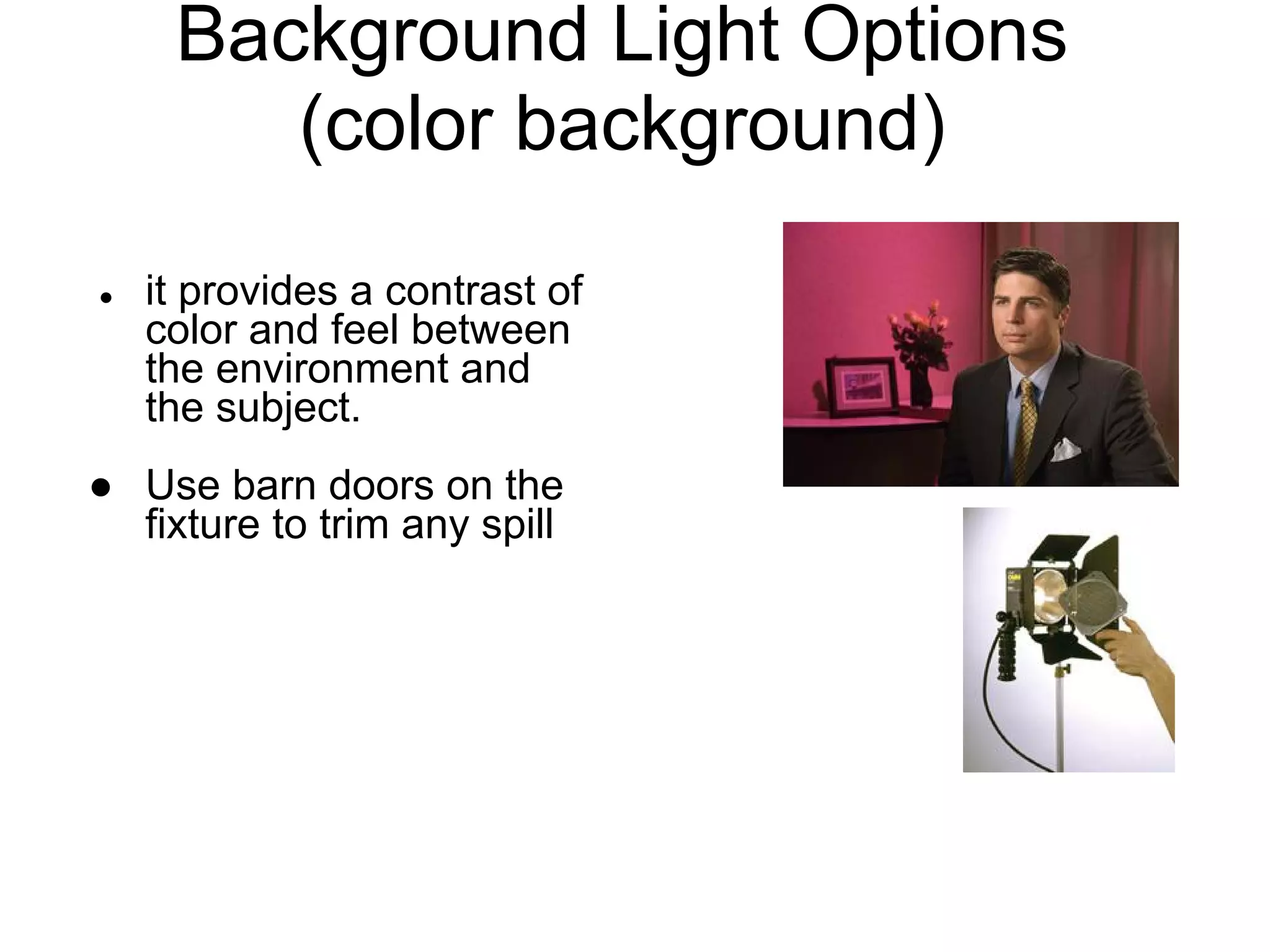
        (color background)
●   it provides a contrast of
    color and feel between
    the environment and
    the subject.
● Use barn doors on the
  fixture to trim any spill

3 pointlighting.ppt

  • 1.
  • 2.
    Interview Lighting ● The concepts covered here will reappear in many other lighting setups. ● They will also help you to create your own distinctive lighting style. ●These 4 lights: Key, Fill, Hair, & Edge, form the basics of a well lit portrait.
  • 3.
    Window lighting ● conceptsof contrast and light angles were often influenced by indirect light coming in a window. ●The north-light window/soft lights- attempt to emulate this classic look.
  • 5.
    Key Light defined:The primary or dominant source of light in a shot.
  • 6.
    Soft Key Light ●Inthe setup shown in the viewer, soft Egg Crate to the Key light is a very soft Rifa-lite control its spill. 88 Notice the effect; the shadow line running down the cheek.
  • 7.
    Hard Key Light ●Thetransitionbetween the light and dark areas is more dramatic. ●Rembrandt lighting- you see a light triangular patch under the near eye, You may notice that both soft and hard key lights are approaching the face from the far side of the face, from the camera. What is referred to as the short side. Full lighting with hard Key Rembrandt van Rijn, Portrait of a Lady with an Ostrich-Feather Fan, c. 1658/1660 Pro-light, 250W Focusing Hard light
  • 8.
    Key Light Techniques ●keep an eye on the shadow it creates from the nose. Bad nose shadow Reduced nose shadow ●As a start, find the angle and height for your Key light that places that shadow along the crease between the nose and the corner of the mouth. ●Now try placing your light so the nose shadow is nearly gone. This will happen when your light is anywhere from directly in front of the subject. ●Bringing the Key light 'face-on' is effective for lightening the shadows from wrinkles, but it is very flat light. -try to move the subject and lights further away from the back wall to allow the spill to fall off. Hatchet lighting-the shadow line runs right down the center of the face. Hatchet lighting
  • 9.
    Simple Light Setups ●Sometimes one light will do the work of both Key and Fill. ●A second small light from behind to add a little shine to the hair adds a finishing touch. ●adjust the distance between the light and your subject to achieve the balance between your key light and the ambient light. ●Don't forget to make the necessary changes in the height of your stand and possibly an exposure change to your camera as you adjust position of the lights. ●perhaps add an umbrella and see that by increasing the relative size of the light source you increase its softness.
  • 10.
    ●Fill light: usedto lighten shadows and control contrast ratios. Combined with the Key light, Fill light helps define the mood by lighting the shaded areas in a range of intensities. ●contrast ratio: the ratio of amount of Key to Fill light
  • 11.
    Fill Light ●After settingthe Key light, you may find that the darker side of the face is too dark ●This doesn't just apply to lighting faces. ●The amount of Fill that is added depends on your taste. ●alter the mood of a shot by raising and lowering the intensity of the Fill.
  • 12.
    Fill Light Techniques ●lightplacement positions near the camera- hide the shadows behind the subject or more off to the opposite side from the Key light. ●When the Fill is directly over the camera it adds to the Key light's exposure so consider adjusting for it. ●withthe Key light/ adding scrims or neutral density gels to the light- lessen the intensity ●. While it could be most any kind of light, a Fill light is usually a soft source so using an umbrella or a softbox is common. Lower ratio higher ratio Double ●theonly wrong way to do fill is if it adds of Key to of key to fill Nose another set of visible shadows. Shadow Fill light light
  • 13.
    Reflected Fill Light ●Anothermethod of providing Fill is by bouncing the Key light off of a reflector. ●A specular reflector (the shiny hard side) will kick back nearly as much light as the Key light shining on it, in the same degree of hardness that strikes it. ● A stippled reflector surface will soften the reflected light more and give less chance of secondary shadows. ●Using a matte white card will provide a very soft reflected fill at close range. ●negative fill- often done by hanging a dark cloth or piece of black foamcore on the fill side to prevent stray light from providing too much fill.
  • 14.
    *creates a sense of separation between subject and background, Hair light/ backlight: A light from behind the subject,aimed at the head & shoulders.
  • 15.
    Hair Light Techniques ●BothHair lights and Edge lights fall into this category. ●Traditionally Hair lights are placed directly opposite the camera ●Small hard lights will make small hard lines and edges, Larger sources provide an even, gentle wash. ●If you are dealing with thinning hair or bald heads, You may just need an edge on the shoulders of a dark garment that is blending into the background. ●For shiny heads you could have separate lights for each shoulder or put up a traditional hair light and block, or flag, the part of the light falling on the head.
  • 16.
    Edge light: Alight from behind the subject, placed to create an edge of definition between subject and background.
  • 17.
    Edge Light Techniques ●Edgelights create subtle defining 'edges', and line-like highlights. ●If your subject's dark hair or jacket seems to blend into a similarly dark background then add an 'edge' to visibly separate, from the background. ●start with small fixtures and keep an eye on the shadow from the subjects ear. (Try using a small light with an umbrella or with a diffusion gel.)
  • 18.
    Background Light: Usedfor lighting the background of a set.
  • 19.
    Background Light Techniques ifthe background is too bright you ● can try turning off any room lights, or by adding distance between the subject and the background. Since large broad sources tend to ● spill on the background consider using an Egg Crate on any softlights you use. ● Other lights should all have barndoors to direct light only where it's wanted.
  • 20.
    Background Light Options (slash accent) ●'treat' background using a slash made by putting two barndoors close together on a hard light source. ●Focusing the light to flood will give a larger and more consistent output level to the slash. ●You can mix the slash with general background fill, making it less prominent. the image to the left shows a slash created by a focusable ●use the slash accent alone in a darker Omni-light. background to increase its effect. ●Coloring the slash with a gel is also a common approach.
  • 21.
    Background Light Options (highlight accent) ●The hard light character of the lamp created a sharp shadow. ●The result looks like it could have come from track lighting or a recessed ceiling light In this shot, we used a tiny lamp directed to place a small ●adds to the natural feel of pool of light on the flowers and the effect. the picture frame.
  • 22.
    Background Light Options (color background) ● it provides a contrast of color and feel between the environment and the subject. ● Use barn doors on the fixture to trim any spill