3 Point Lighting
   Photographic Imaging 1
Key Light
Definition:
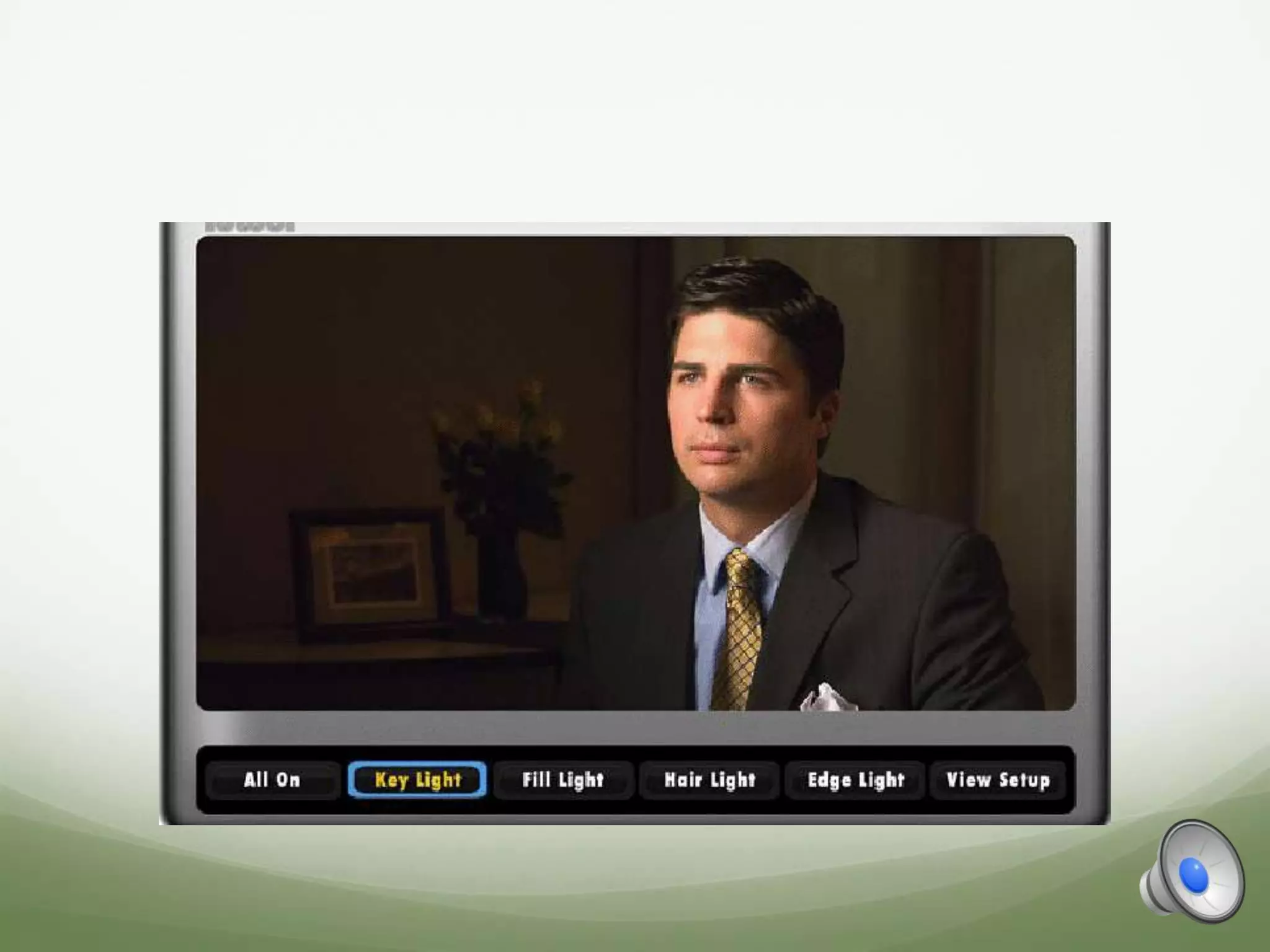
  The primary or dominant source of light in a shot. It often
suggests an out frame source. Choice of fixture (hard or soft)
     and its position will help set the mood of the shot.
Soft Key Light
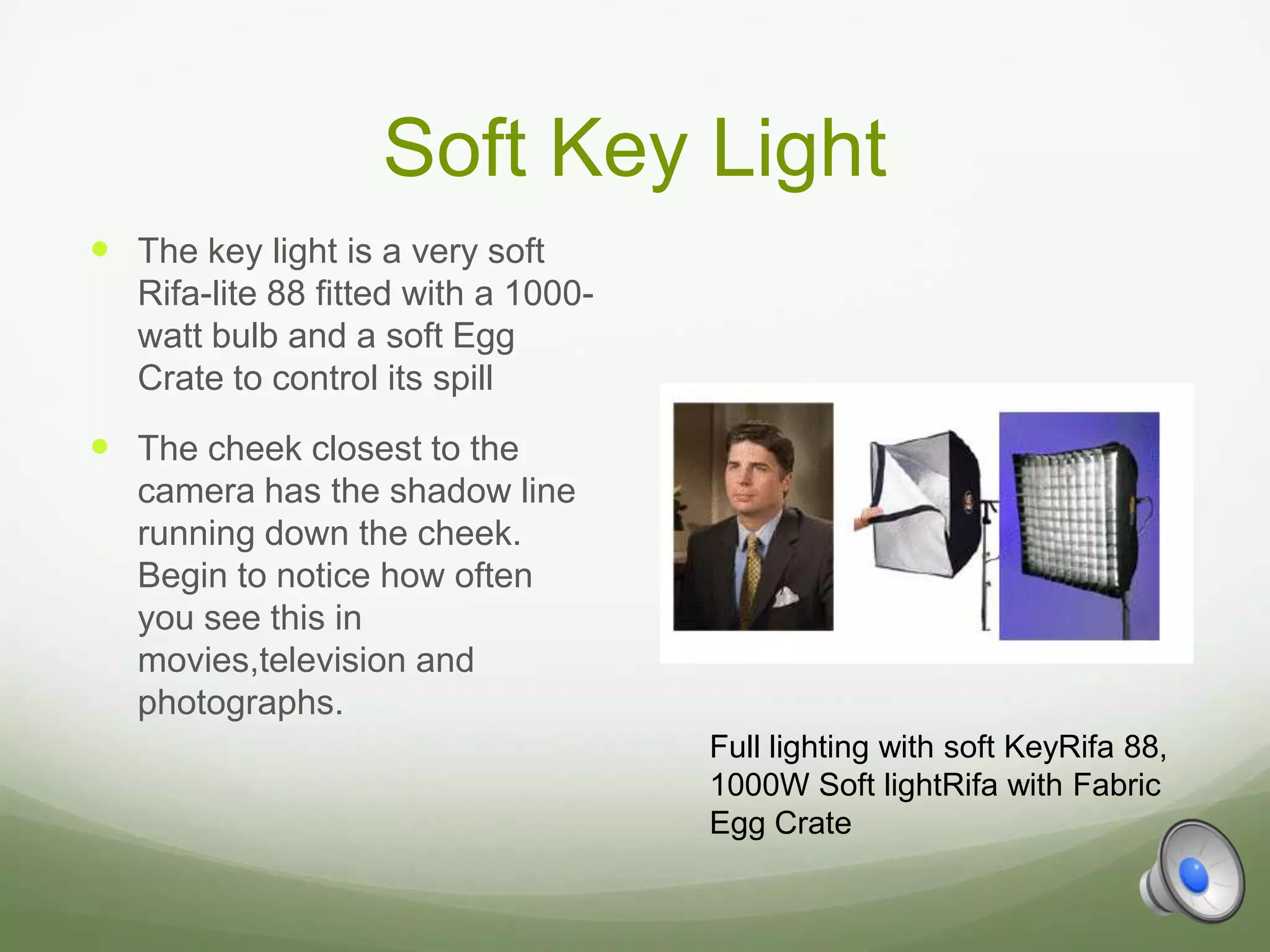
 The key light is a very soft
   Rifa-lite 88 fitted with a 1000-
   watt bulb and a soft Egg
   Crate to control its spill
 The cheek closest to the
   camera has the shadow line
   running down the cheek.
   Begin to notice how often
   you see this in
   movies,television and
   photographs.
                                      Full lighting with soft KeyRifa 88,
                                      1000W Soft lightRifa with Fabric
                                      Egg Crate
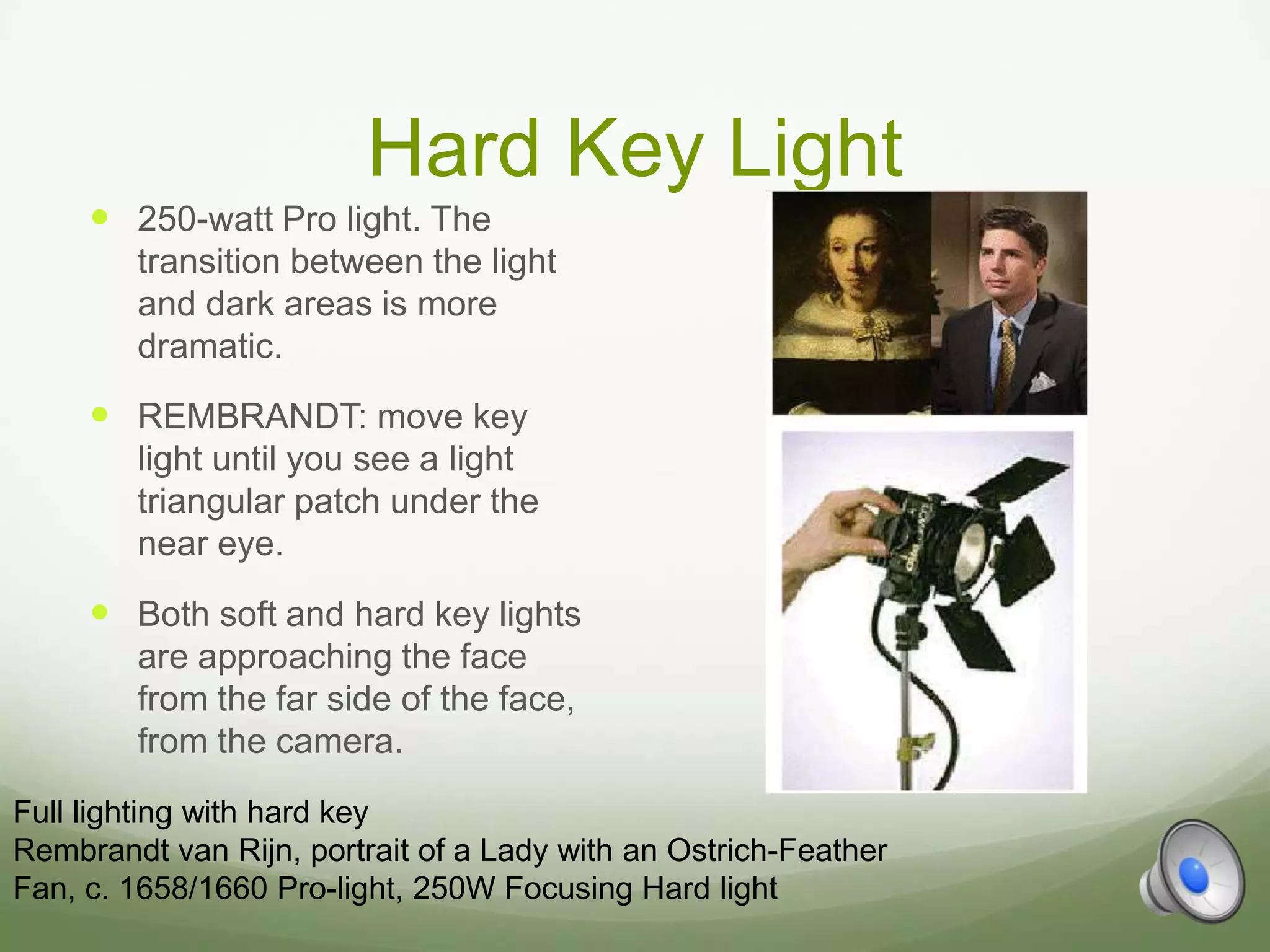
Hard Key Light
      250-watt Pro light. The
        transition between the light
        and dark areas is more
        dramatic.
      REMBRANDT: move key
        light until you see a light
        triangular patch under the
        near eye.
      Both soft and hard key lights
        are approaching the face
        from the far side of the face,
        from the camera.
Full lighting with hard key
Rembrandt van Rijn, portrait of a Lady with an Ostrich-Feather
Fan, c. 1658/1660 Pro-light, 250W Focusing Hard light
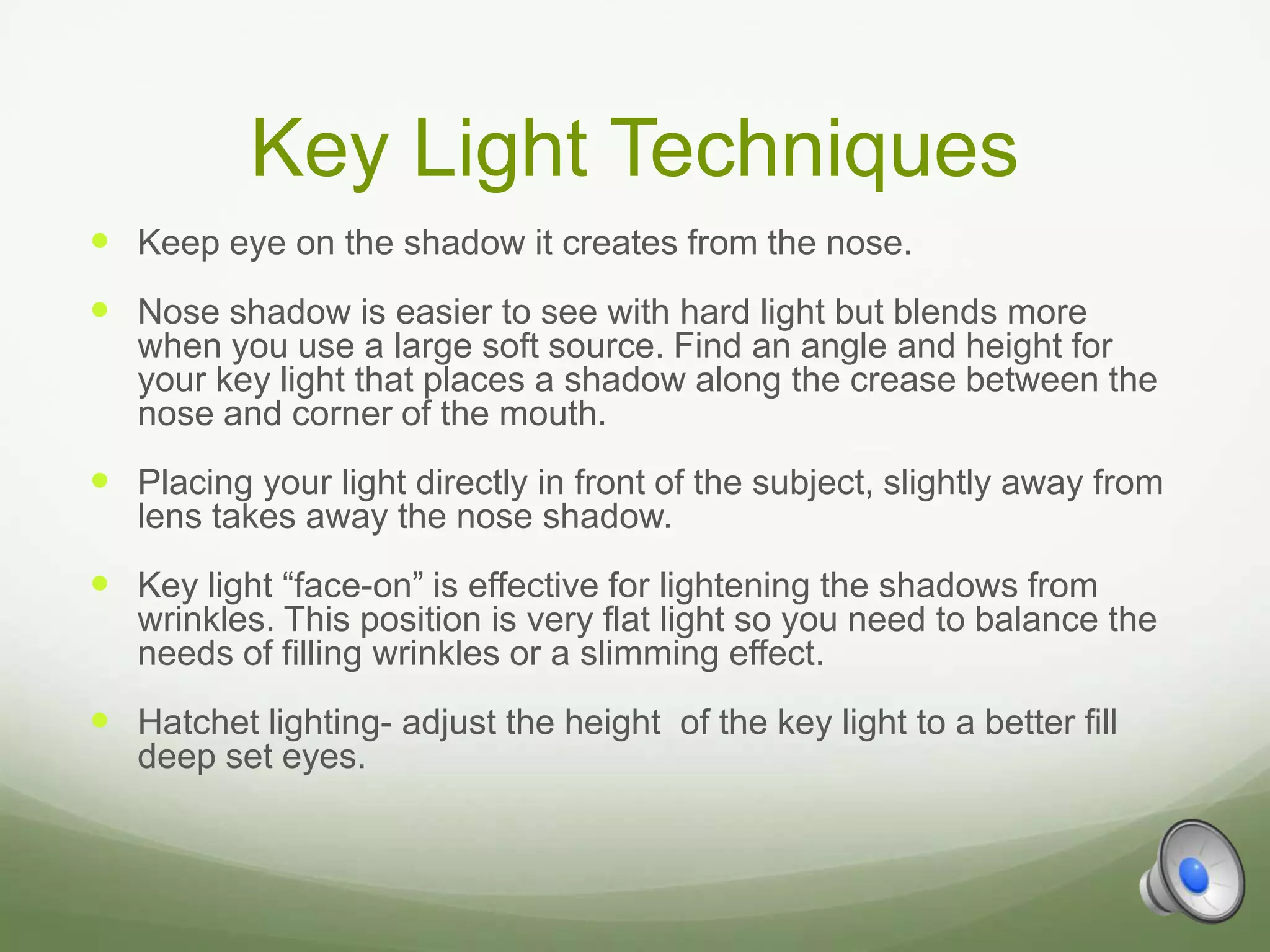
Key Light Techniques
 Keep eye on the shadow it creates from the nose.
 Nose shadow is easier to see with hard light but blends more
   when you use a large soft source. Find an angle and height for
   your key light that places a shadow along the crease between the
   nose and corner of the mouth.
 Placing your light directly in front of the subject, slightly away from
   lens takes away the nose shadow.
 Key light “face-on” is effective for lightening the shadows from
   wrinkles. This position is very flat light so you need to balance the
   needs of filling wrinkles or a slimming effect.
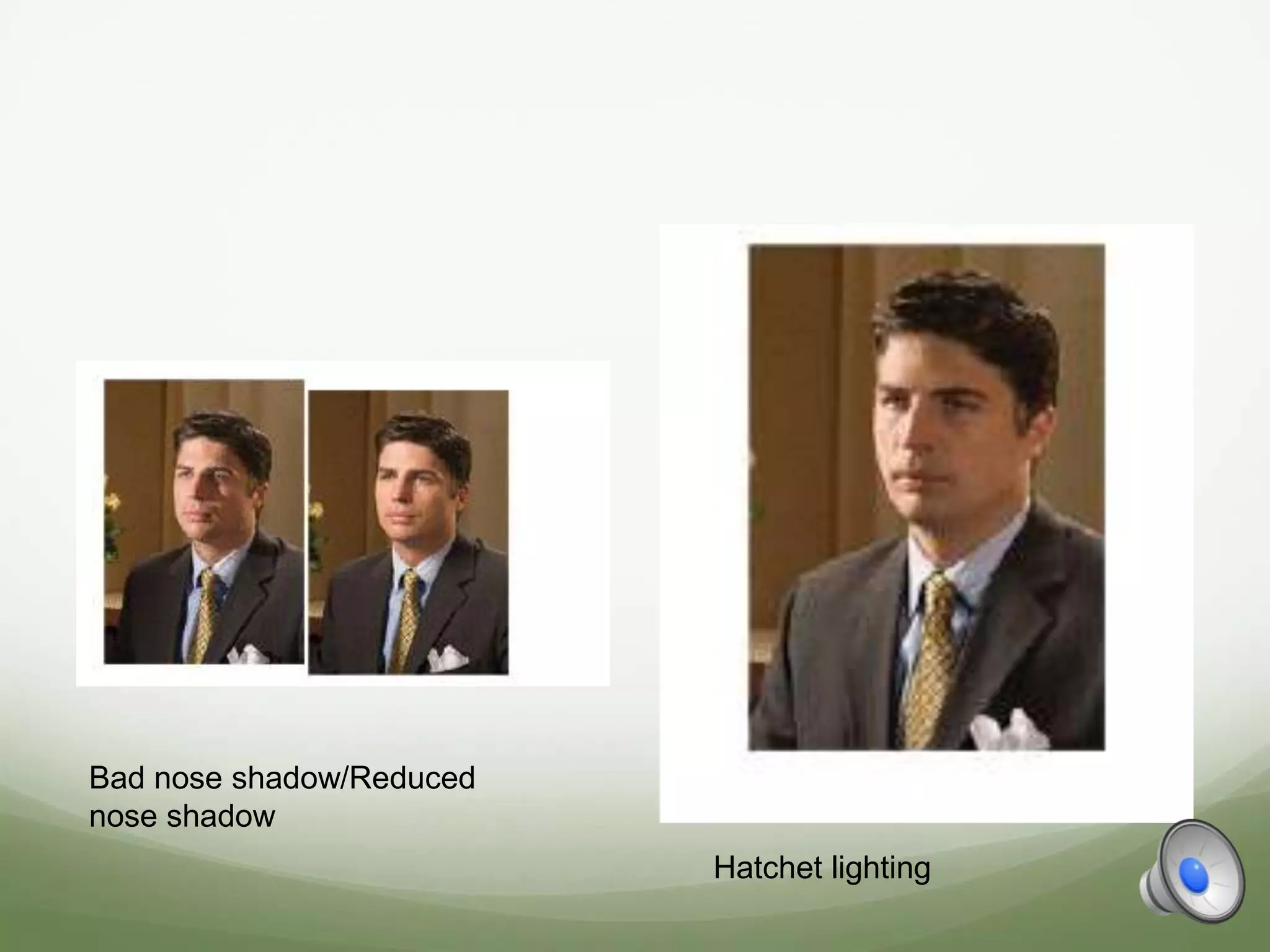
 Hatchet lighting- adjust the height of the key light to a better fill
   deep set eyes.
Bad nose shadow/Reduced
nose shadow
                          Hatchet lighting
Fill Light
Definition:
Fill is used to lighten shadows and control contrast ratios (the ratio of amount
  of Key to Fill light). Combined with the Key light, Fill light helps define the
 mood by lighting the shaded areas in a range of intensities. It can vary from
                       none, to a level equaling the key light.
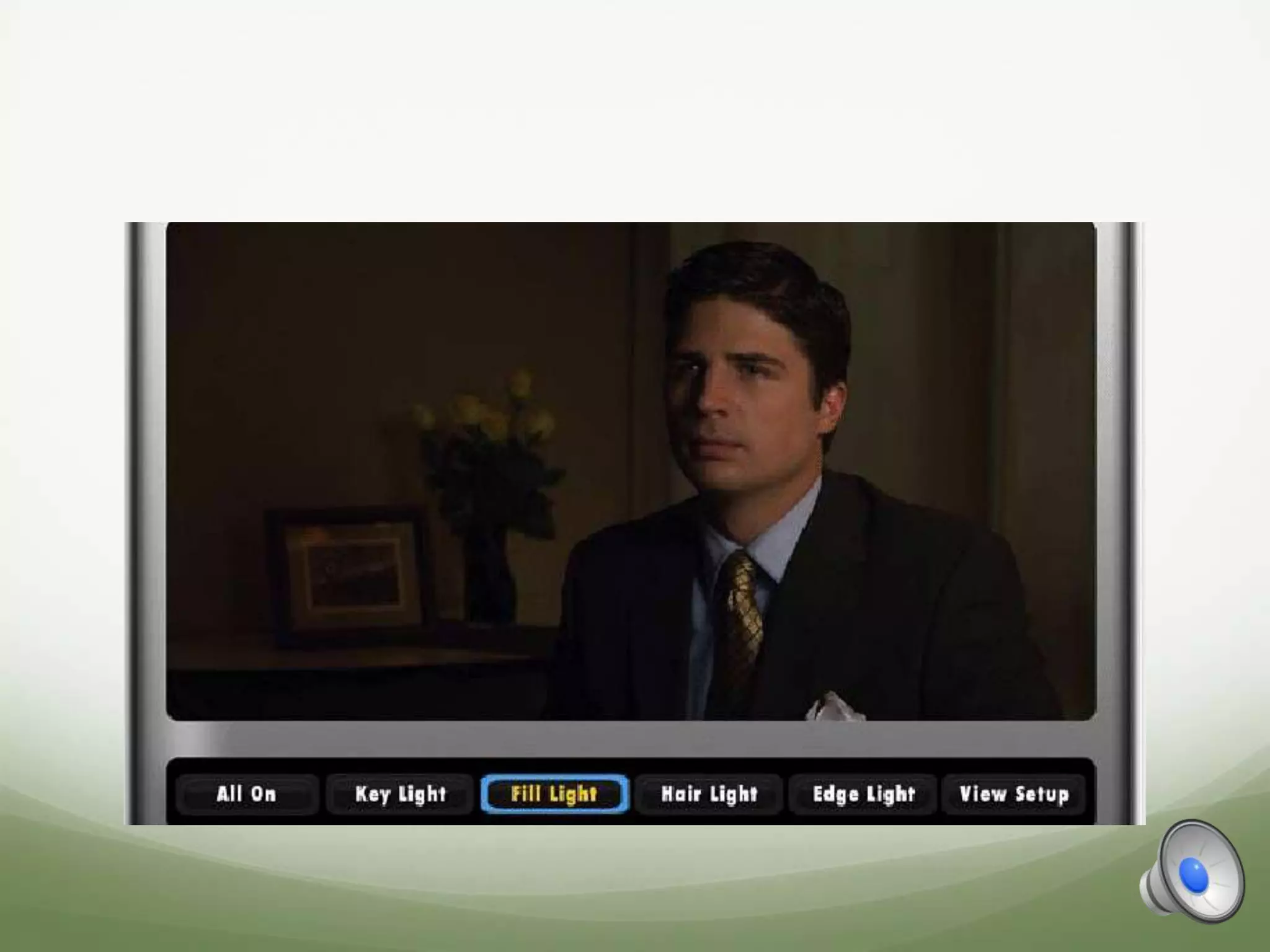
Fill Light
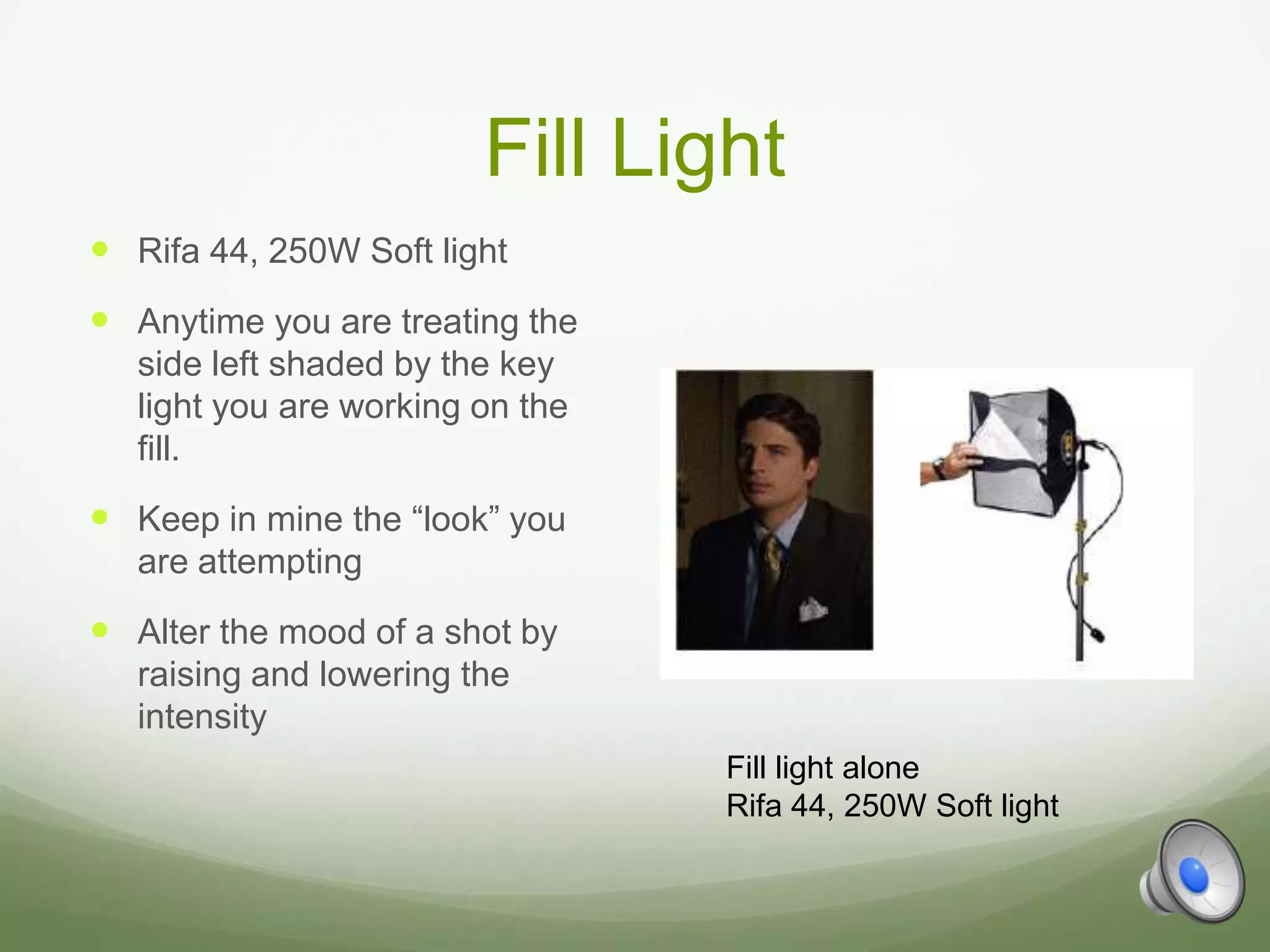
 Rifa 44, 250W Soft light
 Anytime you are treating the
   side left shaded by the key
   light you are working on the
   fill.
 Keep in mine the “look” you
   are attempting
 Alter the mood of a shot by
   raising and lowering the
   intensity
                                  Fill light alone
                                  Rifa 44, 250W Soft light
Fill Light Techniques
 Consider light placement
  positions near the camera to
  hide the shadows behind the
  subject.
 Near-the-camera position is
  when you want to fill
  shadows and still maintain a
  little modeling.
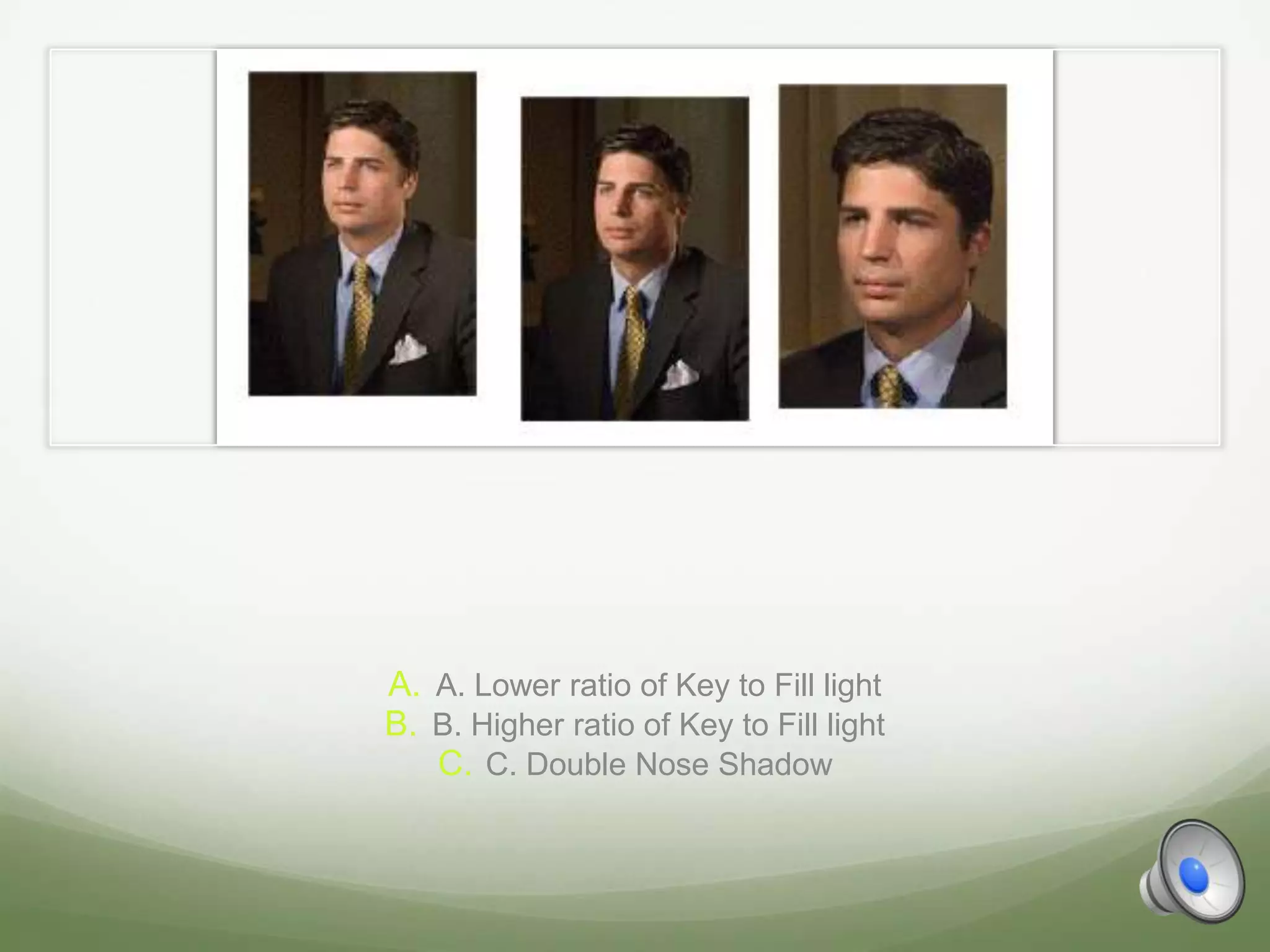
A. A. Lower ratio of Key to Fill light
B. B. Higher ratio of Key to Fill light
   C. C. Double Nose Shadow
Reflected Fill Light
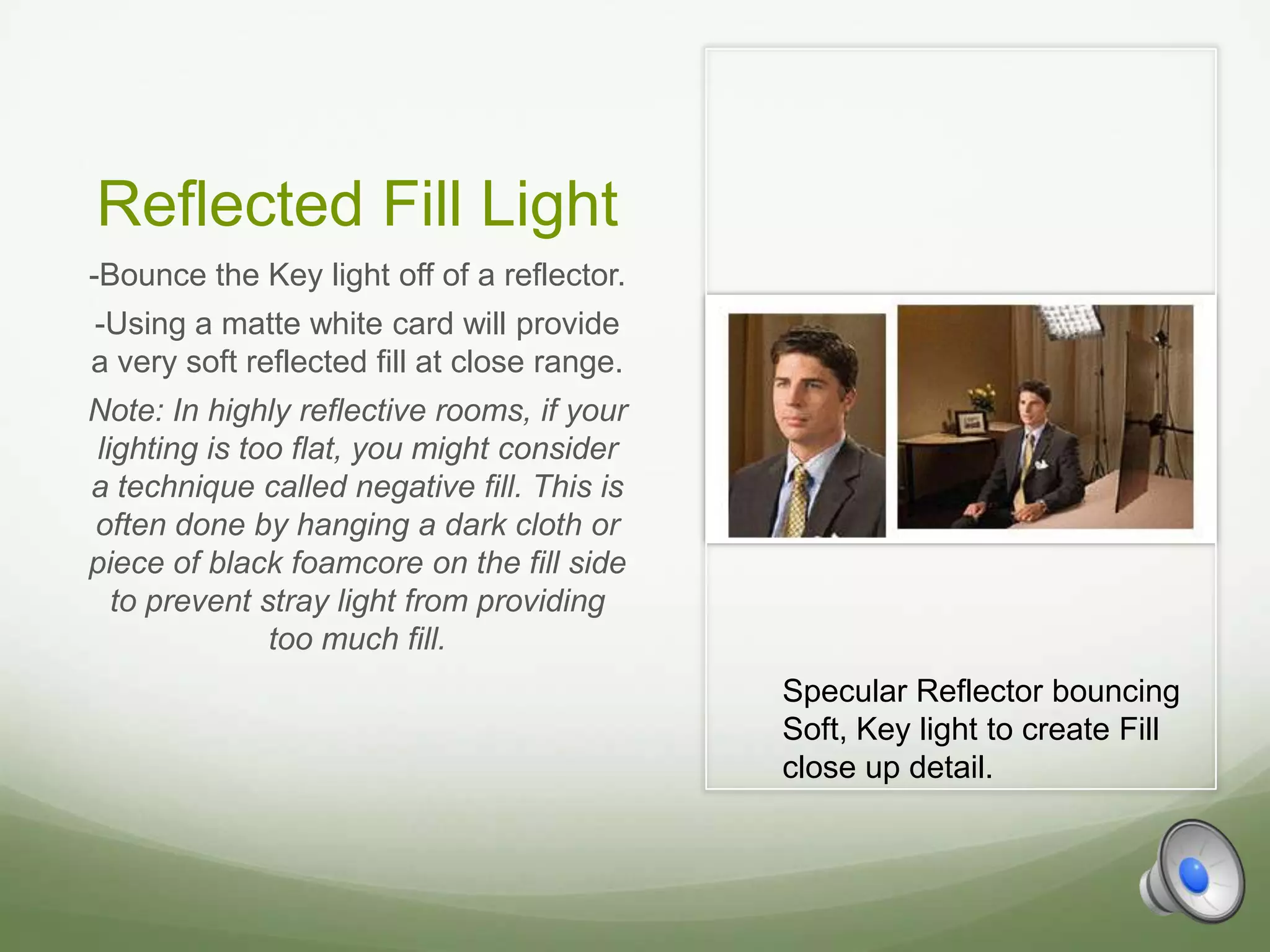
-Bounce the Key light off of a reflector.
-Using a matte white card will provide
a very soft reflected fill at close range.
Note: In highly reflective rooms, if your
 lighting is too flat, you might consider
a technique called negative fill. This is
often done by hanging a dark cloth or
piece of black foamcore on the fill side
   to prevent stray light from providing
               too much fill.
                                             Specular Reflector bouncing
                                             Soft, Key light to create Fill
                                             close up detail.
Hair Light
Definition:
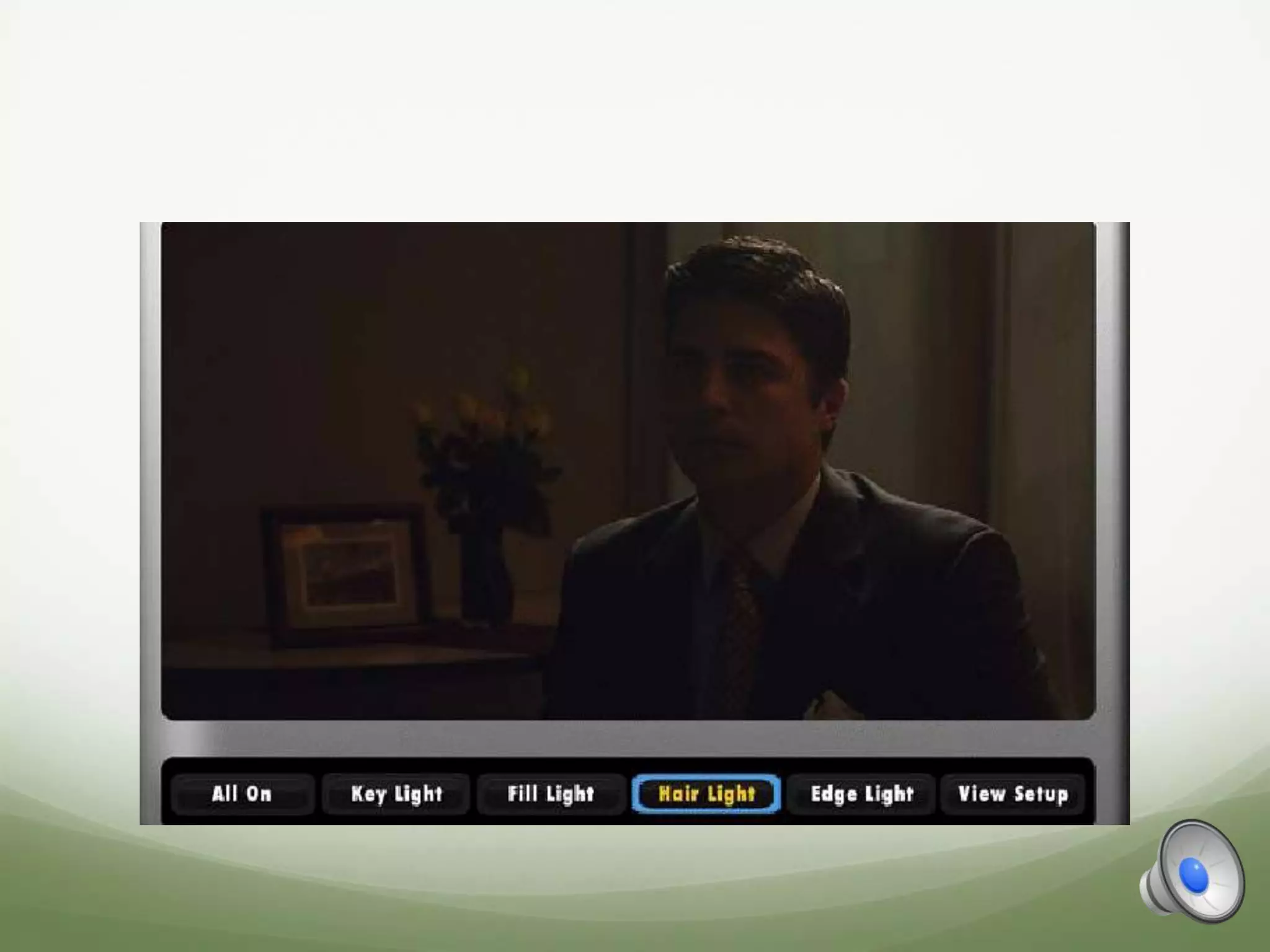
A light from behind the subject, often weaker than the Key or Fill, aimed at the
   head & shoulders. It may also be called a backlight. It creates a sense of
 separation between subject and background, and adds of highlights & shine
             to hair. Often widened to include a subjects shoulders.
Hair Light Techniques
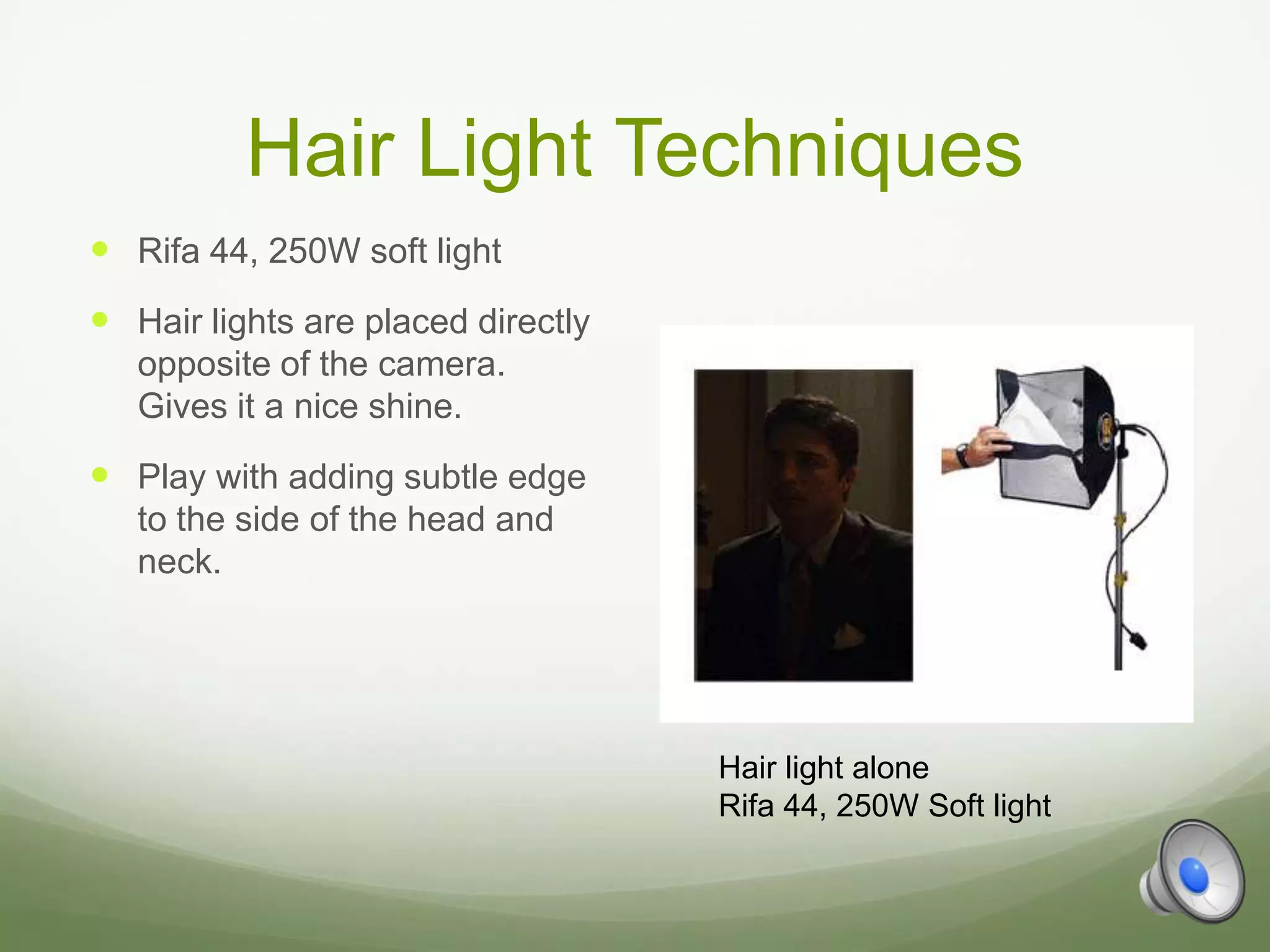
 Rifa 44, 250W soft light
 Hair lights are placed directly
   opposite of the camera.
   Gives it a nice shine.
 Play with adding subtle edge
   to the side of the head and
   neck.


                                    Hair light alone
                                    Rifa 44, 250W Soft light
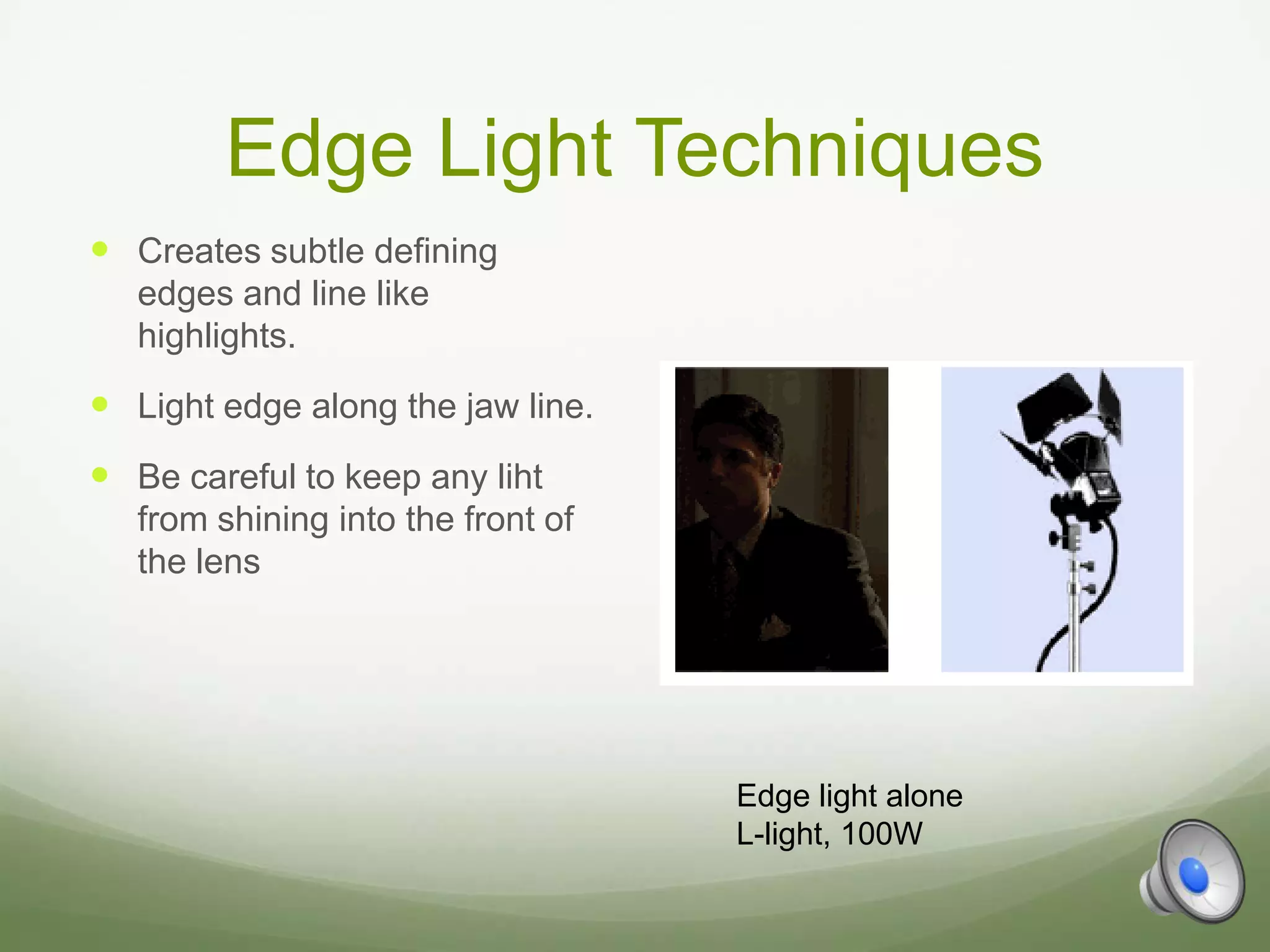
Edge Light
Definition:
A light from behind the subject, often weaker than the Key or Fill, is placed to
   create an edge of definition between subject and background. Similar in
practice to Hair light, it is also a form of backlight normally used to define one
  dark object from another. For example, a dark jacket from a similarly dark
                                      background.
Edge Light Techniques
 Creates subtle defining
   edges and line like
   highlights.
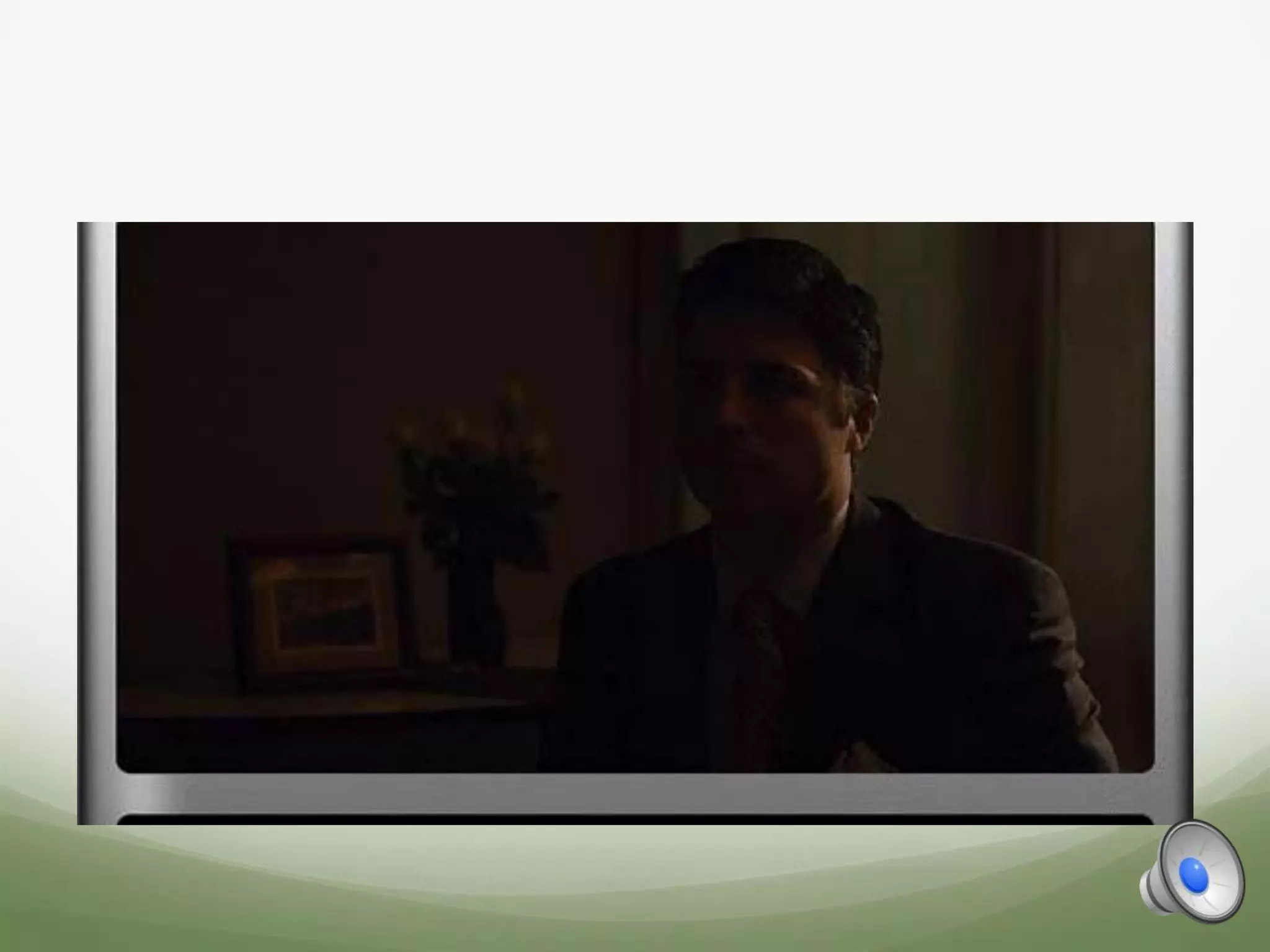
 Light edge along the jaw line.
 Be careful to keep any liht
   from shining into the front of
   the lens


                                    Edge light alone
                                    L-light, 100W
Background Light
Definition:
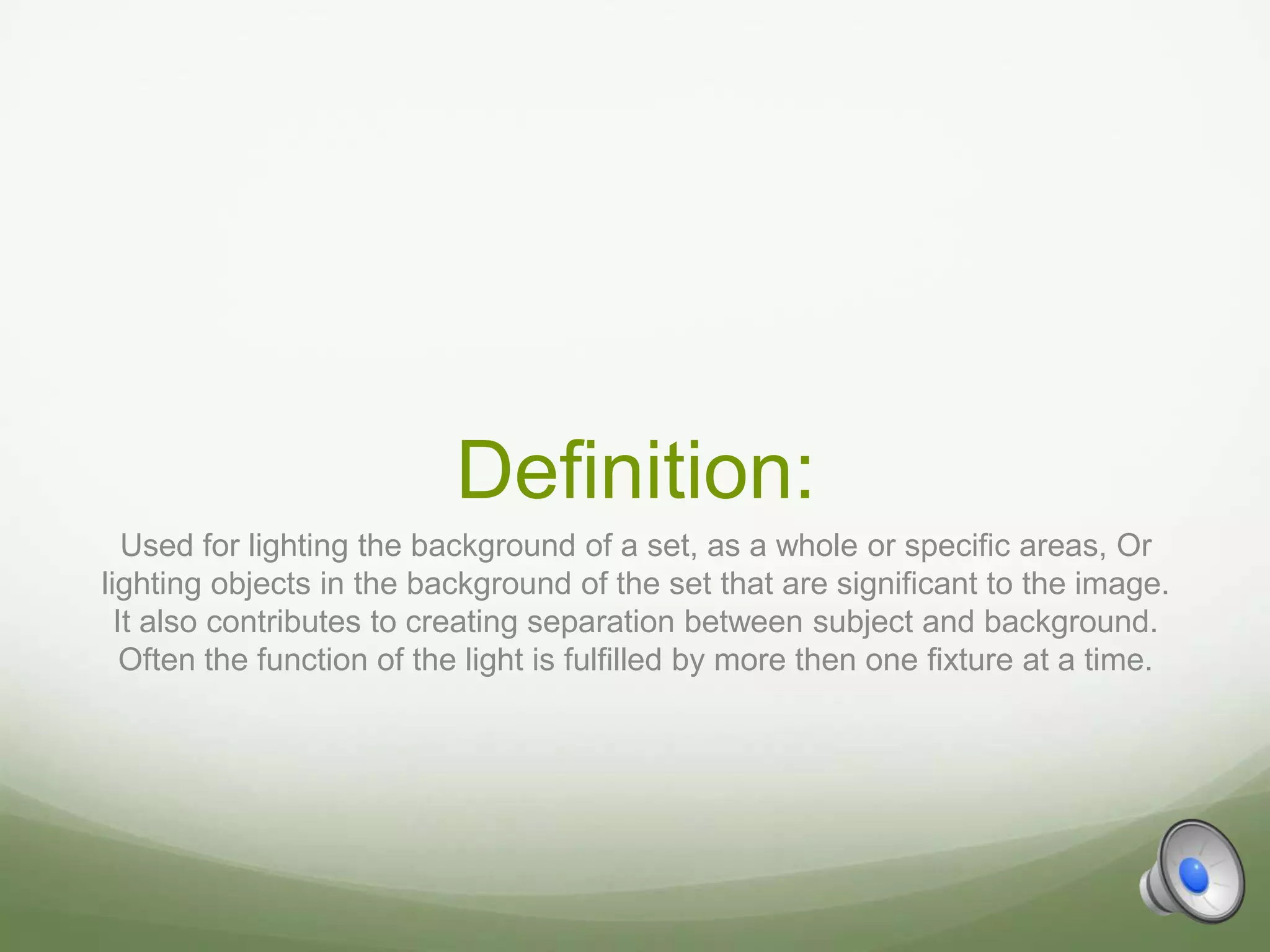
   Used for lighting the background of a set, as a whole or specific areas, Or
lighting objects in the background of the set that are significant to the image.
  It also contributes to creating separation between subject and background.
   Often the function of the light is fulfilled by more then one fixture at a time.
Background Light Techniques
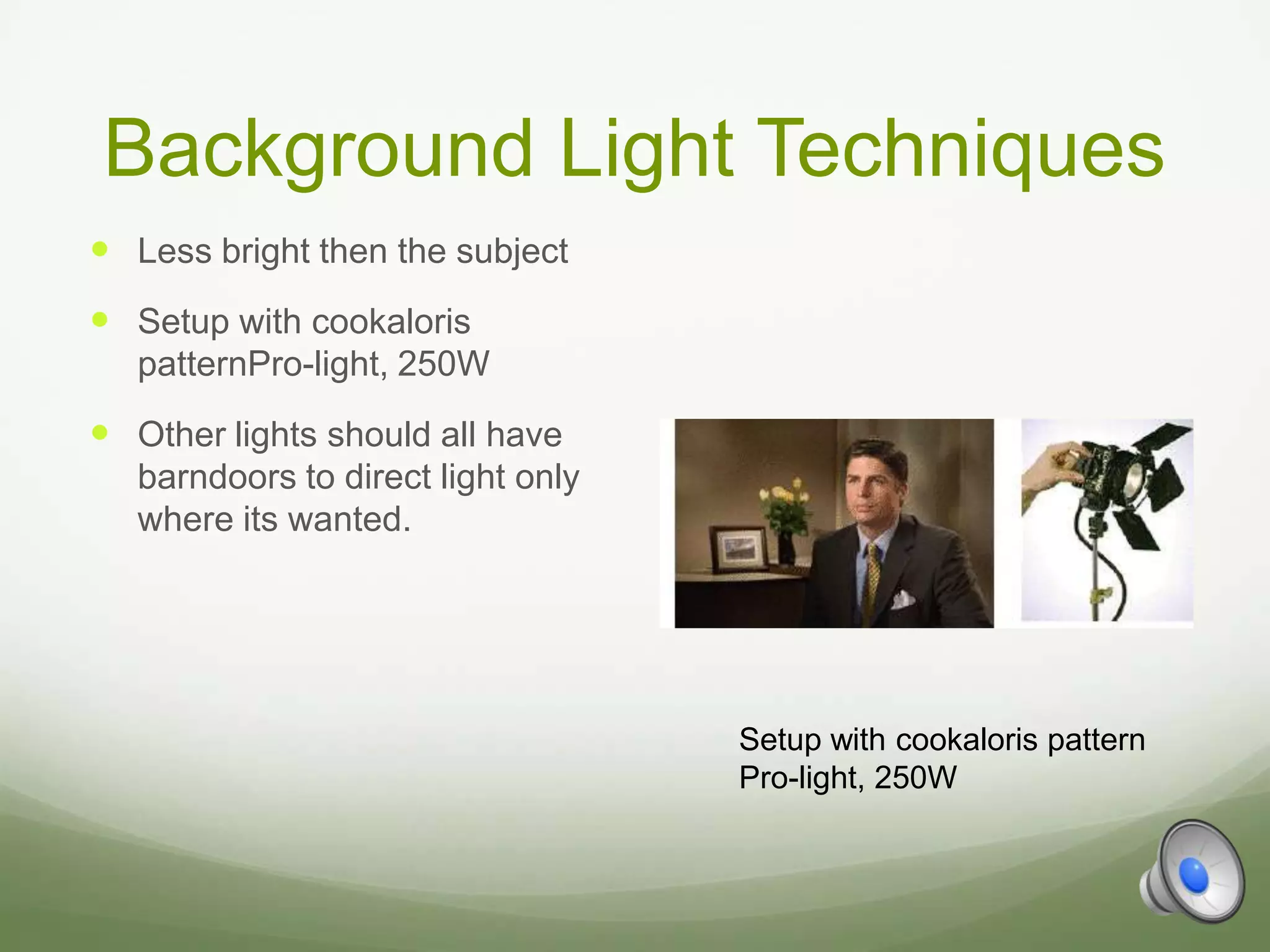
 Less bright then the subject
 Setup with cookaloris
   patternPro-light, 250W
 Other lights should all have
   barndoors to direct light only
   where its wanted.


                                    Setup with cookaloris pattern
                                    Pro-light, 250W
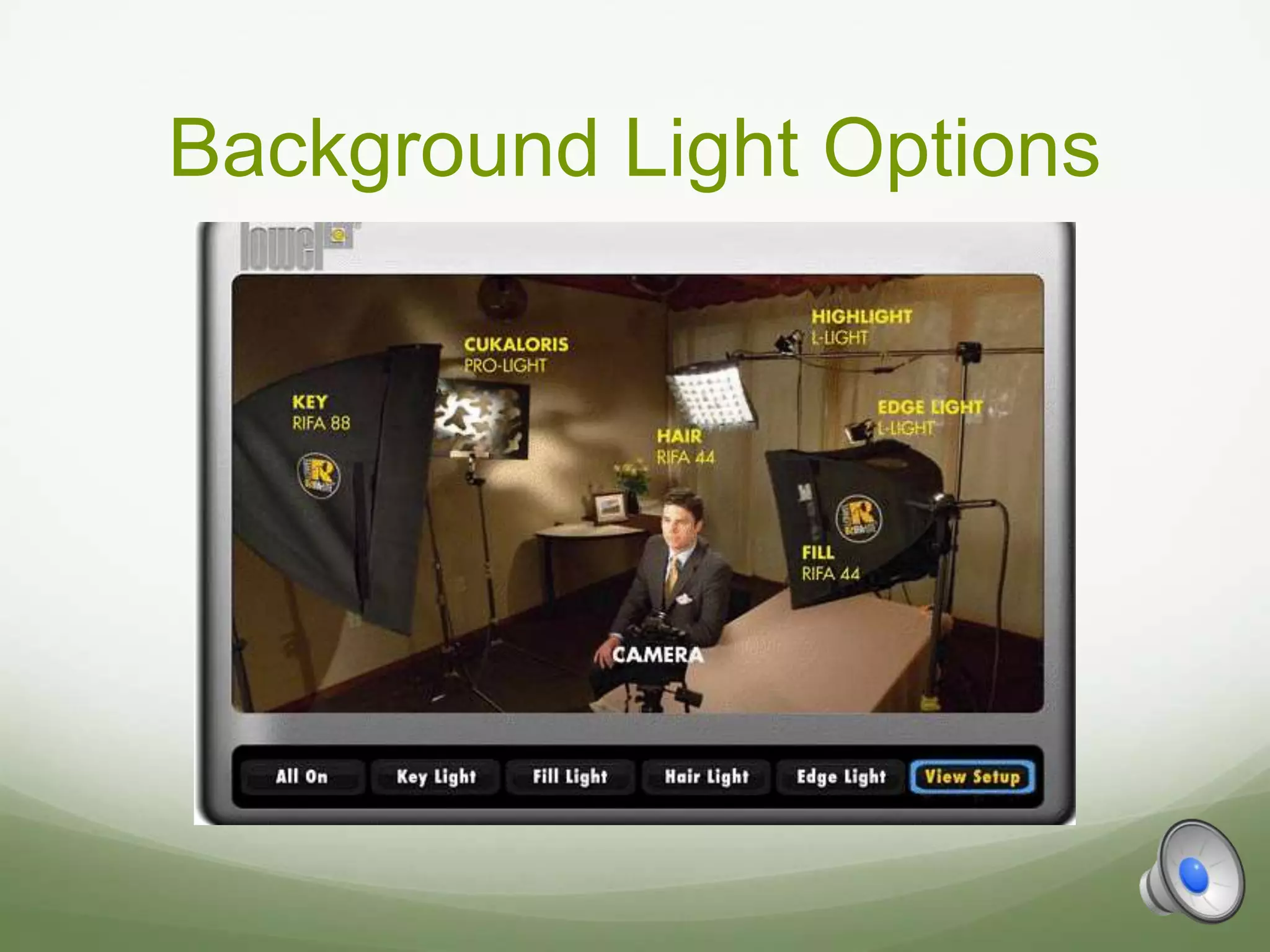
Background Light Options
Background Options
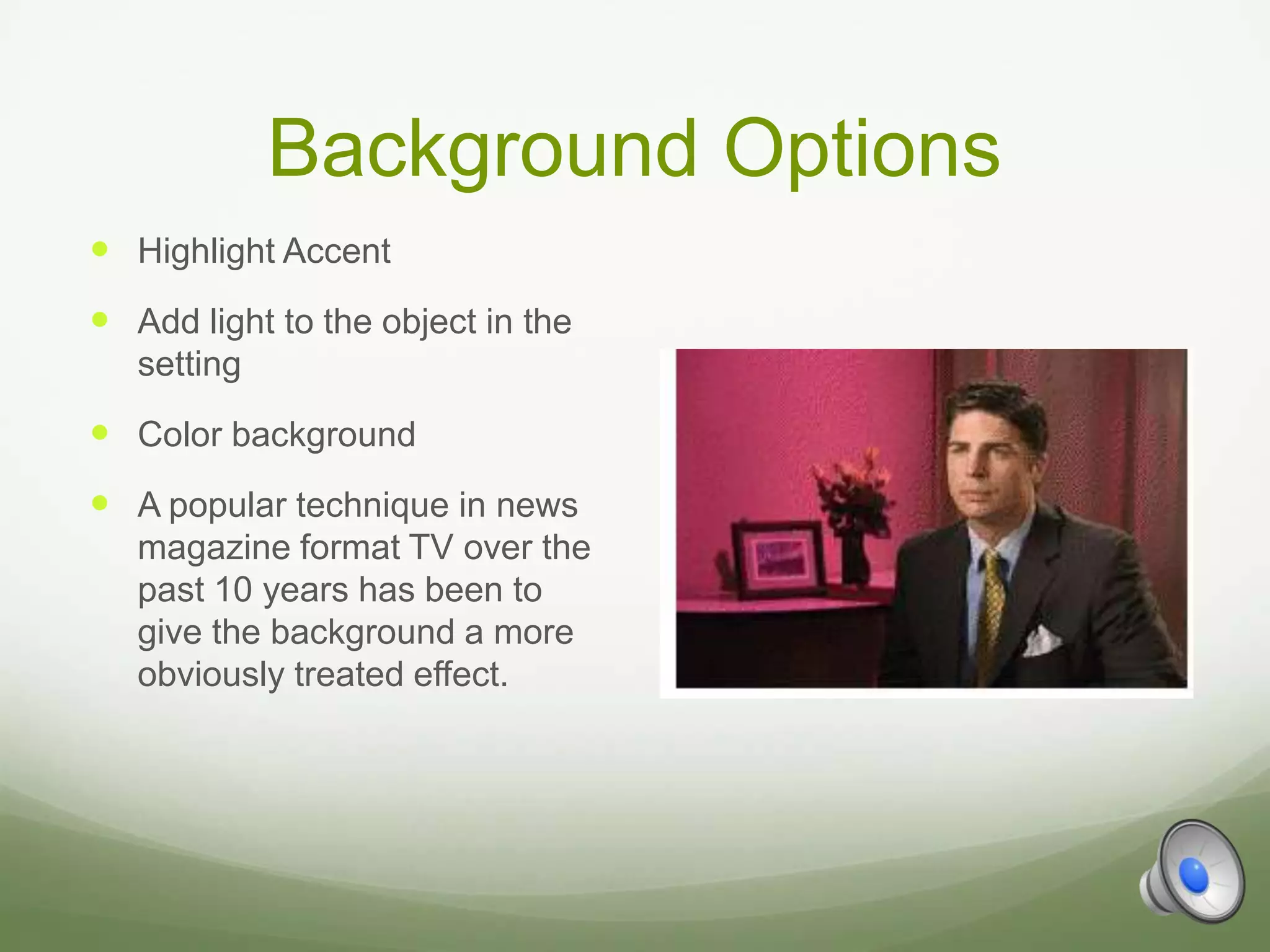
 Highlight Accent
 Add light to the object in the
   setting
 Color background
 A popular technique in news
   magazine format TV over the
   past 10 years has been to
   give the background a more
   obviously treated effect.
Simple Light Setups
Simple Light Setups
 500-watt Omni-light
 One light will work for both key and fill. A second small
  light from behind to add a little shine to the hair adds a
  finishing touch.

 Make necessary changes: height of stand exposure
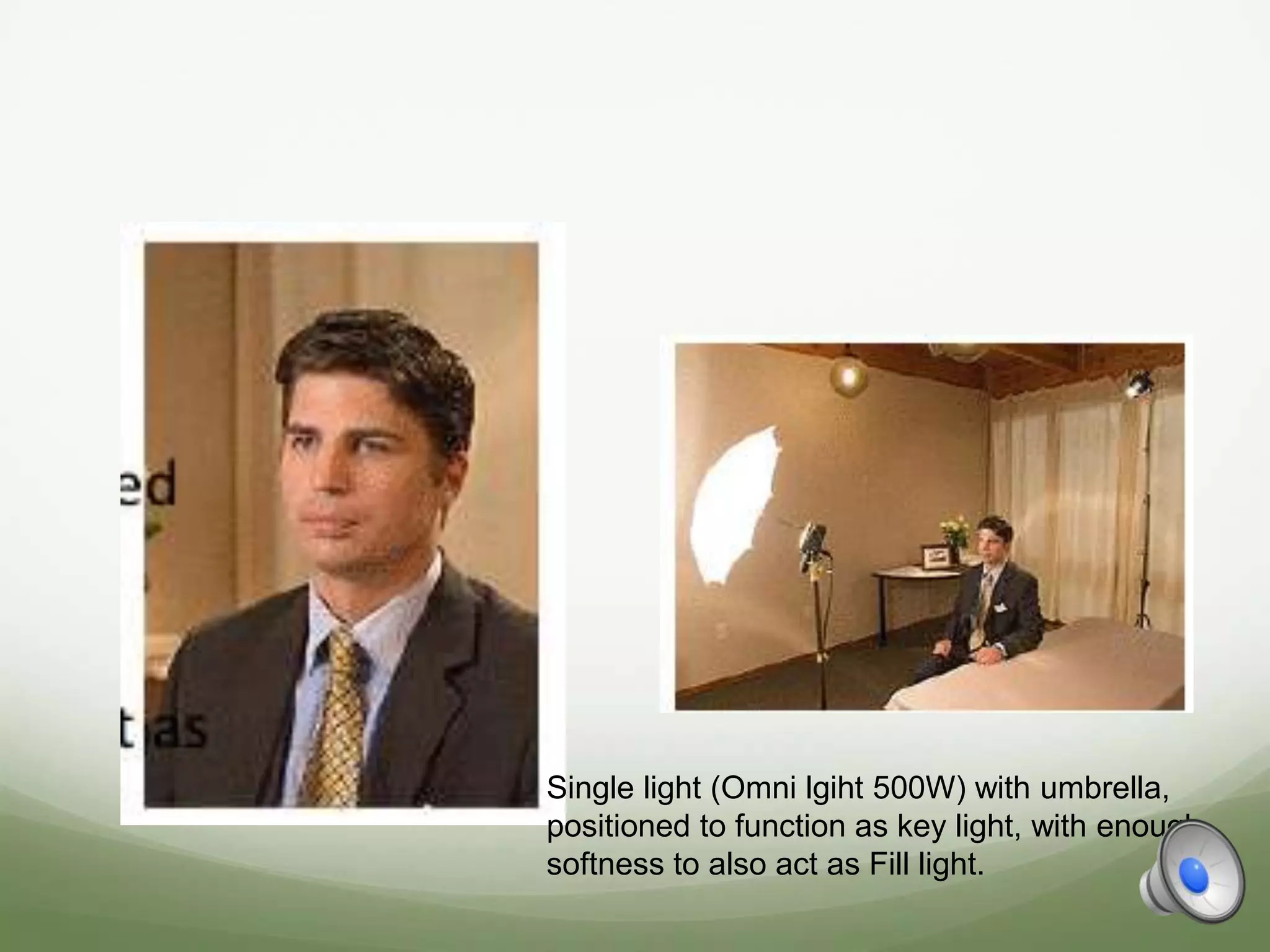
Single light (Omni lgiht 500W) with umbrella,
positioned to function as key light, with enough
softness to also act as Fill light.
http://www.lowel.
Com/edu/foundations of
     lighting.html

Photo class. power point

  • 1.
    3 Point Lighting Photographic Imaging 1
  • 2.
  • 3.
    Definition: Theprimary or dominant source of light in a shot. It often suggests an out frame source. Choice of fixture (hard or soft) and its position will help set the mood of the shot.
  • 4.
    Soft Key Light The key light is a very soft Rifa-lite 88 fitted with a 1000- watt bulb and a soft Egg Crate to control its spill  The cheek closest to the camera has the shadow line running down the cheek. Begin to notice how often you see this in movies,television and photographs. Full lighting with soft KeyRifa 88, 1000W Soft lightRifa with Fabric Egg Crate
  • 5.
    Hard Key Light  250-watt Pro light. The transition between the light and dark areas is more dramatic.  REMBRANDT: move key light until you see a light triangular patch under the near eye.  Both soft and hard key lights are approaching the face from the far side of the face, from the camera. Full lighting with hard key Rembrandt van Rijn, portrait of a Lady with an Ostrich-Feather Fan, c. 1658/1660 Pro-light, 250W Focusing Hard light
  • 6.
    Key Light Techniques Keep eye on the shadow it creates from the nose.  Nose shadow is easier to see with hard light but blends more when you use a large soft source. Find an angle and height for your key light that places a shadow along the crease between the nose and corner of the mouth.  Placing your light directly in front of the subject, slightly away from lens takes away the nose shadow.  Key light “face-on” is effective for lightening the shadows from wrinkles. This position is very flat light so you need to balance the needs of filling wrinkles or a slimming effect.  Hatchet lighting- adjust the height of the key light to a better fill deep set eyes.
  • 7.
    Bad nose shadow/Reduced noseshadow Hatchet lighting
  • 9.
  • 10.
    Definition: Fill is usedto lighten shadows and control contrast ratios (the ratio of amount of Key to Fill light). Combined with the Key light, Fill light helps define the mood by lighting the shaded areas in a range of intensities. It can vary from none, to a level equaling the key light.
  • 11.
    Fill Light  Rifa44, 250W Soft light  Anytime you are treating the side left shaded by the key light you are working on the fill.  Keep in mine the “look” you are attempting  Alter the mood of a shot by raising and lowering the intensity Fill light alone Rifa 44, 250W Soft light
  • 12.
    Fill Light Techniques Consider light placement positions near the camera to hide the shadows behind the subject.  Near-the-camera position is when you want to fill shadows and still maintain a little modeling.
  • 13.
    A. A. Lowerratio of Key to Fill light B. B. Higher ratio of Key to Fill light C. C. Double Nose Shadow
  • 14.
    Reflected Fill Light -Bouncethe Key light off of a reflector. -Using a matte white card will provide a very soft reflected fill at close range. Note: In highly reflective rooms, if your lighting is too flat, you might consider a technique called negative fill. This is often done by hanging a dark cloth or piece of black foamcore on the fill side to prevent stray light from providing too much fill. Specular Reflector bouncing Soft, Key light to create Fill close up detail.
  • 16.
  • 17.
    Definition: A light frombehind the subject, often weaker than the Key or Fill, aimed at the head & shoulders. It may also be called a backlight. It creates a sense of separation between subject and background, and adds of highlights & shine to hair. Often widened to include a subjects shoulders.
  • 18.
    Hair Light Techniques Rifa 44, 250W soft light  Hair lights are placed directly opposite of the camera. Gives it a nice shine.  Play with adding subtle edge to the side of the head and neck. Hair light alone Rifa 44, 250W Soft light
  • 20.
  • 21.
    Definition: A light frombehind the subject, often weaker than the Key or Fill, is placed to create an edge of definition between subject and background. Similar in practice to Hair light, it is also a form of backlight normally used to define one dark object from another. For example, a dark jacket from a similarly dark background.
  • 22.
    Edge Light Techniques Creates subtle defining edges and line like highlights.  Light edge along the jaw line.  Be careful to keep any liht from shining into the front of the lens Edge light alone L-light, 100W
  • 24.
  • 25.
    Definition: Used for lighting the background of a set, as a whole or specific areas, Or lighting objects in the background of the set that are significant to the image. It also contributes to creating separation between subject and background. Often the function of the light is fulfilled by more then one fixture at a time.
  • 26.
    Background Light Techniques Less bright then the subject  Setup with cookaloris patternPro-light, 250W  Other lights should all have barndoors to direct light only where its wanted. Setup with cookaloris pattern Pro-light, 250W
  • 27.
  • 28.
    Background Options  HighlightAccent  Add light to the object in the setting  Color background  A popular technique in news magazine format TV over the past 10 years has been to give the background a more obviously treated effect.
  • 29.
  • 30.
    Simple Light Setups 500-watt Omni-light  One light will work for both key and fill. A second small light from behind to add a little shine to the hair adds a finishing touch.  Make necessary changes: height of stand exposure
  • 31.
    Single light (Omnilgiht 500W) with umbrella, positioned to function as key light, with enough softness to also act as Fill light.
  • 32.