PHOTOGRAPHY
LIGHTING
BASICS
Hello!
I am WS Toh
Being a self-taught photographer, I give
back to the community by giving free
tutorials.
2
“
We can easily forgive a child who
is afraid of the dark; the real
tragedy of life is when men are
afraid of the light.
- Plato
3
Two types of lights
▫ Natural Light: Very obviously, everything that
glows naturally. The sun, moon, fireflies, etc..
▫ Artificial Light: Man-made lights. The light bulbs.
4
1) NATURAL LIGHT
All that glows naturally
5
6
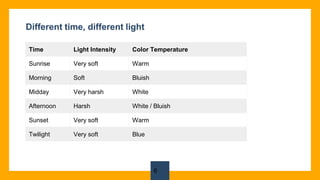
Different time, different light
Time Light Intensity Color Temperature
Sunrise Very soft Warm
Morning Soft Bluish
Midday Very harsh White
Afternoon Harsh White / Bluish
Sunset Very soft Warm
Twilight Very soft Blue
7
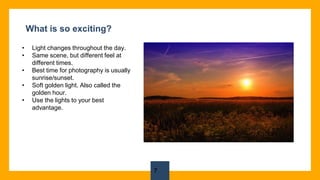
What is so exciting?
• Light changes throughout the day.
• Same scene, but different feel at
different times.
• Best time for photography is usually
sunrise/sunset.
• Soft golden light. Also called the
golden hour.
• Use the lights to your best
advantage.
2) ARTIFICIAL LIGHT
Man-made lights
8
9
Many kinds of artificial lights
Incandescent
The old school bulb,
produces warm light.
Fluorescent
Regular Joe you find
everywhere. Warm or cold.
10
Many kinds of artificial lights
Halogen
Commonly used in cars.
Very bright, very hot.
Flash
Photographer’s best friend.
11
Many kinds of artificial lights
LED Panel
The upcoming new
technology. Getting more
popular.
Strobe
The big guns commonly
used in studios.
12
What is the big deal?
Just like natural light, each artificial light produces different light qualities.
Type Light Intensity Color Temperature
Incandescent Soft Warm
Fluorescent Harsh Warm / Cold
Halogen Very Harsh Almost neutral
Flash Very Harsh Almost neutral
LED Soft Warm / Cold
Strobe Very Harsh Almost neutral
13
How to measure light
Guide Number (GN): The commonly used quantifier in photography equipment.
Goes by the formula of GN = distance X f-number. Or simply, the higher the
number, the more power the light is.
Lumen and Lux: More commonly used in the industry, but it’s the same higher
number, brighter light.
3) THE ESSENTIALS
Laws of light that you should know
14
15
What happens when light falls on an object?
Shadow: We should already
know this. Dark area where light is
blocked by an opaque object.
Highlight: Opposite of shadow.
Bright area where light directly
falls on.
Core: Transition between highlight
and shadow.
16
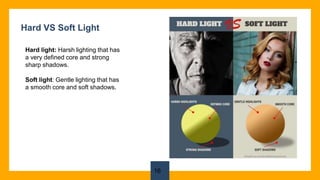
Hard VS Soft Light
Hard light: Harsh lighting that has
a very defined core and strong
sharp shadows.
Soft light: Gentle lighting that has
a smooth core and soft shadows.
17
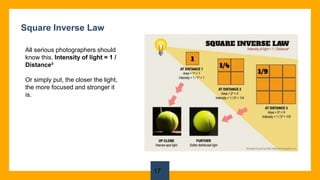
Square Inverse Law
All serious photographers should
know this. Intensity of light = 1 /
Distance²
Or simply put, the closer the light,
the more focused and stronger it
is.
18
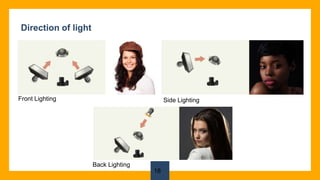
Direction of light
Front Lighting Side Lighting
Back Lighting
19
Keep Playing With Light!
• Natural light exists almost everywhere.
• Using a flash does not mean natural light no longer exists.
• It just means you have to consider the impact of using flash and
the environmental lights.
• Lighting may seem difficult, but you just have to keep
experimenting!
20
THANKS!
That’s all for the short slides.
You can find me at : http://xlightphotography.com
The original article for these slides:
http://xlightphotography.com/photography-lighting-basics/
21
CREDITS
Special thanks to all the people who made and
released these awesome resources for free:
Presentation template by SlidesCarnival
Photographs by Startup Stock Photos

Photography Lighting Basics

  • 1.
  • 2.
    Hello! I am WSToh Being a self-taught photographer, I give back to the community by giving free tutorials. 2
  • 3.
    “ We can easilyforgive a child who is afraid of the dark; the real tragedy of life is when men are afraid of the light. - Plato 3
  • 4.
    Two types oflights ▫ Natural Light: Very obviously, everything that glows naturally. The sun, moon, fireflies, etc.. ▫ Artificial Light: Man-made lights. The light bulbs. 4
  • 5.
    1) NATURAL LIGHT Allthat glows naturally 5
  • 6.
    6 Different time, differentlight Time Light Intensity Color Temperature Sunrise Very soft Warm Morning Soft Bluish Midday Very harsh White Afternoon Harsh White / Bluish Sunset Very soft Warm Twilight Very soft Blue
  • 7.
    7 What is soexciting? • Light changes throughout the day. • Same scene, but different feel at different times. • Best time for photography is usually sunrise/sunset. • Soft golden light. Also called the golden hour. • Use the lights to your best advantage.
  • 8.
  • 9.
    9 Many kinds ofartificial lights Incandescent The old school bulb, produces warm light. Fluorescent Regular Joe you find everywhere. Warm or cold.
  • 10.
    10 Many kinds ofartificial lights Halogen Commonly used in cars. Very bright, very hot. Flash Photographer’s best friend.
  • 11.
    11 Many kinds ofartificial lights LED Panel The upcoming new technology. Getting more popular. Strobe The big guns commonly used in studios.
  • 12.
    12 What is thebig deal? Just like natural light, each artificial light produces different light qualities. Type Light Intensity Color Temperature Incandescent Soft Warm Fluorescent Harsh Warm / Cold Halogen Very Harsh Almost neutral Flash Very Harsh Almost neutral LED Soft Warm / Cold Strobe Very Harsh Almost neutral
  • 13.
    13 How to measurelight Guide Number (GN): The commonly used quantifier in photography equipment. Goes by the formula of GN = distance X f-number. Or simply, the higher the number, the more power the light is. Lumen and Lux: More commonly used in the industry, but it’s the same higher number, brighter light.
  • 14.
    3) THE ESSENTIALS Lawsof light that you should know 14
  • 15.
    15 What happens whenlight falls on an object? Shadow: We should already know this. Dark area where light is blocked by an opaque object. Highlight: Opposite of shadow. Bright area where light directly falls on. Core: Transition between highlight and shadow.
  • 16.
    16 Hard VS SoftLight Hard light: Harsh lighting that has a very defined core and strong sharp shadows. Soft light: Gentle lighting that has a smooth core and soft shadows.
  • 17.
    17 Square Inverse Law Allserious photographers should know this. Intensity of light = 1 / Distance² Or simply put, the closer the light, the more focused and stronger it is.
  • 18.
    18 Direction of light FrontLighting Side Lighting Back Lighting
  • 19.
    19 Keep Playing WithLight! • Natural light exists almost everywhere. • Using a flash does not mean natural light no longer exists. • It just means you have to consider the impact of using flash and the environmental lights. • Lighting may seem difficult, but you just have to keep experimenting!
  • 20.
    20 THANKS! That’s all forthe short slides. You can find me at : http://xlightphotography.com The original article for these slides: http://xlightphotography.com/photography-lighting-basics/
  • 21.
    21 CREDITS Special thanks toall the people who made and released these awesome resources for free: Presentation template by SlidesCarnival Photographs by Startup Stock Photos