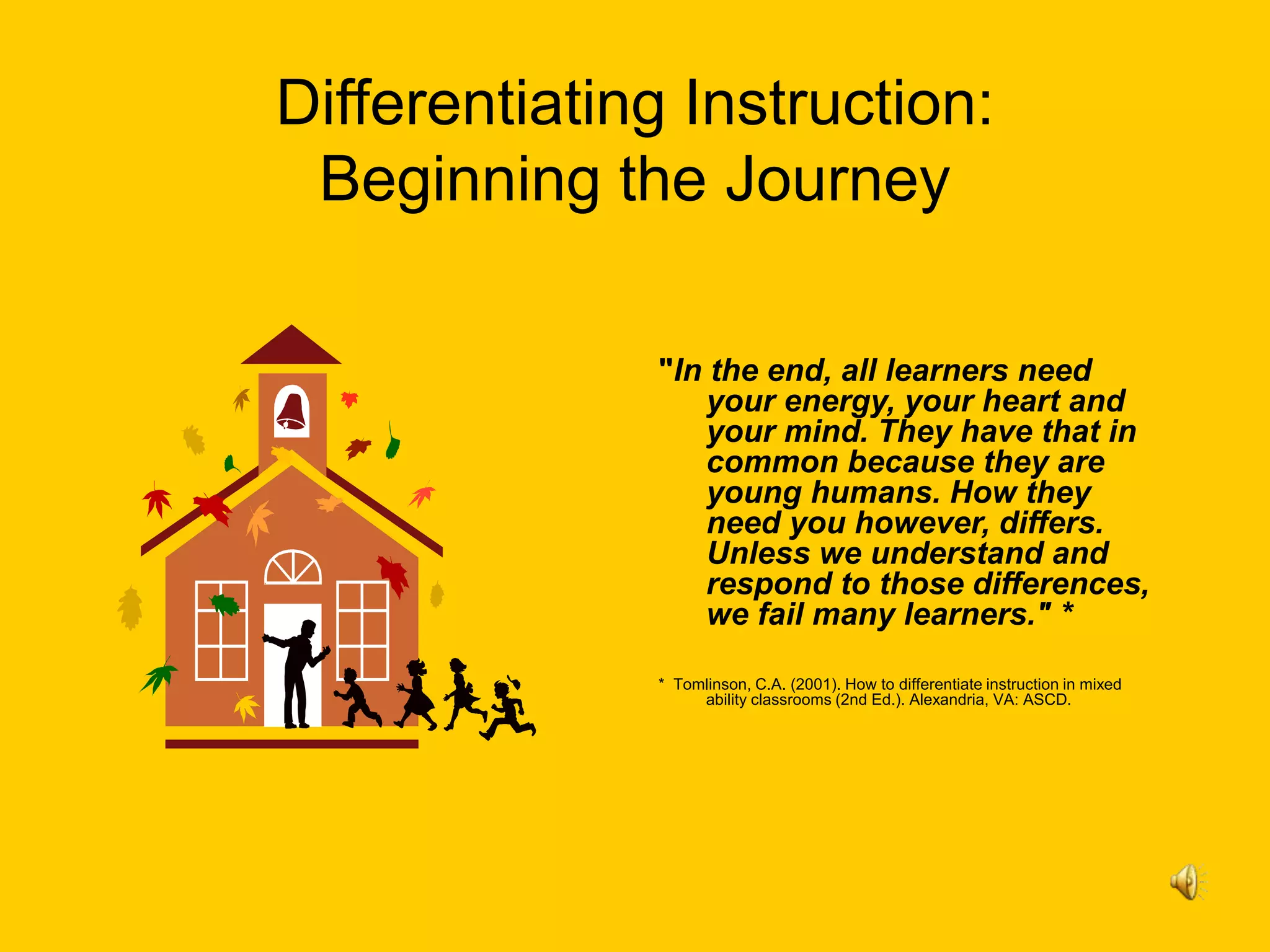
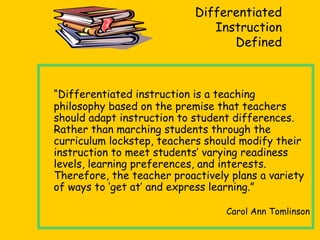
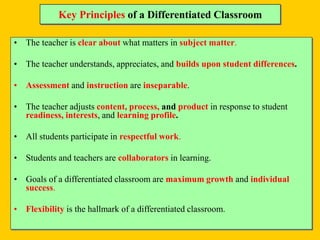
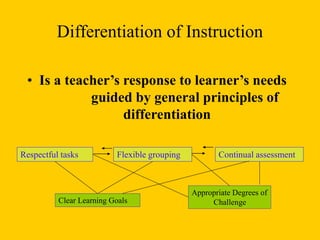
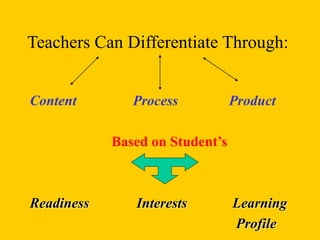
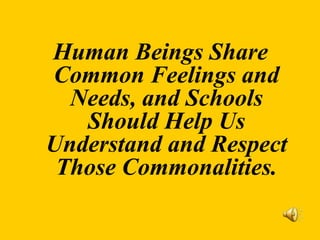
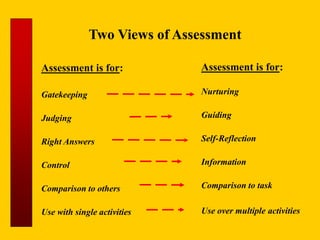
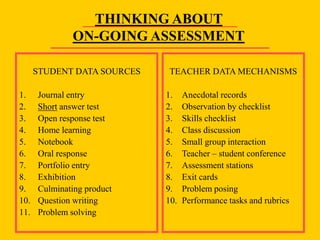
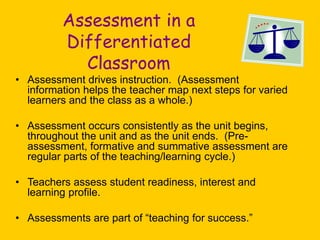
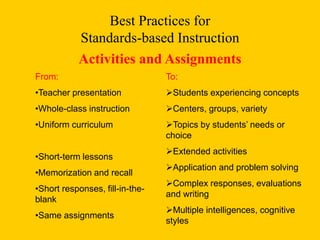
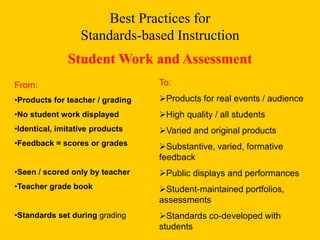
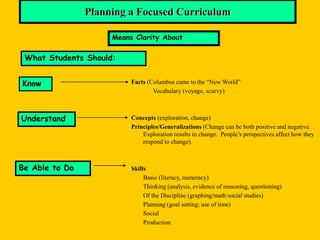
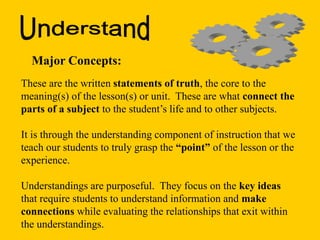
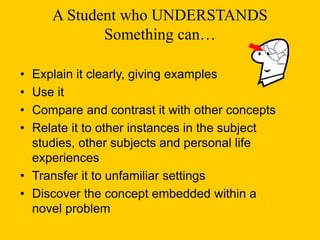
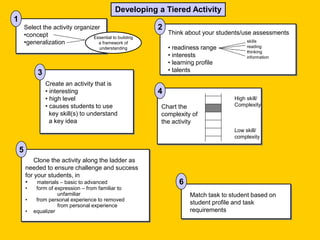
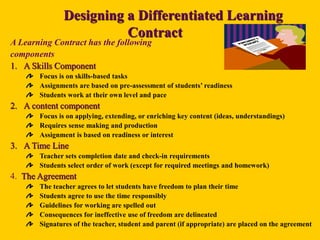
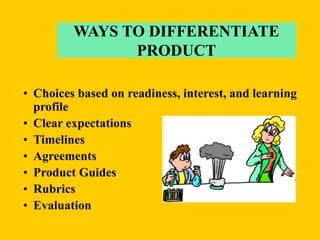
The document discusses differentiating instruction to meet the individual needs of students. It defines differentiated instruction as modifying instruction based on student readiness, interests, and learning profiles rather than using a one-size-fits-all approach. The key principles of a differentiated classroom are that the teacher understands student differences and adapts content, process, and product to maximize growth for each student. Teachers can differentiate instruction through flexible grouping, assessment to guide instruction, and varying content, process, and products based on student characteristics. The goal of differentiation is to respect individual student differences while helping all students understand common human experiences.
















![Differentiation 2012[1]](https://cdn.slidesharecdn.com/ss_thumbnails/differentiation20121-141020222707-conversion-gate02-thumbnail.jpg?width=640&height=640&fit=bounds)


