Downloaded 98 times
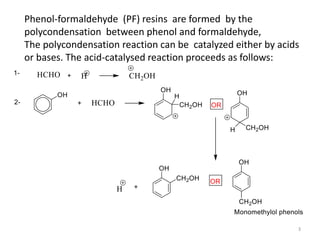
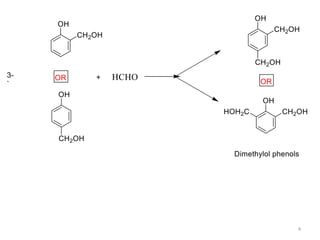
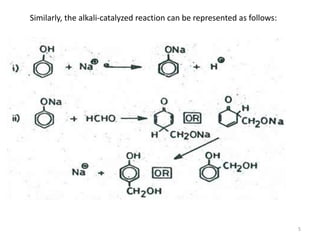
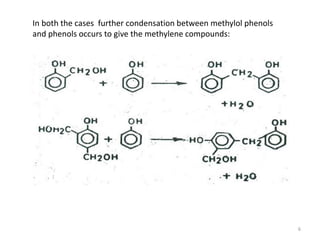
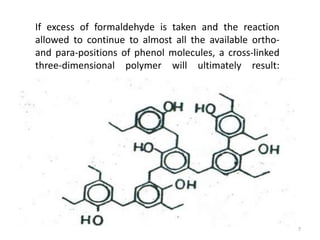
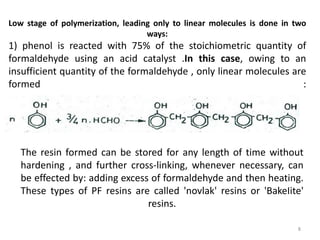
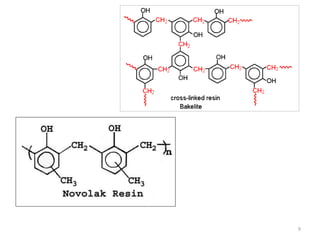
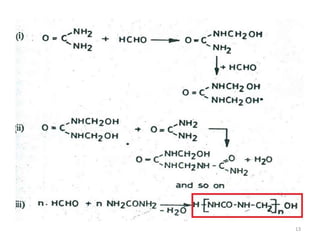
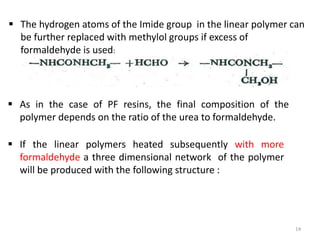
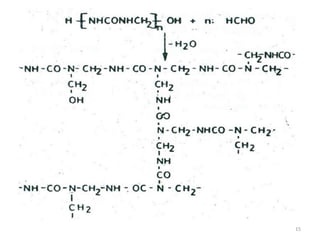
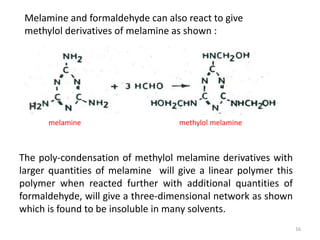
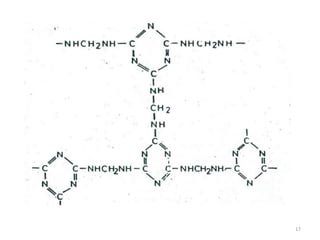
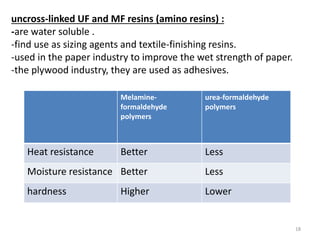
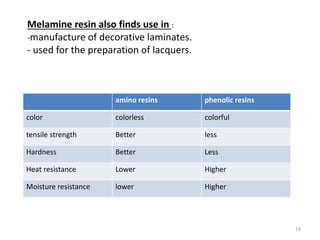


Phenolic and amino resins are formed through polycondensation reactions between phenol/urea/melamine and formaldehyde. In 1860, von Bayer first reported the reaction between phenol and aldehyde. Phenol-formaldehyde resins can be produced through acid or base catalysis and cross-link to form three-dimensional polymers. Urea and melamine also react with formaldehyde to form methylol derivatives which further condense to form linear or cross-linked resins. Phenolic resins exhibit better heat and moisture resistance while amino resins are often used in applications requiring water solubility such as textiles, paper, and plywood adhesives.


