Pollination
Self-pollination
• Pollen from
the anther is
transferred
to the stigma
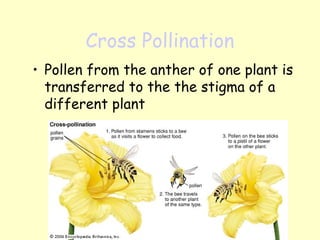
Cross Pollination
• Pollen from the anther of one plant is
transferred to the the stigma of a
different plant
Wind/Insect Pollination
Feature Reason
small petals, often brown or dull
green
no need to attract insects
no scent no need to attract insects
no nectar no need to attract insects
pollen produced in great
quantities
because most does not reach
another flower
pollen very light and smooth so it can be blown in the wind
anthers loosely attached and
dangle out
to release pollen into the
wind
stigma hangs outside the flower to catch the drifting pollen
stigma feathery or net like to catch the drifting pollen
Wind Pollinated Flowers
Feature Reason
large, brightly coloured petals to attract insects
often sweetly scented to attract insects
usually contain nectar to attract insects
moderate quantity of pollen less wastage than with wind
pollination
pollen often sticky or spiky to stick to insects
anthers firm and inside flower to brush against insects
stigma inside the flower so that the insect brushes against
it
stigma has sticky coating pollen sticks to it
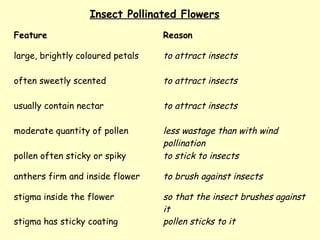
Insect Pollinated Flowers
Feature Reason
large, brightly coloured petals to attract insects
often sweetly scented to attract insects
usually contain nectar to attract insects
moderate quantity of pollen less wastage than with wind
pollination
pollen often sticky or spiky to stick to insects
anthers firm and inside flower to brush against insects
stigma inside the flower so that the insect brushes against
it
stigma has sticky coating pollen sticks to it
Insect Pollinated Flowers

Pollination

  • 1.
    Pollination Self-pollination • Pollen from theanther is transferred to the stigma
  • 2.
    Cross Pollination • Pollenfrom the anther of one plant is transferred to the the stigma of a different plant
  • 3.
  • 4.
    Feature Reason small petals,often brown or dull green no need to attract insects no scent no need to attract insects no nectar no need to attract insects pollen produced in great quantities because most does not reach another flower pollen very light and smooth so it can be blown in the wind anthers loosely attached and dangle out to release pollen into the wind stigma hangs outside the flower to catch the drifting pollen stigma feathery or net like to catch the drifting pollen Wind Pollinated Flowers
  • 5.
    Feature Reason large, brightlycoloured petals to attract insects often sweetly scented to attract insects usually contain nectar to attract insects moderate quantity of pollen less wastage than with wind pollination pollen often sticky or spiky to stick to insects anthers firm and inside flower to brush against insects stigma inside the flower so that the insect brushes against it stigma has sticky coating pollen sticks to it Insect Pollinated Flowers
  • 6.
    Feature Reason large, brightlycoloured petals to attract insects often sweetly scented to attract insects usually contain nectar to attract insects moderate quantity of pollen less wastage than with wind pollination pollen often sticky or spiky to stick to insects anthers firm and inside flower to brush against insects stigma inside the flower so that the insect brushes against it stigma has sticky coating pollen sticks to it Insect Pollinated Flowers