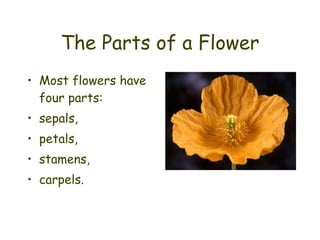
The Parts of a Flower Most flowers have four parts: sepals, petals, stamens, carpels.
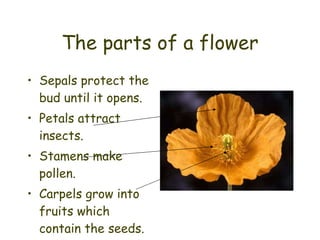
The parts of a flower Sepals protect the bud until it opens. Petals attract insects. Stamens make pollen. Carpels grow into fruits which contain the seeds.
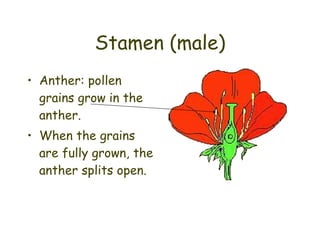
Stamen (male) Anther: pollen grains grow in the anther. When the grains are fully grown, the anther splits open.
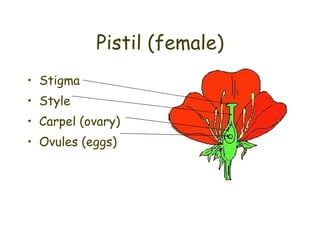
Pistil (female) Stigma Style Carpel (ovary) Ovules (eggs)
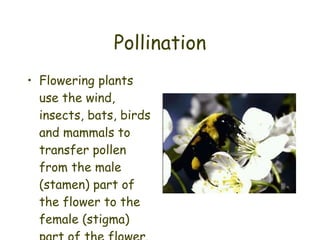
Pollination Flowering plants use the wind, insects, bats, birds and mammals to transfer pollen from the male (stamen) part of the flower to the female (stigma) part of the flower.
Pollination Definition: The transfer of pollen grains from an anther to a stigma When
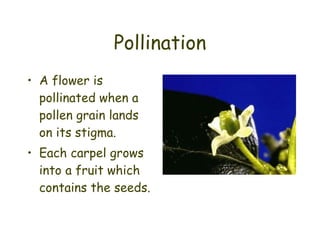
Pollination A flower is pollinated when a pollen grain lands on its stigma. Each carpel grows into a fruit which contains the seeds.
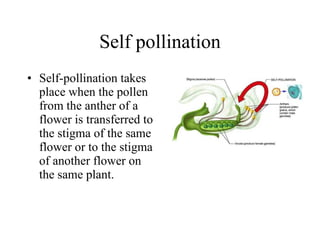
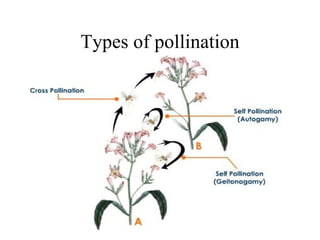
Self pollination Self-pollination takes place when the pollen from the anther of a flower is transferred to the stigma of the same flower or to the stigma of another flower on the same plant.
Cross pollination Cross Pollination occurs when the anther and the stigma are in flowers on different plants of the same species.
Types of pollination
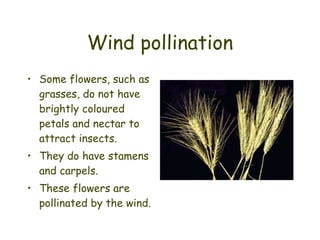
Wind pollination Some flowers, such as grasses, do not have brightly coloured petals and nectar to attract insects. They do have stamens and carpels. These flowers are pollinated by the wind.
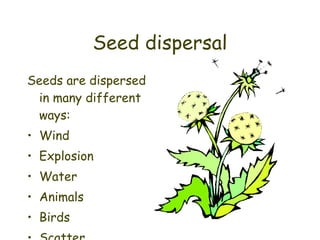
Seed dispersal Seeds are dispersed in many different ways: Wind Explosion Water Animals Birds Scatter
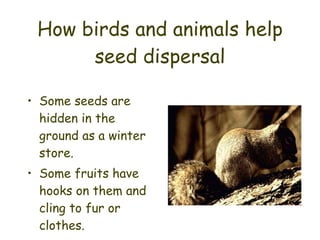
How birds and animals help seed dispersal Some seeds are hidden in the ground as a winter store. Some fruits have hooks on them and cling to fur or clothes.
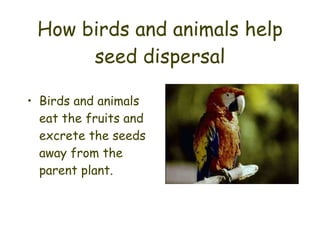
How birds and animals help seed dispersal Birds and animals eat the fruits and excrete the seeds away from the parent plant.
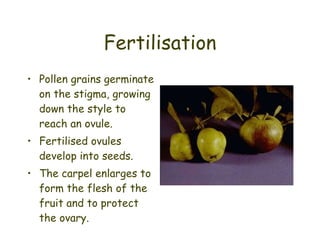
Fertilisation Pollen grains germinate on the stigma, growing down the style to reach an ovule. Fertilised ovules develop into seeds. The carpel enlarges to form the flesh of the fruit and to protect the ovary.

Floweringplants reproduction pp

  • 1.
    The Parts ofa Flower Most flowers have four parts: sepals, petals, stamens, carpels.
  • 2.
    The parts ofa flower Sepals protect the bud until it opens. Petals attract insects. Stamens make pollen. Carpels grow into fruits which contain the seeds.
  • 3.
    Stamen (male) Anther:pollen grains grow in the anther. When the grains are fully grown, the anther splits open.
  • 4.
    Pistil (female) StigmaStyle Carpel (ovary) Ovules (eggs)
  • 5.
    Pollination Flowering plantsuse the wind, insects, bats, birds and mammals to transfer pollen from the male (stamen) part of the flower to the female (stigma) part of the flower.
  • 6.
    Pollination Definition: Thetransfer of pollen grains from an anther to a stigma When
  • 7.
    Pollination A floweris pollinated when a pollen grain lands on its stigma. Each carpel grows into a fruit which contains the seeds.
  • 8.
    Self pollination Self-pollinationtakes place when the pollen from the anther of a flower is transferred to the stigma of the same flower or to the stigma of another flower on the same plant.
  • 9.
    Cross pollination CrossPollination occurs when the anther and the stigma are in flowers on different plants of the same species.
  • 10.
  • 11.
    Wind pollination Someflowers, such as grasses, do not have brightly coloured petals and nectar to attract insects. They do have stamens and carpels. These flowers are pollinated by the wind.
  • 12.
    Seed dispersal Seedsare dispersed in many different ways: Wind Explosion Water Animals Birds Scatter
  • 13.
    How birds andanimals help seed dispersal Some seeds are hidden in the ground as a winter store. Some fruits have hooks on them and cling to fur or clothes.
  • 14.
    How birds andanimals help seed dispersal Birds and animals eat the fruits and excrete the seeds away from the parent plant.
  • 15.
    Fertilisation Pollen grainsgerminate on the stigma, growing down the style to reach an ovule. Fertilised ovules develop into seeds. The carpel enlarges to form the flesh of the fruit and to protect the ovary.