Pollination
LO: To know that flowering plants
reproduce
•To understand the importance of insects in
pollination.
• To know that pollen is produced by flowers
and is the key to pollination.
• To know the roles of parts of the flower in
pollination.
Recap
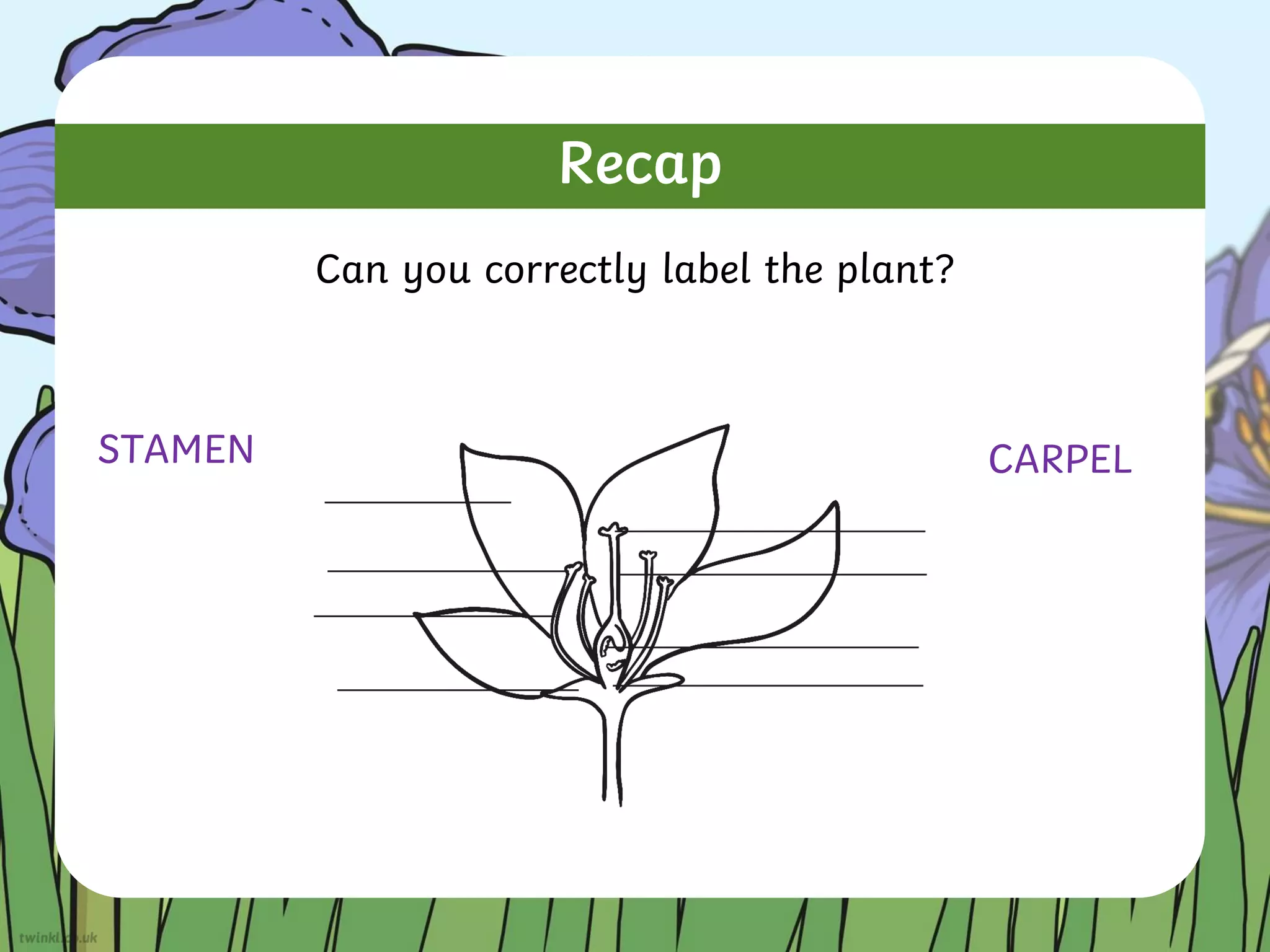
Can you correctly label the plant?
STAMEN CARPEL
• Plants produce seeds in order to reproduce. To make a seed a
flower must be pollinated.
• Pollen is made by the male part of the plant, which is called the
stamen. The pollen needs to get to the female part of the plant,
which is called the stigma. Most plants cannot pollinate
themselves, but a large amount of orchids can. What might be an
advantage of self-pollination?
• The pollen must then travel from one plant to another plant of
the same species (e.g. from a rose to a rose or from a daffodil to a
daffodil). This is called cross-pollination.
Pollination
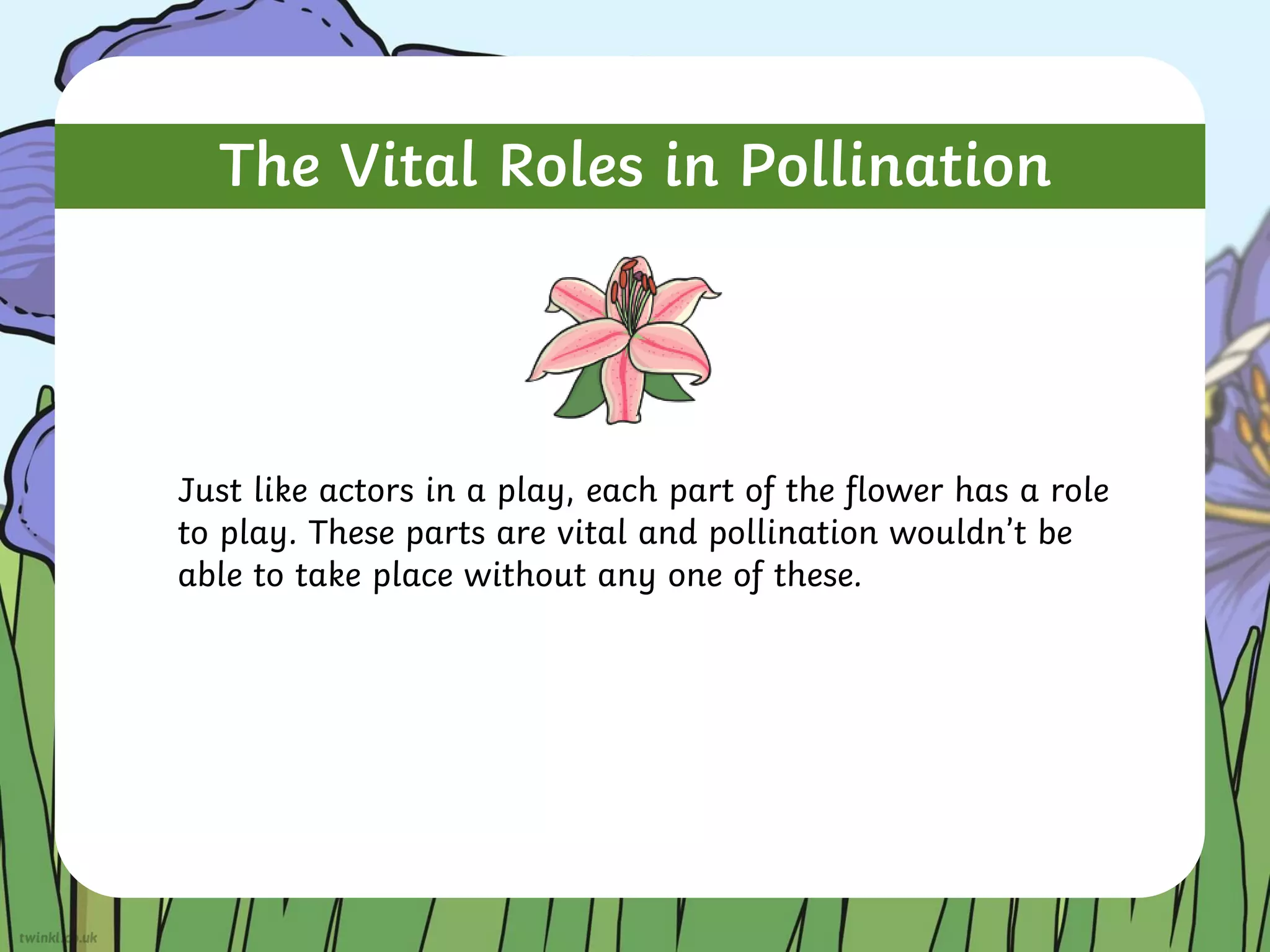
The Vital Roles in Pollination
Just like actors in a play, each part of the flower has a role
to play. These parts are vital and pollination wouldn’t be
able to take place without any one of these.
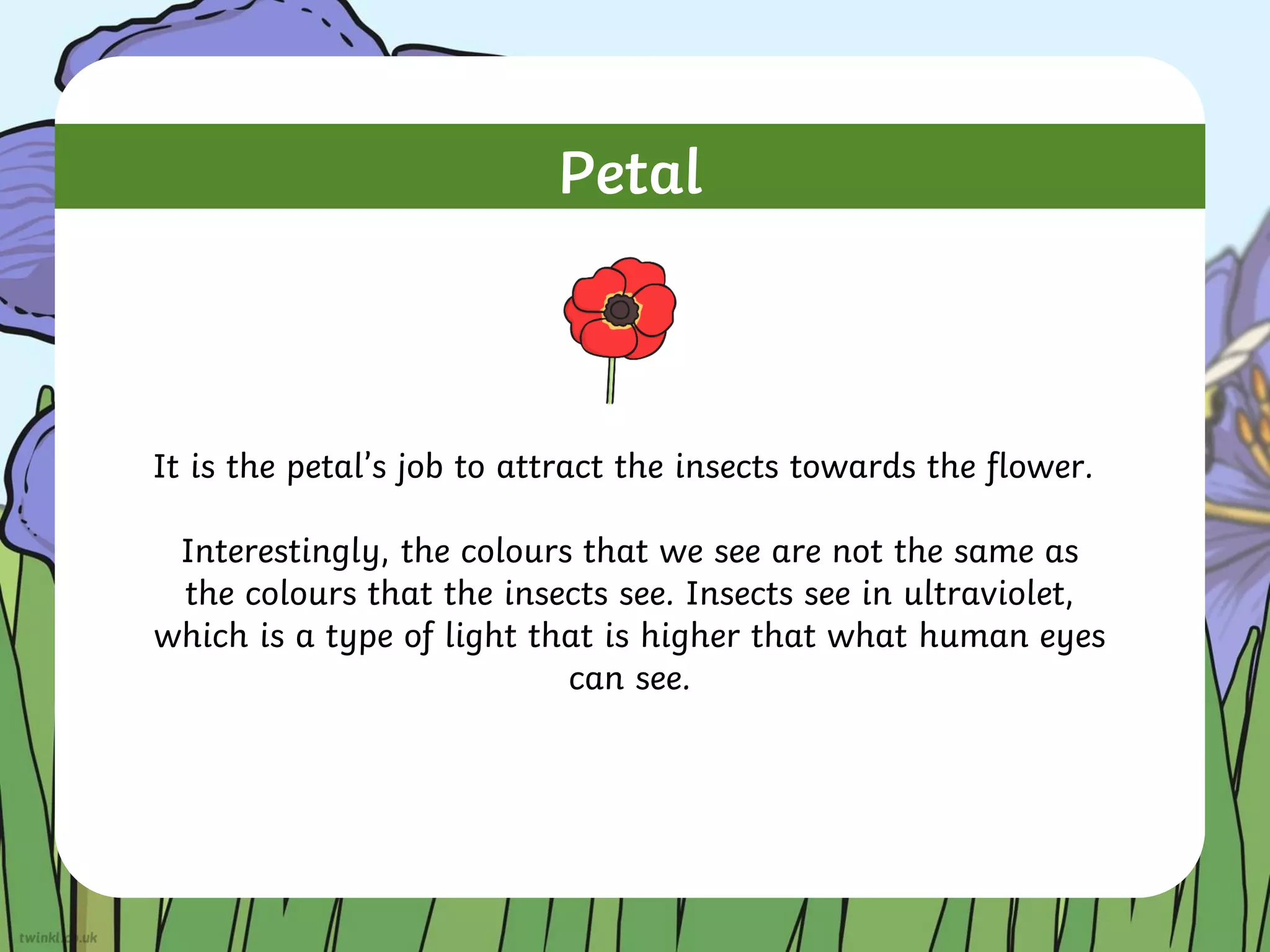
Petal
It is the petal’s job to attract the insects towards the flower.
Interestingly, the colours that we see are not the same as
the colours that the insects see. Insects see in ultraviolet,
which is a type of light that is higher that what human eyes
can see.
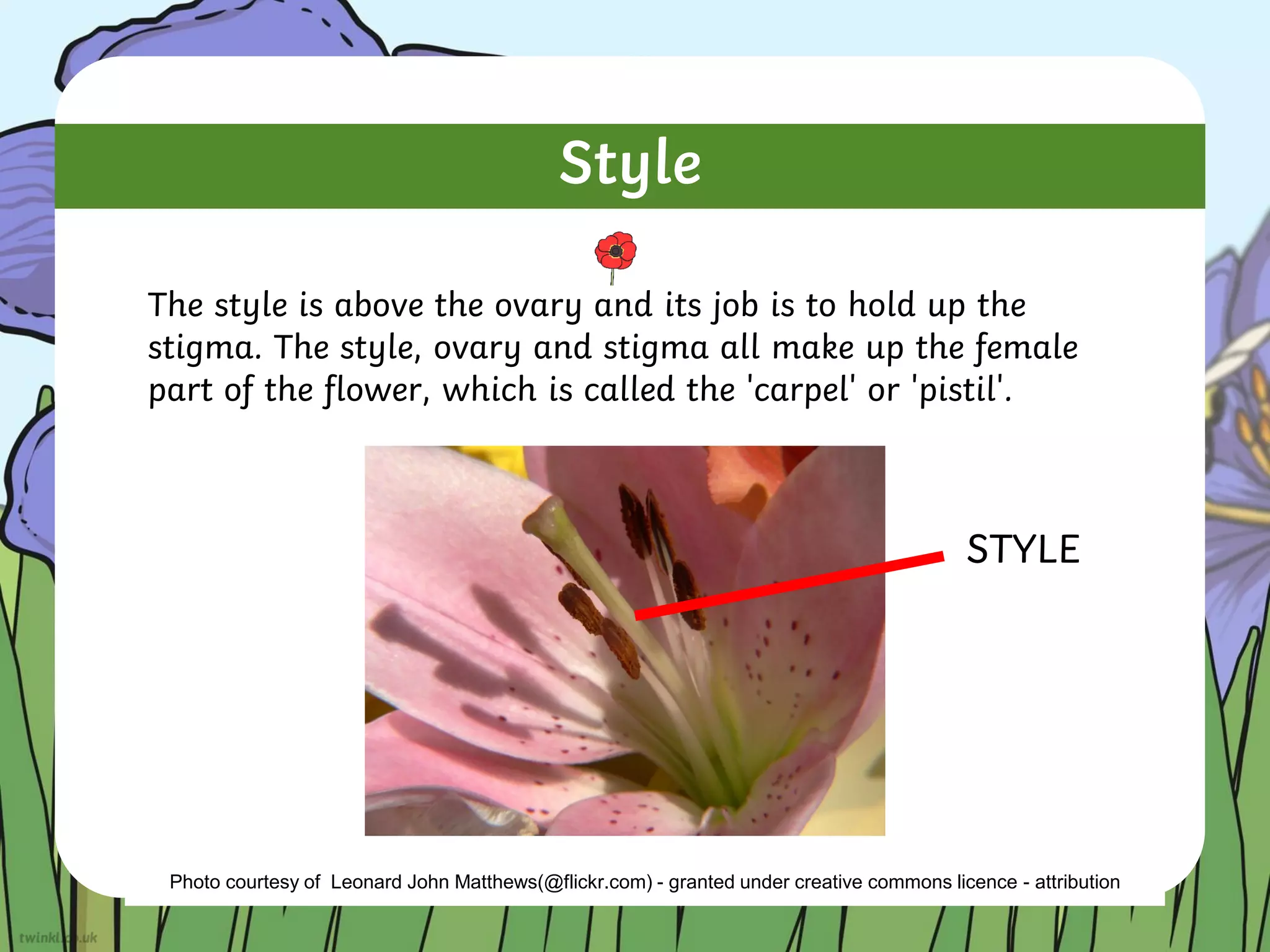
Style
The style is above the ovary and its job is to hold up the
stigma. The style, ovary and stigma all make up the female
part of the flower, which is called the 'carpel' or 'pistil'.
Photo courtesy of Leonard John Matthews(@flickr.com) - granted under creative commons licence - attribution
STYLE
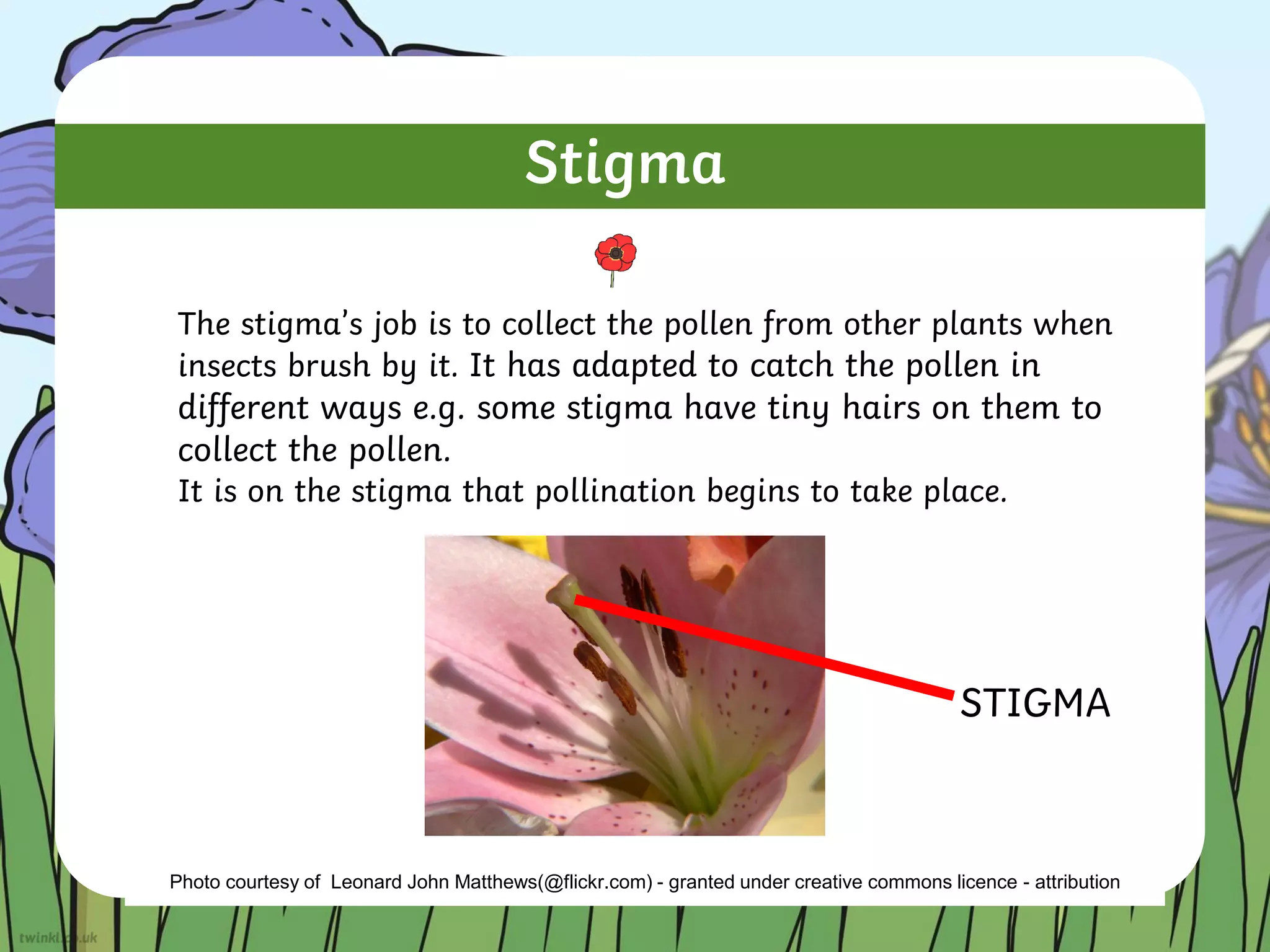
Stigma
The stigma’s job is to collect the pollen from other plants when
insects brush by it. It has adapted to catch the pollen in
different ways e.g. some stigma have tiny hairs on them to
collect the pollen.
It is on the stigma that pollination begins to take place.
Photo courtesy of Leonard John Matthews(@flickr.com) - granted under creative commons licence - attribution
STIGMA
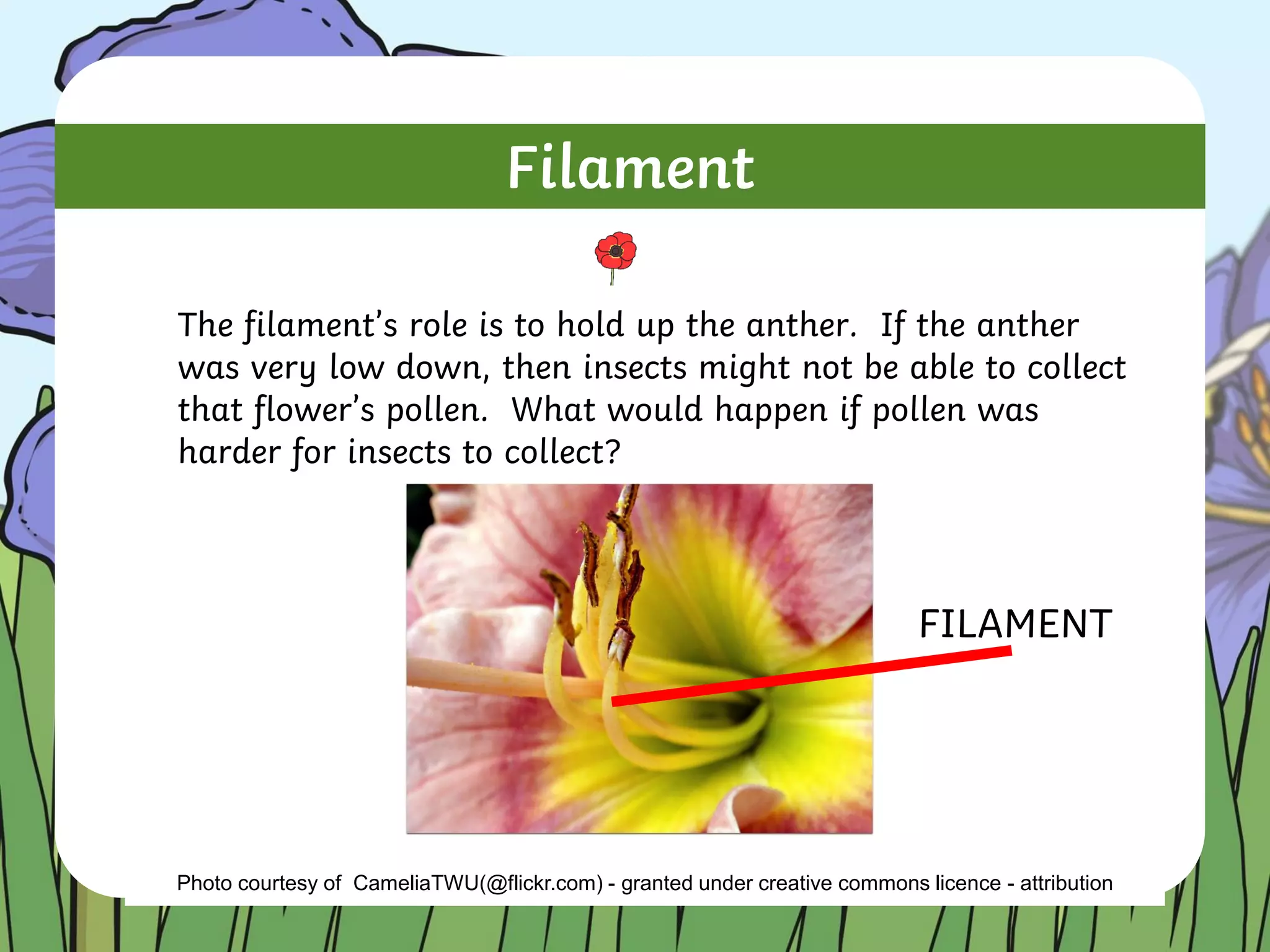
Filament
The filament’s role is to hold up the anther. If the anther
was very low down, then insects might not be able to collect
that flower’s pollen. What would happen if pollen was
harder for insects to collect?
Photo courtesy of CameliaTWU(@flickr.com) - granted under creative commons licence - attribution
FILAMENT
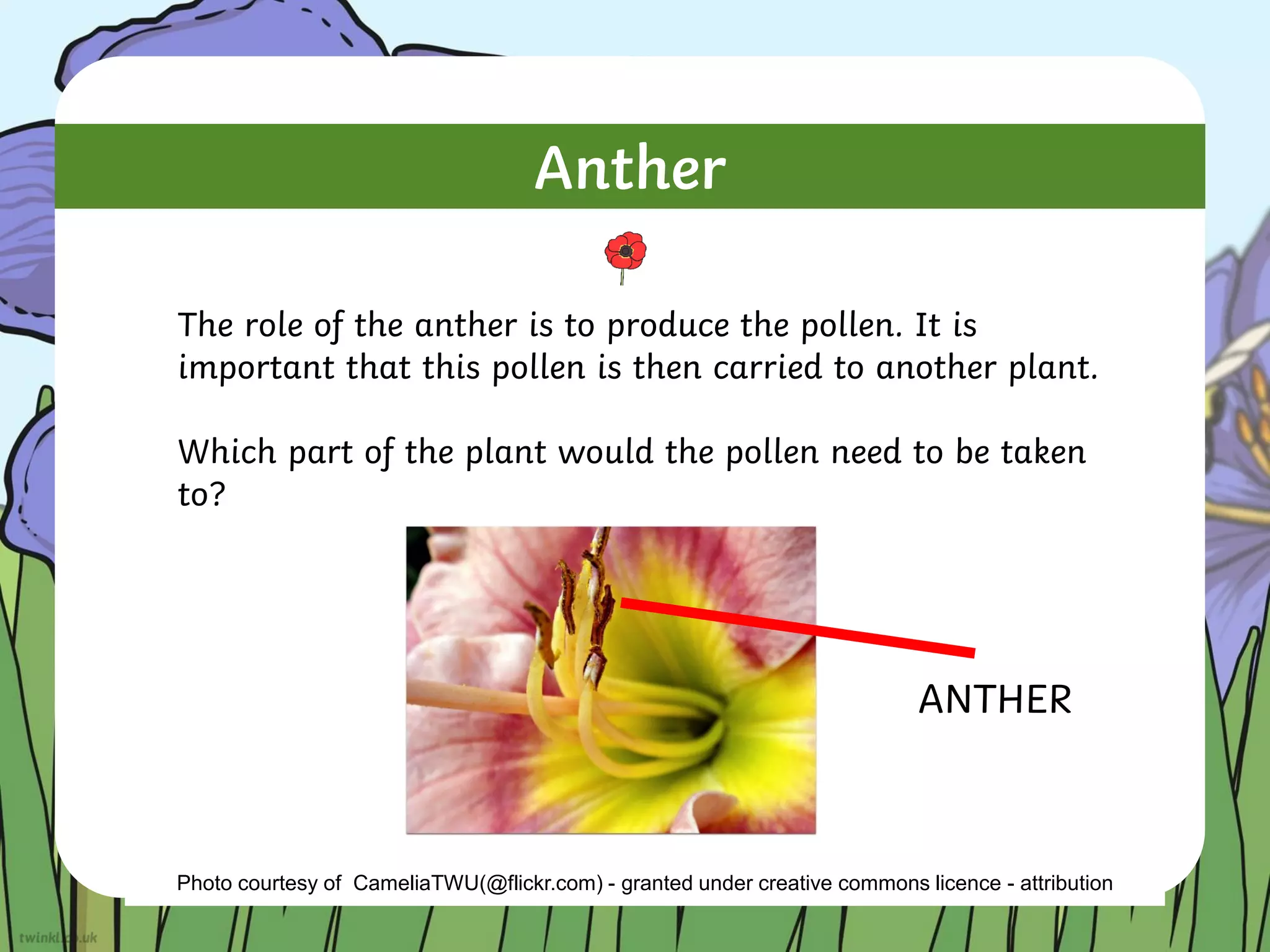
Anther
The role of the anther is to produce the pollen. It is
important that this pollen is then carried to another plant.
Which part of the plant would the pollen need to be taken
to?
Photo courtesy of CameliaTWU(@flickr.com) - granted under creative commons licence - attribution
ANTHER
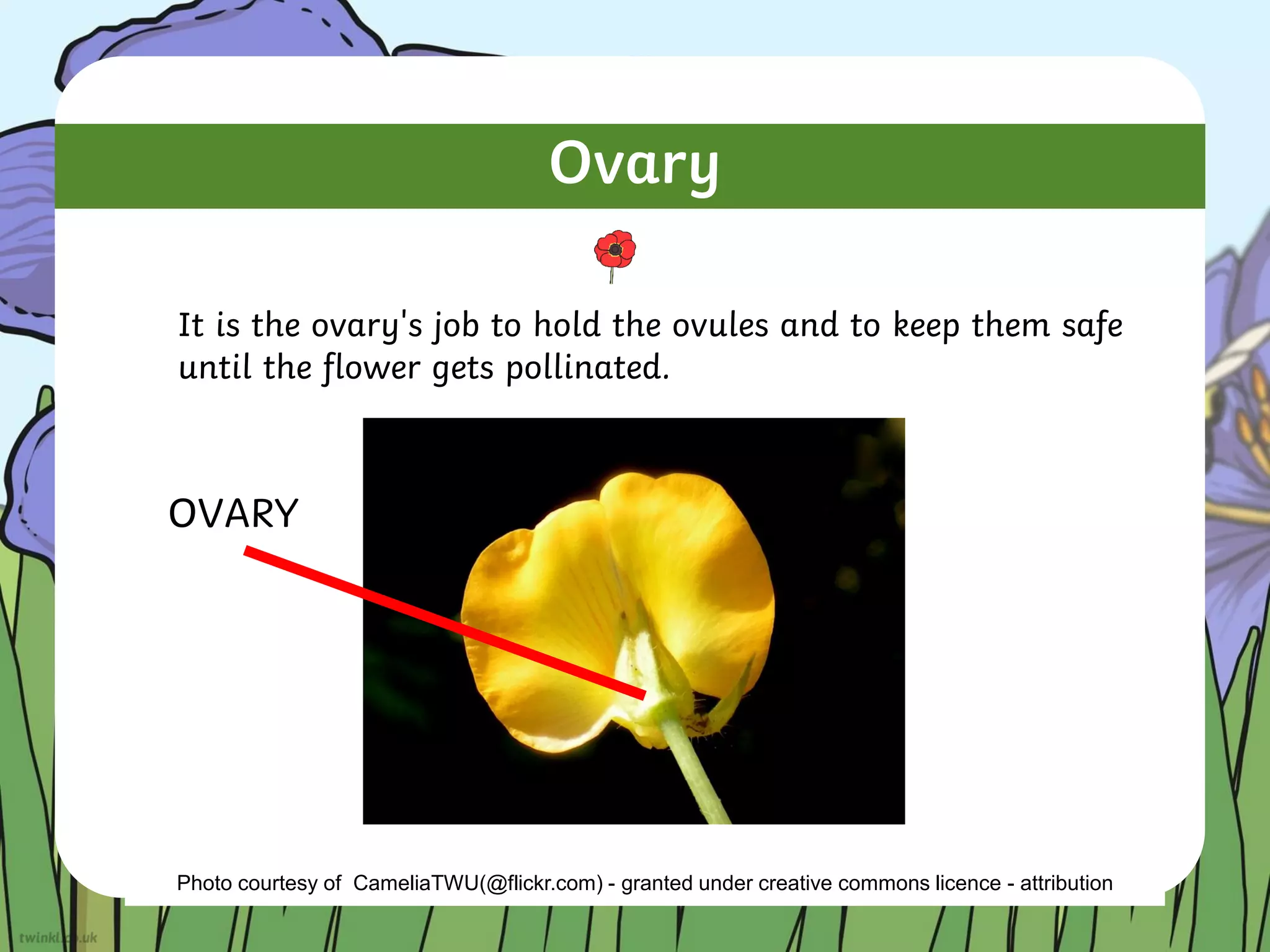
Ovary
It is the ovary's job to hold the ovules and to keep them safe
until the flower gets pollinated.
Photo courtesy of CameliaTWU(@flickr.com) - granted under creative commons licence - attribution
OVARY
Insects in Pollination
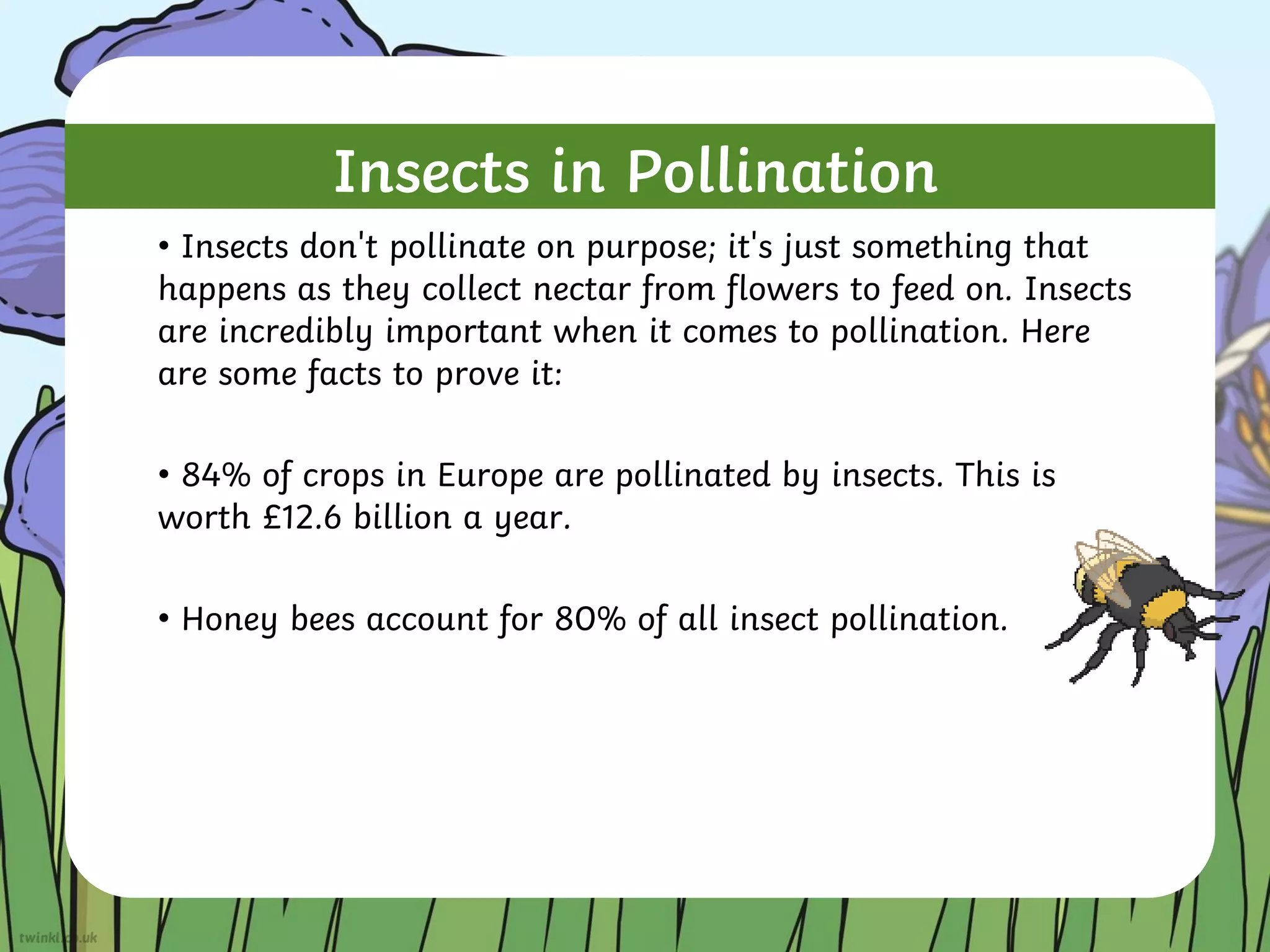
• Insects don't pollinate on purpose; it's just something that
happens as they collect nectar from flowers to feed on. Insects
are incredibly important when it comes to pollination. Here
are some facts to prove it:
• 84% of crops in Europe are pollinated by insects. This is
worth £12.6 billion a year.
• Honey bees account for 80% of all insect pollination.
The Pollination Process
1. The flower petal’s bright colours and fragrant scents attract insects.
2. The insect arrives on the flower to collect nectar. This nectar is a sweet
liquid which makes perfect insect food.
3. As the insect is gathering the nectar, it rubs against the anthers, which
rub pollen onto the insect.
4. After the insect is done feeding on the flower’s nectar, it gets hungry
and gets attracted by another flower`s bright colours.
5. As the insect feeds on the nectar in this new flower, the pollen stuck to
the insect from the first flower rubs off onto the female parts of the second
flower (the stigma).
6. Part of this pollen travels down the style and then into the ovary.
The Pollination Process
7. The tiny piece of pollen joins onto an ovule in the ovary. The plant has
now been fertilised.
8. The ovary of the flower turns into seeds which will then be dispersed so
that new plants will be able to grow somewhere else.
Wind Pollination
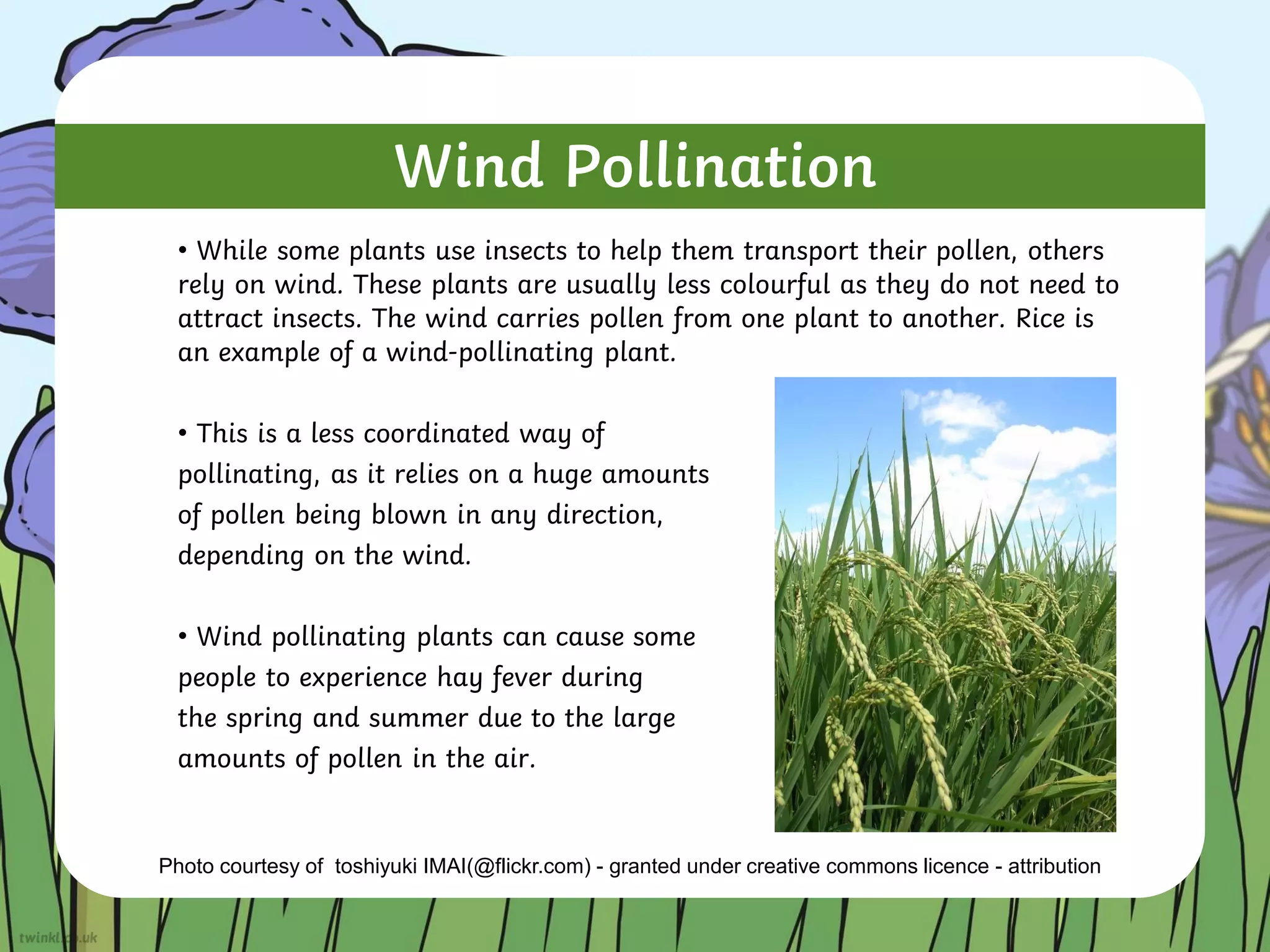
• While some plants use insects to help them transport their pollen, others
rely on wind. These plants are usually less colourful as they do not need to
attract insects. The wind carries pollen from one plant to another. Rice is
an example of a wind-pollinating plant.
• This is a less coordinated way of
pollinating, as it relies on a huge amounts
of pollen being blown in any direction,
depending on the wind.
• Wind pollinating plants can cause some
people to experience hay fever during
the spring and summer due to the large
amounts of pollen in the air.
Photo courtesy of toshiyuki IMAI(@flickr.com) - granted under creative commons licence - attribution
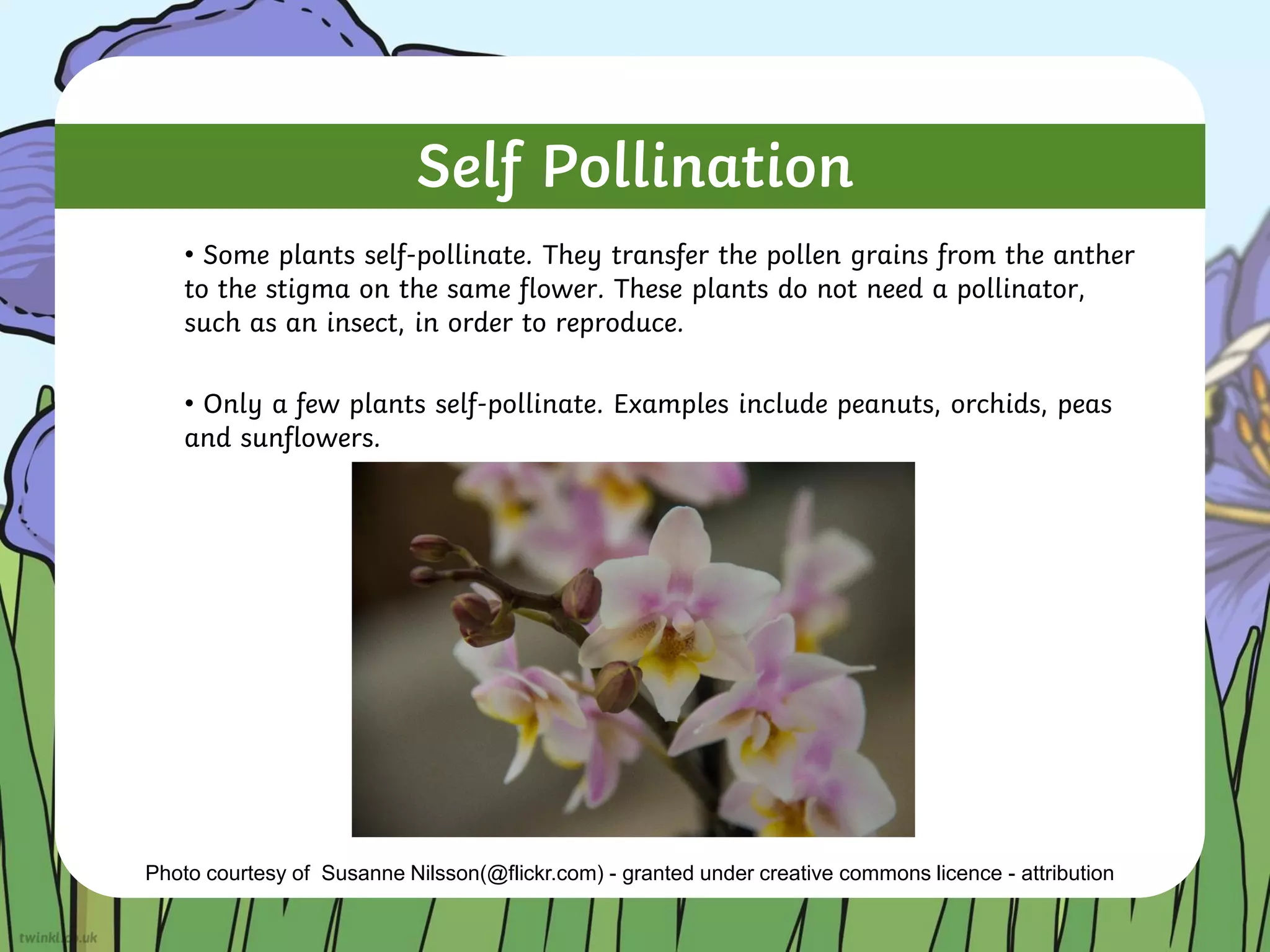
• Some plants self-pollinate. They transfer the pollen grains from the anther
to the stigma on the same flower. These plants do not need a pollinator,
such as an insect, in order to reproduce.
• Only a few plants self-pollinate. Examples include peanuts, orchids, peas
and sunflowers.
Photo courtesy of Susanne Nilsson(@flickr.com) - granted under creative commons licence - attribution
Self Pollination
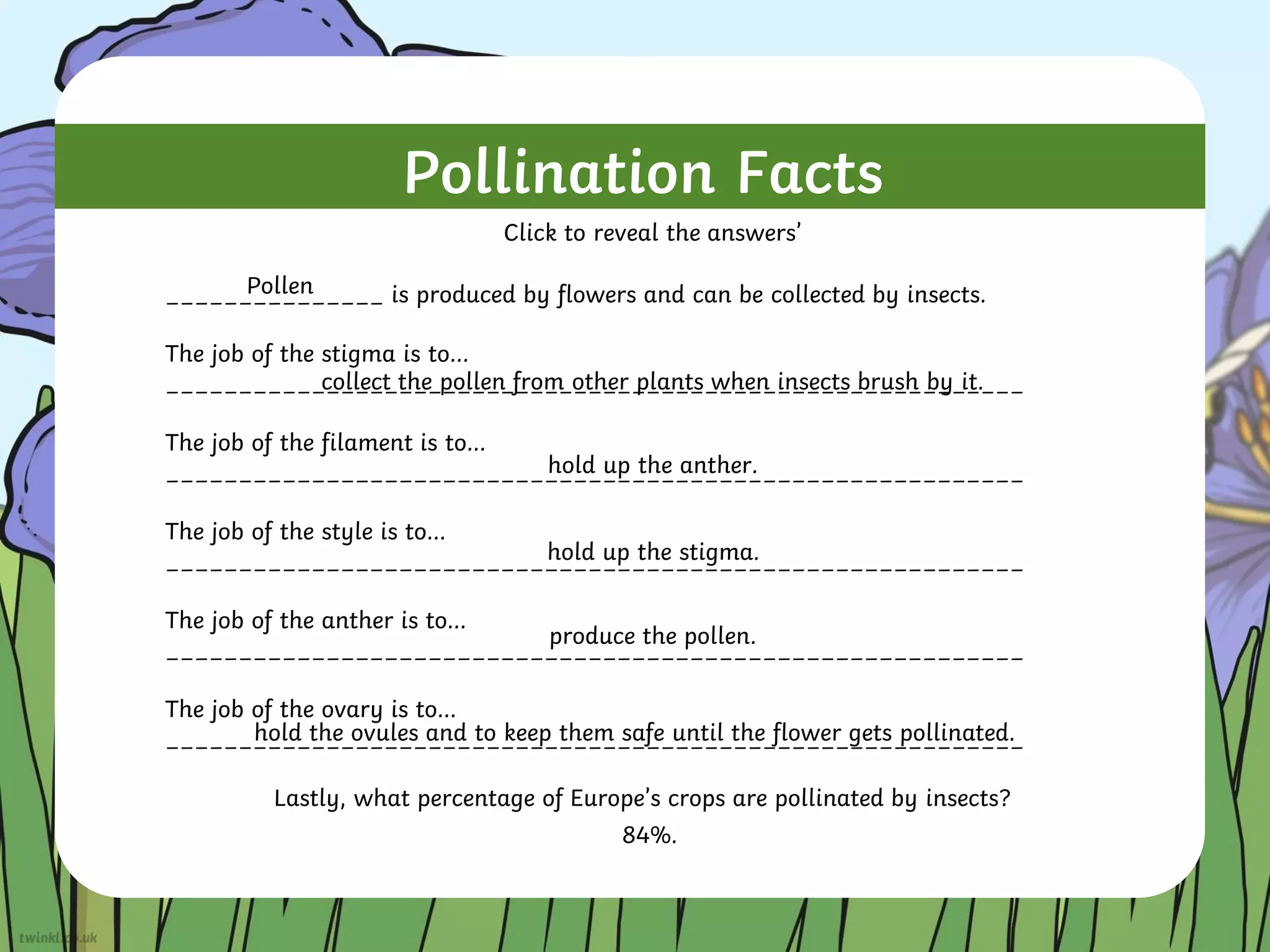
Pollination Facts
_______________ is produced by flowers and can be collected by insects.
The job of the stigma is to…
___________________________________________________________
The job of the filament is to…
___________________________________________________________
The job of the style is to…
___________________________________________________________
The job of the anther is to…
___________________________________________________________
The job of the ovary is to…
___________________________________________________________
Lastly, what percentage of Europe’s crops are pollinated by insects?
Pollen
collect the pollen from other plants when insects brush by it.
hold the ovules and to keep them safe until the flower gets pollinated.
produce the pollen.
hold up the stigma.
hold up the anther.
Click to reveal the answers’
84%.
THE END

Flower pollination-task-setter-powerpoint - text-converted

  • 1.
  • 2.
    LO: To knowthat flowering plants reproduce •To understand the importance of insects in pollination. • To know that pollen is produced by flowers and is the key to pollination. • To know the roles of parts of the flower in pollination.
  • 3.
    Recap Can you correctlylabel the plant? STAMEN CARPEL
  • 4.
    • Plants produceseeds in order to reproduce. To make a seed a flower must be pollinated. • Pollen is made by the male part of the plant, which is called the stamen. The pollen needs to get to the female part of the plant, which is called the stigma. Most plants cannot pollinate themselves, but a large amount of orchids can. What might be an advantage of self-pollination? • The pollen must then travel from one plant to another plant of the same species (e.g. from a rose to a rose or from a daffodil to a daffodil). This is called cross-pollination. Pollination
  • 5.
    The Vital Rolesin Pollination Just like actors in a play, each part of the flower has a role to play. These parts are vital and pollination wouldn’t be able to take place without any one of these.
  • 6.
    Petal It is thepetal’s job to attract the insects towards the flower. Interestingly, the colours that we see are not the same as the colours that the insects see. Insects see in ultraviolet, which is a type of light that is higher that what human eyes can see.
  • 7.
    Style The style isabove the ovary and its job is to hold up the stigma. The style, ovary and stigma all make up the female part of the flower, which is called the 'carpel' or 'pistil'. Photo courtesy of Leonard John Matthews(@flickr.com) - granted under creative commons licence - attribution STYLE
  • 8.
    Stigma The stigma’s jobis to collect the pollen from other plants when insects brush by it. It has adapted to catch the pollen in different ways e.g. some stigma have tiny hairs on them to collect the pollen. It is on the stigma that pollination begins to take place. Photo courtesy of Leonard John Matthews(@flickr.com) - granted under creative commons licence - attribution STIGMA
  • 9.
    Filament The filament’s roleis to hold up the anther. If the anther was very low down, then insects might not be able to collect that flower’s pollen. What would happen if pollen was harder for insects to collect? Photo courtesy of CameliaTWU(@flickr.com) - granted under creative commons licence - attribution FILAMENT
  • 10.
    Anther The role ofthe anther is to produce the pollen. It is important that this pollen is then carried to another plant. Which part of the plant would the pollen need to be taken to? Photo courtesy of CameliaTWU(@flickr.com) - granted under creative commons licence - attribution ANTHER
  • 11.
    Ovary It is theovary's job to hold the ovules and to keep them safe until the flower gets pollinated. Photo courtesy of CameliaTWU(@flickr.com) - granted under creative commons licence - attribution OVARY
  • 12.
    Insects in Pollination •Insects don't pollinate on purpose; it's just something that happens as they collect nectar from flowers to feed on. Insects are incredibly important when it comes to pollination. Here are some facts to prove it: • 84% of crops in Europe are pollinated by insects. This is worth £12.6 billion a year. • Honey bees account for 80% of all insect pollination.
  • 13.
    The Pollination Process 1.The flower petal’s bright colours and fragrant scents attract insects. 2. The insect arrives on the flower to collect nectar. This nectar is a sweet liquid which makes perfect insect food. 3. As the insect is gathering the nectar, it rubs against the anthers, which rub pollen onto the insect. 4. After the insect is done feeding on the flower’s nectar, it gets hungry and gets attracted by another flower`s bright colours. 5. As the insect feeds on the nectar in this new flower, the pollen stuck to the insect from the first flower rubs off onto the female parts of the second flower (the stigma). 6. Part of this pollen travels down the style and then into the ovary.
  • 14.
    The Pollination Process 7.The tiny piece of pollen joins onto an ovule in the ovary. The plant has now been fertilised. 8. The ovary of the flower turns into seeds which will then be dispersed so that new plants will be able to grow somewhere else.
  • 15.
    Wind Pollination • Whilesome plants use insects to help them transport their pollen, others rely on wind. These plants are usually less colourful as they do not need to attract insects. The wind carries pollen from one plant to another. Rice is an example of a wind-pollinating plant. • This is a less coordinated way of pollinating, as it relies on a huge amounts of pollen being blown in any direction, depending on the wind. • Wind pollinating plants can cause some people to experience hay fever during the spring and summer due to the large amounts of pollen in the air. Photo courtesy of toshiyuki IMAI(@flickr.com) - granted under creative commons licence - attribution
  • 16.
    • Some plantsself-pollinate. They transfer the pollen grains from the anther to the stigma on the same flower. These plants do not need a pollinator, such as an insect, in order to reproduce. • Only a few plants self-pollinate. Examples include peanuts, orchids, peas and sunflowers. Photo courtesy of Susanne Nilsson(@flickr.com) - granted under creative commons licence - attribution Self Pollination
  • 17.
    Pollination Facts _______________ isproduced by flowers and can be collected by insects. The job of the stigma is to… ___________________________________________________________ The job of the filament is to… ___________________________________________________________ The job of the style is to… ___________________________________________________________ The job of the anther is to… ___________________________________________________________ The job of the ovary is to… ___________________________________________________________ Lastly, what percentage of Europe’s crops are pollinated by insects? Pollen collect the pollen from other plants when insects brush by it. hold the ovules and to keep them safe until the flower gets pollinated. produce the pollen. hold up the stigma. hold up the anther. Click to reveal the answers’ 84%.
  • 18.