POLARIMETRY
Presented by- Anjali Sharma
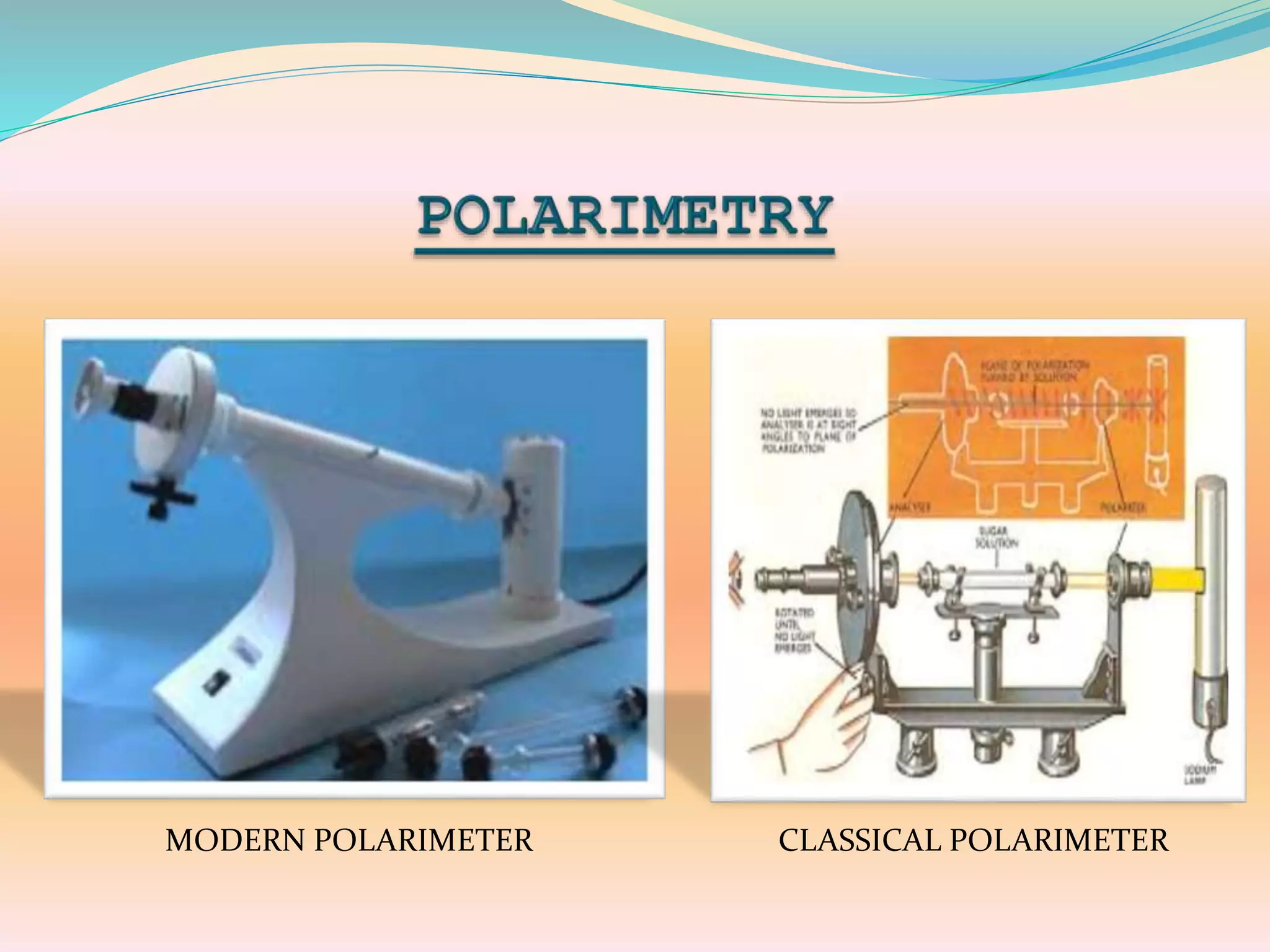
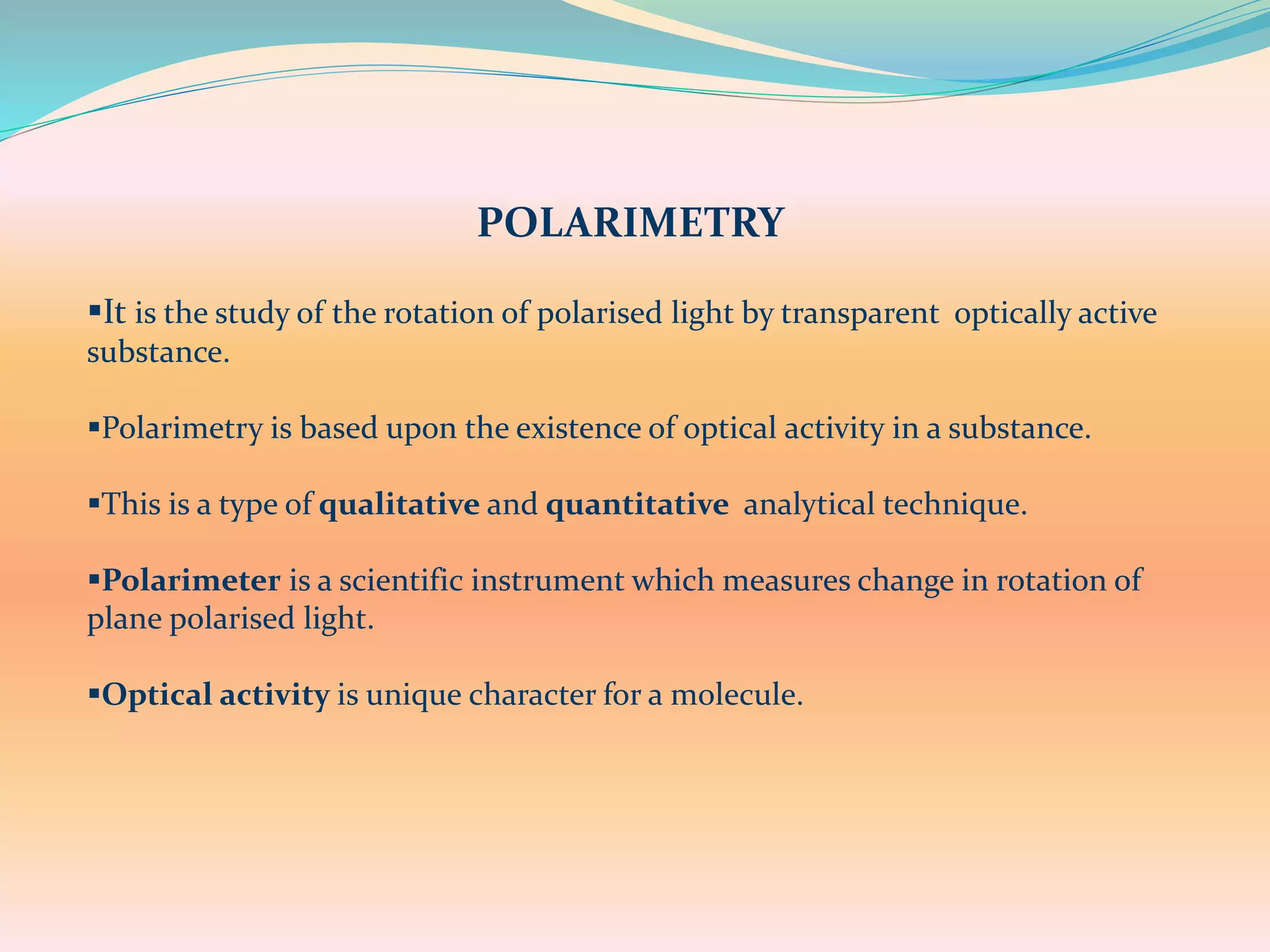
MODERN POLARIMETER CLASSICAL POLARIMETER
POLARIMETRY
It is the study of the rotation of polarised light by transparent optically active
substance.
Polarimetry is based upon the existence of optical activity in a substance.
This is a type of qualitative and quantitative analytical technique.
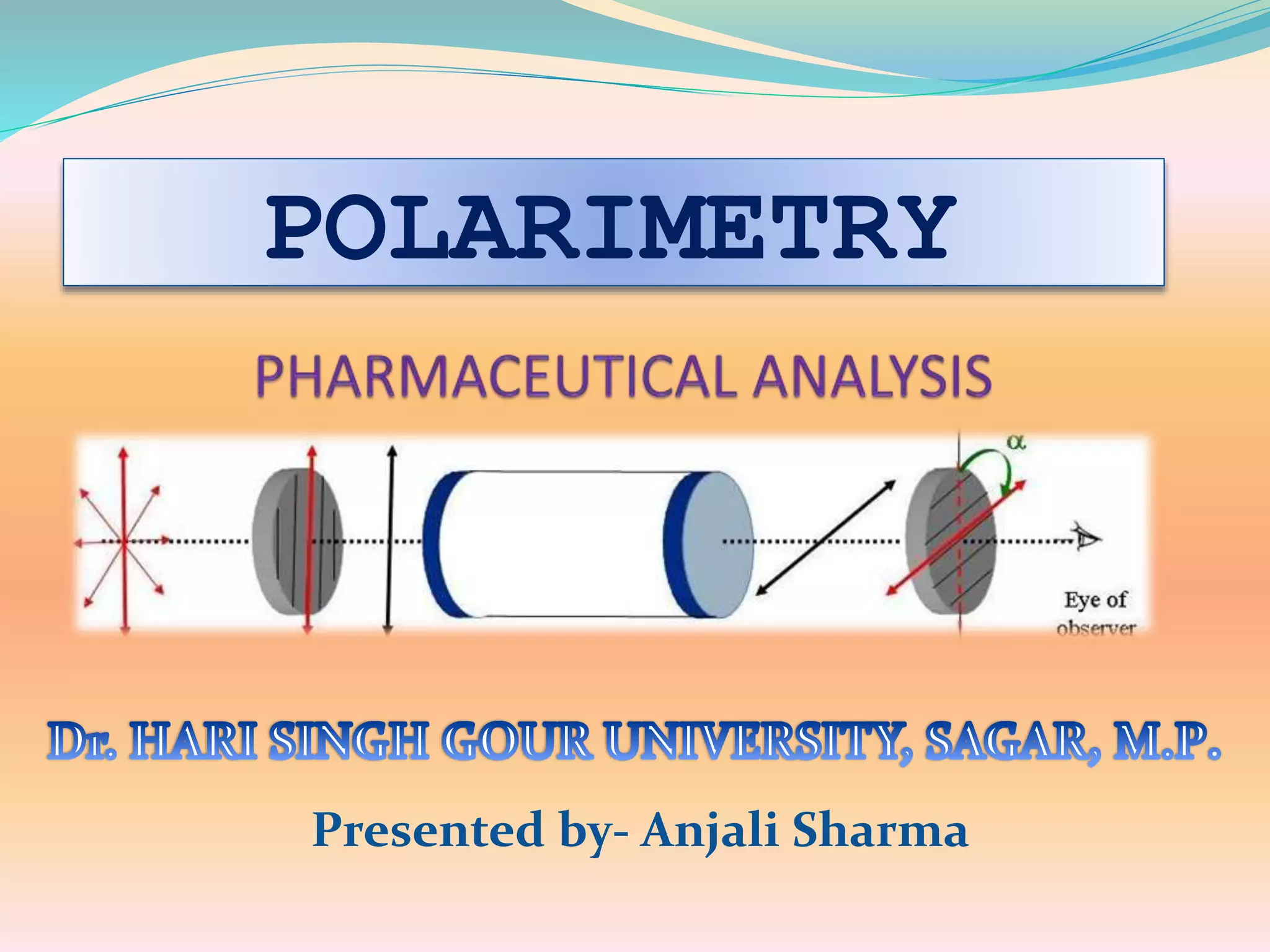
Polarimeter is a scientific instrument which measures change in rotation of
plane polarised light.
Optical activity is unique character for a molecule.
OPTICAL ACTIVITY
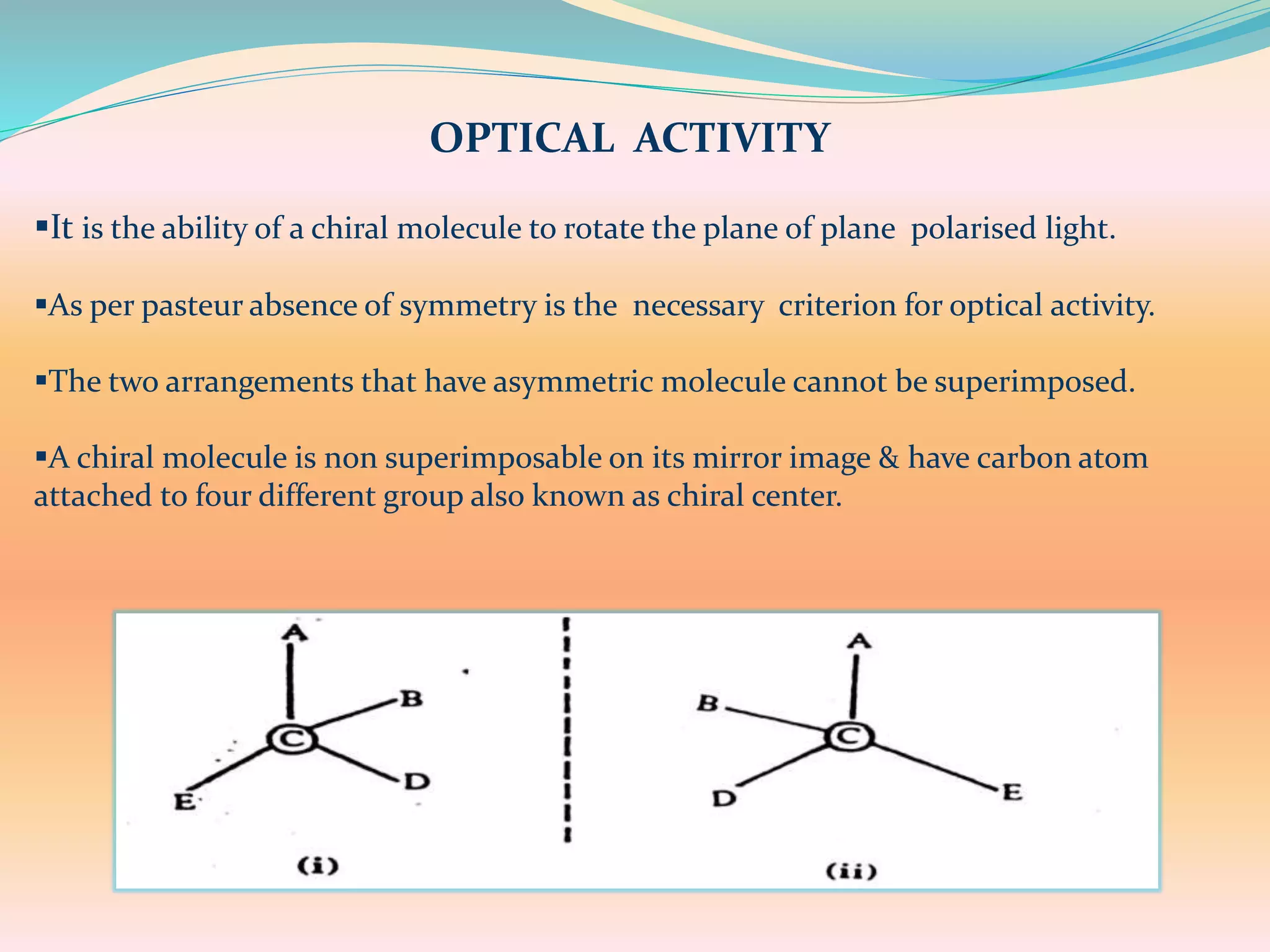
It is the ability of a chiral molecule to rotate the plane of plane polarised light.
As per pasteur absence of symmetry is the necessary criterion for optical activity.
The two arrangements that have asymmetric molecule cannot be superimposed.
A chiral molecule is non superimposable on its mirror image & have carbon atom
attached to four different group also known as chiral center.
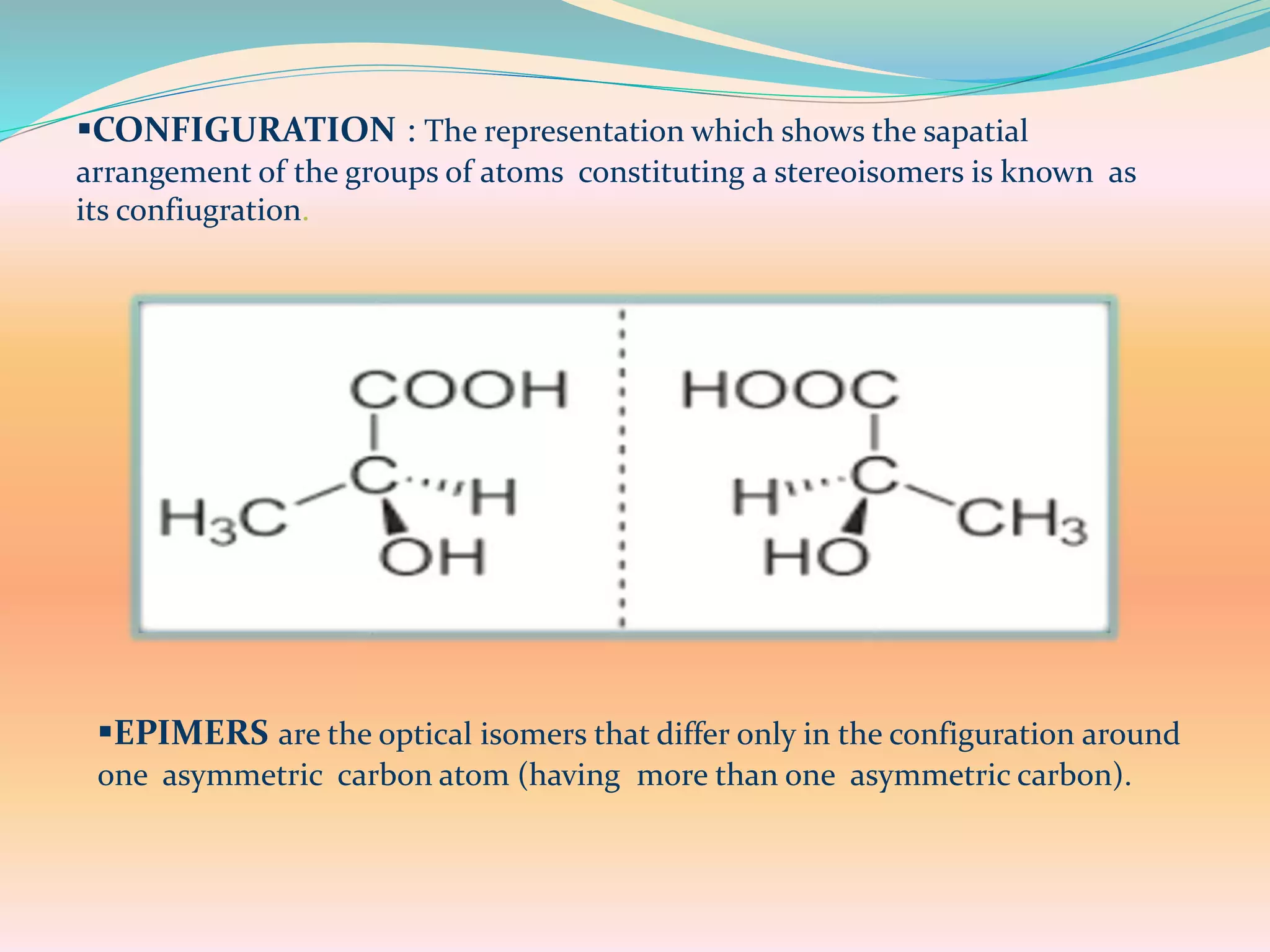
CONFIGURATION : The representation which shows the sapatial
arrangement of the groups of atoms constituting a stereoisomers is known as
its confiugration.
EPIMERS are the optical isomers that differ only in the configuration around
one asymmetric carbon atom (having more than one asymmetric carbon).
Enantiomers are chiral molecules that are mirror images of one another & are
non- superimposable in nature.
Diastereomers are stereoisomers that are not mirror images of one another &
are non- superimposable in nature.
PLANE POLARISED LIGHT
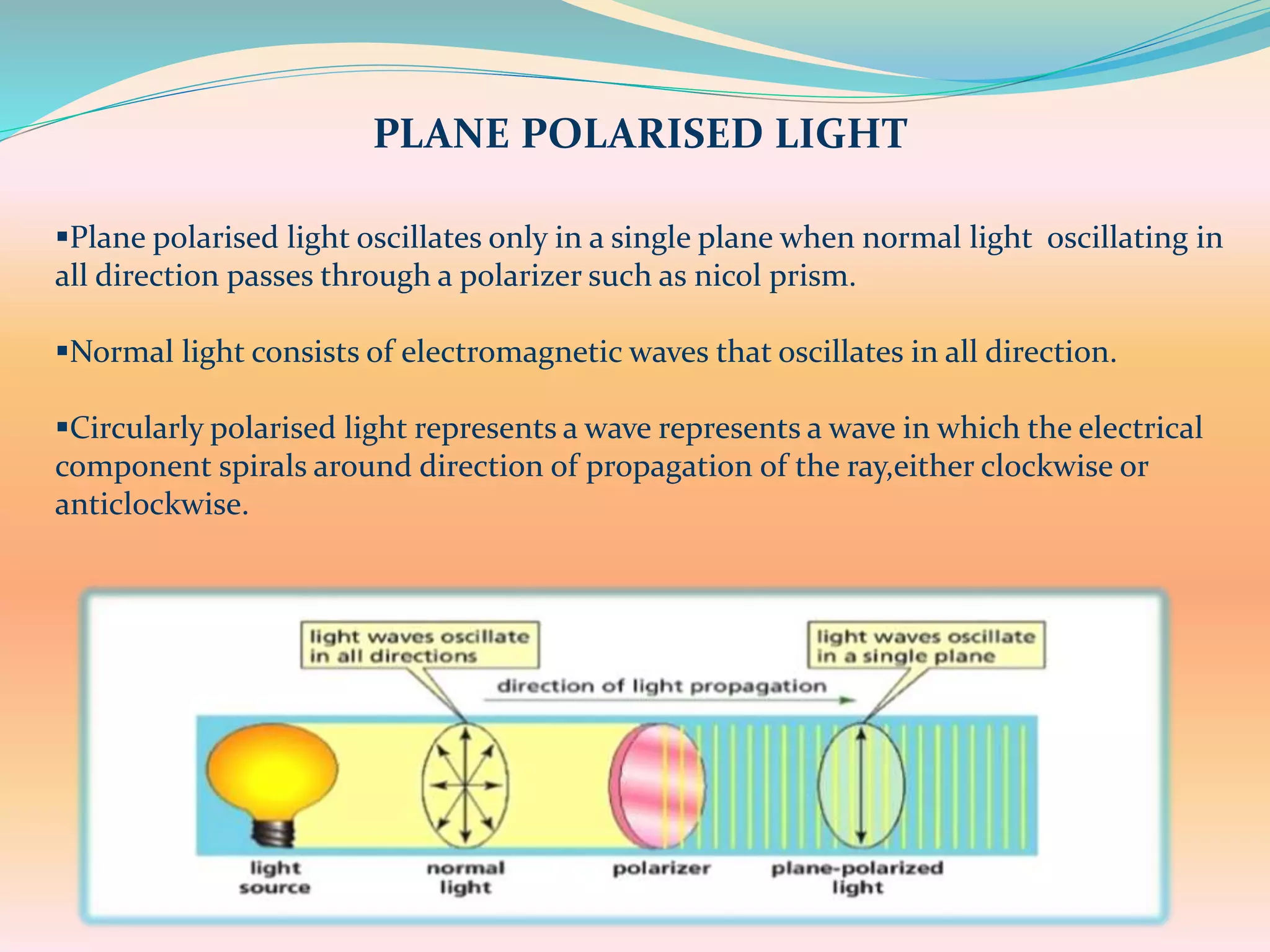
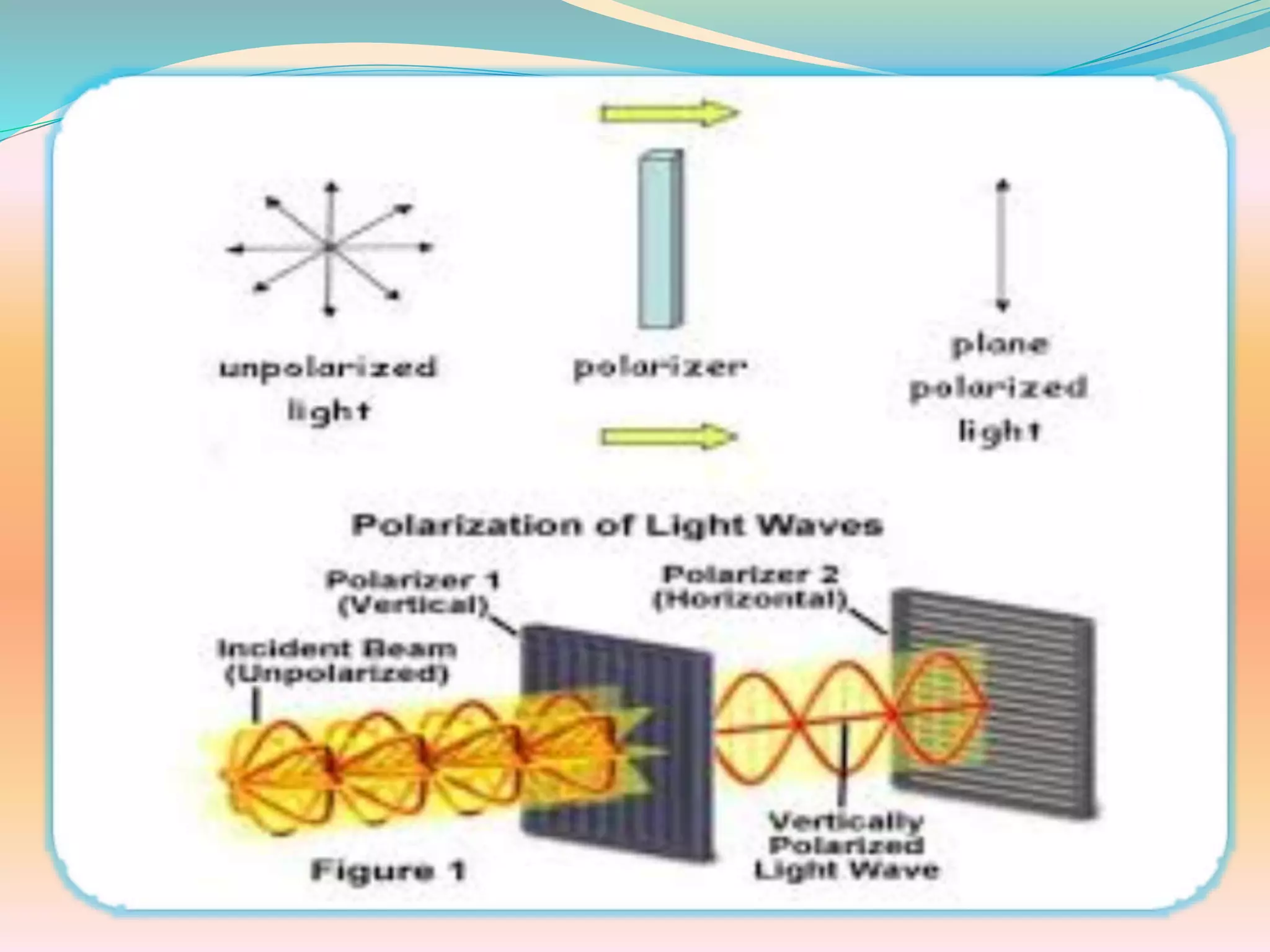
Plane polarised light oscillates only in a single plane when normal light oscillating in
all direction passes through a polarizer such as nicol prism.
Normal light consists of electromagnetic waves that oscillates in all direction.
Circularly polarised light represents a wave represents a wave in which the electrical
component spirals around direction of propagation of the ray,either clockwise or
anticlockwise.
 Electric field of plane polarised light is composed of two components.
I. Right circularly polarised (RCP)
II. Left circularly polarised (LCP)
The plane beam is vector sum of these two component.
The extent of retarding the plane polarised light through a medium is known as
refractive index of that medium.
When the medium is optically inactive both the component s are retarded to the
same extent.
when the medium is optically active the component is retarded to different extent
due to difference in refractive indices of the medium for LCP & RCP.
This phenomenon of the difference in the velocity of LCP& RCP light is called
circular birefringence.
Due to circular birefringence plane of polarization inclined at an angle.
 Polarization involves the separation of natural light into its mutually perpendicular
components.
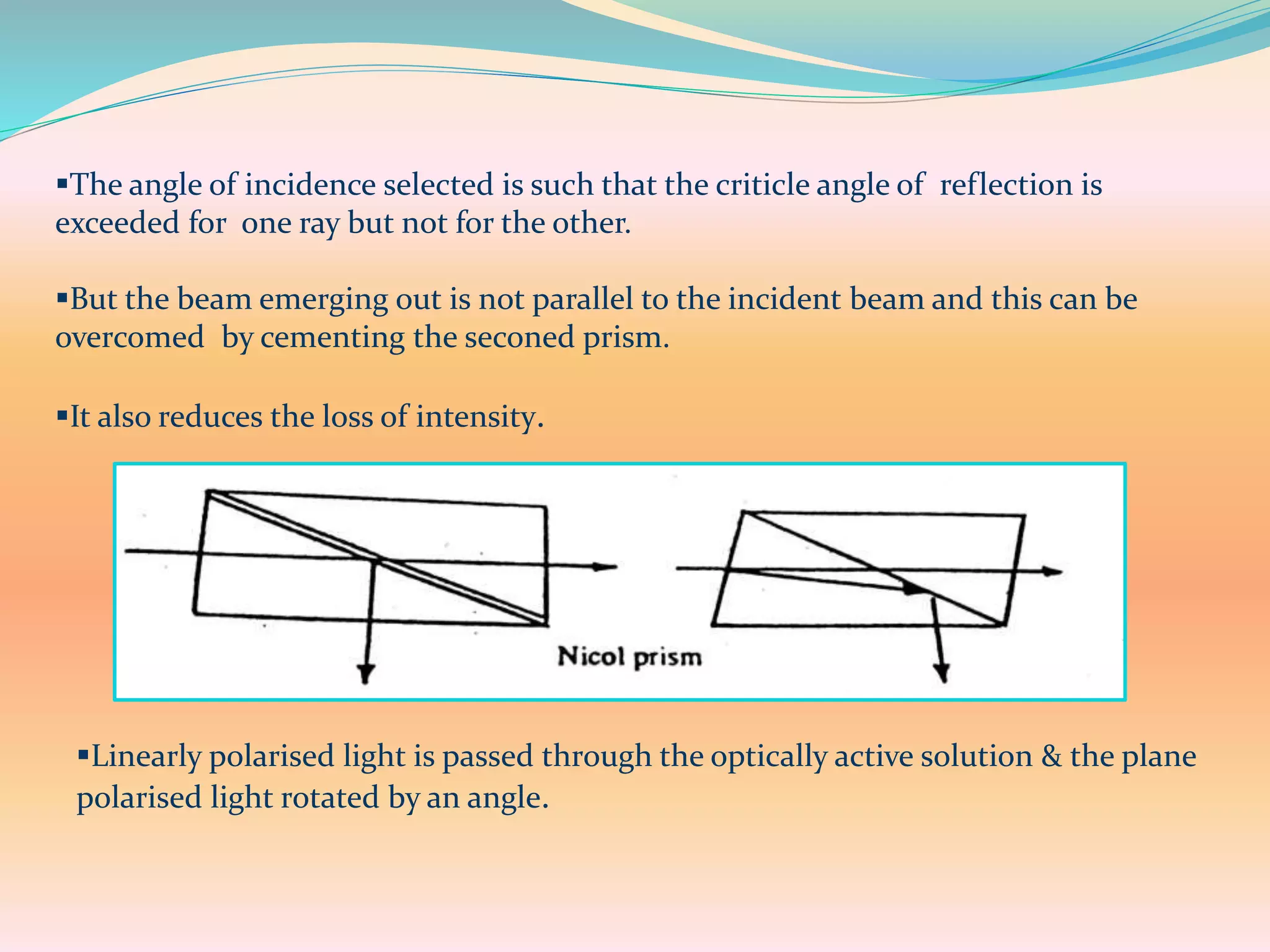
The angle of incidence selected is such that the criticle angle of reflection is
exceeded for one ray but not for the other.
But the beam emerging out is not parallel to the incident beam and this can be
overcomed by cementing the seconed prism.
It also reduces the loss of intensity.
Linearly polarised light is passed through the optically active solution & the plane
polarised light rotated by an angle.
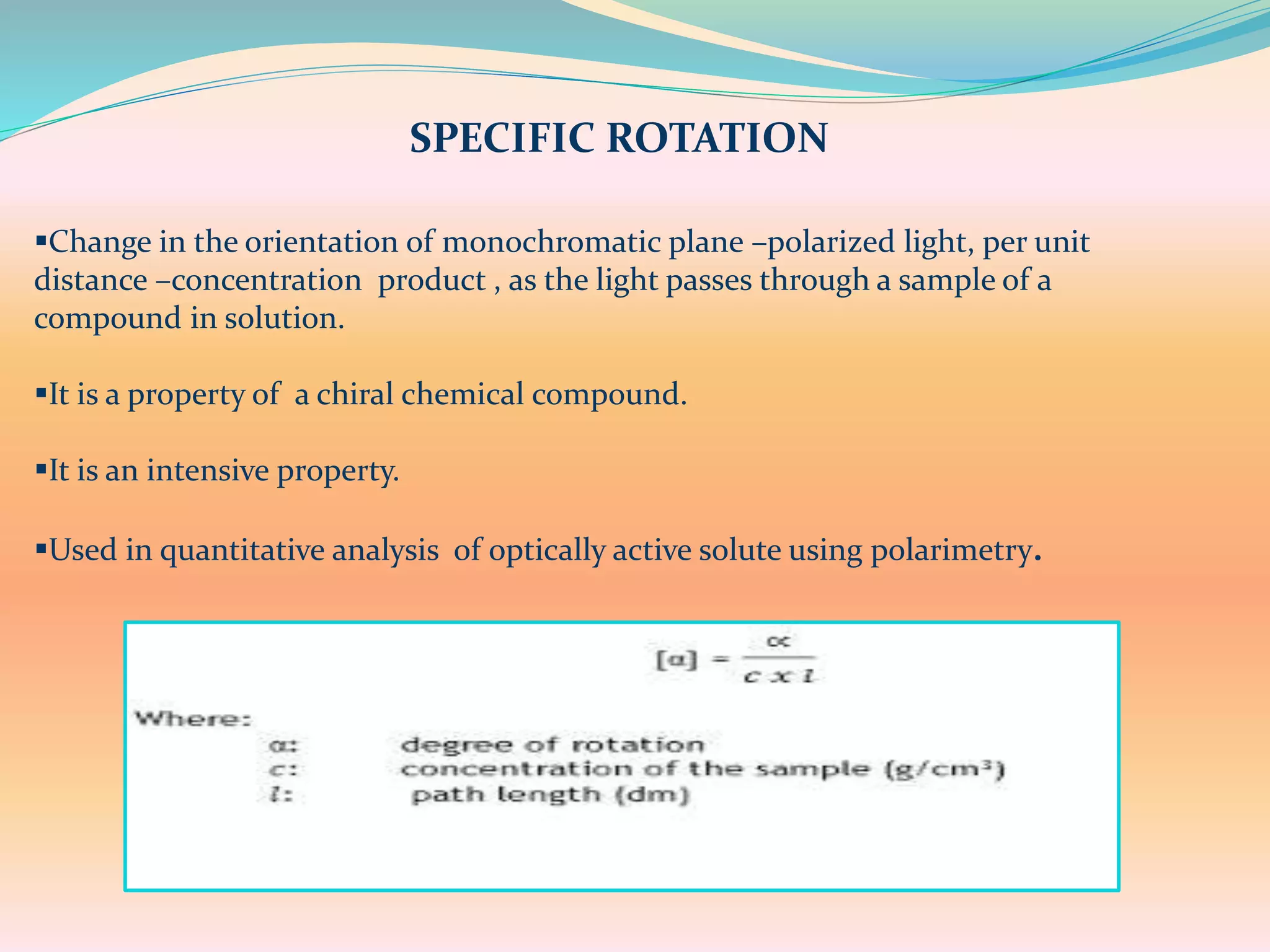
SPECIFIC ROTATION
Change in the orientation of monochromatic plane –polarized light, per unit
distance –concentration product , as the light passes through a sample of a
compound in solution.
It is a property of a chiral chemical compound.
It is an intensive property.
Used in quantitative analysis of optically active solute using polarimetry.
POLARIMETER
Principle :Polarimeter measures the rotation of polarised lights as it passes
through an optically active fluid.
The measured rotation can be used to calculate the value of solution
concentrations.
Construction : A polarimeter consists of a polarized light source,an analyzer,a
graduated circle to measure the rotation angle and sample tube.
Working : The polarized light passes through the sample tube and exhibits angular
rotation to the left (-) or right (+).
On the side opposite the polarizer is the analyzer.
Visual fields are manually adjusted by the users to measure the optical rotation
angle by using optics.
TYPES OF POLARIMETER
Laurent’s half-shade polarimeter
Biquartz polarimeter
Lippich polarimeter
X-ray polarimeter
Quartz-wedge polarimeter
APPLICATIONS
Quantitative application-
For determining the specific rotation if concentration is known.
For determining the concentration if specific rotation is known.
Differentiating optical substances from optically inactive species.
Qualitative application-
ORD & CD measurements can be used for studying configuration and
confirmation in UV region.
For distinguish between D & L isomeric forms.
For identification & determination of purity of substance.
Polarimetry

Polarimetry

  • 1.
  • 2.
  • 3.
    POLARIMETRY It is thestudy of the rotation of polarised light by transparent optically active substance. Polarimetry is based upon the existence of optical activity in a substance. This is a type of qualitative and quantitative analytical technique. Polarimeter is a scientific instrument which measures change in rotation of plane polarised light. Optical activity is unique character for a molecule.
  • 4.
    OPTICAL ACTIVITY It isthe ability of a chiral molecule to rotate the plane of plane polarised light. As per pasteur absence of symmetry is the necessary criterion for optical activity. The two arrangements that have asymmetric molecule cannot be superimposed. A chiral molecule is non superimposable on its mirror image & have carbon atom attached to four different group also known as chiral center.
  • 5.
    CONFIGURATION : Therepresentation which shows the sapatial arrangement of the groups of atoms constituting a stereoisomers is known as its confiugration. EPIMERS are the optical isomers that differ only in the configuration around one asymmetric carbon atom (having more than one asymmetric carbon).
  • 6.
    Enantiomers are chiralmolecules that are mirror images of one another & are non- superimposable in nature. Diastereomers are stereoisomers that are not mirror images of one another & are non- superimposable in nature.
  • 7.
    PLANE POLARISED LIGHT Planepolarised light oscillates only in a single plane when normal light oscillating in all direction passes through a polarizer such as nicol prism. Normal light consists of electromagnetic waves that oscillates in all direction. Circularly polarised light represents a wave represents a wave in which the electrical component spirals around direction of propagation of the ray,either clockwise or anticlockwise.
  • 9.
     Electric fieldof plane polarised light is composed of two components. I. Right circularly polarised (RCP) II. Left circularly polarised (LCP) The plane beam is vector sum of these two component. The extent of retarding the plane polarised light through a medium is known as refractive index of that medium.
  • 10.
    When the mediumis optically inactive both the component s are retarded to the same extent. when the medium is optically active the component is retarded to different extent due to difference in refractive indices of the medium for LCP & RCP. This phenomenon of the difference in the velocity of LCP& RCP light is called circular birefringence. Due to circular birefringence plane of polarization inclined at an angle.  Polarization involves the separation of natural light into its mutually perpendicular components.
  • 11.
    The angle ofincidence selected is such that the criticle angle of reflection is exceeded for one ray but not for the other. But the beam emerging out is not parallel to the incident beam and this can be overcomed by cementing the seconed prism. It also reduces the loss of intensity. Linearly polarised light is passed through the optically active solution & the plane polarised light rotated by an angle.
  • 12.
    SPECIFIC ROTATION Change inthe orientation of monochromatic plane –polarized light, per unit distance –concentration product , as the light passes through a sample of a compound in solution. It is a property of a chiral chemical compound. It is an intensive property. Used in quantitative analysis of optically active solute using polarimetry.
  • 13.
    POLARIMETER Principle :Polarimeter measuresthe rotation of polarised lights as it passes through an optically active fluid. The measured rotation can be used to calculate the value of solution concentrations. Construction : A polarimeter consists of a polarized light source,an analyzer,a graduated circle to measure the rotation angle and sample tube. Working : The polarized light passes through the sample tube and exhibits angular rotation to the left (-) or right (+). On the side opposite the polarizer is the analyzer. Visual fields are manually adjusted by the users to measure the optical rotation angle by using optics.
  • 15.
    TYPES OF POLARIMETER Laurent’shalf-shade polarimeter Biquartz polarimeter Lippich polarimeter X-ray polarimeter Quartz-wedge polarimeter
  • 16.
    APPLICATIONS Quantitative application- For determiningthe specific rotation if concentration is known. For determining the concentration if specific rotation is known. Differentiating optical substances from optically inactive species. Qualitative application- ORD & CD measurements can be used for studying configuration and confirmation in UV region. For distinguish between D & L isomeric forms. For identification & determination of purity of substance.