POL 140
Fall 2014
 Sources help to gather, package, and disseminate
information to the public
 Newspapers
 Radio
 Television
 Internet
 Main goal of media has stayed the same
 How information is delivered has changed
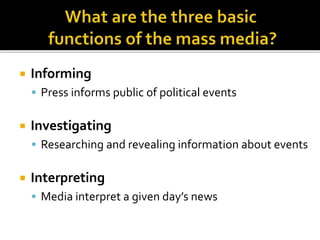
 Informing
 Press informs public of political events
 Investigating
 Researching and revealing information about events
 Interpreting
 Media interpret a given day’s news
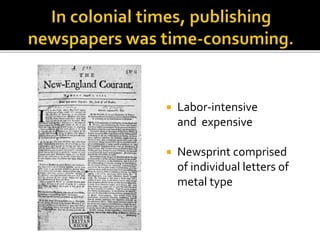
 Labor-intensive
and expensive
 Newsprint comprised
of individual letters of
metal type
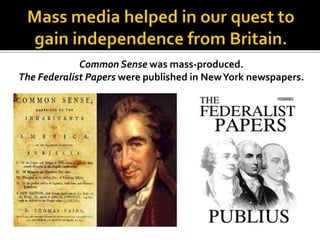
Common Sense was mass-produced.
The Federalist Papers were published in NewYork newspapers.
 Newspapers and partisan politics
 Influence of the “penny press”
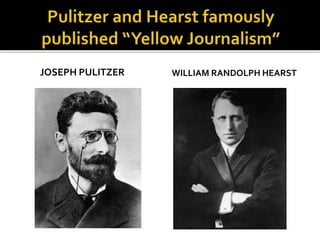
 Beginnings of “Yellow Journalism”
JOSEPH PULITZER WILLIAM RANDOLPH HEARST
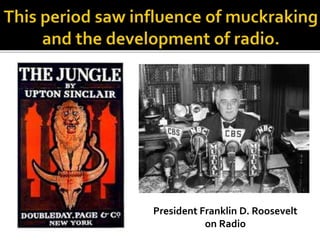
President Franklin D. Roosevelt
on Radio
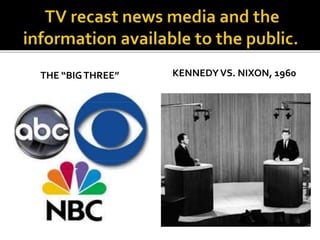
THE “BIGTHREE” KENNEDYVS. NIXON, 1960
 Decline inTraditional Newspaper Readership
 Popularity ofTalk Radio
 Rise of Soft News or “Infotainment”
 Prevalence of Blogs
 Rise and Continuation of Social Networking
 Cell Phones andText Messaging
 Gatekeeper
 Decide what will be covered
 Managers of wire services, editors, reporters
 Disseminator
 “Just the Facts,” avoid unverifiable stories
 Does this help the public?
 Investigator
 Investigate problems, critically analyze and report them
 “Muckrakers,”Woodward and Bernstein (Watergate)
 Public Mobilizer
 Emphasis on civic journalism
 Grassroots movement due to Internet, etc.
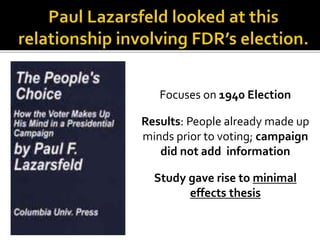
Focuses on 1940 Election
Results: People already made up
minds prior to voting; campaign
did not add information
Study gave rise to minimal
effects thesis
 Selective Exposure
 Individuals exposed to information with beliefs
 Selective Perception
 Individuals interpret information with beliefs
 Selective Retention
 Individuals recall information with beliefs
 Agenda Setting
 Must choose which events to cover— signal to public
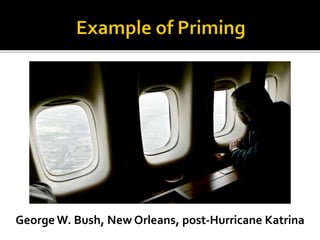
 Priming
 Media emphasizes characteristics of people, events,
or issues—and this influences public’s view
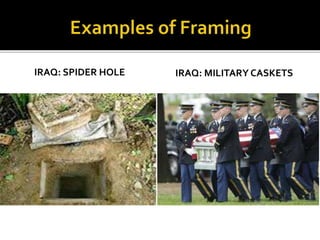
 Framing
 Media alters public view on issue by presentation
George W. Bush, New Orleans, post-Hurricane Katrina
IRAQ: SPIDER HOLE IRAQ: MILITARY CASKETS
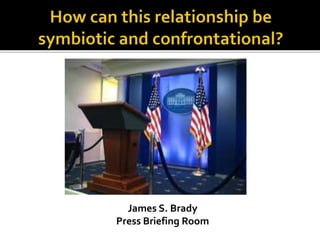
James S. Brady
Press Briefing Room
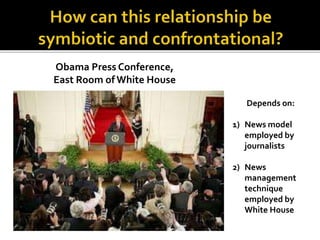
Obama Press Conference,
East Room of White House
Depends on:
1) News model
employed by
journalists
2) News
management
technique
employed by
White House
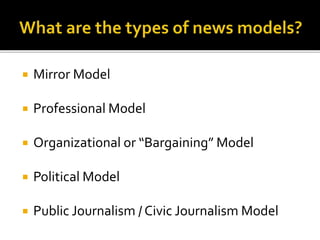
 Mirror Model
 Professional Model
 Organizational or “Bargaining” Model
 Political Model
 Public Journalism / Civic Journalism Model
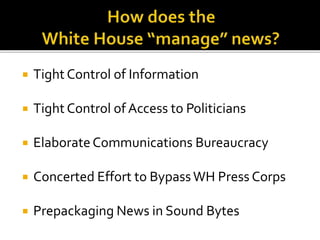
 Tight Control of Information
 Tight Control of Access to Politicians
 ElaborateCommunications Bureaucracy
 Concerted Effort to BypassWH Press Corps
 Prepackaging News in Sound Bytes

Pol 140 media

  • 1.
  • 6.
     Sources helpto gather, package, and disseminate information to the public  Newspapers  Radio  Television  Internet  Main goal of media has stayed the same  How information is delivered has changed
  • 8.
     Informing  Pressinforms public of political events  Investigating  Researching and revealing information about events  Interpreting  Media interpret a given day’s news
  • 11.
     Labor-intensive and expensive Newsprint comprised of individual letters of metal type
  • 13.
    Common Sense wasmass-produced. The Federalist Papers were published in NewYork newspapers.
  • 15.
     Newspapers andpartisan politics  Influence of the “penny press”  Beginnings of “Yellow Journalism”
  • 16.
    JOSEPH PULITZER WILLIAMRANDOLPH HEARST
  • 18.
    President Franklin D.Roosevelt on Radio
  • 20.
  • 22.
     Decline inTraditionalNewspaper Readership  Popularity ofTalk Radio  Rise of Soft News or “Infotainment”  Prevalence of Blogs  Rise and Continuation of Social Networking  Cell Phones andText Messaging
  • 24.
     Gatekeeper  Decidewhat will be covered  Managers of wire services, editors, reporters  Disseminator  “Just the Facts,” avoid unverifiable stories  Does this help the public?  Investigator  Investigate problems, critically analyze and report them  “Muckrakers,”Woodward and Bernstein (Watergate)  Public Mobilizer  Emphasis on civic journalism  Grassroots movement due to Internet, etc.
  • 26.
    Focuses on 1940Election Results: People already made up minds prior to voting; campaign did not add information Study gave rise to minimal effects thesis
  • 27.
     Selective Exposure Individuals exposed to information with beliefs  Selective Perception  Individuals interpret information with beliefs  Selective Retention  Individuals recall information with beliefs
  • 28.
     Agenda Setting Must choose which events to cover— signal to public  Priming  Media emphasizes characteristics of people, events, or issues—and this influences public’s view  Framing  Media alters public view on issue by presentation
  • 29.
    George W. Bush,New Orleans, post-Hurricane Katrina
  • 30.
    IRAQ: SPIDER HOLEIRAQ: MILITARY CASKETS
  • 32.
    James S. Brady PressBriefing Room
  • 33.
    Obama Press Conference, EastRoom of White House Depends on: 1) News model employed by journalists 2) News management technique employed by White House
  • 34.
     Mirror Model Professional Model  Organizational or “Bargaining” Model  Political Model  Public Journalism / Civic Journalism Model
  • 35.
     Tight Controlof Information  Tight Control of Access to Politicians  ElaborateCommunications Bureaucracy  Concerted Effort to BypassWH Press Corps  Prepackaging News in Sound Bytes