POL 240-01
Fall 2015
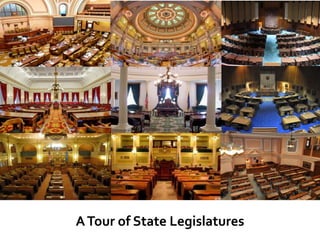
ATour of State Legislatures
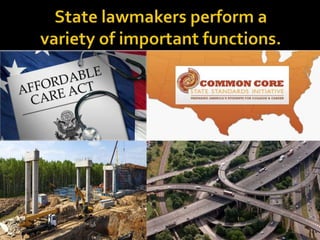
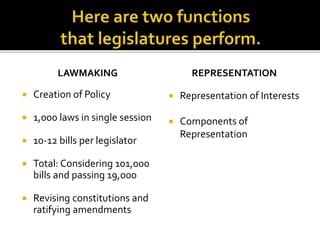
LAWMAKING
 Creation of Policy
 1,000 laws in single session
 10-12 bills per legislator
 Total: Considering 101,000
bills and passing 19,000
 Revising constitutions and
ratifying amendments
REPRESENTATION
 Representation of Interests
 Components of
Representation
CONSTITUENT SERVICE
 Personalized services to
citizens
 What does legislative work
entail?
OVERSIGHT
 Role in legislative process
 Committee Role
 Examples of Oversight
 Conflict with Executive
Agencies
 Impact of “Sunset” Laws
APPROPRIATIONS
 Approving State Budgets
 The “Power of the Purse”
IMPEACHMENT
 What is impeachment?
 Stages of Impeachment
 #1: Impeachment
 #2:Trial
 State Examples
 Why is impeachment rare?
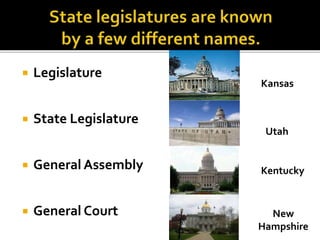
Name, Number, andType of Chamber
 Legislature
 State Legislature
 General Assembly
 General Court
Kansas
Utah
Kentucky
New
Hampshire
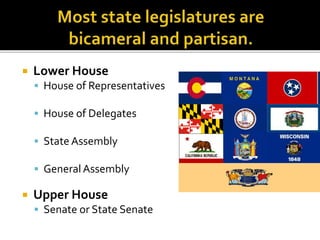
 Lower House
 House of Representatives
 House of Delegates
 State Assembly
 GeneralAssembly
 Upper House
 Senate or State Senate
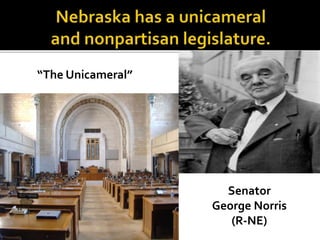
“The Unicameral”
Senator
George Norris
(R-NE)
 Shift from biennial to annual sessions
 Biennial: 31  6; Annual: 19  44
 Changes in overall size
 Slight decrease in state legislators
 About 7,400 state legislators today
 Changes in legislative membership
 Some states have increased their membership, while
others have decreased over time
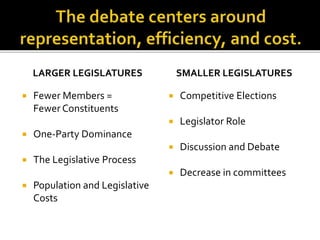
LARGER LEGISLATURES
 Fewer Members =
Fewer Constituents
 One-Party Dominance
 The Legislative Process
 Population and Legislative
Costs
SMALLER LEGISLATURES
 Competitive Elections
 Legislator Role
 Discussion and Debate
 Decrease in committees
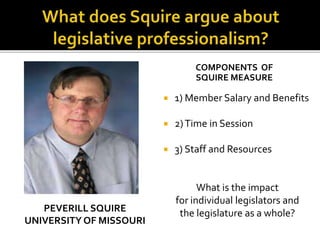
PEVERILL SQUIRE
UNIVERSITY OF MISSOURI
COMPONENTS OF
SQUIRE MEASURE
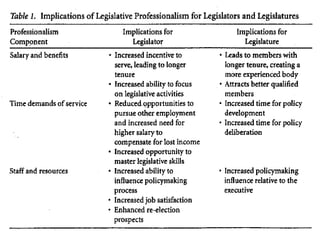
 1) Member Salary and Benefits
 2)Time in Session
 3) Staff and Resources
What is the impact
for individual legislators and
the legislature as a whole?
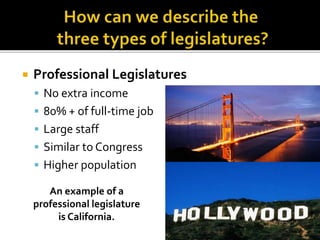
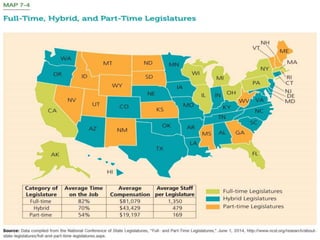
 Professional Legislatures
 No extra income
 80% + of full-time job
 Large staff
 Similar to Congress
 Higher population
An example of a
professional legislature
is California.
 Professional or Full-Time Legislatures
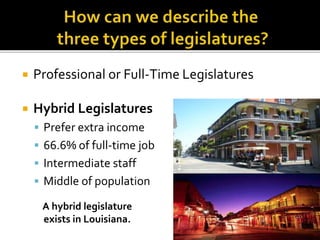
 Hybrid Legislatures
 Prefer extra income
 66.6% of full-time job
 Intermediate staff
 Middle of population
A hybrid legislature
exists in Louisiana.
 Professional or Full-Time Legislatures
 Hybrid Legislatures
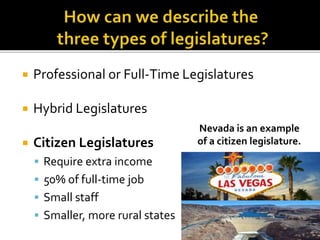
 Citizen Legislatures
 Require extra income
 50% of full-time job
 Small staff
 Smaller, more rural states
Nevada is an example
of a citizen legislature.
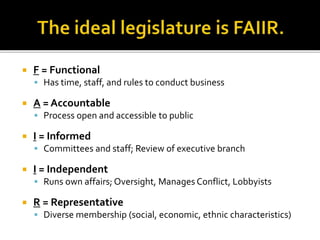
 F = Functional
 Has time, staff, and rules to conduct business
 A = Accountable
 Process open and accessible to public
 I = Informed
 Committees and staff; Review of executive branch
 I = Independent
 Runs own affairs; Oversight, Manages Conflict, Lobbyists
 R = Representative
 Diverse membership (social, economic, ethnic characteristics)
 Constitutional Basis
 Powers for House and Senate
 Structure
 Size
 38 Senate Districts; 100 House Districts
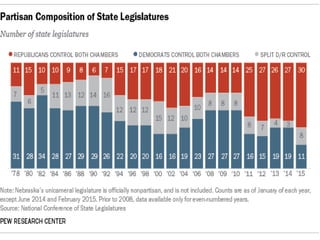
 Partisan Composition
 Democrats control House; Republicans control Senate
 Professionalism
 Time in Session
 Member Salary and Benefits
 Staff and Resources
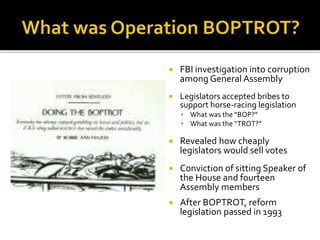
 FBI investigation into corruption
among General Assembly
 Legislators accepted bribes to
support horse-racing legislation
 What was the “BOP?”
 What was the “TROT?”
 Revealed how cheaply
legislators would sell votes
 Conviction of sitting Speaker of
the House and fourteen
Assembly members
 After BOPTROT, reform
legislation passed in 1993
 Began in 1948
 Nonpartisan agency
 Provides policy
research, bill drafting,
educational materials,
website maintenance
 State Legislature
 System used in most states
 District lines subject to majority in legislature and veto by governor
 Advisory Commission
 Advise legislature about boundaries
 Backup Commission
 Draw district lines if state legislature does not pass a plan
 Politician Commission
 Elected state officials (not just legislators) may serve as members
 Independent Commission
 Splintering
 Dividing up and diluting lines to deny it power to elect representative
 Packing
 Concentrating partisan voters in single district to “waste” their votes
for single representative and protect modest majorities by party in
other districts
 Cracking
 Splintering or dividing up sizable minority group into several districts
to deny it enough voting strength to elect representative
 Racial Gerrymandering
 Partisan Gerrymandering
 Is this a district I can win?
 Can I beat my opponent?
 Issue of Incumbency Advantage
 Can I get money to run winning campaign?
 How are the national and state trends
running?
“Vaupel backs revisions to state term limits”
Salter: State term limits still bad public policy”
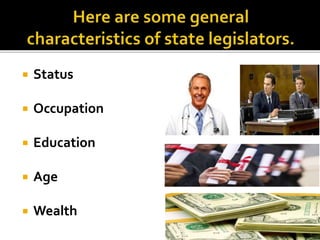
 Status
 Occupation
 Education
 Age
 Wealth
 African-American Representation
 Elected in majority black districts
 Impact on civil rights issues
 Hispanic Representation
 3% of all state legislators (14% ofVAP)
 Female Representation
 Significant gains in occupying legislative seats (24%)
 Serve in leadership posts (committee chairs)
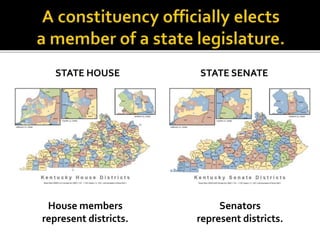
STATE HOUSE STATE SENATE
House members
represent districts.
Senators
represent districts.
DELEGATE
REPRESENTATION
 Representative follows
wishes and preferences of
their constituents
TRUSTEE REPRESENTATION
 Representative listens to
their constituents
 Makes up own mind on
best course of action
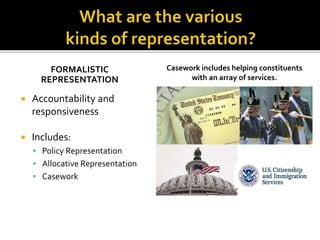
FORMALISTIC
REPRESENTATION
 Accountability and
responsiveness
 Includes:
 Policy Representation
 Allocative Representation
 Casework
Casework includes helping constituents
with an array of services.
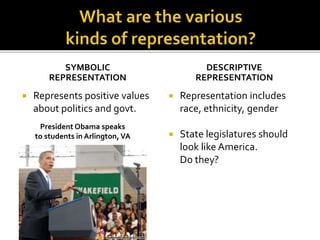
SYMBOLIC
REPRESENTATION
 Represents positive values
about politics and govt.
DESCRIPTIVE
REPRESENTATION
 Representation includes
race, ethnicity, gender
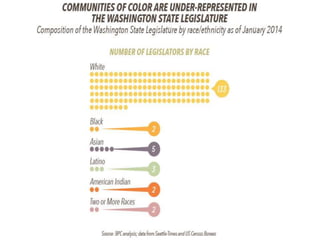
 State legislatures should
look like America.
Do they?
President Obama speaks
to students in Arlington, VA
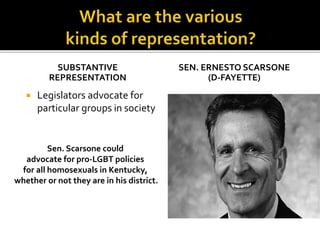
SUBSTANTIVE
REPRESENTATION
SEN. ERNESTO SCARSONE
(D-FAYETTE)
 Legislators advocate for
particular groups in society
Sen. Scarsone could
advocate for pro-LGBT policies
for all homosexuals in Kentucky,
whether or not they are in his district.
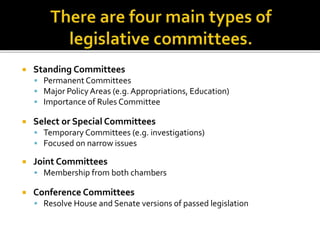
 Standing Committees
 Permanent Committees
 Major Policy Areas (e.g.Appropriations, Education)
 Importance of Rules Committee
 Select or Special Committees
 Temporary Committees (e.g. investigations)
 Focused on narrow issues
 Joint Committees
 Membership from both chambers
 Conference Committees
 Resolve House and Senate versions of passed legislation
POL 240 State Legislatures

POL 240 State Legislatures

  • 1.
  • 3.
    ATour of StateLegislatures
  • 9.
    LAWMAKING  Creation ofPolicy  1,000 laws in single session  10-12 bills per legislator  Total: Considering 101,000 bills and passing 19,000  Revising constitutions and ratifying amendments REPRESENTATION  Representation of Interests  Components of Representation
  • 10.
    CONSTITUENT SERVICE  Personalizedservices to citizens  What does legislative work entail? OVERSIGHT  Role in legislative process  Committee Role  Examples of Oversight  Conflict with Executive Agencies  Impact of “Sunset” Laws
  • 11.
    APPROPRIATIONS  Approving StateBudgets  The “Power of the Purse” IMPEACHMENT  What is impeachment?  Stages of Impeachment  #1: Impeachment  #2:Trial  State Examples  Why is impeachment rare?
  • 13.
  • 14.
     Legislature  StateLegislature  General Assembly  General Court Kansas Utah Kentucky New Hampshire
  • 15.
     Lower House House of Representatives  House of Delegates  State Assembly  GeneralAssembly  Upper House  Senate or State Senate
  • 16.
  • 18.
     Shift frombiennial to annual sessions  Biennial: 31  6; Annual: 19  44  Changes in overall size  Slight decrease in state legislators  About 7,400 state legislators today  Changes in legislative membership  Some states have increased their membership, while others have decreased over time
  • 20.
    LARGER LEGISLATURES  FewerMembers = Fewer Constituents  One-Party Dominance  The Legislative Process  Population and Legislative Costs SMALLER LEGISLATURES  Competitive Elections  Legislator Role  Discussion and Debate  Decrease in committees
  • 24.
    PEVERILL SQUIRE UNIVERSITY OFMISSOURI COMPONENTS OF SQUIRE MEASURE  1) Member Salary and Benefits  2)Time in Session  3) Staff and Resources What is the impact for individual legislators and the legislature as a whole?
  • 26.
     Professional Legislatures No extra income  80% + of full-time job  Large staff  Similar to Congress  Higher population An example of a professional legislature is California.
  • 27.
     Professional orFull-Time Legislatures  Hybrid Legislatures  Prefer extra income  66.6% of full-time job  Intermediate staff  Middle of population A hybrid legislature exists in Louisiana.
  • 28.
     Professional orFull-Time Legislatures  Hybrid Legislatures  Citizen Legislatures  Require extra income  50% of full-time job  Small staff  Smaller, more rural states Nevada is an example of a citizen legislature.
  • 34.
     F =Functional  Has time, staff, and rules to conduct business  A = Accountable  Process open and accessible to public  I = Informed  Committees and staff; Review of executive branch  I = Independent  Runs own affairs; Oversight, Manages Conflict, Lobbyists  R = Representative  Diverse membership (social, economic, ethnic characteristics)
  • 36.
     Constitutional Basis Powers for House and Senate  Structure  Size  38 Senate Districts; 100 House Districts  Partisan Composition  Democrats control House; Republicans control Senate  Professionalism  Time in Session  Member Salary and Benefits  Staff and Resources
  • 37.
     FBI investigationinto corruption among General Assembly  Legislators accepted bribes to support horse-racing legislation  What was the “BOP?”  What was the “TROT?”  Revealed how cheaply legislators would sell votes  Conviction of sitting Speaker of the House and fourteen Assembly members  After BOPTROT, reform legislation passed in 1993
  • 38.
     Began in1948  Nonpartisan agency  Provides policy research, bill drafting, educational materials, website maintenance
  • 40.
     State Legislature System used in most states  District lines subject to majority in legislature and veto by governor  Advisory Commission  Advise legislature about boundaries  Backup Commission  Draw district lines if state legislature does not pass a plan  Politician Commission  Elected state officials (not just legislators) may serve as members  Independent Commission
  • 42.
     Splintering  Dividingup and diluting lines to deny it power to elect representative  Packing  Concentrating partisan voters in single district to “waste” their votes for single representative and protect modest majorities by party in other districts  Cracking  Splintering or dividing up sizable minority group into several districts to deny it enough voting strength to elect representative  Racial Gerrymandering  Partisan Gerrymandering
  • 43.
     Is thisa district I can win?  Can I beat my opponent?  Issue of Incumbency Advantage  Can I get money to run winning campaign?  How are the national and state trends running?
  • 44.
    “Vaupel backs revisionsto state term limits” Salter: State term limits still bad public policy”
  • 46.
     Status  Occupation Education  Age  Wealth
  • 47.
     African-American Representation Elected in majority black districts  Impact on civil rights issues  Hispanic Representation  3% of all state legislators (14% ofVAP)  Female Representation  Significant gains in occupying legislative seats (24%)  Serve in leadership posts (committee chairs)
  • 48.
    STATE HOUSE STATESENATE House members represent districts. Senators represent districts.
  • 49.
    DELEGATE REPRESENTATION  Representative follows wishesand preferences of their constituents TRUSTEE REPRESENTATION  Representative listens to their constituents  Makes up own mind on best course of action
  • 51.
    FORMALISTIC REPRESENTATION  Accountability and responsiveness Includes:  Policy Representation  Allocative Representation  Casework Casework includes helping constituents with an array of services.
  • 52.
    SYMBOLIC REPRESENTATION  Represents positivevalues about politics and govt. DESCRIPTIVE REPRESENTATION  Representation includes race, ethnicity, gender  State legislatures should look like America. Do they? President Obama speaks to students in Arlington, VA
  • 54.
    SUBSTANTIVE REPRESENTATION SEN. ERNESTO SCARSONE (D-FAYETTE) Legislators advocate for particular groups in society Sen. Scarsone could advocate for pro-LGBT policies for all homosexuals in Kentucky, whether or not they are in his district.
  • 57.
     Standing Committees Permanent Committees  Major Policy Areas (e.g.Appropriations, Education)  Importance of Rules Committee  Select or Special Committees  Temporary Committees (e.g. investigations)  Focused on narrow issues  Joint Committees  Membership from both chambers  Conference Committees  Resolve House and Senate versions of passed legislation