POL 252-01
Fall 2015
“Greece crisis: PM AlexisTsipras quits and calls early polls”
“Turkey snap election called after coalition talks fail”
What words, concepts, ideas, etc. come to mind
when you see the following words?
“politics”
“power”
“comparative politics”
 Politics: “Who gets what, when and how”
(Lasswell)
 Politics: Struggle for power; emphasis on
decision-making
 Political scientists study leadership in
political community
 Political party, legislature, city, region, country
 Power:
 Ability to influence others or impose will on them
 How do you know if you have power?
 Get someone to do something they would not do
 Prevent someone from doing something they
would do
 Influence how people think
 Subfield of political science that compares
the pursuit of power across countries
 Examples of Power Imbalances:
 State Control vs. Individual Freedom
 Plutocracy vs. Egalitarianism
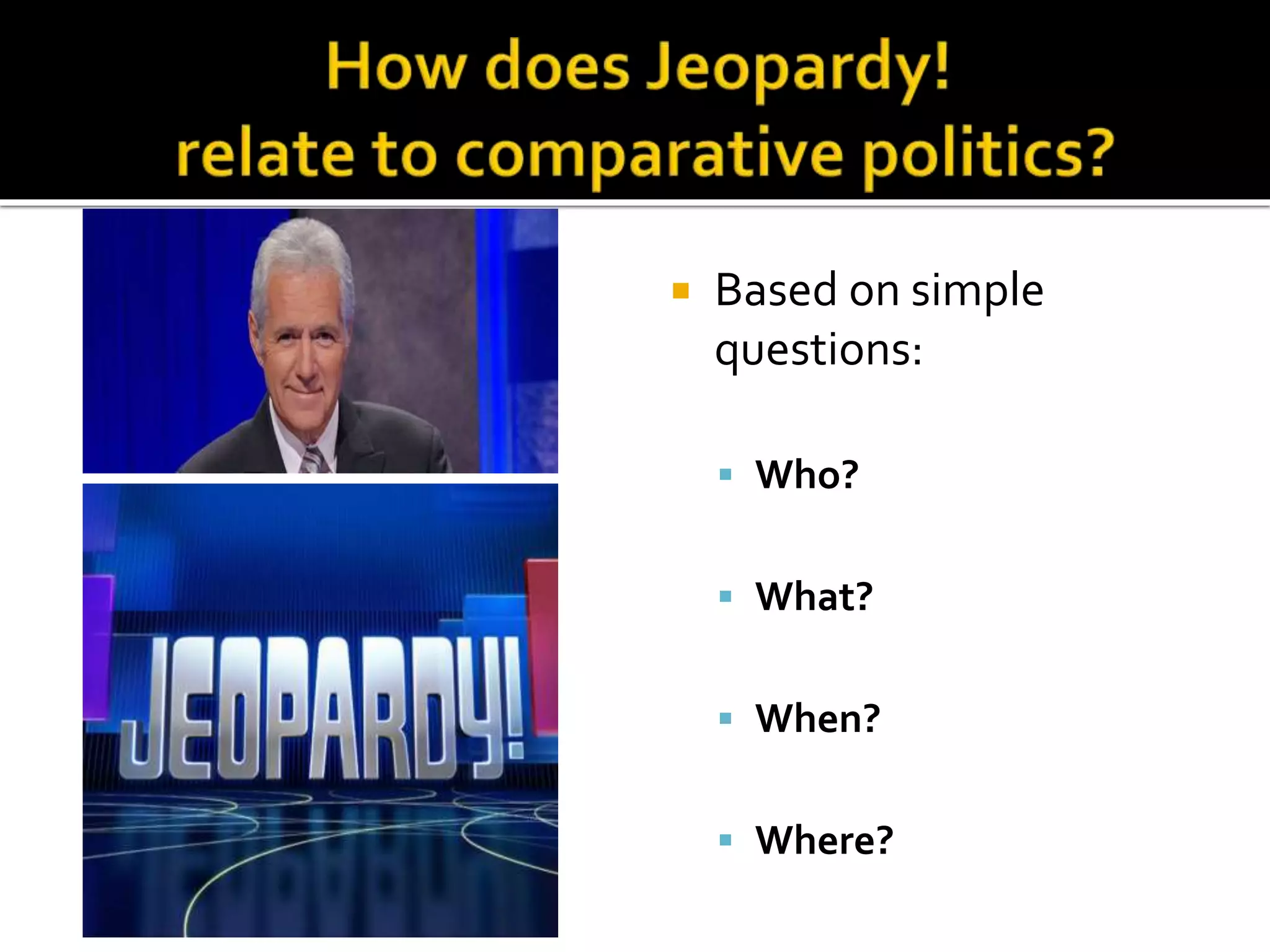
 Based on simple
questions:
 Who?
 What?
 When?
 Where?
INSTRUCTIONS:
Just like Jeopardy!, come up with a topic of your choice
(does NOT have to be political—can be movies, music, etc.)
Write questions and answers using the FourW’s
Can use phones, laptops, etc. to find answers
Example:The American Presidency
WHO was our thirty-second president? (Franklin D. Roosevelt)
WHAT did he do while in office? (Began “New Deal” program)
WHEN did he serve? (1933-1945)
WHERE did he die? (Warm Springs, Georgia)
 Knowing the four W’s can answer a lot of
interesting questions.
 In FDR example, “Why?” question might be:
 Why was FDR such a great orator?
INSTRUCTIONS:
Return to your group and come up with a few
“Why?” questions related to your original topic.
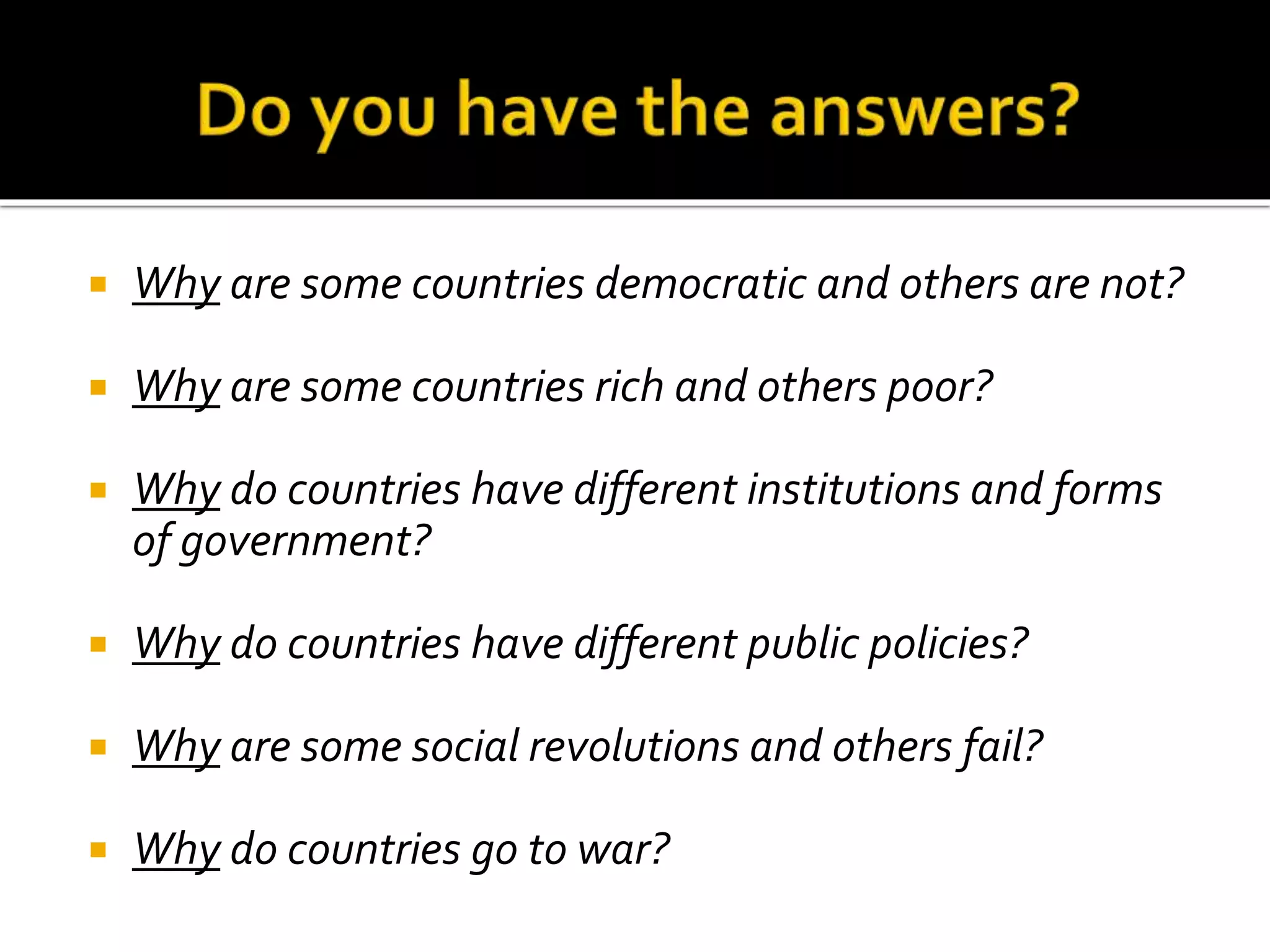
 Why are some countries democratic and others are not?
 Why are some countries rich and others poor?
 Why do countries have different institutions and forms
of government?
 Why do countries have different public policies?
 Why are some social revolutions and others fail?
 Why do countries go to war?
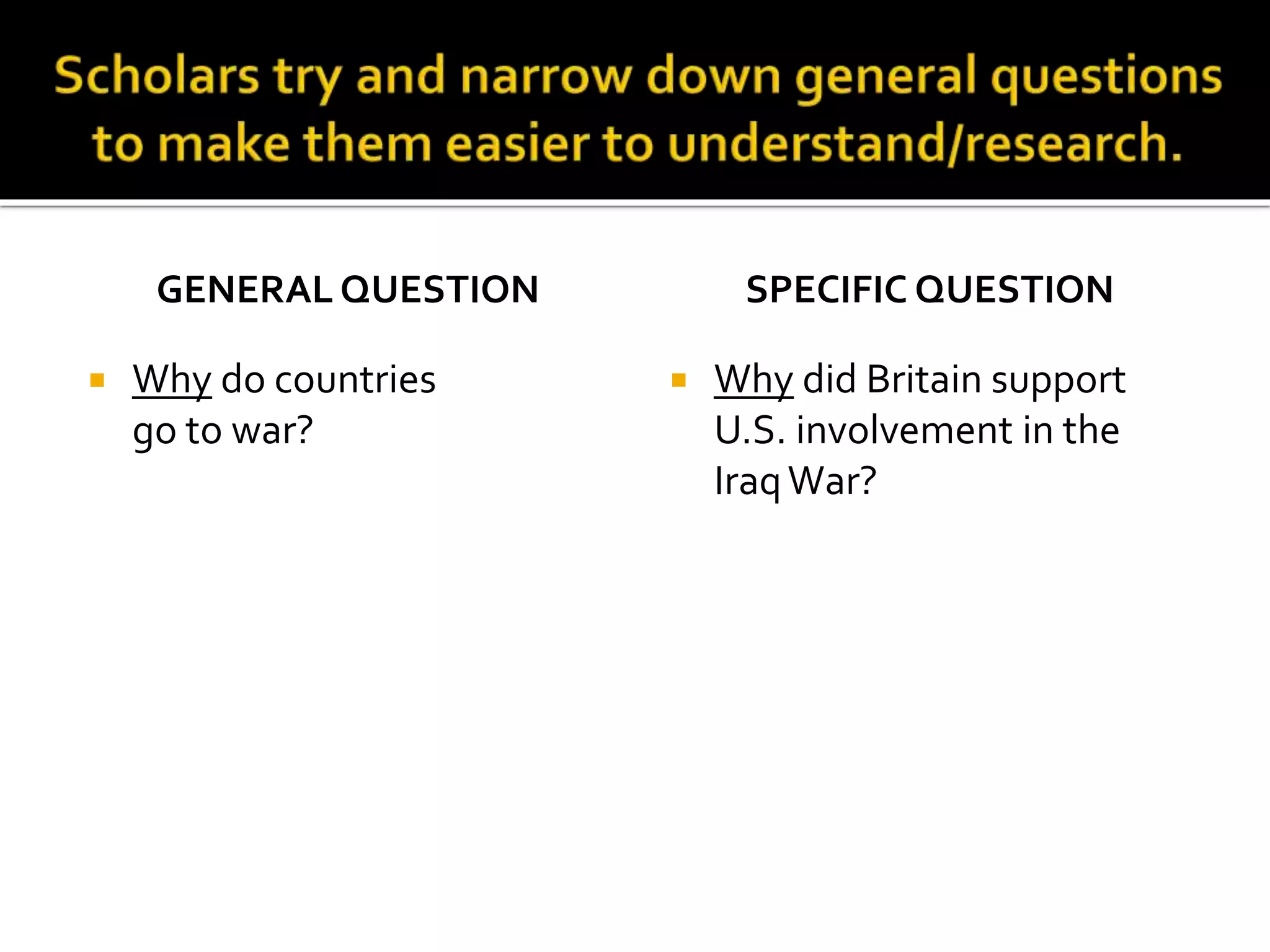
GENERAL QUESTION
 Why do countries
go to war?
SPECIFIC QUESTION
 Why did Britain support
U.S. involvement in the
IraqWar?
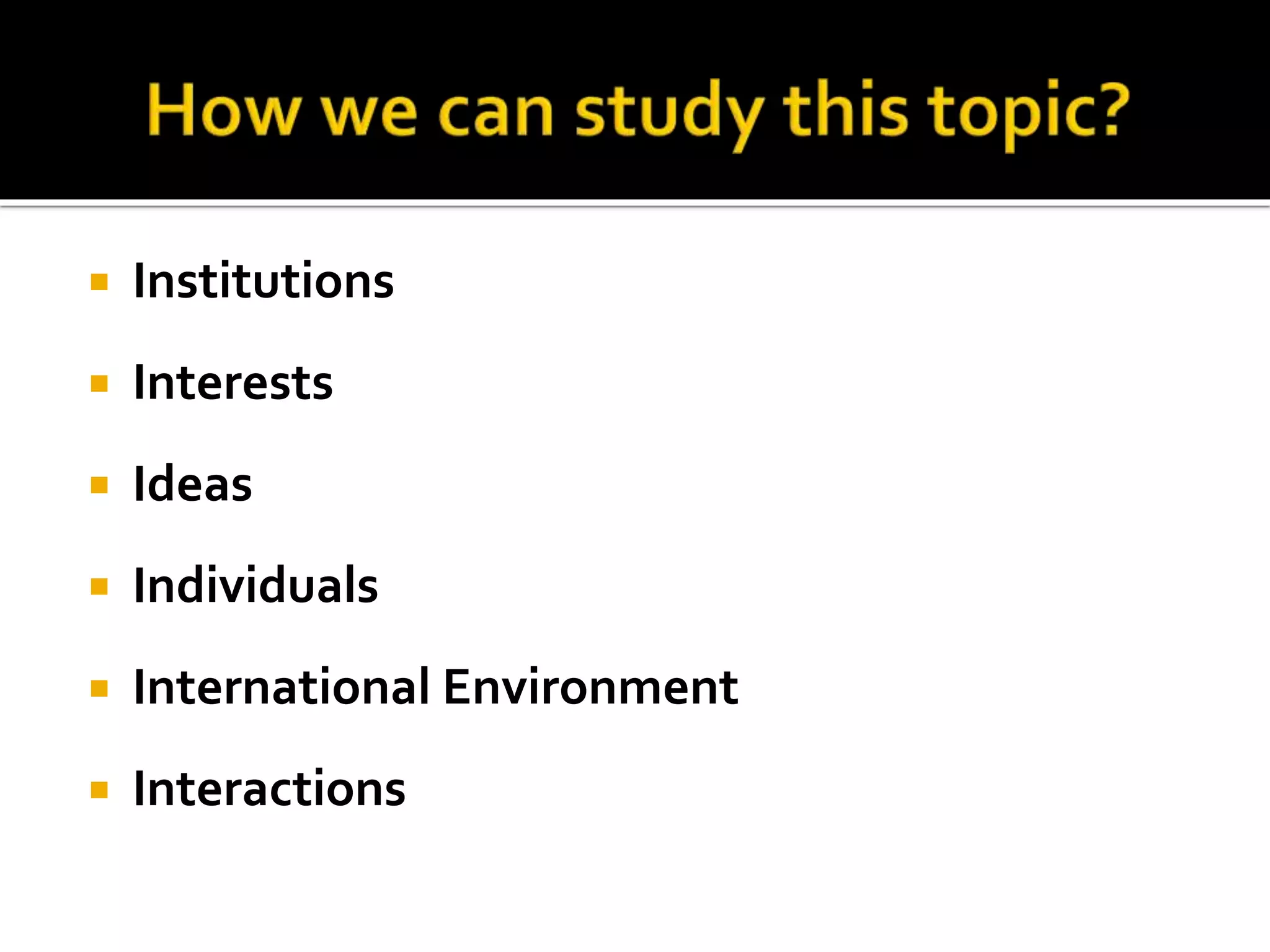
 Institutions
 Interests
 Ideas
 Individuals
 International Environment
 Interactions
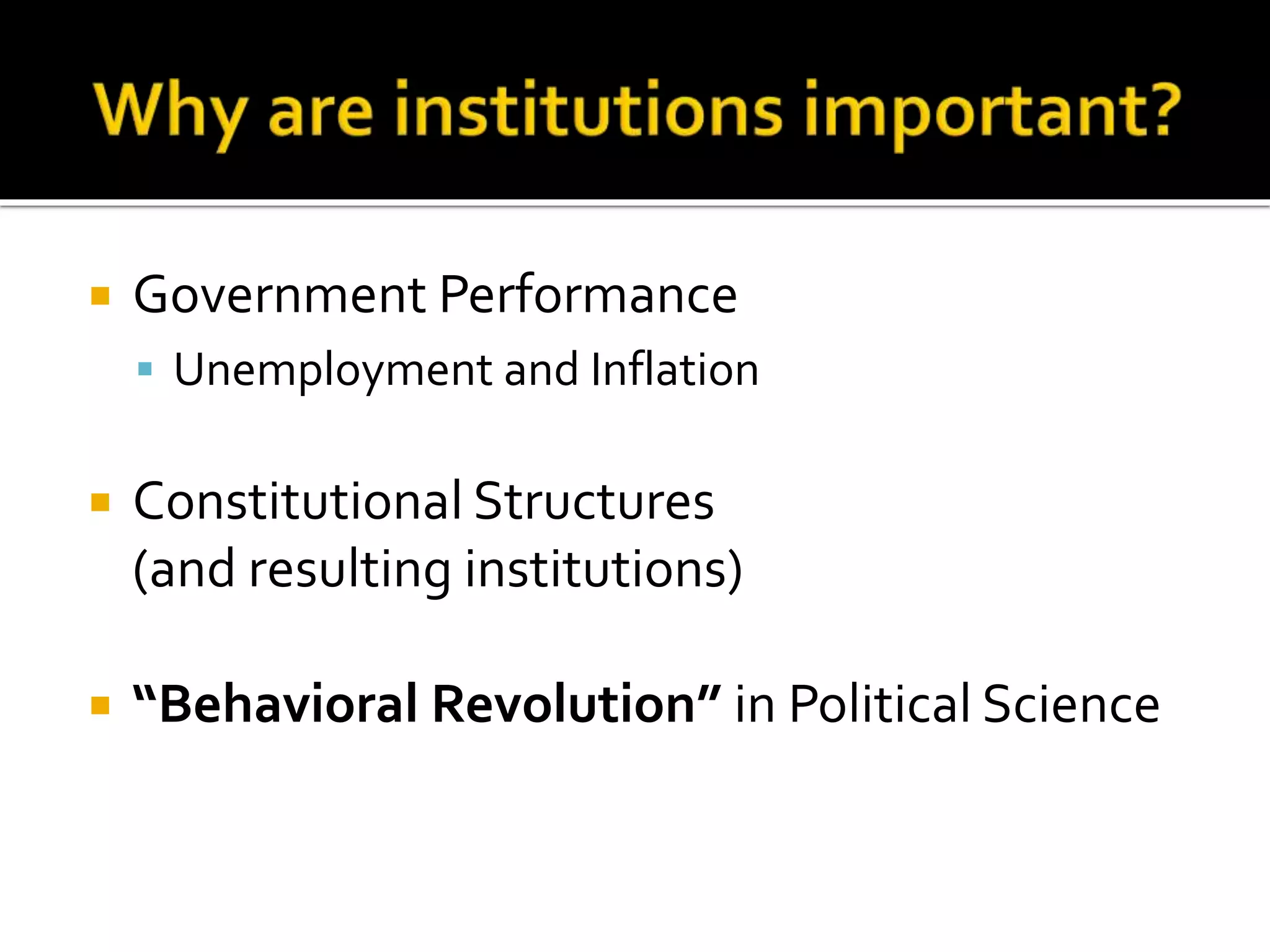
 Government Performance
 Unemployment and Inflation
 Constitutional Structures
(and resulting institutions)
 “Behavioral Revolution” in Political Science
 Lasswell Definition of Politics
 How do individuals and groups define their
interests?
 Politically
 Economically
 Socially
 Political Culture
 What do people think about politics?
 Opinion Polling
(e.g. Gallup Poll, WorldValues Survey, etc.)
 Equality, Loyalty, Freedom, Justice,Trust
 Impact of ideas change over time
 Why?
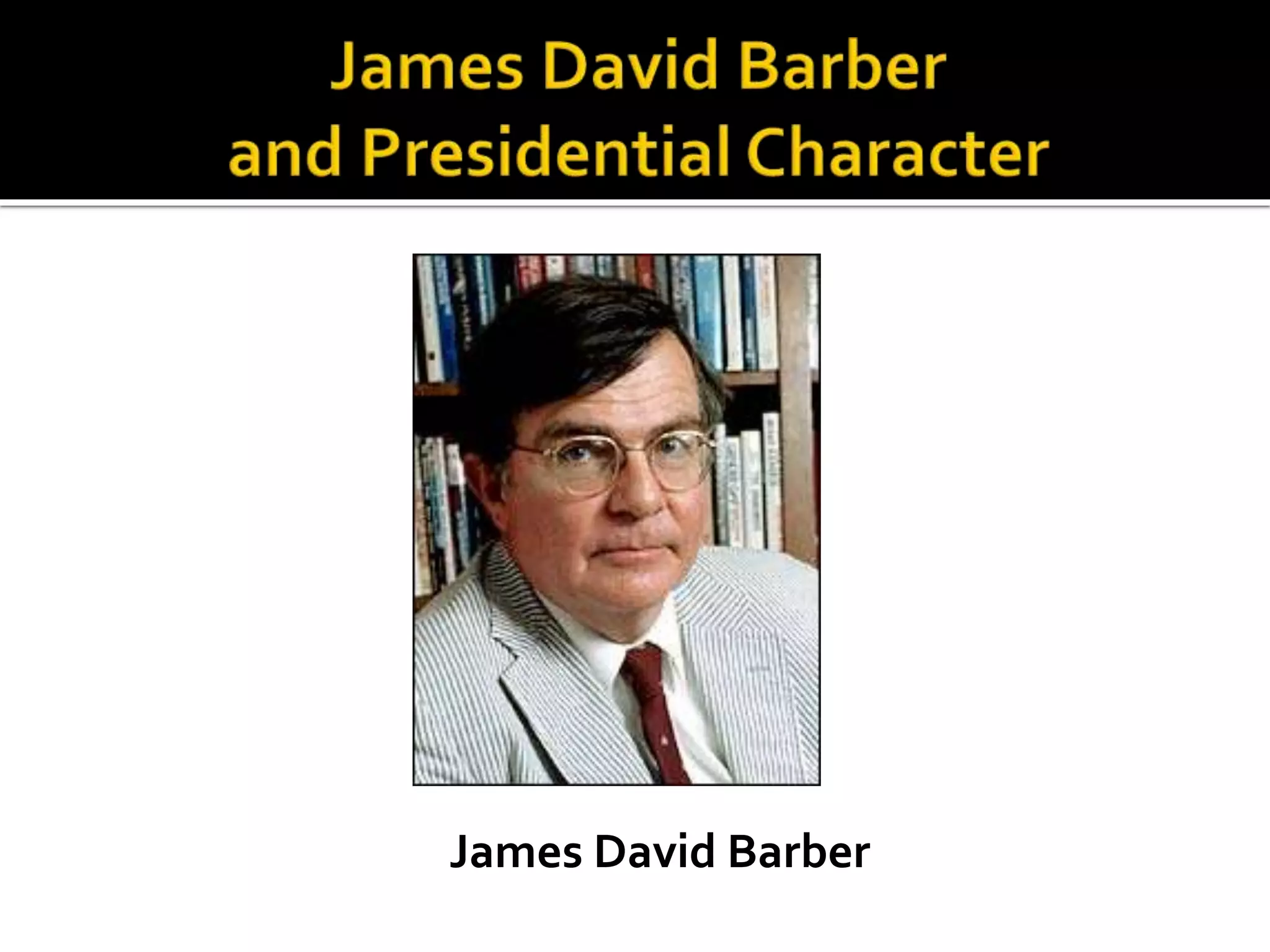
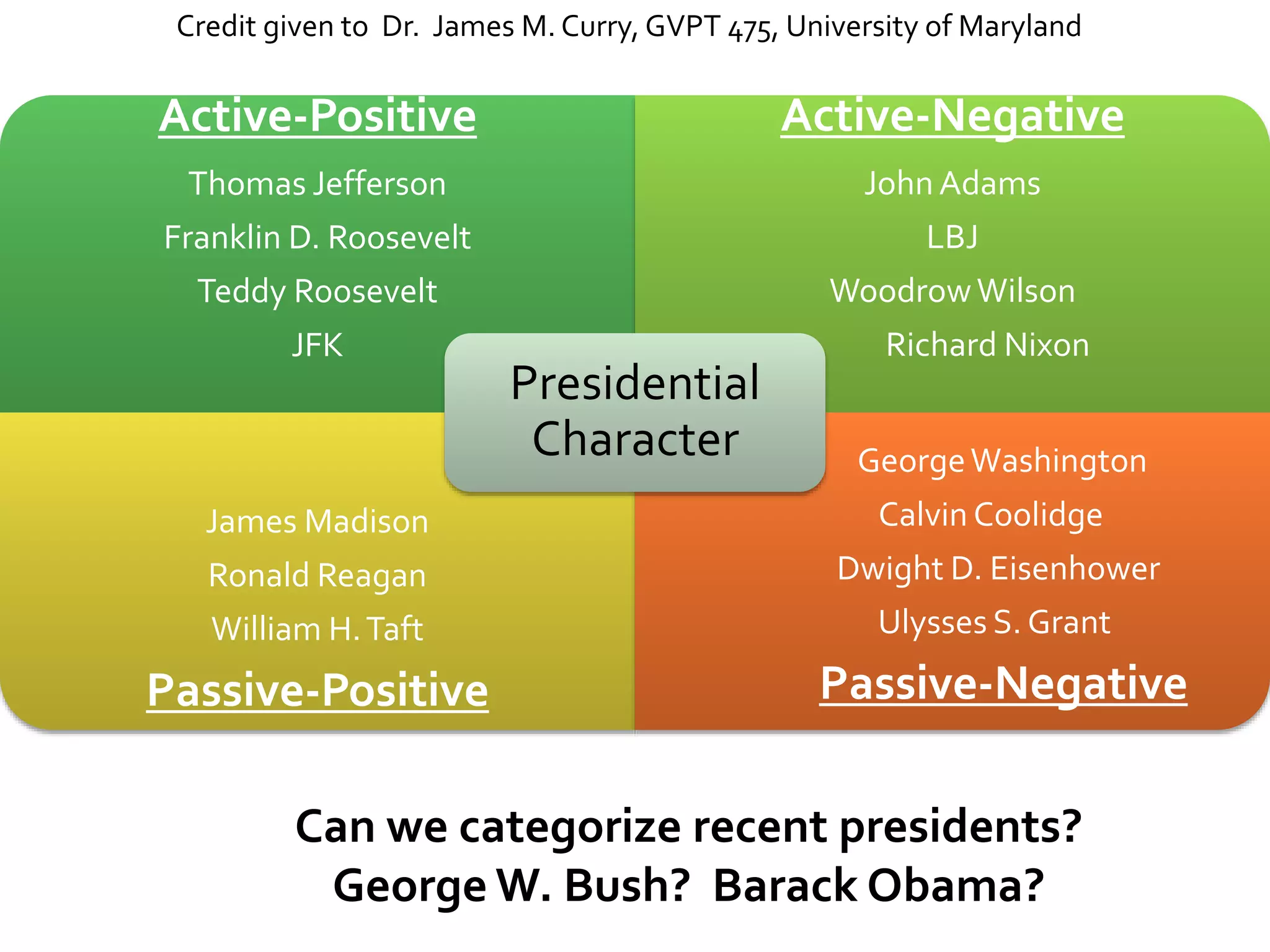
James David Barber
ACTIVE-PASSIVE
 How much energy does
the president invest in
their job?
POSITIVE-NEGATIVE
 How much does the
president enjoy their job?
Can we categorize recent presidents?
George W. Bush? Barack Obama?
Active-Positive
Thomas Jefferson
Franklin D. Roosevelt
Teddy Roosevelt
JFK
Active-Negative
JohnAdams
LBJ
WoodrowWilson
Richard Nixon
James Madison
Ronald Reagan
William H.Taft
Passive-Positive
G GeorgeWashington
Calvin Coolidge
Dwight D. Eisenhower
Ulysses S. Grant
Passive-Negative
Presidential
Character
Credit given to Dr. James M. Curry, GVPT 475, University of Maryland
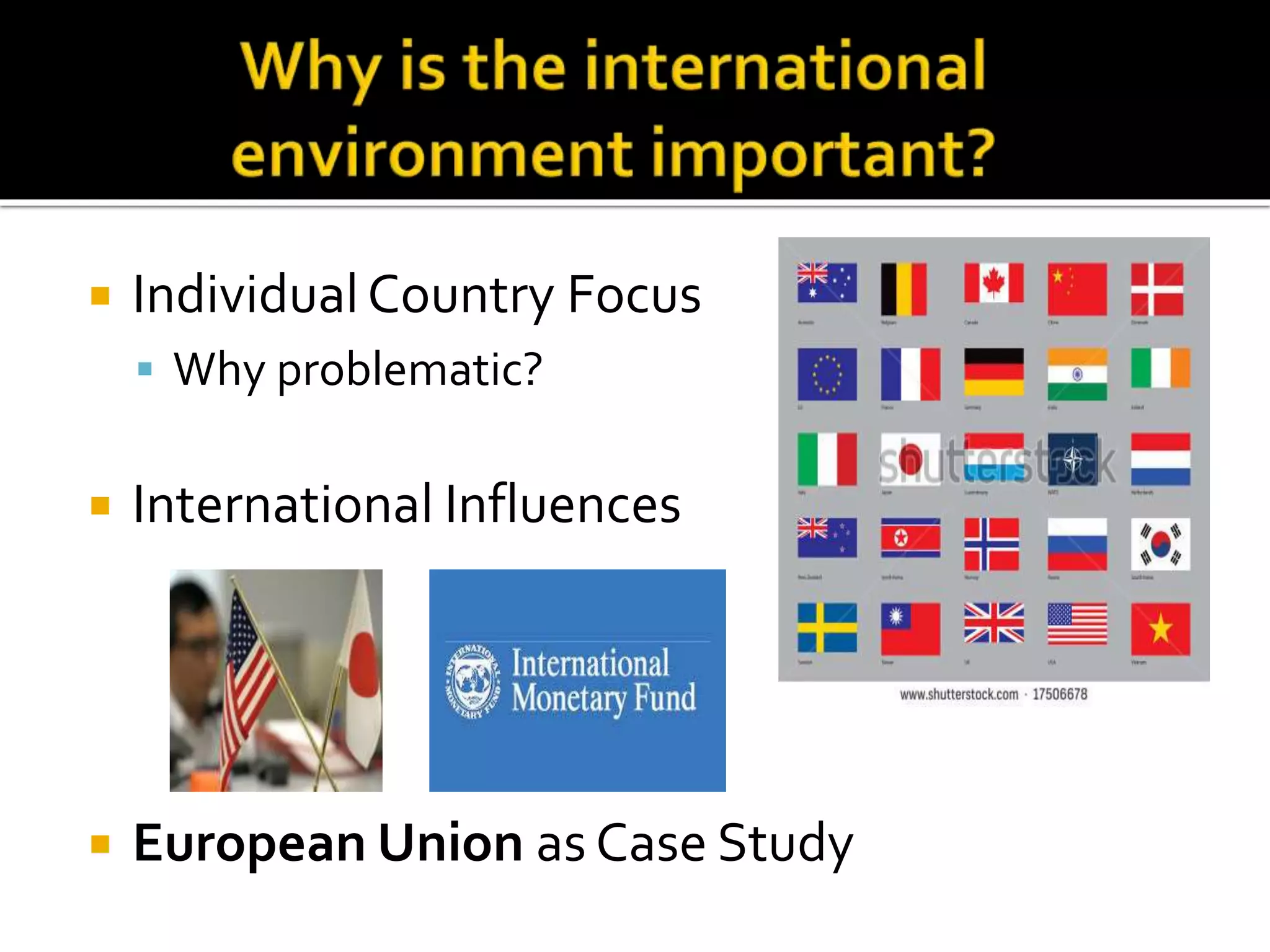
 IndividualCountry Focus
 Why problematic?
 International Influences
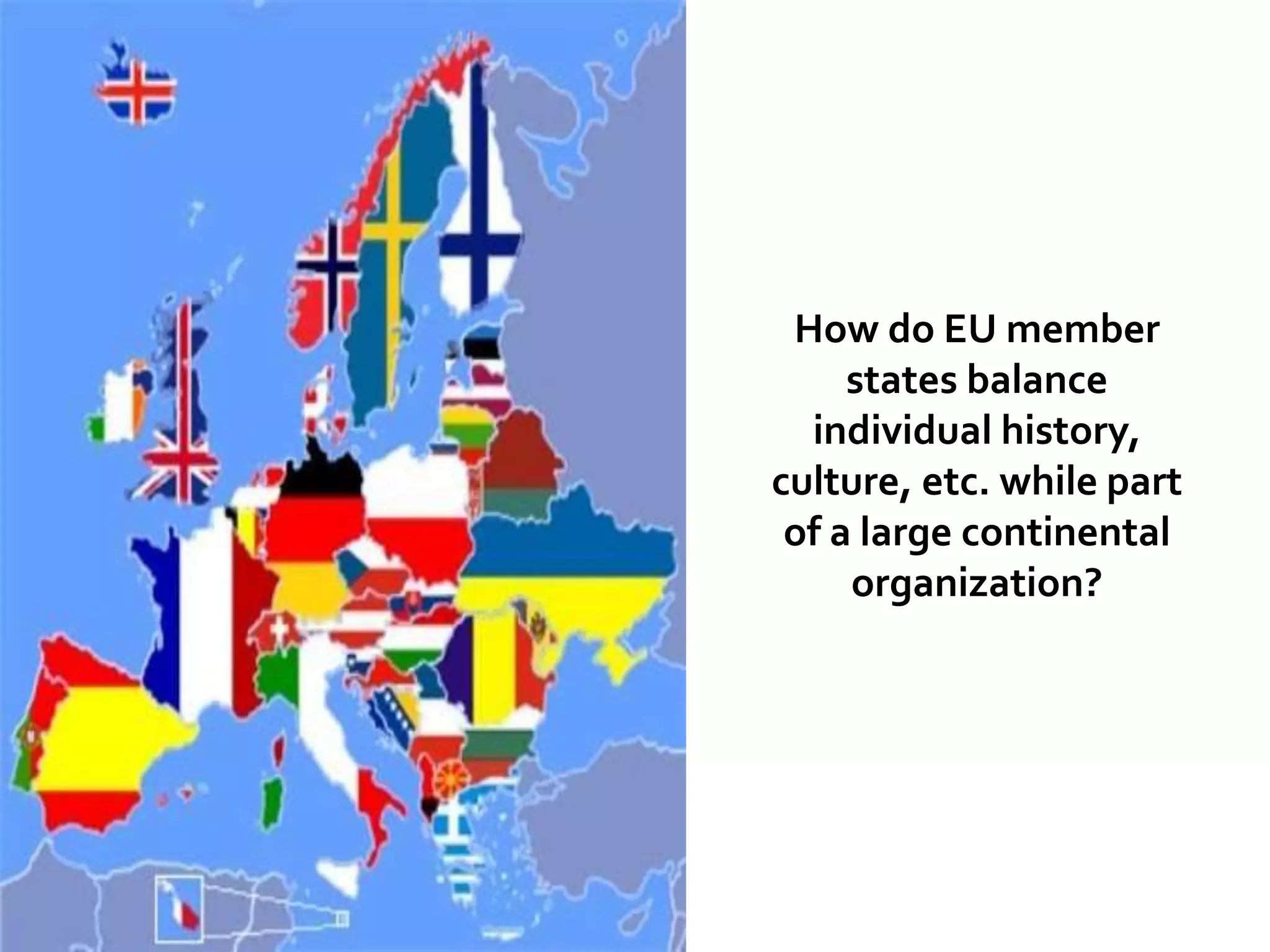
 European Union as Case Study
How do EU member
states balance
individual history,
culture, etc. while part
of a large continental
organization?
 Individuals are rational and self-interested
with sincere preferences
 What does this mean?
 Borrowed from economics
 Example: Building a New Road in Murray
 Rep.Whitfield vs. Other Members in Congress
 Attitudes, values, beliefs, and symbols
 Gives people a way to understand politics
 Culture of location can change—but does
slowly—since it becomes ingrained in society
 Endures because of political socialization
 Cultural values can influence forms of power
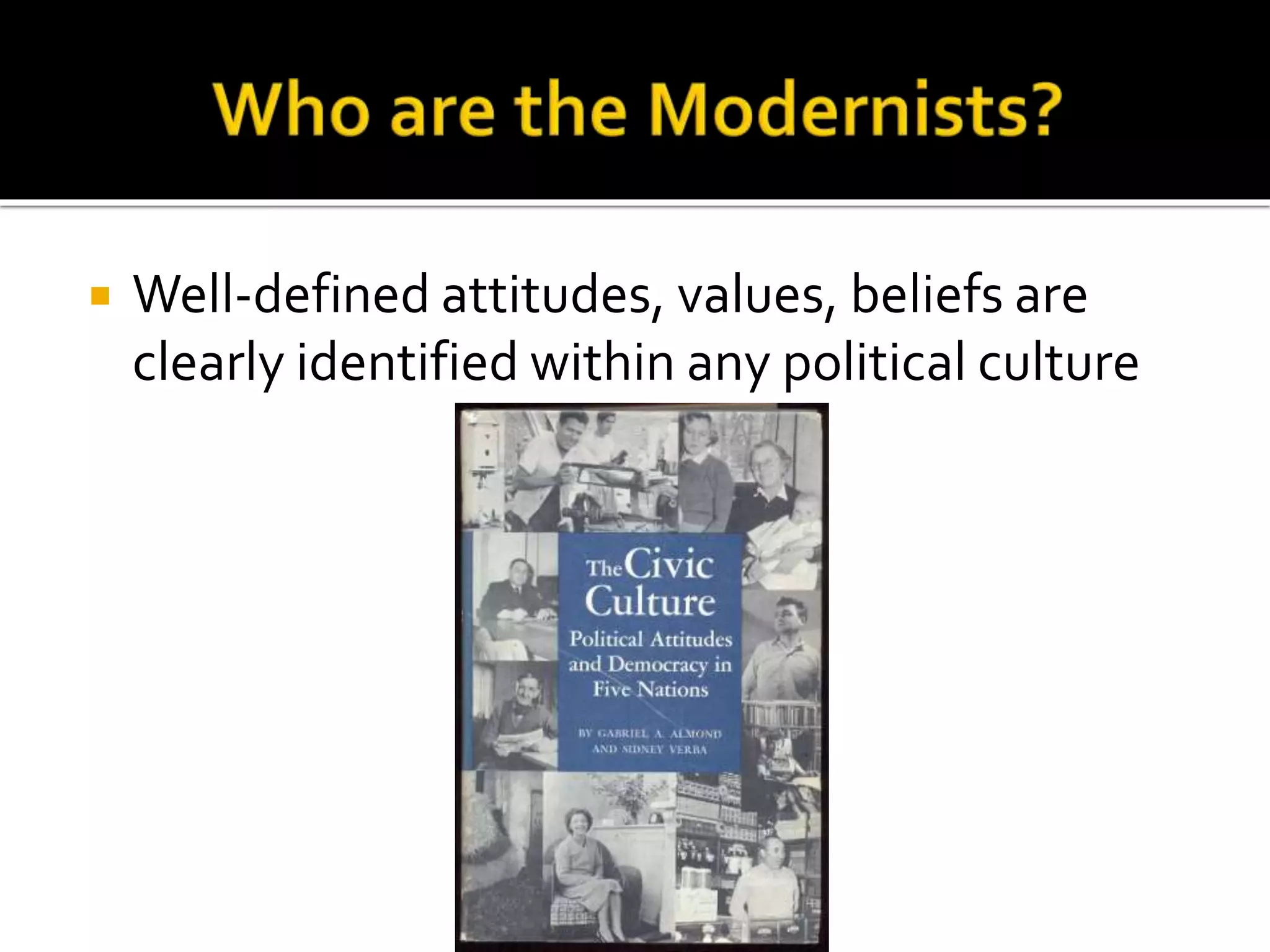
 Well-defined attitudes, values, beliefs are
clearly identified within any political culture
 Question Modernists’ argument
 Cultures NOT fixed with set values;
subject to interpretation
 Societies have subcultures
(e.g. South and Northeast in U.S.)
 Importance of political discourse
 Example: Meaning of “family values”
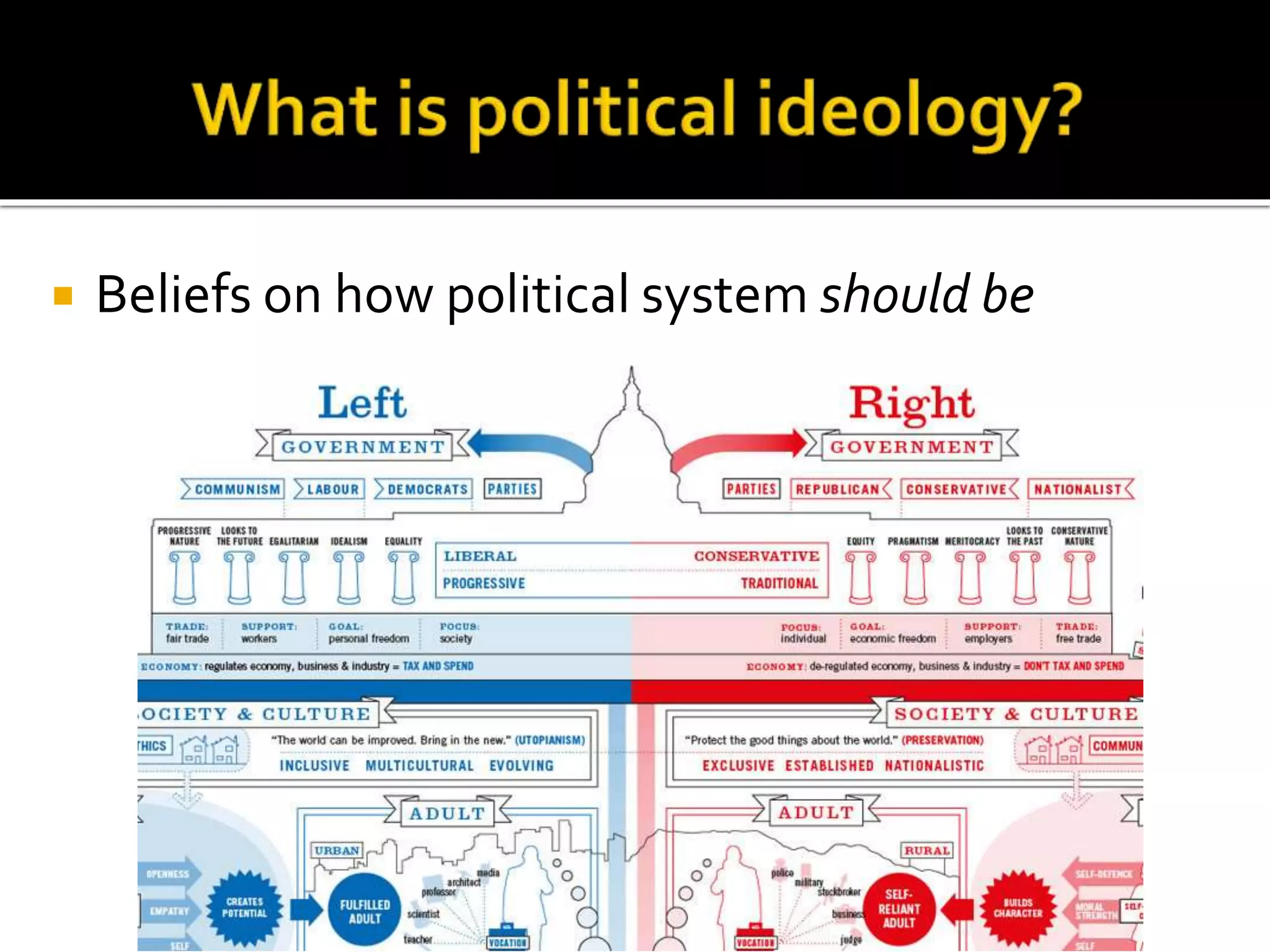
 Beliefs on how political system should be
 Political structures influence & limit behavior
 Marxism and Institutionalism
 What is an institution?
 Who rules in the United States?
 Democratically-elected political actors
▪ Presidents, legislators, justices
 Voters
 Who rules in other countries?
 A dictator
 The military
 Something or someone else
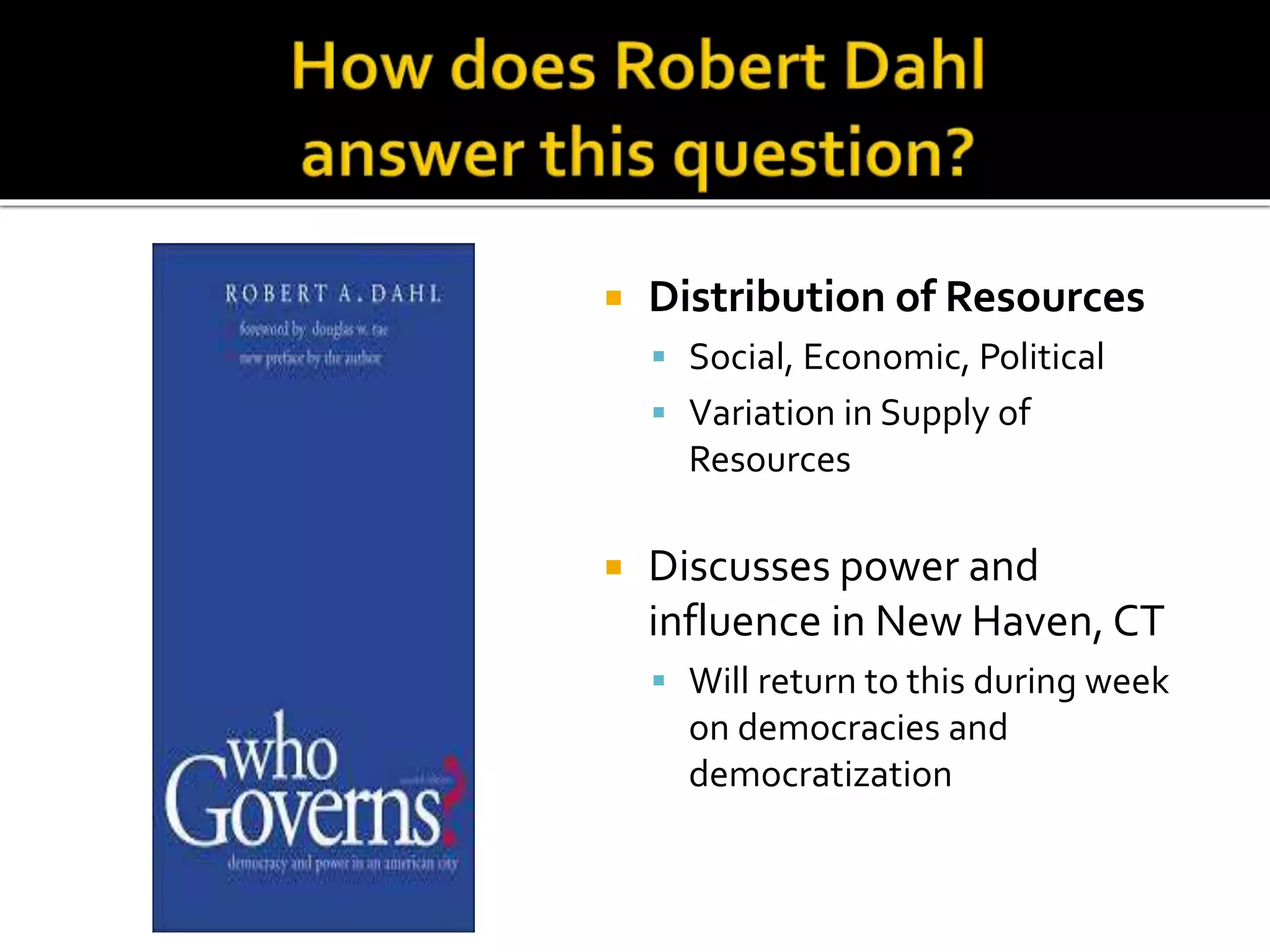
 Distribution of Resources
 Social, Economic, Political
 Variation in Supply of
Resources
 Discusses power and
influence in New Haven, CT
 Will return to this during week
on democracies and
democratization
 Society divided into various groups and power is
dispersed so that no group has absolute power
 Common in nations with opposing parties
 Policy = Compromise
 Power and InfluenceVaries
 Example: Democrats and U.S. House
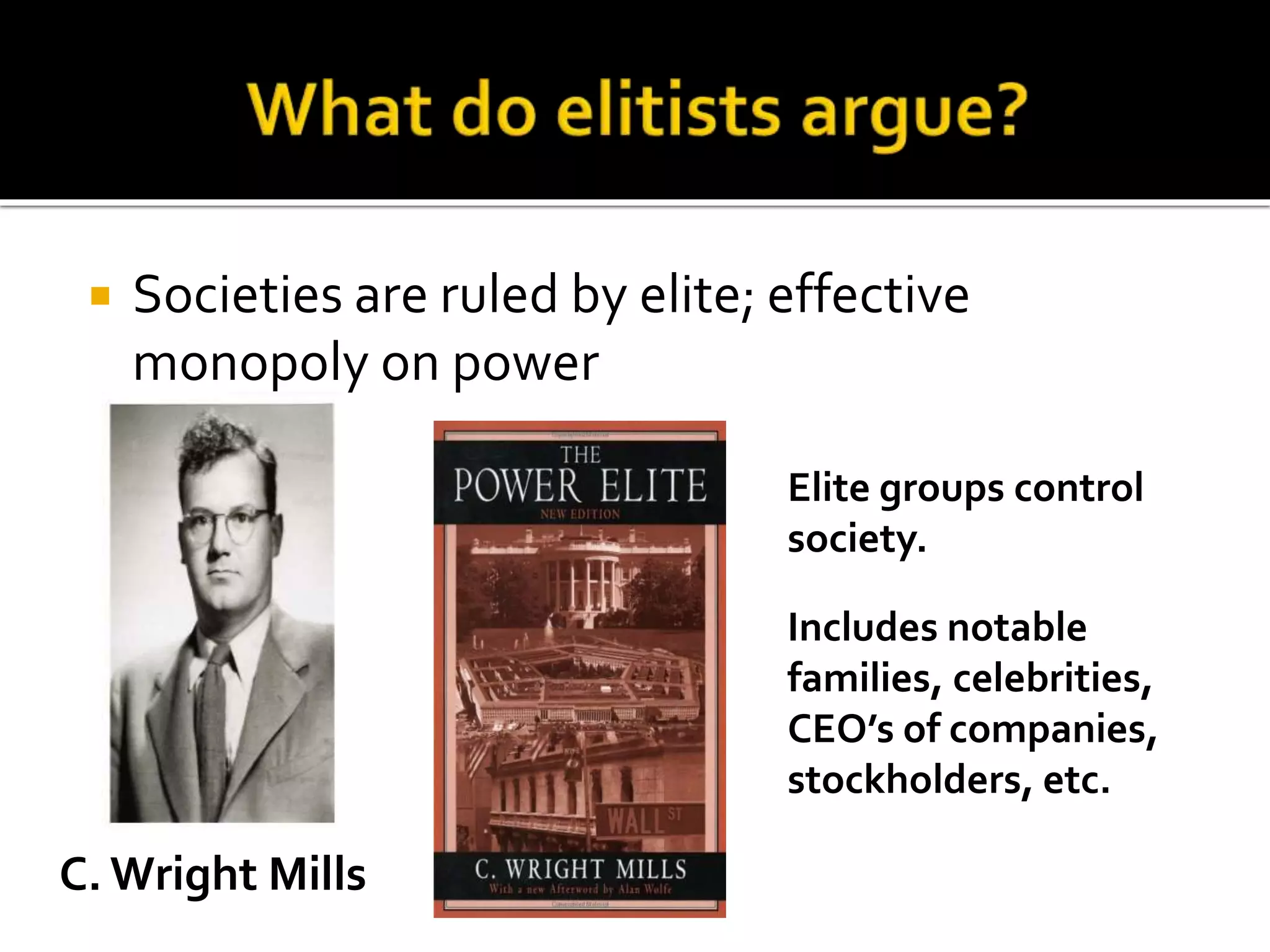
 Societies are ruled by elite; effective
monopoly on power
C. Wright Mills
Elite groups control
society.
Includes notable
families, celebrities,
CEO’s of companies,
stockholders, etc.
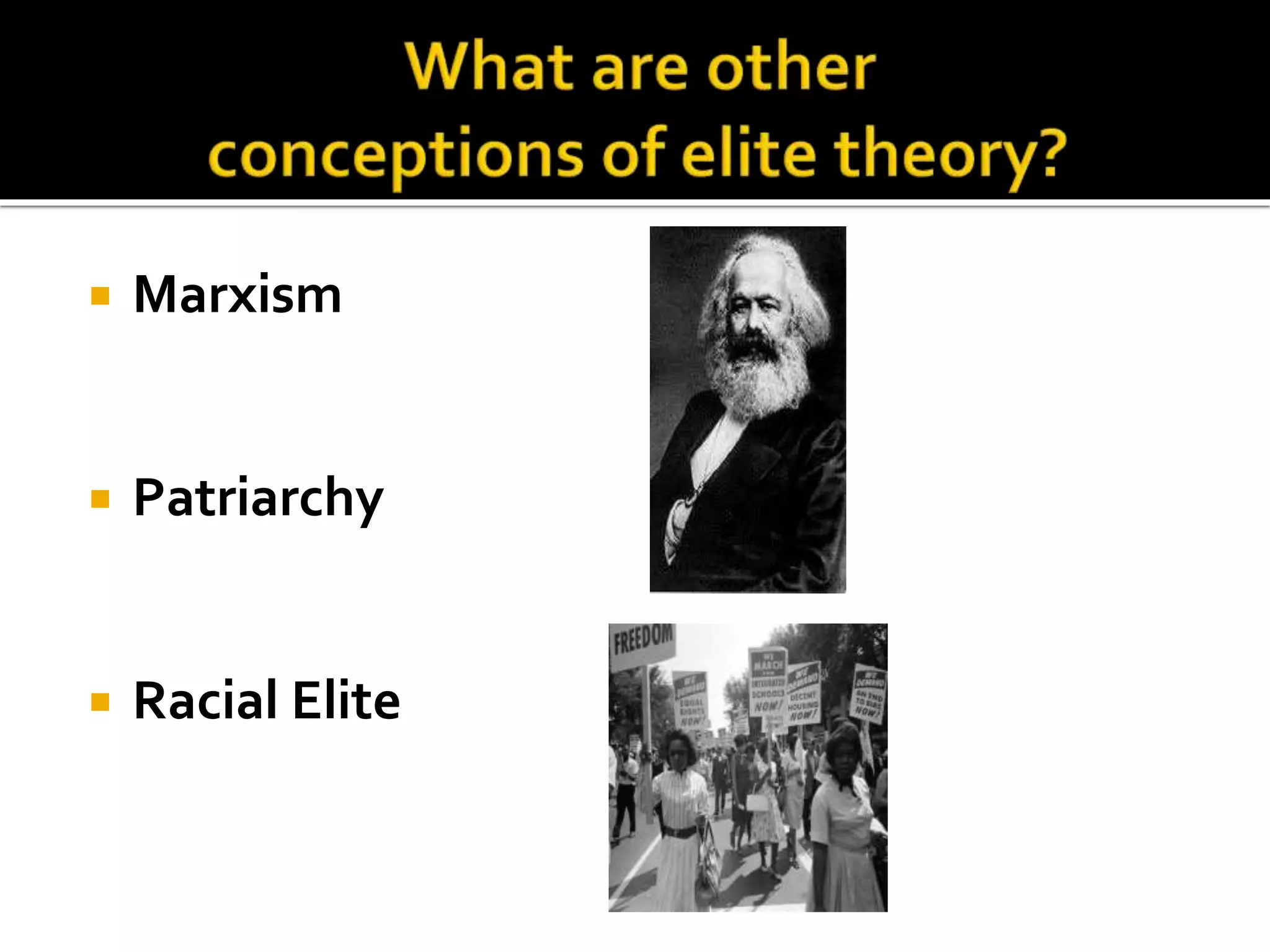
 Marxism
 Patriarchy
 Racial Elite
 Who is in formal position of power?
 Who has influence in governmental-
decision-making?
 Who benefits from decisions made?

Intro to Comparative Politics

  • 1.
  • 2.
    “Greece crisis: PMAlexisTsipras quits and calls early polls” “Turkey snap election called after coalition talks fail”
  • 5.
    What words, concepts,ideas, etc. come to mind when you see the following words? “politics” “power” “comparative politics”
  • 6.
     Politics: “Whogets what, when and how” (Lasswell)  Politics: Struggle for power; emphasis on decision-making  Political scientists study leadership in political community  Political party, legislature, city, region, country
  • 7.
     Power:  Abilityto influence others or impose will on them  How do you know if you have power?  Get someone to do something they would not do  Prevent someone from doing something they would do  Influence how people think
  • 13.
     Subfield ofpolitical science that compares the pursuit of power across countries  Examples of Power Imbalances:  State Control vs. Individual Freedom  Plutocracy vs. Egalitarianism
  • 16.
     Based onsimple questions:  Who?  What?  When?  Where?
  • 18.
    INSTRUCTIONS: Just like Jeopardy!,come up with a topic of your choice (does NOT have to be political—can be movies, music, etc.) Write questions and answers using the FourW’s Can use phones, laptops, etc. to find answers Example:The American Presidency WHO was our thirty-second president? (Franklin D. Roosevelt) WHAT did he do while in office? (Began “New Deal” program) WHEN did he serve? (1933-1945) WHERE did he die? (Warm Springs, Georgia)
  • 19.
     Knowing thefour W’s can answer a lot of interesting questions.  In FDR example, “Why?” question might be:  Why was FDR such a great orator?
  • 21.
    INSTRUCTIONS: Return to yourgroup and come up with a few “Why?” questions related to your original topic.
  • 25.
     Why aresome countries democratic and others are not?  Why are some countries rich and others poor?  Why do countries have different institutions and forms of government?  Why do countries have different public policies?  Why are some social revolutions and others fail?  Why do countries go to war?
  • 26.
    GENERAL QUESTION  Whydo countries go to war? SPECIFIC QUESTION  Why did Britain support U.S. involvement in the IraqWar?
  • 28.
     Institutions  Interests Ideas  Individuals  International Environment  Interactions
  • 30.
     Government Performance Unemployment and Inflation  Constitutional Structures (and resulting institutions)  “Behavioral Revolution” in Political Science
  • 32.
     Lasswell Definitionof Politics  How do individuals and groups define their interests?  Politically  Economically  Socially
  • 34.
     Political Culture What do people think about politics?  Opinion Polling (e.g. Gallup Poll, WorldValues Survey, etc.)  Equality, Loyalty, Freedom, Justice,Trust  Impact of ideas change over time  Why?
  • 36.
  • 37.
    ACTIVE-PASSIVE  How muchenergy does the president invest in their job? POSITIVE-NEGATIVE  How much does the president enjoy their job?
  • 38.
    Can we categorizerecent presidents? George W. Bush? Barack Obama? Active-Positive Thomas Jefferson Franklin D. Roosevelt Teddy Roosevelt JFK Active-Negative JohnAdams LBJ WoodrowWilson Richard Nixon James Madison Ronald Reagan William H.Taft Passive-Positive G GeorgeWashington Calvin Coolidge Dwight D. Eisenhower Ulysses S. Grant Passive-Negative Presidential Character Credit given to Dr. James M. Curry, GVPT 475, University of Maryland
  • 40.
     IndividualCountry Focus Why problematic?  International Influences  European Union as Case Study
  • 41.
    How do EUmember states balance individual history, culture, etc. while part of a large continental organization?
  • 47.
     Individuals arerational and self-interested with sincere preferences  What does this mean?  Borrowed from economics  Example: Building a New Road in Murray  Rep.Whitfield vs. Other Members in Congress
  • 49.
     Attitudes, values,beliefs, and symbols  Gives people a way to understand politics  Culture of location can change—but does slowly—since it becomes ingrained in society  Endures because of political socialization  Cultural values can influence forms of power
  • 50.
     Well-defined attitudes,values, beliefs are clearly identified within any political culture
  • 51.
     Question Modernists’argument  Cultures NOT fixed with set values; subject to interpretation  Societies have subcultures (e.g. South and Northeast in U.S.)  Importance of political discourse  Example: Meaning of “family values”
  • 52.
     Beliefs onhow political system should be
  • 53.
     Political structuresinfluence & limit behavior  Marxism and Institutionalism  What is an institution?
  • 55.
     Who rulesin the United States?  Democratically-elected political actors ▪ Presidents, legislators, justices  Voters  Who rules in other countries?  A dictator  The military  Something or someone else
  • 56.
     Distribution ofResources  Social, Economic, Political  Variation in Supply of Resources  Discusses power and influence in New Haven, CT  Will return to this during week on democracies and democratization
  • 58.
     Society dividedinto various groups and power is dispersed so that no group has absolute power  Common in nations with opposing parties  Policy = Compromise  Power and InfluenceVaries  Example: Democrats and U.S. House
  • 60.
     Societies areruled by elite; effective monopoly on power C. Wright Mills Elite groups control society. Includes notable families, celebrities, CEO’s of companies, stockholders, etc.
  • 61.
  • 63.
     Who isin formal position of power?  Who has influence in governmental- decision-making?  Who benefits from decisions made?