
1
Making buildings better
The Role of Post Occupancy Evaluation
Saryu Vatal
Sustainable Construction Group
2
Making buildings better
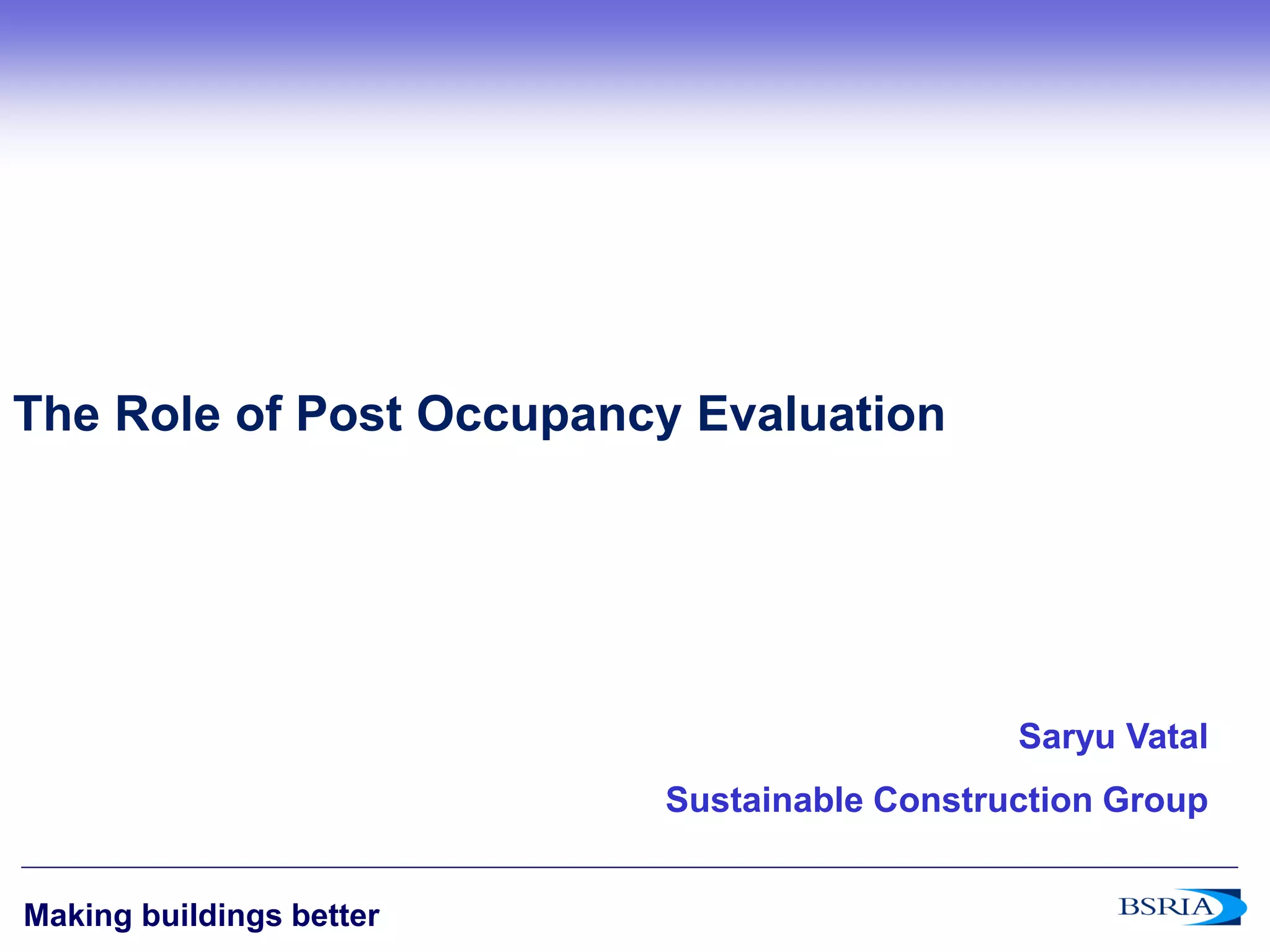
2010
25%
reductions in
CO2 emissions
over 2006
2013
8%
reductions in
CO2 emissions
over 2010
2016
All new dwellings
to be ‘Zero
Carbon’ (regulated
energy)
2019
All non-domestic
buildings to be
‘Zero Carbon’
(regulated energy)
2050
80% reduction in CO2
emissions due to
operational energy use
from 1990 levels in all
buildings
At least 90% of all new
homes meet or perform better
than the designed energy /
carbon performance.
2020
Introduction of the
concept of the Fabric
Energy Efficiency
Standard (FEES)
2009
2006
Change in compliance
method from 3 optional
routes to single route
via SAP calculation for
CO2 emissions only
Clarification of scope
of ‘zero carbon’ to
refer to regulated
energy use only
2011
Private rental
properties to meet
minimum Energy
Efficiency standards
2018
Target energy and CO2 reductions
3
Making buildings better
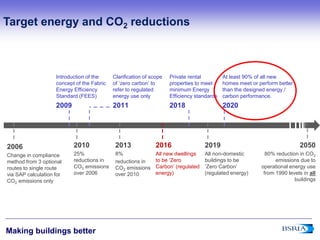
Occupant impact on energy use
0
20
40
60
80
100
120
140
17
18
19
20
21
22
24
26
27
28
29
30
33
34
35
36
37
38
39
40
41
42
43
44
46
47
48
49
52
53
54
55
56
57
58
184
185
Gasconsumption(kWh/m2)
Plot number
Actual vs predicted gas consumption kWh/m2
Actual gas consumption (Sept'13 to Aug'14) kWh/m2 Predicted gas consumption (Sept to Aug inc.) kWh/m2
4
Making buildings better
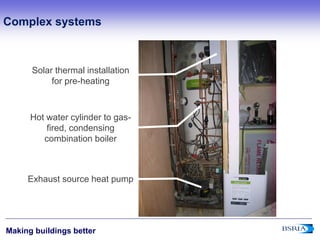
Solar thermal installation
for pre-heating
Hot water cylinder to gas-
fired, condensing
combination boiler
Exhaust source heat pump
Complex systems
5
Making buildings better
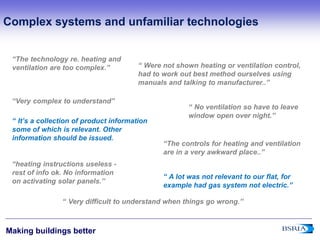
‘‘The technology re. heating and
ventilation are too complex.’’
‘‘ No ventilation so have to leave
window open over night.’’
‘‘The controls for heating and ventilation
are in a very awkward place..’’
‘‘heating instructions useless -
rest of info ok. No information
on activating solar panels.’’
‘‘Very complex to understand’’
‘‘ It’s a collection of product information
some of which is relevant. Other
information should be issued.
‘‘ Were not shown heating or ventilation control,
had to work out best method ourselves using
manuals and talking to manufacturer..’’
‘‘ A lot was not relevant to our flat, for
example had gas system not electric.’’
‘‘ Very difficult to understand when things go wrong.’’
Complex systems and unfamiliar technologies
6
Making buildings better
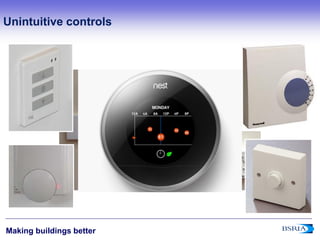
Unintuitive controls
7
Making buildings better
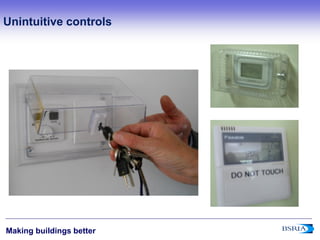
Unintuitive controls
8
Making buildings better
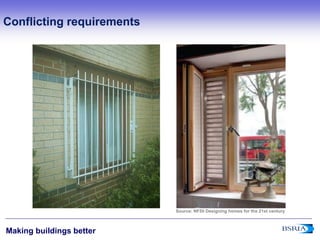
Conflicting requirements
Source: NF50 Designing homes for the 21st century
9
Making buildings better
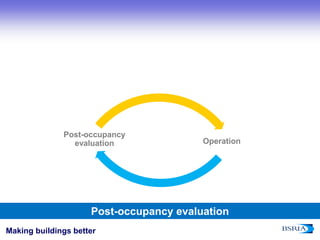
Post-occupancy evaluation
Operation
Post-occupancy
evaluation
10
Making buildings better
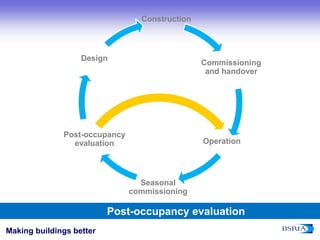
Commissioning
and handover
Seasonal
commissioning
Design
Construction
Post-occupancy
evaluation Operation
Post-occupancy evaluation
11
Making buildings better
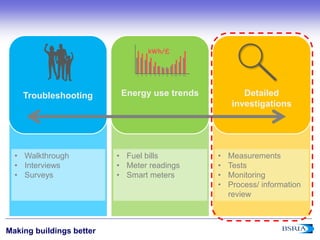
• Walkthrough
• Interviews
• Surveys
• Fuel bills
• Meter readings
• Smart meters
• Measurements
• Tests
• Monitoring
• Process/ information
review
Troubleshooting Energy use trends Detailed
investigations
1 2 3 4 5 6 7 8 9 10 11 12
kWh/£
12
Making buildings better
Thank you.
Saryu Vatal
saryu.vatal@bsria.co.uk
Sustainable Construction Group

The Role of Post Occupancy Evaluation

  • 1.
    1 Making buildings better TheRole of Post Occupancy Evaluation Saryu Vatal Sustainable Construction Group
  • 2.
    2 Making buildings better 2010 25% reductionsin CO2 emissions over 2006 2013 8% reductions in CO2 emissions over 2010 2016 All new dwellings to be ‘Zero Carbon’ (regulated energy) 2019 All non-domestic buildings to be ‘Zero Carbon’ (regulated energy) 2050 80% reduction in CO2 emissions due to operational energy use from 1990 levels in all buildings At least 90% of all new homes meet or perform better than the designed energy / carbon performance. 2020 Introduction of the concept of the Fabric Energy Efficiency Standard (FEES) 2009 2006 Change in compliance method from 3 optional routes to single route via SAP calculation for CO2 emissions only Clarification of scope of ‘zero carbon’ to refer to regulated energy use only 2011 Private rental properties to meet minimum Energy Efficiency standards 2018 Target energy and CO2 reductions
  • 3.
    3 Making buildings better Occupantimpact on energy use 0 20 40 60 80 100 120 140 17 18 19 20 21 22 24 26 27 28 29 30 33 34 35 36 37 38 39 40 41 42 43 44 46 47 48 49 52 53 54 55 56 57 58 184 185 Gasconsumption(kWh/m2) Plot number Actual vs predicted gas consumption kWh/m2 Actual gas consumption (Sept'13 to Aug'14) kWh/m2 Predicted gas consumption (Sept to Aug inc.) kWh/m2
  • 4.
    4 Making buildings better Solarthermal installation for pre-heating Hot water cylinder to gas- fired, condensing combination boiler Exhaust source heat pump Complex systems
  • 5.
    5 Making buildings better ‘‘Thetechnology re. heating and ventilation are too complex.’’ ‘‘ No ventilation so have to leave window open over night.’’ ‘‘The controls for heating and ventilation are in a very awkward place..’’ ‘‘heating instructions useless - rest of info ok. No information on activating solar panels.’’ ‘‘Very complex to understand’’ ‘‘ It’s a collection of product information some of which is relevant. Other information should be issued. ‘‘ Were not shown heating or ventilation control, had to work out best method ourselves using manuals and talking to manufacturer..’’ ‘‘ A lot was not relevant to our flat, for example had gas system not electric.’’ ‘‘ Very difficult to understand when things go wrong.’’ Complex systems and unfamiliar technologies
  • 6.
  • 7.
  • 8.
    8 Making buildings better Conflictingrequirements Source: NF50 Designing homes for the 21st century
  • 9.
    9 Making buildings better Post-occupancyevaluation Operation Post-occupancy evaluation
  • 10.
    10 Making buildings better Commissioning andhandover Seasonal commissioning Design Construction Post-occupancy evaluation Operation Post-occupancy evaluation
  • 11.
    11 Making buildings better •Walkthrough • Interviews • Surveys • Fuel bills • Meter readings • Smart meters • Measurements • Tests • Monitoring • Process/ information review Troubleshooting Energy use trends Detailed investigations 1 2 3 4 5 6 7 8 9 10 11 12 kWh/£
  • 12.
    12 Making buildings better Thankyou. Saryu Vatal saryu.vatal@bsria.co.uk Sustainable Construction Group