C A S E
S T U D Y
F O R
M U S E U M
L A M A J A S S I M 3 0 1 0
A R C H I T E C T U R A L
D E S I G N 3
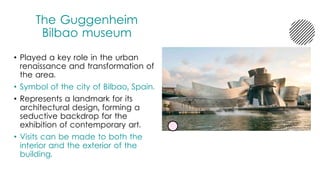
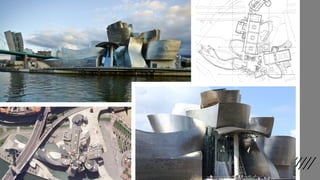
The Guggenheim
Bilbao museum
• Played a key role in the urban
renaissance and transformation of
the area.
• Symbol of the city of Bilbao, Spain.
• Represents a landmark for its
architectural design, forming a
seductive backdrop for the
exhibition of contemporary art.
• Visits can be made to both the
interior and the exterior of the
building.
Museum’s
details
• Architect: Frank Gehry
• Designed in: 1992
• Built in: 1993-1997
• Location: Bilbao, Spain
• Built-up Area: 32,500 square meters
24,000 square meters are
occupied by building.
9,066 square meters are devoted
to exhibition spaces.
Concept
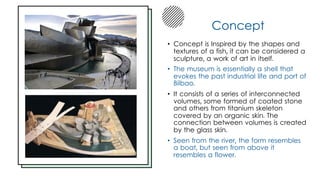
• Concept is Inspired by the shapes and
textures of a fish, it can be considered a
sculpture, a work of art in itself.
• The museum is essentially a shell that
evokes the past industrial life and port of
Bilbao.
• It consists of a series of interconnected
volumes, some formed of coated stone
and others from titanium skeleton
covered by an organic skin. The
connection between volumes is created
by the glass skin.
• Seen from the river, the form resembles
a boat, but seen from above it
resembles a flower.
Materials and structure
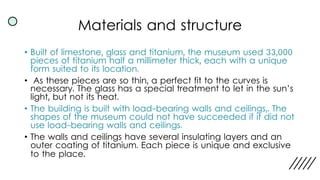
• Built of limestone, glass and titanium, the museum used 33,000
pieces of titanium half a millimeter thick, each with a unique
form suited to its location.
• As these pieces are so thin, a perfect fit to the curves is
necessary. The glass has a special treatment to let in the sun’s
light, but not its heat.
• The building is built with load-bearing walls and ceilings,. The
shapes of the museum could not have succeeded if it did not
use load-bearing walls and ceilings.
• The walls and ceilings have several insulating layers and an
outer coating of titanium. Each piece is unique and exclusive
to the place.
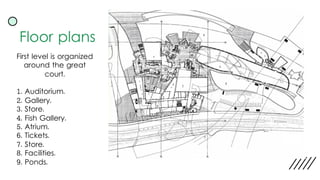
Floor plans
First level is organized
around the great
court.
1. Auditorium.
2. Gallery.
3. Store.
4. Fish Gallery.
5. Atrium.
6. Tickets.
7. Store.
8. Facilities.
9. Ponds.
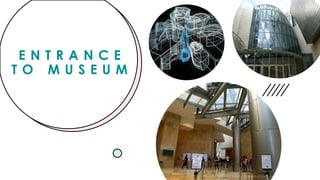
E N T R A N C E
T O M U S E U M
Second level, where
the galleries are
connected by air
bridges.
1. Accessible
2. Library.
3. Restaurant.
4. Galleries.
5. Atrium.
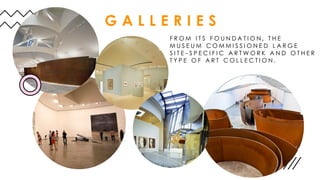
G A L L E R I E S
F R O M I T S F O U N D A T I O N , T H E
M U S E U M C O M M I S S I O N E D L A R G E
S I T E - S P E C I F I C A R T W O R K A N D O T H E R
T Y P E O F A R T C O L L E C T I O N .
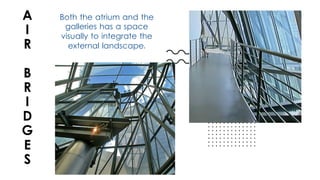
A
I
R
B
R
I
D
G
E
S
Both the atrium and the
galleries has a space
visually to integrate the
external landscape.
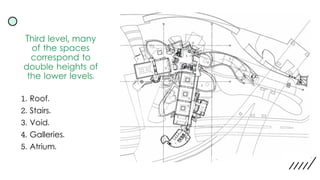
Third level, many
of the spaces
correspond to
double heights of
the lower levels.
1. Roof.
2. Stairs.
3. Void.
4. Galleries.
5. Atrium.
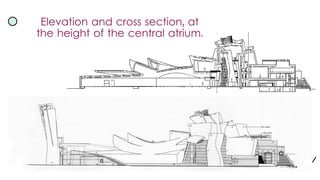
Elevation and cross section, at
the height of the central atrium.
Refrences
• https://en.wikiarquitectura.com/building/guggenheim-bilbao/
• http://www.justinadabri.com/uploads/4/1/9/9/4199008/2011_02_19_just
ina_dabrisiute_-_guggenheim_museum_bilbao_.pdf
• http://architecturalmoleskine.blogspot.com/2012/08/f-gehry-
guggenheim-museum-bilbao.html
• https://www.guggenheim-bilbao.eus/en/the-building/inside-the-
museum
• https://www.inexhibit.com/mymuseum/guggenheim-museum-bilbao/
• http://www.justinadabri.com/uploads/4/1/9/9/4199008/2011_02_19_just
ina_dabrisiute_-_guggenheim_museum_bilbao_.pdf
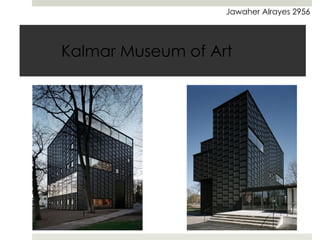
Kalmar Museum of Art
Jawaher Alrayes 2956
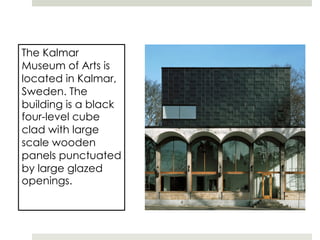
The Kalmar
Museum of Arts is
located in Kalmar,
Sweden. The
building is a black
four-level cube
clad with large
scale wooden
panels punctuated
by large glazed
openings.
The interior
This gallery is lit by shed head
light shafts doubling its ceiling
height.
Stair case
Stair case
One of the main features is the open stair spiraling the
full height of the building, starting from the new
entrance lobby that interconnects between lake-side
and park.
Section:
Site Plan:
References:
¤ https://www.archdaily.com/12122/kalmar-museum-of-
art-tham-videgard-hansson-
arkitekter?ad_source=search&ad_medium=search_result
_projects
¤ https://www.archilovers.com/projects/101779/kalmar-
museum-of-art.html

2 Museum Case studies

  • 1.
    C A SE S T U D Y F O R M U S E U M L A M A J A S S I M 3 0 1 0 A R C H I T E C T U R A L D E S I G N 3
  • 2.
    The Guggenheim Bilbao museum •Played a key role in the urban renaissance and transformation of the area. • Symbol of the city of Bilbao, Spain. • Represents a landmark for its architectural design, forming a seductive backdrop for the exhibition of contemporary art. • Visits can be made to both the interior and the exterior of the building.
  • 3.
    Museum’s details • Architect: FrankGehry • Designed in: 1992 • Built in: 1993-1997 • Location: Bilbao, Spain • Built-up Area: 32,500 square meters 24,000 square meters are occupied by building. 9,066 square meters are devoted to exhibition spaces.
  • 4.
    Concept • Concept isInspired by the shapes and textures of a fish, it can be considered a sculpture, a work of art in itself. • The museum is essentially a shell that evokes the past industrial life and port of Bilbao. • It consists of a series of interconnected volumes, some formed of coated stone and others from titanium skeleton covered by an organic skin. The connection between volumes is created by the glass skin. • Seen from the river, the form resembles a boat, but seen from above it resembles a flower.
  • 6.
    Materials and structure •Built of limestone, glass and titanium, the museum used 33,000 pieces of titanium half a millimeter thick, each with a unique form suited to its location. • As these pieces are so thin, a perfect fit to the curves is necessary. The glass has a special treatment to let in the sun’s light, but not its heat. • The building is built with load-bearing walls and ceilings,. The shapes of the museum could not have succeeded if it did not use load-bearing walls and ceilings. • The walls and ceilings have several insulating layers and an outer coating of titanium. Each piece is unique and exclusive to the place.
  • 7.
    Floor plans First levelis organized around the great court. 1. Auditorium. 2. Gallery. 3. Store. 4. Fish Gallery. 5. Atrium. 6. Tickets. 7. Store. 8. Facilities. 9. Ponds.
  • 8.
    E N TR A N C E T O M U S E U M
  • 10.
    Second level, where thegalleries are connected by air bridges. 1. Accessible 2. Library. 3. Restaurant. 4. Galleries. 5. Atrium.
  • 11.
    G A LL E R I E S F R O M I T S F O U N D A T I O N , T H E M U S E U M C O M M I S S I O N E D L A R G E S I T E - S P E C I F I C A R T W O R K A N D O T H E R T Y P E O F A R T C O L L E C T I O N .
  • 12.
    A I R B R I D G E S Both the atriumand the galleries has a space visually to integrate the external landscape.
  • 13.
    Third level, many ofthe spaces correspond to double heights of the lower levels. 1. Roof. 2. Stairs. 3. Void. 4. Galleries. 5. Atrium.
  • 14.
    Elevation and crosssection, at the height of the central atrium.
  • 15.
    Refrences • https://en.wikiarquitectura.com/building/guggenheim-bilbao/ • http://www.justinadabri.com/uploads/4/1/9/9/4199008/2011_02_19_just ina_dabrisiute_-_guggenheim_museum_bilbao_.pdf •http://architecturalmoleskine.blogspot.com/2012/08/f-gehry- guggenheim-museum-bilbao.html • https://www.guggenheim-bilbao.eus/en/the-building/inside-the- museum • https://www.inexhibit.com/mymuseum/guggenheim-museum-bilbao/ • http://www.justinadabri.com/uploads/4/1/9/9/4199008/2011_02_19_just ina_dabrisiute_-_guggenheim_museum_bilbao_.pdf
  • 16.
    Kalmar Museum ofArt Jawaher Alrayes 2956
  • 17.
    The Kalmar Museum ofArts is located in Kalmar, Sweden. The building is a black four-level cube clad with large scale wooden panels punctuated by large glazed openings.
  • 18.
    The interior This galleryis lit by shed head light shafts doubling its ceiling height.
  • 19.
  • 20.
    Stair case One ofthe main features is the open stair spiraling the full height of the building, starting from the new entrance lobby that interconnects between lake-side and park.
  • 21.
  • 22.
  • 23.