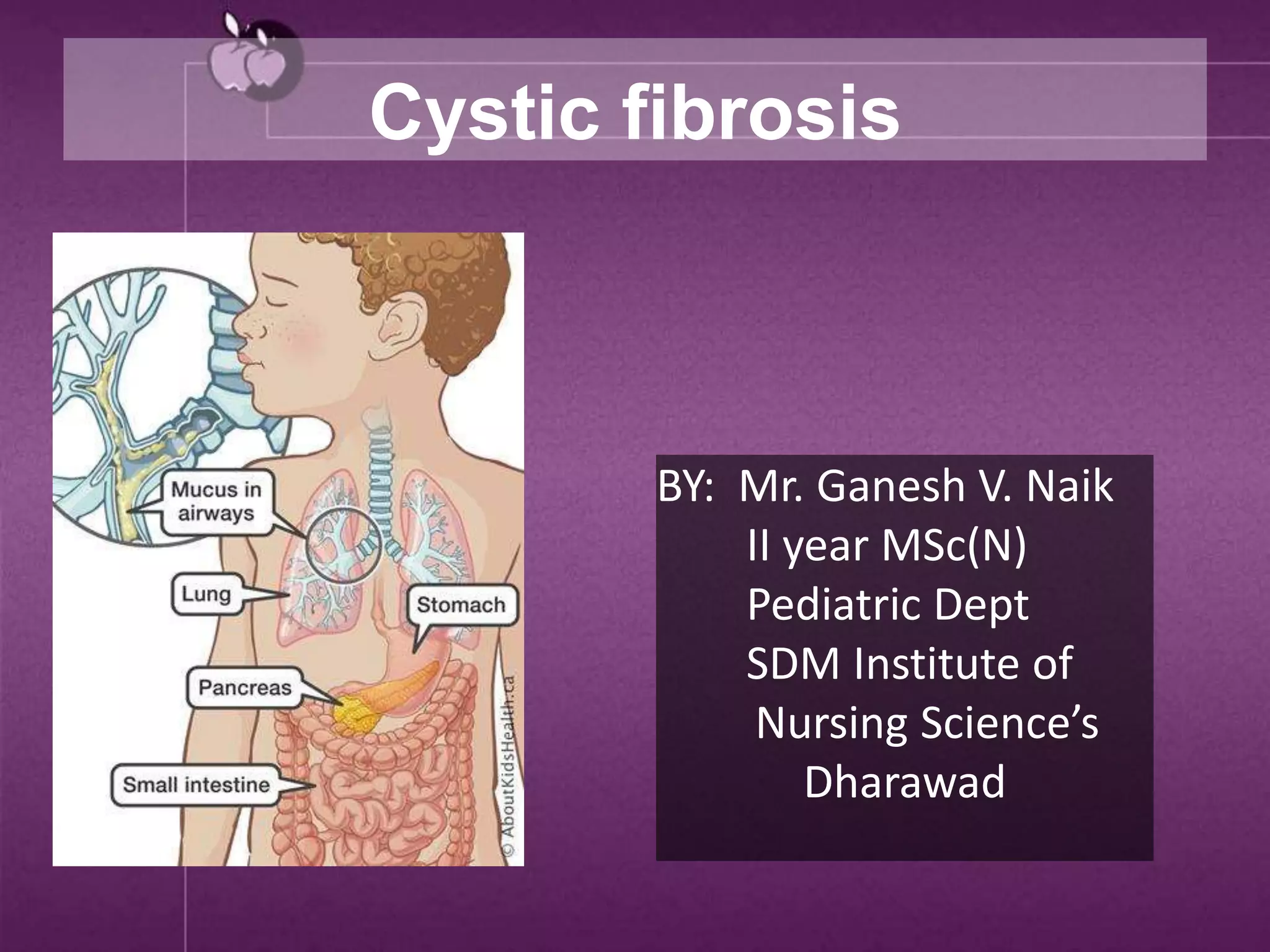
Cystic fibrosis
BY: Mr. Ganesh V. Naik
II year MSc(N)
Pediatric Dept
SDM Institute of
Nursing Science’s
Dharawad
INTRODUCTION
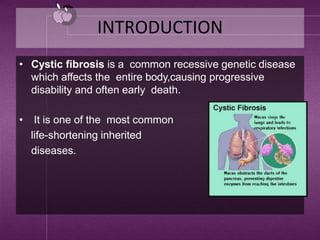
• Cystic fibrosis is a common recessive genetic disease
which affects the entire body,causing progressive
disability and often early death.
• It is one of the most common
life-shortening inherited
diseases.
DEFINITON
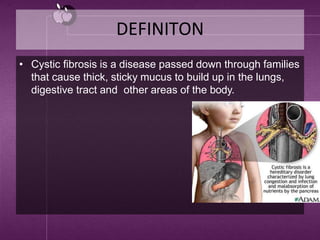
• Cystic fibrosis is a disease passed down through families
that cause thick, sticky mucus to build up in the lungs,
digestive tract and other areas of the body.
ETIOLOGY
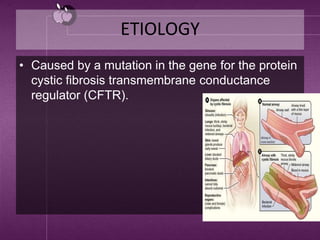
• Caused by a mutation in the gene for the protein
cystic fibrosis transmembrane conductance
regulator (CFTR).
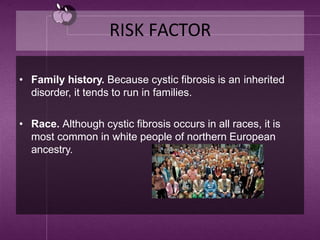
RISK FACTOR
• Family history. Because cystic fibrosis is an inherited
disorder, it tends to run in families.
• Race. Although cystic fibrosis occurs in all races, it is
most common in white people of northern European
ancestry.
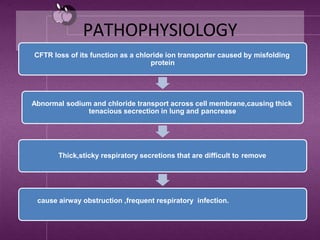
PATHOPHYSIOLOGY
CFTR loss of its function as a chloride ion transporter caused by misfolding
protein
Abnormal sodium and chloride transport across cell membrane,causing thick
tenacious secrection in lung and pancrease
Thick,sticky respiratory secretions that are difficult to remove
cause airway obstruction ,frequent respiratory infection.
CLINICAL MANIFESTATION
• Symptoms related to the respiratory
system include :
 Cough
 Fatigue
 Nasal congestion
 Recurrent episodes of pneumonia.
CON’T…
In newborns :
Delayed growth
Failure to gain weight
No bowel movement
Salty skin
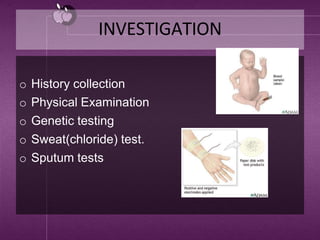
INVESTIGATION
o History collection
o Physical Examination
o Genetic testing
o Sweat(chloride) test.
o Sputum tests
CON’T…
• Pulmonary Function Test
• Chest x-rays
MEDICAL TREATMENT
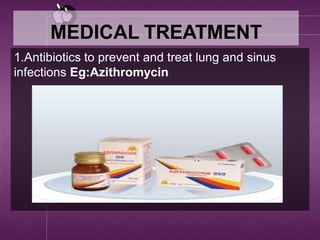
1.Antibiotics to prevent and treat lung and sinus
infections Eg:Azithromycin
CON’T…
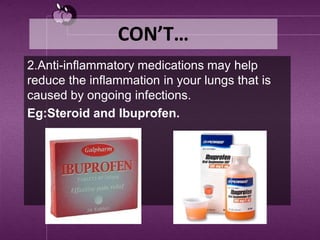
2.Anti-inflammatory medications may help
reduce the inflammation in your lungs that is
caused by ongoing infections.
Eg:Steroid and Ibuprofen.
CON’T…
3.Inhaled medicines to help open the
airways. (eg:Mucolytics like Bisolven®)
CON’T…
4.Gene therapy. attempts to place a normal copy
of the CFTR gene into affected cells
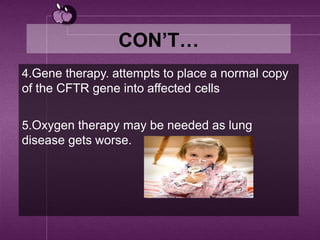
5.Oxygen therapy may be needed as lung
disease gets worse.
SURGICAL TREATMENT
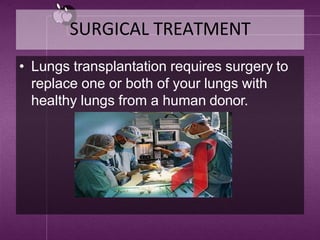
• Lungs transplantation requires surgery to
replace one or both of your lungs with
healthy lungs from a human donor.
COMPLICATION
• Many different types of complication can
occur with CF. The most complications affect
the respiratory,and digestive tract.
Respiratory system include :
Bronchiectasis
Chronic infection
CON’T…
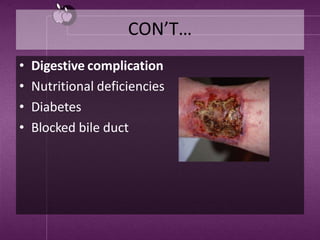
• Digestive complication
• Nutritional deficiencies
• Diabetes
• Blocked bile duct
PREVENTION
• Actually,there is no way to prevent cystic fibrosis
because it is genetic disorder.
• But,if people or their partner has close relatives
who have cystic fibrosis,they both might want to
undergo genetic testing before having children of
they own.
HEALTH TEACHING
• Encourage patient avoid exposure to smoke,
dust, dirt, fumes, household chemicals,
fireplace smoke.
• Teach patient clearing or bringing up mucus or
secretions from the airways.
CON’T…
• Encourage patient
drinking plenty of fluids.
• Encourage patient to do exercising two or
three time a week.
Cystic fibosis

Cystic fibosis

  • 1.
    Cystic fibrosis BY: Mr.Ganesh V. Naik II year MSc(N) Pediatric Dept SDM Institute of Nursing Science’s Dharawad
  • 2.
    INTRODUCTION • Cystic fibrosisis a common recessive genetic disease which affects the entire body,causing progressive disability and often early death. • It is one of the most common life-shortening inherited diseases.
  • 3.
    DEFINITON • Cystic fibrosisis a disease passed down through families that cause thick, sticky mucus to build up in the lungs, digestive tract and other areas of the body.
  • 4.
    ETIOLOGY • Caused bya mutation in the gene for the protein cystic fibrosis transmembrane conductance regulator (CFTR).
  • 5.
    RISK FACTOR • Familyhistory. Because cystic fibrosis is an inherited disorder, it tends to run in families. • Race. Although cystic fibrosis occurs in all races, it is most common in white people of northern European ancestry.
  • 6.
    PATHOPHYSIOLOGY CFTR loss ofits function as a chloride ion transporter caused by misfolding protein Abnormal sodium and chloride transport across cell membrane,causing thick tenacious secrection in lung and pancrease Thick,sticky respiratory secretions that are difficult to remove cause airway obstruction ,frequent respiratory infection.
  • 7.
    CLINICAL MANIFESTATION • Symptomsrelated to the respiratory system include :  Cough  Fatigue  Nasal congestion  Recurrent episodes of pneumonia.
  • 8.
    CON’T… In newborns : Delayedgrowth Failure to gain weight No bowel movement Salty skin
  • 9.
    INVESTIGATION o History collection oPhysical Examination o Genetic testing o Sweat(chloride) test. o Sputum tests
  • 10.
    CON’T… • Pulmonary FunctionTest • Chest x-rays
  • 11.
    MEDICAL TREATMENT 1.Antibiotics toprevent and treat lung and sinus infections Eg:Azithromycin
  • 12.
    CON’T… 2.Anti-inflammatory medications mayhelp reduce the inflammation in your lungs that is caused by ongoing infections. Eg:Steroid and Ibuprofen.
  • 13.
    CON’T… 3.Inhaled medicines tohelp open the airways. (eg:Mucolytics like Bisolven®)
  • 14.
    CON’T… 4.Gene therapy. attemptsto place a normal copy of the CFTR gene into affected cells 5.Oxygen therapy may be needed as lung disease gets worse.
  • 15.
    SURGICAL TREATMENT • Lungstransplantation requires surgery to replace one or both of your lungs with healthy lungs from a human donor.
  • 16.
    COMPLICATION • Many differenttypes of complication can occur with CF. The most complications affect the respiratory,and digestive tract. Respiratory system include : Bronchiectasis Chronic infection
  • 17.
    CON’T… • Digestive complication •Nutritional deficiencies • Diabetes • Blocked bile duct
  • 18.
    PREVENTION • Actually,there isno way to prevent cystic fibrosis because it is genetic disorder. • But,if people or their partner has close relatives who have cystic fibrosis,they both might want to undergo genetic testing before having children of they own.
  • 19.
    HEALTH TEACHING • Encouragepatient avoid exposure to smoke, dust, dirt, fumes, household chemicals, fireplace smoke. • Teach patient clearing or bringing up mucus or secretions from the airways.
  • 20.
    CON’T… • Encourage patient drinkingplenty of fluids. • Encourage patient to do exercising two or three time a week.