Plants
Defining Plants
Land plants have two major features

 1. Protected embryos

 2. Multicellular haploid and diploid phases


                                               2
Defining Plants
Adaptations to terrestrial life

  1. Protection from desiccation by a waxy
  cuticle and stomata
  2. Evolution of leaves which increase
  photosynthetic surface area
  3. Shift to a dominant vertical diploid
  generation
                                             3
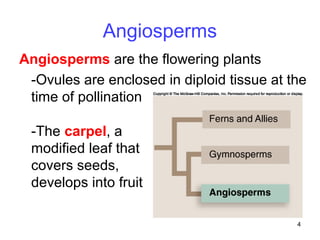
Angiosperms
Angiosperms are the flowering plants
 -Ovules are enclosed in diploid tissue at the
 time of pollination

 -The carpel, a
 modified leaf that
 covers seeds,
 develops into fruit

                                            4
Angiosperms
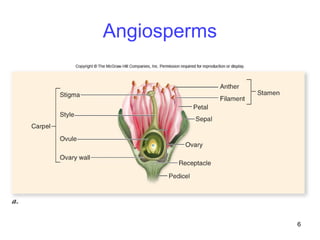
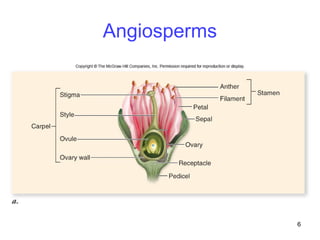
Flower morphology
  -Outermost whorl = Sepals
  -Second whorl = Petals
  -Third whorl = Stamens (androecium)
     -Each stamen has a pollen-bearing
     anther and a filament (stalk)
  -Innermost whorl = Gynoecium
     -Consists of one or more carpels that
  house the female gametophyte               5
Angiosperms


              6
Angiosperms


              6

plants

  • 1.
  • 2.
    Defining Plants Land plantshave two major features 1. Protected embryos 2. Multicellular haploid and diploid phases 2
  • 3.
    Defining Plants Adaptations toterrestrial life 1. Protection from desiccation by a waxy cuticle and stomata 2. Evolution of leaves which increase photosynthetic surface area 3. Shift to a dominant vertical diploid generation 3
  • 4.
    Angiosperms Angiosperms are theflowering plants -Ovules are enclosed in diploid tissue at the time of pollination -The carpel, a modified leaf that covers seeds, develops into fruit 4
  • 5.
    Angiosperms Flower morphology -Outermost whorl = Sepals -Second whorl = Petals -Third whorl = Stamens (androecium) -Each stamen has a pollen-bearing anther and a filament (stalk) -Innermost whorl = Gynoecium -Consists of one or more carpels that house the female gametophyte 5
  • 6.
  • 7.