A PLANT GENETIC ASSESSMENT AND CONTROL SYSTEM 
FOR SPACE ENVIRONMENTS 
Drs. Terri Lomax and William Winner 
Department of Botany and Plant Pathology 
Oregon State University
Plants will play an important role in any long-term space exploration……..
.…colonization…..
…..or habitation
Challenges for Plants in Space: 
Microgravity 
Cosmic Radiation 
Low Atmospheric 
Pressure 
High CO2 
Temperature 
????
Adaptable system to measure and optimize the response of plants to any unique space conditionPlant Genetic Assessment and Control 
The Solution: 
Plant Genomics 
in Space Environments 
Module
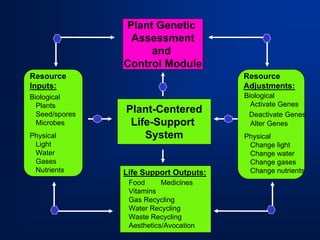
Plant Genetic Assessmentand Control ModuleResource Adjustments: BiologicalActivate GenesDeactivate GenesAlter GenesPhysicalChange lightChange waterChange gasesChange nutrientsPlant-CenteredLife-Support SystemLife Support Outputs: FoodMedicines VitaminsGas RecyclingWater RecyclingWaste RecyclingAesthetics/AvocationResource Inputs: BiologicalPlantsSeed/sporesMicrobesPhysicalLightWaterGasesNutrients
Plants respond to their environment by changing gene expressionPlant Genetic Assessment and Control Modulee.g. high CO2mRNA transcription from theRubiscogeneIncreasedRubiscoprotein Increased photosynthesisoutputs
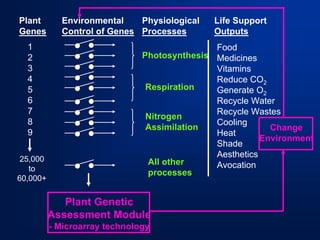
25,000to60,000+ EnvironmentalControl of GenesPhysiologicalProcessesLife SupportOutputsPlantGenes 123456789 PhotosynthesisRespirationNitrogenAssimilationAll otherprocessesFoodMedicinesVitaminsReduce CO2Generate O2Recycle WaterRecycle WastesCoolingHeatShadeAestheticsAvocationPlant GeneticAssessment Module-Microarray technologyChangeEnvironment
Basic Architecture for 
Plant Genomics in Space EnvironmentsModify GenesModifyEcosystemGene/patternIdentificationOptimizedPerformanceModifyEnvironment 
Space 
Environmental 
Condition 
Test Plant 
RNA 
DNA 
Microarrays
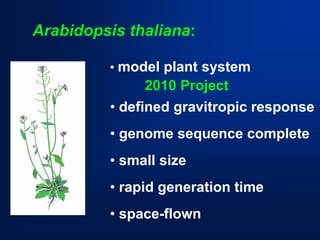
Arabidopsis thaliana: 
•model plant system 
2010 Project 
•defined gravitropic response 
•genome sequence complete 
•small size 
•rapid generation time 
•space-flown
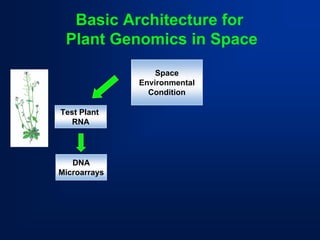
Basic Architecture for 
Plant Genomics in Space 
Space 
Environmental 
Condition 
Test Plant 
RNADNAMicroarrays
Plant Genomics 
in Space Environments 
Microarray Technology•temporal and spatial gene expression •Affymetrix Arabidopsisgene chips with over 8200 genes-next generation chipw/entire genomedue this summer•provides information on gene involvement in a process or pathway
Microarrays carry DNA representing 10,000s of gene
Measuring 
Gene 
Expression 
with 
Microarrays
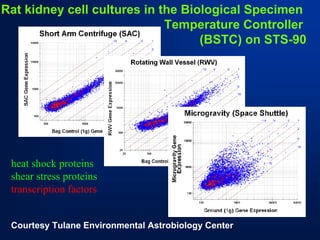
Rat kidney cell cultures in the Biological Specimen 
Temperature Controller 
(BSTC) on STS-90 
heat shock proteins 
shear stress proteins 
transcription factors 
Courtesy Tulane Environmental Astrobiology Center
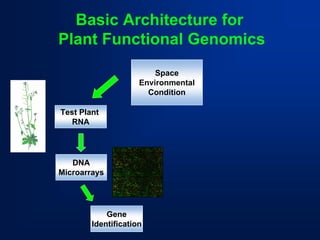
Basic Architecture for 
Plant Functional Genomics 
Space 
Environmental 
Condition 
Test Plant 
RNA 
DNA 
Microarrays 
Gene 
Identification
Data Mining: 
Plant Genome Sequence Databases
Phase I -Issues & Accomplishments 
√ Test plant Arabidopsis thaliana as model system to identify genes involved in the gravitropic response√ Optimize sample preparation for differentialexpression analysis√ AffymetrixMicroarrayanalysis√ Identify genes whose expression increases ArabidopsisDNAMicroarraysArabidopsisDatabaseArabidopsisRNA
Phase II -Plant Genetic 
Assessment and Control 
System 
Based on unique 
combination of systems: 
•Rapid advances in plant genomics 
•Microarraytechnology to measure 
gene expression 
•Bioinformatics 
•Physiological monitoring
Plant Genomics in Space Environments 
Phase II: 
¾Continue testing feasibility of microarray 
analysis 
¾Introduce additional environmental conditi 
¾space-flown plant material 
¾high CO2
OSU Controlled Environment Chamb
Plant Genomics in Space Environments 
Phase II: 
¾Continue testing feasibility of microarray 
analysis 
¾Introduce additional environmental conditions 
¾space-flown plant material 
¾high CO2 
¾Assess the key technology issues for developing 
a Plant Genetic Assessment and Control 
Module
Plant Genomics in Space Environments 
Key Technology Issue -Size:
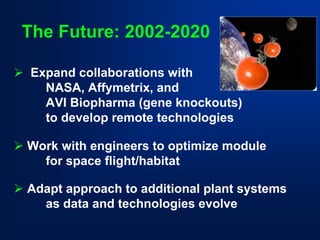
The Future: 2002-2020 
¾Expand collaborations with 
NASA, Affymetrix, and 
AVI Biopharma(gene knockouts) 
to develop remote technologies 
¾Work with engineers to optimize module 
for space flight/habitat 
¾Adapt approach to additional plant systems 
as data and technologies evolve
Acknowledgements: 
Oregon State University: 
TJ White 
Rex Cole 
The Center for Gene Research and Biotechnolo 
Damon Taylor 
Patrick Iverson 
David Stein

Plant genomicsinspacejun02

  • 1.
    A PLANT GENETICASSESSMENT AND CONTROL SYSTEM FOR SPACE ENVIRONMENTS Drs. Terri Lomax and William Winner Department of Botany and Plant Pathology Oregon State University
  • 2.
    Plants will playan important role in any long-term space exploration……..
  • 3.
  • 4.
  • 5.
    Challenges for Plantsin Space: Microgravity Cosmic Radiation Low Atmospheric Pressure High CO2 Temperature ????
  • 6.
    Adaptable system tomeasure and optimize the response of plants to any unique space conditionPlant Genetic Assessment and Control The Solution: Plant Genomics in Space Environments Module
  • 7.
    Plant Genetic AssessmentandControl ModuleResource Adjustments: BiologicalActivate GenesDeactivate GenesAlter GenesPhysicalChange lightChange waterChange gasesChange nutrientsPlant-CenteredLife-Support SystemLife Support Outputs: FoodMedicines VitaminsGas RecyclingWater RecyclingWaste RecyclingAesthetics/AvocationResource Inputs: BiologicalPlantsSeed/sporesMicrobesPhysicalLightWaterGasesNutrients
  • 8.
    Plants respond totheir environment by changing gene expressionPlant Genetic Assessment and Control Modulee.g. high CO2mRNA transcription from theRubiscogeneIncreasedRubiscoprotein Increased photosynthesisoutputs
  • 9.
    25,000to60,000+ EnvironmentalControl ofGenesPhysiologicalProcessesLife SupportOutputsPlantGenes 123456789 PhotosynthesisRespirationNitrogenAssimilationAll otherprocessesFoodMedicinesVitaminsReduce CO2Generate O2Recycle WaterRecycle WastesCoolingHeatShadeAestheticsAvocationPlant GeneticAssessment Module-Microarray technologyChangeEnvironment
  • 10.
    Basic Architecture for Plant Genomics in Space EnvironmentsModify GenesModifyEcosystemGene/patternIdentificationOptimizedPerformanceModifyEnvironment Space Environmental Condition Test Plant RNA DNA Microarrays
  • 11.
    Arabidopsis thaliana: •modelplant system 2010 Project •defined gravitropic response •genome sequence complete •small size •rapid generation time •space-flown
  • 12.
    Basic Architecture for Plant Genomics in Space Space Environmental Condition Test Plant RNADNAMicroarrays
  • 13.
    Plant Genomics inSpace Environments Microarray Technology•temporal and spatial gene expression •Affymetrix Arabidopsisgene chips with over 8200 genes-next generation chipw/entire genomedue this summer•provides information on gene involvement in a process or pathway
  • 14.
    Microarrays carry DNArepresenting 10,000s of gene
  • 15.
    Measuring Gene Expression with Microarrays
  • 16.
    Rat kidney cellcultures in the Biological Specimen Temperature Controller (BSTC) on STS-90 heat shock proteins shear stress proteins transcription factors Courtesy Tulane Environmental Astrobiology Center
  • 17.
    Basic Architecture for Plant Functional Genomics Space Environmental Condition Test Plant RNA DNA Microarrays Gene Identification
  • 18.
    Data Mining: PlantGenome Sequence Databases
  • 19.
    Phase I -Issues& Accomplishments √ Test plant Arabidopsis thaliana as model system to identify genes involved in the gravitropic response√ Optimize sample preparation for differentialexpression analysis√ AffymetrixMicroarrayanalysis√ Identify genes whose expression increases ArabidopsisDNAMicroarraysArabidopsisDatabaseArabidopsisRNA
  • 20.
    Phase II -PlantGenetic Assessment and Control System Based on unique combination of systems: •Rapid advances in plant genomics •Microarraytechnology to measure gene expression •Bioinformatics •Physiological monitoring
  • 21.
    Plant Genomics inSpace Environments Phase II: ¾Continue testing feasibility of microarray analysis ¾Introduce additional environmental conditi ¾space-flown plant material ¾high CO2
  • 22.
  • 23.
    Plant Genomics inSpace Environments Phase II: ¾Continue testing feasibility of microarray analysis ¾Introduce additional environmental conditions ¾space-flown plant material ¾high CO2 ¾Assess the key technology issues for developing a Plant Genetic Assessment and Control Module
  • 24.
    Plant Genomics inSpace Environments Key Technology Issue -Size:
  • 25.
    The Future: 2002-2020 ¾Expand collaborations with NASA, Affymetrix, and AVI Biopharma(gene knockouts) to develop remote technologies ¾Work with engineers to optimize module for space flight/habitat ¾Adapt approach to additional plant systems as data and technologies evolve
  • 26.
    Acknowledgements: Oregon StateUniversity: TJ White Rex Cole The Center for Gene Research and Biotechnolo Damon Taylor Patrick Iverson David Stein