2 Pictures 1 word
___ ___ i___ ___ ___ ___ ___
e ___ ___ ___u ___ ___ ___ ___
___ r ___ ___ ___ ___
___ ___ ___ ___ ___
___ ___ t ___ ___ ___
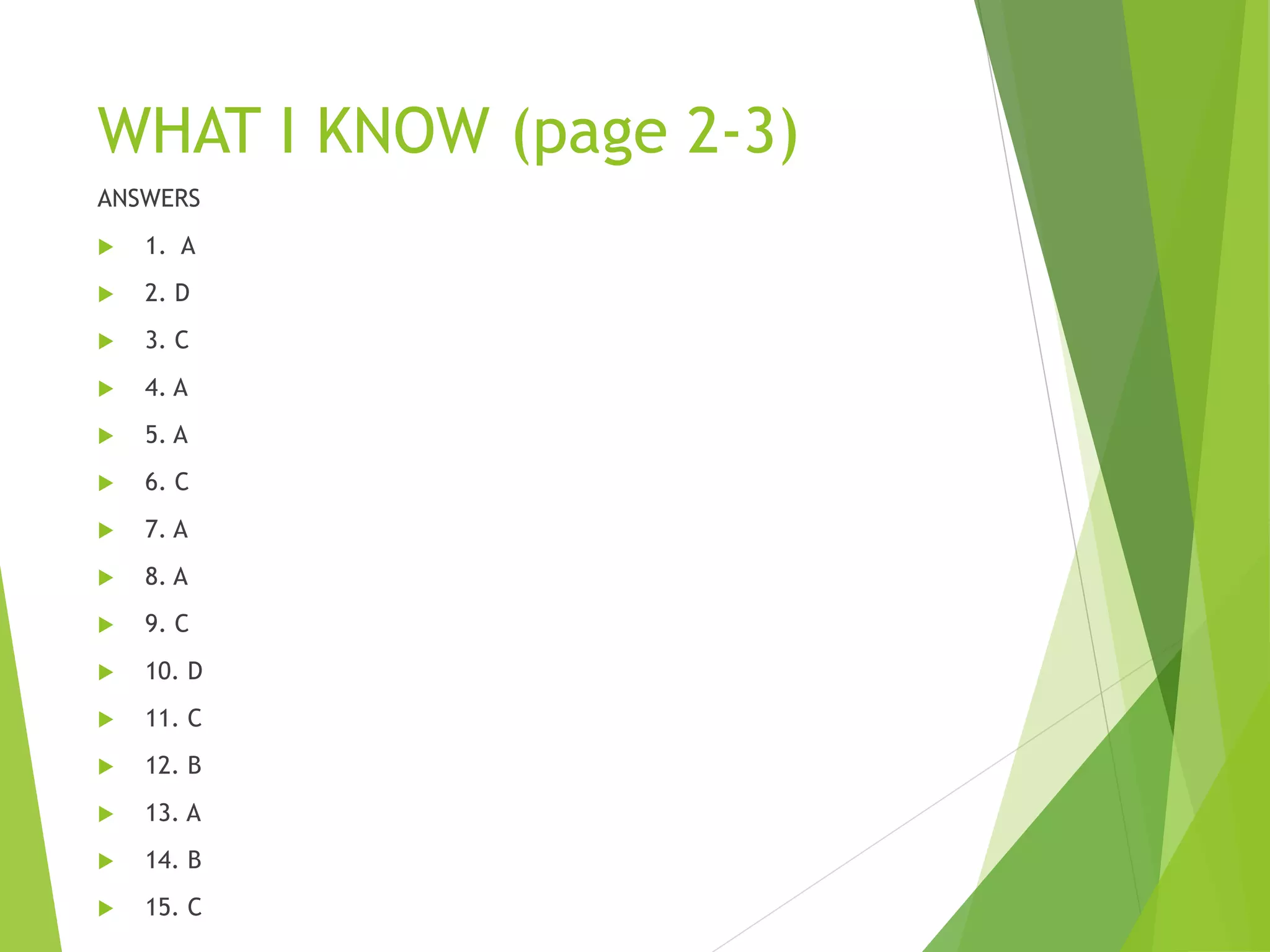
WHAT I KNOW (page 2-3)
ANSWERS
 1. A
 2. D
 3. C
 4. A
 5. A
 6. C
 7. A
 8. A
 9. C
 10. D
 11. C
 12. B
 13. A
 14. B
 15. C
The world where we live
today is just a small part of
our universe. In your
previous years, you have
learned about the different
theories of the origin of the
universe that eventually led
to the formation of galaxies,
solar system and other
heavenly bodies.
This lesson will focus on one
of those wonderful things
present in outer space, the
stars. Although stars are
millions of light years away
from us, we can still see
them twinkling in the night
sky. Let’s find out how they
emit light and what keeps
them shining for a long
time.
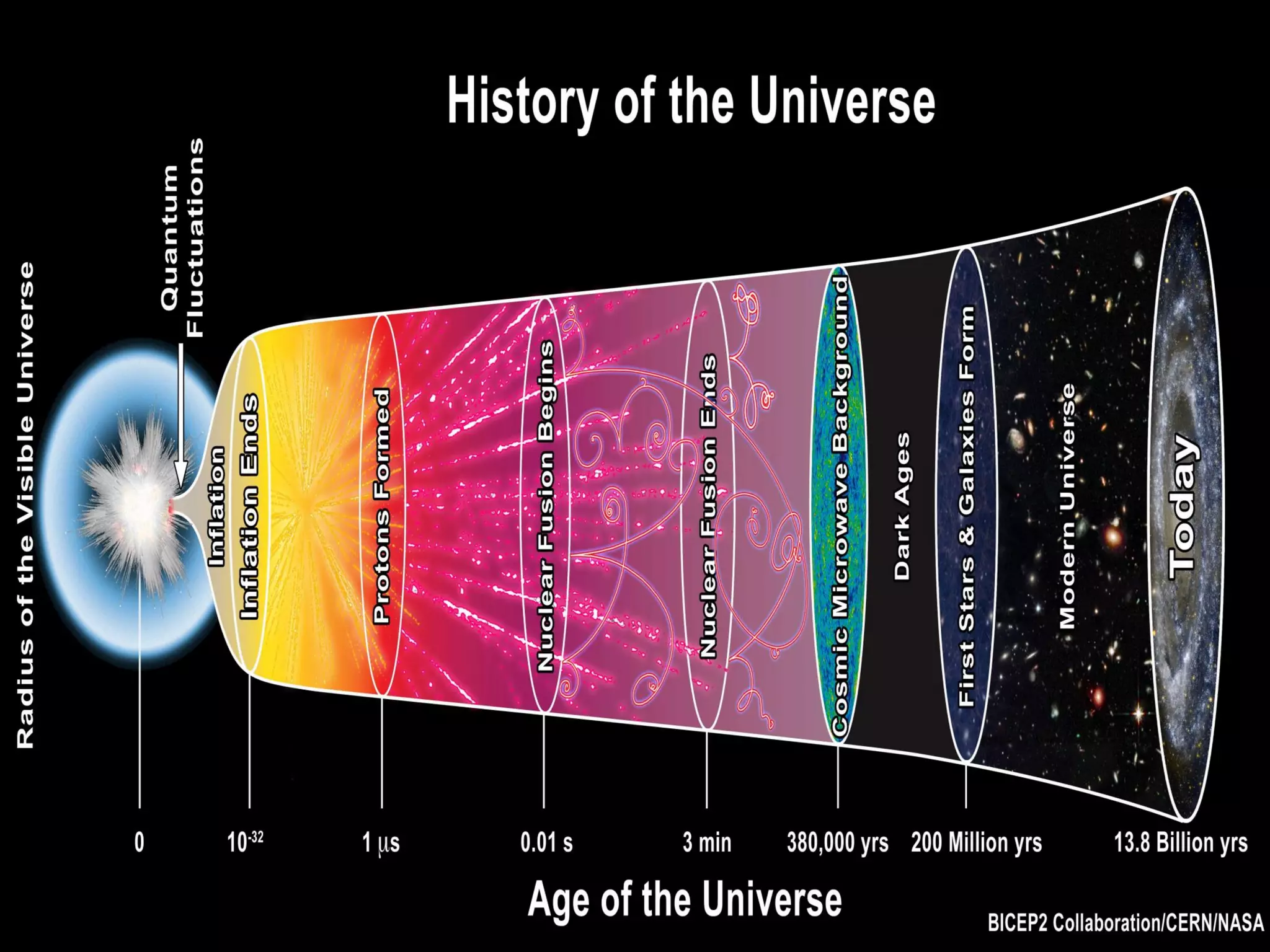
Scientists believe that the
formation of the universe
began through the explosion
of a primordial atom which
happened 13 billion years
ago. It is known as the Big
Bang. It became a theory
that also explains the
continuous expansion of the
universe.
Right after Big Bang, protons
and neutrons combined
together and formed light
elements Hydrogen and
Helium in the process of Big
Bang Nucleosynthesis. Other
light elements such as
Lithium and Beryllium were
also formed during this
process.
Stellar Nucleosynthesis
▪“stellar” – star
▪stellar
nucleosynthesis - the
formation of
elements in the
center of the star
“We are made
up of star
stuff”.
- Carl Sagan-
Have you ever wondered
what we’re made of? Would
you believe that you and me
and all of the plants and all
of the animals that we can
see are all made of the same
kind of stuff that makes up
books and rocks and
mountains and the ocean?
We’re all made
from the same
kind of stuff, and
we call that stuff
“m __ t __ __ __”.
Stars are huge
superheated
bodies of mass
that are formed
from clouds and
dust.
Let’s Watch
Video Clips
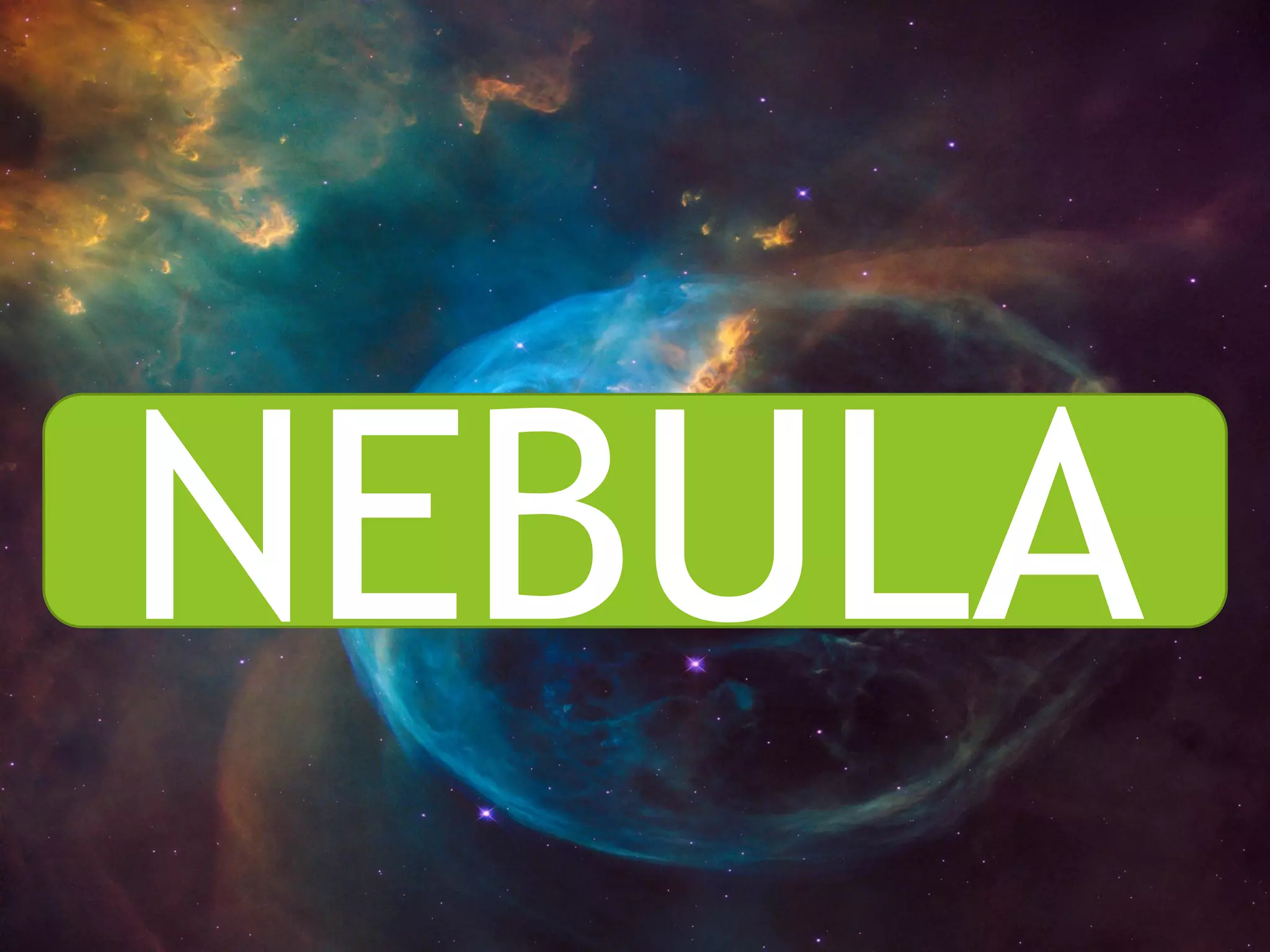
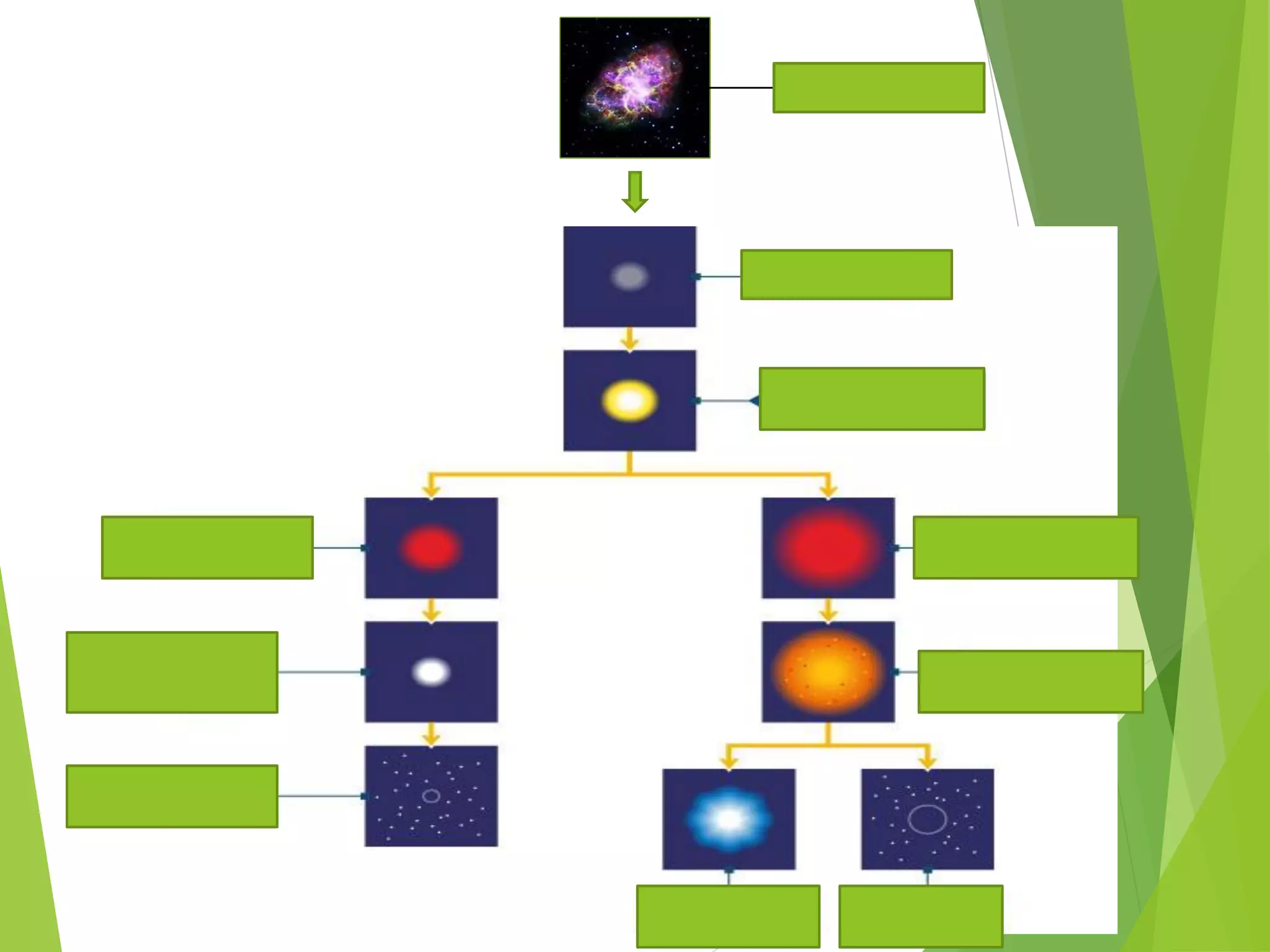
NEBULA
Just like people, stars
have different stages
depending on the age
and grow to become
even larger until they
finally lose their life.
There are two
different paths
of which a star
can be created.
The first path occurs
when a region of high
density in a stellar
nebula condenses
into a single point of
matter that becomes
hotter and starts to
glow.
Particles of dust
and gas are the
first ingredients
used to make
stars.
Nebula

physical science module 1.pdf

  • 2.
  • 3.
    ___ ___ i______ ___ ___ ___
  • 5.
    e ___ ______u ___ ___ ___ ___
  • 7.
    ___ r ______ ___ ___
  • 9.
    ___ ___ ______ ___
  • 11.
    ___ ___ t___ ___ ___
  • 13.
    WHAT I KNOW(page 2-3) ANSWERS  1. A  2. D  3. C  4. A  5. A  6. C  7. A  8. A  9. C  10. D  11. C  12. B  13. A  14. B  15. C
  • 14.
    The world wherewe live today is just a small part of our universe. In your previous years, you have learned about the different theories of the origin of the universe that eventually led to the formation of galaxies, solar system and other heavenly bodies.
  • 15.
    This lesson willfocus on one of those wonderful things present in outer space, the stars. Although stars are millions of light years away from us, we can still see them twinkling in the night sky. Let’s find out how they emit light and what keeps them shining for a long time.
  • 16.
    Scientists believe thatthe formation of the universe began through the explosion of a primordial atom which happened 13 billion years ago. It is known as the Big Bang. It became a theory that also explains the continuous expansion of the universe.
  • 18.
    Right after BigBang, protons and neutrons combined together and formed light elements Hydrogen and Helium in the process of Big Bang Nucleosynthesis. Other light elements such as Lithium and Beryllium were also formed during this process.
  • 20.
    Stellar Nucleosynthesis ▪“stellar” –star ▪stellar nucleosynthesis - the formation of elements in the center of the star
  • 21.
    “We are made upof star stuff”. - Carl Sagan-
  • 22.
    Have you everwondered what we’re made of? Would you believe that you and me and all of the plants and all of the animals that we can see are all made of the same kind of stuff that makes up books and rocks and mountains and the ocean?
  • 23.
    We’re all made fromthe same kind of stuff, and we call that stuff “m __ t __ __ __”.
  • 24.
    Stars are huge superheated bodiesof mass that are formed from clouds and dust.
  • 25.
  • 26.
  • 27.
    Just like people,stars have different stages depending on the age and grow to become even larger until they finally lose their life.
  • 28.
    There are two differentpaths of which a star can be created.
  • 29.
    The first pathoccurs when a region of high density in a stellar nebula condenses into a single point of matter that becomes hotter and starts to glow.
  • 30.
    Particles of dust andgas are the first ingredients used to make stars.
  • 33.