Subject : Physical Science
Lesson 1: Formation of Heavy Elements
Prepared By: Sir Aldrin Joseph F. Lacuarin
PHYSICAL SCIENCE
is an encompassing term for the branches of natural
science, and science (generally), that study non-living
systems, in contrast to the biological sciences.
However, the term "physical" creates an unintended,
somewhat arbitrary distinction, since many branches of
physical science also study biological phenomena.
Basic physical science topics include
Astronomy - the study of the universe beyond the
atmosphere of the Earth
Chemistry - the science dealing with the composition of
substances, their interactions with energy and each other
Geology - the study of the planetary structure of Earth
and the physical processes which shape it
Meteorology - the study of weather patterns and other
atmospheric phenomena
Oceanography - the study of the ocean as a physical
system
Physics - the quantitative science dealing with matter
and energy
DIVINE CREATION THEORY
the belief that the universe and the various forms of life
were created by God out of nothing
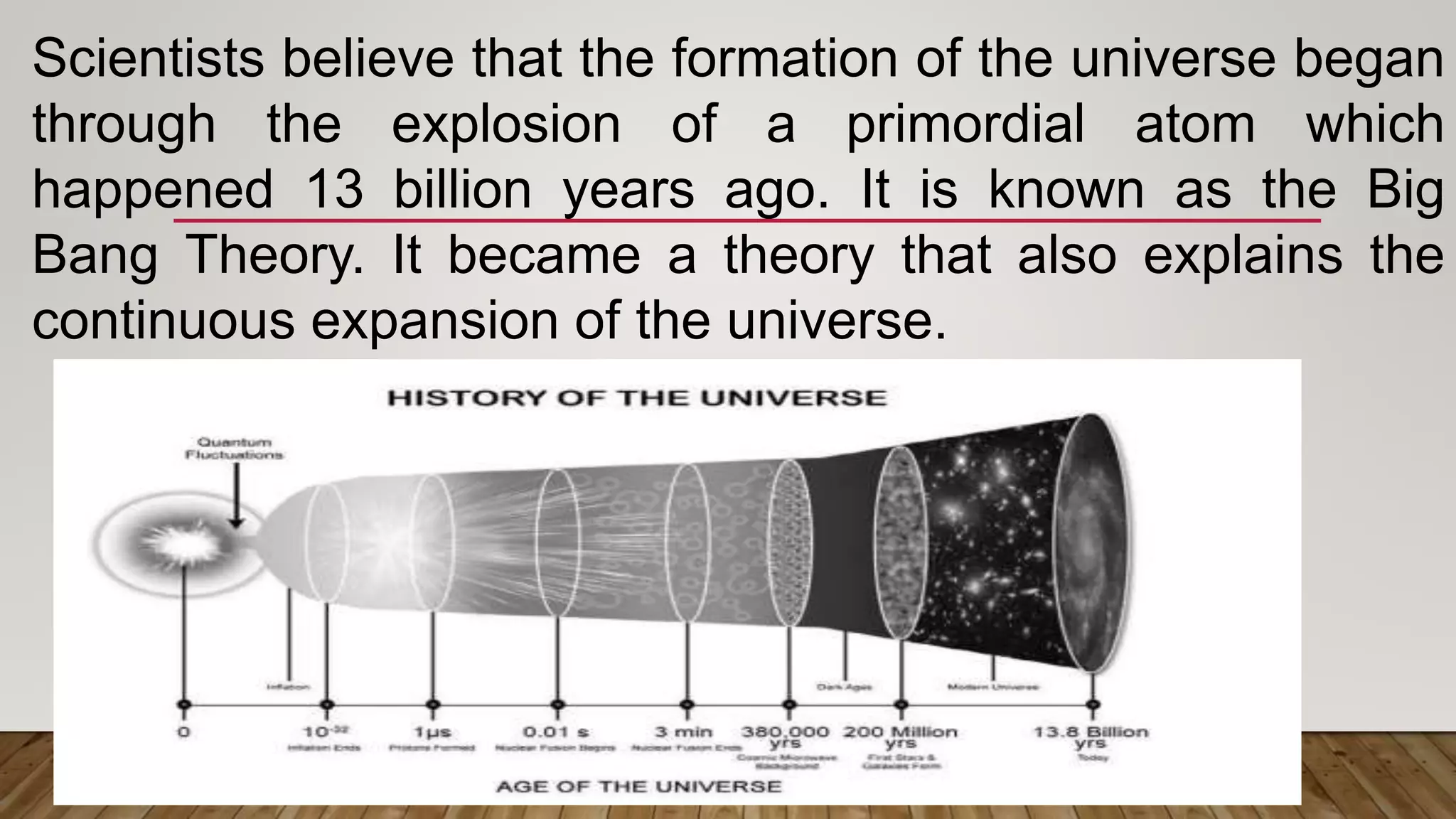
Scientists believe that the formation of the universe began
through the explosion of a primordial atom which
happened 13 billion years ago. It is known as the Big
Bang Theory. It became a theory that also explains the
continuous expansion of the universe.
THE ORIGIN OF LIGHT ELEMENTS
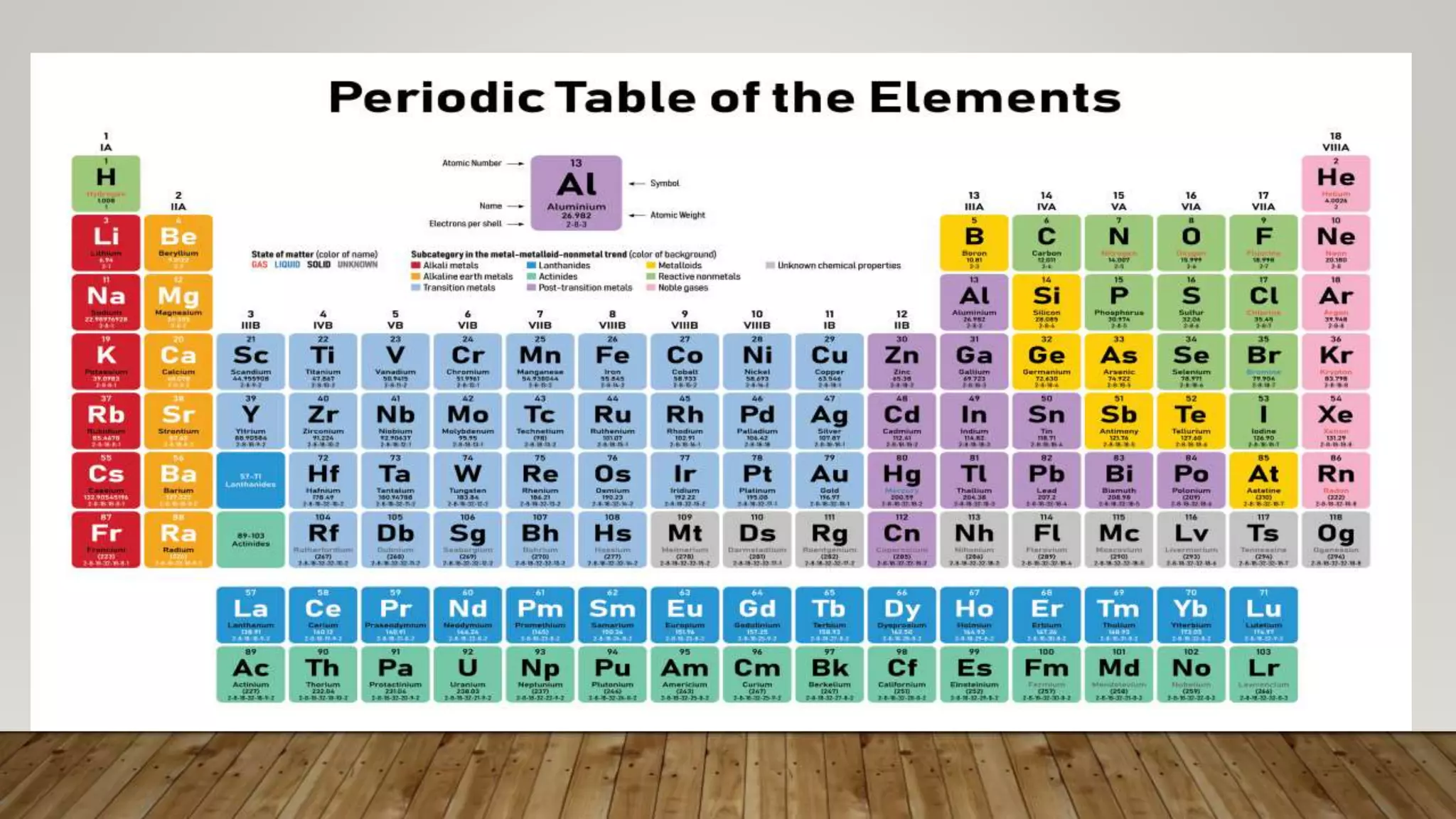
Right after Big Bang, protons and neutrons combined
together and formed light elements Hydrogen and Helium
in the process of Big Bang Nucleosynthesis. Other light
elements such as Lithium and Beryllium were also
formed during this process.
Stellar Nucleosynthesis
The word “stellar” means star and the formation of
elements in the center of the star is called stellar
nucleosynthesis. Carl Sagan said that “We are made of
star stuff.” What did he mean by that? If we know how
some important heavy elements were formed same as
stars, that maybe a
clue.
Lesson 1 Formation of Heavy Elements.pptx

Lesson 1 Formation of Heavy Elements.pptx

  • 1.
    Subject : PhysicalScience Lesson 1: Formation of Heavy Elements Prepared By: Sir Aldrin Joseph F. Lacuarin
  • 2.
    PHYSICAL SCIENCE is anencompassing term for the branches of natural science, and science (generally), that study non-living systems, in contrast to the biological sciences. However, the term "physical" creates an unintended, somewhat arbitrary distinction, since many branches of physical science also study biological phenomena. Basic physical science topics include
  • 3.
    Astronomy - thestudy of the universe beyond the atmosphere of the Earth Chemistry - the science dealing with the composition of substances, their interactions with energy and each other Geology - the study of the planetary structure of Earth and the physical processes which shape it
  • 4.
    Meteorology - thestudy of weather patterns and other atmospheric phenomena Oceanography - the study of the ocean as a physical system Physics - the quantitative science dealing with matter and energy
  • 5.
    DIVINE CREATION THEORY thebelief that the universe and the various forms of life were created by God out of nothing
  • 7.
    Scientists believe thatthe formation of the universe began through the explosion of a primordial atom which happened 13 billion years ago. It is known as the Big Bang Theory. It became a theory that also explains the continuous expansion of the universe.
  • 8.
    THE ORIGIN OFLIGHT ELEMENTS Right after Big Bang, protons and neutrons combined together and formed light elements Hydrogen and Helium in the process of Big Bang Nucleosynthesis. Other light elements such as Lithium and Beryllium were also formed during this process.
  • 10.
    Stellar Nucleosynthesis The word“stellar” means star and the formation of elements in the center of the star is called stellar nucleosynthesis. Carl Sagan said that “We are made of star stuff.” What did he mean by that? If we know how some important heavy elements were formed same as stars, that maybe a clue.