Physical science basis perspective
IPCC Working Group 1
Valérie Masson-Delmotte
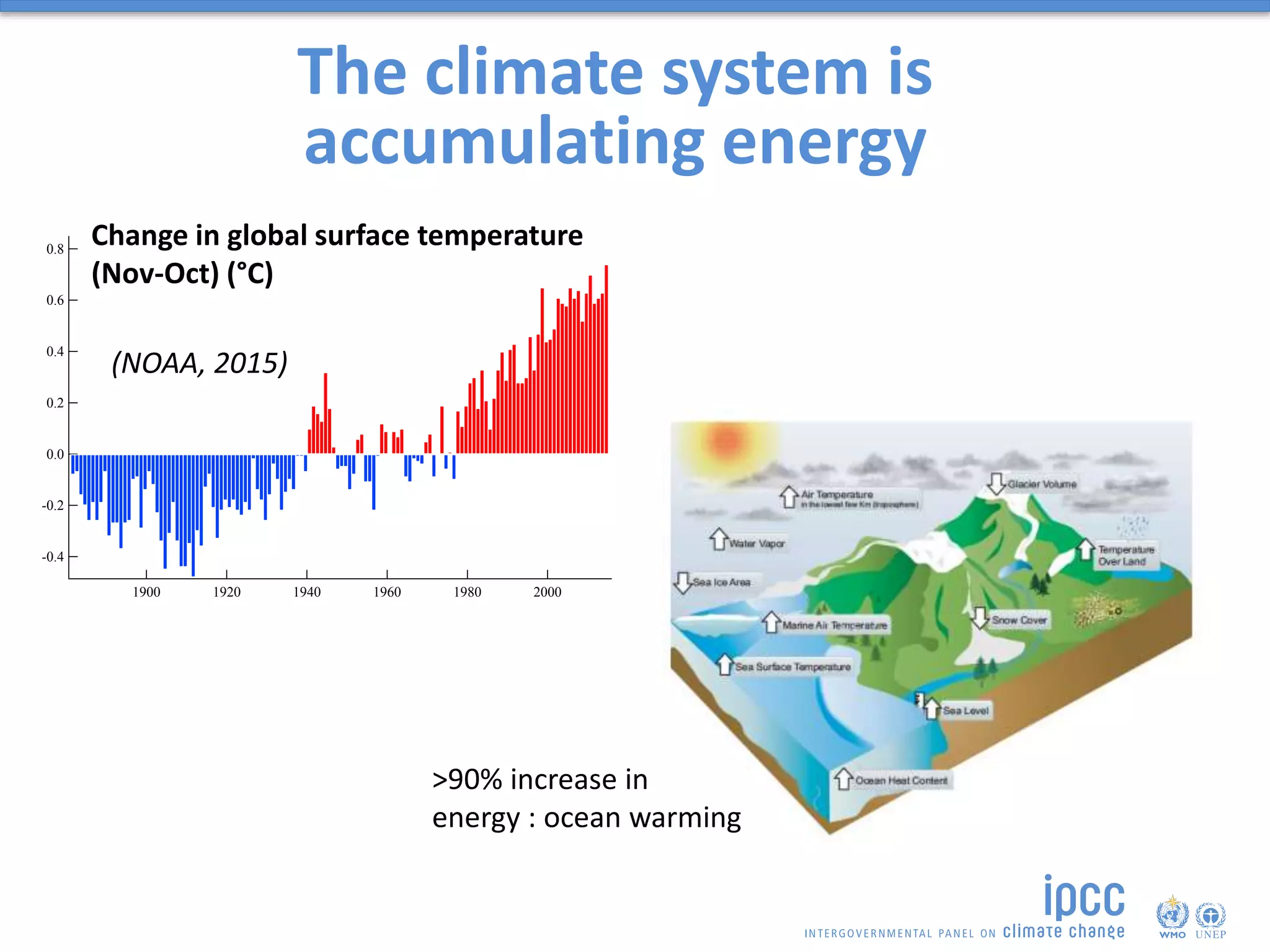
The climate system is
accumulating energy
0.8
0.6
0.4
0.2
0.0
-0.2
-0.4
200019801960194019201900
Change in global surface temperature
(Nov-Oct) (°C)
(NOAA, 2015)
>90% increase in
energy : ocean warming
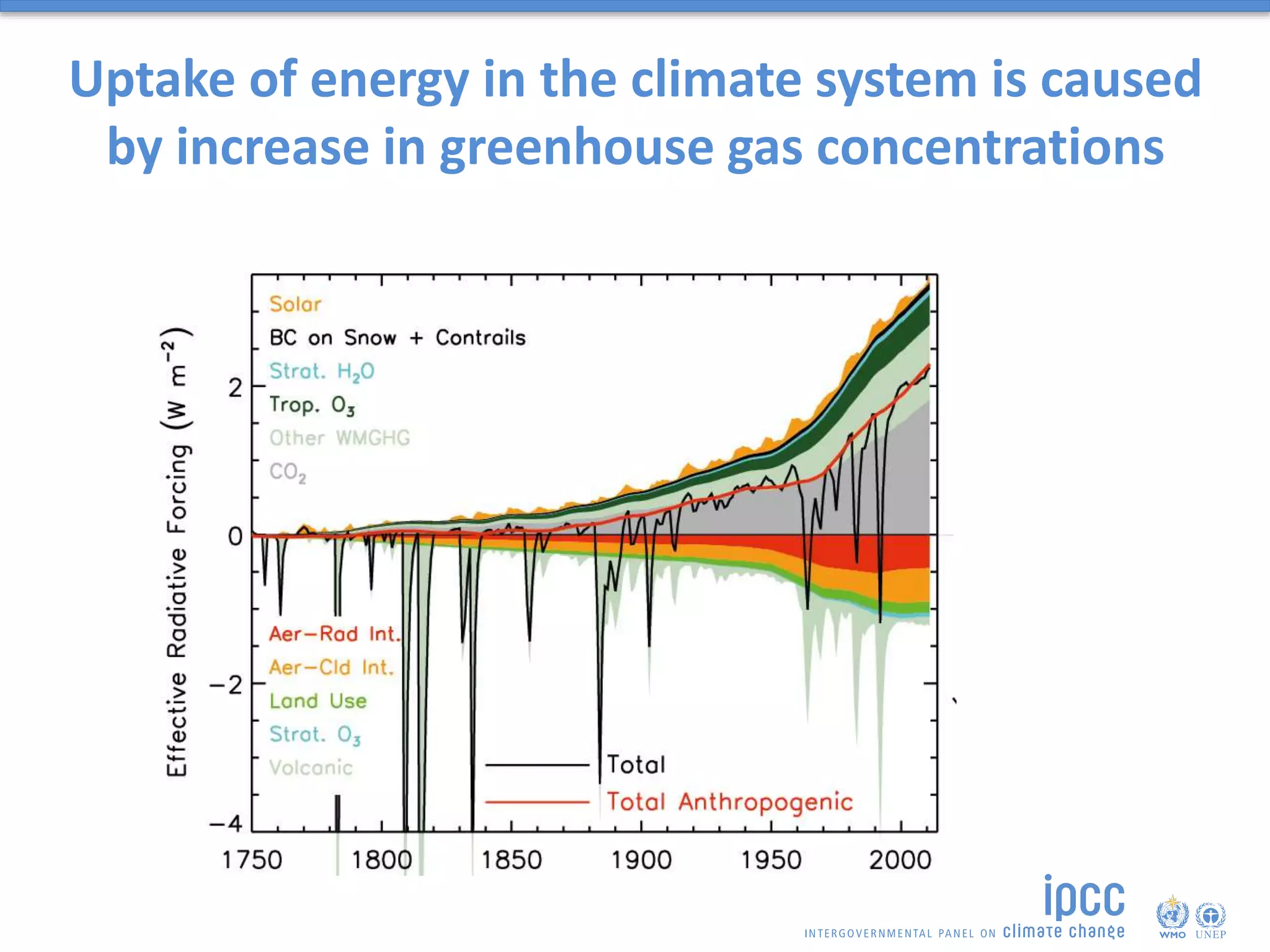
Uptake of energy in the climate system is caused
by increase in greenhouse gas concentrations
Uptake of energy in the climate system is caused
by increase in greenhouse gas concentrations
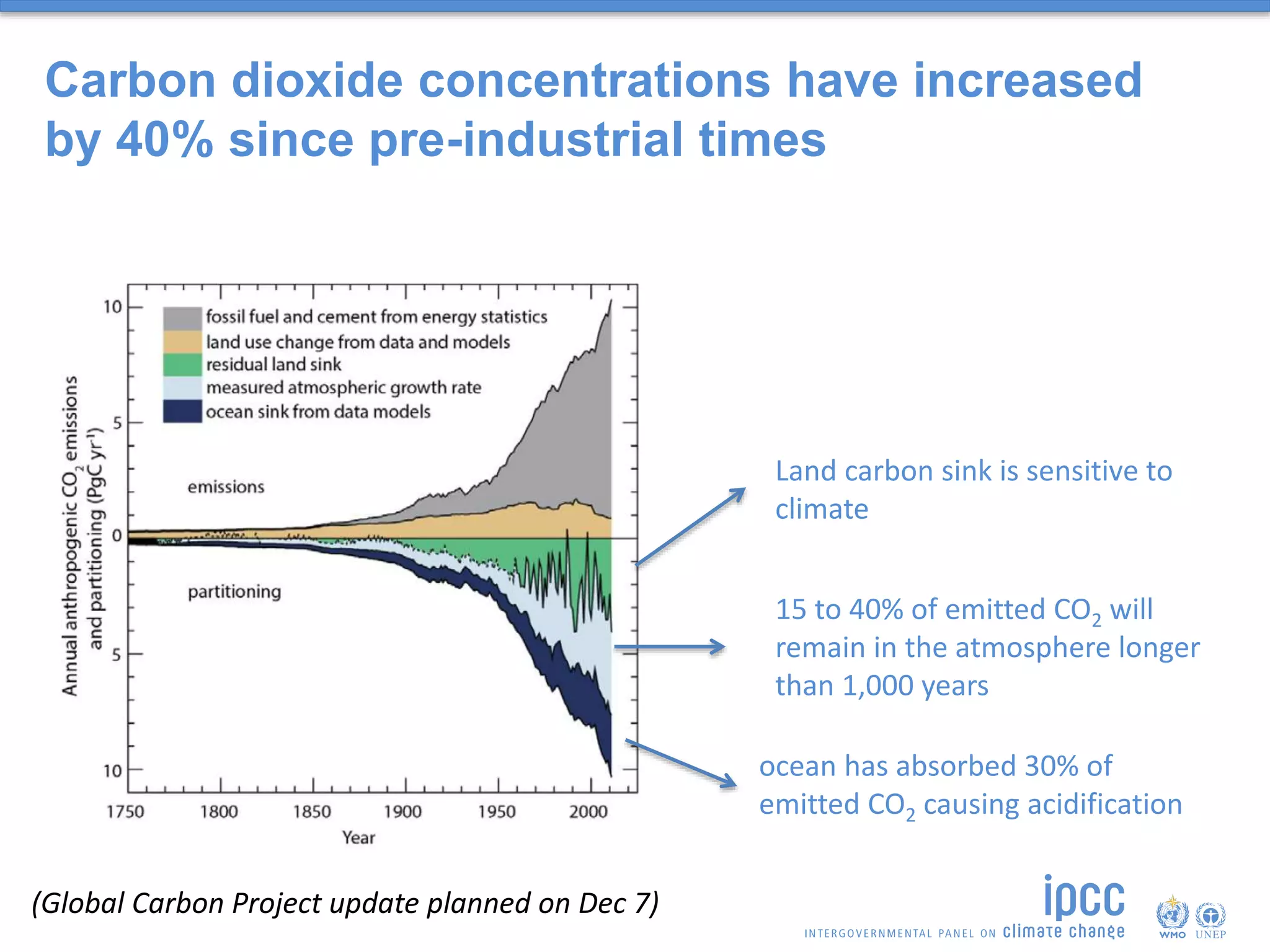
Carbon dioxide concentrations have increased
by 40% since pre-industrial times
ocean has absorbed 30% of
emitted CO2 causing acidification
15 to 40% of emitted CO2 will
remain in the atmosphere longer
than 1,000 years
Land carbon sink is sensitive to
climate
(Global Carbon Project update planned on Dec 7)
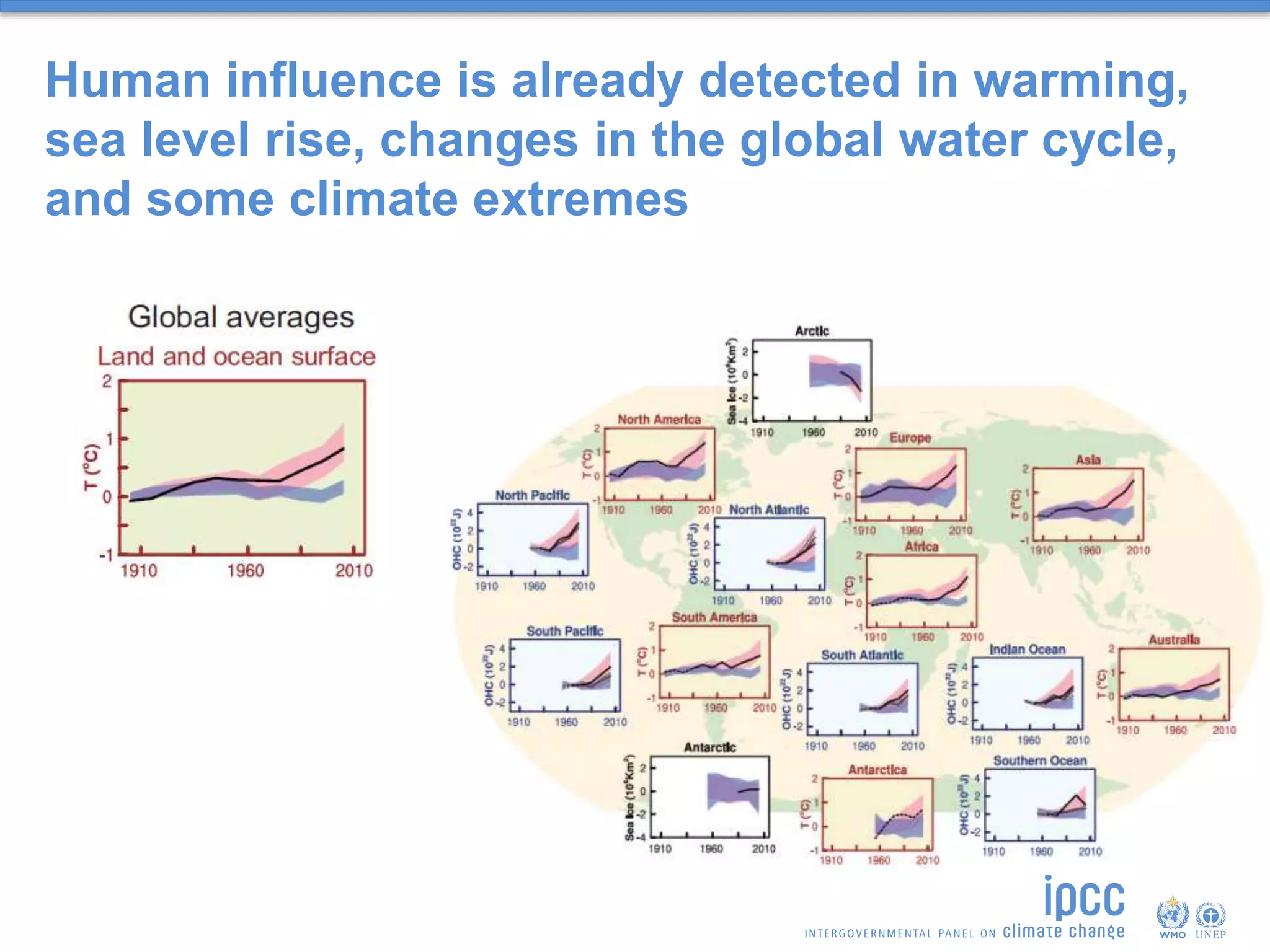
Human influence is already detected in warming,
sea level rise, changes in the global water cycle,
and some climate extremes
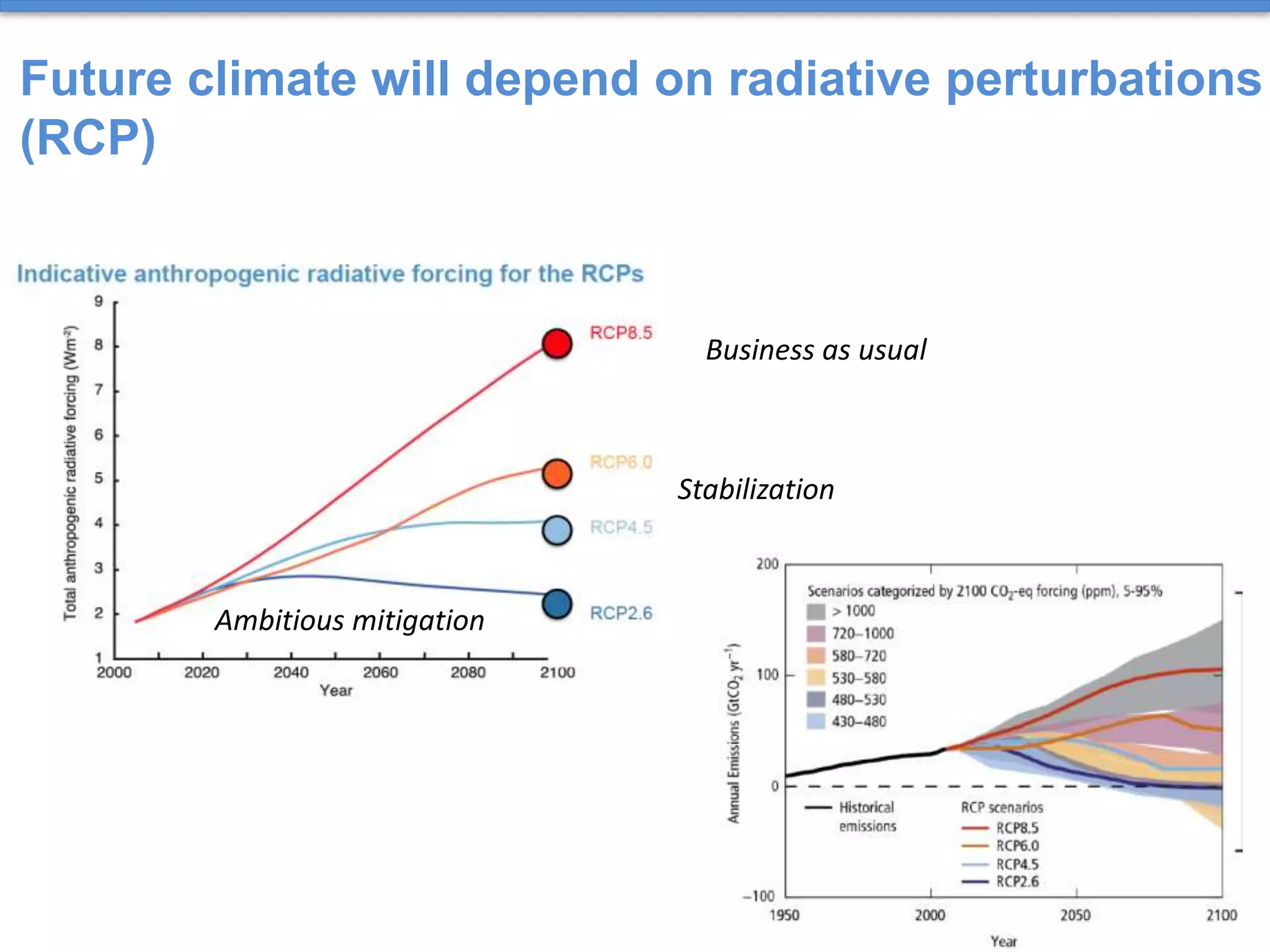
Business as usual
Stabilization
Ambitious mitigation
Future climate will depend on radiative perturbations
(RCP)
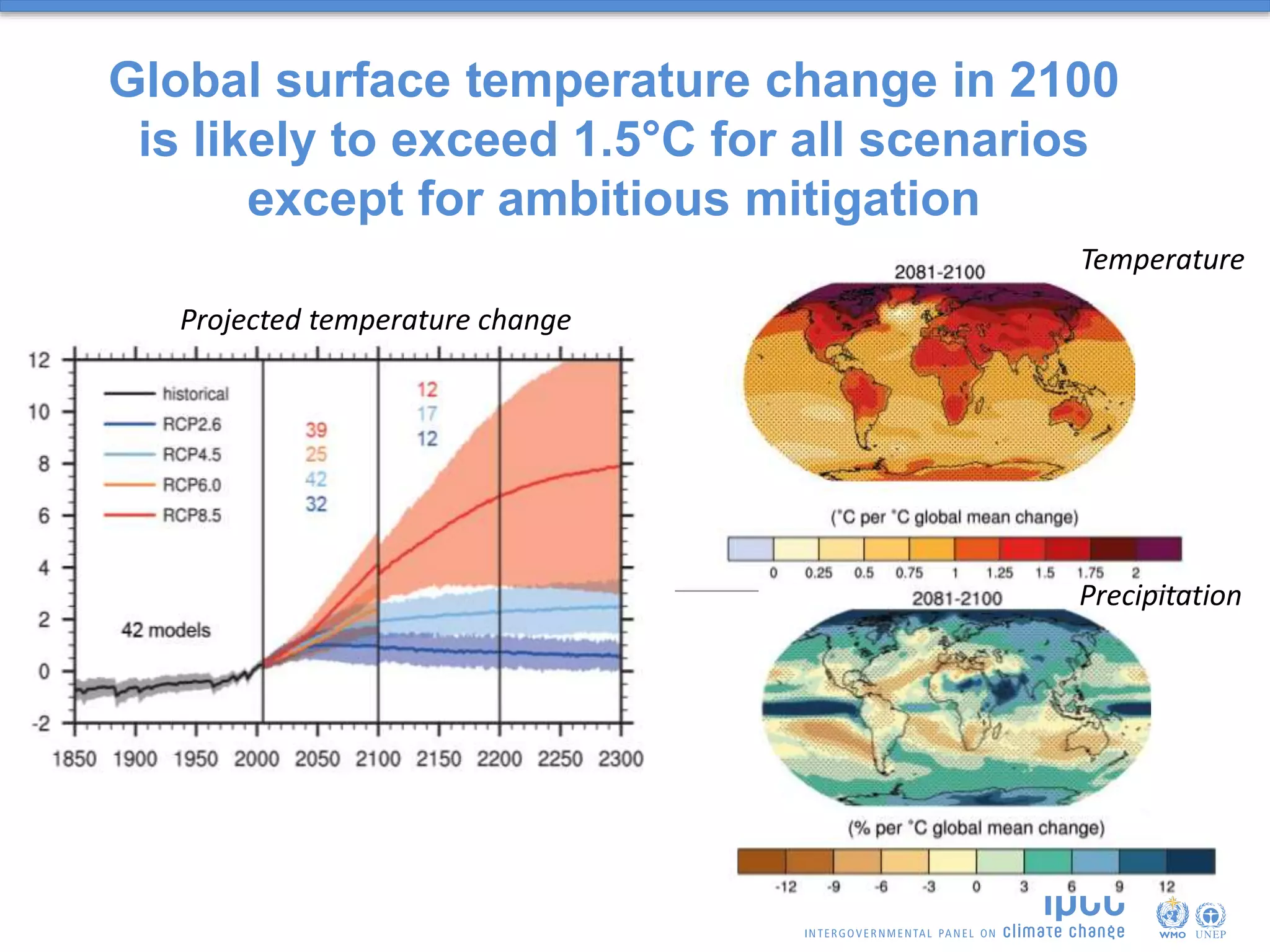
Global surface temperature change in 2100
is likely to exceed 1.5°C for all scenarios
except for ambitious mitigation
Temperature
Projected temperature change
Precipitation
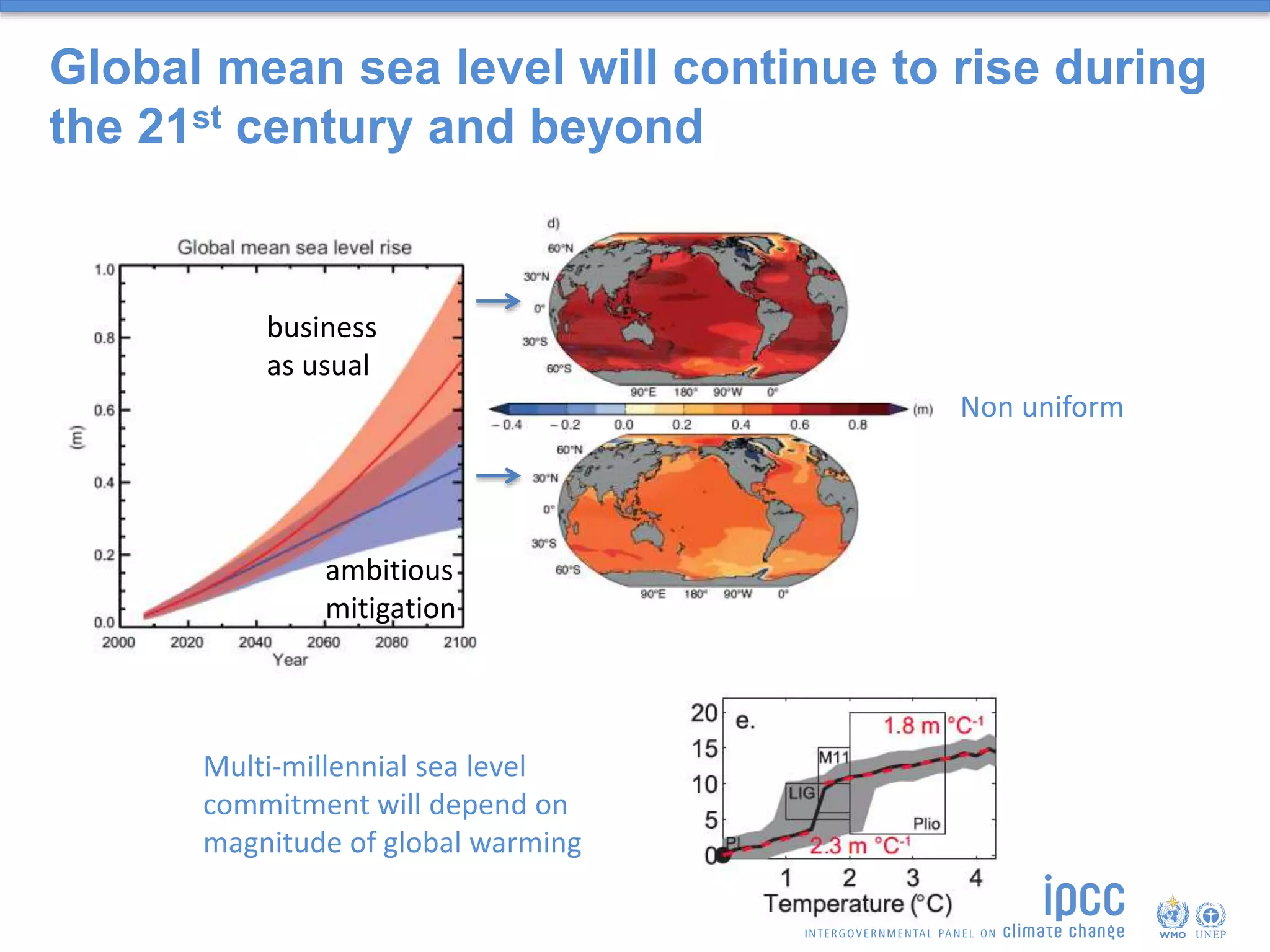
Global mean sea level will continue to rise during
the 21st century and beyond
business
as usual
ambitious
mitigation
Multi-millennial sea level
commitment will depend on
magnitude of global warming
Non uniform
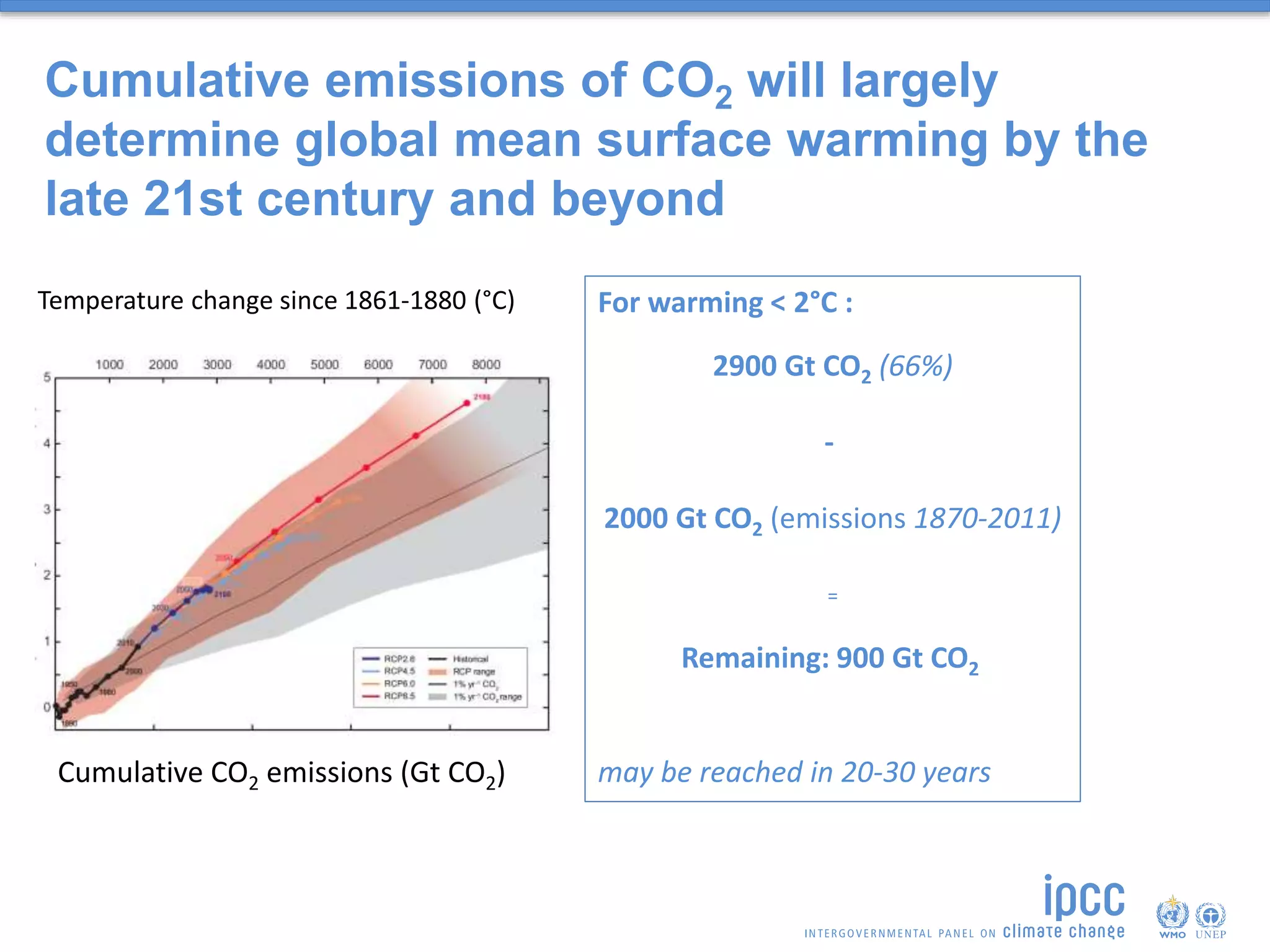
Cumulative CO2 emissions (Gt CO2)
Temperature change since 1861-1880 (°C) For warming < 2°C :
2900 Gt CO2 (66%)
-
2000 Gt CO2 (emissions 1870-2011)
=
Remaining: 900 Gt CO2
may be reached in 20-30 years
Cumulative emissions of CO2 will largely
determine global mean surface warming by the
late 21st century and beyond

Physical science basis perspective- IPCC Working Group 1

  • 1.
    Physical science basisperspective IPCC Working Group 1 Valérie Masson-Delmotte
  • 2.
    The climate systemis accumulating energy 0.8 0.6 0.4 0.2 0.0 -0.2 -0.4 200019801960194019201900 Change in global surface temperature (Nov-Oct) (°C) (NOAA, 2015) >90% increase in energy : ocean warming
  • 3.
    Uptake of energyin the climate system is caused by increase in greenhouse gas concentrations
  • 4.
    Uptake of energyin the climate system is caused by increase in greenhouse gas concentrations
  • 5.
    Carbon dioxide concentrationshave increased by 40% since pre-industrial times ocean has absorbed 30% of emitted CO2 causing acidification 15 to 40% of emitted CO2 will remain in the atmosphere longer than 1,000 years Land carbon sink is sensitive to climate (Global Carbon Project update planned on Dec 7)
  • 6.
    Human influence isalready detected in warming, sea level rise, changes in the global water cycle, and some climate extremes
  • 7.
    Business as usual Stabilization Ambitiousmitigation Future climate will depend on radiative perturbations (RCP)
  • 8.
    Global surface temperaturechange in 2100 is likely to exceed 1.5°C for all scenarios except for ambitious mitigation Temperature Projected temperature change Precipitation
  • 9.
    Global mean sealevel will continue to rise during the 21st century and beyond business as usual ambitious mitigation Multi-millennial sea level commitment will depend on magnitude of global warming Non uniform
  • 10.
    Cumulative CO2 emissions(Gt CO2) Temperature change since 1861-1880 (°C) For warming < 2°C : 2900 Gt CO2 (66%) - 2000 Gt CO2 (emissions 1870-2011) = Remaining: 900 Gt CO2 may be reached in 20-30 years Cumulative emissions of CO2 will largely determine global mean surface warming by the late 21st century and beyond