The 
IPCC’s Fift 
h 
Assessme 
nt Report 
What’s in it for 
Small Islands 
Developing States? 
Key findings
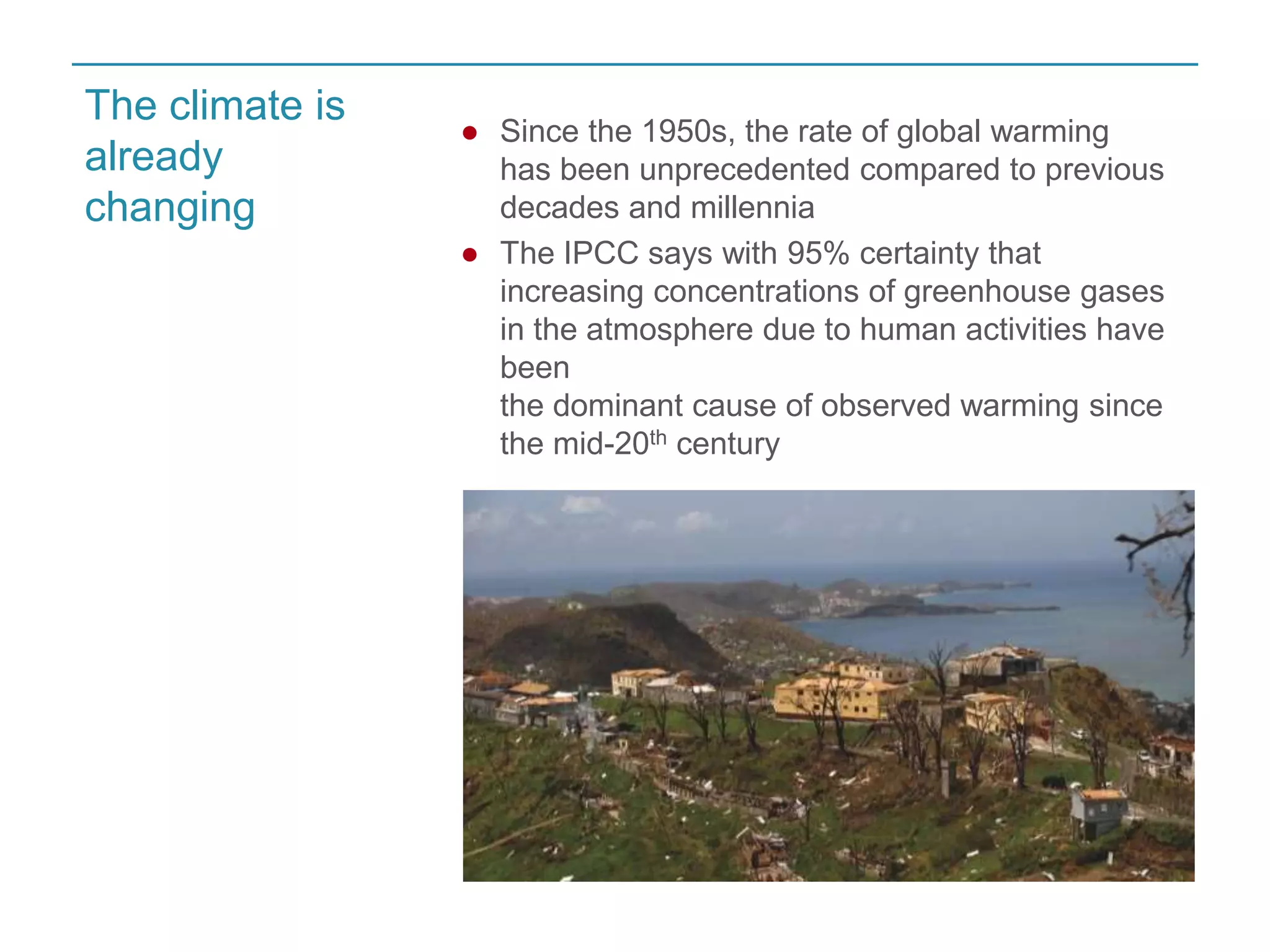
● Since the 1950s, the rate of global warming 
has been unprecedented compared to previous 
decades and millennia 
● The IPCC says with 95% certainty that 
increasing concentrations of greenhouse gases 
in the atmosphere due to human activities have 
been 
the dominant cause of observed warming since 
the mid-20th century 
The climate is 
already 
changing
Even today, climate-related risks for 
SIDS include sea level rise, tropical 
and extra-tropical cyclones, increasing 
air and 
sea surface temperatures, and 
changing rainfall patterns (high 
confidence) 
BUT 
In most small islands, long-term 
quality-controlled climate data are 
generally sparse 
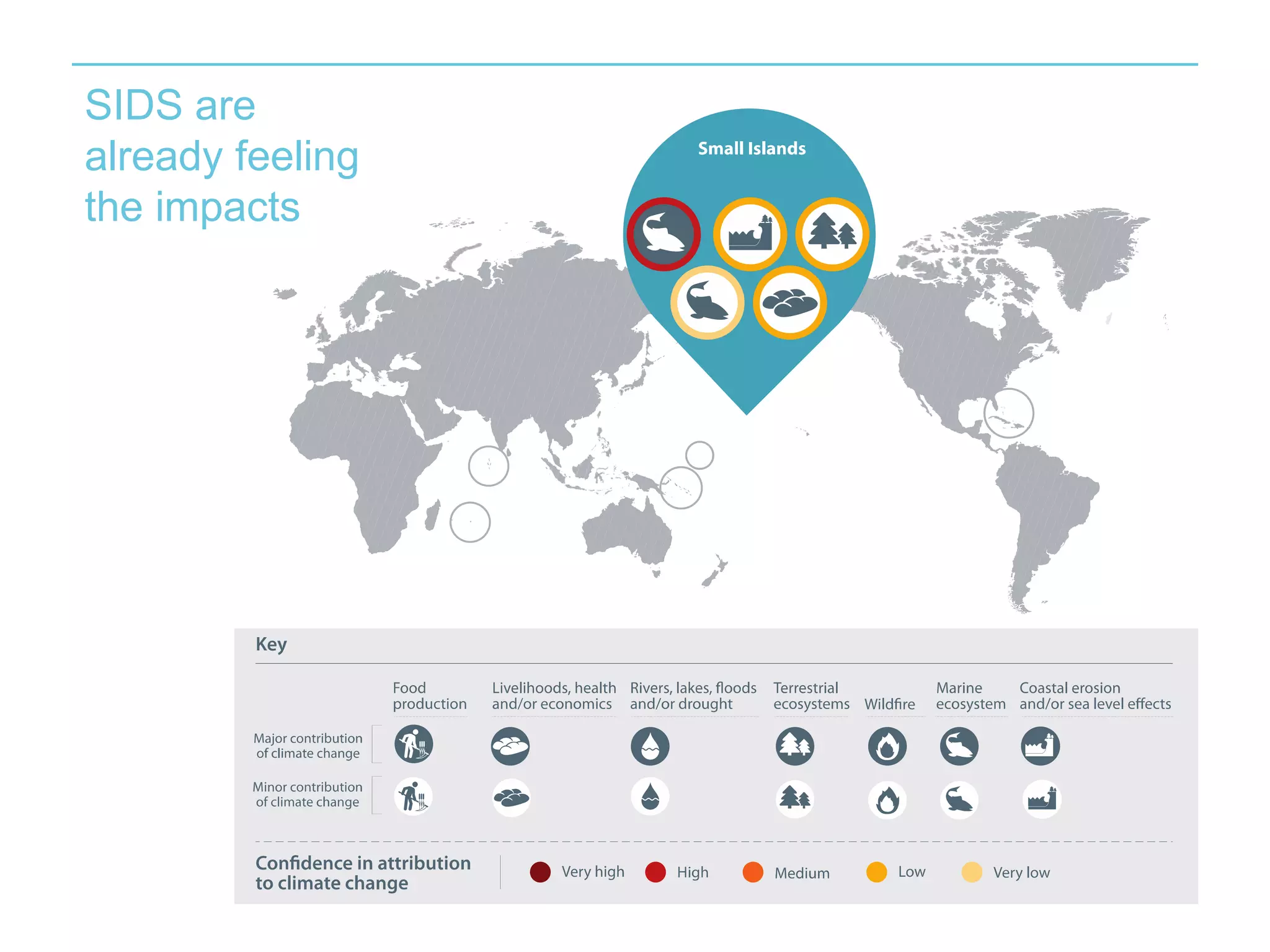
SIDS are 
already feeling 
the impacts
SIDS are 
already feeling 
the impacts
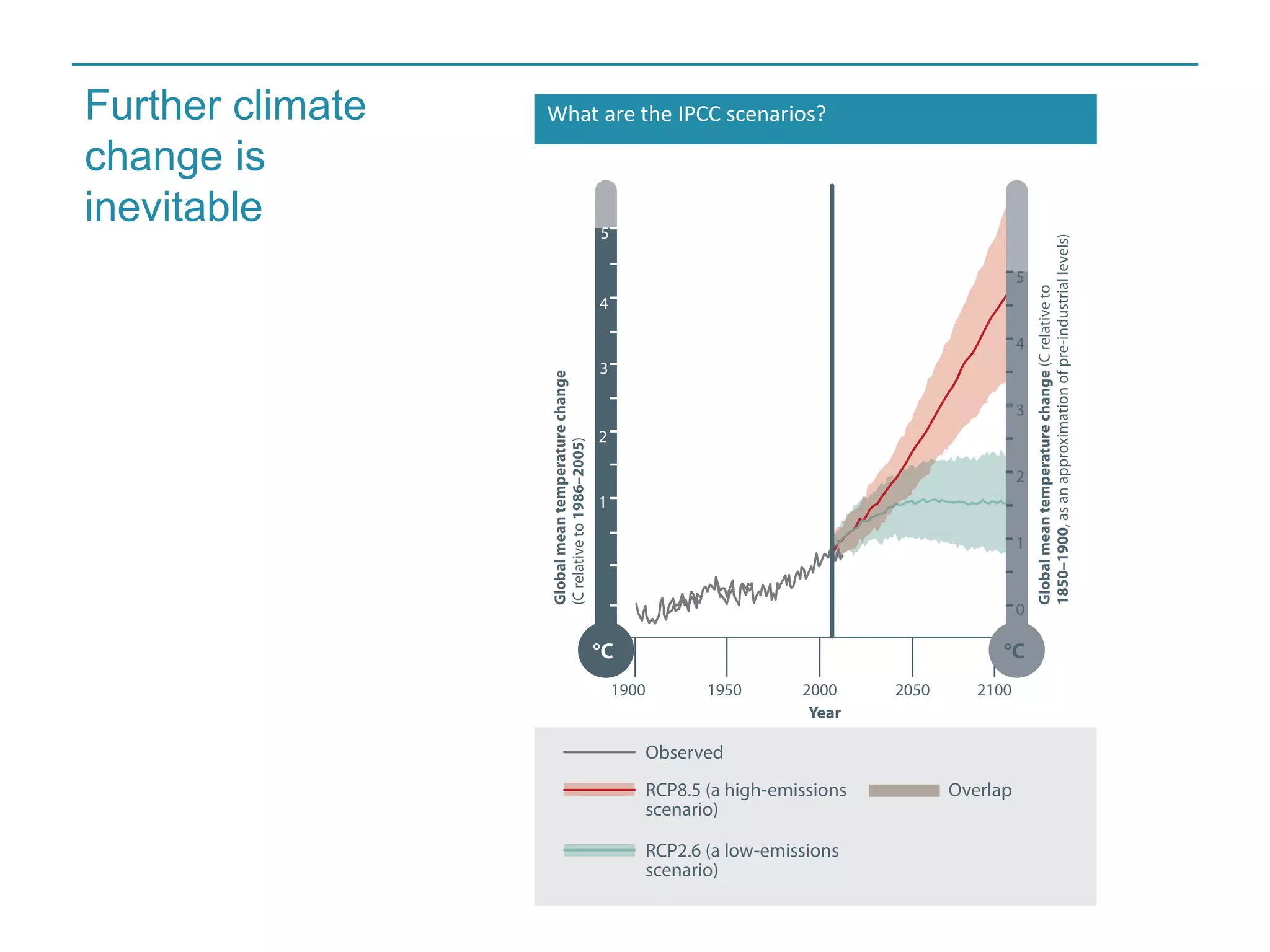
Further climate 
change is 
inevitable 
What are the IPCC scenarios?
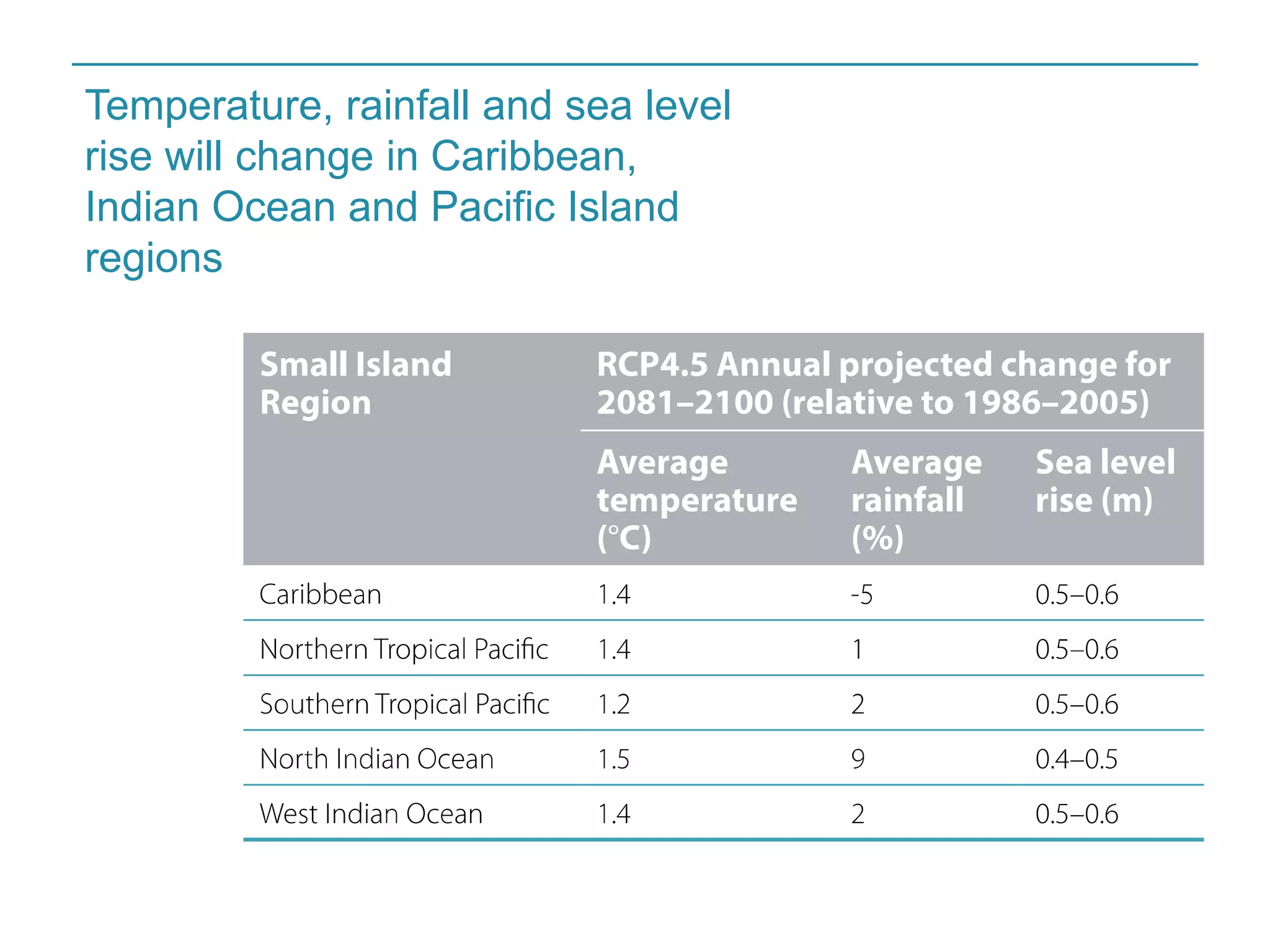
Temperature, rainfall and sea level 
rise will change in Caribbean, 
Indian Ocean and Pacific Island 
regions
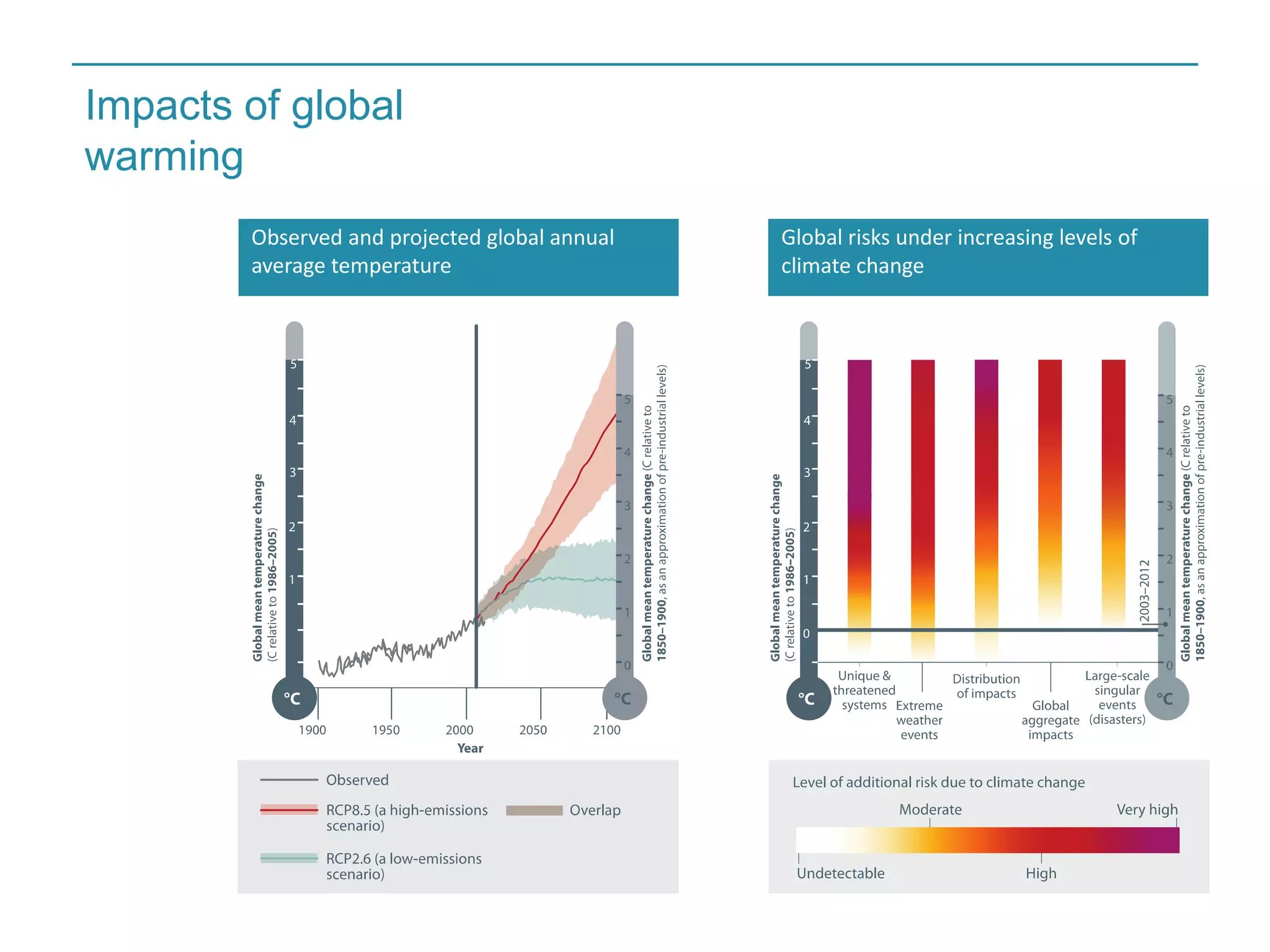
Impacts of global 
warming 
Observed and projected global annual 
average temperature 
Global risks under increasing levels of 
climate change
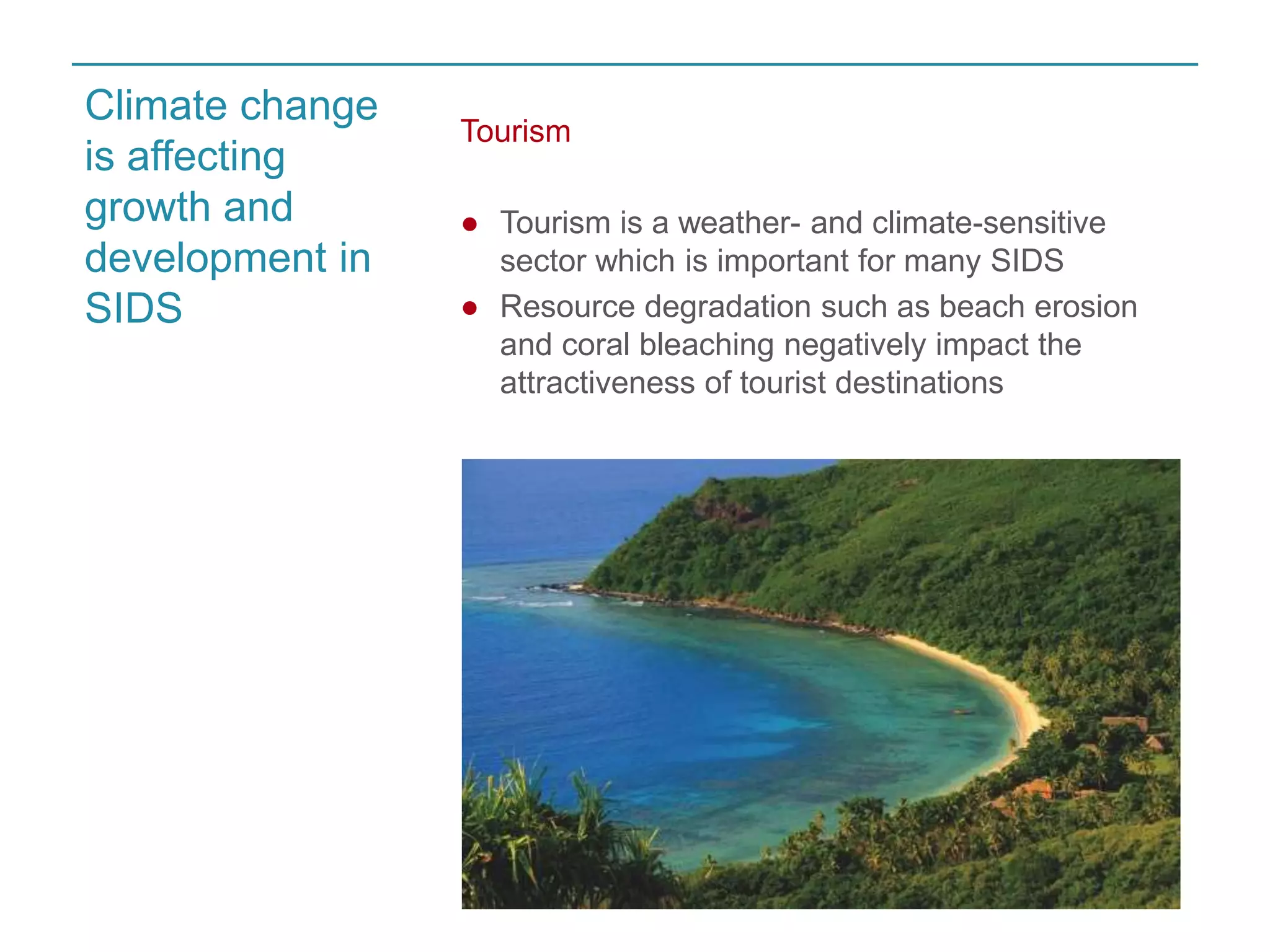
Tourism 
● Tourism is a weather- and climate-sensitive 
sector which is important for many SIDS 
● Resource degradation such as beach erosion 
and coral bleaching negatively impact the 
attractiveness of tourist destinations 
Climate change 
is affecting 
growth and 
development in 
SIDS
Climate change 
is affecting 
growth and 
development in 
SIDS 
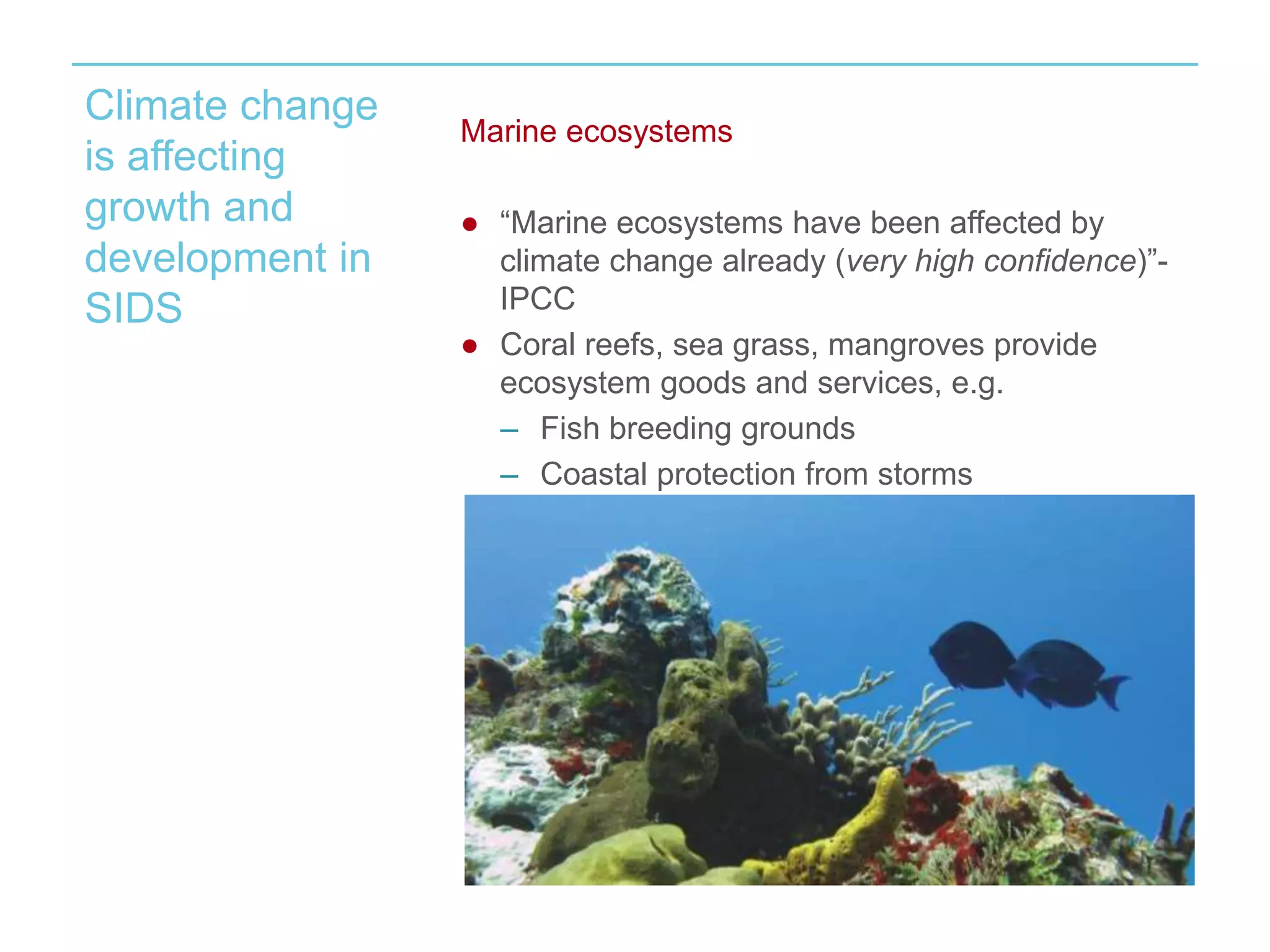
Marine ecosystems 
● “Marine ecosystems have been affected by 
climate change already (very high confidence)”- 
IPCC 
● Coral reefs, sea grass, mangroves provide 
ecosystem goods and services, e.g. 
– Fish breeding grounds 
– Coastal protection from storms
Climate change 
is affecting 
growth and 
development in 
SIDS 
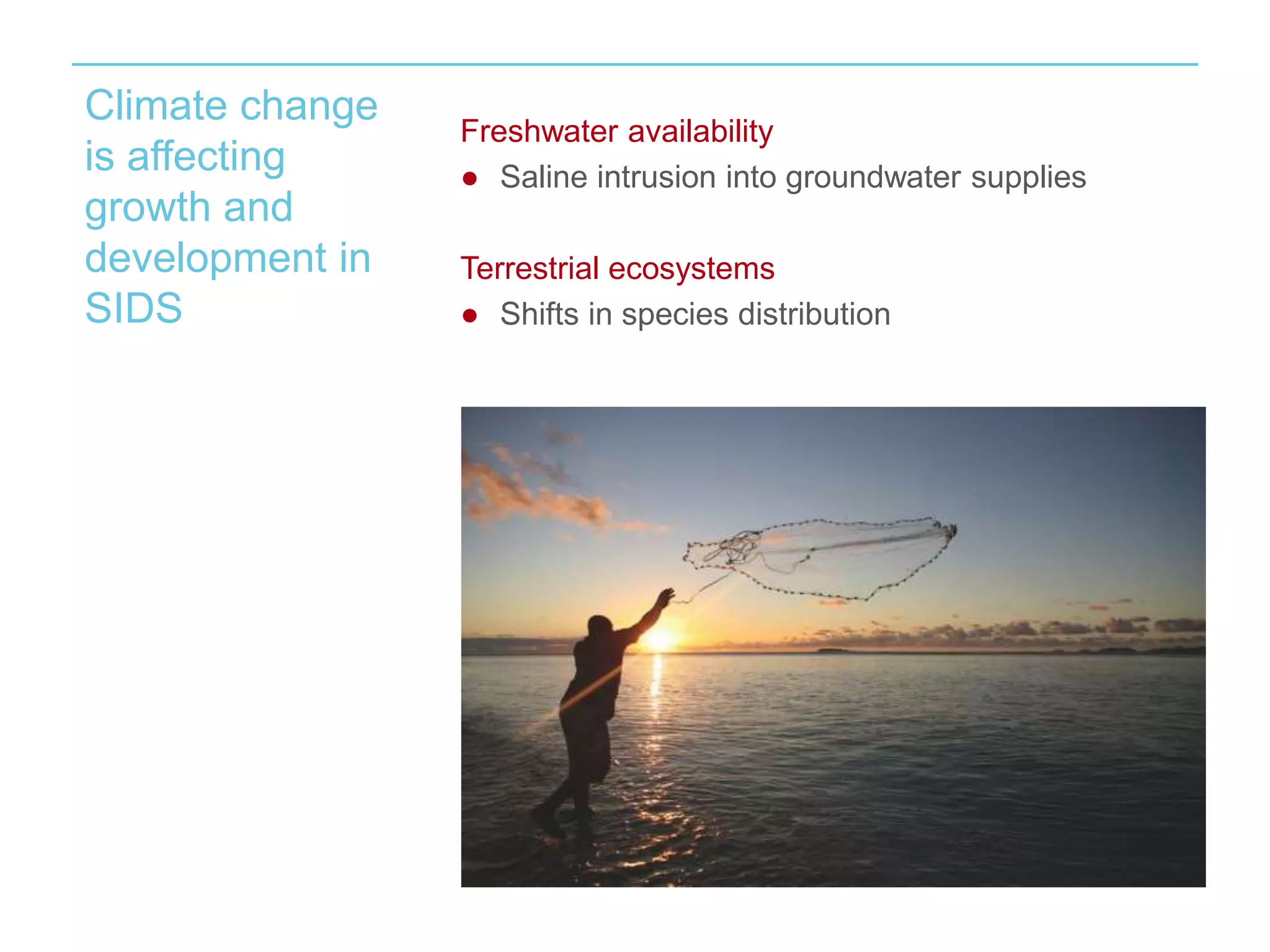
Freshwater availability 
● Saline intrusion into groundwater supplies 
Terrestrial ecosystems 
● Shifts in species distribution
Climate change 
is affecting 
growth and 
development in 
SIDS 
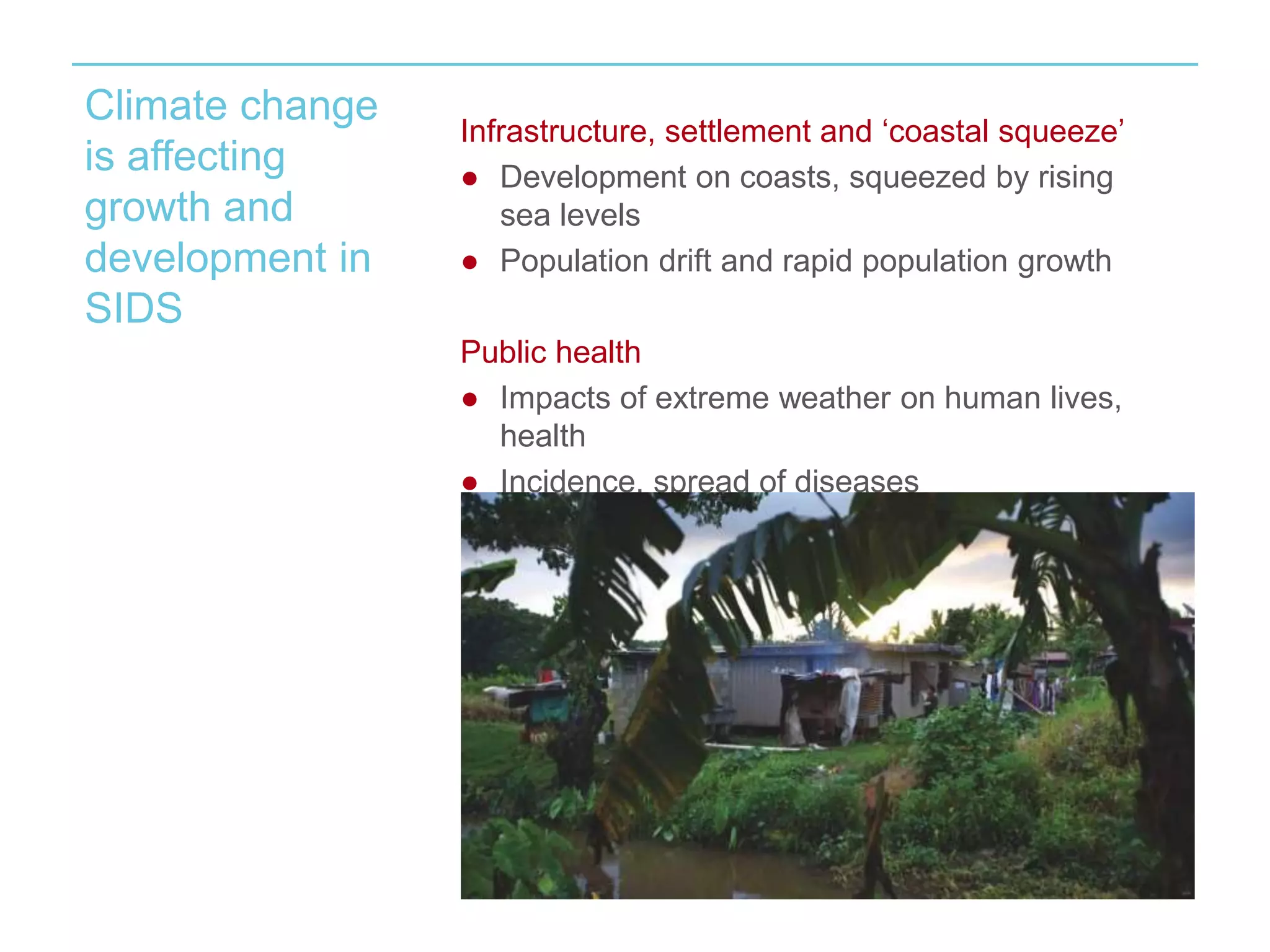
Infrastructure, settlement and ‘coastal squeeze’ 
● Development on coasts, squeezed by rising 
sea levels 
● Population drift and rapid population growth 
Public health 
● Impacts of extreme weather on human lives, 
health 
● Incidence, spread of diseases
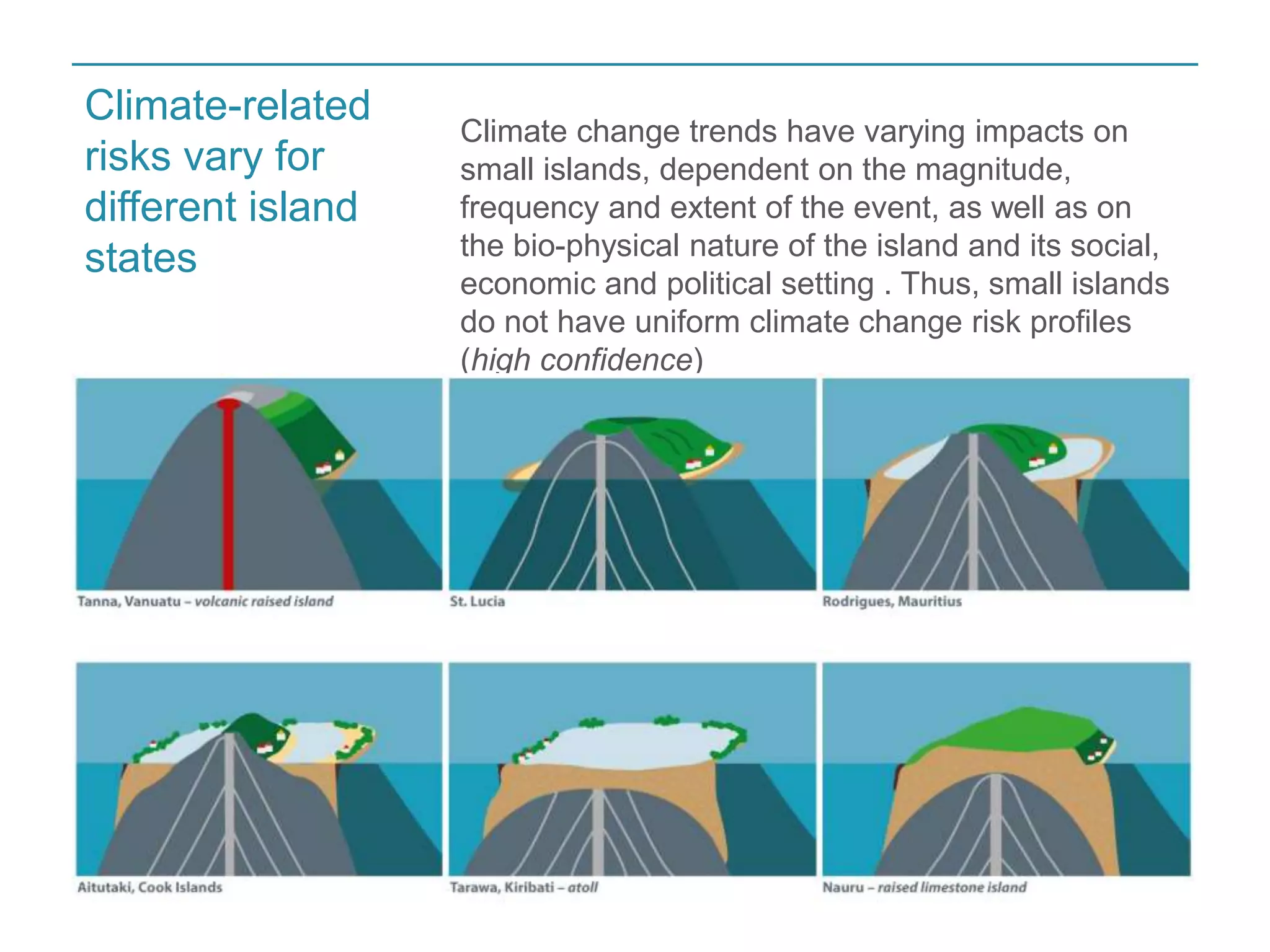
Climate change trends have varying impacts on 
small islands, dependent on the magnitude, 
frequency and extent of the event, as well as on 
the bio-physical nature of the island and its social, 
economic and political setting . Thus, small islands 
do not have uniform climate change risk profiles 
(high confidence) 
Climate-related 
risks vary for 
different island 
states
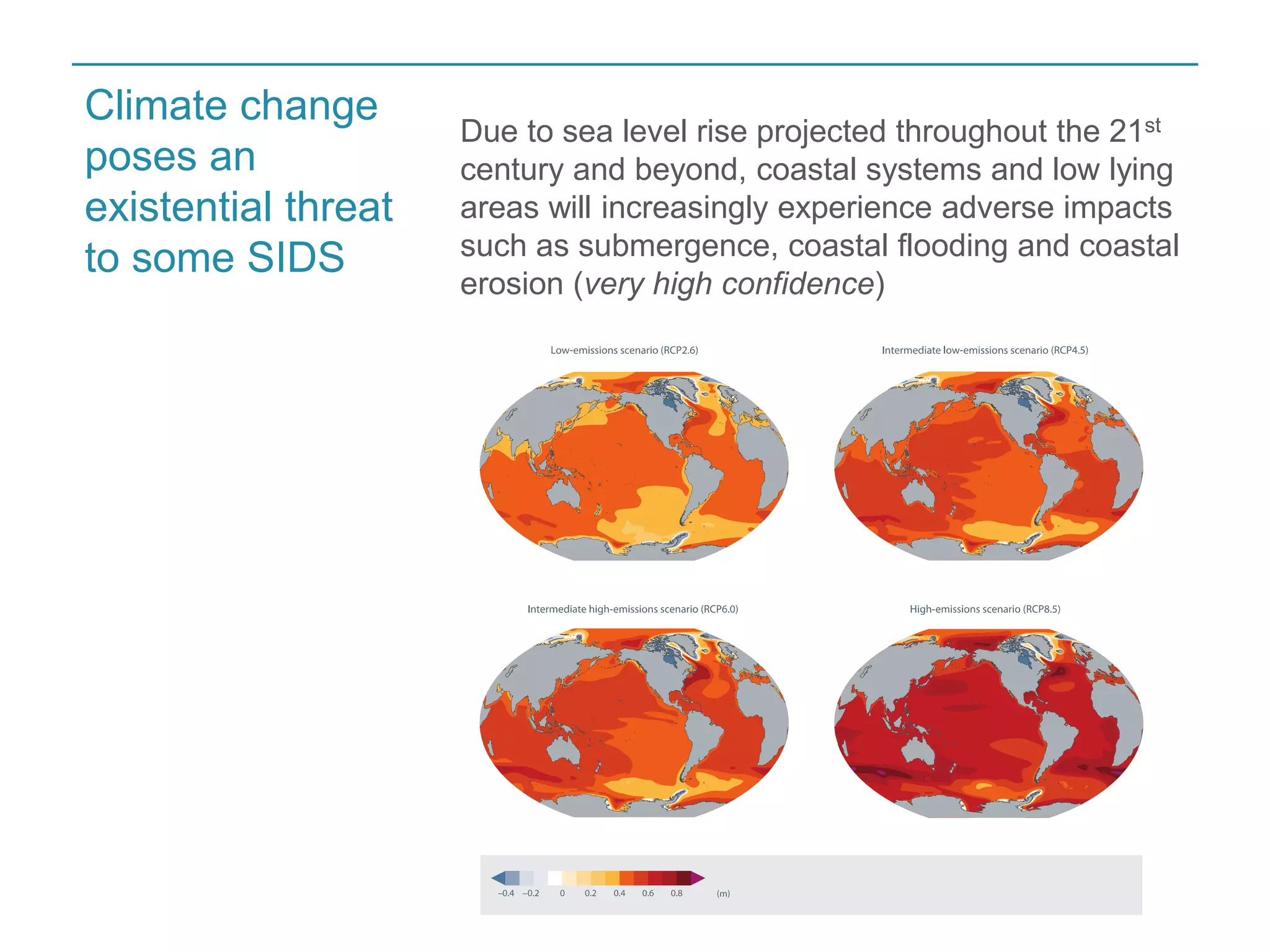
Due to sea level rise projected throughout the 21st 
century and beyond, coastal systems and low lying 
areas will increasingly experience adverse impacts 
such as submergence, coastal flooding and coastal 
erosion (very high confidence) 
Climate change 
poses an 
existential threat 
to some SIDS
Carefully planned adaptation activities make for 
good development. ‘No regrets’ and ‘low regrets’ 
measures: 
● Increasing access to information 
● Improving health services 
● Diversifying cropping systems 
● Strengthening access to land, credit and other 
resources especially for poor and marginalised 
groups 
● Improving governance of water and land 
resources 
Adaptation can 
reduce the 
impacts of 
climate change, 
but there are 
limits and risks 
involved
Adaptation can 
reduce the 
impacts of 
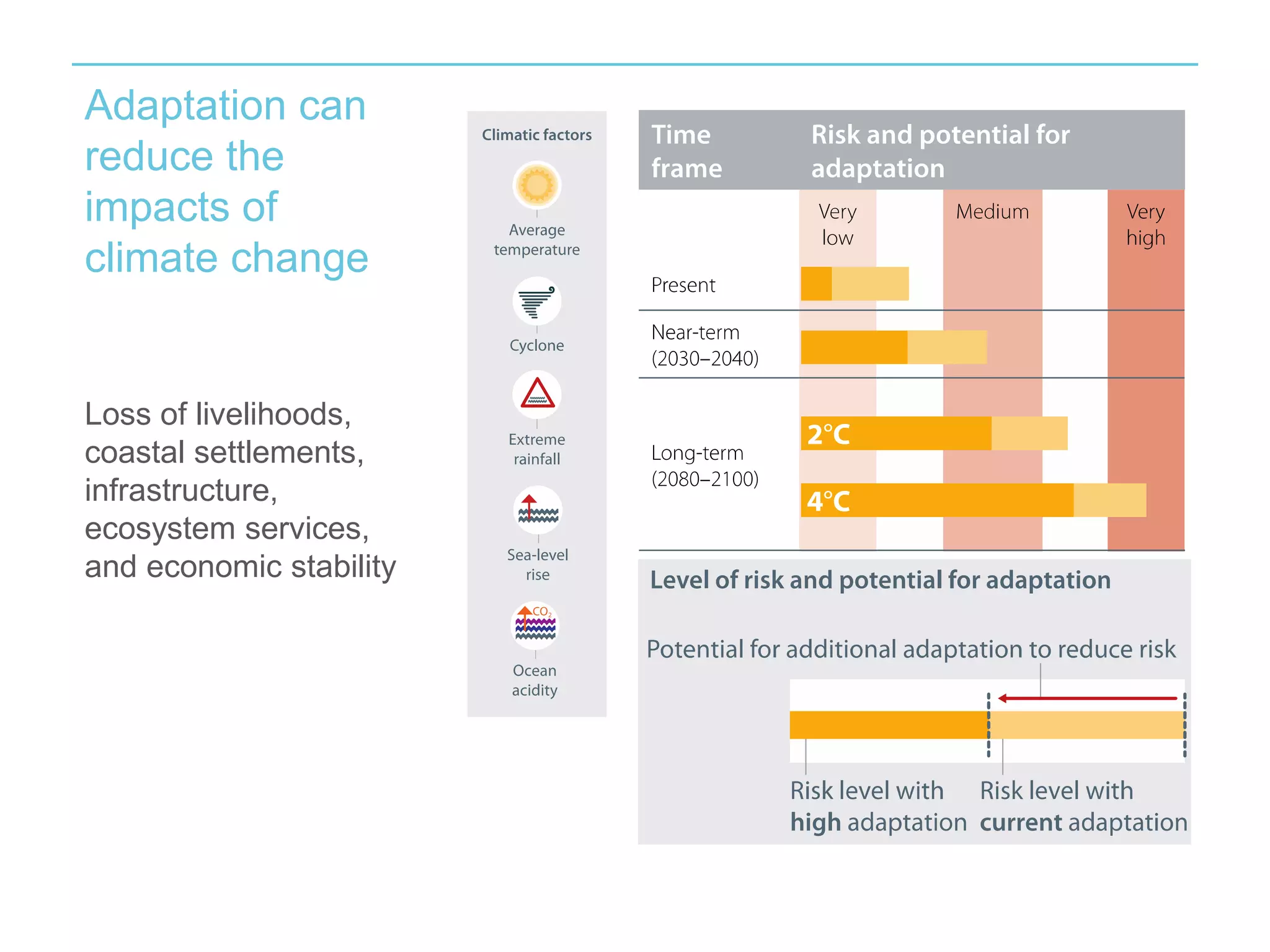
climate change 
Loss of livelihoods, 
coastal settlements, 
infrastructure, 
ecosystem services, 
and economic stability
Adaptation can 
reduce the 
impacts of 
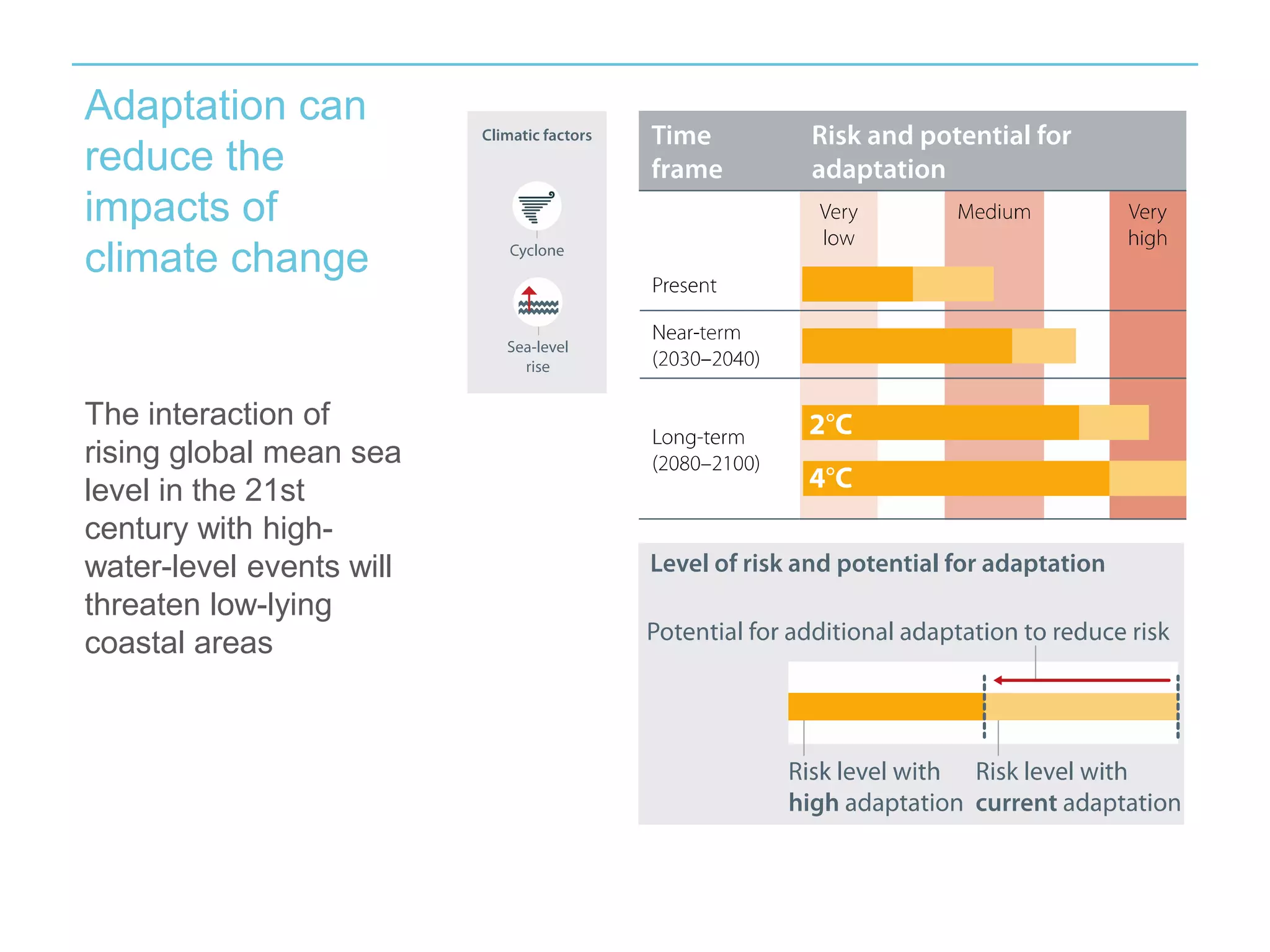
climate change 
The interaction of 
rising global mean sea 
level in the 21st 
century with high-water- 
level events will 
threaten low-lying 
coastal areas
● Damage costs for SIDS are enormous in 
relation to the size of their economies, they will 
find it most difficult to raise the necessary 
finances 
● E.g. unit cost of shoreline protection per capita 
in small islands is substantially higher than for a 
larger territory with a larger population 
“In many cases, we are not 
prepared for the climate-related 
risks we already face. 
Investments in better preparation 
can pay dividends both in the 
present and for the future.” 
– Vicente Barros, IPCC Working 
Group II Co-Chair 
The economic 
cost of 
adaptation to 
climate change 
is high in SIDS 
relative to the 
size of their 
economies
● In order to limit global warming to 
less than 2oC, total emissions from 
human activity should not exceed 
800–1000 gigatonnes of carbon 
dioxide equivalent, to date, human 
activity has release 500 gigatonnes 
● Pledges by world leaders are not 
enough to limit global warming 
below 2oC 
Promoting 
ambitious global 
action
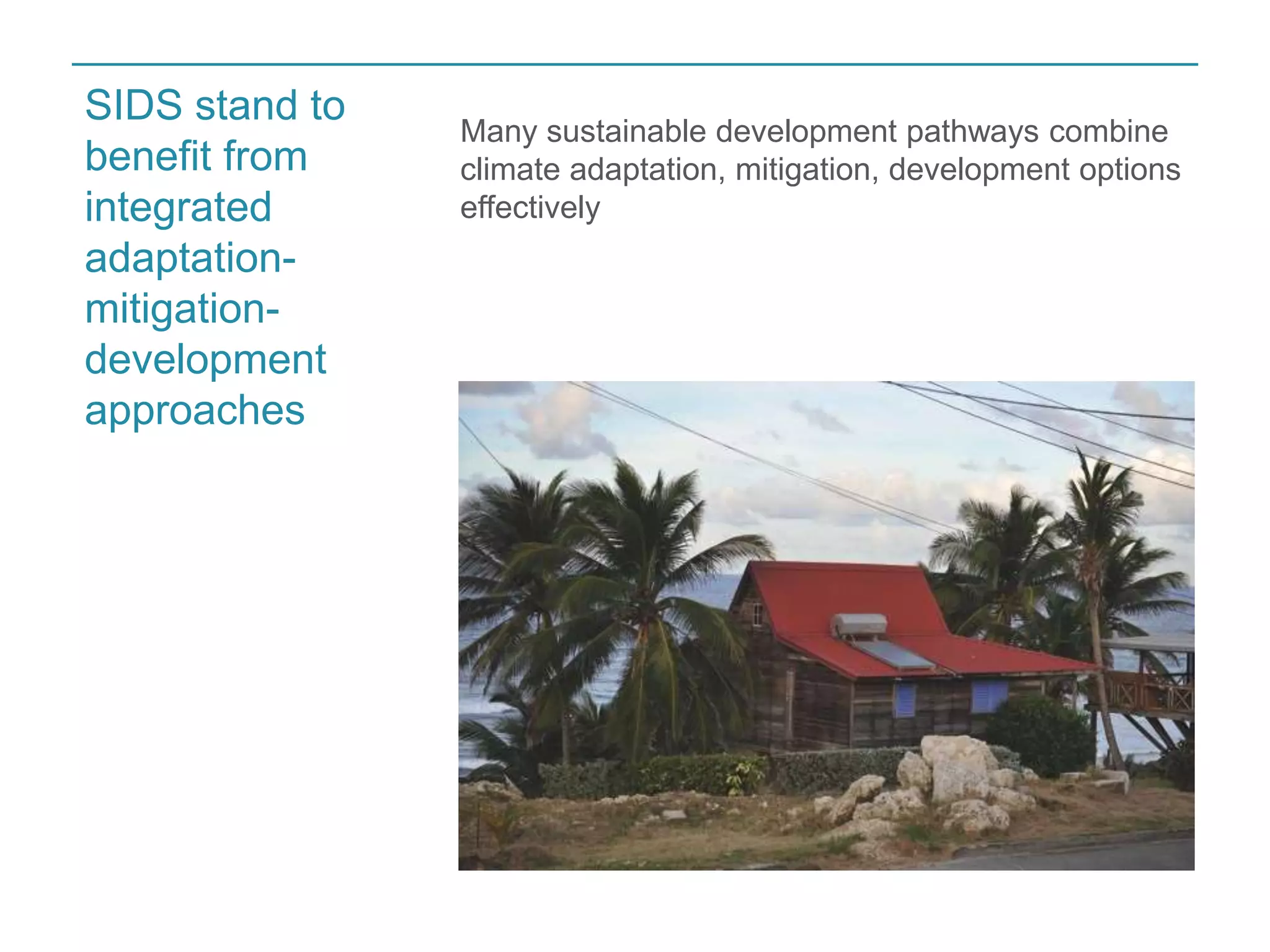
Many sustainable development pathways combine 
climate adaptation, mitigation, development options 
effectively 
SIDS stand to 
benefit from 
integrated 
adaptation-mitigation-development 
approaches
● Historic emissions from SIDS have 
contributed extremely little to global 
greenhouse gas concentrations 
● SIDS countries can nonetheless 
benefit from low-carbon investments 
because it confers other 
advantages, such as reducing 
dependence on costly imported 
fossil fuels (energy security) 
Transformation 
to a low-carbon 
economy implies 
new investment 
patterns
● Every government must participate in global 
negotiations toward a collective solution 
● Developed countries have committed to 
mobilising $100 billion/year by 2020 for 
adaptation and mitigation in developing 
countries 
“International cooperation is 
required to effectively mitigate 
greenhouse gas emissions and 
address other climate change 
issues…outcomes seen as 
equitable can lead to more 
effective cooperation”–IPCC 
International 
cooperation is 
vital to avert 
dangerous 
climate change
Download resources 
including infographics and slides: 
www.cdkn.org/ar5-toolkit 
Find the IPCC’s Fifth Assessment 
Report: http://www.ipcc.ch/report/ar5/ 
Contact: enquiries@cdkn.org

What's in it for Small Island Developing States? Key findings from the IPCC's Fifth Assessment Report

  • 1.
    The IPCC’s Fift h Assessme nt Report What’s in it for Small Islands Developing States? Key findings
  • 2.
    ● Since the1950s, the rate of global warming has been unprecedented compared to previous decades and millennia ● The IPCC says with 95% certainty that increasing concentrations of greenhouse gases in the atmosphere due to human activities have been the dominant cause of observed warming since the mid-20th century The climate is already changing
  • 3.
    Even today, climate-relatedrisks for SIDS include sea level rise, tropical and extra-tropical cyclones, increasing air and sea surface temperatures, and changing rainfall patterns (high confidence) BUT In most small islands, long-term quality-controlled climate data are generally sparse SIDS are already feeling the impacts
  • 4.
    SIDS are alreadyfeeling the impacts
  • 5.
    Further climate changeis inevitable What are the IPCC scenarios?
  • 6.
    Temperature, rainfall andsea level rise will change in Caribbean, Indian Ocean and Pacific Island regions
  • 7.
    Impacts of global warming Observed and projected global annual average temperature Global risks under increasing levels of climate change
  • 8.
    Tourism ● Tourismis a weather- and climate-sensitive sector which is important for many SIDS ● Resource degradation such as beach erosion and coral bleaching negatively impact the attractiveness of tourist destinations Climate change is affecting growth and development in SIDS
  • 9.
    Climate change isaffecting growth and development in SIDS Marine ecosystems ● “Marine ecosystems have been affected by climate change already (very high confidence)”- IPCC ● Coral reefs, sea grass, mangroves provide ecosystem goods and services, e.g. – Fish breeding grounds – Coastal protection from storms
  • 10.
    Climate change isaffecting growth and development in SIDS Freshwater availability ● Saline intrusion into groundwater supplies Terrestrial ecosystems ● Shifts in species distribution
  • 11.
    Climate change isaffecting growth and development in SIDS Infrastructure, settlement and ‘coastal squeeze’ ● Development on coasts, squeezed by rising sea levels ● Population drift and rapid population growth Public health ● Impacts of extreme weather on human lives, health ● Incidence, spread of diseases
  • 12.
    Climate change trendshave varying impacts on small islands, dependent on the magnitude, frequency and extent of the event, as well as on the bio-physical nature of the island and its social, economic and political setting . Thus, small islands do not have uniform climate change risk profiles (high confidence) Climate-related risks vary for different island states
  • 13.
    Due to sealevel rise projected throughout the 21st century and beyond, coastal systems and low lying areas will increasingly experience adverse impacts such as submergence, coastal flooding and coastal erosion (very high confidence) Climate change poses an existential threat to some SIDS
  • 14.
    Carefully planned adaptationactivities make for good development. ‘No regrets’ and ‘low regrets’ measures: ● Increasing access to information ● Improving health services ● Diversifying cropping systems ● Strengthening access to land, credit and other resources especially for poor and marginalised groups ● Improving governance of water and land resources Adaptation can reduce the impacts of climate change, but there are limits and risks involved
  • 15.
    Adaptation can reducethe impacts of climate change Loss of livelihoods, coastal settlements, infrastructure, ecosystem services, and economic stability
  • 16.
    Adaptation can reducethe impacts of climate change The interaction of rising global mean sea level in the 21st century with high-water- level events will threaten low-lying coastal areas
  • 17.
    ● Damage costsfor SIDS are enormous in relation to the size of their economies, they will find it most difficult to raise the necessary finances ● E.g. unit cost of shoreline protection per capita in small islands is substantially higher than for a larger territory with a larger population “In many cases, we are not prepared for the climate-related risks we already face. Investments in better preparation can pay dividends both in the present and for the future.” – Vicente Barros, IPCC Working Group II Co-Chair The economic cost of adaptation to climate change is high in SIDS relative to the size of their economies
  • 18.
    ● In orderto limit global warming to less than 2oC, total emissions from human activity should not exceed 800–1000 gigatonnes of carbon dioxide equivalent, to date, human activity has release 500 gigatonnes ● Pledges by world leaders are not enough to limit global warming below 2oC Promoting ambitious global action
  • 19.
    Many sustainable developmentpathways combine climate adaptation, mitigation, development options effectively SIDS stand to benefit from integrated adaptation-mitigation-development approaches
  • 20.
    ● Historic emissionsfrom SIDS have contributed extremely little to global greenhouse gas concentrations ● SIDS countries can nonetheless benefit from low-carbon investments because it confers other advantages, such as reducing dependence on costly imported fossil fuels (energy security) Transformation to a low-carbon economy implies new investment patterns
  • 21.
    ● Every governmentmust participate in global negotiations toward a collective solution ● Developed countries have committed to mobilising $100 billion/year by 2020 for adaptation and mitigation in developing countries “International cooperation is required to effectively mitigate greenhouse gas emissions and address other climate change issues…outcomes seen as equitable can lead to more effective cooperation”–IPCC International cooperation is vital to avert dangerous climate change
  • 22.
    Download resources includinginfographics and slides: www.cdkn.org/ar5-toolkit Find the IPCC’s Fifth Assessment Report: http://www.ipcc.ch/report/ar5/ Contact: enquiries@cdkn.org