PHYSICS
PHYSICAL QUANTITIES
AND
MEASUREMENT
CONCEPTS IN MODULE
 INTRODUCTION
 VOLUME AND ITS MEASUREMENT
 CAPACITY AND ITS MEASUREMENT
 AREA AND ITS MEASUREMENT
 DENSITY AND ITS MEASUREMENT
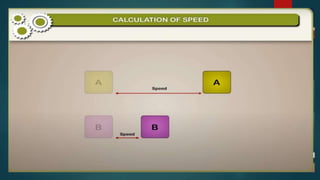
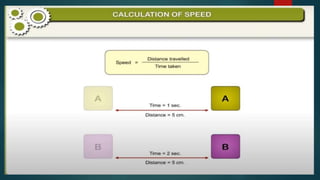
 CALCULATION OF SPEED
 NUMERICAL PROBLEMS
 RECAPTULATION
 EVALUATION
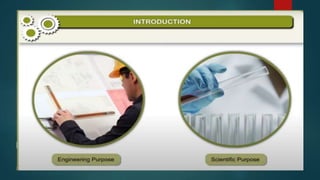
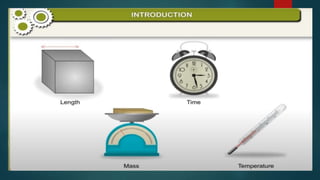
INTRODUCTION
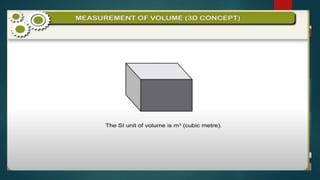
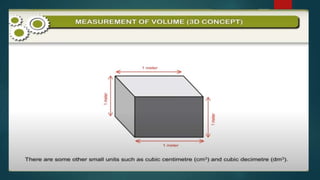
MEASUREMENT OF VOLUME
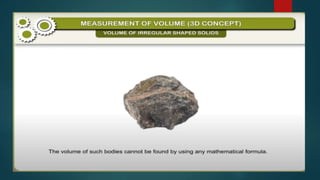
VOLUME OF IRREGULAR
SHAPED SOLIDS
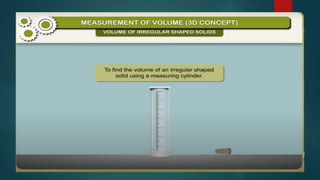
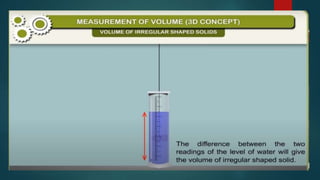
ACTIVITY-1
TO FIND THE VOLUME OF AN
IRREGULAR SHAPED SOLID
USING A MEASURING CYLINDER
(DISPLACEMENT METHOD)
NUMERICAL PROBLEMS
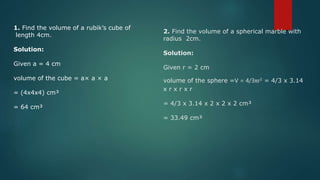
1. Find the volume of a rubik’s cube of
length 4cm.
Solution:
Given a = 4 cm
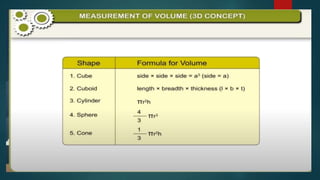
volume of the cube = a× a × a
= (4x4x4) cm³
= 64 cm³
2. Find the volume of a spherical marble with
radius 2cm.
Solution:
Given r = 2 cm
volume of the sphere =V = 4/3πr3 = 4/3 x 3.14
x r x r x r
= 4/3 x 3.14 x 2 x 2 x 2 cm³
= 33.49 cm³
MEASUREMENT OF
CAPACITY
“
”
 https://www.youtube.com/watch?v=Tk
Xxn0bJ4r0
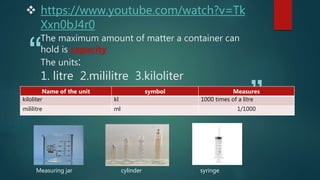
The maximum amount of matter a container can
hold is capacity
The units:
1. litre 2.mililitre 3.kiloliter
Measuring jar cylinder syringe
Name of the unit symbol Measures
kiloliter kl 1000 times of a litre
mililitre ml 1/1000
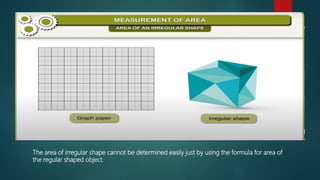
MEASUREMENT OF AREA
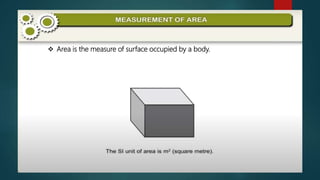
 Area is the measure of surface occupied by a body.
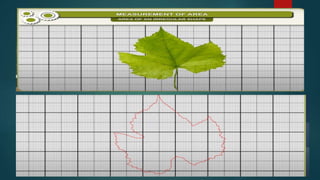
AREA OF AN IRREGULAR
SHAPE
ACTIVITY
(TO FIND THE SURFACE OF A LEAF)
“
”
The area of irregular shape cannot be determined easily just by using the formula for area of
the regular shaped object.
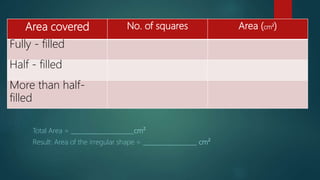
Area covered No. of squares Area (cm²)
Fully - filled
Half - filled
More than half-
filled
Total Area = _____________________cm²
Result: Area of the irregular shape = __________________ cm²
MEASUREMENT OF
DENSITY
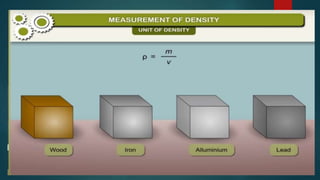
FORMULA
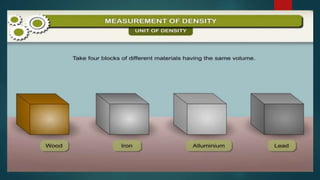
UNIT OF DENSITY
ACTIVITY
TO UNDERSTAND THE MEANING OF DENSITY
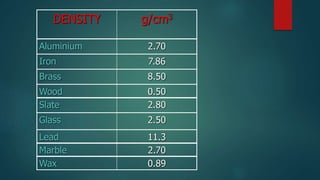
DENSITY g/cm3
Aluminium 2.70
Brass 8.50
Iron 7.86
Wood 0.50
Slate 2.80
Glass 2.50
Lead 11.3
Marble 2.70
Wax 0.89
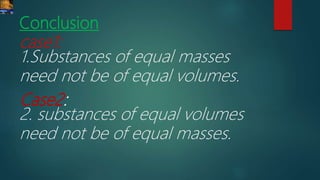
Conclusion
case1:
1.Substances of equal masses
need not be of equal volumes.
Case2:
2. substances of equal volumes
need not be of equal masses.
NUMERICAL PROBLEMS
(BASED ON DENSITY)
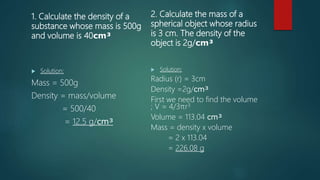
1. Calculate the density of a
substance whose mass is 500g
and volume is 40cm³
 Solution:
Mass = 500g
Density = mass/volume
= 500/40
= 12.5 g/cm³
2. Calculate the mass of a
spherical object whose radius
is 3 cm. The density of the
object is 2g/cm³
 Solution:
Radius (r) = 3cm
Density =2g/cm³
First we need to find the volume
; V = 4/3πr3
Volume = 113.04 cm³
Mass = density x volume
= 2 x 113.04
= 226.08 g
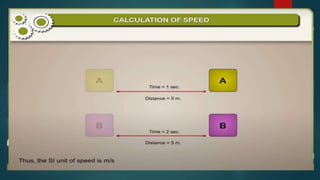
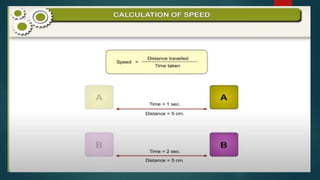
CALCULATION OF SPEED
UNIT OF SPEED
NUMERICAL PROBLEM
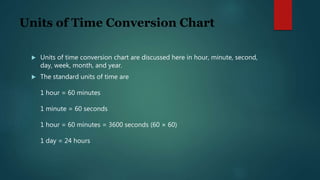
 Units of time conversion chart are discussed here in hour, minute, second,
day, week, month, and year.
 The standard units of time are
1 hour = 60 minutes
1 minute = 60 seconds
1 hour = 60 minutes = 3600 seconds (60 × 60)
1 day = 24 hours
Units of Time Conversion Chart
RECAPTULATION
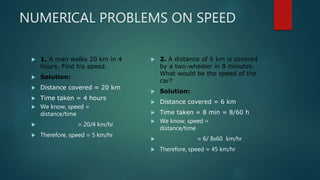
NUMERICAL PROBLEMS ON SPEED
 1. A man walks 20 km in 4
hours. Find his speed.
 Solution:
 Distance covered = 20 km
 Time taken = 4 hours
 We know, speed =
distance/time
 = 20/4 km/hr
 Therefore, speed = 5 km/hr
 2. A distance of 6 km is covered
by a two-wheeler in 8 minutes.
What would be the speed of the
car?
 Solution:
 Distance covered = 6 km
 Time taken = 8 min = 8/60 h
 We know, speed =
distance/time
 = 6/ 8x60 km/hr
 Therefore, speed = 45 km/hr
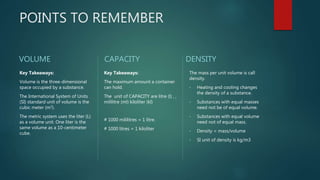
POINTS TO REMEMBER
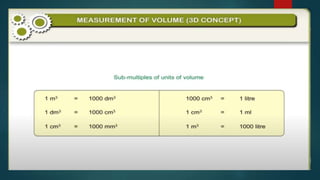
VOLUME
Key Takeaways:
Volume is the three-dimensional
space occupied by a substance.
The International System of Units
(SI) standard unit of volume is the
cubic meter (m3).
The metric system uses the liter (L)
as a volume unit. One liter is the
same volume as a 10-centimeter
cube.
CAPACITY
Key Takeaways:
The maximum amount a container
can hold.
The unit of CAPACITY are litre (l) , ,
mililitre (ml) kiloliter (kl)
# 1000 mililitres = 1 litre.
# 1000 litres = 1 kiloliter
DENSITY
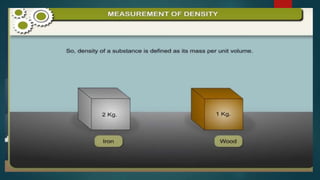
The mass per unit volume is call
density.
• Heating and cooling changes
the density of a substance.
• Substances with equal masses
need not be of equal volume.
• Substances with equal volume
need not of equal mass.
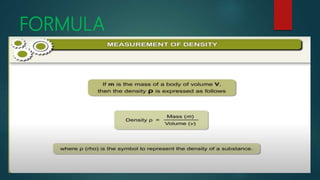
• Density = mass/volume
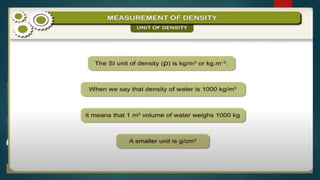
• SI unit of density is kg/m3
EVALUATION
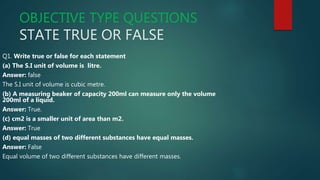
OBJECTIVE TYPE QUESTIONS
STATE TRUE OR FALSE
Q1. Write true or false for each statement
(a) The S.I unit of volume is litre.
Answer: false
The S.I unit of volume is cubic metre.
(b) A measuring beaker of capacity 200ml can measure only the volume
200ml of a liquid.
Answer: True.
(c) cm2 is a smaller unit of area than m2.
Answer: True
(d) equal masses of two different substances have equal masses.
Answer: False
Equal volume of two different substances have different masses.
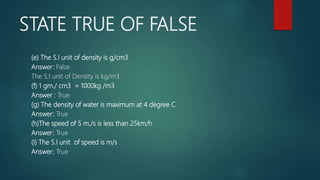
STATE TRUE OF FALSE
(e) The S.I unit of density is g/cm3
Answer: False
The S.I unit of Density is kg/m3
(f) 1 gm./ cm3 = 1000kg /m3
Answer : True
(g) The density of water is maximum at 4 degree C
Answer: True
(h)The speed of 5 m./s is less than 25km/h
Answer: True
(I) The S.I unit of speed is m/s
Answer: True
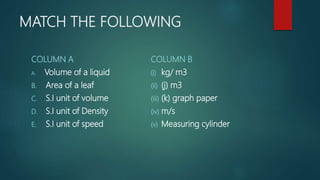
MATCH THE FOLLOWING
COLUMN A
A. Volume of a liquid
B. Area of a leaf
C. S.I unit of volume
D. S.I unit of Density
E. S.I unit of speed
COLUMN B
(i) kg/ m3
(ii) (j) m3
(iii) (k) graph paper
(iv) m/s
(v) Measuring cylinder
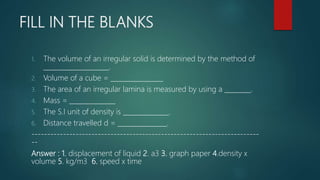
FILL IN THE BLANKS
1. The volume of an irregular solid is determined by the method of
____________________.
2. Volume of a cube = ________________
3. The area of an irregular lamina is measured by using a ________.
4. Mass = ______________
5. The S.I unit of density is ______________.
6. Distance travelled d = _______________.
------------------------------------------------------------------------
--
Answer : 1. displacement of liquid 2. a3 3. graph paper 4.density x
volume 5. kg/m3 6. speed x time
 physical quantity and measurement (part 1)

physical quantity and measurement (part 1)

  • 1.
  • 2.
    CONCEPTS IN MODULE INTRODUCTION  VOLUME AND ITS MEASUREMENT  CAPACITY AND ITS MEASUREMENT  AREA AND ITS MEASUREMENT  DENSITY AND ITS MEASUREMENT  CALCULATION OF SPEED  NUMERICAL PROBLEMS  RECAPTULATION  EVALUATION
  • 3.
  • 6.
  • 11.
  • 13.
    ACTIVITY-1 TO FIND THEVOLUME OF AN IRREGULAR SHAPED SOLID USING A MEASURING CYLINDER (DISPLACEMENT METHOD)
  • 16.
  • 17.
    1. Find thevolume of a rubik’s cube of length 4cm. Solution: Given a = 4 cm volume of the cube = a× a × a = (4x4x4) cm³ = 64 cm³ 2. Find the volume of a spherical marble with radius 2cm. Solution: Given r = 2 cm volume of the sphere =V = 4/3πr3 = 4/3 x 3.14 x r x r x r = 4/3 x 3.14 x 2 x 2 x 2 cm³ = 33.49 cm³
  • 18.
  • 19.
    “ ”  https://www.youtube.com/watch?v=Tk Xxn0bJ4r0 The maximumamount of matter a container can hold is capacity The units: 1. litre 2.mililitre 3.kiloliter Measuring jar cylinder syringe Name of the unit symbol Measures kiloliter kl 1000 times of a litre mililitre ml 1/1000
  • 20.
  • 21.
     Area isthe measure of surface occupied by a body.
  • 22.
    AREA OF ANIRREGULAR SHAPE ACTIVITY (TO FIND THE SURFACE OF A LEAF)
  • 23.
    “ ” The area ofirregular shape cannot be determined easily just by using the formula for area of the regular shaped object.
  • 25.
    Area covered No.of squares Area (cm²) Fully - filled Half - filled More than half- filled Total Area = _____________________cm² Result: Area of the irregular shape = __________________ cm²
  • 26.
  • 28.
  • 29.
  • 30.
    ACTIVITY TO UNDERSTAND THEMEANING OF DENSITY
  • 33.
    DENSITY g/cm3 Aluminium 2.70 Brass8.50 Iron 7.86 Wood 0.50 Slate 2.80 Glass 2.50 Lead 11.3 Marble 2.70 Wax 0.89
  • 34.
    Conclusion case1: 1.Substances of equalmasses need not be of equal volumes. Case2: 2. substances of equal volumes need not be of equal masses.
  • 35.
  • 36.
    1. Calculate thedensity of a substance whose mass is 500g and volume is 40cm³  Solution: Mass = 500g Density = mass/volume = 500/40 = 12.5 g/cm³ 2. Calculate the mass of a spherical object whose radius is 3 cm. The density of the object is 2g/cm³  Solution: Radius (r) = 3cm Density =2g/cm³ First we need to find the volume ; V = 4/3πr3 Volume = 113.04 cm³ Mass = density x volume = 2 x 113.04 = 226.08 g
  • 37.
  • 39.
  • 43.
  • 44.
     Units oftime conversion chart are discussed here in hour, minute, second, day, week, month, and year.  The standard units of time are 1 hour = 60 minutes 1 minute = 60 seconds 1 hour = 60 minutes = 3600 seconds (60 × 60) 1 day = 24 hours Units of Time Conversion Chart
  • 45.
  • 46.
    NUMERICAL PROBLEMS ONSPEED  1. A man walks 20 km in 4 hours. Find his speed.  Solution:  Distance covered = 20 km  Time taken = 4 hours  We know, speed = distance/time  = 20/4 km/hr  Therefore, speed = 5 km/hr  2. A distance of 6 km is covered by a two-wheeler in 8 minutes. What would be the speed of the car?  Solution:  Distance covered = 6 km  Time taken = 8 min = 8/60 h  We know, speed = distance/time  = 6/ 8x60 km/hr  Therefore, speed = 45 km/hr
  • 47.
    POINTS TO REMEMBER VOLUME KeyTakeaways: Volume is the three-dimensional space occupied by a substance. The International System of Units (SI) standard unit of volume is the cubic meter (m3). The metric system uses the liter (L) as a volume unit. One liter is the same volume as a 10-centimeter cube. CAPACITY Key Takeaways: The maximum amount a container can hold. The unit of CAPACITY are litre (l) , , mililitre (ml) kiloliter (kl) # 1000 mililitres = 1 litre. # 1000 litres = 1 kiloliter DENSITY The mass per unit volume is call density. • Heating and cooling changes the density of a substance. • Substances with equal masses need not be of equal volume. • Substances with equal volume need not of equal mass. • Density = mass/volume • SI unit of density is kg/m3
  • 48.
  • 49.
    OBJECTIVE TYPE QUESTIONS STATETRUE OR FALSE Q1. Write true or false for each statement (a) The S.I unit of volume is litre. Answer: false The S.I unit of volume is cubic metre. (b) A measuring beaker of capacity 200ml can measure only the volume 200ml of a liquid. Answer: True. (c) cm2 is a smaller unit of area than m2. Answer: True (d) equal masses of two different substances have equal masses. Answer: False Equal volume of two different substances have different masses.
  • 50.
    STATE TRUE OFFALSE (e) The S.I unit of density is g/cm3 Answer: False The S.I unit of Density is kg/m3 (f) 1 gm./ cm3 = 1000kg /m3 Answer : True (g) The density of water is maximum at 4 degree C Answer: True (h)The speed of 5 m./s is less than 25km/h Answer: True (I) The S.I unit of speed is m/s Answer: True
  • 51.
    MATCH THE FOLLOWING COLUMNA A. Volume of a liquid B. Area of a leaf C. S.I unit of volume D. S.I unit of Density E. S.I unit of speed COLUMN B (i) kg/ m3 (ii) (j) m3 (iii) (k) graph paper (iv) m/s (v) Measuring cylinder
  • 52.
    FILL IN THEBLANKS 1. The volume of an irregular solid is determined by the method of ____________________. 2. Volume of a cube = ________________ 3. The area of an irregular lamina is measured by using a ________. 4. Mass = ______________ 5. The S.I unit of density is ______________. 6. Distance travelled d = _______________. ------------------------------------------------------------------------ -- Answer : 1. displacement of liquid 2. a3 3. graph paper 4.density x volume 5. kg/m3 6. speed x time