Conflict and Change in the Middle East
Religious and Ethnic Differences Muslims, Christians, and Jews all living in the same area Different branches within each religion 30 different languages spoken Desire for united Arab state
Natural Resources Largest oil fields in the world Oil rich nations gain  wealth and political power Limited water supply Arguments over dams and water rights Suez Canal key waterway
Governments Democracy in Israel and Turkey Rule by royal families in Jordan and Saudi Arabia Single party dictators in Iran and Syria
Islamic Traditions Islamic Influence in law, government, and society Anti-Western feelings Revival on traditional Islam
Israeli-Palestinian Conflict The seeds of the conflict were planted in 1917 under the British Balfour Declaration This document promised a Jewish nation in Palestine after WWI The Arab Palestinians were angered and bitter about the idea of a Jewish homeland in their Islamic nation Soon, both Jews and Palestinians claimed the land to be theirs and violent conflicts began In 1948, the United Nations drew up a plan to divide Palestine into an Arab and Jewish state. The Jews Accepted the plan, the Arabs did not Israel developed rapidly during the second half of the 20 th  century, now having one of the strongest economies and militaries in the Middle East
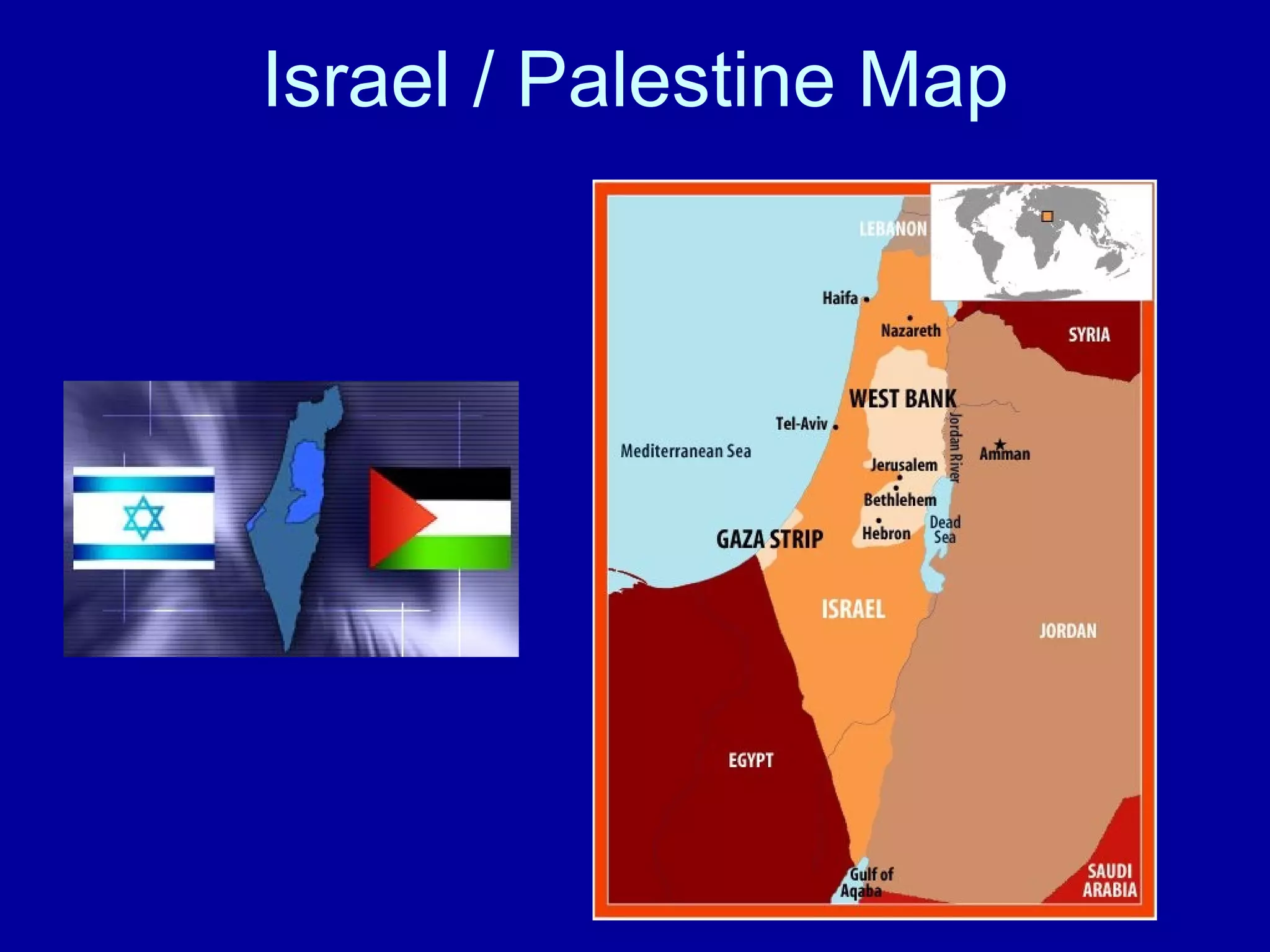
Israel / Palestine Map
Arab-Israeli Wars The first war took place in 1948 with a decisive Israeli victory Many Palestinians experienced poverty and discrimination which fueled their anger against the Israelis The Palestinian Liberation Organization (PLO) was created to fight against the Israelis Led by Yasir Arafat Used guerilla warfare tactics to fight against Israel
Arab-Israeli Wars Continued In 1967, during the Six Day War, Israel took over the Sinai Peninsula and forced many Palestinians out of their settlements In 12973, Egypt and Syria launched an attack against Israel of the Jewish holiday Yom Kippur. The Israelis crushed that attack. Soon after, Israel and Egypt began the Peace process. In 1979 the two nations signed the Camp David Accords, an agreement to end war between Egypt and Israel.
Arab-Israeli Wars Continued In 9187, young Palestinians began the first intifada, or uprising against the Israelis Teenagers threw rocks at heavily armed Israeli soldiers Some made homemade bombs Israeli retaliation against the violence resulted in  even more conflict
Arab-Israeli Wars Continued In 1993, direct talks were held between PLO leader Yasir Arafat and Israeli Prime Minister Yitzhak Rabin in Oslo Norway at the Oslo Accords They agreed to end the violence and the Palestinians were given control of the Gaza Strip and Jericho with limited self rule
Arab-Israeli Wars Continued Many Palestinians were upset because Arafat accepted less than what the Arabs wanted, the Jews out of Palestine A second intifada began, this time much more violent than the first In 1995 Rabin was assassinated. The young Israeli who shot him said he was trying to stop the peace process From 1999-2000 President Bill Clinton made many attempts to try and bring the two groups to a peaceful agreement. Although coming close, the two sides failed to reach and agreement and the violence continues today
Civil War in Lebanon Lebanon gained independence after WWII and had a diverse population of Christians and Muslims who coexisted peacefully After the Six Day War in Israel, more and more Palestinians fled to refugee camps in Israel A Muslim majority took over Lebanon and the PLO gained  more and more power in the   country Civil War broke in 1975 and  lasted for about 15 years
Road Map of Peace As the violence continued between Palestinians and Israelis, The US, UN, EU, and Russia outlined a roadmap of peace The plan would create an Islamic state as long as the PLO agreed to make democratic reforms and end the use of terrorism Israel had to pull out of Palestinian settlements and accept the new Palestinian government
Revolution in Iran In 1953, Britain and the United States helped Muhammad Reza Pahlavi gain control of the Iranian government. He westernized and modernized the country. During the 1970’s, the people of Iran became upset with Pahlavi’s rule and forced him to leave the country  The Ayatollah Khomeini declared Iran an Islamic Republic
The New Iran Extremely hostile to the west Western books, movies, and music was banned Iranian militants seized the American embassy in Tehran and held a group of Americans hostage for over a year Iran encouraged other Middle Eastern countries to do the same
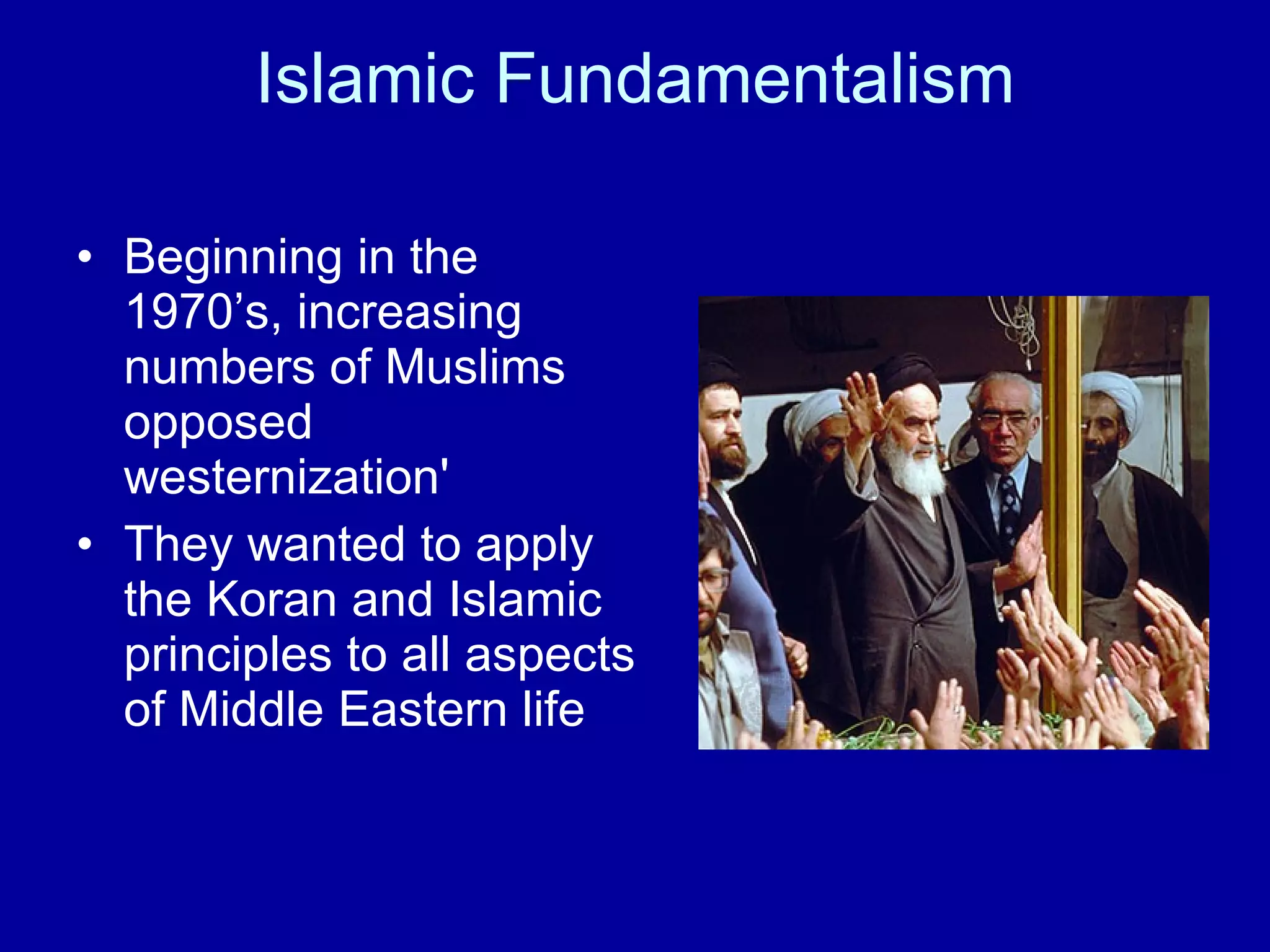
Islamic Fundamentalism Beginning in the 1970’s, increasing numbers of Muslims opposed westernization'  They wanted to apply the Koran and Islamic principles to all aspects of Middle Eastern life
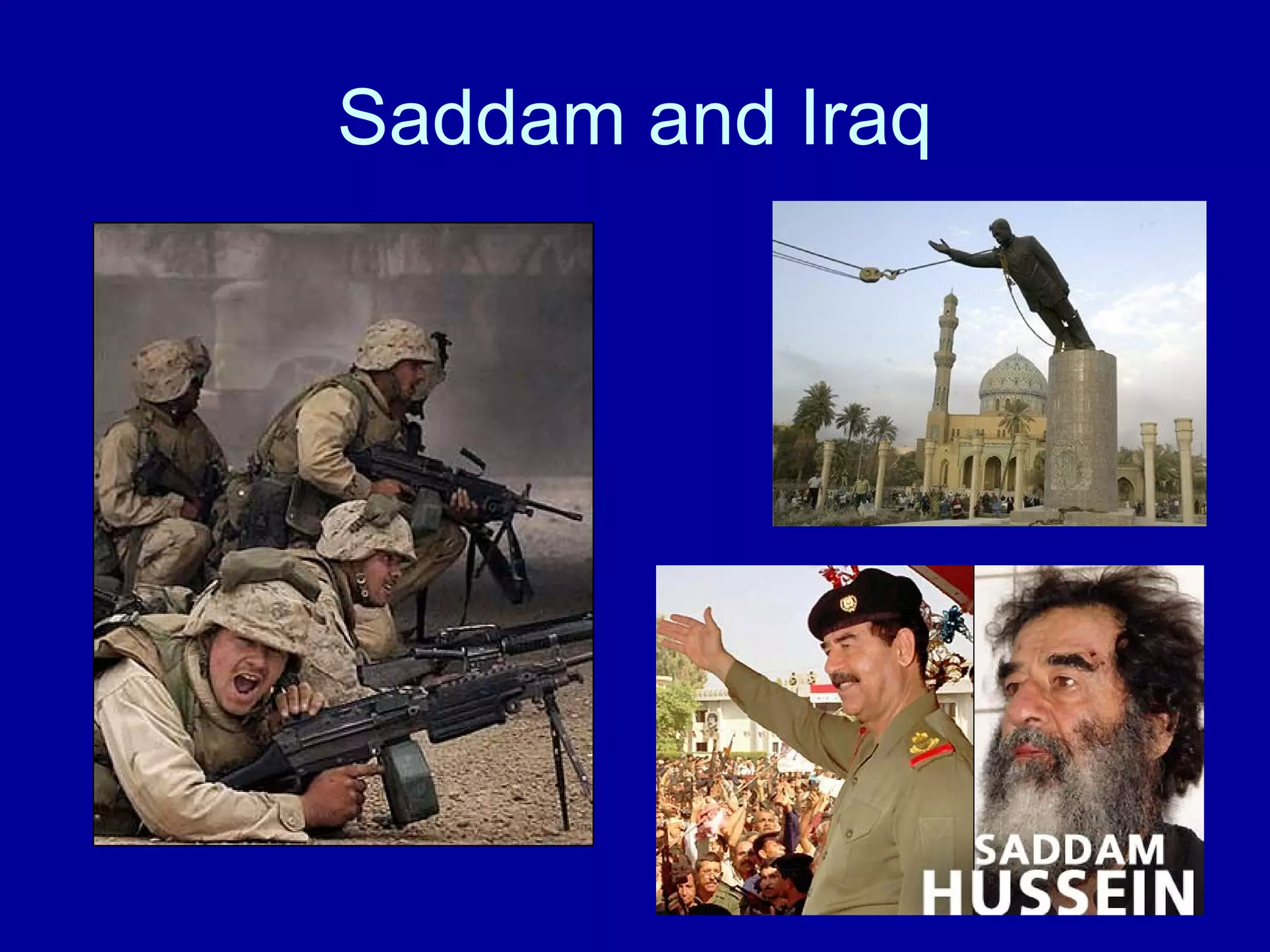
Saddam Hussein and Iraq Iran – Iraq War – In 1980, Hussein seized control over a disputed border area between Iran and Iraq Persian Gulf War – In 1990, Iraq invaded its neighbor Kuwait and seized its oil fields. The US and allied forces got involved when Iraq refused to with from Kuwait and quickly defeated the Iraqis Second Iraq War – In 2003, the United States invaded Iraq fearing Saddam Hussein's nuclear program and suspecting their involvement in 9/11 and aiding terrorists The United States invaded Iraq and removed Saddam  from power The United States and a small number of allied forces are trying to create a democracy in Iraq Violence between Sunnis and Shiite Muslims is hampering their efforts.
Saddam and Iraq

Conflict And Change In The Middle East

  • 1.
    Conflict and Changein the Middle East
  • 2.
    Religious and EthnicDifferences Muslims, Christians, and Jews all living in the same area Different branches within each religion 30 different languages spoken Desire for united Arab state
  • 3.
    Natural Resources Largestoil fields in the world Oil rich nations gain wealth and political power Limited water supply Arguments over dams and water rights Suez Canal key waterway
  • 4.
    Governments Democracy inIsrael and Turkey Rule by royal families in Jordan and Saudi Arabia Single party dictators in Iran and Syria
  • 5.
    Islamic Traditions IslamicInfluence in law, government, and society Anti-Western feelings Revival on traditional Islam
  • 6.
    Israeli-Palestinian Conflict Theseeds of the conflict were planted in 1917 under the British Balfour Declaration This document promised a Jewish nation in Palestine after WWI The Arab Palestinians were angered and bitter about the idea of a Jewish homeland in their Islamic nation Soon, both Jews and Palestinians claimed the land to be theirs and violent conflicts began In 1948, the United Nations drew up a plan to divide Palestine into an Arab and Jewish state. The Jews Accepted the plan, the Arabs did not Israel developed rapidly during the second half of the 20 th century, now having one of the strongest economies and militaries in the Middle East
  • 7.
  • 8.
    Arab-Israeli Wars Thefirst war took place in 1948 with a decisive Israeli victory Many Palestinians experienced poverty and discrimination which fueled their anger against the Israelis The Palestinian Liberation Organization (PLO) was created to fight against the Israelis Led by Yasir Arafat Used guerilla warfare tactics to fight against Israel
  • 9.
    Arab-Israeli Wars ContinuedIn 1967, during the Six Day War, Israel took over the Sinai Peninsula and forced many Palestinians out of their settlements In 12973, Egypt and Syria launched an attack against Israel of the Jewish holiday Yom Kippur. The Israelis crushed that attack. Soon after, Israel and Egypt began the Peace process. In 1979 the two nations signed the Camp David Accords, an agreement to end war between Egypt and Israel.
  • 10.
    Arab-Israeli Wars ContinuedIn 9187, young Palestinians began the first intifada, or uprising against the Israelis Teenagers threw rocks at heavily armed Israeli soldiers Some made homemade bombs Israeli retaliation against the violence resulted in even more conflict
  • 11.
    Arab-Israeli Wars ContinuedIn 1993, direct talks were held between PLO leader Yasir Arafat and Israeli Prime Minister Yitzhak Rabin in Oslo Norway at the Oslo Accords They agreed to end the violence and the Palestinians were given control of the Gaza Strip and Jericho with limited self rule
  • 12.
    Arab-Israeli Wars ContinuedMany Palestinians were upset because Arafat accepted less than what the Arabs wanted, the Jews out of Palestine A second intifada began, this time much more violent than the first In 1995 Rabin was assassinated. The young Israeli who shot him said he was trying to stop the peace process From 1999-2000 President Bill Clinton made many attempts to try and bring the two groups to a peaceful agreement. Although coming close, the two sides failed to reach and agreement and the violence continues today
  • 13.
    Civil War inLebanon Lebanon gained independence after WWII and had a diverse population of Christians and Muslims who coexisted peacefully After the Six Day War in Israel, more and more Palestinians fled to refugee camps in Israel A Muslim majority took over Lebanon and the PLO gained more and more power in the country Civil War broke in 1975 and lasted for about 15 years
  • 14.
    Road Map ofPeace As the violence continued between Palestinians and Israelis, The US, UN, EU, and Russia outlined a roadmap of peace The plan would create an Islamic state as long as the PLO agreed to make democratic reforms and end the use of terrorism Israel had to pull out of Palestinian settlements and accept the new Palestinian government
  • 15.
    Revolution in IranIn 1953, Britain and the United States helped Muhammad Reza Pahlavi gain control of the Iranian government. He westernized and modernized the country. During the 1970’s, the people of Iran became upset with Pahlavi’s rule and forced him to leave the country The Ayatollah Khomeini declared Iran an Islamic Republic
  • 16.
    The New IranExtremely hostile to the west Western books, movies, and music was banned Iranian militants seized the American embassy in Tehran and held a group of Americans hostage for over a year Iran encouraged other Middle Eastern countries to do the same
  • 17.
    Islamic Fundamentalism Beginningin the 1970’s, increasing numbers of Muslims opposed westernization' They wanted to apply the Koran and Islamic principles to all aspects of Middle Eastern life
  • 18.
    Saddam Hussein andIraq Iran – Iraq War – In 1980, Hussein seized control over a disputed border area between Iran and Iraq Persian Gulf War – In 1990, Iraq invaded its neighbor Kuwait and seized its oil fields. The US and allied forces got involved when Iraq refused to with from Kuwait and quickly defeated the Iraqis Second Iraq War – In 2003, the United States invaded Iraq fearing Saddam Hussein's nuclear program and suspecting their involvement in 9/11 and aiding terrorists The United States invaded Iraq and removed Saddam from power The United States and a small number of allied forces are trying to create a democracy in Iraq Violence between Sunnis and Shiite Muslims is hampering their efforts.
  • 19.