Unit 57: Photography and Photographic Practice Terminology
                     P1, P2, M1, M2


                    Joshua Whipday
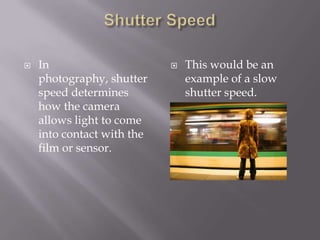
   In                         This would be an
    photography, shutter        example of a slow
    speed determines            shutter speed.
    how the camera
    allows light to come
    into contact with the
    film or sensor.
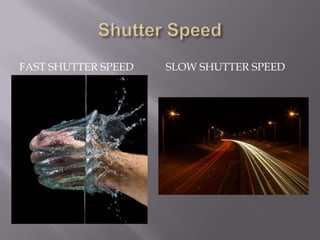
FAST SHUTTER SPEED   SLOW SHUTTER SPEED
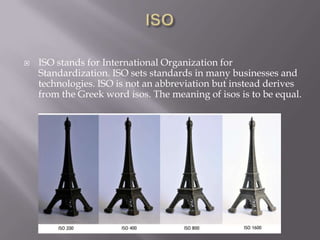
   ISO stands for International Organization for
    Standardization. ISO sets standards in many businesses and
    technologies. ISO is not an abbreviation but instead derives
    from the Greek word isos. The meaning of isos is to be equal.
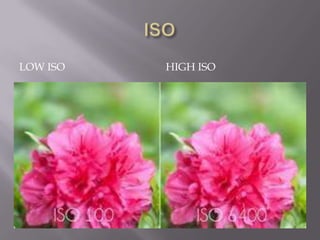
LOW ISO   HIGH ISO
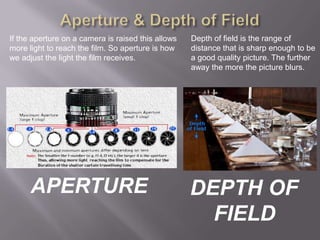
If the aperture on a camera is raised this allows   Depth of field is the range of
more light to reach the film. So aperture is how    distance that is sharp enough to be
we adjust the light the film receives.              a good quality picture. The further
                                                    away the more the picture blurs.


      APERTURE                                      DEPTH OF
                                                      FIELD
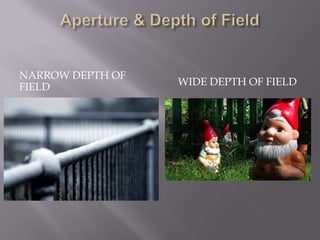
NARROW DEPTH OF
FIELD             WIDE DEPTH OF FIELD
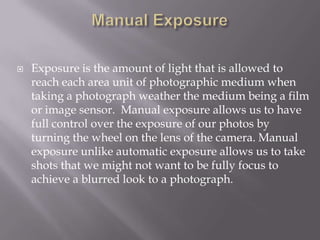
   Exposure is the amount of light that is allowed to
    reach each area unit of photographic medium when
    taking a photograph weather the medium being a film
    or image sensor. Manual exposure allows us to have
    full control over the exposure of our photos by
    turning the wheel on the lens of the camera. Manual
    exposure unlike automatic exposure allows us to take
    shots that we might not want to be fully focus to
    achieve a blurred look to a photograph.
   Automatic exposure is a setting on most modern
    cameras that allows the user to completely focus
    on what they are taking a picture of and the
    camera will put the shot you choose to take in
    focus before you take it. The advantage of using
    automatic exposure is that you as a photographer
    can concentrate on taking extra care to keep the
    camera still if shooting free hand, it also allows
    you to get the best framed shot you can without
    having to worry about focus and exposure.
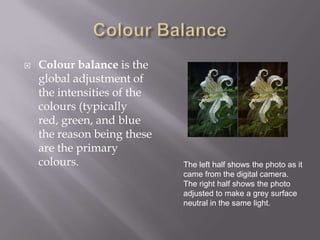
   Colour balance is the
    global adjustment of
    the intensities of the
    colours (typically
    red, green, and blue
    the reason being these
    are the primary
    colours.                 The left half shows the photo as it
                             came from the digital camera.
                             The right half shows the photo
                             adjusted to make a grey surface
                             neutral in the same light.
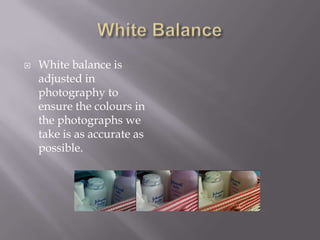
   White balance is
    adjusted in
    photography to
    ensure the colours in
    the photographs we
    take is as accurate as
    possible.
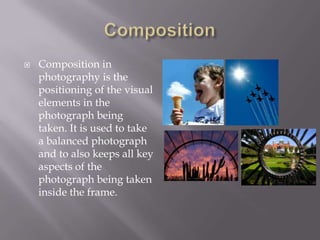
   Composition in
    photography is the
    positioning of the visual
    elements in the
    photograph being
    taken. It is used to take
    a balanced photograph
    and to also keeps all key
    aspects of the
    photograph being taken
    inside the frame.
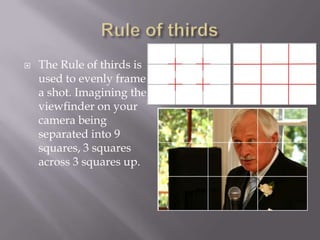
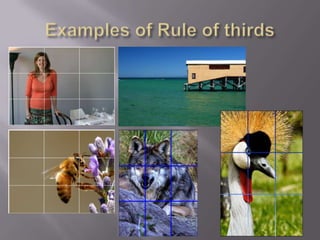
   The Rule of thirds is
    used to evenly frame
    a shot. Imagining the
    viewfinder on your
    camera being
    separated into 9
    squares, 3 squares
    across 3 squares up.
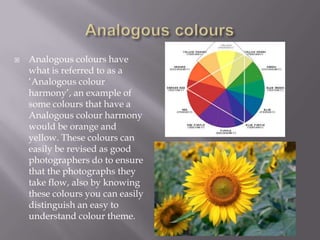
   Analogous colours have
    what is referred to as a
    ‘Analogous colour
    harmony’, an example of
    some colours that have a
    Analogous colour harmony
    would be orange and
    yellow. These colours can
    easily be revised as good
    photographers do to ensure
    that the photographs they
    take flow, also by knowing
    these colours you can easily
    distinguish an easy to
    understand colour theme.
   Using Complementary
    colours in a photograph
    creates contrast and really
    eye catching photos. These
    colours are the opposites
    of each other on the colour
    wheel therefore they are
    easily executed in
    photography to good
    effect. Often using
    complimentary colours in
    your photography will
    create a dramatic image
    since each colour makes
    the other colour appear
    more active.
   Macro photography is
    extreme close up shots.
    These shots are of small
    objects most of the time.
    By some definitions, a
    macro photograph is
    one in which the size of    Photomacrograph of a
    the subject on the          common yellow dung fly
    negative or image           (Scathophaga stercoraria)
    sensor is life size or      made using a lens at its
    greater. However in         maximum 1:1
    other uses it refers to a   reproduction ratio, and a
    finished photograph of      18×24mm image
    a subject at greater than   sensor, the on-screen
    life size.                  display of the photograph
                                results in a greater than
                                life-size image.

Photography terminologypowerpoint

  • 1.
    Unit 57: Photographyand Photographic Practice Terminology P1, P2, M1, M2 Joshua Whipday
  • 2.
    In  This would be an photography, shutter example of a slow speed determines shutter speed. how the camera allows light to come into contact with the film or sensor.
  • 3.
    FAST SHUTTER SPEED SLOW SHUTTER SPEED
  • 4.
    ISO stands for International Organization for Standardization. ISO sets standards in many businesses and technologies. ISO is not an abbreviation but instead derives from the Greek word isos. The meaning of isos is to be equal.
  • 5.
    LOW ISO HIGH ISO
  • 6.
    If the apertureon a camera is raised this allows Depth of field is the range of more light to reach the film. So aperture is how distance that is sharp enough to be we adjust the light the film receives. a good quality picture. The further away the more the picture blurs. APERTURE DEPTH OF FIELD
  • 7.
    NARROW DEPTH OF FIELD WIDE DEPTH OF FIELD
  • 8.
    Exposure is the amount of light that is allowed to reach each area unit of photographic medium when taking a photograph weather the medium being a film or image sensor. Manual exposure allows us to have full control over the exposure of our photos by turning the wheel on the lens of the camera. Manual exposure unlike automatic exposure allows us to take shots that we might not want to be fully focus to achieve a blurred look to a photograph.
  • 9.
    Automatic exposure is a setting on most modern cameras that allows the user to completely focus on what they are taking a picture of and the camera will put the shot you choose to take in focus before you take it. The advantage of using automatic exposure is that you as a photographer can concentrate on taking extra care to keep the camera still if shooting free hand, it also allows you to get the best framed shot you can without having to worry about focus and exposure.
  • 10.
    Colour balance is the global adjustment of the intensities of the colours (typically red, green, and blue the reason being these are the primary colours. The left half shows the photo as it came from the digital camera. The right half shows the photo adjusted to make a grey surface neutral in the same light.
  • 11.
    White balance is adjusted in photography to ensure the colours in the photographs we take is as accurate as possible.
  • 12.
    Composition in photography is the positioning of the visual elements in the photograph being taken. It is used to take a balanced photograph and to also keeps all key aspects of the photograph being taken inside the frame.
  • 13.
    The Rule of thirds is used to evenly frame a shot. Imagining the viewfinder on your camera being separated into 9 squares, 3 squares across 3 squares up.
  • 15.
    Analogous colours have what is referred to as a ‘Analogous colour harmony’, an example of some colours that have a Analogous colour harmony would be orange and yellow. These colours can easily be revised as good photographers do to ensure that the photographs they take flow, also by knowing these colours you can easily distinguish an easy to understand colour theme.
  • 16.
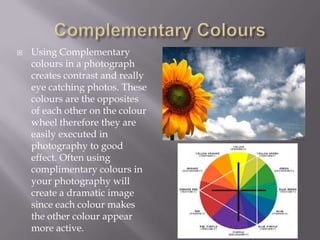
    Using Complementary colours in a photograph creates contrast and really eye catching photos. These colours are the opposites of each other on the colour wheel therefore they are easily executed in photography to good effect. Often using complimentary colours in your photography will create a dramatic image since each colour makes the other colour appear more active.
  • 17.
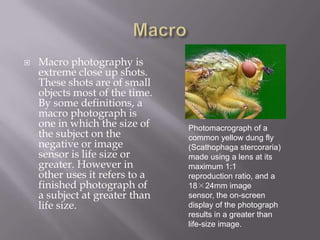
    Macro photography is extreme close up shots. These shots are of small objects most of the time. By some definitions, a macro photograph is one in which the size of Photomacrograph of a the subject on the common yellow dung fly negative or image (Scathophaga stercoraria) sensor is life size or made using a lens at its greater. However in maximum 1:1 other uses it refers to a reproduction ratio, and a finished photograph of 18×24mm image a subject at greater than sensor, the on-screen life size. display of the photograph results in a greater than life-size image.