Unit 57: Photography and Photographic Practice Terminology (P1, P2, M1, M2)
Term              Explanation of term e.g. what it Examples
                  is used for / the effect it has on
                  your images
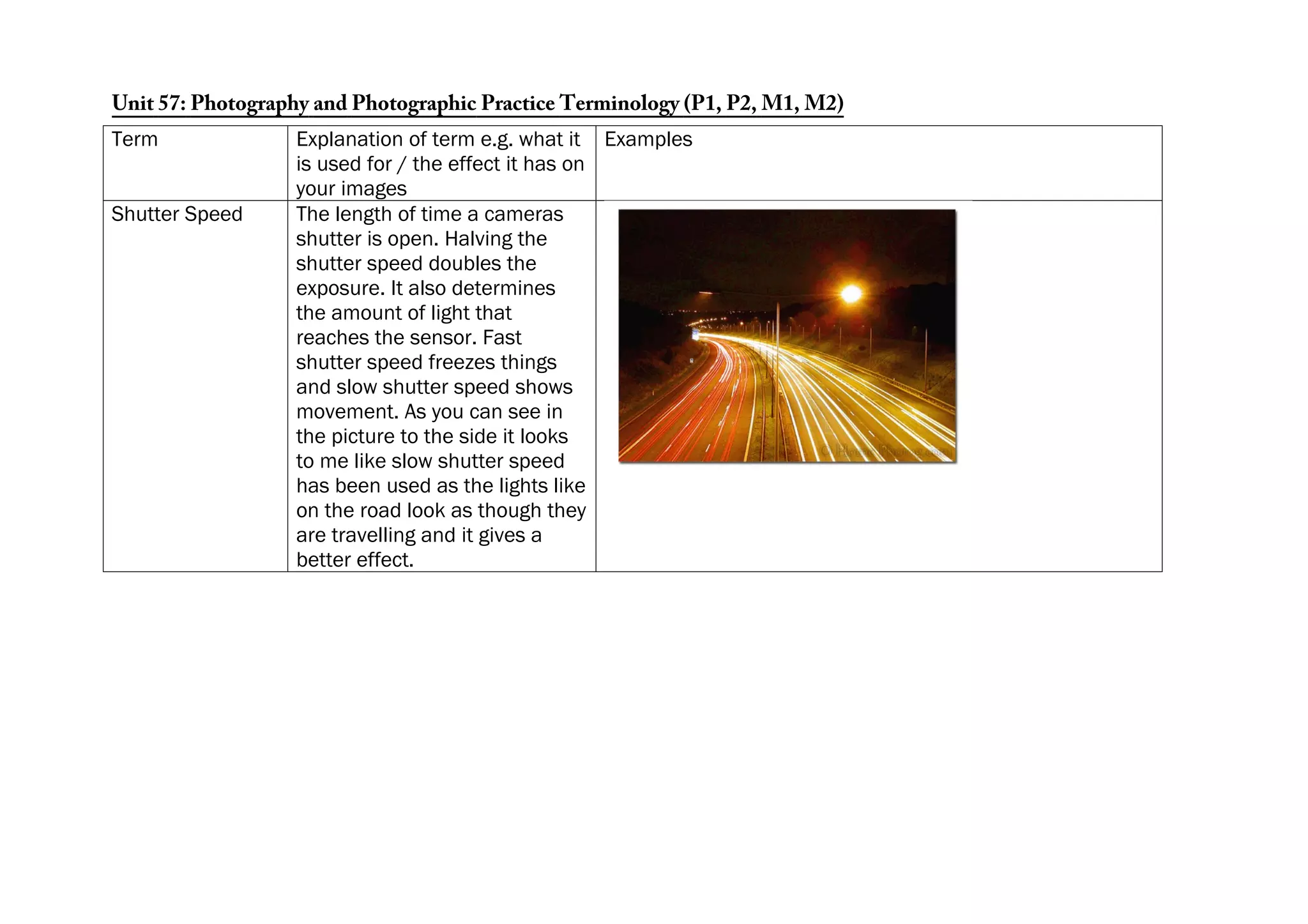
Shutter Speed     The length of time a cameras
                  shutter is open. Halving the
                  shutter speed doubles the
                  exposure. It also determines
                  the amount of light that
                  reaches the sensor. Fast
                  shutter speed freezes things
                  and slow shutter speed shows
                  movement. As you can see in
                  the picture to the side it looks
                  to me like slow shutter speed
                  has been used as the lights like
                  on the road look as though they
                  are travelling and it gives a
                  better effect.
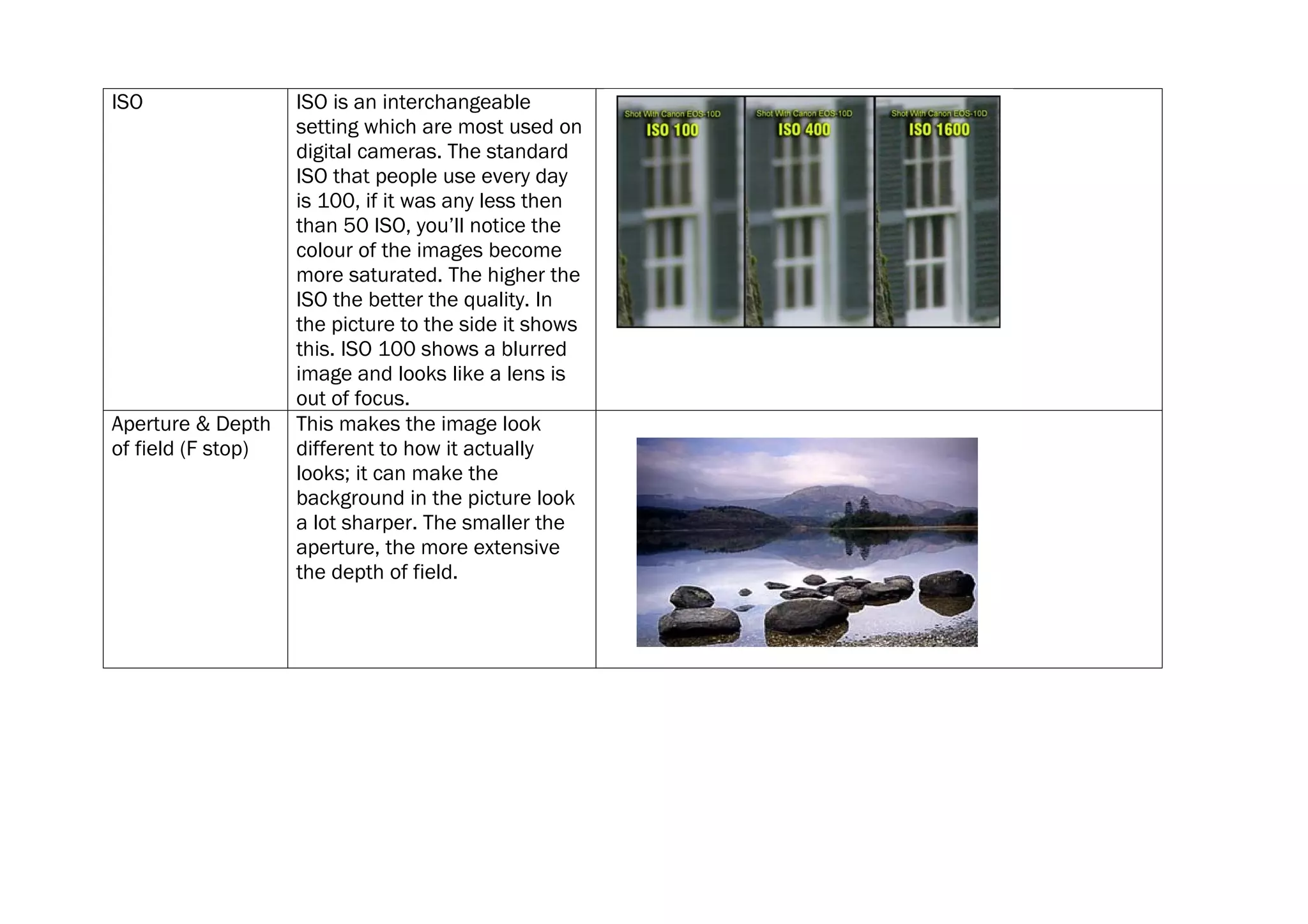
ISO                 ISO is an interchangeable
                    setting which are most used on
                    digital cameras. The standard
                    ISO that people use every day
                    is 100, if it was any less then
                    than 50 ISO, you’ll notice the
                    colour of the images become
                    more saturated. The higher the
                    ISO the better the quality. In
                    the picture to the side it shows
                    this. ISO 100 shows a blurred
                    image and looks like a lens is
                    out of focus.
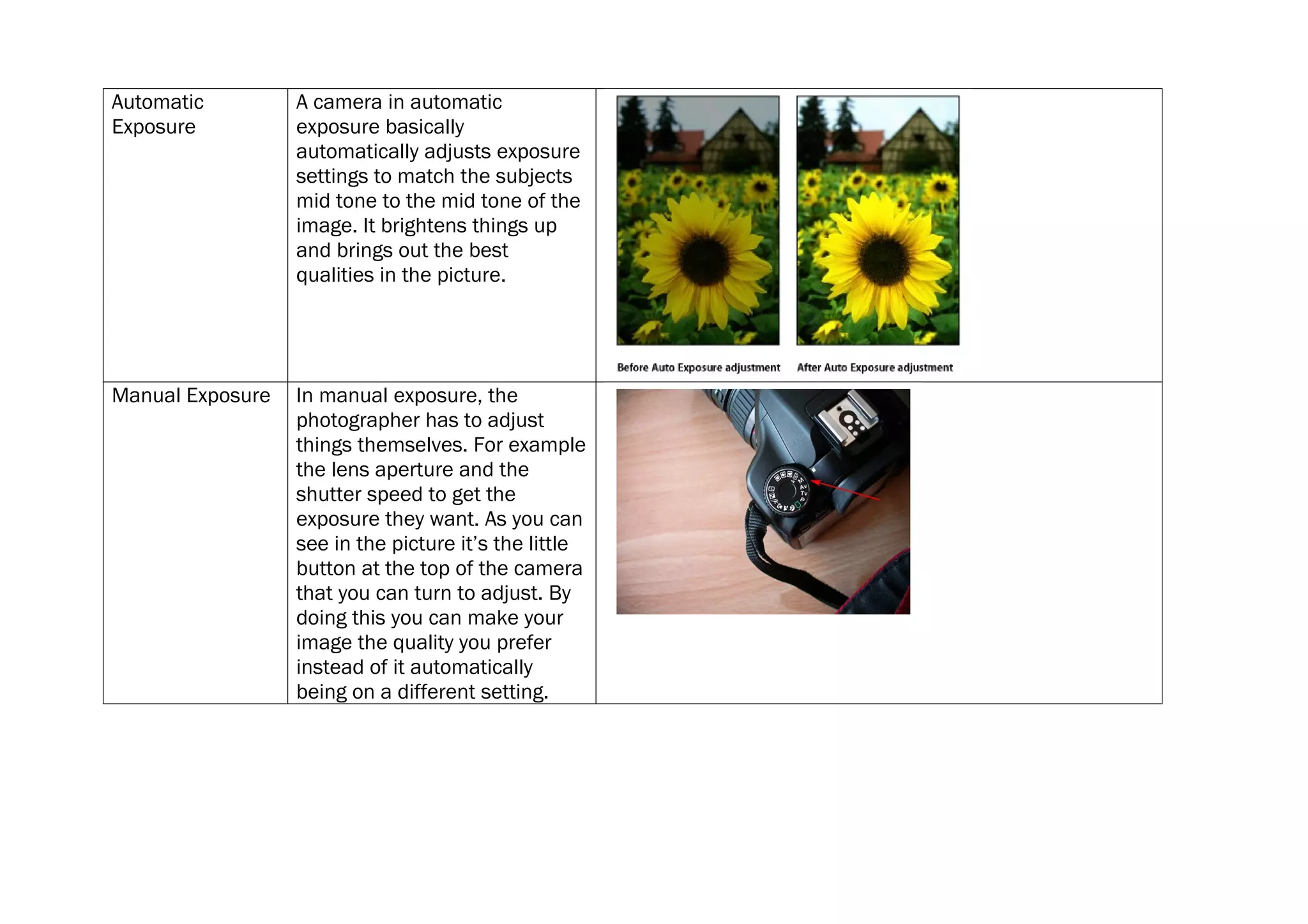
Aperture & Depth    This makes the image look
of field (F stop)   different to how it actually
                    looks; it can make the
                    background in the picture look
                    a lot sharper. The smaller the
                    aperture, the more extensive
                    the depth of field.
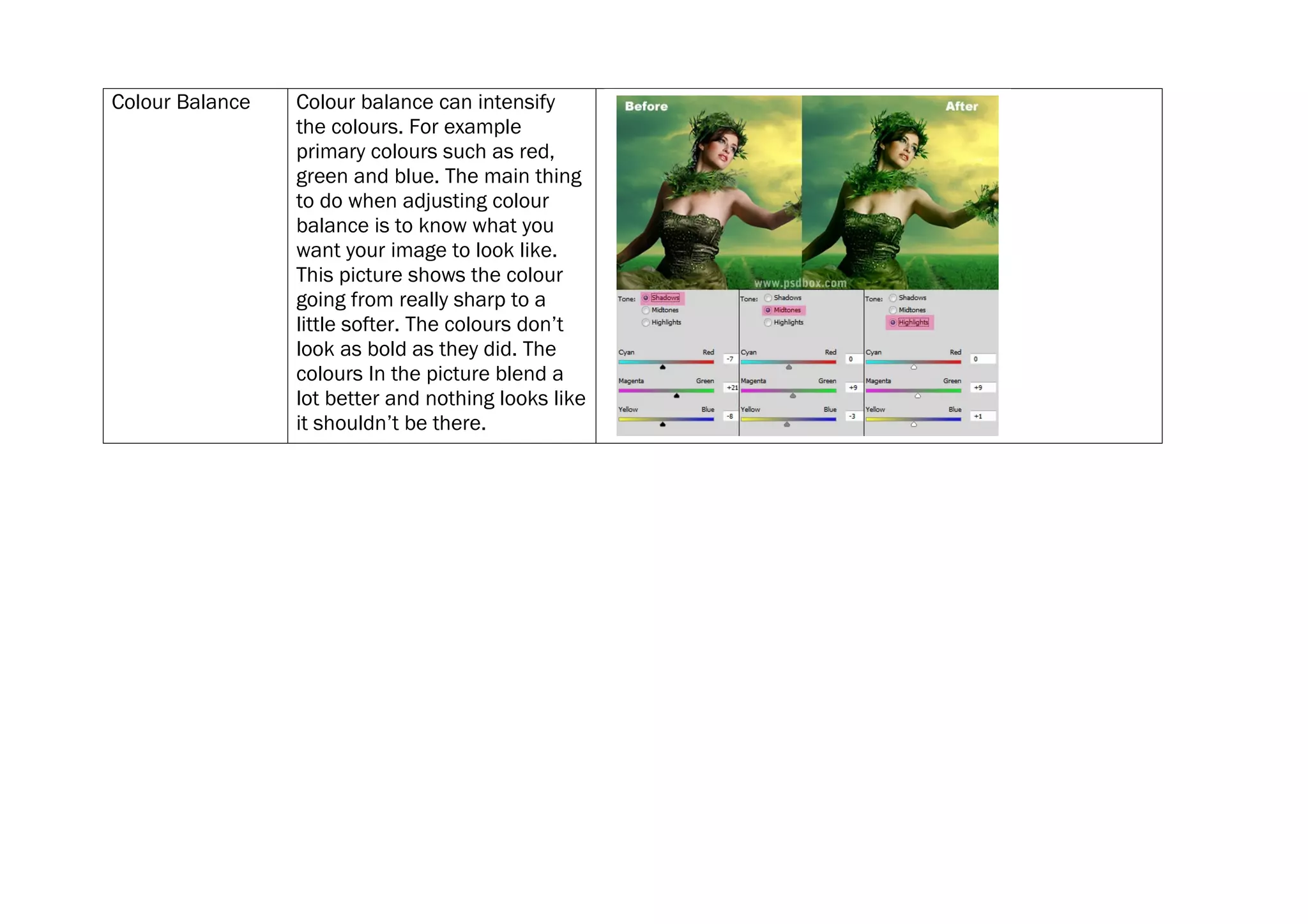
Automatic         A camera in automatic
Exposure          exposure basically
                  automatically adjusts exposure
                  settings to match the subjects
                  mid tone to the mid tone of the
                  image. It brightens things up
                  and brings out the best
                  qualities in the picture.


Manual Exposure   In manual exposure, the
                  photographer has to adjust
                  things themselves. For example
                  the lens aperture and the
                  shutter speed to get the
                  exposure they want. As you can
                  see in the picture it’s the little
                  button at the top of the camera
                  that you can turn to adjust. By
                  doing this you can make your
                  image the quality you prefer
                  instead of it automatically
                  being on a different setting.
Colour Balance   Colour balance can intensify
                 the colours. For example
                 primary colours such as red,
                 green and blue. The main thing
                 to do when adjusting colour
                 balance is to know what you
                 want your image to look like.
                 This picture shows the colour
                 going from really sharp to a
                 little softer. The colours don’t
                 look as bold as they did. The
                 colours In the picture blend a
                 lot better and nothing looks like
                 it shouldn’t be there.
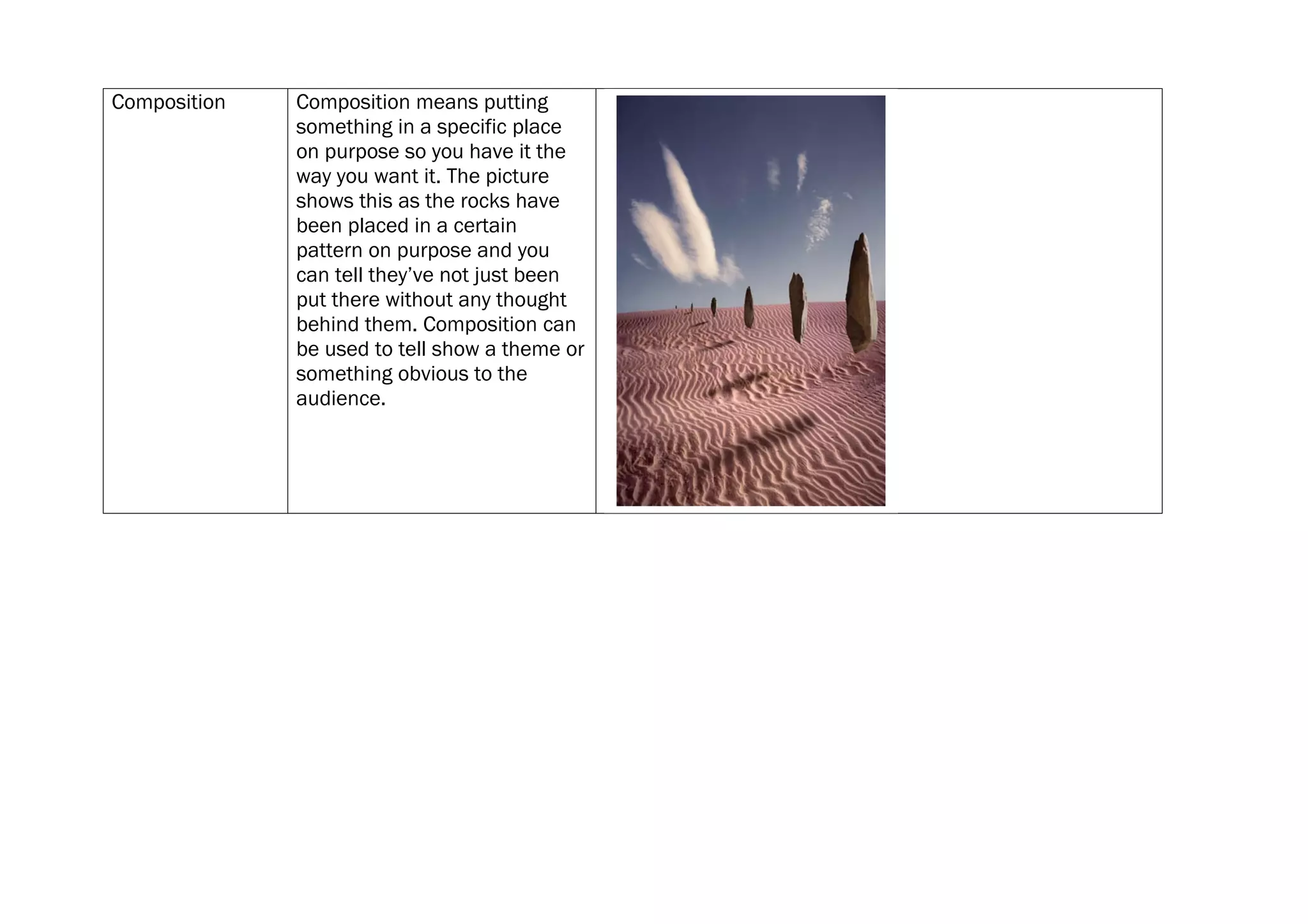
Composition   Composition means putting
              something in a specific place
              on purpose so you have it the
              way you want it. The picture
              shows this as the rocks have
              been placed in a certain
              pattern on purpose and you
              can tell they’ve not just been
              put there without any thought
              behind them. Composition can
              be used to tell show a theme or
              something obvious to the
              audience.
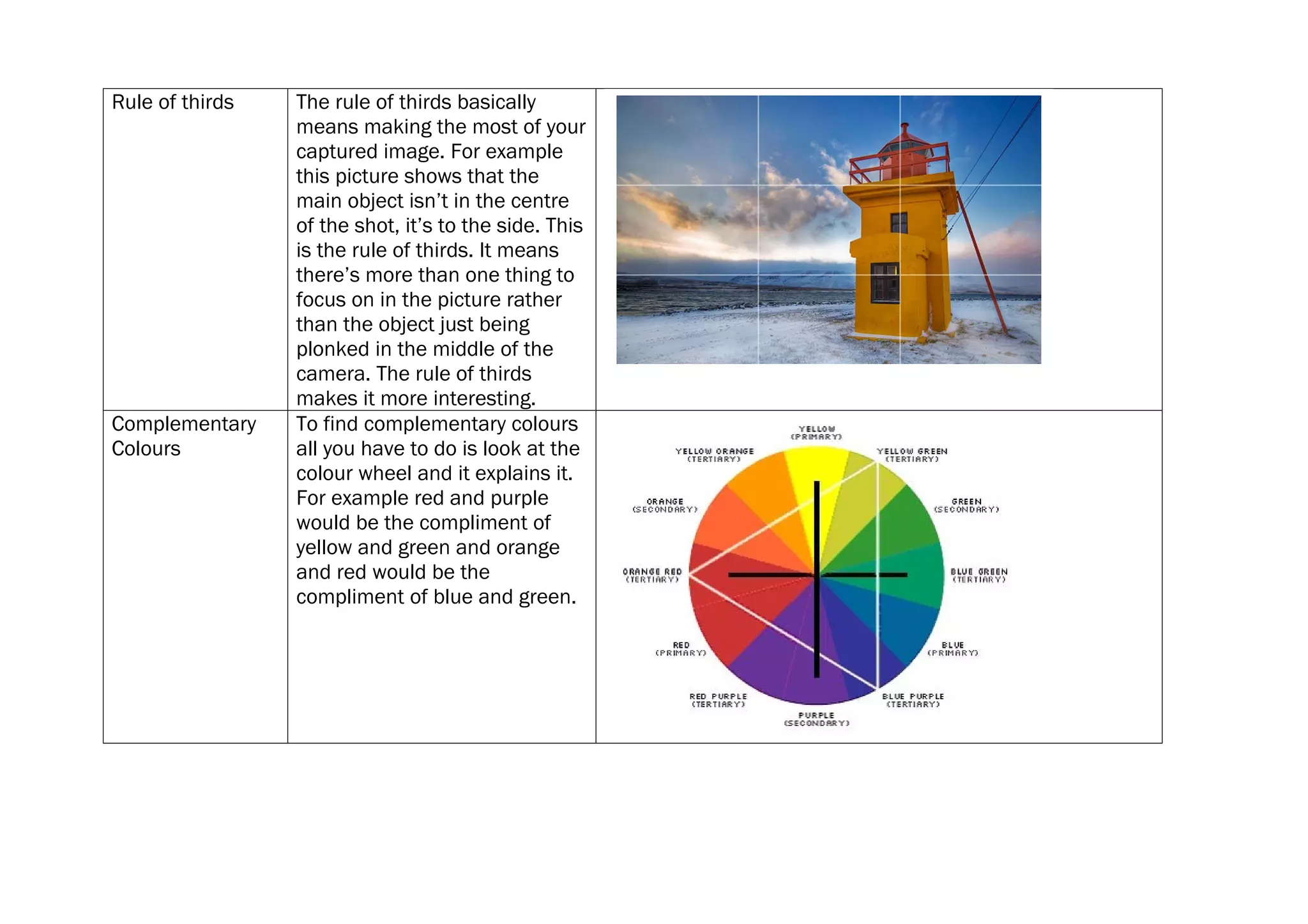
Rule of thirds   The rule of thirds basically
                 means making the most of your
                 captured image. For example
                 this picture shows that the
                 main object isn’t in the centre
                 of the shot, it’s to the side. This
                 is the rule of thirds. It means
                 there’s more than one thing to
                 focus on in the picture rather
                 than the object just being
                 plonked in the middle of the
                 camera. The rule of thirds
                 makes it more interesting.
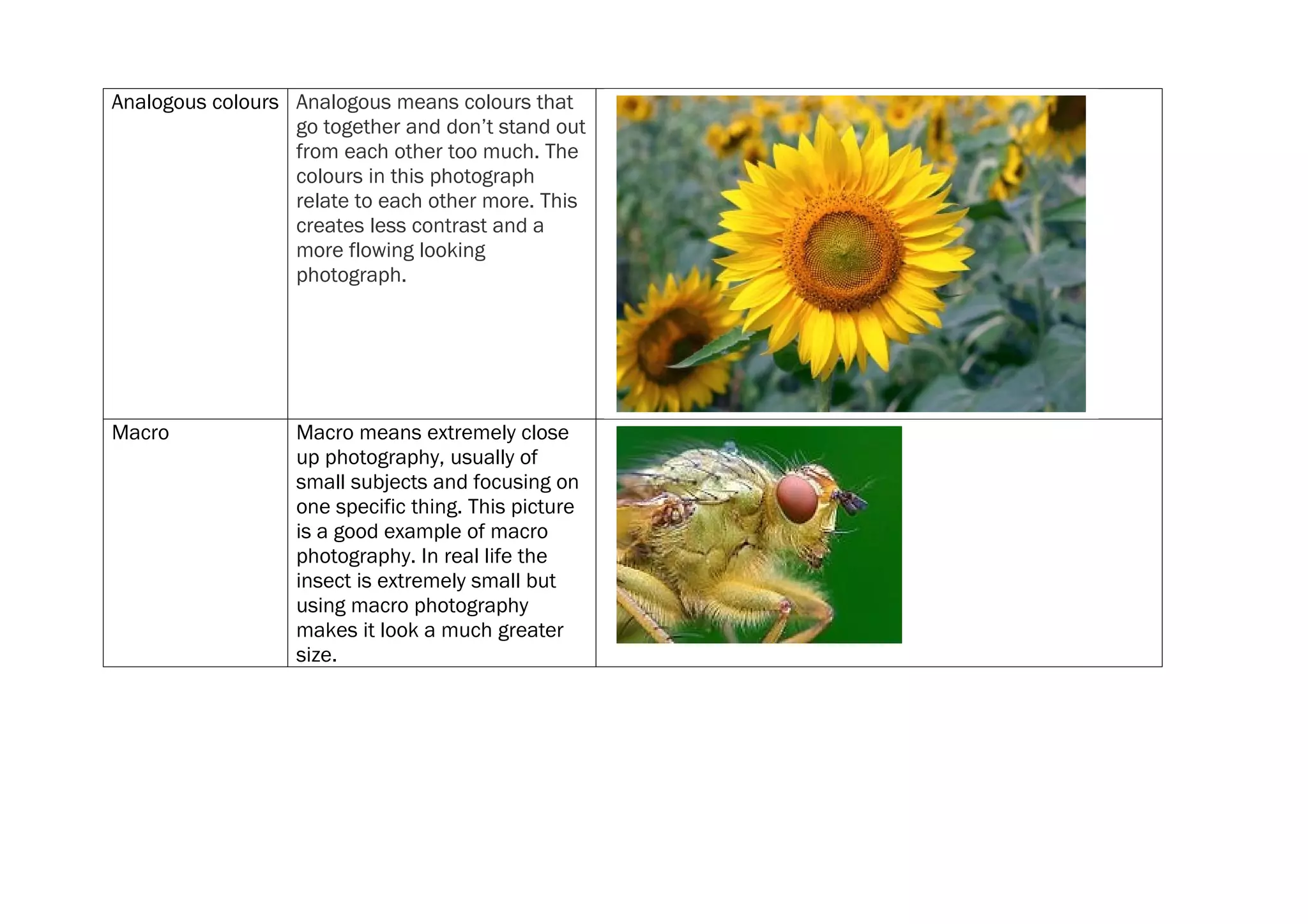
Complementary    To find complementary colours
Colours          all you have to do is look at the
                 colour wheel and it explains it.
                 For example red and purple
                 would be the compliment of
                 yellow and green and orange
                 and red would be the
                 compliment of blue and green.
Analogous colours Analogous means colours that
                  go together and don’t stand out
                  from each other too much. The
                  colours in this photograph
                  relate to each other more. This
                  creates less contrast and a
                  more flowing looking
                  photograph.


Macro              Macro means extremely close
                   up photography, usually of
                   small subjects and focusing on
                   one specific thing. This picture
                   is a good example of macro
                   photography. In real life the
                   insect is extremely small but
                   using macro photography
                   makes it look a much greater
                   size.

Definitions.

  • 1.
    Unit 57: Photographyand Photographic Practice Terminology (P1, P2, M1, M2) Term Explanation of term e.g. what it Examples is used for / the effect it has on your images Shutter Speed The length of time a cameras shutter is open. Halving the shutter speed doubles the exposure. It also determines the amount of light that reaches the sensor. Fast shutter speed freezes things and slow shutter speed shows movement. As you can see in the picture to the side it looks to me like slow shutter speed has been used as the lights like on the road look as though they are travelling and it gives a better effect.
  • 2.
    ISO ISO is an interchangeable setting which are most used on digital cameras. The standard ISO that people use every day is 100, if it was any less then than 50 ISO, you’ll notice the colour of the images become more saturated. The higher the ISO the better the quality. In the picture to the side it shows this. ISO 100 shows a blurred image and looks like a lens is out of focus. Aperture & Depth This makes the image look of field (F stop) different to how it actually looks; it can make the background in the picture look a lot sharper. The smaller the aperture, the more extensive the depth of field.
  • 3.
    Automatic A camera in automatic Exposure exposure basically automatically adjusts exposure settings to match the subjects mid tone to the mid tone of the image. It brightens things up and brings out the best qualities in the picture. Manual Exposure In manual exposure, the photographer has to adjust things themselves. For example the lens aperture and the shutter speed to get the exposure they want. As you can see in the picture it’s the little button at the top of the camera that you can turn to adjust. By doing this you can make your image the quality you prefer instead of it automatically being on a different setting.
  • 4.
    Colour Balance Colour balance can intensify the colours. For example primary colours such as red, green and blue. The main thing to do when adjusting colour balance is to know what you want your image to look like. This picture shows the colour going from really sharp to a little softer. The colours don’t look as bold as they did. The colours In the picture blend a lot better and nothing looks like it shouldn’t be there.
  • 5.
    Composition Composition means putting something in a specific place on purpose so you have it the way you want it. The picture shows this as the rocks have been placed in a certain pattern on purpose and you can tell they’ve not just been put there without any thought behind them. Composition can be used to tell show a theme or something obvious to the audience.
  • 6.
    Rule of thirds The rule of thirds basically means making the most of your captured image. For example this picture shows that the main object isn’t in the centre of the shot, it’s to the side. This is the rule of thirds. It means there’s more than one thing to focus on in the picture rather than the object just being plonked in the middle of the camera. The rule of thirds makes it more interesting. Complementary To find complementary colours Colours all you have to do is look at the colour wheel and it explains it. For example red and purple would be the compliment of yellow and green and orange and red would be the compliment of blue and green.
  • 7.
    Analogous colours Analogousmeans colours that go together and don’t stand out from each other too much. The colours in this photograph relate to each other more. This creates less contrast and a more flowing looking photograph. Macro Macro means extremely close up photography, usually of small subjects and focusing on one specific thing. This picture is a good example of macro photography. In real life the insect is extremely small but using macro photography makes it look a much greater size.