Unit 57: Photography and
   Photographic Practice
         Terminology
       P1, P2, M1, M2


Photographic
Terminology
Charlotte Bracken
Shutter Speed
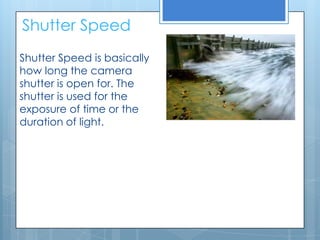
Shutter Speed is basically
how long the camera
shutter is open for. The
shutter is used for the
exposure of time or the
duration of light.
Shutter Speed
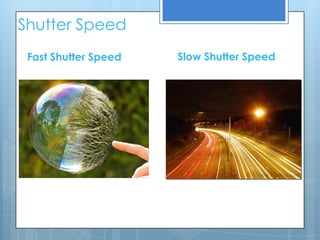
 Fast Shutter Speed   Slow Shutter Speed
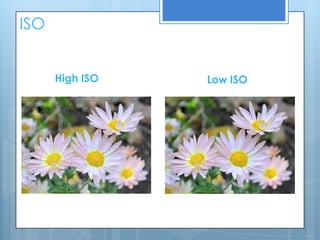
ISO
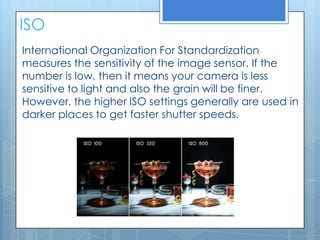
International Organization For Standardization
measures the sensitivity of the image sensor. If the
number is low, then it means your camera is less
sensitive to light and also the grain will be finer.
However, the higher ISO settings generally are used in
darker places to get faster shutter speeds.
ISO


      High ISO   Low ISO
Aperture &
Depth of Field


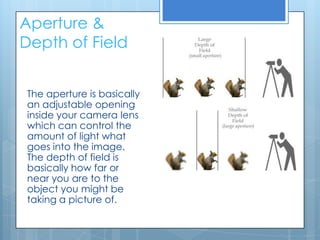
The aperture is basically
an adjustable opening
inside your camera lens
which can control the
amount of light what
goes into the image.
The depth of field is
basically how far or
near you are to the
object you might be
taking a picture of.
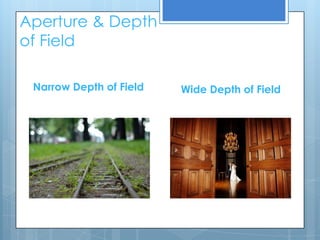
Aperture & Depth
of Field

 Narrow Depth of Field   Wide Depth of Field
Manual Exposure
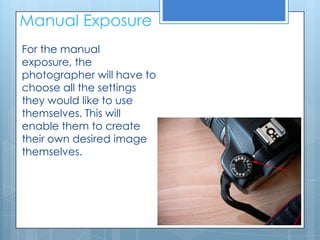
For the manual
exposure, the
photographer will have to
choose all the settings
they would like to use
themselves. This will
enable them to create
their own desired image
themselves.
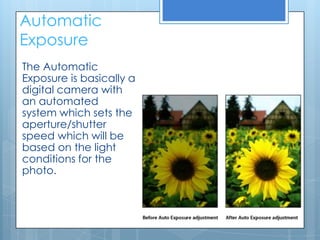
Automatic
Exposure
The Automatic
Exposure is basically a
digital camera with
an automated
system which sets the
aperture/shutter
speed which will be
based on the light
conditions for the
photo.
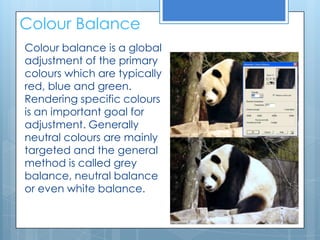
Colour Balance
Colour balance is a global
adjustment of the primary
colours which are typically
red, blue and green.
Rendering specific colours
is an important goal for
adjustment. Generally
neutral colours are mainly
targeted and the general
method is called grey
balance, neutral balance
or even white balance.
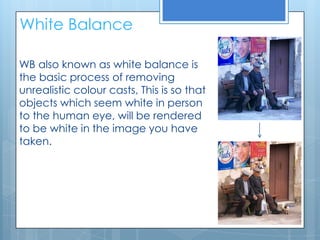
White Balance

WB also known as white balance is
the basic process of removing
unrealistic colour casts, This is so that
objects which seem white in person
to the human eye, will be rendered
to be white in the image you have
taken.
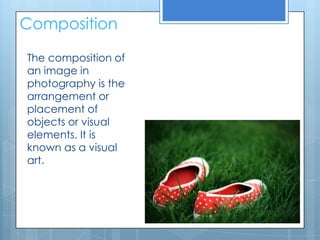
Composition

The composition of
an image in
photography is the
arrangement or
placement of
objects or visual
elements. It is
known as a visual
art.
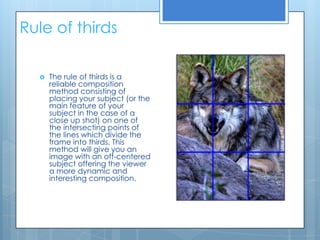
Rule of thirds

  ď‚›   The rule of thirds is a
      reliable composition
      method consisting of
      placing your subject (or the
      main feature of your
      subject in the case of a
      close up shot) on one of
      the intersecting points of
      the lines which divide the
      frame into thirds. This
      method will give you an
      image with an off-centered
      subject offering the viewer
      a more dynamic and
      interesting composition.
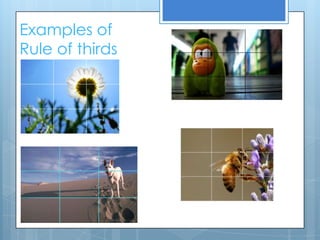
Examples of
Rule of thirds
Analogous
colours
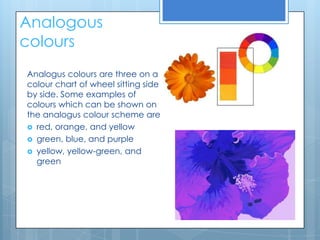
Analogus colours are three on a
colour chart of wheel sitting side
by side. Some examples of
colours which can be shown on
the analogus colour scheme are
ď‚› red, orange, and yellow
ď‚› green, blue, and purple
ď‚› yellow, yellow-green, and
  green
Complementary
Colours
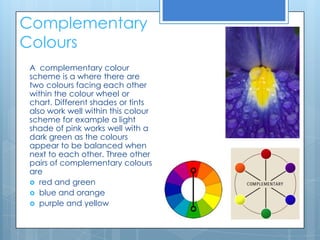
 A complementary colour
 scheme is a where there are
 two colours facing each other
 within the colour wheel or
 chart. Different shades or tints
 also work well within this colour
 scheme for example a light
 shade of pink works well with a
 dark green as the colours
 appear to be balanced when
 next to each other. Three other
 pairs of complementary colours
 are
 ď‚› red and green
 ď‚› blue and orange
 ď‚› purple and yellow
Macro
 Marco photography is more of a
 professional term for a clos-up
 photography. Marco
 photography allows you to see
 things from the world in a
 different prospective and shows
 the beauty in something so
 simple yet small. To capure these
 kinds of shots, you need a lens
 capable of reproduction ratios
 greater than 1:.

Photography terminology

  • 1.
    Unit 57: Photographyand Photographic Practice Terminology P1, P2, M1, M2 Photographic Terminology Charlotte Bracken
  • 2.
    Shutter Speed Shutter Speedis basically how long the camera shutter is open for. The shutter is used for the exposure of time or the duration of light.
  • 3.
    Shutter Speed FastShutter Speed Slow Shutter Speed
  • 4.
    ISO International Organization ForStandardization measures the sensitivity of the image sensor. If the number is low, then it means your camera is less sensitive to light and also the grain will be finer. However, the higher ISO settings generally are used in darker places to get faster shutter speeds.
  • 5.
    ISO High ISO Low ISO
  • 6.
    Aperture & Depth ofField The aperture is basically an adjustable opening inside your camera lens which can control the amount of light what goes into the image. The depth of field is basically how far or near you are to the object you might be taking a picture of.
  • 7.
    Aperture & Depth ofField Narrow Depth of Field Wide Depth of Field
  • 8.
    Manual Exposure For themanual exposure, the photographer will have to choose all the settings they would like to use themselves. This will enable them to create their own desired image themselves.
  • 9.
    Automatic Exposure The Automatic Exposure isbasically a digital camera with an automated system which sets the aperture/shutter speed which will be based on the light conditions for the photo.
  • 10.
    Colour Balance Colour balanceis a global adjustment of the primary colours which are typically red, blue and green. Rendering specific colours is an important goal for adjustment. Generally neutral colours are mainly targeted and the general method is called grey balance, neutral balance or even white balance.
  • 11.
    White Balance WB alsoknown as white balance is the basic process of removing unrealistic colour casts, This is so that objects which seem white in person to the human eye, will be rendered to be white in the image you have taken.
  • 12.
    Composition The composition of animage in photography is the arrangement or placement of objects or visual elements. It is known as a visual art.
  • 13.
    Rule of thirds ď‚› The rule of thirds is a reliable composition method consisting of placing your subject (or the main feature of your subject in the case of a close up shot) on one of the intersecting points of the lines which divide the frame into thirds. This method will give you an image with an off-centered subject offering the viewer a more dynamic and interesting composition.
  • 14.
  • 15.
    Analogous colours Analogus colours arethree on a colour chart of wheel sitting side by side. Some examples of colours which can be shown on the analogus colour scheme are ď‚› red, orange, and yellow ď‚› green, blue, and purple ď‚› yellow, yellow-green, and green
  • 16.
    Complementary Colours A complementarycolour scheme is a where there are two colours facing each other within the colour wheel or chart. Different shades or tints also work well within this colour scheme for example a light shade of pink works well with a dark green as the colours appear to be balanced when next to each other. Three other pairs of complementary colours are ď‚› red and green ď‚› blue and orange ď‚› purple and yellow
  • 17.
    Macro Marco photographyis more of a professional term for a clos-up photography. Marco photography allows you to see things from the world in a different prospective and shows the beauty in something so simple yet small. To capure these kinds of shots, you need a lens capable of reproduction ratios greater than 1:.