PHOTO
      ETHICS
CHRIS SNIDER | JMC59 | FALL 2009
Ethics made simple
• Tell the truth
• Be fair
• Don’t pretend something is yours if it is
  not yours
• Don’t deceive the reader
• ALSO: Understand the ethical values of
  your organization
San Jose Mercury News
• ETHICS POLICY STATES...
• The San Jose Mercury News is committed to the highest
  ethical standards. To take pride in the work we do, we
  must do our work honestly.
• Fairness and accuracy are among our core values. But
  perhaps nothing stands above the need for the
  newspaper to maintain and preserve its integrity. We
  cannot hold the people we cover to standards we do not
  meet ourselves. The public's trust in our work – our
  most important asset – depends on our meeting these
  high standards.
Visual Ethics
LA Times
• VISUAL ETHICS POLICY STATES...
• Photographs and graphics must inform, not mislead.
  Any attempt to confuse readers or misrepresent visual
  information is prohibited.
• In photographing news, we do not stage or reenact
  events. Photographers may direct subjects of portraits,
  fashion shoots or studio work. In presenting such
  images, we must avoid creating the impression that
  they were captured spontaneously.
LA Times
• We do not add color, create photomontages, remove
  objects or flop images. We do not digitally alter images
  beyond making minor adjustments for color correction,
  exposure correction and removal of dust spots or
  scratches required to ensure faithful reproduction of the
  original image. Exaggerated use of burning, dodging or
  color saturation is not permitted.
• On occasion, we publish artistic or graphic renderings
  that include altered photographs. Such renderings
  should be clearly labeled photo illustration. Before
  creating a photo illustration, photographers, photo
  editors and designers must obtain approval from a
  Senior Editor for photography.
Virginian-Pilot
• RULES FOR DOCUMENTARY PHOTOS...
• Posing or re-enacting a documentary photograph is
  unacceptable. Altering a documentary photo is also
  unacceptable. This includes eliminating or adding
  material to the photo.
• Do not ask someone to repeat an action for a
  documentary photo. The photographer would not ask a
  wife to again hug her husband at a ship homecoming
  because he missed it the first time.
Virginian-Pilot

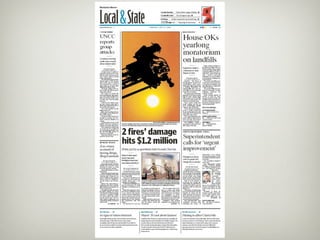
• Do not cut out a "live" news photo. Cutouts can make a
  news photo look like a feature photo. Let the reader
  have full information.
• A photographer, photo editor or designer should not
  eliminate a telephone line from a photo to "clean up"
  the scene. Clouds, sky, grass or other elements should
  not be added to make room for type or make the photo
  fit a hole.
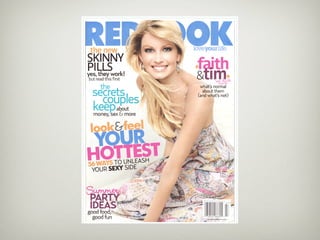
Magazines
http://jezebel.com/gossip/photoshop-of-horrors/heres-our-winner-redbook-shatters-our-faith-in-well-not-publishing-but-maybe-god-278919.php

http://jezebel.com/gossip/top/the-annotated-guide-to-making-faith-hill-hot-278978.php


http://youtube.com/watch?v=iYhCn0jf46U
Public relations
Photo Decisions
To use or not to use?
To use or not to use
• Virginian-Pilot photo usage rules...
• When in doubt, use common sense. Know privacy rules
  and laws. Shooting the photo usually is not the
  problem. Publishing the photo may be. Using sound
  judgment, the photographer should almost always
  shoot the picture. The editing process will determine
  whether the photo will be used. The photo editor, page
  editor and news editor will also help determine
  publication. Some photos should be approved by a
  deputy managing editor, managing editor or the editor.
Some Red Flags
•   Virginian-Pilot...
•   Death
•   Nudity or sexual content
•   Exaggerated grief
•   Blood or other body fluids
•   Photo is too good to be true (it may be set up)
•   Vulgar words or gestures (these may be hidden in a photo)
•   Cheap shot (zipper open, food on the face)
•   Unflattering expression not related to the event or situation
•   People performing dangerous acts
•   Violence
•   Racial stereotypes
•   Photos that may otherwise shock or appall readers
To use or not to use
•   Virginian-Pilot cont’d...
•   GUIDING QUESTIONS
•   Is the photo appropriate to the story?
•   Is the news value worth upsetting the reader?
•   Is the photo from this community or from far away?
•   What are the paper’s general standards of taste?
•   Do you need to pass the photo through the top editor?
•   Does it pass the "breakfast table" test?
This image carries a number of messages that are not
 directly part of its purpose as a news photo of the
Vietnam War. What else does the photo tell viewers?
http://abcnews.go.com/video/playerIndex?id=8049121
Which of the following 3 photos would you use?
Visual Ethics
The Guardian
    4/4/06


The Daily Mail
   4/5/06

Photo Ethics

  • 1.
    PHOTO ETHICS CHRIS SNIDER | JMC59 | FALL 2009
  • 3.
    Ethics made simple •Tell the truth • Be fair • Don’t pretend something is yours if it is not yours • Don’t deceive the reader • ALSO: Understand the ethical values of your organization
  • 4.
    San Jose MercuryNews • ETHICS POLICY STATES... • The San Jose Mercury News is committed to the highest ethical standards. To take pride in the work we do, we must do our work honestly. • Fairness and accuracy are among our core values. But perhaps nothing stands above the need for the newspaper to maintain and preserve its integrity. We cannot hold the people we cover to standards we do not meet ourselves. The public's trust in our work – our most important asset – depends on our meeting these high standards.
  • 5.
  • 6.
    LA Times • VISUALETHICS POLICY STATES... • Photographs and graphics must inform, not mislead. Any attempt to confuse readers or misrepresent visual information is prohibited. • In photographing news, we do not stage or reenact events. Photographers may direct subjects of portraits, fashion shoots or studio work. In presenting such images, we must avoid creating the impression that they were captured spontaneously.
  • 7.
    LA Times • Wedo not add color, create photomontages, remove objects or flop images. We do not digitally alter images beyond making minor adjustments for color correction, exposure correction and removal of dust spots or scratches required to ensure faithful reproduction of the original image. Exaggerated use of burning, dodging or color saturation is not permitted. • On occasion, we publish artistic or graphic renderings that include altered photographs. Such renderings should be clearly labeled photo illustration. Before creating a photo illustration, photographers, photo editors and designers must obtain approval from a Senior Editor for photography.
  • 8.
    Virginian-Pilot • RULES FORDOCUMENTARY PHOTOS... • Posing or re-enacting a documentary photograph is unacceptable. Altering a documentary photo is also unacceptable. This includes eliminating or adding material to the photo. • Do not ask someone to repeat an action for a documentary photo. The photographer would not ask a wife to again hug her husband at a ship homecoming because he missed it the first time.
  • 9.
    Virginian-Pilot • Do notcut out a "live" news photo. Cutouts can make a news photo look like a feature photo. Let the reader have full information. • A photographer, photo editor or designer should not eliminate a telephone line from a photo to "clean up" the scene. Clouds, sky, grass or other elements should not be added to make room for type or make the photo fit a hole.
  • 33.
  • 43.
  • 47.
  • 52.
    Photo Decisions To useor not to use?
  • 54.
    To use ornot to use • Virginian-Pilot photo usage rules... • When in doubt, use common sense. Know privacy rules and laws. Shooting the photo usually is not the problem. Publishing the photo may be. Using sound judgment, the photographer should almost always shoot the picture. The editing process will determine whether the photo will be used. The photo editor, page editor and news editor will also help determine publication. Some photos should be approved by a deputy managing editor, managing editor or the editor.
  • 55.
    Some Red Flags • Virginian-Pilot... • Death • Nudity or sexual content • Exaggerated grief • Blood or other body fluids • Photo is too good to be true (it may be set up) • Vulgar words or gestures (these may be hidden in a photo) • Cheap shot (zipper open, food on the face) • Unflattering expression not related to the event or situation • People performing dangerous acts • Violence • Racial stereotypes • Photos that may otherwise shock or appall readers
  • 56.
    To use ornot to use • Virginian-Pilot cont’d... • GUIDING QUESTIONS • Is the photo appropriate to the story? • Is the news value worth upsetting the reader? • Is the photo from this community or from far away? • What are the paper’s general standards of taste? • Do you need to pass the photo through the top editor? • Does it pass the "breakfast table" test?
  • 57.
    This image carriesa number of messages that are not directly part of its purpose as a news photo of the Vietnam War. What else does the photo tell viewers?
  • 58.
  • 59.
    Which of thefollowing 3 photos would you use?
  • 66.
  • 69.
    The Guardian 4/4/06 The Daily Mail 4/5/06