Photo
Essay
A photographic essay is a set or series of photographs that
are intended to tell a story or evoke a series of emotions in
the viewer.
It allows to tell more than what is possible with a single image
Essays range from purely photographic projects to
photographs with captions, small texts or full text essays
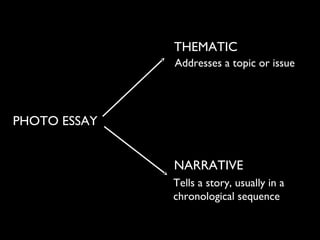
PHOTO ESSAY
NARRATIVE
THEMATIC
Addresses a topic or issue
Tells a story, usually in a
chronological sequence
THEME
• You have reviewed some of the issues that affect us in Hong
Kong. Now ask yourself what issues do you find important.
• Consider ideas that are relevant to you and that you are
passionate about.
• Are you affiliated with a nonprofit organization that you
could use as a resource? See if you can collaborate with them
on a project.
How to choose your theme
• Look at photography publications to familiarize yourself with
what other photographers are publishing
• Consider what type of photography you enjoy. What type of
subjects do you enjoy working with?
• Who do you know? Do you have any contacts that would allow
you to get some powerful and candid shots?
STRUCTURE
It is important that the order of your photos effectively
tell a story, in an interesting and logical sequence.
Unless your essay is part of a journalistic piece, it
should be able to stand alone, without a written
article, and make logical sense to the viewer
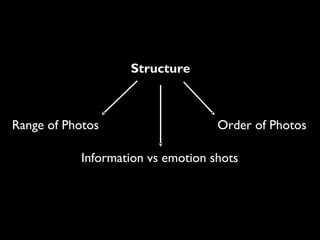
Range of Photos Order of Photos
Information vs emotion shots
Structure
NARRATIVE
SHOTS
Your lead photo should effectively draw in your
audience. This is usually the most difficult photo to
choose and should follow the theme of your essay. It
could be an emotional portrait or an action shot, but
ultimately it should provoke the curiosity of the viewer.
The Lead Photo / The Hook
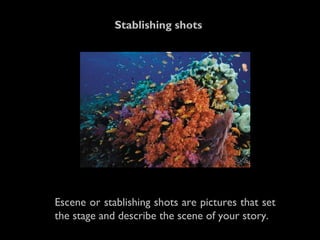
Escene or stablishing shots are pictures that set
the stage and describe the scene of your story.
Stablishing shots
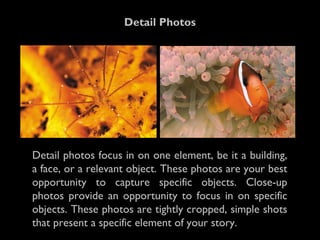
Detail photos focus in on one element, be it a building,
a face, or a relevant object. These photos are your best
opportunity to capture specific objects. Close-up
photos provide an opportunity to focus in on specific
objects. These photos are tightly cropped, simple shots
that present a specific element of your story.
Detail Photos
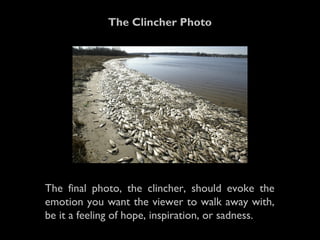
The final photo, the clincher, should evoke the
emotion you want the viewer to walk away with,
be it a feeling of hope, inspiration, or sadness.
The Clincher Photo
Other shots
Portrait: Often a tight portrait or head shot, but can also be tight
environmental portrait. This shot gives a face to your characters. It
make the story personal to someone. Even if your character is not a
human, a portrait can be important.
Medium Shot: The medium shot serves to inform the viewer who
are the characters and what they are doing. The shot should include
both the subject and it’s surrounding.
Action/Gesture: Action shots show your subject doing something,
ideally the thing you are reporting on.
UNITY
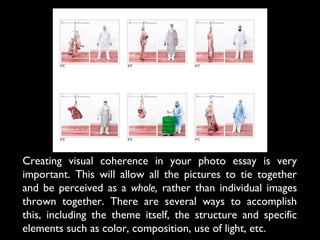
Creating visual coherence in your photo essay is very
important. This will allow all the pictures to tie together
and be perceived as a whole, rather than individual images
thrown together. There are several ways to accomplish
this, including the theme itself, the structure and specific
elements such as color, composition, use of light, etc.
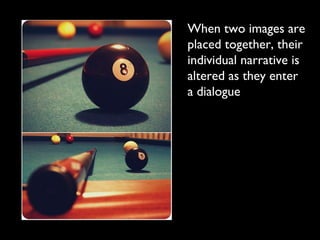
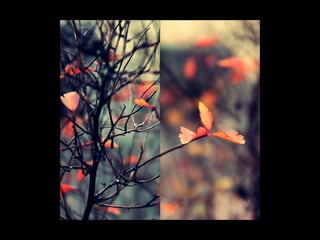
Diptychs and triptychs are a brilliant tool for
photographic storytelling. They present two or three
images which can be from the same session or they can be
polar opposites to show opposition or contrasting ideas.
When two images are
placed together, their
individual narrative is
altered as they enter
a dialogue
EXAMPLES
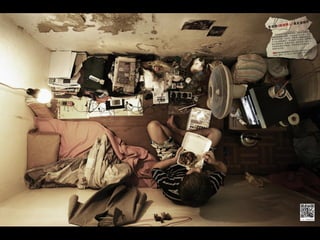
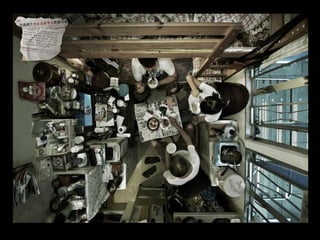
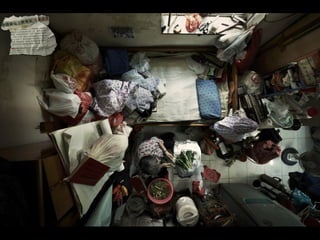
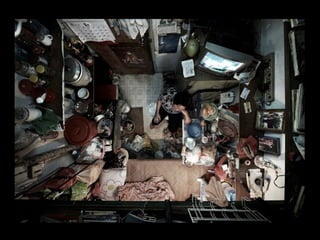
Trapped
Benny Lam
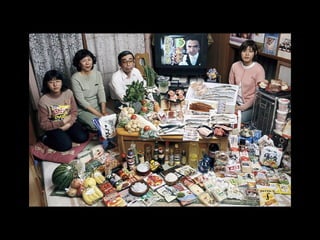
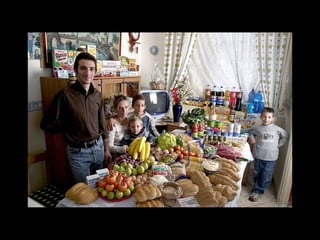
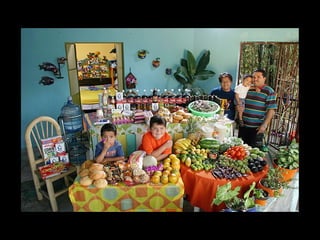
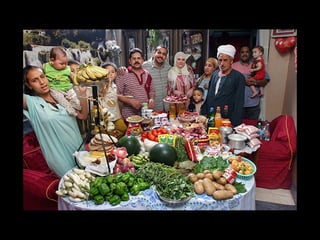
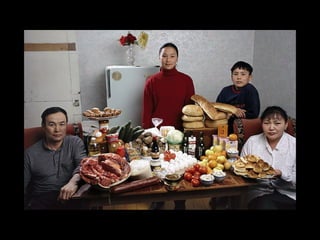
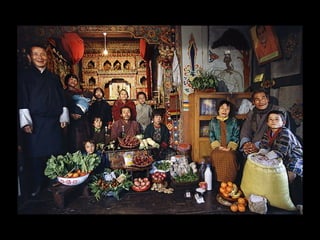
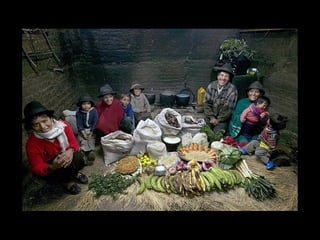
What the World Eats
Peter Menzel
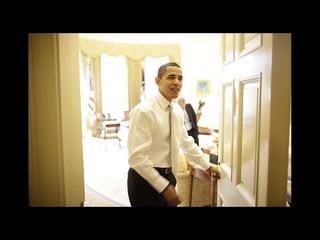
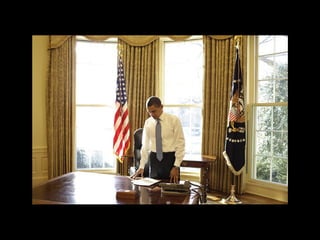
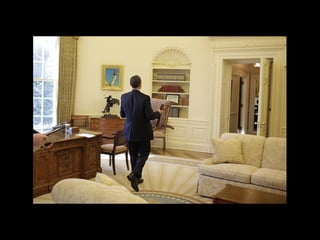
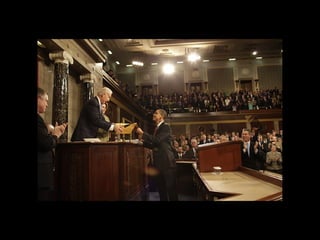
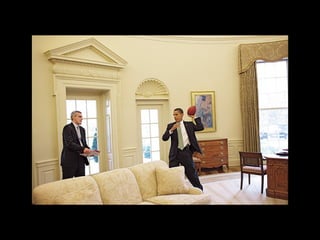
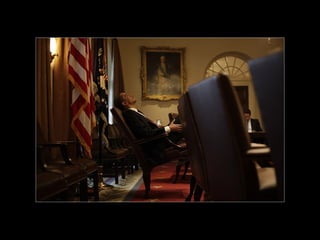
Behind the Scenes with Obama
Callie Shell
Final thoughts
and resources
Context: Make sure to portray the context, setting & situation
Character(s): As yourself, Who are the characters of my story?
What makes them interesting & compelling?
Conflict: Is there a conflict?
Plot: Is there a sequence of events?
Theme: What is the Essay about ?
Image Characteristics: How will you use the composition, color, &
light to create unity for your story?
Progression/order: Does the chosen order of the images help you
tell the story? Why was it chosen?
Juxtaposition: How does juxtaposition affect the meaning and power
of the images.
Narration: Is there narration? Is it effective? Necessary?
Some questions to ask yourself about your essay
Be careful with:
Misplaced focus
Under/over exposure
Presentation
Variety of shots
Visual Unity
The odd one out

Photo Essay Outline

  • 1.
  • 2.
    A photographic essayis a set or series of photographs that are intended to tell a story or evoke a series of emotions in the viewer. It allows to tell more than what is possible with a single image Essays range from purely photographic projects to photographs with captions, small texts or full text essays
  • 3.
    PHOTO ESSAY NARRATIVE THEMATIC Addresses atopic or issue Tells a story, usually in a chronological sequence
  • 4.
  • 5.
    • You havereviewed some of the issues that affect us in Hong Kong. Now ask yourself what issues do you find important. • Consider ideas that are relevant to you and that you are passionate about. • Are you affiliated with a nonprofit organization that you could use as a resource? See if you can collaborate with them on a project. How to choose your theme
  • 6.
    • Look atphotography publications to familiarize yourself with what other photographers are publishing • Consider what type of photography you enjoy. What type of subjects do you enjoy working with? • Who do you know? Do you have any contacts that would allow you to get some powerful and candid shots?
  • 7.
  • 8.
    It is importantthat the order of your photos effectively tell a story, in an interesting and logical sequence. Unless your essay is part of a journalistic piece, it should be able to stand alone, without a written article, and make logical sense to the viewer
  • 9.
    Range of PhotosOrder of Photos Information vs emotion shots Structure
  • 10.
  • 11.
    Your lead photoshould effectively draw in your audience. This is usually the most difficult photo to choose and should follow the theme of your essay. It could be an emotional portrait or an action shot, but ultimately it should provoke the curiosity of the viewer. The Lead Photo / The Hook
  • 12.
    Escene or stablishingshots are pictures that set the stage and describe the scene of your story. Stablishing shots
  • 13.
    Detail photos focusin on one element, be it a building, a face, or a relevant object. These photos are your best opportunity to capture specific objects. Close-up photos provide an opportunity to focus in on specific objects. These photos are tightly cropped, simple shots that present a specific element of your story. Detail Photos
  • 14.
    The final photo,the clincher, should evoke the emotion you want the viewer to walk away with, be it a feeling of hope, inspiration, or sadness. The Clincher Photo
  • 15.
    Other shots Portrait: Oftena tight portrait or head shot, but can also be tight environmental portrait. This shot gives a face to your characters. It make the story personal to someone. Even if your character is not a human, a portrait can be important. Medium Shot: The medium shot serves to inform the viewer who are the characters and what they are doing. The shot should include both the subject and it’s surrounding. Action/Gesture: Action shots show your subject doing something, ideally the thing you are reporting on.
  • 16.
  • 17.
    Creating visual coherencein your photo essay is very important. This will allow all the pictures to tie together and be perceived as a whole, rather than individual images thrown together. There are several ways to accomplish this, including the theme itself, the structure and specific elements such as color, composition, use of light, etc.
  • 19.
    Diptychs and triptychsare a brilliant tool for photographic storytelling. They present two or three images which can be from the same session or they can be polar opposites to show opposition or contrasting ideas.
  • 20.
    When two imagesare placed together, their individual narrative is altered as they enter a dialogue
  • 23.
  • 24.
  • 32.
    What the WorldEats Peter Menzel
  • 42.
    Behind the Sceneswith Obama Callie Shell
  • 53.
  • 54.
    Context: Make sureto portray the context, setting & situation Character(s): As yourself, Who are the characters of my story? What makes them interesting & compelling? Conflict: Is there a conflict? Plot: Is there a sequence of events? Theme: What is the Essay about ? Image Characteristics: How will you use the composition, color, & light to create unity for your story? Progression/order: Does the chosen order of the images help you tell the story? Why was it chosen? Juxtaposition: How does juxtaposition affect the meaning and power of the images. Narration: Is there narration? Is it effective? Necessary? Some questions to ask yourself about your essay
  • 55.
    Be careful with: Misplacedfocus Under/over exposure Presentation Variety of shots Visual Unity The odd one out