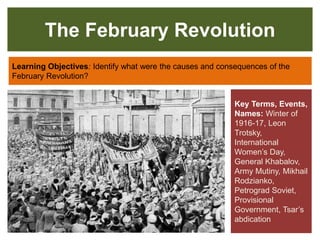
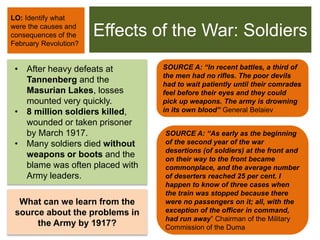
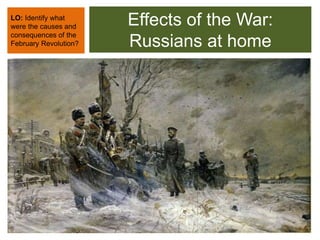
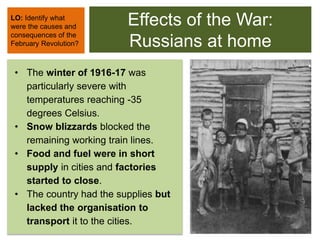
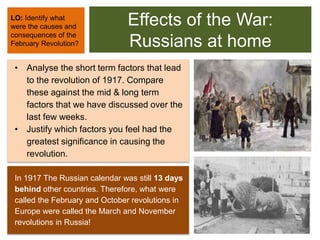
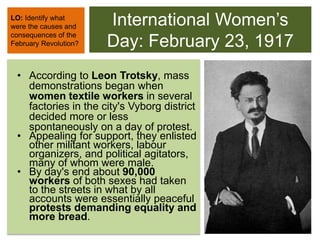
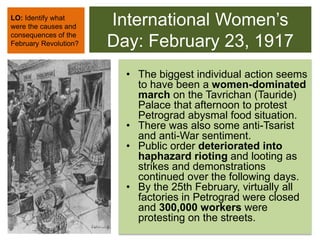
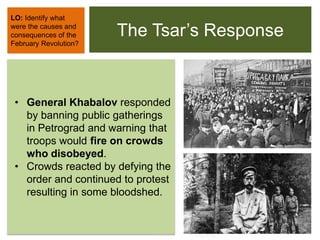
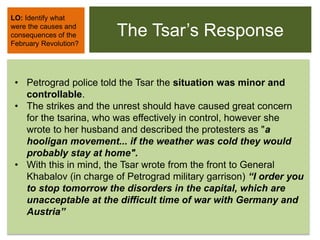
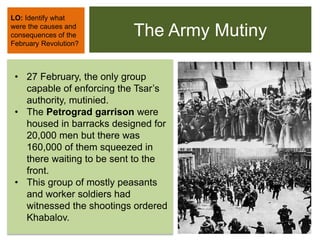
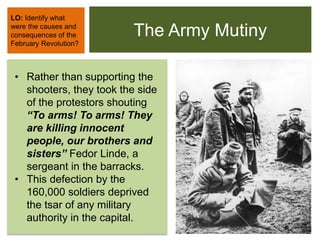
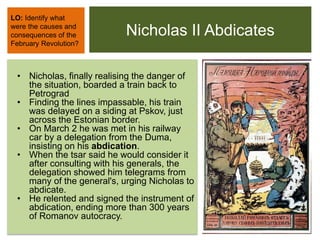
The February Revolution of 1917 in Russia was caused by widespread dissatisfaction with World War I and Tsar Nicholas II's autocratic rule. Major factors included heavy losses and poor conditions for Russian soldiers, food and fuel shortages exacerbated by harsh winter weather, and growing strikes and protests. On International Women's Day, demonstrations in Petrograd swelled to over 90,000 protesters demanding bread and an end to the war. The Tsar ordered military suppression but the soldiers mutinied, depriving the Tsar of power. Nicholas abdicated on March 2, ending over 300 years of Romanov rule and beginning Russia's transition to a provisional democratic government.


![Russian revolution [new]](https://cdn.slidesharecdn.com/ss_thumbnails/russianrevolutionnew-190213175016-thumbnail.jpg?width=640&height=640&fit=bounds)


