Photojournalism:
The Important Role of Pictures in
           the News
Jargon
• Photo Editor
  – The person in charge of the photography staff and
    acts as a liaison between the other branches of the
    paper that produce news.
• Staff Photographers
  – The “shooters”; the ones who actually take
    photographs for stories
  – They also provide information regarding the photo
    and upload photos to the paper.
• Photo Assignments
  – Basically instructions to the photographer; where
    they need to go, when, and why.
Key Points to Remember
• The photographer should think about the story
  to determine what is expected/needed from the
  photos.
• Be sure to get names of all people
  photographed and any additional
  information (score, location, date, scene,
  etc.) as you take the pictures. This will make
  caption writing so much easier!
Good Photographers…
• Are prepared. They bring everything they
  need with them to each location.
• Get there early to plan shots and get the lay of
  the room.
• Travel with a notebook to take down names of
  individuals photographed, and any pertinent
  information.
• Keep track of the Five W’s and H; this will help
  you or the reporter write the story.
Choosing a Photo
• Once you’ve taken photos of the event or
  subject, you must choose the ones you
  want to appear in the story. This is
  usually a collaborative effort—ask as
  many others as you want (generally the
  photo editor should have last say).
What makes a good photo?
• Pictures that have active people in them,
  tell the story well and give meaning to the
  story.
  – Remember: some photos should be cropped
    to get rid of unused space or unimportant
    information.
Do you remember?
• Think back to our lesson on the elements
  of photography. What are some of the
  “rules of composition” we discussed?
Story Type: The Photo Essay
• A series of photos that show the
  progression of a story in chronological
  order. It can be composed of one
  photographer’s pictures or several. It
  tells the story in images, rather than
  words.
Photo Essay Tips
• Find a topic you care about
• Whether you choose to document the
  first month of a freshmen’s year, the
  process of a school drama production, or
  even a soccer game, make your topic
  something in which you find interest.
• Do your research
• If you cover a drama production, talk
  with the students involved, both actors
  and crew; investigate the general interest
  of the student body in seeing the show;
  investigate the script and reasons for
  doing this show. Talk to the director.
• Find the “real story”
• After youresearch, determine the angle
  you want to take your story. Is the drama
  production an effort to bring the student
  body together? Is it featuring a freshmen
  star?
• Create and use emotions
• Every dynamic story is built on a set of
  core values and emotions that touch the
  heart of its audience. Draw out the
  emotions within the story and utilize
  them in your shots. Do not manipulate
  your audience’s emotions—use emotion

       as a connecting point.
• Plan your shots
• Think about the type of shots that will
  work best to tell your story. Try creating
  a story board first, think of each shot like
  a sentence in a one-paragraph story.
  Start with 10 shots, each emphasizing a
  different concept or emotion that can be
  woven together to create the story.
• Remember: story telling takes practice
• You don’t have to be an incredible writer
  to pull off a powerful photo essay. Know
  how to take good pictures, be creative
  and have a lot of heart. Focus on telling
  the story with your pictures and you’ll do
  well.
Example
• See a great example here:
• Mean Streets

• www.photoessasy.com
Permission is the Key!
• Don’t take photos that show private
  information (a teacher’s home, for
  example). Get permission.
• You may not advertise a product without
  the person’s permission.
  – You can’t use an athlete's image to promote
    a product without their permission.
Legal Issues
• Young children
  – Do not photograph children under the age of
    18 without parent consent.
• Photographing Students
  – All ILS students get a release. Make sure
    they have given permission to be
    photographed. If not, you may not use an
    image of them.
Accurate Representation
• Be sure the photos you choose accurately
  represent the people in them. Don’t use
  the school valedictorian’s picture in an
  article about cheating…unless you can
  prove they have been cheating.
Online Images
• Generally, artists, writers, and films all
  have publicity photos that can be used in
  publications. Go to that
  band/artist/movie’s website and use a
  photo from there—with credit, of course.
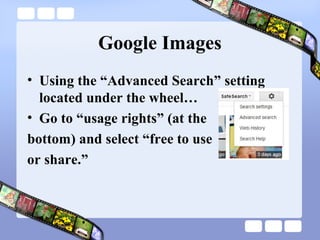
Google Images
• Using the “Advanced Search” setting
  located under the wheel…
• Go to “usage rights” (at the
bottom) and select “free to use
or share.”
Borrowed Photos
• Be sure to ask the person who took the
  photo directly and give them credit for
  having done so.
• Obtain permission to use the picture, and
  credit it as such.
DIY
• Take your own photos as much as you
  can! You’ll never get better if you don’t
  practice!
• Shoot a lot of photos so you have many to
  choose from. Chances are higher, then,
  of getting a quality photo.

Photojournalism

  • 1.
    Photojournalism: The Important Roleof Pictures in the News
  • 2.
    Jargon • Photo Editor – The person in charge of the photography staff and acts as a liaison between the other branches of the paper that produce news. • Staff Photographers – The “shooters”; the ones who actually take photographs for stories – They also provide information regarding the photo and upload photos to the paper. • Photo Assignments – Basically instructions to the photographer; where they need to go, when, and why.
  • 3.
    Key Points toRemember • The photographer should think about the story to determine what is expected/needed from the photos. • Be sure to get names of all people photographed and any additional information (score, location, date, scene, etc.) as you take the pictures. This will make caption writing so much easier!
  • 4.
    Good Photographers… • Areprepared. They bring everything they need with them to each location. • Get there early to plan shots and get the lay of the room. • Travel with a notebook to take down names of individuals photographed, and any pertinent information. • Keep track of the Five W’s and H; this will help you or the reporter write the story.
  • 5.
    Choosing a Photo •Once you’ve taken photos of the event or subject, you must choose the ones you want to appear in the story. This is usually a collaborative effort—ask as many others as you want (generally the photo editor should have last say).
  • 6.
    What makes agood photo? • Pictures that have active people in them, tell the story well and give meaning to the story. – Remember: some photos should be cropped to get rid of unused space or unimportant information.
  • 7.
    Do you remember? •Think back to our lesson on the elements of photography. What are some of the “rules of composition” we discussed?
  • 8.
    Story Type: ThePhoto Essay • A series of photos that show the progression of a story in chronological order. It can be composed of one photographer’s pictures or several. It tells the story in images, rather than words.
  • 9.
    Photo Essay Tips •Find a topic you care about • Whether you choose to document the first month of a freshmen’s year, the process of a school drama production, or even a soccer game, make your topic something in which you find interest.
  • 10.
    • Do yourresearch • If you cover a drama production, talk with the students involved, both actors and crew; investigate the general interest of the student body in seeing the show; investigate the script and reasons for doing this show. Talk to the director.
  • 11.
    • Find the“real story” • After youresearch, determine the angle you want to take your story. Is the drama production an effort to bring the student body together? Is it featuring a freshmen star?
  • 12.
    • Create anduse emotions • Every dynamic story is built on a set of core values and emotions that touch the heart of its audience. Draw out the emotions within the story and utilize them in your shots. Do not manipulate your audience’s emotions—use emotion as a connecting point.
  • 13.
    • Plan yourshots • Think about the type of shots that will work best to tell your story. Try creating a story board first, think of each shot like a sentence in a one-paragraph story. Start with 10 shots, each emphasizing a different concept or emotion that can be woven together to create the story.
  • 14.
    • Remember: storytelling takes practice • You don’t have to be an incredible writer to pull off a powerful photo essay. Know how to take good pictures, be creative and have a lot of heart. Focus on telling the story with your pictures and you’ll do well.
  • 15.
    Example • See agreat example here: • Mean Streets • www.photoessasy.com
  • 16.
    Permission is theKey! • Don’t take photos that show private information (a teacher’s home, for example). Get permission. • You may not advertise a product without the person’s permission. – You can’t use an athlete's image to promote a product without their permission.
  • 17.
    Legal Issues • Youngchildren – Do not photograph children under the age of 18 without parent consent. • Photographing Students – All ILS students get a release. Make sure they have given permission to be photographed. If not, you may not use an image of them.
  • 18.
    Accurate Representation • Besure the photos you choose accurately represent the people in them. Don’t use the school valedictorian’s picture in an article about cheating…unless you can prove they have been cheating.
  • 19.
    Online Images • Generally,artists, writers, and films all have publicity photos that can be used in publications. Go to that band/artist/movie’s website and use a photo from there—with credit, of course.
  • 20.
    Google Images • Usingthe “Advanced Search” setting located under the wheel… • Go to “usage rights” (at the bottom) and select “free to use or share.”
  • 21.
    Borrowed Photos • Besure to ask the person who took the photo directly and give them credit for having done so. • Obtain permission to use the picture, and credit it as such.
  • 22.
    DIY • Take yourown photos as much as you can! You’ll never get better if you don’t practice! • Shoot a lot of photos so you have many to choose from. Chances are higher, then, of getting a quality photo.