Phonological processes
UCV
Phonological processes
 Changes segments(sounds) suffer when they are combined
to form words, phrases, utterances.
 These changes occur at the points of junction of segments.
 The most common phonological processes are:
Assimilation
Coalescence
Elision
Haplology
Metathesis
Assimilation
 Influence of one segment upon the articulation of another.
 The two sounds become more alike or identical.
 Assimilation can occur both ways:
 upon a preceding sound = Regressive
 upon a succeeding sound = Progressive
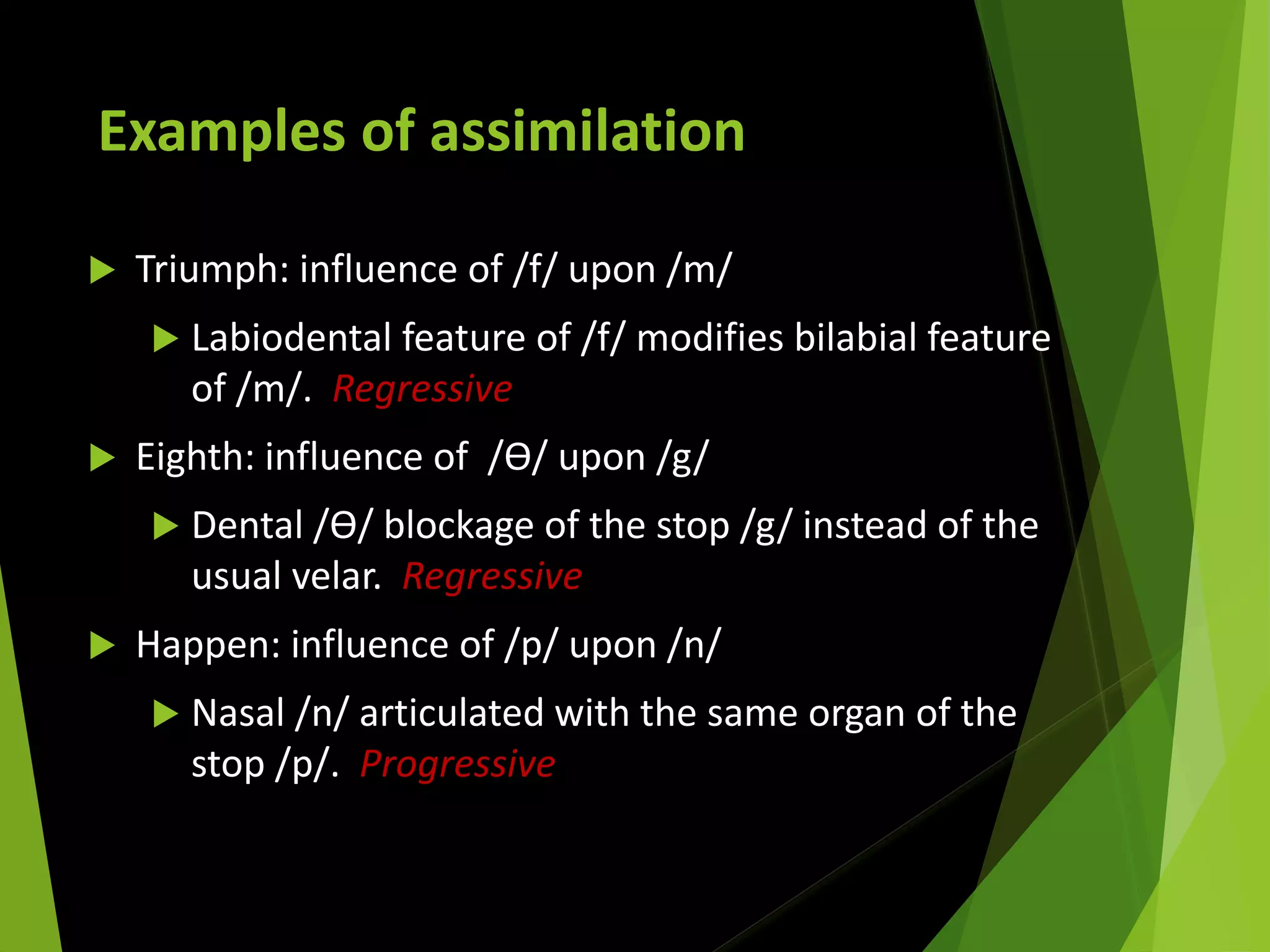
Examples of assimilation
 Triumph: influence of /f/ upon /m/
 Labiodental feature of /f/ modifies bilabial feature
of /m/. Regressive
 Eighth: influence of /Ɵ/ upon /g/
 Dental /Ɵ/ blockage of the stop /g/ instead of the
usual velar. Regressive
 Happen: influence of /p/ upon /n/
 Nasal /n/ articulated with the same organ of the
stop /p/. Progressive
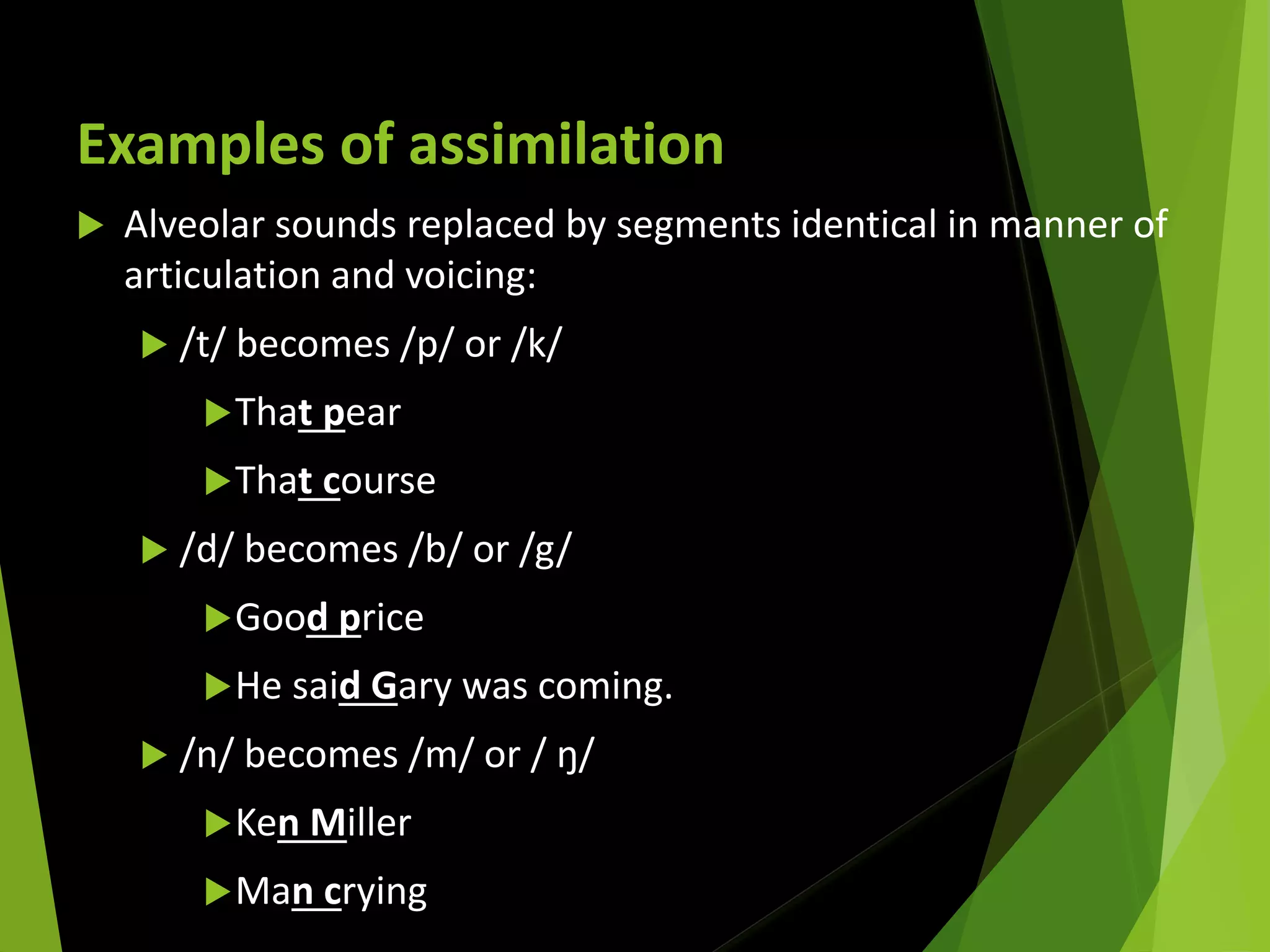
Examples of assimilation
 Alveolar sounds replaced by segments identical in manner of
articulation and voicing:
 /t/ becomes /p/ or /k/
That pear
That course
 /d/ becomes /b/ or /g/
Good price
He said Gary was coming.
 /n/ becomes /m/ or / ŋ/
Ken Miller
Man crying
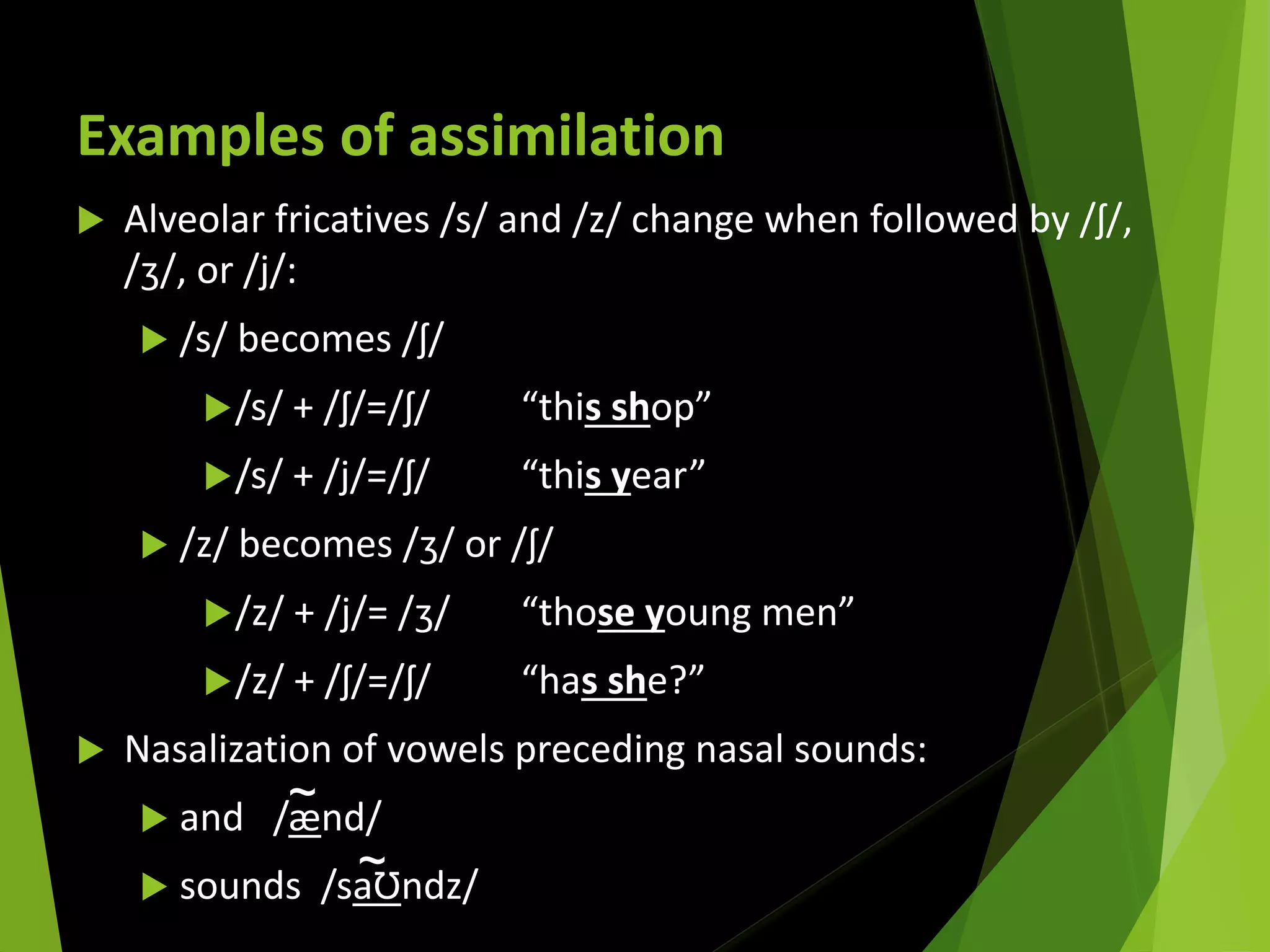
Examples of assimilation
 Alveolar fricatives /s/ and /z/ change when followed by /ʃ/,
/ʒ/, or /j/:
 /s/ becomes /ʃ/
/s/ + /ʃ/=/ʃ/ “this shop”
/s/ + /j/=/ʃ/ “this year”
 /z/ becomes /ʒ/ or /ʃ/
/z/ + /j/= /ʒ/ “those young men”
/z/ + /ʃ/=/ʃ/ “has she?”
 Nasalization of vowels preceding nasal sounds:
 and /ænd/
 sounds /saƱndz/
~
~
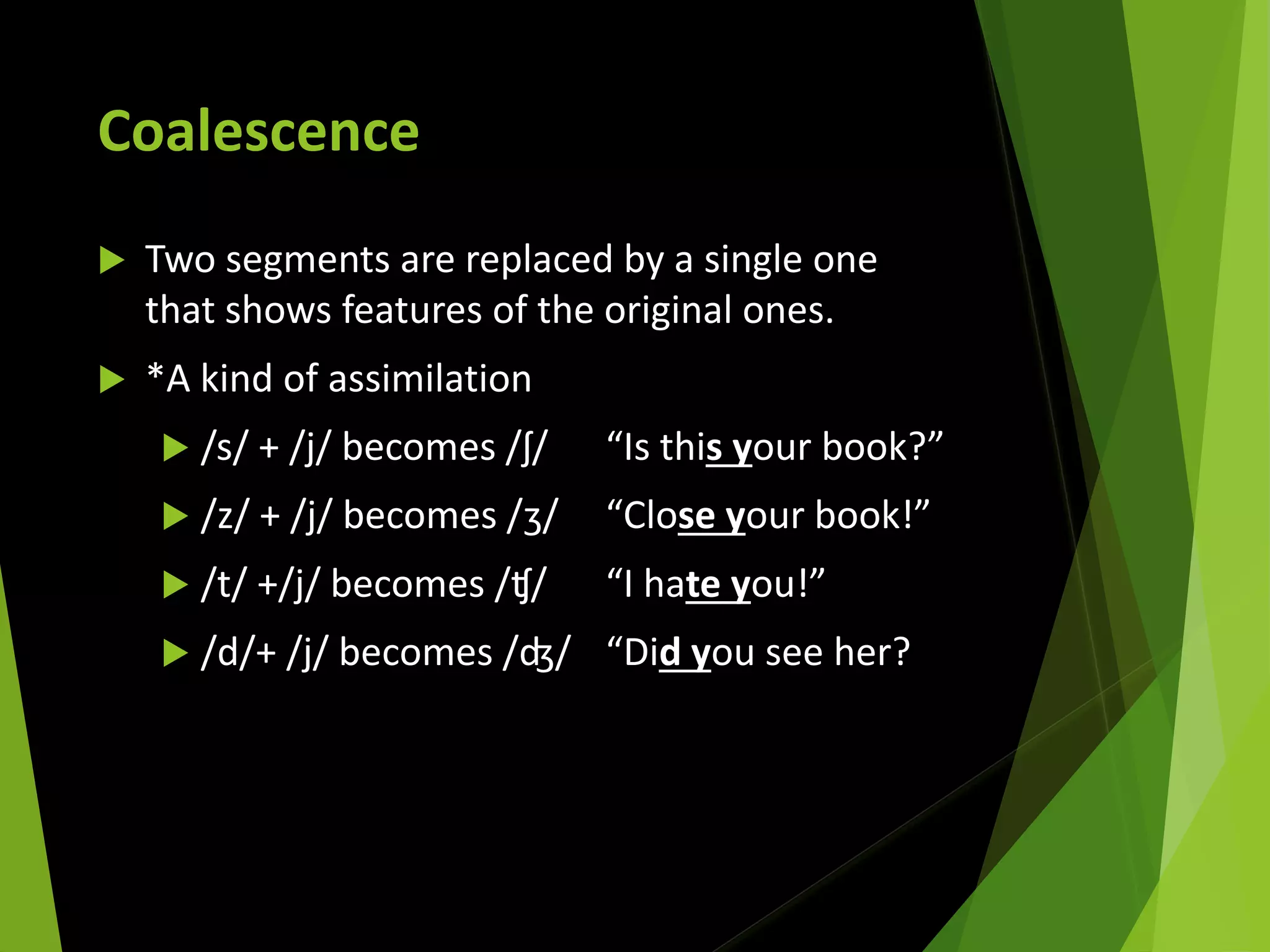
Coalescence
 Two segments are replaced by a single one
that shows features of the original ones.
 *A kind of assimilation
 /s/ + /j/ becomes /ʃ/ “Is this your book?”
 /z/ + /j/ becomes /ʒ/ “Close your book!”
 /t/ +/j/ becomes /ʧ/ “I hate you!”
 /d/+ /j/ becomes /ʤ/ “Did you see her?
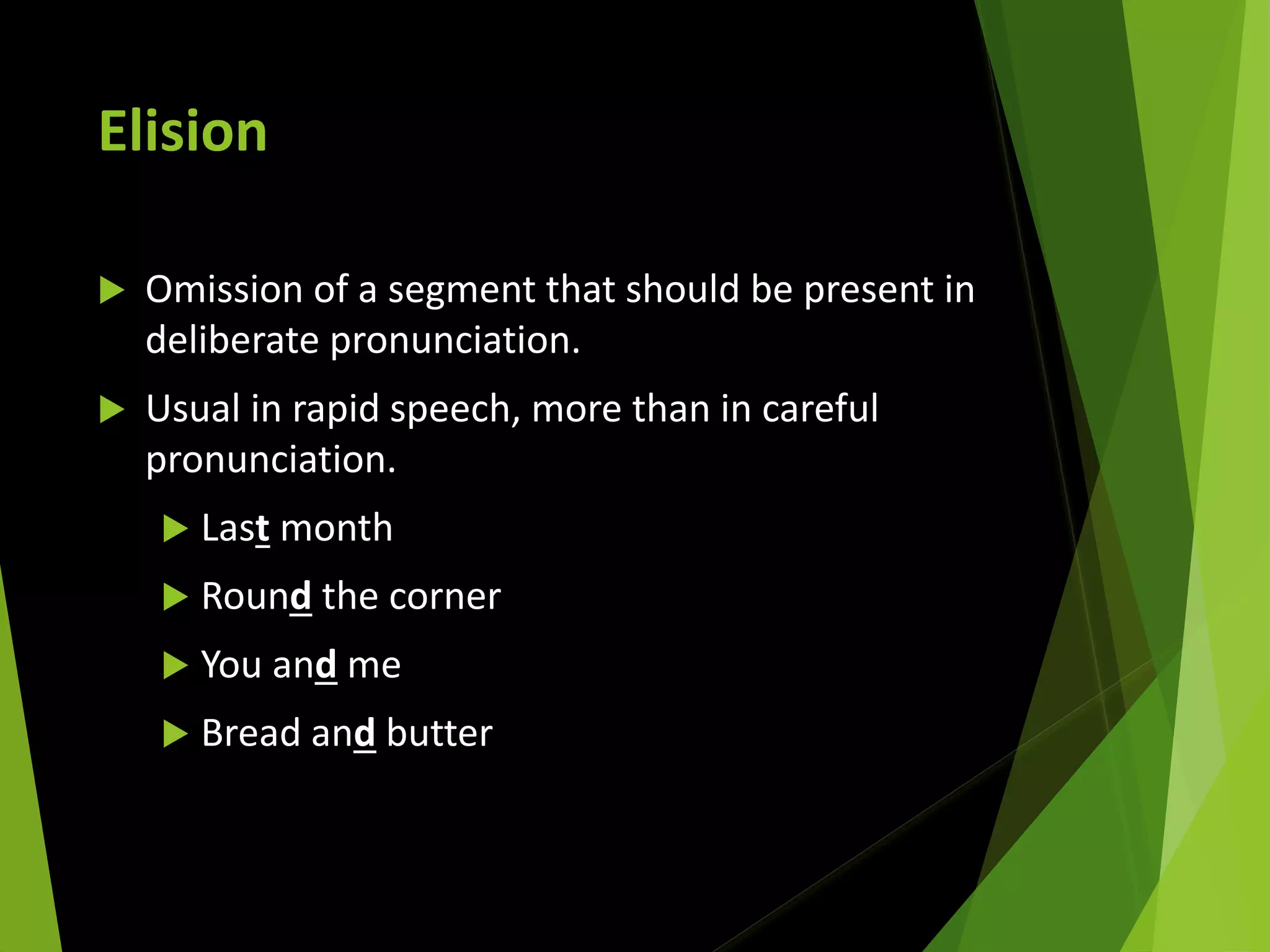
Elision
 Omission of a segment that should be present in
deliberate pronunciation.
 Usual in rapid speech, more than in careful
pronunciation.
 Last month
 Round the corner
 You and me
 Bread and butter
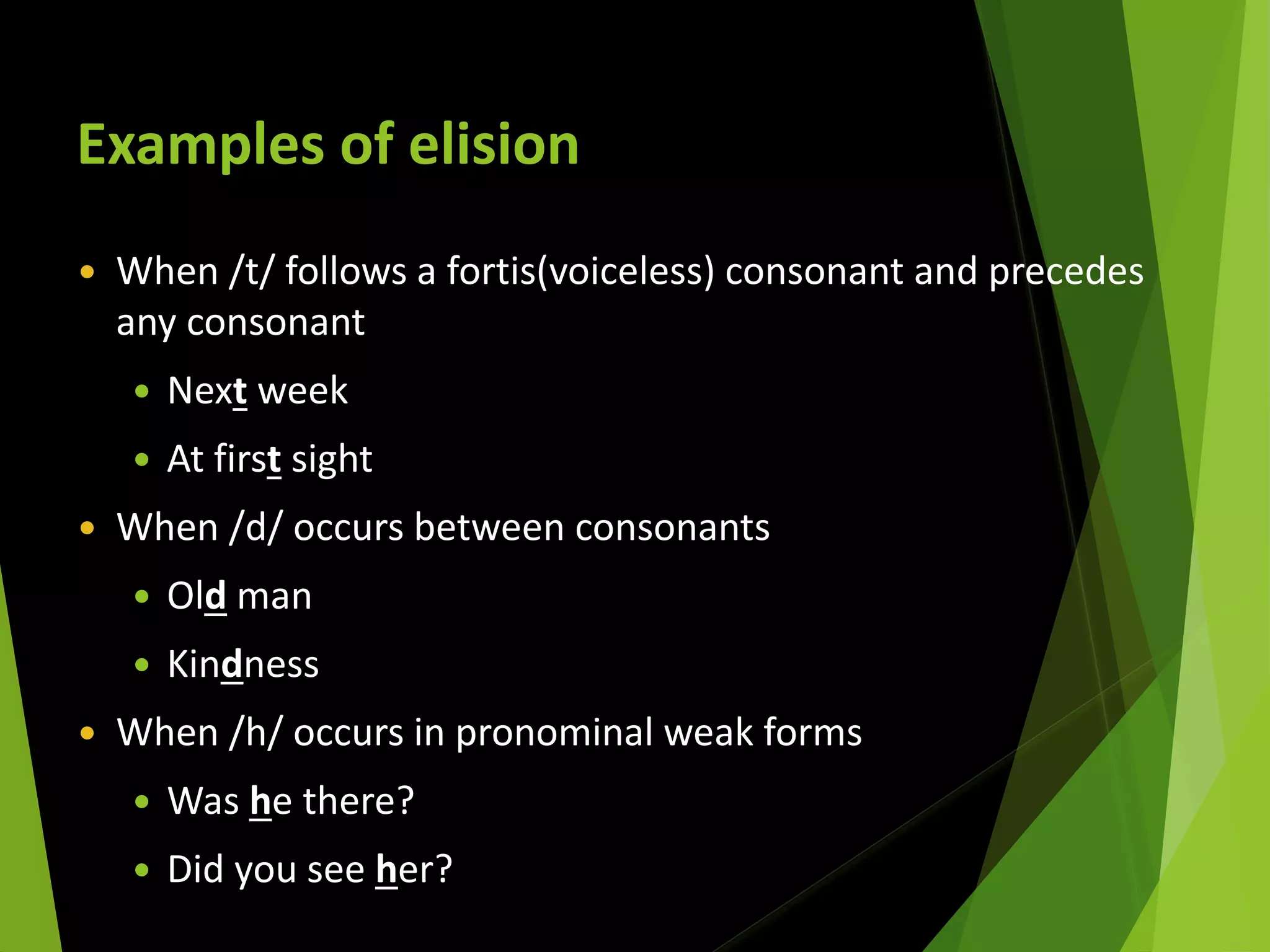
Examples of elision
 When /t/ follows a fortis(voiceless) consonant and precedes
any consonant
 Next week
 At first sight
 When /d/ occurs between consonants
 Old man
 Kindness
 When /h/ occurs in pronominal weak forms
 Was he there?
 Did you see her?
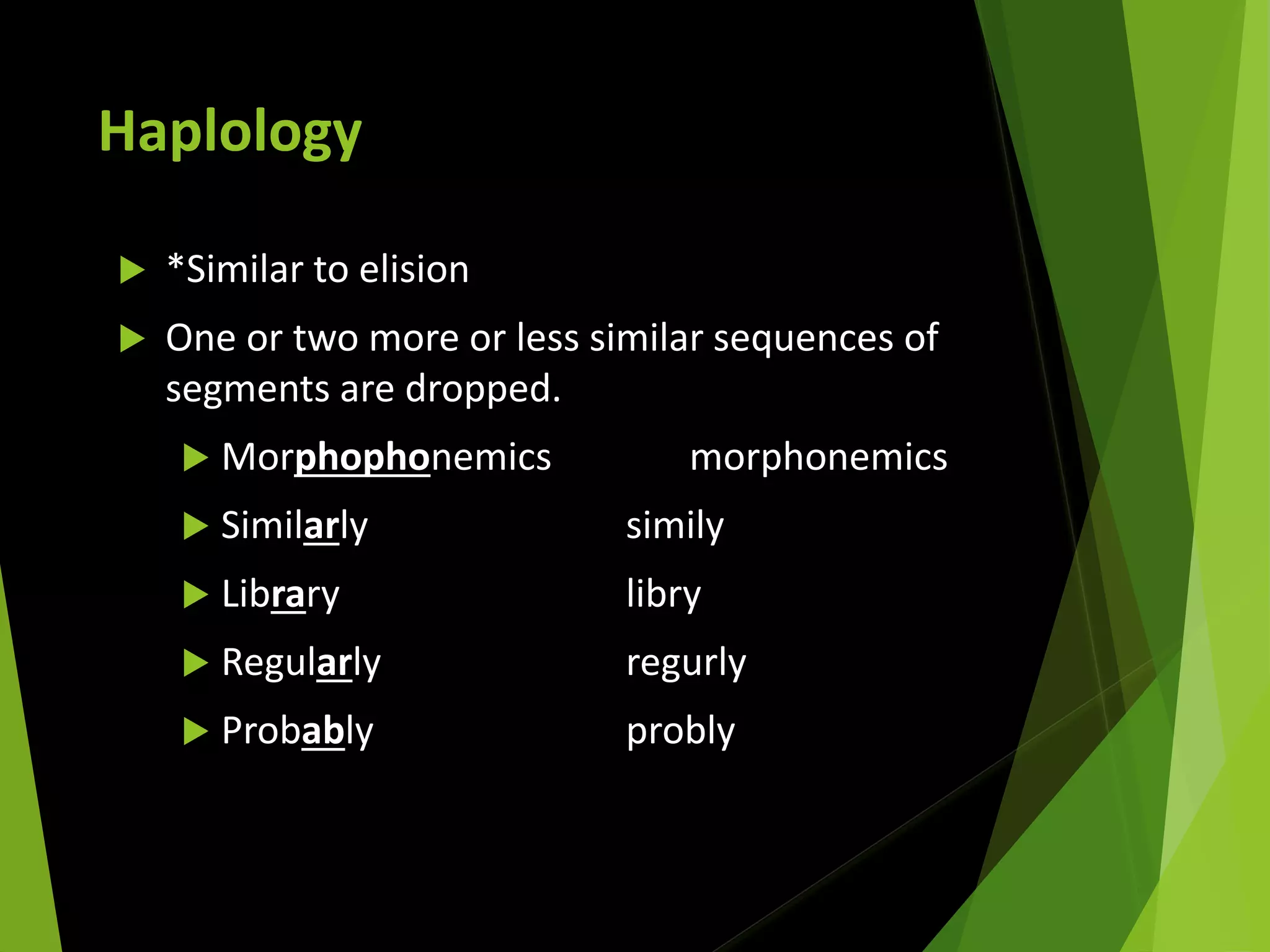
Haplology
 *Similar to elision
 One or two more or less similar sequences of
segments are dropped.
 Morphophonemics morphonemics
 Similarly simily
 Library libry
 Regularly regurly
 Probably probly
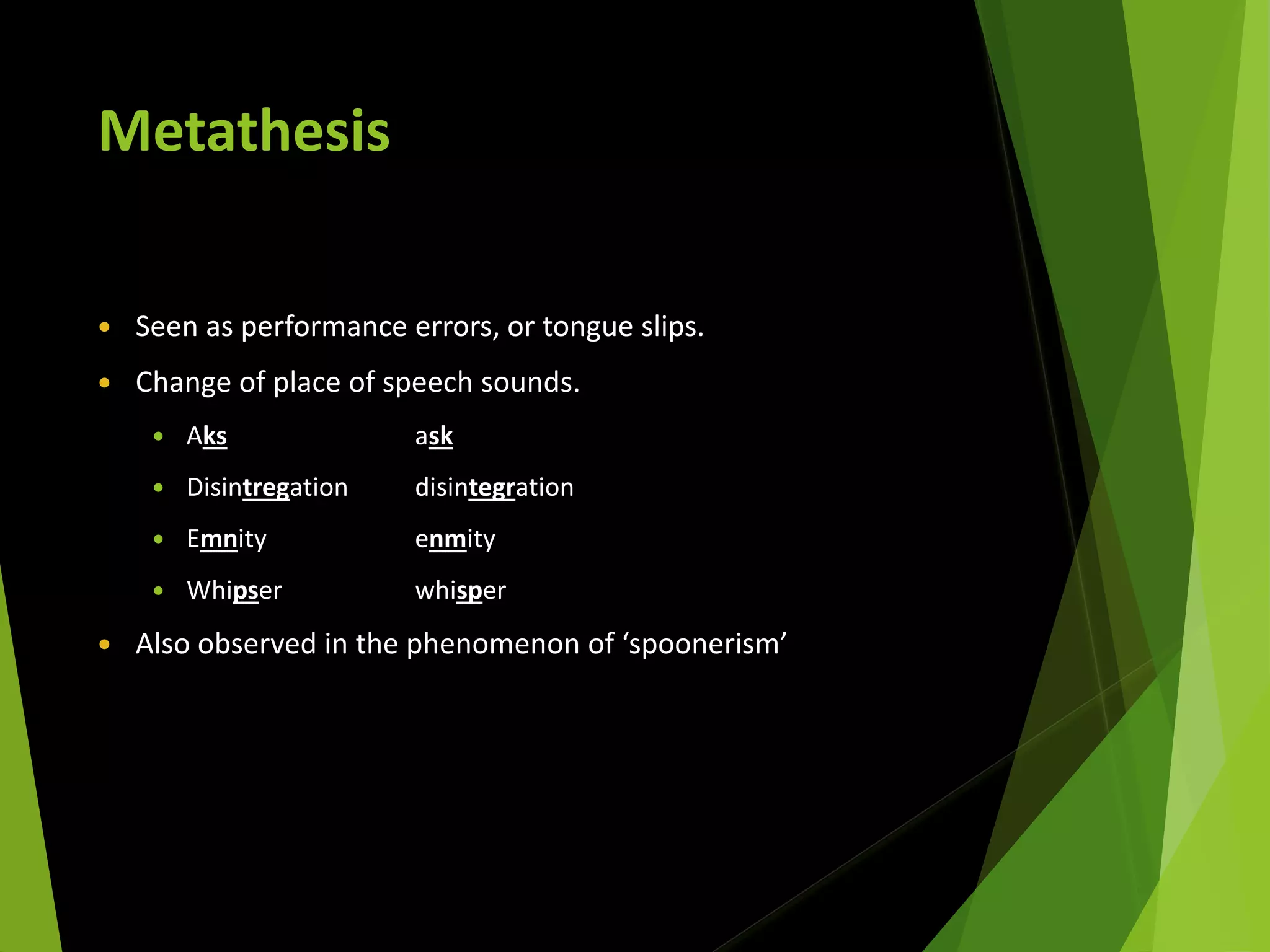
Metathesis
 Seen as performance errors, or tongue slips.
 Change of place of speech sounds.
 Aks ask
 Disintregation disintegration
 Emnity enmity
 Whipser whisper
 Also observed in the phenomenon of ‘spoonerism’

Phonological processes

  • 1.
  • 2.
    Phonological processes  Changessegments(sounds) suffer when they are combined to form words, phrases, utterances.  These changes occur at the points of junction of segments.  The most common phonological processes are: Assimilation Coalescence Elision Haplology Metathesis
  • 3.
    Assimilation  Influence ofone segment upon the articulation of another.  The two sounds become more alike or identical.  Assimilation can occur both ways:  upon a preceding sound = Regressive  upon a succeeding sound = Progressive
  • 4.
    Examples of assimilation Triumph: influence of /f/ upon /m/  Labiodental feature of /f/ modifies bilabial feature of /m/. Regressive  Eighth: influence of /Ɵ/ upon /g/  Dental /Ɵ/ blockage of the stop /g/ instead of the usual velar. Regressive  Happen: influence of /p/ upon /n/  Nasal /n/ articulated with the same organ of the stop /p/. Progressive
  • 5.
    Examples of assimilation Alveolar sounds replaced by segments identical in manner of articulation and voicing:  /t/ becomes /p/ or /k/ That pear That course  /d/ becomes /b/ or /g/ Good price He said Gary was coming.  /n/ becomes /m/ or / ŋ/ Ken Miller Man crying
  • 6.
    Examples of assimilation Alveolar fricatives /s/ and /z/ change when followed by /ʃ/, /ʒ/, or /j/:  /s/ becomes /ʃ/ /s/ + /ʃ/=/ʃ/ “this shop” /s/ + /j/=/ʃ/ “this year”  /z/ becomes /ʒ/ or /ʃ/ /z/ + /j/= /ʒ/ “those young men” /z/ + /ʃ/=/ʃ/ “has she?”  Nasalization of vowels preceding nasal sounds:  and /ænd/  sounds /saƱndz/ ~ ~
  • 7.
    Coalescence  Two segmentsare replaced by a single one that shows features of the original ones.  *A kind of assimilation  /s/ + /j/ becomes /ʃ/ “Is this your book?”  /z/ + /j/ becomes /ʒ/ “Close your book!”  /t/ +/j/ becomes /ʧ/ “I hate you!”  /d/+ /j/ becomes /ʤ/ “Did you see her?
  • 8.
    Elision  Omission ofa segment that should be present in deliberate pronunciation.  Usual in rapid speech, more than in careful pronunciation.  Last month  Round the corner  You and me  Bread and butter
  • 9.
    Examples of elision When /t/ follows a fortis(voiceless) consonant and precedes any consonant  Next week  At first sight  When /d/ occurs between consonants  Old man  Kindness  When /h/ occurs in pronominal weak forms  Was he there?  Did you see her?
  • 10.
    Haplology  *Similar toelision  One or two more or less similar sequences of segments are dropped.  Morphophonemics morphonemics  Similarly simily  Library libry  Regularly regurly  Probably probly
  • 11.
    Metathesis  Seen asperformance errors, or tongue slips.  Change of place of speech sounds.  Aks ask  Disintregation disintegration  Emnity enmity  Whipser whisper  Also observed in the phenomenon of ‘spoonerism’