plant secondary metabolites
Phenylpropanoid pathway
By
KAUSHAL KUMAR SAHU
Assistant Professor (Ad Hoc)
Department of Biotechnology
Govt. Digvijay Autonomous P. G. College
Raj-Nandgaon ( C. G. )
SYNOPSIS
INTRODUCTION
HISTORY
DEFINITION
PRIMARY VS SECONDARY PLANT METABOLISM
SECONDARY METABOLITES
PHENOLIC COMPOUND
PHENYLPROPANOID PATHWAY METABOLITES
PHENYLPROPANOID BIOSYNTHESIS
BIOCHEMICAL PATHWAYS TO PHENOLIC CLASSES
SOME IMPORTANT PRODUCTS OF PHENYLPROPANOID
PATHWAY
LIGNANS AND LIGNINS
FLAVONOIDS
METABOLIC ENGINEERING OF PHENYLPROPANOID PRODUCTION
BIOTECHNOLOGICAL APPLICATIONS
CONCLUSION
REFERENCES
INTRODUCTION
Plants produce a vast and diverse organic compounds, the
great majority of which do not appear to participate directly
in growth and development. These substances, referred to as
secondary metabolites.
The primary metabolites, in contrast, such as phytosterols,
acyl lipids, nucleotides, amino acids, and organic acids, are
found in all plants and perform metabolic roles that are
essential and usually evident.
Particular secondary metabolites are often found in only one
plant species or related group of species, whereas primary
metabolites are found throughout the plant kingdom.
Secondary metabolism facilitates the primary metabolism in
plants.
phenylpropanoidpathway
HISTORY
Research into secondary plant metabolism primarily took off in
the latter half of the 19th century.
The study of plant metabolites is thought to have started in the
early 1800s when Friedrich Willhelm Serturner isolated
morphine from opium poppy.
In the early half of the 1900s, the main research around
secondary plant metabolism was dedicated to the formation of
secondary metabolite in plants.
In the 1970s, however, new research showed that secondary
plant metabolites play an indispensable role in the survival of the
plant in its environment.
Recently, the research around secondary plant metabolites is
focused around the gene level and the genetic diversity of plant
metabolites.
phenylpropanoidpathway
DEFINITION
Phenyl propanoid pathway is the pathway which is
responsible for the synthesis of a wide variety of
secondary metabolic compounds, including lignins,
salicylates, coumarins, hydroxycinnamic amides,
flavonoid phytoalexins, pigments, UV light protectants,
and antioxidants.
phenylpropanoidpathway
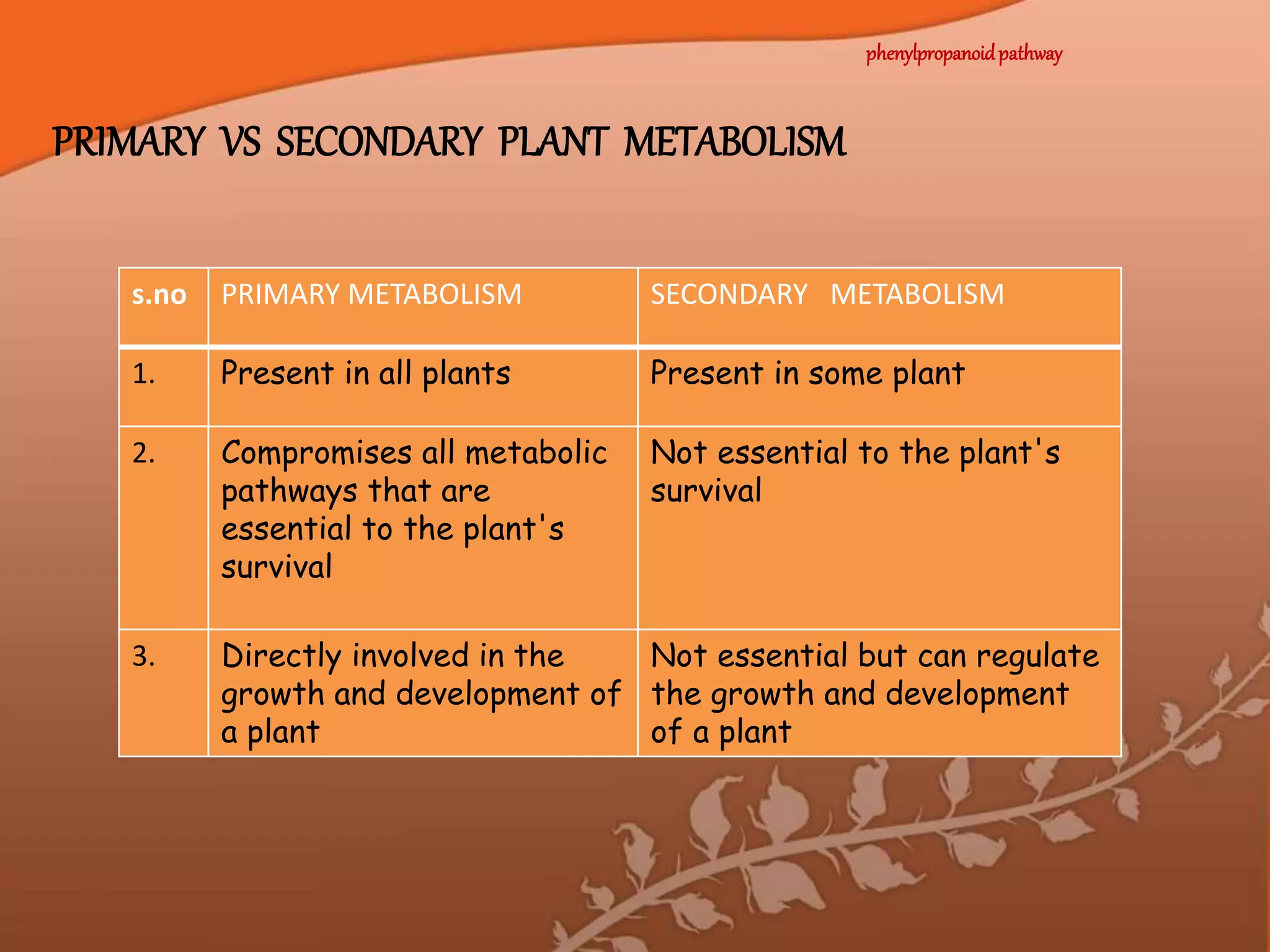
PRIMARY VS SECONDARY PLANT METABOLISM
s.no PRIMARY METABOLISM SECONDARY METABOLISM
1. Present in all plants Present in some plant
2. Compromises all metabolic
pathways that are
essential to the plant's
survival
Not essential to the plant's
survival
3. Directly involved in the
growth and development of
a plant
Not essential but can regulate
the growth and development
of a plant
phenylpropanoidpathway
FIGURE - A simplified view of the major pathways of secondary-metabolite
biosynthesis and their interrelationships with primary metabolism.
SECONDARY METABOLITES
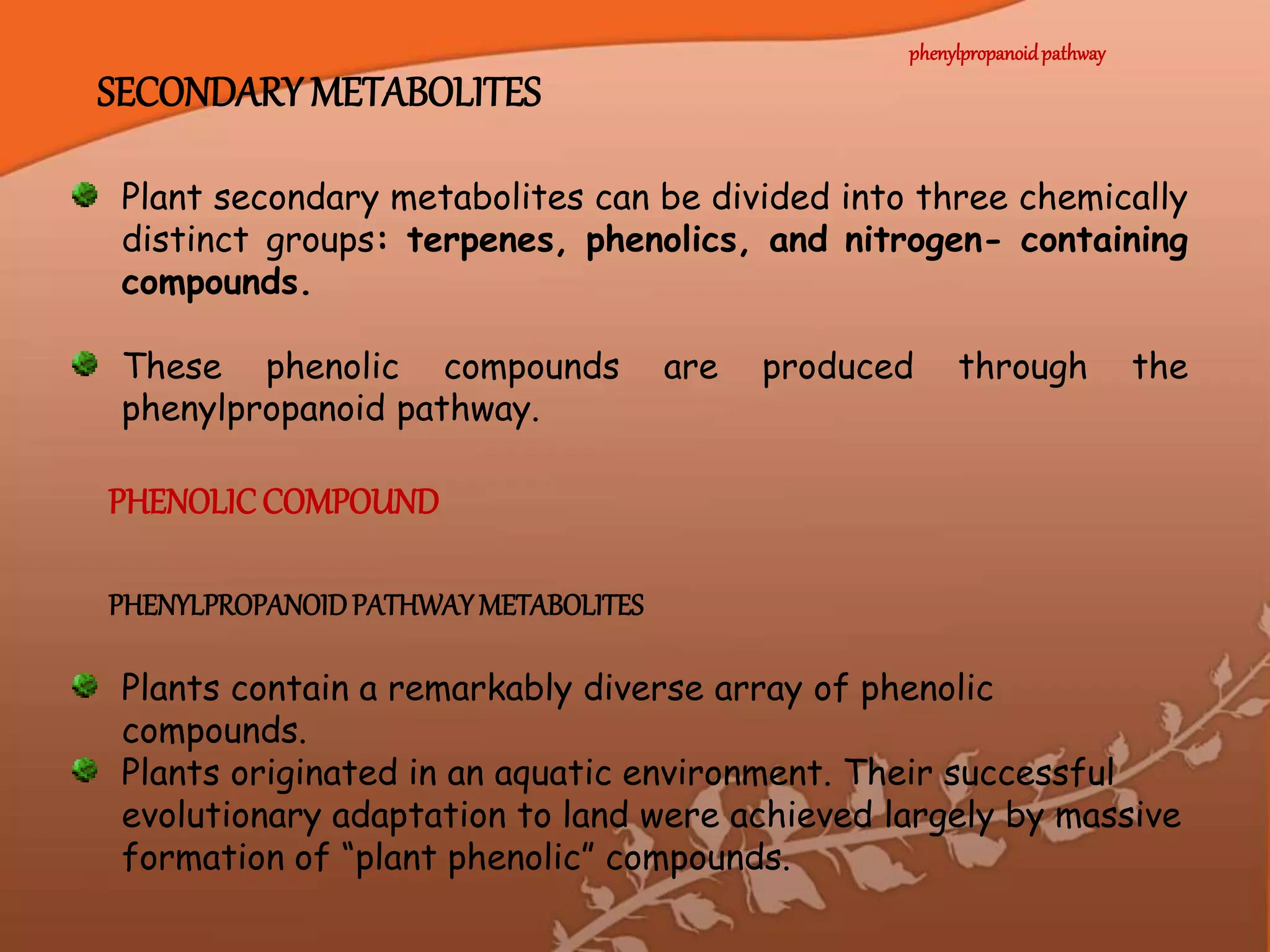
Plant secondary metabolites can be divided into three chemically
distinct groups: terpenes, phenolics, and nitrogen- containing
compounds.
These phenolic compounds are produced through the
phenylpropanoid pathway.
PHENOLICCOMPOUND
PHENYLPROPANOIDPATHWAYMETABOLITES
Plants contain a remarkably diverse array of phenolic
compounds.
Plants originated in an aquatic environment. Their successful
evolutionary adaptation to land were achieved largely by massive
formation of “plant phenolic” compounds.
phenylpropanoidpathway
Although the bulk of these substances assumed cell wall structural
roles, a vast array of nonstructural constituents was also formed,
having such various roles as defending plants,establishing flower
color, and contributing substantially to certain flavors (tastes and
odors).
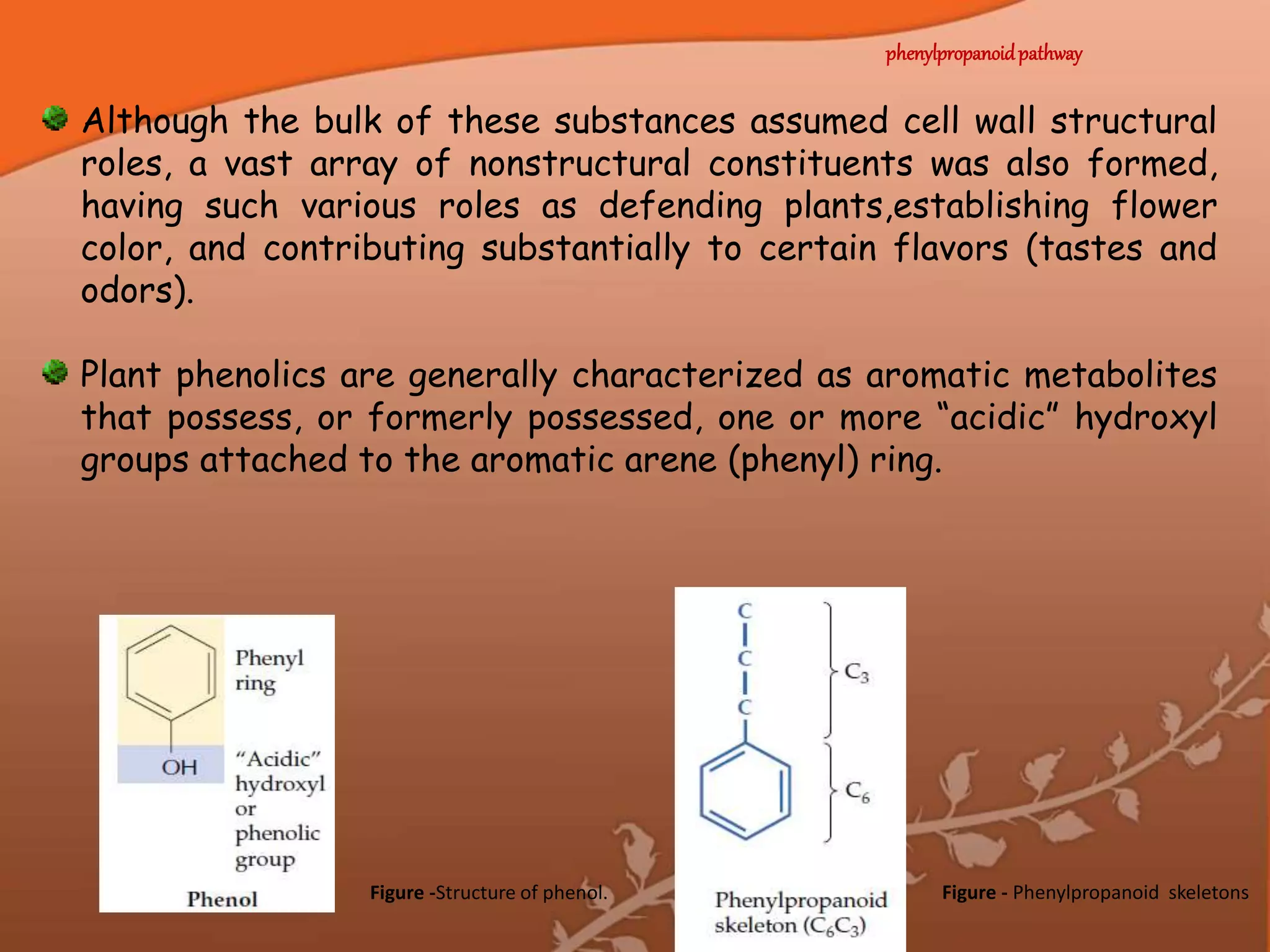
Plant phenolics are generally characterized as aromatic metabolites
that possess, or formerly possessed, one or more “acidic” hydroxyl
groups attached to the aromatic arene (phenyl) ring.
Figure -Structure of phenol. Figure - Phenylpropanoid skeletons
phenylpropanoidpathway
PRODUCTS OF PHENYLPROPANOID METABOLISM
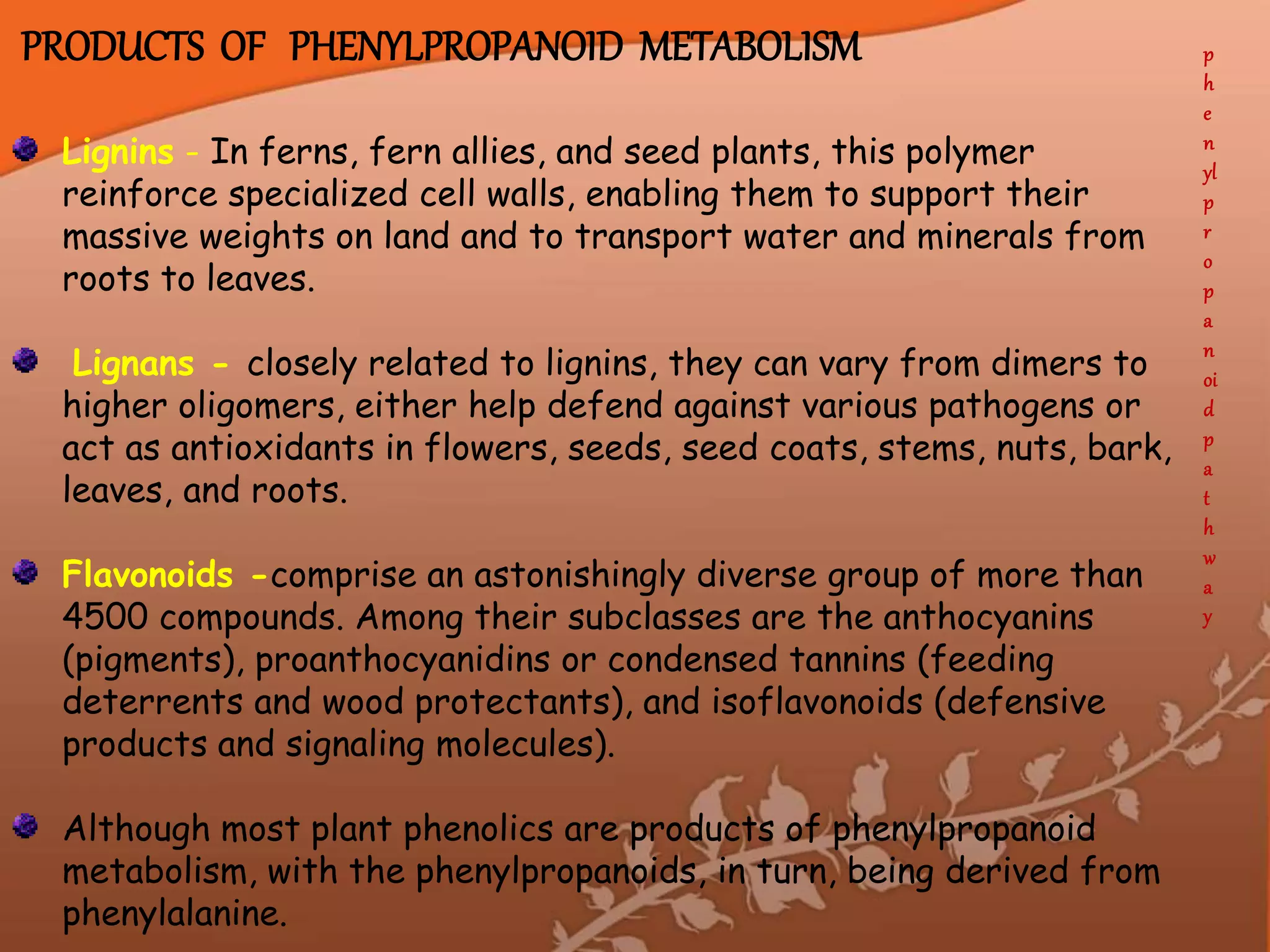
Lignins - In ferns, fern allies, and seed plants, this polymer
reinforce specialized cell walls, enabling them to support their
massive weights on land and to transport water and minerals from
roots to leaves.
Lignans - closely related to lignins, they can vary from dimers to
higher oligomers, either help defend against various pathogens or
act as antioxidants in flowers, seeds, seed coats, stems, nuts, bark,
leaves, and roots.
Flavonoids -comprise an astonishingly diverse group of more than
4500 compounds. Among their subclasses are the anthocyanins
(pigments), proanthocyanidins or condensed tannins (feeding
deterrents and wood protectants), and isoflavonoids (defensive
products and signaling molecules).
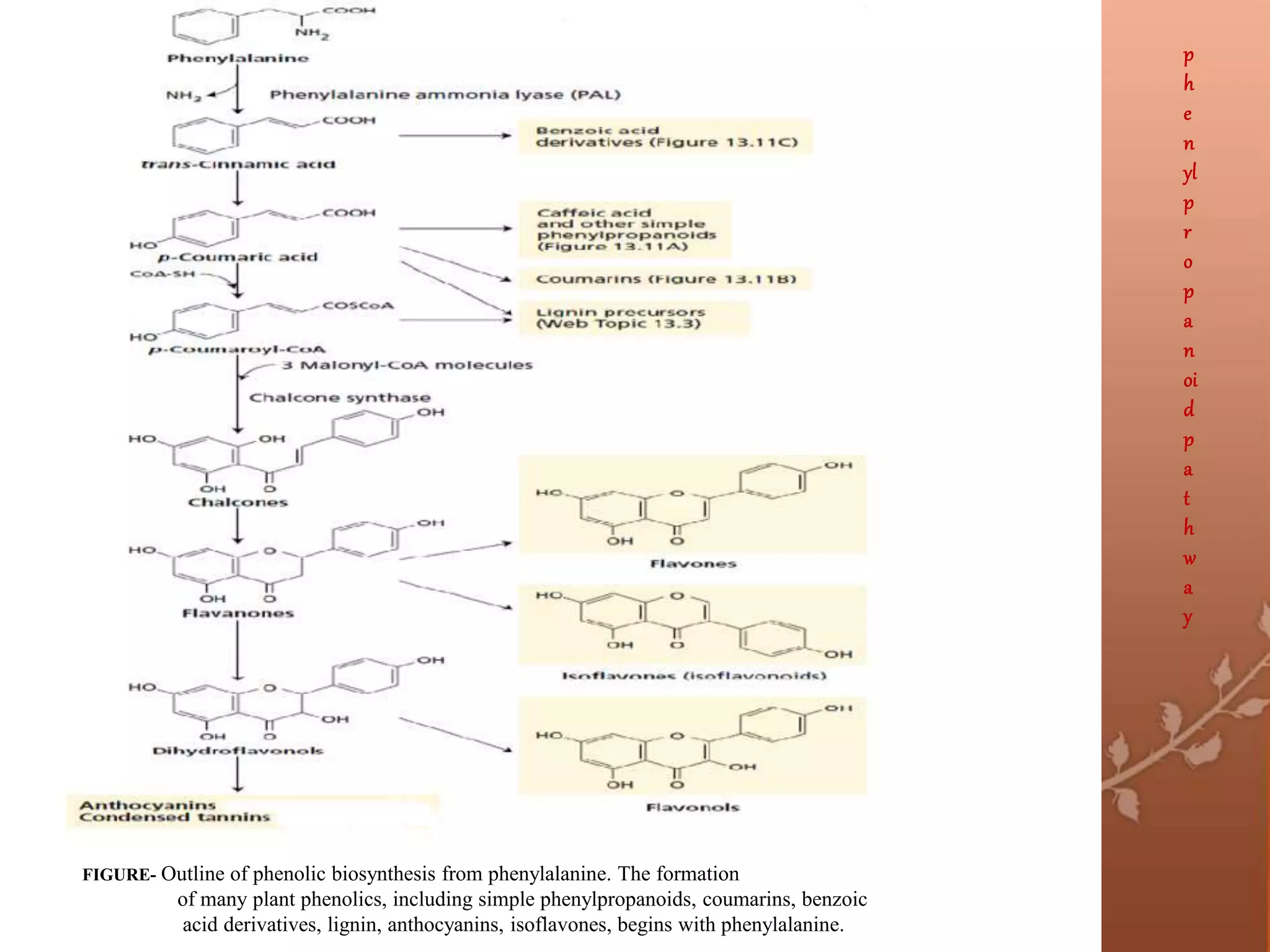
Although most plant phenolics are products of phenylpropanoid
metabolism, with the phenylpropanoids, in turn, being derived from
phenylalanine.
p
h
e
n
yl
p
r
o
p
a
n
oi
d
p
a
t
h
w
a
y
FIGURE- Outline of phenolic biosynthesis from phenylalanine. The formation
of many plant phenolics, including simple phenylpropanoids, coumarins, benzoic
acid derivatives, lignin, anthocyanins, isoflavones, begins with phenylalanine.
p
h
e
n
yl
p
r
o
p
a
n
oi
d
p
a
t
h
w
a
y
Enzyme involvedin PHENYLPROPANOID BIOSYNTHESIS
Phenylalanine (tyrosine) ammonia- lyase (PAL) is a central enzyme
in phenylpropanoid metabolism
This enzyme directs carbon from aromatic amino acids to the
synthesis of phenylpropanoid metabolites. This enzyme converts
phenylalanine to cinnamic acid and tyrosine (TAL) to p- coumaric
acid.
Interestingly, inmost vascular plants, Phe is the highly preferred
substrate, but the monocot enzyme can utilize both Phe and Tyr.
In some plants, PAL appears to be encoded by a single gene, whereas
in others it is the product of a multigene family.
phenylpropanoidpathway
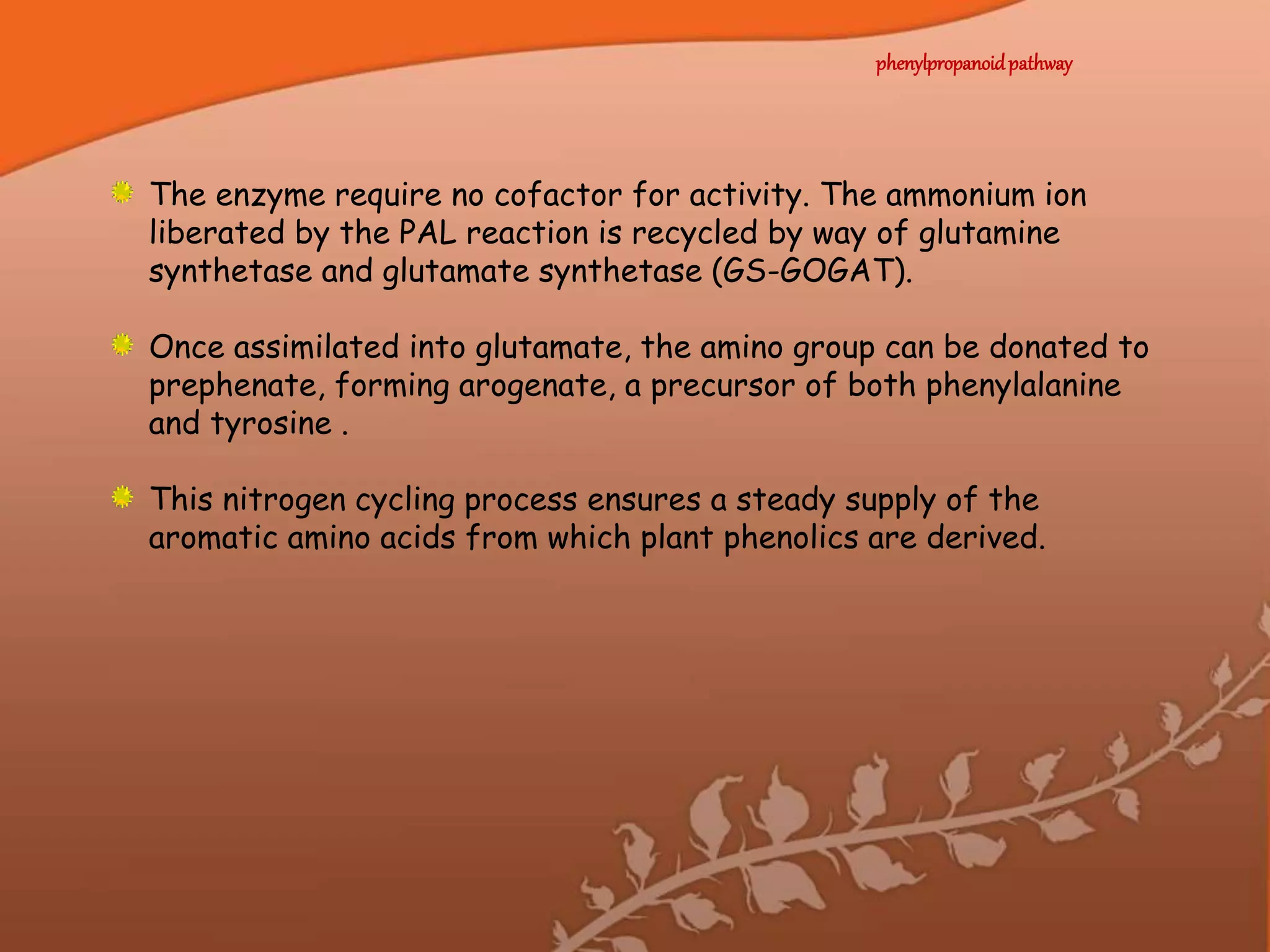
The enzyme require no cofactor for activity. The ammonium ion
liberated by the PAL reaction is recycled by way of glutamine
synthetase and glutamate synthetase (GS-GOGAT).
Once assimilated into glutamate, the amino group can be donated to
prephenate, forming arogenate, a precursor of both phenylalanine
and tyrosine .
This nitrogen cycling process ensures a steady supply of the
aromatic amino acids from which plant phenolics are derived.
phenylpropanoidpathway
Figure - During active phenylpropanoid metabolism, nitrogen from phenylalanine is recycled. Although TAL activity has been
reported in certain plant species, GOGAT, glutamine: -ketoglutarate aminotransferase; L- Gln, glutamine; L- Glu , glutamate; -KG,
-ketoglutarate; Fdxred, reduced ferredoxin; Fdxox, oxidize ferredoxin
p
he
ny
lp
ro
pa
n
oi
d
pa
th
w
ay
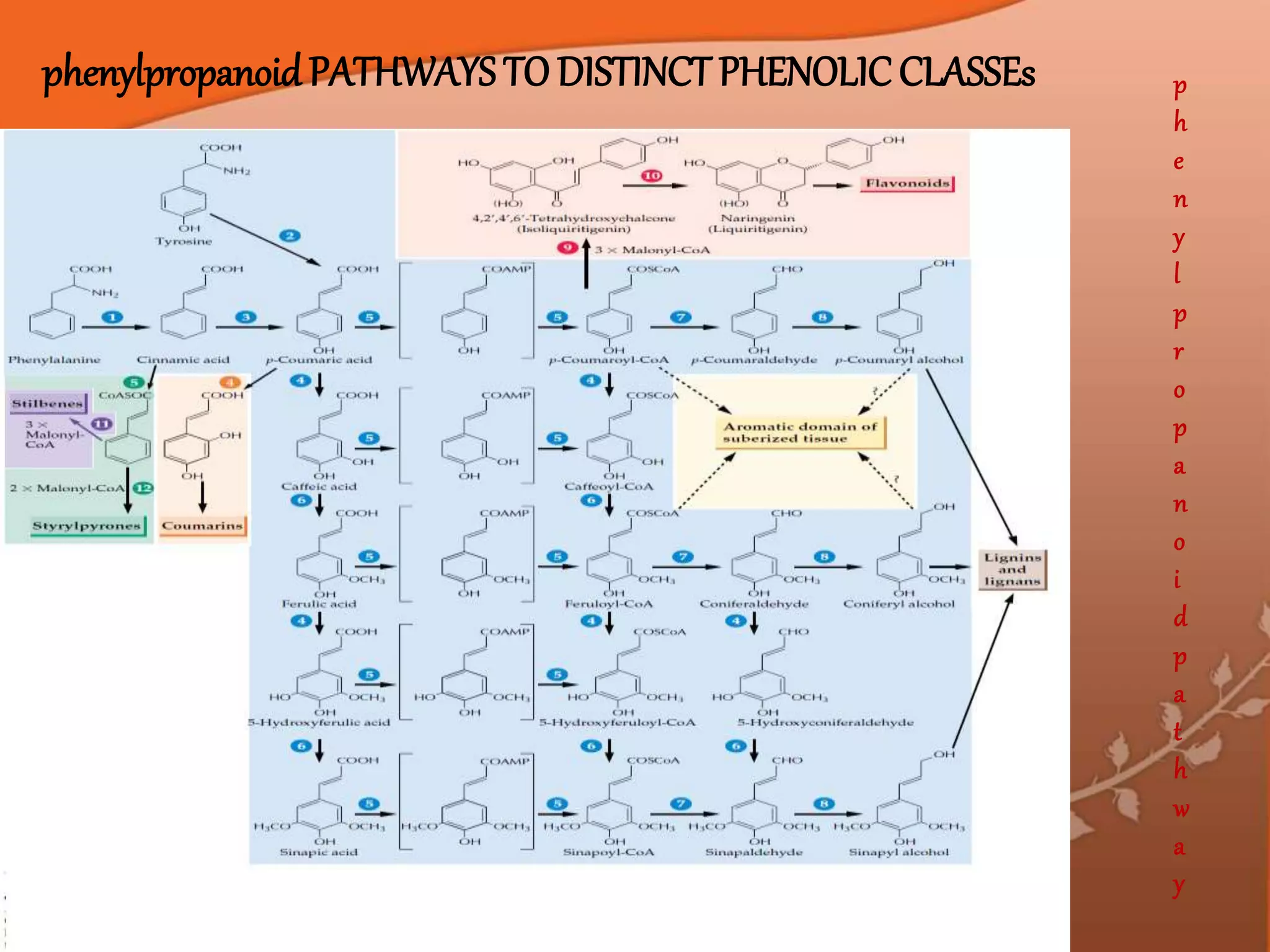
phenylpropanoidPATHWAYS TO DISTINCT PHENOLICCLASSEs p
h
e
n
y
l
p
r
o
p
a
n
o
i
d
p
a
t
h
w
a
y
SOMEIMPORTANT PRODUCTS OF PHENYLPROPANOIDPATHWAY
LIGNANSANDLIGNINS
BIOSYNTHESISOFLIGNANS,LIGNINS
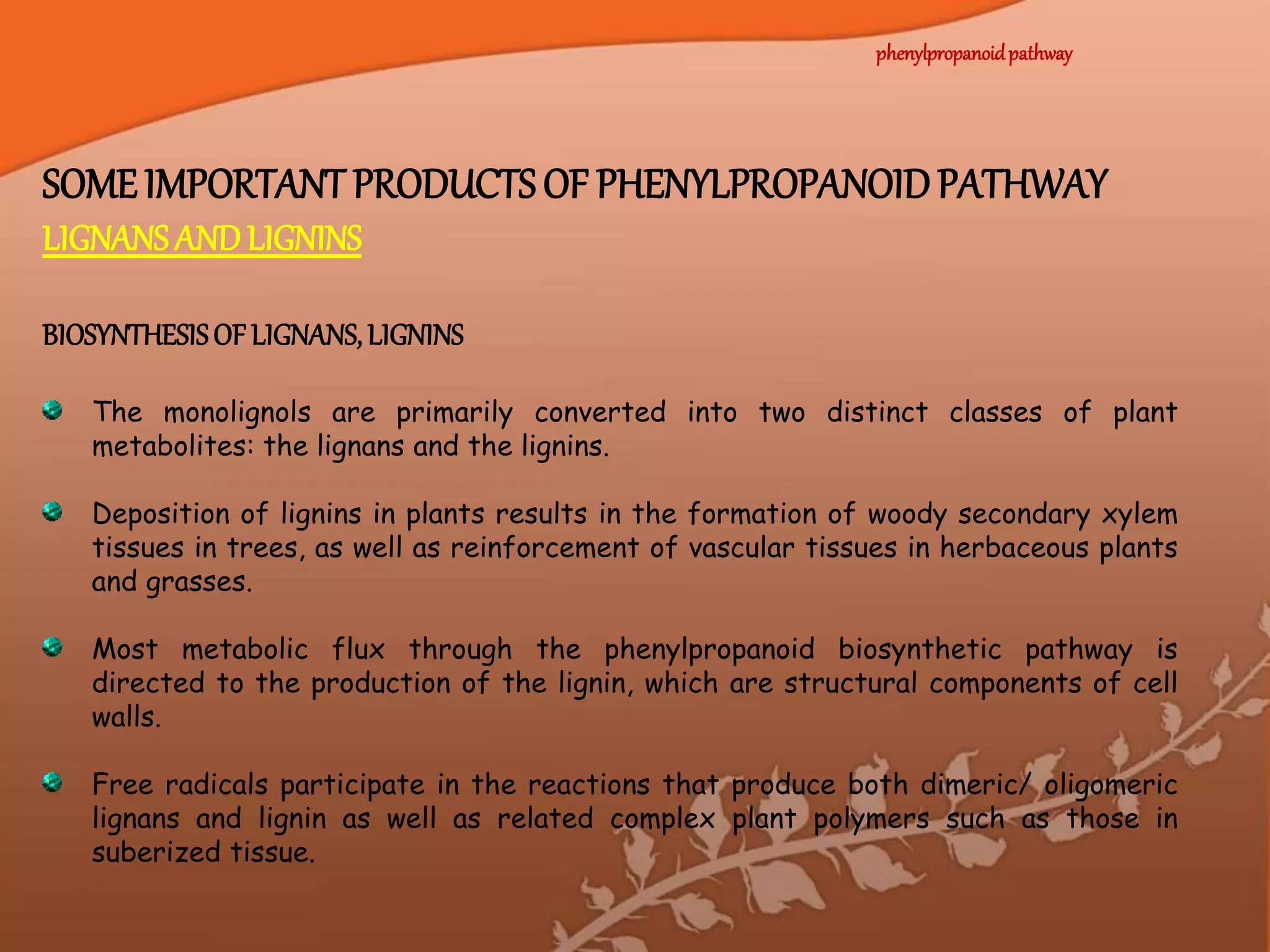
The monolignols are primarily converted into two distinct classes of plant
metabolites: the lignans and the lignins.
Deposition of lignins in plants results in the formation of woody secondary xylem
tissues in trees, as well as reinforcement of vascular tissues in herbaceous plants
and grasses.
Most metabolic flux through the phenylpropanoid biosynthetic pathway is
directed to the production of the lignin, which are structural components of cell
walls.
Free radicals participate in the reactions that produce both dimeric/ oligomeric
lignans and lignin as well as related complex plant polymers such as those in
suberized tissue.
phenylpropanoidpathway
p
h
e
n
y
l
p
r
o
p
a
n
o
i
d
p
a
t
h
w
a
y
Figure -Proposed biochemical pathway for interconversions in the various 8–8’-linked lignan classes in Forsythia, western red
cedar (Thuja plicata), and Podophyllum species. The pathway from pinoresinal to matairesinol is common to all three plant
p
h
e
n
y
l
p
r
o
p
a
n
o
i
d
p
a
t
h
w
a
y
FLAVONOIDS
The flavonoids constitute an enormous class of phenolic natural
products are also known as Vitamin P or citrin.
Present in most plant tissues, often in vacuoles, flavonoids can
occur as monomers, dimers, and higher oligomers.
Good dietary sources of Flavonoids are all citrus fruits, which
contain the specific flavanoids hesperidins, quercitrin,and rutin,
berries, tea, dark chocolate and red wine.
The basic carbon skeleton of a flavonoid contains 15 carbons
arranged in two aromatic rings connected by a three-carbon bridge:
phenylpropanoidpathway
FLAVONOIDS COMPRISE A DIVERSE SET OF COMPOUNDS AND PERFORM A
WIDERANGEOF FUNCTIONS
Many plant–animal interactions are influenced by flavonoids.
The colors of flowers and fruits, which often function to attract
pollinators and seed dispersers, result primarily from vacuolar
anthocyanins such as the pelargonidins (orange, salmon, pink, and
red), the cyanidins (magenta and crimson), and the delphinidins
(purple, mauve, and blue).
Related flavonoids, such as flavonols, flavones, chalcones, and
aurones, also contribute to color definition.
Manipulating flower color by targeting various enzymatic steps
and genes in flavonoid biosynthesis has been quite successful.
Specific flavonoids can also function to protect plants against
UV-B irradiation.
Others can act as insect feeding attractants, such as
isoquercetin in mulberry, a factor involved in silkworm recognition
of its host species.
In contrast, condensed tannins such as the proanthocyanidins add
a distinct bitterness or astringency to the taste of certain plant
tissues and function as antifeedants.
phenylpropanoidpathway
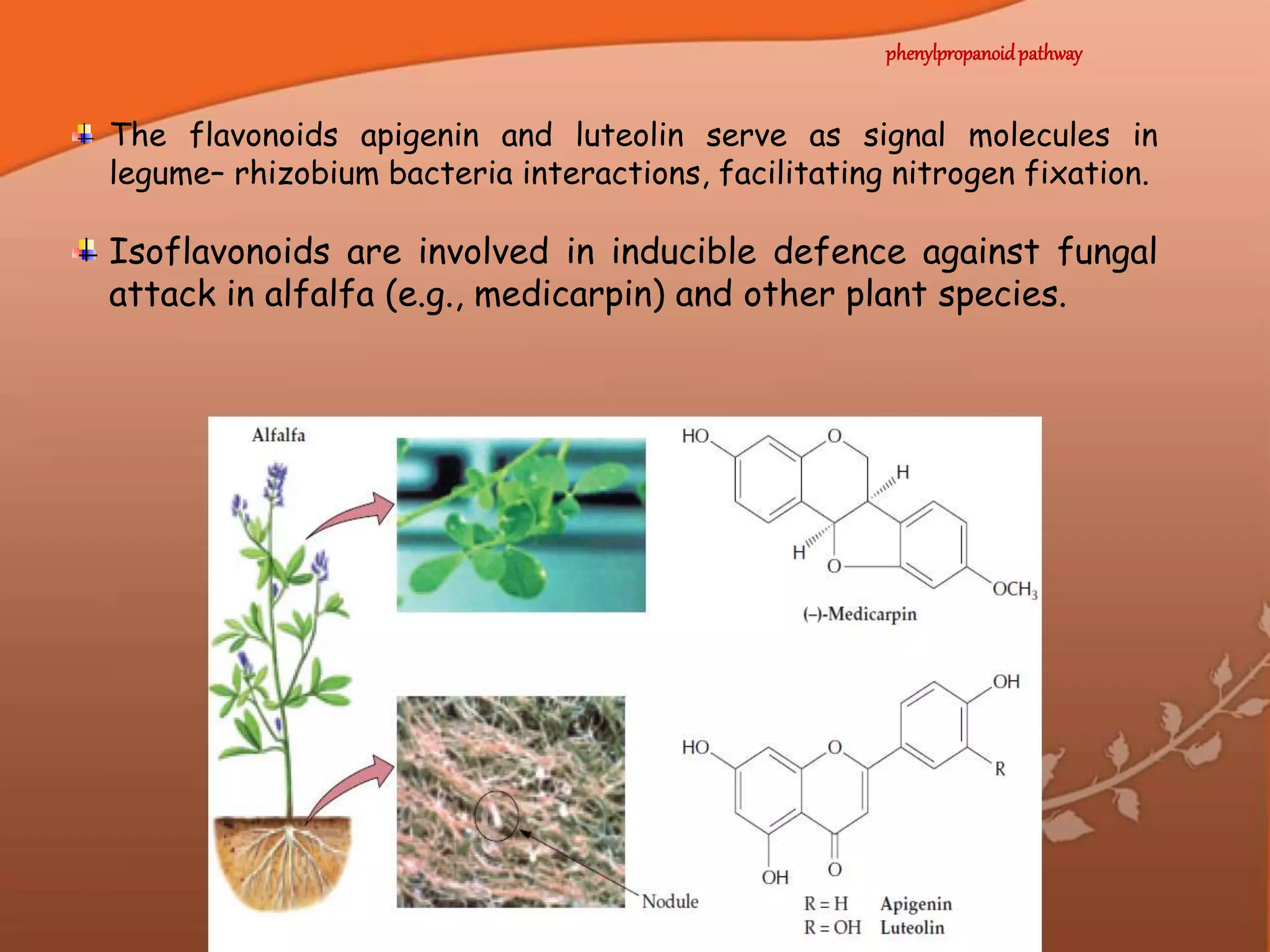
The flavonoids apigenin and luteolin serve as signal molecules in
legume– rhizobium bacteria interactions, facilitating nitrogen fixation.
Isoflavonoids are involved in inducible defence against fungal
attack in alfalfa (e.g., medicarpin) and other plant species.
phenylpropanoidpathway
THEFLAVONOIDBIOSYNTHESIS PATHWAY
The flavonoids consist of various groups of plant metabolites, which
include chalcones, aurones, flavonones, isoflavonoids, flavones,
flavonols, leucoanthocyanidins, catechins, and anthocyanins.
Flavonoids are synthesized by the phenylpropanoid metabolic pathway
where the amino acid phenylalanine is used to produce 4-coumaryol-
CoA, and this is then combined with malonyl-CoA to produce chalcones
which are backbones of Flavonoids.
The closure of chalcones causes the formation of the Flavonoid
structure.
Flavonoids are also closely related to flavones which are actually a sub
class of Flavonoids, and are the yellow pigments in plants.
phenylpropanoidpathway
p
h
e
n
y
l
p
r
o
p
a
n
o
i
d
p
a
t
h
w
a
y
METABOLICENGINEERINGOF PHENYLPROPANOIDPRODUCTION:
a possible source of enhanced fibers, pigments, pharmaceuticals, and flavoring
agents
Many biotechnological possibilities for manipulation of plant phenolic
metabolism: plants with increased resistance to pathogens;
improvements in the quality of wood and fiber products; new or
improved sources of pharmaceuticals, nutriceuticals, pigments,
flavors, and fragrances; and selective adjustments to the taste and
odor of selected plant species.
Accordingly, many biotechnological strategies are directed toward
improving fiber and wood properties by manipulating the biochemical
processes responsible for cell wall biosynthesis and associated
metabolic functions.
The biotechnological emphasis placed on attempting to engineer
lignin content and composition has involved using antisense and sense
strategies to target the genes that encode various enzymatic steps
in the pathway from phenylalanine to the monolignols.
A similar target for enhanced production might be podophyllotoxin,
one of a handful of plant anticancer compounds already in use today.
The impressive advances in plant metabolic engineering seen in the
manipulation of flower color by application of sense/antisense
technologies.
Lastly, knowledge of these pathways will eventually lead to the
systematic modification and improvement of plant flavors' and
fragrances, the properties of which define the very essence of many
of our foodstuffs, such as pepper, ginger, and vanilla.
These modifications will ultimately impact the quality of many of our
alcoholic and nonalcoholic beverages.
phenylpropanoidpathway
The recent isolation of genes encoding key enzymes of the various
phenylpropanoid branch pathways opens up the possibility of
engineering important crop plants such as alfalfa for:
(a) Improved forage digestibility, by modification of lignin composition
and/or content;
(b) Increased or broader-spectrum disease resistance, by introducing
novel phytoalexins or structural variants of the naturally
occurring phytoalexins, or by modifying expression of
transcriptional regulators of phytoalexin pathways; and
(c) Enhanced nodulation efficiency, by engineering over-production of
flavonoid nod gene inducers.
phenylpropanoidpathway
Figure- Phenolics flavor
p
h
e
n
y
l
p
r
o
p
a
n
o
i
d
p
a
t
h
w
a
y
BIOTECHNOLOGICAL APPLICATION
The compounds of engineered phenylpropanoid pathway are
important in plant growth, development and responses to
environmental stresses and thus can have large impacts on
agricultural productivity.
Transgenic plants over-expressing dihydroflavonol reductase (DFR)
were subsequently transformed with the cDNA coding for the
glycosyltransferase (UGT) of Solanum sogarandinum in order to
obtain plants with a high anthocyanin content without reducing
tuber yield and quality. In the super-transformed plants, tuber
production was much higher than in the original transgenic plants.
Stem phenotype of control poplar (a) and poplars with down
regulated cinnamyl-alcohol dehydrogenase (CAD) (b), showing the
red xylem typical of mutant plants with reduced CAD activity. In
these transformed poplar trees, a higher lignin extractability was
reported .
phenylpropanoidpathway
S.N
O
BOOK NAME AUTHOR
1. PLANT
PHYSIOLOGY
TAIZ AND
ZEIGER(3rd Edition)
2. BIOCHEMISTRY
AND MOLECULAR
BIOLOGY OF PLANT
B. BUCHANAN, W.
GRUISSEM, R.
JONES
REFERENCES
INTERNET SOURCES:-www.ncbi.nlm.nih.gov
www.bio.unlp.edu.ar
www.google.com

Phenyl propanoid pathway by kk sahu sir

  • 1.
    plant secondary metabolites Phenylpropanoidpathway By KAUSHAL KUMAR SAHU Assistant Professor (Ad Hoc) Department of Biotechnology Govt. Digvijay Autonomous P. G. College Raj-Nandgaon ( C. G. )
  • 2.
    SYNOPSIS INTRODUCTION HISTORY DEFINITION PRIMARY VS SECONDARYPLANT METABOLISM SECONDARY METABOLITES PHENOLIC COMPOUND PHENYLPROPANOID PATHWAY METABOLITES PHENYLPROPANOID BIOSYNTHESIS BIOCHEMICAL PATHWAYS TO PHENOLIC CLASSES SOME IMPORTANT PRODUCTS OF PHENYLPROPANOID PATHWAY LIGNANS AND LIGNINS FLAVONOIDS METABOLIC ENGINEERING OF PHENYLPROPANOID PRODUCTION BIOTECHNOLOGICAL APPLICATIONS CONCLUSION REFERENCES
  • 3.
    INTRODUCTION Plants produce avast and diverse organic compounds, the great majority of which do not appear to participate directly in growth and development. These substances, referred to as secondary metabolites. The primary metabolites, in contrast, such as phytosterols, acyl lipids, nucleotides, amino acids, and organic acids, are found in all plants and perform metabolic roles that are essential and usually evident. Particular secondary metabolites are often found in only one plant species or related group of species, whereas primary metabolites are found throughout the plant kingdom. Secondary metabolism facilitates the primary metabolism in plants. phenylpropanoidpathway
  • 4.
    HISTORY Research into secondaryplant metabolism primarily took off in the latter half of the 19th century. The study of plant metabolites is thought to have started in the early 1800s when Friedrich Willhelm Serturner isolated morphine from opium poppy. In the early half of the 1900s, the main research around secondary plant metabolism was dedicated to the formation of secondary metabolite in plants. In the 1970s, however, new research showed that secondary plant metabolites play an indispensable role in the survival of the plant in its environment. Recently, the research around secondary plant metabolites is focused around the gene level and the genetic diversity of plant metabolites. phenylpropanoidpathway
  • 5.
    DEFINITION Phenyl propanoid pathwayis the pathway which is responsible for the synthesis of a wide variety of secondary metabolic compounds, including lignins, salicylates, coumarins, hydroxycinnamic amides, flavonoid phytoalexins, pigments, UV light protectants, and antioxidants. phenylpropanoidpathway
  • 6.
    PRIMARY VS SECONDARYPLANT METABOLISM s.no PRIMARY METABOLISM SECONDARY METABOLISM 1. Present in all plants Present in some plant 2. Compromises all metabolic pathways that are essential to the plant's survival Not essential to the plant's survival 3. Directly involved in the growth and development of a plant Not essential but can regulate the growth and development of a plant phenylpropanoidpathway
  • 7.
    FIGURE - Asimplified view of the major pathways of secondary-metabolite biosynthesis and their interrelationships with primary metabolism.
  • 8.
    SECONDARY METABOLITES Plant secondarymetabolites can be divided into three chemically distinct groups: terpenes, phenolics, and nitrogen- containing compounds. These phenolic compounds are produced through the phenylpropanoid pathway. PHENOLICCOMPOUND PHENYLPROPANOIDPATHWAYMETABOLITES Plants contain a remarkably diverse array of phenolic compounds. Plants originated in an aquatic environment. Their successful evolutionary adaptation to land were achieved largely by massive formation of “plant phenolic” compounds. phenylpropanoidpathway
  • 9.
    Although the bulkof these substances assumed cell wall structural roles, a vast array of nonstructural constituents was also formed, having such various roles as defending plants,establishing flower color, and contributing substantially to certain flavors (tastes and odors). Plant phenolics are generally characterized as aromatic metabolites that possess, or formerly possessed, one or more “acidic” hydroxyl groups attached to the aromatic arene (phenyl) ring. Figure -Structure of phenol. Figure - Phenylpropanoid skeletons phenylpropanoidpathway
  • 10.
    PRODUCTS OF PHENYLPROPANOIDMETABOLISM Lignins - In ferns, fern allies, and seed plants, this polymer reinforce specialized cell walls, enabling them to support their massive weights on land and to transport water and minerals from roots to leaves. Lignans - closely related to lignins, they can vary from dimers to higher oligomers, either help defend against various pathogens or act as antioxidants in flowers, seeds, seed coats, stems, nuts, bark, leaves, and roots. Flavonoids -comprise an astonishingly diverse group of more than 4500 compounds. Among their subclasses are the anthocyanins (pigments), proanthocyanidins or condensed tannins (feeding deterrents and wood protectants), and isoflavonoids (defensive products and signaling molecules). Although most plant phenolics are products of phenylpropanoid metabolism, with the phenylpropanoids, in turn, being derived from phenylalanine. p h e n yl p r o p a n oi d p a t h w a y
  • 11.
    FIGURE- Outline ofphenolic biosynthesis from phenylalanine. The formation of many plant phenolics, including simple phenylpropanoids, coumarins, benzoic acid derivatives, lignin, anthocyanins, isoflavones, begins with phenylalanine. p h e n yl p r o p a n oi d p a t h w a y
  • 12.
    Enzyme involvedin PHENYLPROPANOIDBIOSYNTHESIS Phenylalanine (tyrosine) ammonia- lyase (PAL) is a central enzyme in phenylpropanoid metabolism This enzyme directs carbon from aromatic amino acids to the synthesis of phenylpropanoid metabolites. This enzyme converts phenylalanine to cinnamic acid and tyrosine (TAL) to p- coumaric acid. Interestingly, inmost vascular plants, Phe is the highly preferred substrate, but the monocot enzyme can utilize both Phe and Tyr. In some plants, PAL appears to be encoded by a single gene, whereas in others it is the product of a multigene family. phenylpropanoidpathway
  • 13.
    The enzyme requireno cofactor for activity. The ammonium ion liberated by the PAL reaction is recycled by way of glutamine synthetase and glutamate synthetase (GS-GOGAT). Once assimilated into glutamate, the amino group can be donated to prephenate, forming arogenate, a precursor of both phenylalanine and tyrosine . This nitrogen cycling process ensures a steady supply of the aromatic amino acids from which plant phenolics are derived. phenylpropanoidpathway
  • 14.
    Figure - Duringactive phenylpropanoid metabolism, nitrogen from phenylalanine is recycled. Although TAL activity has been reported in certain plant species, GOGAT, glutamine: -ketoglutarate aminotransferase; L- Gln, glutamine; L- Glu , glutamate; -KG, -ketoglutarate; Fdxred, reduced ferredoxin; Fdxox, oxidize ferredoxin p he ny lp ro pa n oi d pa th w ay
  • 15.
    phenylpropanoidPATHWAYS TO DISTINCTPHENOLICCLASSEs p h e n y l p r o p a n o i d p a t h w a y
  • 16.
    SOMEIMPORTANT PRODUCTS OFPHENYLPROPANOIDPATHWAY LIGNANSANDLIGNINS BIOSYNTHESISOFLIGNANS,LIGNINS The monolignols are primarily converted into two distinct classes of plant metabolites: the lignans and the lignins. Deposition of lignins in plants results in the formation of woody secondary xylem tissues in trees, as well as reinforcement of vascular tissues in herbaceous plants and grasses. Most metabolic flux through the phenylpropanoid biosynthetic pathway is directed to the production of the lignin, which are structural components of cell walls. Free radicals participate in the reactions that produce both dimeric/ oligomeric lignans and lignin as well as related complex plant polymers such as those in suberized tissue. phenylpropanoidpathway
  • 17.
  • 18.
    Figure -Proposed biochemicalpathway for interconversions in the various 8–8’-linked lignan classes in Forsythia, western red cedar (Thuja plicata), and Podophyllum species. The pathway from pinoresinal to matairesinol is common to all three plant p h e n y l p r o p a n o i d p a t h w a y
  • 19.
    FLAVONOIDS The flavonoids constitutean enormous class of phenolic natural products are also known as Vitamin P or citrin. Present in most plant tissues, often in vacuoles, flavonoids can occur as monomers, dimers, and higher oligomers. Good dietary sources of Flavonoids are all citrus fruits, which contain the specific flavanoids hesperidins, quercitrin,and rutin, berries, tea, dark chocolate and red wine. The basic carbon skeleton of a flavonoid contains 15 carbons arranged in two aromatic rings connected by a three-carbon bridge: phenylpropanoidpathway
  • 20.
    FLAVONOIDS COMPRISE ADIVERSE SET OF COMPOUNDS AND PERFORM A WIDERANGEOF FUNCTIONS Many plant–animal interactions are influenced by flavonoids. The colors of flowers and fruits, which often function to attract pollinators and seed dispersers, result primarily from vacuolar anthocyanins such as the pelargonidins (orange, salmon, pink, and red), the cyanidins (magenta and crimson), and the delphinidins (purple, mauve, and blue).
  • 21.
    Related flavonoids, suchas flavonols, flavones, chalcones, and aurones, also contribute to color definition. Manipulating flower color by targeting various enzymatic steps and genes in flavonoid biosynthesis has been quite successful. Specific flavonoids can also function to protect plants against UV-B irradiation. Others can act as insect feeding attractants, such as isoquercetin in mulberry, a factor involved in silkworm recognition of its host species. In contrast, condensed tannins such as the proanthocyanidins add a distinct bitterness or astringency to the taste of certain plant tissues and function as antifeedants. phenylpropanoidpathway
  • 22.
    The flavonoids apigeninand luteolin serve as signal molecules in legume– rhizobium bacteria interactions, facilitating nitrogen fixation. Isoflavonoids are involved in inducible defence against fungal attack in alfalfa (e.g., medicarpin) and other plant species. phenylpropanoidpathway
  • 23.
    THEFLAVONOIDBIOSYNTHESIS PATHWAY The flavonoidsconsist of various groups of plant metabolites, which include chalcones, aurones, flavonones, isoflavonoids, flavones, flavonols, leucoanthocyanidins, catechins, and anthocyanins. Flavonoids are synthesized by the phenylpropanoid metabolic pathway where the amino acid phenylalanine is used to produce 4-coumaryol- CoA, and this is then combined with malonyl-CoA to produce chalcones which are backbones of Flavonoids. The closure of chalcones causes the formation of the Flavonoid structure. Flavonoids are also closely related to flavones which are actually a sub class of Flavonoids, and are the yellow pigments in plants. phenylpropanoidpathway
  • 24.
  • 25.
    METABOLICENGINEERINGOF PHENYLPROPANOIDPRODUCTION: a possiblesource of enhanced fibers, pigments, pharmaceuticals, and flavoring agents Many biotechnological possibilities for manipulation of plant phenolic metabolism: plants with increased resistance to pathogens; improvements in the quality of wood and fiber products; new or improved sources of pharmaceuticals, nutriceuticals, pigments, flavors, and fragrances; and selective adjustments to the taste and odor of selected plant species. Accordingly, many biotechnological strategies are directed toward improving fiber and wood properties by manipulating the biochemical processes responsible for cell wall biosynthesis and associated metabolic functions. The biotechnological emphasis placed on attempting to engineer lignin content and composition has involved using antisense and sense strategies to target the genes that encode various enzymatic steps in the pathway from phenylalanine to the monolignols.
  • 26.
    A similar targetfor enhanced production might be podophyllotoxin, one of a handful of plant anticancer compounds already in use today. The impressive advances in plant metabolic engineering seen in the manipulation of flower color by application of sense/antisense technologies. Lastly, knowledge of these pathways will eventually lead to the systematic modification and improvement of plant flavors' and fragrances, the properties of which define the very essence of many of our foodstuffs, such as pepper, ginger, and vanilla. These modifications will ultimately impact the quality of many of our alcoholic and nonalcoholic beverages. phenylpropanoidpathway
  • 27.
    The recent isolationof genes encoding key enzymes of the various phenylpropanoid branch pathways opens up the possibility of engineering important crop plants such as alfalfa for: (a) Improved forage digestibility, by modification of lignin composition and/or content; (b) Increased or broader-spectrum disease resistance, by introducing novel phytoalexins or structural variants of the naturally occurring phytoalexins, or by modifying expression of transcriptional regulators of phytoalexin pathways; and (c) Enhanced nodulation efficiency, by engineering over-production of flavonoid nod gene inducers. phenylpropanoidpathway
  • 28.
  • 29.
    BIOTECHNOLOGICAL APPLICATION The compoundsof engineered phenylpropanoid pathway are important in plant growth, development and responses to environmental stresses and thus can have large impacts on agricultural productivity. Transgenic plants over-expressing dihydroflavonol reductase (DFR) were subsequently transformed with the cDNA coding for the glycosyltransferase (UGT) of Solanum sogarandinum in order to obtain plants with a high anthocyanin content without reducing tuber yield and quality. In the super-transformed plants, tuber production was much higher than in the original transgenic plants. Stem phenotype of control poplar (a) and poplars with down regulated cinnamyl-alcohol dehydrogenase (CAD) (b), showing the red xylem typical of mutant plants with reduced CAD activity. In these transformed poplar trees, a higher lignin extractability was reported . phenylpropanoidpathway
  • 30.
    S.N O BOOK NAME AUTHOR 1.PLANT PHYSIOLOGY TAIZ AND ZEIGER(3rd Edition) 2. BIOCHEMISTRY AND MOLECULAR BIOLOGY OF PLANT B. BUCHANAN, W. GRUISSEM, R. JONES REFERENCES INTERNET SOURCES:-www.ncbi.nlm.nih.gov www.bio.unlp.edu.ar www.google.com