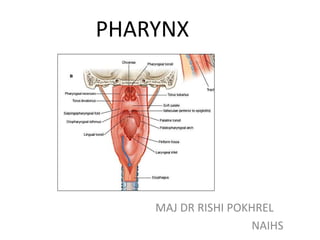
PHARYNX
MAJ DR RISHI POKHREL
NAIHS
33 y old lady with
• c/o
– Discomfort and foreign body sensation in throat
since 2 days
• o/e
– an orange seed found embedded in ‘piriform
fossa’
• What precaution should be taken while
removing it?
PHARYNX
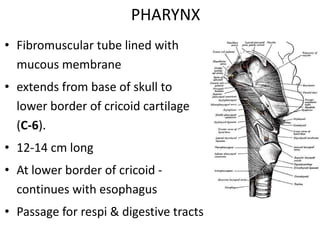
• Fibromuscular tube lined with
mucous membrane
• extends from base of skull to
lower border of cricoid cartilage
(C-6).
• 12-14 cm long
• At lower border of cricoid -
continues with esophagus
• Passage for respi & digestive tracts
PHARYNX
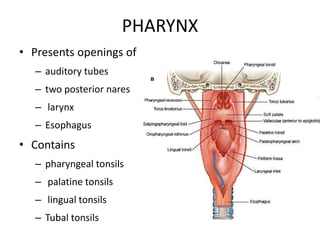
• Presents openings of
– auditory tubes
– two posterior nares
– larynx
– Esophagus
• Contains
– pharyngeal tonsils
– palatine tonsils
– lingual tonsils
– Tubal tonsils
Bony landmarks
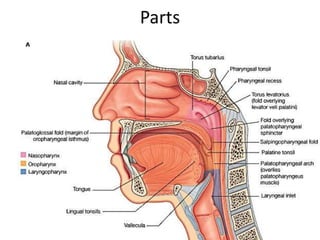
Parts
Layers in pharyngeal wall
• Mucosa & submucosa
• Pharyngobasilar fascia
• Longitudinal muscles
• Circular muscles – constrictors
• Pharyngeal plexus of veins & nerves
• Buccopharyngeal fascia
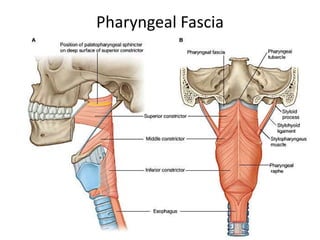
Pharyngeal Fascia
• Separated into 2 layers, pharyngeal
muscles sandwiched between them
• Thick pharyngobasilar fascia inside
• Thin buccopharyngeal fascia outside
• Reinforces the pharyngeal wall
Pharyngeal Fascia
NASOPHARYNX
• Part of respiratory
tract – mucosa?
• Behind the nasal cavity
• Above and behind soft
palate.
• Communicates
through pharyngeal
isthmus with
oropharynx.
NASOPHARYNX• Opening of PT tube ½”
behind and at the level of
INC
• guarded by tubal elevation
• Salpingopharyngeal fold -
posterior margin of tubal
elevation to side-wall of
pharynx downwards.
• Salpingopharyngeus
• Behind salpingopharyngeal
fold - pharyngeal recess.
• Under mucous membrane
- nasopharyngeal tonsil.
• Behind mouth and
tongue.
• common to both
respiratory and digestive
systems
• Oropharyngeal isthmus
• Posterior wall is smooth
• Lateral walls shows
palatine tonsils between
palatoglossal and
palatopharyngeal arches.
OROPHARYNX
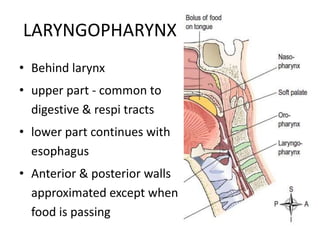
LARYNGOPHARYNX
• Behind larynx
• upper part - common to
digestive & respi tracts
• lower part continues with
esophagus
• Anterior & posterior walls
approximated except when
food is passing
LARYNGOPHARYNX
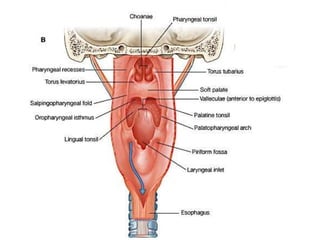
• Posterior wall and side - walls
are smooth.
• Anterior wall from above
downwards presents
– epiglottis
– aryepiglottic folds
– Arytenoids & cricoid
– inlet of larynx
– piriform fossa
• Anterior wall - back of larynx.
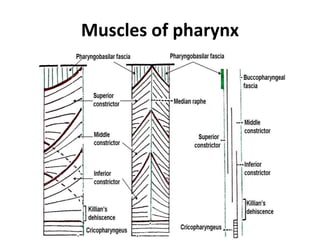
Muscles of pharynx
• Differ from rest GIT
• Skeletal muscles
• longitudinal muscles are placed inside
• circular muscles (constrictors) are incomplete
anteriorly & arranged in three layers
overlapping each other
Muscles of pharynx
Constrictors of pharynx
• Superior constrictor - attached to pharyngeal
tubercle, lowest fibers reach up to level of
vocal cords
• Middle constructor arises from stylohyoid
ligament, lesser and greater cornu of hyoid,
overlap SC and reach upto level of vocal cords.
• Inferior constrictor has two parts:
thyropharyngeus & cricopharyngeus
• Thyropharyngeus overlaps MC
• Cricopharyngeus continues with other side
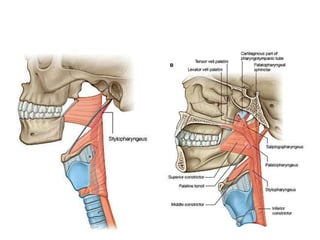
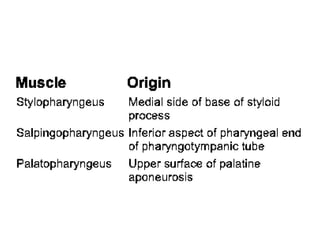
longitudinal muscles
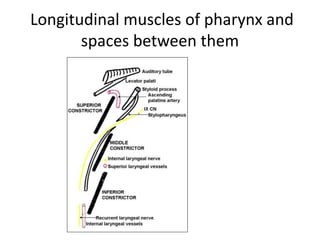
• Stylophryngeus, Salpingopharyngeus and
Palatopharyngeus
• Attached to posterior border of thyroid
cartilage
• Help in 2nd stage of deglutition by lifting the
pharynx
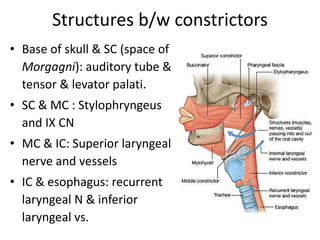
Structures b/w constrictors
• Base of skull & SC (space of
Morgagni): auditory tube &
tensor & levator palati.
• SC & MC : Stylophryngeus
and IX CN
• MC & IC: Superior laryngeal
nerve and vessels
• IC & esophagus: recurrent
laryngeal N & inferior
laryngeal vs.
Longitudinal muscles of pharynx and
spaces between them
Tonsils
• Pharyngeal tonsil (adenoids): midline on the
roof of the nasopharynx;
• Palatine tonsils: on each side of the
oropharynx between the palatoglossal and
palatopharyngeal arches
• Lingual tonsil : posterior one-third of the
tongue.
• Tubal tonsil: pharyngotympanic tube near its
opening into the nasopharynx, and on the
upper surface of the soft palate.
Blood supply - ECA
• Ascending
pharyngeal A
• Ascending palatine
and tonsillar
branches of facial A
• Maxillary & lingual A
Veins
• Superiorly:
pterygoid plexus
in infratemporal
fossa
• Inferiorly: facial
and IJV
Lymphatics
• deep cervical nodes:
retropharyngeal
paratracheal &
infrahyoid nodes
• Palatine tonsils :
jugulodigastric nodes
(inferior to posterior
belly of digastric muscle)
Find out
• Passavant’s ridge
• Killian’s dehiscence
• Palatine tonsil
• Physiology of deglutition

Pharynx

  • 1.
    PHARYNX MAJ DR RISHIPOKHREL NAIHS
  • 2.
    33 y oldlady with • c/o – Discomfort and foreign body sensation in throat since 2 days • o/e – an orange seed found embedded in ‘piriform fossa’ • What precaution should be taken while removing it?
  • 3.
    PHARYNX • Fibromuscular tubelined with mucous membrane • extends from base of skull to lower border of cricoid cartilage (C-6). • 12-14 cm long • At lower border of cricoid - continues with esophagus • Passage for respi & digestive tracts
  • 4.
    PHARYNX • Presents openingsof – auditory tubes – two posterior nares – larynx – Esophagus • Contains – pharyngeal tonsils – palatine tonsils – lingual tonsils – Tubal tonsils
  • 5.
  • 6.
  • 7.
    Layers in pharyngealwall • Mucosa & submucosa • Pharyngobasilar fascia • Longitudinal muscles • Circular muscles – constrictors • Pharyngeal plexus of veins & nerves • Buccopharyngeal fascia
  • 8.
    Pharyngeal Fascia • Separatedinto 2 layers, pharyngeal muscles sandwiched between them • Thick pharyngobasilar fascia inside • Thin buccopharyngeal fascia outside • Reinforces the pharyngeal wall
  • 9.
  • 10.
    NASOPHARYNX • Part ofrespiratory tract – mucosa? • Behind the nasal cavity • Above and behind soft palate. • Communicates through pharyngeal isthmus with oropharynx.
  • 11.
    NASOPHARYNX• Opening ofPT tube ½” behind and at the level of INC • guarded by tubal elevation • Salpingopharyngeal fold - posterior margin of tubal elevation to side-wall of pharynx downwards. • Salpingopharyngeus • Behind salpingopharyngeal fold - pharyngeal recess. • Under mucous membrane - nasopharyngeal tonsil.
  • 13.
    • Behind mouthand tongue. • common to both respiratory and digestive systems • Oropharyngeal isthmus • Posterior wall is smooth • Lateral walls shows palatine tonsils between palatoglossal and palatopharyngeal arches. OROPHARYNX
  • 14.
    LARYNGOPHARYNX • Behind larynx •upper part - common to digestive & respi tracts • lower part continues with esophagus • Anterior & posterior walls approximated except when food is passing
  • 15.
    LARYNGOPHARYNX • Posterior walland side - walls are smooth. • Anterior wall from above downwards presents – epiglottis – aryepiglottic folds – Arytenoids & cricoid – inlet of larynx – piriform fossa • Anterior wall - back of larynx.
  • 17.
    Muscles of pharynx •Differ from rest GIT • Skeletal muscles • longitudinal muscles are placed inside • circular muscles (constrictors) are incomplete anteriorly & arranged in three layers overlapping each other
  • 20.
  • 21.
    Constrictors of pharynx •Superior constrictor - attached to pharyngeal tubercle, lowest fibers reach up to level of vocal cords • Middle constructor arises from stylohyoid ligament, lesser and greater cornu of hyoid, overlap SC and reach upto level of vocal cords. • Inferior constrictor has two parts: thyropharyngeus & cricopharyngeus • Thyropharyngeus overlaps MC • Cricopharyngeus continues with other side
  • 23.
    longitudinal muscles • Stylophryngeus,Salpingopharyngeus and Palatopharyngeus • Attached to posterior border of thyroid cartilage • Help in 2nd stage of deglutition by lifting the pharynx
  • 25.
    Structures b/w constrictors •Base of skull & SC (space of Morgagni): auditory tube & tensor & levator palati. • SC & MC : Stylophryngeus and IX CN • MC & IC: Superior laryngeal nerve and vessels • IC & esophagus: recurrent laryngeal N & inferior laryngeal vs.
  • 26.
    Longitudinal muscles ofpharynx and spaces between them
  • 27.
    Tonsils • Pharyngeal tonsil(adenoids): midline on the roof of the nasopharynx; • Palatine tonsils: on each side of the oropharynx between the palatoglossal and palatopharyngeal arches • Lingual tonsil : posterior one-third of the tongue. • Tubal tonsil: pharyngotympanic tube near its opening into the nasopharynx, and on the upper surface of the soft palate.
  • 30.
    Blood supply -ECA • Ascending pharyngeal A • Ascending palatine and tonsillar branches of facial A • Maxillary & lingual A
  • 31.
    Veins • Superiorly: pterygoid plexus ininfratemporal fossa • Inferiorly: facial and IJV
  • 32.
    Lymphatics • deep cervicalnodes: retropharyngeal paratracheal & infrahyoid nodes • Palatine tonsils : jugulodigastric nodes (inferior to posterior belly of digastric muscle)
  • 33.
    Find out • Passavant’sridge • Killian’s dehiscence • Palatine tonsil • Physiology of deglutition