Downloaded 6,676 times


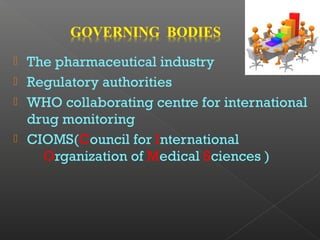






















This document discusses various aspects of pharmacovigilance including its aims, responsibilities, methods, governing bodies, adverse drug reactions, terminology, and international programs. The key goals of pharmacovigilance are to improve patient safety, contribute to benefit-risk assessments of medicines, and ensure their rational use. It involves the detection, assessment, understanding and prevention of adverse drug reactions using methods like spontaneous reporting, cohort event monitoring, and record linkage. Regulatory authorities and the WHO play important roles in governing pharmacovigilance activities globally.


